DonateMembershipVisit Heritage
  • Tūrangawaewae
    Places
  • Tira Māori
    Māori Heritage
  • Poutairangahia
    Archaeology
  • Rauemi
    Resources
  • Mō Tātou
    About Us
  • New Zealand Heritage List
  • Nominate and submit
  • Explore the List
  • National Historic Landmarks
  • Plaques
  • Rainbow List Project
  • Lost heritage
  • Visit Heritage
  • Our properties
  • Turnbull House Project
  • Collections
  • Shop
  • Tohu Whenua
  • Tira Māori
  • Conserving Māori heritage
  • Marae built heritage
  • Māori heritage on the List
  • Hinemihi—Te Hokinga Mai
  • What is archaeology?
  • Is there a site on my property?
  • What are my legal requirements?
  • Affecting an archaeological site
  • Declaring an archaeological site
  • Archaeology FAQs
  • Archaeology Digital Library
  • Archaeology guidelines and templates
  • Resources
  • Funding
  • Publications
  • Sustainable management guides
  • Disaster recovery
  • Podcasts & digital resources
  • Education Hub
  • Conservation plans
  • About
  • Board
  • Māori Heritage Council
  • Senior Staff
  • Offices
  • Contact us
  • Careers
  • Covenants
  • Fast-track
  • Corporate documents
  • Currently consulting on
  • Our submissions
  • News
  • Covid-19 response
Quick links
Rārangi Kōrero | The List
Explore the List
National Historic Landmarks
Ngā Manawhenua o Aotearoa me ōna Kōrero Tūturu
Quick links
Tapuwae
A Vision for Places of Māori Heritage
Funding for Māori Heritage
Resources
Quick links
Archaeological Authority Portal
Applying for an archaeological authority
Archaeology FAQs
Browse the most frequently asked questions about archaeological authorities and the archaeological process.
Quick links
Quick links
News
News Keep up to date with Heritage New Zealand Pouhere Taonga
Membership
Membership Find out more and sign up today
DonateMembershipVisit Heritage
  • Tūrangawaewae
    Places
  • Tira Māori
    Māori Heritage
  • Poutairangahia
    Archaeology
  • Rauemi
    Resources
  • Mō Tātou
    About Us
  • New Zealand Heritage List
  • Nominate and submit
  • Explore the List
  • National Historic Landmarks
  • Plaques
  • Rainbow List Project
  • Lost heritage
  • Visit Heritage
  • Our properties
  • Turnbull House Project
  • Collections
  • Shop
  • Tohu Whenua
  • Tira Māori
  • Conserving Māori heritage
  • Marae built heritage
  • Māori heritage on the List
  • Hinemihi—Te Hokinga Mai
  • What is archaeology?
  • Is there a site on my property?
  • What are my legal requirements?
  • Affecting an archaeological site
  • Declaring an archaeological site
  • Archaeology FAQs
  • Archaeology Digital Library
  • Archaeology guidelines and templates
  • Resources
  • Funding
  • Publications
  • Sustainable management guides
  • Disaster recovery
  • Podcasts & digital resources
  • Education Hub
  • Conservation plans
  • About
  • Board
  • Māori Heritage Council
  • Senior Staff
  • Offices
  • Contact us
  • Careers
  • Covenants
  • Fast-track
  • Corporate documents
  • Currently consulting on
  • Our submissions
  • News
  • Covid-19 response
Quick links
Rārangi Kōrero | The List
Explore the List
National Historic Landmarks
Ngā Manawhenua o Aotearoa me ōna Kōrero Tūturu
Quick links
Tapuwae
A Vision for Places of Māori Heritage
Funding for Māori Heritage
Resources
Quick links
Archaeological Authority Portal
Applying for an archaeological authority
Archaeology FAQs
Browse the most frequently asked questions about archaeological authorities and the archaeological process.
Quick links
Quick links
News
News Keep up to date with Heritage New Zealand Pouhere Taonga
Membership
Membership Find out more and sign up today
  • Places
  • Nominate and submit
  • National Historic Landmarks
  • Places
  • Nominate and submit
  • National Historic Landmarks
  • Tira Māori
  • Conserving Māori heritage
  • Marae built heritage
  • Tira Māori
  • Conserving Māori heritage
  • Marae built heritage
  • Archaeological authorities
  • Archaeology Digital Library
  • Archaeological authorities
  • Archaeology Digital Library
  • All resources
  • Publications
  • Funding
  • All resources
  • Publications
  • Funding
  • FAQs
  • FAQs
Follow us on:
Places
  • Places
  • Nominate and submit
  • National Historic Landmarks
Tira Māori
  • Tira Māori
  • Conserving Māori heritage
  • Marae built heritage
Archaeology
  • Archaeological authorities
  • Archaeology Digital Library
Resources
  • All resources
  • Publications
  • Funding
FAQs
  • FAQs
Follow us on
HomePrivacyTerms and conditionsAbout this site
© Heritage New Zealand Pouhere Taonga 2026.
 
Wellington Central Library (Former)

101 Wakefield Street, Civic Square, WELLINGTON

Public

Historic Place Category 2

List No. 1451

Quick links:
List GalleryLocationDetails
Wellington Central Library (Former) opened in 1940 and was Wellington’s main library until 1991. It has historical significance as one of the city’s major public buildings, a function that continues to the present day through its status as City Gallery Wellington Te Whare Toi. A fine example of the Stripped Classical Style, it is an architecturally significant building that makes an important contribution to the city’s built fabric.

The human presence in Wellington is said to begin with the explorer Kupe, who travelled to Aotearoa New Zealand from Hawaiki, the ancestral Polynesian homeland of Māori. Following permanent settlement, the rangatira Tara, son of Whātonga and the eponymous ancestor of Ngāi Tara, travelled south from Māhia Peninsula and settled at the harbour, which came to be known as Te Whanganui-a-Tara, the great harbour of Tara. In the seventeenth century Ngāti Ira of Hawke’s Bay joined Ngāi Tara and extensive intermarriage occurred between the two tribes. Other iwi who made a home in the region included Ngāti Kahungunu, Rangitāne, Ngāi Tahu and Ngāti Māmoe. Te Ātiawa, Ngāti Tama and Ngāti Mutunga migrated south from Taranaki in the 1820s. In 1824 Ngāti Mutunga built the five-acre Te Aro Pā, which straddled both sides of present-day Taranaki Street just north of the intersection with Courtenay Place and Manners Street. When Ngāti Mutunga and Ngāti Tama people migrated to Rēkohu (Chatham Islands) in 1835, their land rights around the harbour were transferred to Te Ātiawa. Organised Pākehā settlement commenced in 1839.

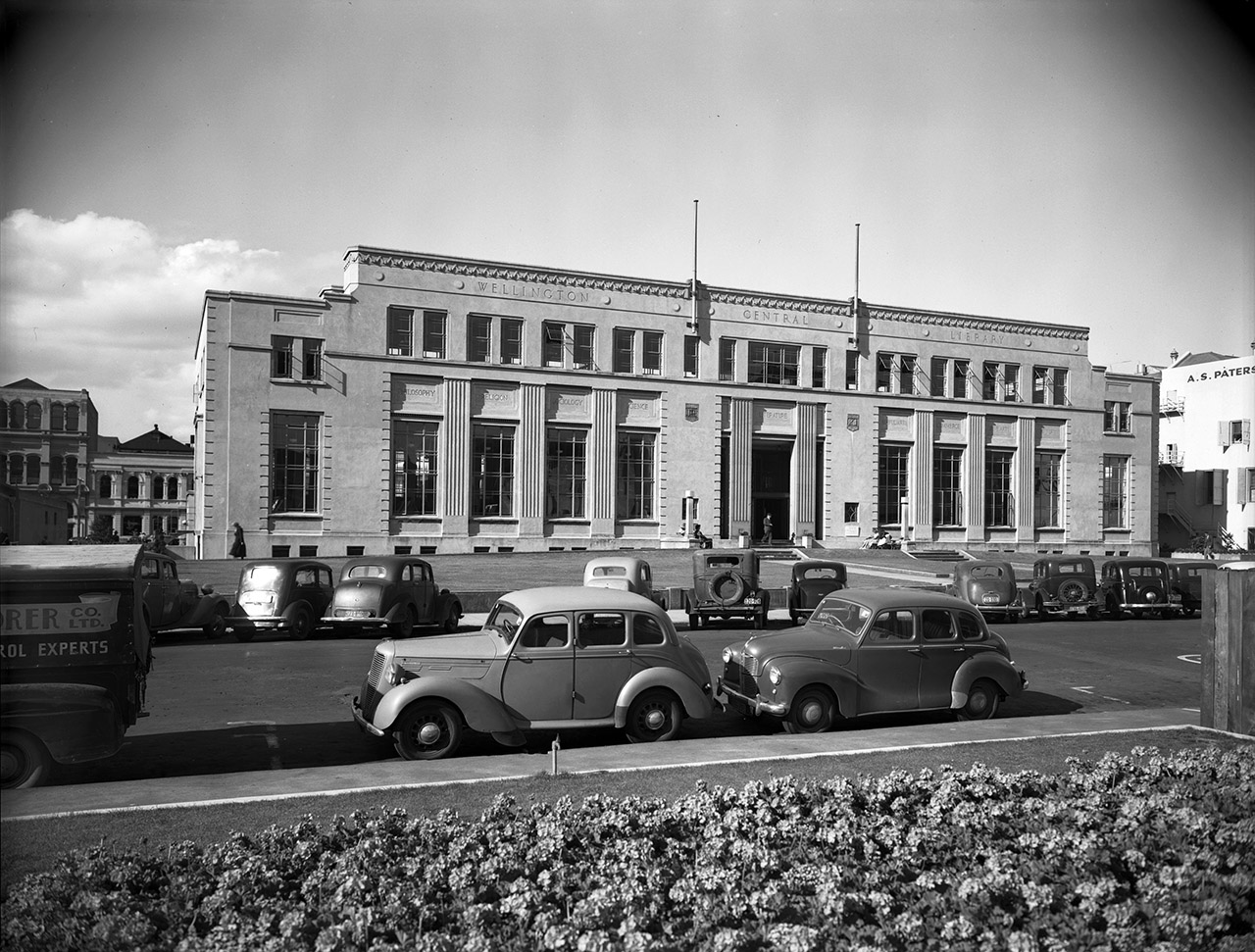
In 1935, as the country was moving out of the great depression and entering the Second World War, the Wellington City Council held a design competition for a new central library which was won by two firms, Messenger Taylor and Wolfe, and Gummer and Ford, who collaborated on the final design. The outcome was a well-realised inter-war Stripped Classical building of two stories and a basement, constructed in reinforced concrete. The main elevation is distinguished by eight fluted pilasters and generous steel windows. Above the ground floor windows are moulded tablets inscribed with library classifications. The relatively plain entablature proclaims the building’s function in capital letters. Internally, the ground floor was occupied by the ‘popular library’ (mostly fiction), the junior library, and the newspaper and magazines rooms. On the first floor was reference, commercial and technical, the New Zealand and Fine Arts collections and staff offices. The basement held the stacks and bindery, and a lecture hall, meeting room and kitchen. A mezzanine floor at the east side between ground and first was used for offices.

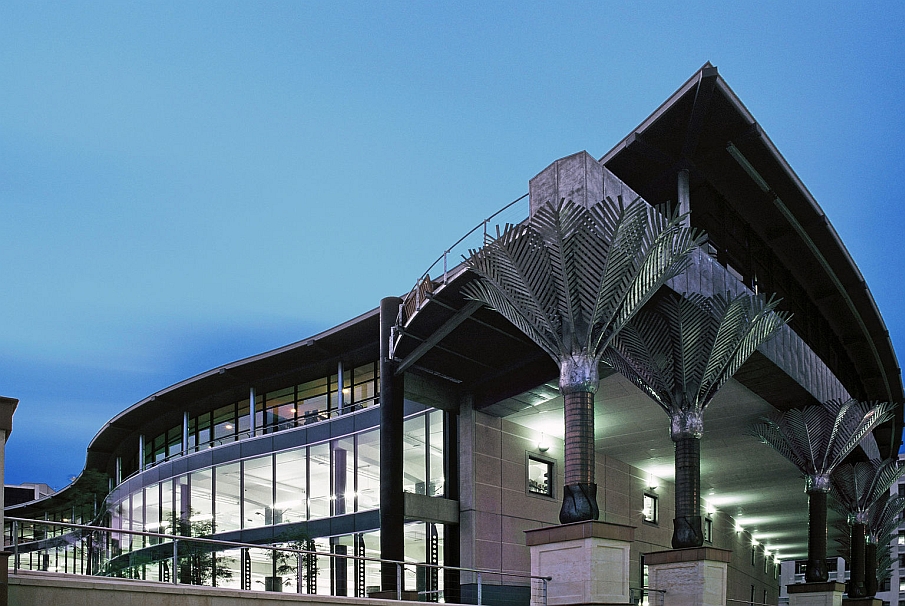
The building served as the city’s central library for over 50 years and its location in the city’s civic centre made it the backdrop for a range of community, social and political events and gatherings over the years. The men’s toilet on the Harris Street side was a beat, a sex-on-site venue for men interested in men. The number of library patrons eventually outstripped capacity and a new library designed by Athfield Architects opened next door in 1991. The old library was converted to City Gallery Wellington Te Whare Toi as part of the Te Ngākau Civic Square development. The gallery opened in 1993. Previously facing Mercer Street, the building now opens onto the pedestrian square and is the background to even more community events and protests. Inside is an ever-changing series of modern and contemporary visual art exhibitions. The building was modified to meet the requirements of an art gallery and the north (back) elevation has had significant modifications and additions in the early 1990s and in 2009; however, the main elevation facing the square is significantly intact.
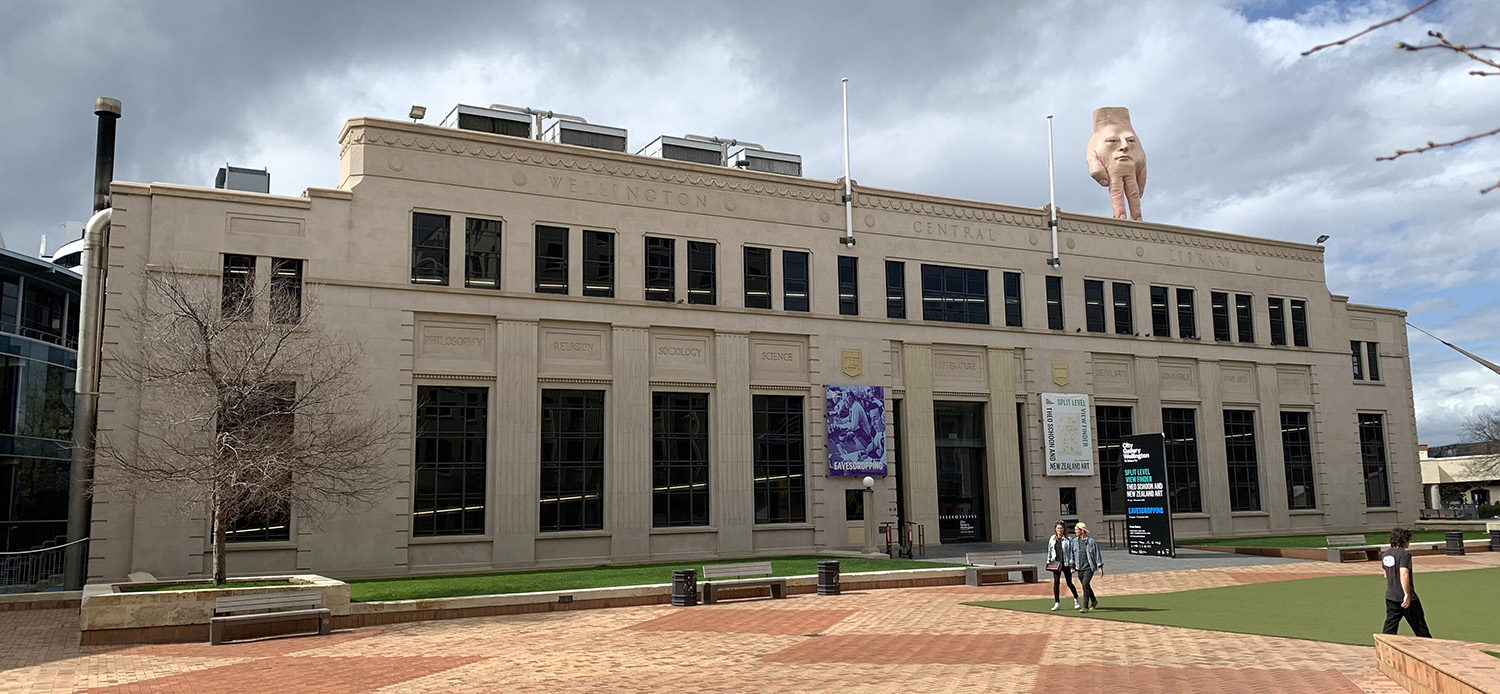
Wellington Central Library (Former),Wellington. CC BY-SA 4.0 Image courtesy of commons.wikimedia.org | Tom Ackroyd | 12/10/2019 | Tom Ackroyd - Wikimedia Commons
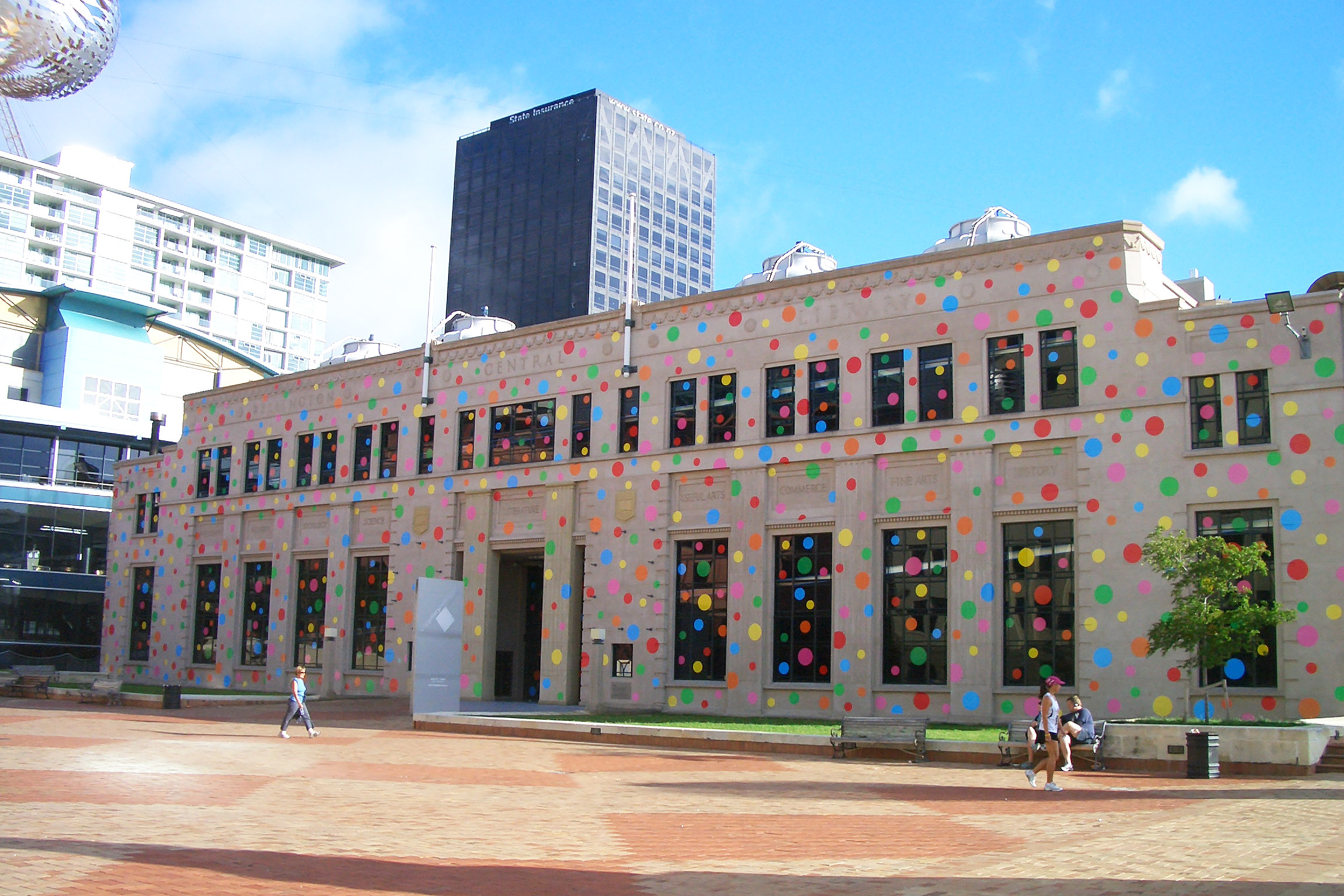
Wellington Central Library (Former),Wellington. Dots for Love and Peace by Japanese Artist Yayoi Kusama as part of her exhibition at the gallery CC BY-SA 4.0 Image courtesy of commons.wikimedia.org | Wainuiomartian | 21/02/2010 | Wainuiomartian - Wikimedia Commons
Wellington Central Library (Former),Wellington. c.1940 Permission of the Alexander Turnbull Library, Wellington, NZ, must be obtained before any re-use of this image. Ref: 1/1-015911-F | Gordon Onslow Hilbury Burt | Alexander Turnbull Library, Wellington, New Zealand
Wellington Central Library (Former),Wellington. CC BY-SA 4.0 Image courtesy of commons.wikimedia.org | Tom Ackroyd | 12/10/2019 | Tom Ackroyd - Wikimedia Commons
Wellington Central Library (Former),Wellington. Dots for Love and Peace by Japanese Artist Yayoi Kusama as part of her exhibition at the gallery CC BY-SA 4.0 Image courtesy of commons.wikimedia.org | Wainuiomartian | 21/02/2010 | Wainuiomartian - Wikimedia Commons
Wellington Central Library (Former),Wellington. c.1940 Permission of the Alexander Turnbull Library, Wellington, NZ, must be obtained before any re-use of this image. Ref: 1/1-015911-F | Gordon Onslow Hilbury Burt | Alexander Turnbull Library, Wellington, New Zealand

List Entry Information

Overview

Status
Listed

List Entry Status
Historic Place Category 2

Access
Able to Visit

List Number
1451

Date Entered
10th September 1981

Date of Effect
10th September 1981

City/District Council
Wellington City

Region
Wellington Region

Extent of List Entry

Extent includes part of the land described as Lot 1 DP 494594 (RT 724107), Wellington Land District and the building known as Wellington Central Library (Former) thereon.

Legal description

Lot 1 DP 494594 (RT 724107), Wellington Land District.

Detailed List Entry

Construction Professional

Name

Gummer & Ford

Type

Architectural Partnership

Biography

The architectural partnership of Gummer and Ford was established in 1923, and became one of national importance. William Henry Gummer (1884-1966) was articled to W.A. Holman, an Auckland architect, and was elected as an Associate of the Royal Institute of British Architects in 1910. In the period 1908-1913 he travelled in the United Kingdom, Europe and the United States. During this time he worked for Sir Edwin Lutyens, leading English architect of the time, and for Daniel Burnham in Chicago. Burnham was a major American architect and one of the founders of the influential Chicago School of Architecture. Gummer joined the firm of Hoggard and Prouse of Auckland and Wellington in 1913. In 1914 he was elected a Fellow of the New Zealand Institute of Architects, was president of the Institute from 1933-34 and was later elected a life member. Charles Reginald Ford (1880- 1972) was born in England and served in the Royal Navy. He was later with Captain Scott's 1901-1904 expedition to Antarctica. He trained as an architect working in Wanganui as an engineer. In 1926 he wrote the first treatise on earthquake and building construction in the English language. Ford was president of the New Zealand Institute of Architects from 1921-22. Buildings designed by the partnership include the State Insurance Building Wellington, (1940) the Dilworth Building (1926), the Guardian Trust Building and the Domain Wintergardens (1921 and 1928), all in Auckland, and the Dominion Museum (1936) in Wellington. Gummer and Ford were awarded Gold Medals from the New Zealand Institute of Architects for the designs of Auckland Railway Station and Remuera Library. Gummer was one of the most outstanding architects working in New Zealand in the first half of this century and was responsible for the stylistically and structurally advanced Tauroa (1916), Craggy Range (1919), Arden (1926), and Te Mata (1935) homesteads at Havelock North.

Construction Details

Start Year

1938

Finish Year

1939

Type

Original Construction

Start Year

1942

Finish Year

1943

Type

Maintenance/repairs

Description

Earthquake damage

Start Year

1990

Type

Addition

Description

Cooling towers

Start Year

1997

Type

Addition

Description

Roof extension

Start Year

2009

Type

Addition

Description

New auditorium and galleries

Reference

Completion Date

16th May 2022

Report Written By

Kerryn Pollock

Information Sources

‘Wellington City Art Gallery’, WCC Heritage Inventory

‘Wellington City Art Gallery’, WCC Heritage Inventory https://www.wellingtoncityheritage.org.nz/buildings/1-150/70-wellington-city-gallery?q=

Report Written By

This place was identified as significant under previous legislation with different information requirements. It remains significant under the current legislation. There is opportunity under our legislation and policies to add to this information. Further information about this place may be available from the Central Regional Office of Heritage New Zealand Pouhere Taonga. NZIA National Award Winner 1994 A fully referenced copy of the upgrade report is available on request from the Central Reigonal Office of Heritage New Zealand Pouhere Taonga Please note that entry on the New Zealand Heritage List/Rarangi Korero identifies only the heritage values of the property concerned, and should not be construed as advice on the state of the property, or as a comment of its soundness or safety, including in regard to earthquake risk, safety in the event of fire, or insanitary conditions.

Further Information

Current Usages

Uses: Civic Facilities

Specific Usage: Art Gallery

Former Usages

General Usage:: Civic Facilities

Specific Usage: Library

Themes

Rainbow List

Web Links

description:

url: http://citygallery.org.nz/

Overview

Status

Listed

List Entry Status

Historic Place Category 2

Access

Able to Visit

List Number

1451

Date Entered

10th September 1981

Date of Effect

10th September 1981

City/District Council

Wellington City

Region

Wellington Region

Extent of List Entry

Extent includes part of the land described as Lot 1 DP 494594 (RT 724107), Wellington Land District and the building known as Wellington Central Library (Former) thereon.

Legal description

Lot 1 DP 494594 (RT 724107), Wellington Land District.

Status

Listed

List Entry Status

Historic Place Category 2

Access

Able to Visit

List Number

1451

Date Entered

10th September 1981

Date of Effect

10th September 1981

City/District Council

Wellington City

Region

Wellington Region

Extent of List Entry

Extent includes part of the land described as Lot 1 DP 494594 (RT 724107), Wellington Land District and the building known as Wellington Central Library (Former) thereon.

Legal description

Lot 1 DP 494594 (RT 724107), Wellington Land District.

Construction Information

Construction Professional

Name

Gummer & Ford

Type

Architectural Partnership

Biography

The architectural partnership of Gummer and Ford was established in 1923, and became one of national importance. William Henry Gummer (1884-1966) was articled to W.A. Holman, an Auckland architect, and was elected as an Associate of the Royal Institute of British Architects in 1910. In the period 1908-1913 he travelled in the United Kingdom, Europe and the United States. During this time he worked for Sir Edwin Lutyens, leading English architect of the time, and for Daniel Burnham in Chicago. Burnham was a major American architect and one of the founders of the influential Chicago School of Architecture. Gummer joined the firm of Hoggard and Prouse of Auckland and Wellington in 1913. In 1914 he was elected a Fellow of the New Zealand Institute of Architects, was president of the Institute from 1933-34 and was later elected a life member. Charles Reginald Ford (1880- 1972) was born in England and served in the Royal Navy. He was later with Captain Scott's 1901-1904 expedition to Antarctica. He trained as an architect working in Wanganui as an engineer. In 1926 he wrote the first treatise on earthquake and building construction in the English language. Ford was president of the New Zealand Institute of Architects from 1921-22. Buildings designed by the partnership include the State Insurance Building Wellington, (1940) the Dilworth Building (1926), the Guardian Trust Building and the Domain Wintergardens (1921 and 1928), all in Auckland, and the Dominion Museum (1936) in Wellington. Gummer and Ford were awarded Gold Medals from the New Zealand Institute of Architects for the designs of Auckland Railway Station and Remuera Library. Gummer was one of the most outstanding architects working in New Zealand in the first half of this century and was responsible for the stylistically and structurally advanced Tauroa (1916), Craggy Range (1919), Arden (1926), and Te Mata (1935) homesteads at Havelock North.

Construction Details

Start Year

1938

Finish Year

1939

Type

Original Construction

Start Year

1942

Finish Year

1943

Type

Maintenance/repairs

Description

Earthquake damage

Start Year

1990

Type

Addition

Description

Cooling towers

Start Year

1997

Type

Addition

Description

Roof extension

Start Year

2009

Type

Addition

Description

New auditorium and galleries

Construction Professional

Name

Gummer & Ford

Type

Architectural Partnership

Biography

The architectural partnership of Gummer and Ford was established in 1923, and became one of national importance. William Henry Gummer (1884-1966) was articled to W.A. Holman, an Auckland architect, and was elected as an Associate of the Royal Institute of British Architects in 1910. In the period 1908-1913 he travelled in the United Kingdom, Europe and the United States. During this time he worked for Sir Edwin Lutyens, leading English architect of the time, and for Daniel Burnham in Chicago. Burnham was a major American architect and one of the founders of the influential Chicago School of Architecture. Gummer joined the firm of Hoggard and Prouse of Auckland and Wellington in 1913. In 1914 he was elected a Fellow of the New Zealand Institute of Architects, was president of the Institute from 1933-34 and was later elected a life member. Charles Reginald Ford (1880- 1972) was born in England and served in the Royal Navy. He was later with Captain Scott's 1901-1904 expedition to Antarctica. He trained as an architect working in Wanganui as an engineer. In 1926 he wrote the first treatise on earthquake and building construction in the English language. Ford was president of the New Zealand Institute of Architects from 1921-22. Buildings designed by the partnership include the State Insurance Building Wellington, (1940) the Dilworth Building (1926), the Guardian Trust Building and the Domain Wintergardens (1921 and 1928), all in Auckland, and the Dominion Museum (1936) in Wellington. Gummer and Ford were awarded Gold Medals from the New Zealand Institute of Architects for the designs of Auckland Railway Station and Remuera Library. Gummer was one of the most outstanding architects working in New Zealand in the first half of this century and was responsible for the stylistically and structurally advanced Tauroa (1916), Craggy Range (1919), Arden (1926), and Te Mata (1935) homesteads at Havelock North.

Construction Details

Start Year

1938

Finish Year

1939

Type

Original Construction

Start Year

1942

Finish Year

1943

Type

Maintenance/repairs

Description

Earthquake damage

Start Year

1990

Type

Addition

Description

Cooling towers

Start Year

1997

Type

Addition

Description

Roof extension

Start Year

2009

Type

Addition

Description

New auditorium and galleries

Reference

Historical and Associated Iwi / Hapū / Whānau

Completion Date

16th May 2022

Report Written By

Kerryn Pollock

Information Sources

‘Wellington City Art Gallery’, WCC Heritage Inventory

‘Wellington City Art Gallery’, WCC Heritage Inventory https://www.wellingtoncityheritage.org.nz/buildings/1-150/70-wellington-city-gallery?q=

Other Information

This place was identified as significant under previous legislation with different information requirements. It remains significant under the current legislation. There is opportunity under our legislation and policies to add to this information. Further information about this place may be available from the Central Regional Office of Heritage New Zealand Pouhere Taonga. NZIA National Award Winner 1994 A fully referenced copy of the upgrade report is available on request from the Central Reigonal Office of Heritage New Zealand Pouhere Taonga Please note that entry on the New Zealand Heritage List/Rarangi Korero identifies only the heritage values of the property concerned, and should not be construed as advice on the state of the property, or as a comment of its soundness or safety, including in regard to earthquake risk, safety in the event of fire, or insanitary conditions.

Historical and Associated Iwi / Hapū / Whānau

Completion Date

16th May 2022

Report Written By

Kerryn Pollock

Information Sources

‘Wellington City Art Gallery’, WCC Heritage Inventory

‘Wellington City Art Gallery’, WCC Heritage Inventory https://www.wellingtoncityheritage.org.nz/buildings/1-150/70-wellington-city-gallery?q=

Other Information

This place was identified as significant under previous legislation with different information requirements. It remains significant under the current legislation. There is opportunity under our legislation and policies to add to this information. Further information about this place may be available from the Central Regional Office of Heritage New Zealand Pouhere Taonga. NZIA National Award Winner 1994 A fully referenced copy of the upgrade report is available on request from the Central Reigonal Office of Heritage New Zealand Pouhere Taonga Please note that entry on the New Zealand Heritage List/Rarangi Korero identifies only the heritage values of the property concerned, and should not be construed as advice on the state of the property, or as a comment of its soundness or safety, including in regard to earthquake risk, safety in the event of fire, or insanitary conditions.

Further Information

Current Usages

Uses: Civic Facilities

Specific Usage: Art Gallery

Former Usages

General Usage: Civic Facilities

Specific Usage: Library

Themes

Rainbow List

Web Links

description:

url: http://citygallery.org.nz/

Current Usages

Uses: Civic Facilities

Specific Usage: Art Gallery

Former Usages

General Usage: Civic Facilities

Specific Usage: Library

Themes

Rainbow List

Web Links

description:

url: http://citygallery.org.nz/

Location

Loading
Related listings
Wellington Central Library, Wellington. CC BY 4.0
Wellington Central Library
Wellington Central Library, Wellington. CC BY 4.0
Wellington Central Library
Stay up to date with Heritage this month