DonateMembershipVisit Heritage
  • Tūrangawaewae
    Places
  • Tira Māori
    Māori Heritage
  • Poutairangahia
    Archaeology
  • Rauemi
    Resources
  • Mō Tātou
    About Us
  • New Zealand Heritage List
  • Nominate and submit
  • Explore the List
  • National Historic Landmarks
  • Plaques
  • Rainbow List Project
  • Lost heritage
  • Visit Heritage
  • Our properties
  • Turnbull House Project
  • Collections
  • Shop
  • Tohu Whenua
  • Tira Māori
  • Conserving Māori heritage
  • Marae built heritage
  • Māori heritage on the List
  • Hinemihi—Te Hokinga Mai
  • What is archaeology?
  • Is there a site on my property?
  • What are my legal requirements?
  • Affecting an archaeological site
  • Declaring an archaeological site
  • Archaeology FAQs
  • Archaeology Digital Library
  • Archaeology guidelines and templates
  • Resources
  • Funding
  • Publications
  • Sustainable management guides
  • Disaster recovery
  • Podcasts & digital resources
  • Education Hub
  • Conservation plans
  • About
  • Board
  • Māori Heritage Council
  • Senior Staff
  • Offices
  • Contact us
  • Careers
  • Covenants
  • Fast-track
  • Corporate documents
  • Currently consulting on
  • Our submissions
  • News
  • Covid-19 response
Quick links
Rārangi Kōrero | The List
Explore the List
National Historic Landmarks
Ngā Manawhenua o Aotearoa me ōna Kōrero Tūturu
Quick links
Tapuwae
A Vision for Places of Māori Heritage
Funding for Māori Heritage
Resources
Quick links
Archaeological Authority Portal
Applying for an archaeological authority
Archaeology FAQs
Browse the most frequently asked questions about archaeological authorities and the archaeological process.
Quick links
Quick links
News
News Keep up to date with Heritage New Zealand Pouhere Taonga
Membership
Membership Find out more and sign up today
DonateMembershipVisit Heritage
  • Tūrangawaewae
    Places
  • Tira Māori
    Māori Heritage
  • Poutairangahia
    Archaeology
  • Rauemi
    Resources
  • Mō Tātou
    About Us
  • New Zealand Heritage List
  • Nominate and submit
  • Explore the List
  • National Historic Landmarks
  • Plaques
  • Rainbow List Project
  • Lost heritage
  • Visit Heritage
  • Our properties
  • Turnbull House Project
  • Collections
  • Shop
  • Tohu Whenua
  • Tira Māori
  • Conserving Māori heritage
  • Marae built heritage
  • Māori heritage on the List
  • Hinemihi—Te Hokinga Mai
  • What is archaeology?
  • Is there a site on my property?
  • What are my legal requirements?
  • Affecting an archaeological site
  • Declaring an archaeological site
  • Archaeology FAQs
  • Archaeology Digital Library
  • Archaeology guidelines and templates
  • Resources
  • Funding
  • Publications
  • Sustainable management guides
  • Disaster recovery
  • Podcasts & digital resources
  • Education Hub
  • Conservation plans
  • About
  • Board
  • Māori Heritage Council
  • Senior Staff
  • Offices
  • Contact us
  • Careers
  • Covenants
  • Fast-track
  • Corporate documents
  • Currently consulting on
  • Our submissions
  • News
  • Covid-19 response
Quick links
Rārangi Kōrero | The List
Explore the List
National Historic Landmarks
Ngā Manawhenua o Aotearoa me ōna Kōrero Tūturu
Quick links
Tapuwae
A Vision for Places of Māori Heritage
Funding for Māori Heritage
Resources
Quick links
Archaeological Authority Portal
Applying for an archaeological authority
Archaeology FAQs
Browse the most frequently asked questions about archaeological authorities and the archaeological process.
Quick links
Quick links
News
News Keep up to date with Heritage New Zealand Pouhere Taonga
Membership
Membership Find out more and sign up today
  • Places
  • Nominate and submit
  • National Historic Landmarks
  • Places
  • Nominate and submit
  • National Historic Landmarks
  • Tira Māori
  • Conserving Māori heritage
  • Marae built heritage
  • Tira Māori
  • Conserving Māori heritage
  • Marae built heritage
  • Archaeological authorities
  • Archaeology Digital Library
  • Archaeological authorities
  • Archaeology Digital Library
  • All resources
  • Publications
  • Funding
  • All resources
  • Publications
  • Funding
  • FAQs
  • FAQs
Follow us on:
Places
  • Places
  • Nominate and submit
  • National Historic Landmarks
Tira Māori
  • Tira Māori
  • Conserving Māori heritage
  • Marae built heritage
Archaeology
  • Archaeological authorities
  • Archaeology Digital Library
Resources
  • All resources
  • Publications
  • Funding
FAQs
  • FAQs
Follow us on
HomePrivacyTerms and conditionsAbout this site
© Heritage New Zealand Pouhere Taonga 2026.
 
Armagh Street Bridge

Armagh Street, Eastern crossing the Avon River, CHRISTCHURCH

Public

Historic Place Category 2

List No. 1830

Quick links:
List GalleryLocationDetails
The Canterbury Association survey of Christchurch in 1850 laid out the nascent town in a grid, bisected only by diagonals providing access to the port of Lyttelton and the northern hinterland. Disrupting the regularity of this street pattern however were the sinuous curves of the Avon River. These proved a serious impediment to travel within the city, and necessitated the prompt construction of a series of bridges. Initially simple structures, by the 1880s the majority of these inner city bridges had been replaced in permanent materials. With their fine cast iron railings, they contribute much to the townscape and character of Christchurch.

A timber road bridge was erected around 1873 to cross the Avon adjacent to the Provincial Government Buildings on Armagh St. In February 1883 the City Surveyor Charles Walkden reported serious decay of the fabric, and was instructed to prepare plans for a new bridge. The tender of Grieg and Hunter for £1, 390 (exclusive of cement, approach roads and paths) was accepted in June of that year. Six months later the bridge was complete. It opened to the public on December 11, 1883.

William Grieg (1836-1911) was born in Rothesay in Scotland. Arriving in Christchurch in 1860, he worked on the Lyttelton Railway Tunnel before taking the contract for the Bank of Australasia. After working as a builder for eight years, Grieg farmed at Ashley for a period. He returned to Christchurch in 1876 and went into partnership with John Hunter. The buildings they erected together included the Boys and Girls High Schools, Supreme Court, part of Sunnyside Asylum, and Ballantynes. Grieg retired in 1893, but returned to building in 1904 in partnership with his sons.

Surveyor and engineer Charles Walkden (1824-1908) had worked in Austria and Denmark for a number of years before arriving in Christchurch in 1871. In 1874 he was appointed City Surveyor to the City Council, a position he held for 22 years. During this time, Walkden was responsible for building or rebuilding many of the bridges in central Christchurch. He retired in 1896 on an allowance of £375 p.a.
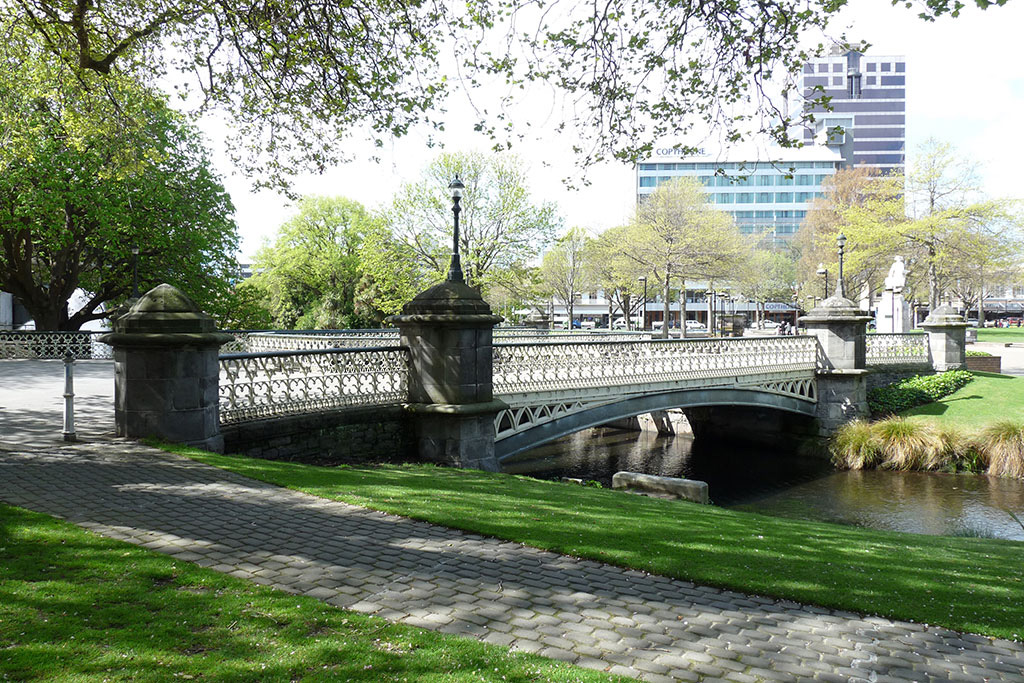
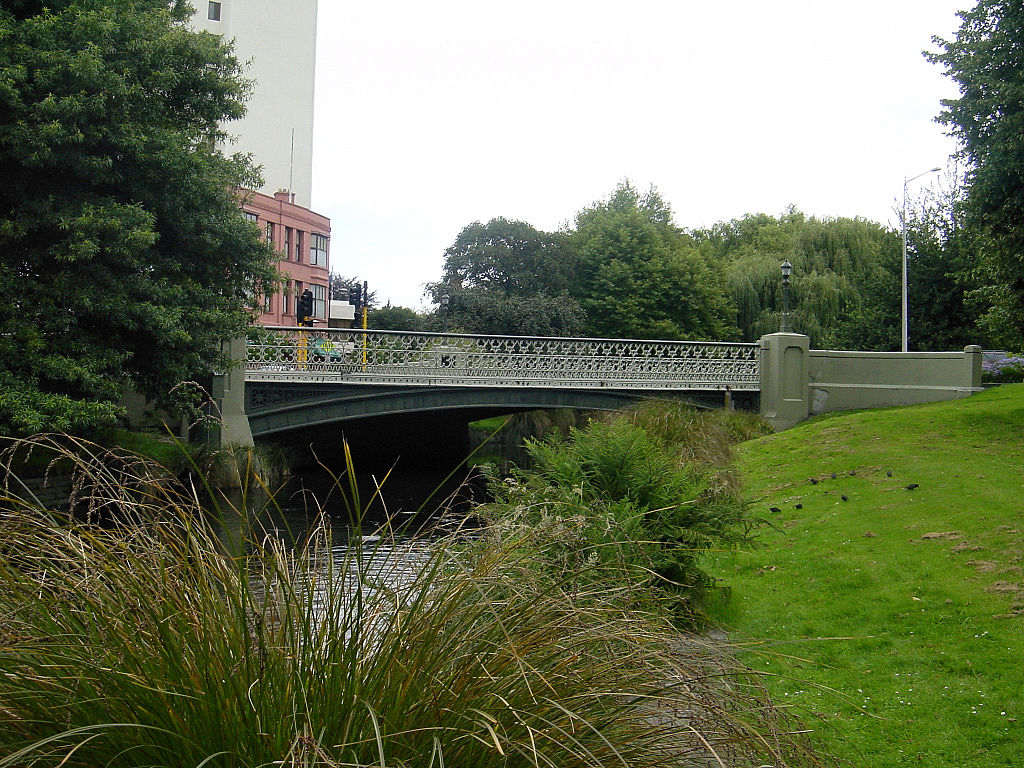
Armagh Street Bridge, Christchurch. CC BY-NC-SA 3.0 Image courtesy of ketechristchurch.peoplesnetworknz.info | Darryl Tong | 26/09/2009 | Kete Christchurch
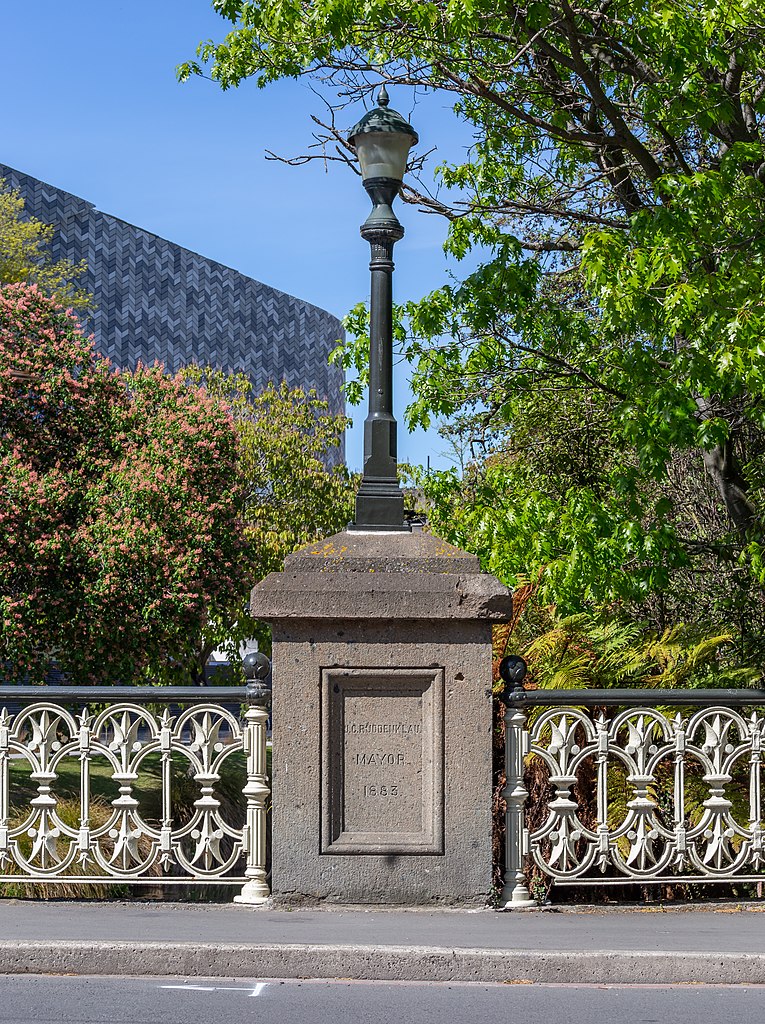
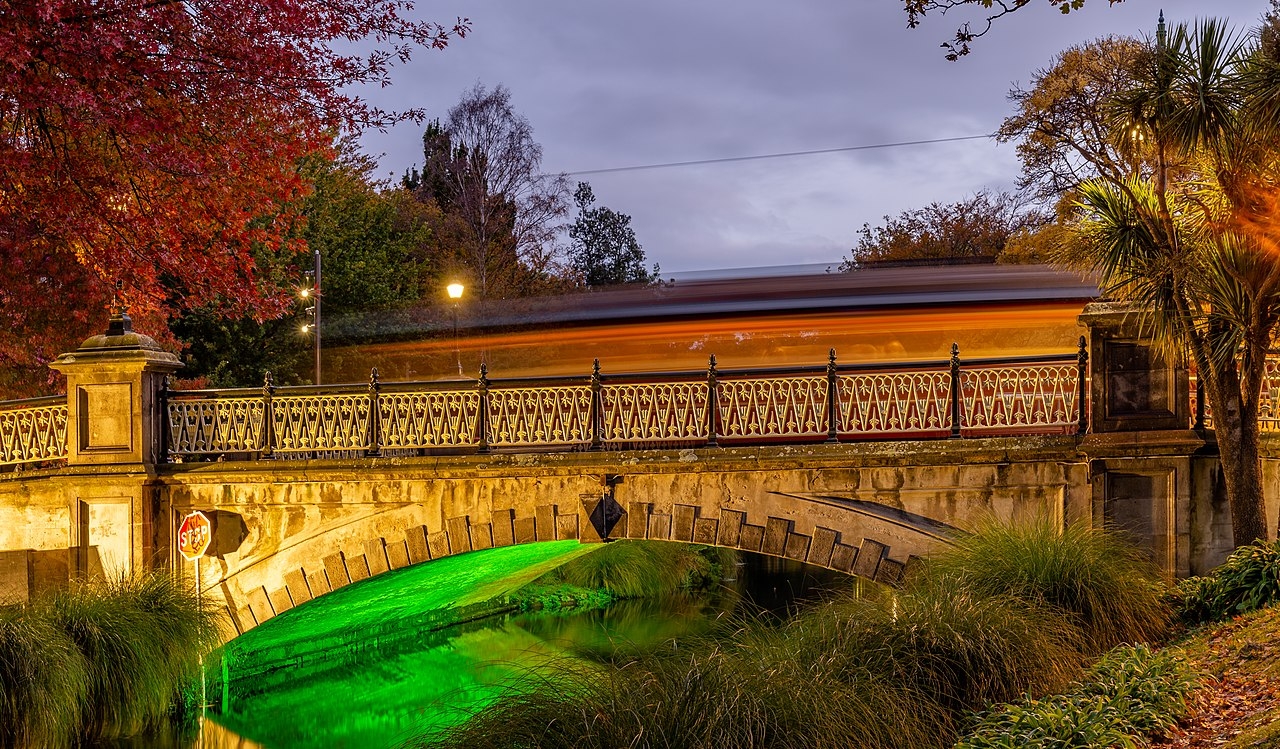
Armagh Street Bridge, Christchurch. Bridge lamp CC BY-SA 4.0 Image courtesy of commons.wikimedia.org | Michal Klajban | 18/10/2020 | Michal Klajban - Wikimedia Commons
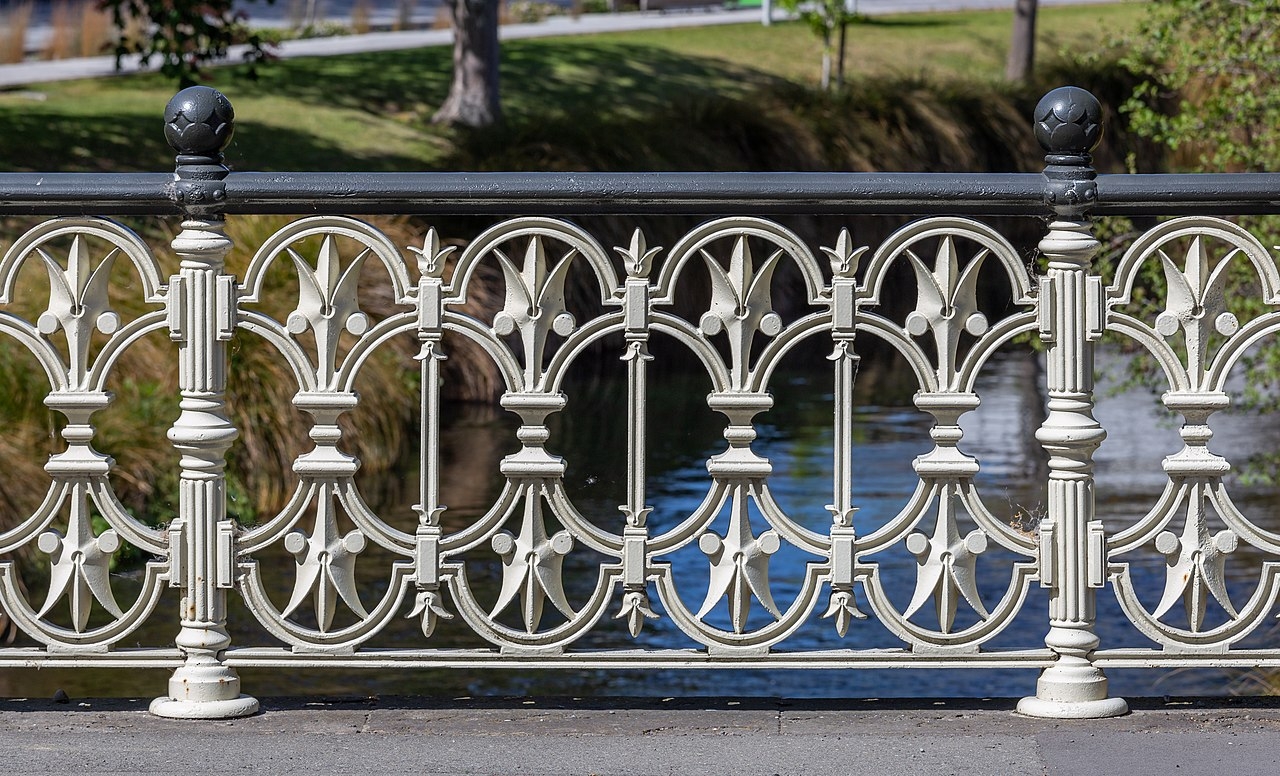
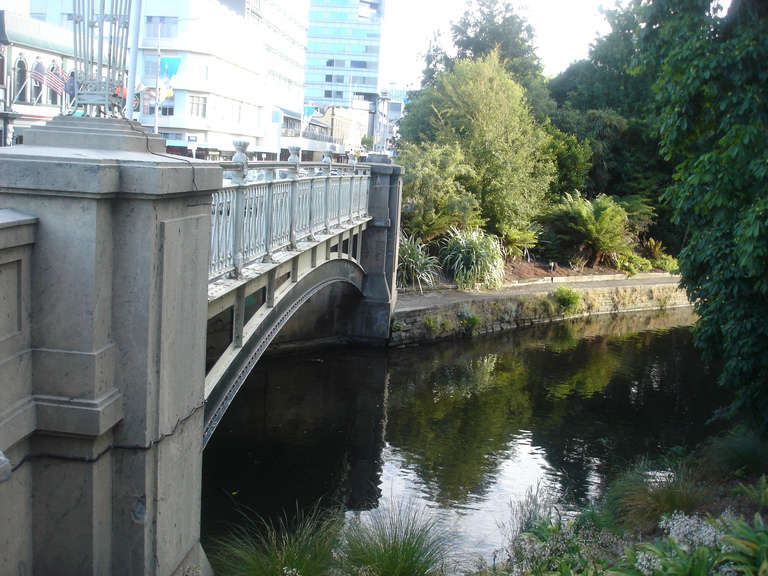
Armagh Street Bridge, Christchurch. Balustrade detail CC BY-SA 4.0 Image courtesy of commons.wikimedia.org | Michal Klajban | 18/10/2020 | Michal Klajban - Wikimedia Commons
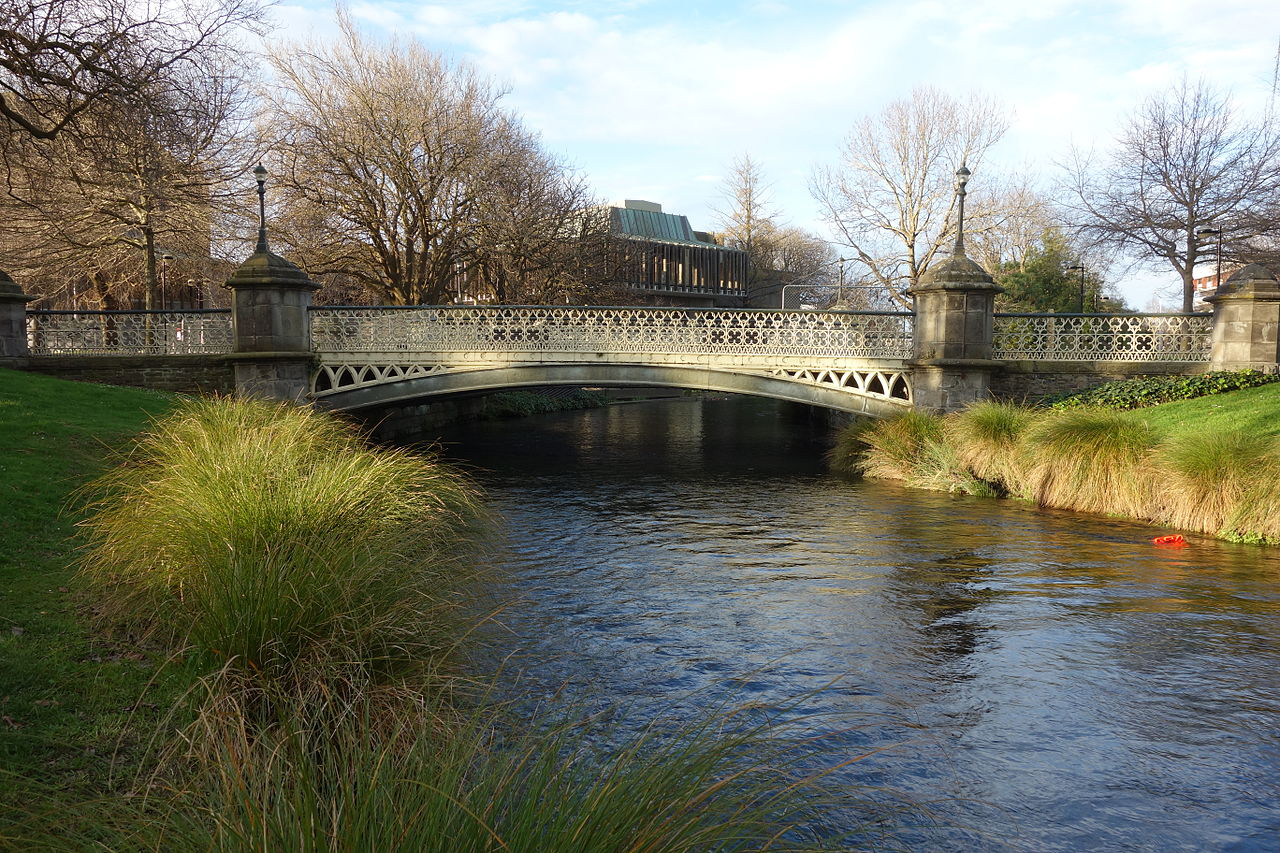
Armagh Street Bridge, Christchurch. CC BY-NC-SA 3.0 Image courtesy of ketechristchurch.peoplesnetworknz.info | Darryl Tong | 26/09/2009 | Kete Christchurch
Armagh Street Bridge, Christchurch. Bridge lamp CC BY-SA 4.0 Image courtesy of commons.wikimedia.org | Michal Klajban | 18/10/2020 | Michal Klajban - Wikimedia Commons
Armagh Street Bridge, Christchurch. Balustrade detail CC BY-SA 4.0 Image courtesy of commons.wikimedia.org | Michal Klajban | 18/10/2020 | Michal Klajban - Wikimedia Commons

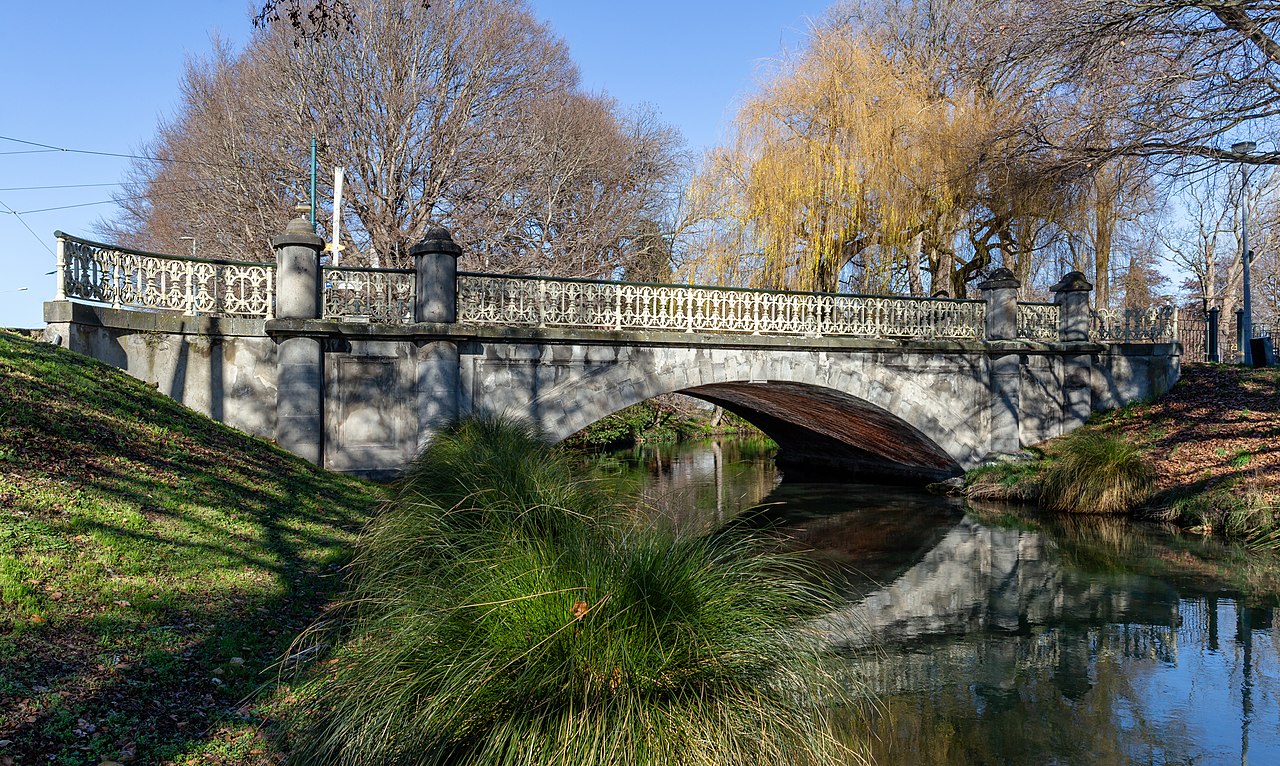
List Entry Information

Overview

Status
Listed

List Entry Status
Historic Place Category 2

Access
Able to Visit

List Number
1830

Date Entered
2nd April 2004

Date of Effect
2nd April 2004

City/District Council
Christchurch City

Region
Canterbury Region

Extent of List Entry

Registration includes the bridge and land the bridge sits on.

Legal description

There is no legal description or Certificate of Title for the Avon River and its banks.

Detailed List Entry
Significance

Historic Significance

Historical Significance or Value The construction of the bridge has historical significance as an indication of the desire of the Victorian citizens of the city to use the Avon's bridges to ornament Christchurch whilst also providing evidence of permanency and progress.

Physical Significance

The Armagh St Bridge has aesthetic significance in the graceful form of the bridge arch and the neo-gothic ornamentation of its balustrading, which add to the attractive riverside environs of the Avon as it winds through the central city. It has architectural significant for the manner in which it coheres with the pattern established for central city bridges, and with the neo-gothic idiom broadly characteristic of public architecture in Christchurch.

Detail Of Assessed Criteria

(a) reflects the economic and social importance of the establishment of an effective transport network in the fledgling city; (g) is an aesthetically pleasing but effective, practical design enhanced by fine ornamentation; (k) is an integral part of the collection of historic bridges in the central city, and a contributor to the neo-gothic tone of central Christchurch.

Construction Professional

Name

Walkden, Charles

Type

Engineer

Biography

No biography is currently available for this construction professional

Name

Greig & Hunter

Type

Builder

Biography

Responsible for the construction of John Campbell's Sunnyside Hospital Administration Building (Former).

Construction Details

Start Year

1883

Type

Original Construction

Construction Materials

Brick, Mt Somers stone, and cast iron.

Physical Description

A single-span brick arch bridge with cast iron railings and a stone façade and piers.

Reference

Completion Date

7th September 2004

Report Written By

Pam Wilson

Information Sources

Ince, 1998

John A. Ince, A City of Bridges. A History of Bridges over the Avon and Heathcote Rivers in Christchurch, Christchurch, 1998

Report Written By

A fully referenced version of this report is available from the NZHPT Southern Region Office. Please note that entry on the New Zealand Heritage List/Rarangi Korero identifies only the heritage values of the property concerned, and should not be construed as advice on the state of the property, or as a comment of its soundness or safety, including in regard to earthquake risk, safety in the event of fire, or insanitary conditions.

Further Information

Current Usages

Uses: Transport

Specific Usage: Bridge/ Viaduct

Former Usages

General Usage:: Transport

Specific Usage: Bridge/ Viaduct

Themes

Web Links

Overview

Status

Listed

List Entry Status

Historic Place Category 2

Access

Able to Visit

List Number

1830

Date Entered

2nd April 2004

Date of Effect

2nd April 2004

City/District Council

Christchurch City

Region

Canterbury Region

Extent of List Entry

Registration includes the bridge and land the bridge sits on.

Legal description

There is no legal description or Certificate of Title for the Avon River and its banks.

Status

Listed

List Entry Status

Historic Place Category 2

Access

Able to Visit

List Number

1830

Date Entered

2nd April 2004

Date of Effect

2nd April 2004

City/District Council

Christchurch City

Region

Canterbury Region

Extent of List Entry

Registration includes the bridge and land the bridge sits on.

Legal description

There is no legal description or Certificate of Title for the Avon River and its banks.

Significance

Why is this place significant?

Historic Significance

Historical Significance or Value The construction of the bridge has historical significance as an indication of the desire of the Victorian citizens of the city to use the Avon's bridges to ornament Christchurch whilst also providing evidence of permanency and progress.

Physical Significance

The Armagh St Bridge has aesthetic significance in the graceful form of the bridge arch and the neo-gothic ornamentation of its balustrading, which add to the attractive riverside environs of the Avon as it winds through the central city. It has architectural significant for the manner in which it coheres with the pattern established for central city bridges, and with the neo-gothic idiom broadly characteristic of public architecture in Christchurch.

Why is this place Category 1 / Category 2?

Detail Of Assessed Criteria

(a) reflects the economic and social importance of the establishment of an effective transport network in the fledgling city; (g) is an aesthetically pleasing but effective, practical design enhanced by fine ornamentation; (k) is an integral part of the collection of historic bridges in the central city, and a contributor to the neo-gothic tone of central Christchurch.

Why is this place significant?

Historic Significance

Historical Significance or Value The construction of the bridge has historical significance as an indication of the desire of the Victorian citizens of the city to use the Avon's bridges to ornament Christchurch whilst also providing evidence of permanency and progress.

Physical Significance

The Armagh St Bridge has aesthetic significance in the graceful form of the bridge arch and the neo-gothic ornamentation of its balustrading, which add to the attractive riverside environs of the Avon as it winds through the central city. It has architectural significant for the manner in which it coheres with the pattern established for central city bridges, and with the neo-gothic idiom broadly characteristic of public architecture in Christchurch.

Why is this place Category 1 / Category 2?

Detail Of Assessed Criteria

(a) reflects the economic and social importance of the establishment of an effective transport network in the fledgling city; (g) is an aesthetically pleasing but effective, practical design enhanced by fine ornamentation; (k) is an integral part of the collection of historic bridges in the central city, and a contributor to the neo-gothic tone of central Christchurch.

Construction Information

Construction Professional

Name

Walkden, Charles

Type

Engineer

Biography

No biography is currently available for this construction professional

Name

Greig & Hunter

Type

Builder

Biography

Responsible for the construction of John Campbell's Sunnyside Hospital Administration Building (Former).

Construction Details

Start Year

1883

Type

Original Construction

Construction Materials

Brick, Mt Somers stone, and cast iron.

Construction Professional

Name

Walkden, Charles

Type

Engineer

Biography

No biography is currently available for this construction professional

Name

Greig & Hunter

Type

Builder

Biography

Responsible for the construction of John Campbell's Sunnyside Hospital Administration Building (Former).

Construction Details

Start Year

1883

Type

Original Construction

Construction Materials

Brick, Mt Somers stone, and cast iron.

Physical Description

A single-span brick arch bridge with cast iron railings and a stone façade and piers.

A single-span brick arch bridge with cast iron railings and a stone façade and piers.

Reference

Historical and Associated Iwi / Hapū / Whānau

Completion Date

7th September 2004

Report Written By

Pam Wilson

Information Sources

Ince, 1998

John A. Ince, A City of Bridges. A History of Bridges over the Avon and Heathcote Rivers in Christchurch, Christchurch, 1998

Other Information

A fully referenced version of this report is available from the NZHPT Southern Region Office. Please note that entry on the New Zealand Heritage List/Rarangi Korero identifies only the heritage values of the property concerned, and should not be construed as advice on the state of the property, or as a comment of its soundness or safety, including in regard to earthquake risk, safety in the event of fire, or insanitary conditions.

Historical and Associated Iwi / Hapū / Whānau

Completion Date

7th September 2004

Report Written By

Pam Wilson

Information Sources

Ince, 1998

John A. Ince, A City of Bridges. A History of Bridges over the Avon and Heathcote Rivers in Christchurch, Christchurch, 1998

Other Information

A fully referenced version of this report is available from the NZHPT Southern Region Office. Please note that entry on the New Zealand Heritage List/Rarangi Korero identifies only the heritage values of the property concerned, and should not be construed as advice on the state of the property, or as a comment of its soundness or safety, including in regard to earthquake risk, safety in the event of fire, or insanitary conditions.

Further Information

Current Usages

Uses: Transport

Specific Usage: Bridge/ Viaduct

Former Usages

General Usage: Transport

Specific Usage: Bridge/ Viaduct

Current Usages

Uses: Transport

Specific Usage: Bridge/ Viaduct

Former Usages

General Usage: Transport

Specific Usage: Bridge/ Viaduct

Location

Loading
Related listings
Victoria Street Bridge (aka Hamish Hay Bridge), Christchurch. CC BY-SA 3.0 Image courtesy of commons.wikimedia.org
Victoria Street Bridge
Park Bridge, Christchurch. CC BY-SA 4.0 Image courtesy of commons.wikimedia.org
Park Bridge
Gloucester Street Bridge, Christchurch. CC BY-SA 2.0 Image courtesy of commons.wikimedia.org
Gloucester Street Bridge
Worcester Street Bridge, Christchurch. CC BY-SA 4.0 Image courtesy of commons.wikimedia.org
Worcester Street Bridge
Colombo Street Bridge, Christchurch. CC BY-NC-SA 3.0 Image courtesy of ketechristchurch.peoplesnetworknz.info
Colombo Street Bridge
Gloucester Street Bridge, Christchurch. CC BY-SA 2.0 Image courtesy of commons.wikimedia.org
Gloucester Street Bridge
Victoria Street Bridge (aka Hamish Hay Bridge), Christchurch. CC BY-SA 3.0 Image courtesy of commons.wikimedia.org
Victoria Street Bridge
Worcester Street Bridge, Christchurch. CC BY-SA 4.0 Image courtesy of commons.wikimedia.org
Worcester Street Bridge
Park Bridge, Christchurch. CC BY-SA 4.0 Image courtesy of commons.wikimedia.org
Park Bridge
Colombo Street Bridge, Christchurch. CC BY-NC-SA 3.0 Image courtesy of ketechristchurch.peoplesnetworknz.info
Colombo Street Bridge
Stay up to date with Heritage this month