DonateMembershipVisit Heritage
  • Tūrangawaewae
    Places
  • Tira Māori
    Māori Heritage
  • Poutairangahia
    Archaeology
  • Rauemi
    Resources
  • Mō Tātou
    About Us
  • New Zealand Heritage List
  • Nominate and submit
  • Explore the List
  • National Historic Landmarks
  • Plaques
  • Rainbow List Project
  • Lost heritage
  • Visit Heritage
  • Our properties
  • Turnbull House Project
  • Collections
  • Shop
  • Tohu Whenua
  • Tira Māori
  • Conserving Māori heritage
  • Marae built heritage
  • Māori heritage on the List
  • Hinemihi—Te Hokinga Mai
  • What is archaeology?
  • Is there a site on my property?
  • What are my legal requirements?
  • Affecting an archaeological site
  • Declaring an archaeological site
  • Archaeology FAQs
  • Archaeology Digital Library
  • Archaeology guidelines and templates
  • Resources
  • Funding
  • Publications
  • Sustainable management guides
  • Disaster recovery
  • Podcasts & digital resources
  • Education Hub
  • Conservation plans
  • About
  • Board
  • Māori Heritage Council
  • Senior Staff
  • Offices
  • Contact us
  • Careers
  • Covenants
  • Fast-track
  • Corporate documents
  • Currently consulting on
  • Our submissions
  • News
  • Covid-19 response
Quick links
Rārangi Kōrero | The List
Explore the List
National Historic Landmarks
Ngā Manawhenua o Aotearoa me ōna Kōrero Tūturu
Quick links
Tapuwae
A Vision for Places of Māori Heritage
Funding for Māori Heritage
Resources
Quick links
Archaeological Authority Portal
Applying for an archaeological authority
Archaeology FAQs
Browse the most frequently asked questions about archaeological authorities and the archaeological process.
Quick links
Quick links
News
News Keep up to date with Heritage New Zealand Pouhere Taonga
Membership
Membership Find out more and sign up today
DonateMembershipVisit Heritage
  • Tūrangawaewae
    Places
  • Tira Māori
    Māori Heritage
  • Poutairangahia
    Archaeology
  • Rauemi
    Resources
  • Mō Tātou
    About Us
  • New Zealand Heritage List
  • Nominate and submit
  • Explore the List
  • National Historic Landmarks
  • Plaques
  • Rainbow List Project
  • Lost heritage
  • Visit Heritage
  • Our properties
  • Turnbull House Project
  • Collections
  • Shop
  • Tohu Whenua
  • Tira Māori
  • Conserving Māori heritage
  • Marae built heritage
  • Māori heritage on the List
  • Hinemihi—Te Hokinga Mai
  • What is archaeology?
  • Is there a site on my property?
  • What are my legal requirements?
  • Affecting an archaeological site
  • Declaring an archaeological site
  • Archaeology FAQs
  • Archaeology Digital Library
  • Archaeology guidelines and templates
  • Resources
  • Funding
  • Publications
  • Sustainable management guides
  • Disaster recovery
  • Podcasts & digital resources
  • Education Hub
  • Conservation plans
  • About
  • Board
  • Māori Heritage Council
  • Senior Staff
  • Offices
  • Contact us
  • Careers
  • Covenants
  • Fast-track
  • Corporate documents
  • Currently consulting on
  • Our submissions
  • News
  • Covid-19 response
Quick links
Rārangi Kōrero | The List
Explore the List
National Historic Landmarks
Ngā Manawhenua o Aotearoa me ōna Kōrero Tūturu
Quick links
Tapuwae
A Vision for Places of Māori Heritage
Funding for Māori Heritage
Resources
Quick links
Archaeological Authority Portal
Applying for an archaeological authority
Archaeology FAQs
Browse the most frequently asked questions about archaeological authorities and the archaeological process.
Quick links
Quick links
News
News Keep up to date with Heritage New Zealand Pouhere Taonga
Membership
Membership Find out more and sign up today
  • Places
  • Nominate and submit
  • National Historic Landmarks
  • Places
  • Nominate and submit
  • National Historic Landmarks
  • Tira Māori
  • Conserving Māori heritage
  • Marae built heritage
  • Tira Māori
  • Conserving Māori heritage
  • Marae built heritage
  • Archaeological authorities
  • Archaeology Digital Library
  • Archaeological authorities
  • Archaeology Digital Library
  • All resources
  • Publications
  • Funding
  • All resources
  • Publications
  • Funding
  • FAQs
  • FAQs
Follow us on:
Places
  • Places
  • Nominate and submit
  • National Historic Landmarks
Tira Māori
  • Tira Māori
  • Conserving Māori heritage
  • Marae built heritage
Archaeology
  • Archaeological authorities
  • Archaeology Digital Library
Resources
  • All resources
  • Publications
  • Funding
FAQs
  • FAQs
Follow us on
HomePrivacyTerms and conditionsAbout this site
© Heritage New Zealand Pouhere Taonga 2026.
 
Massey Memorial

130 Massey Road, Point Halswell, Maupuia, WELLINGTON

Public

Historic Place Category 1

List No. 222

Quick links:
List GalleryLocationDetails
From its prominent position overlooking Wellington Harbour, the Massey Memorial has, since 1930, served as a unique reminder of Prime Minister William Ferguson Massey (1856-1925).

The memorial is located on Point Halswell, a site long associated with defence. Point Halswell, initially known as Rukutoa, was originally occupied by a Maori pa named 'Kai-tawharo'. The land was taken by the Crown in 1841 for 'public purposes' and renamed after Judge Edmond Halswell who had arrived in New Zealand that same year. From 1885 the site was used for the Halswell Battery and barracks, one of a number of coastal defence forts built to protect Wellington after the Crimean War from the threat of a Russian sea borne invasion. The battery was built and maintained by prison labour. In 1913 the site was leased by the Justice Department for use as a women's prison. The fort remained armed until the First World War when it was converted into a magazine.

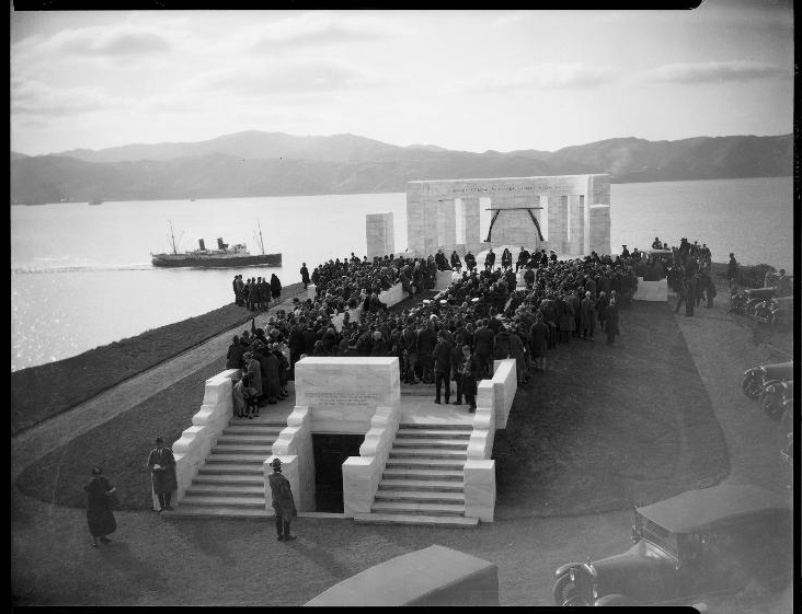
Massey was New Zealand's Prime Minister throughout the First World War, and the only leader in the commonwealth who retained his position after the war. On Massey's death in 1925 Parliament passed the Massey Burial-ground Act, which allocated 0.8 hectares (two acres) of land for use as a burial ground for Massey and his widow, Christina Massey. The fort, which had remained unused for over eleven years, was converted into a crypt. The original gun-pit was lined with marble to serve as a vault for Massey and his wife. A temporary marble obelisk was erected over the gun-pit roof to mark the grave above ground until the present memorial was completed in 1930.

The Massey Memorial, visible from many parts of the city, is an outstanding feature of Wellington Harbour. The grand, classically influenced, marble structure was designed by Samuel Hurst Seager in conjunction with Auckland architects Gummer and Ford. It cost over £15,000, much of which was contributed by public donations. Seager was well known as a designer of memorials and was responsible for the design of the famous Chunuk Bair War Memorial. Following the completion of the Massey Memorial, Gummer and Ford were commissioned to complete numerous war memorials around New Zealand, including the National War Memorial in Wellington.

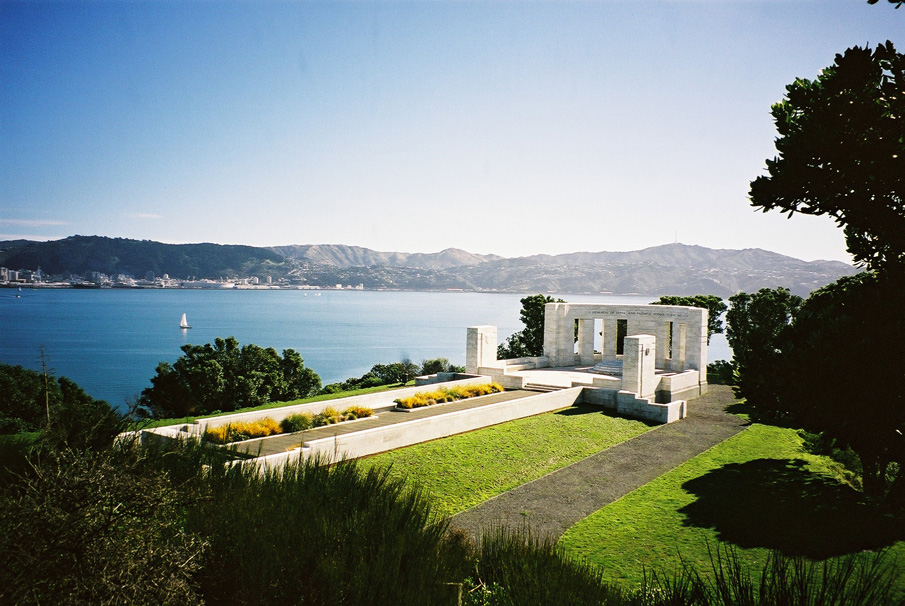
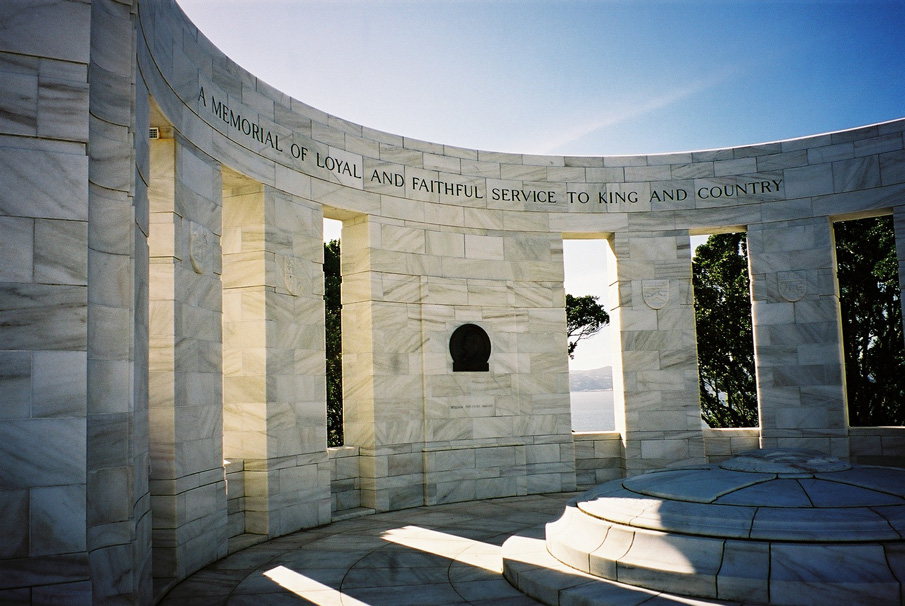
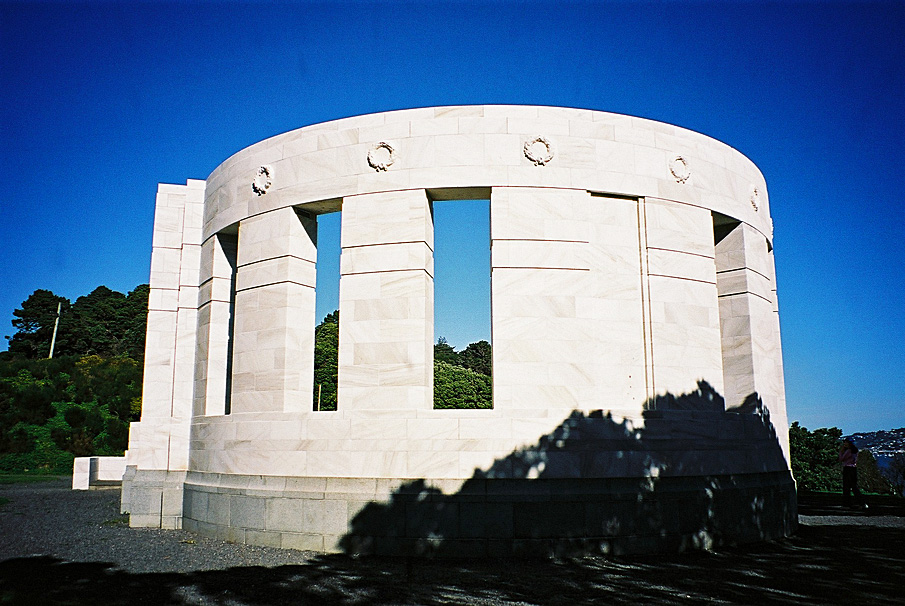
The main feature of the Massey Memorial is seven columns arranged in a semi-circle, topped by a curved marble block. A long paved marble walk leads back to the entrance of the crypt where an inscription lists the names of Massey and his wife. The memorial was originally to have been made entirely of Italian marble but, following protests from nationalistic members of Parliament, the architects settled on a base of Coromandel granite with the remaining structure composed of Kairuru marble from the Takaka quarry. Built by the firm of Hansford and Mills, the memorial traces the design of the original fort. The paved walkway marks the location of the underground magazine area that is now used as a passageway to reach the vault. The dome in the centre of the curved end marks the position of the 8 inch disappearing gun pit. The lower level of the fort, once used for shell and cartridge storage, remain intact under the memorial. During the Second World War the site was re-commissioned for defence purposes and the remains of an observation post can be seen on the terraces behind the Memorial.

The Massey Memorial has national significance as a memorial to William Ferguson Massey, a Prime Minister remembered for his staunch imperialism and governance of New Zealand throughout the First World War. It has great historical significance and potential educational value through its association with part of an early coastal defence system for Wellington Harbour. It is also an illustration of the pre-occupation with the virtues of the empire and the fashion for building elaborate and prominent memorials that characterised the early part of the twenty-first century. As a prominent Wellington landmark and an excellent example of the work of Samuel Hurst Seager, the Memorial also has great architectural significance. It demonstrates the careful siting and austere simplicity that characterised his work as New Zealand's official architect of war memorials. As an unusual conversion a former battery into a crypt, the Memorial has both rarity and technological value. Immaculately maintained, the highly visible landmark is an integral part of New Zealand's national defence and governance history.
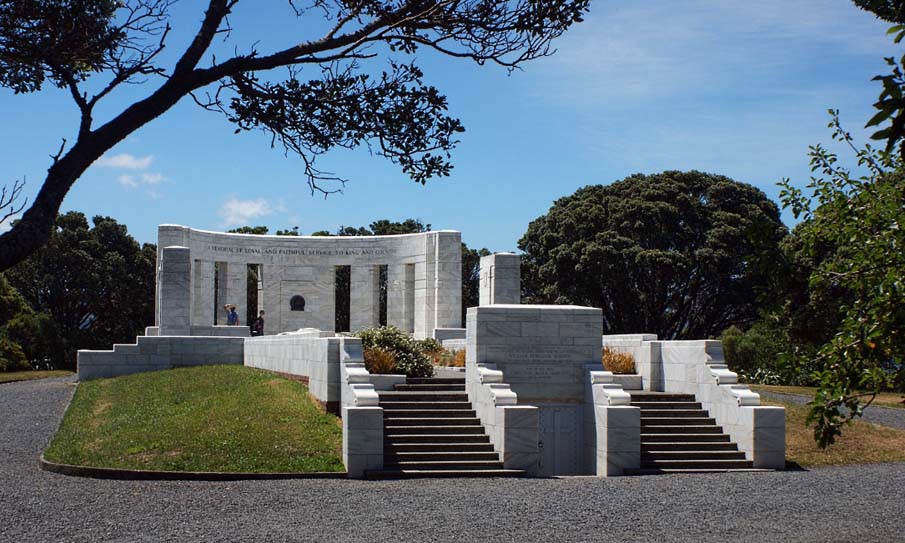
Massey Memorial, Point Halswell, Wellington. Image courtesy of www.flickr.com | PhilBee NZ - Phil Braithwaite | 09/12/2012 | Phil Braithwaite
Massey Memorial, Point Halswell, Wellington | A Renton-Green | 12/04/2025 | Heritage New Zealand Pouhere Taonga
Massey Memorial, Point Halswell, Wellington | R O'Brien | 20/09/2002 | Heritage New Zealand Pouhere Taonga
Massey Memorial, Point Halswell, Wellington | A Renton-Green | 12/04/2025 | Heritage New Zealand Pouhere Taonga
Massey Memorial. Unveiling of the Massey memorial, Point Halswell, Wellington, 19 Sep 1930. Reference Number: 1/1-000711-F. Unveiling of the Massey memorial, Point Halswell, Miramar Peninsula, Wellington, 19 September, 1930. Photographer unidentified. Permission of the Alexander Turnbull Library must be obtained before reuse of this image | Alexander Turnbull Library
Massey Memorial, Point Halswell, Wellington. Image courtesy of www.flickr.com | PhilBee NZ - Phil Braithwaite | 09/12/2012 | Phil Braithwaite
Massey Memorial, Point Halswell, Wellington | A Renton-Green | 12/04/2025 | Heritage New Zealand Pouhere Taonga
Massey Memorial, Point Halswell, Wellington | R O'Brien | 20/09/2002 | Heritage New Zealand Pouhere Taonga
Massey Memorial, Point Halswell, Wellington | A Renton-Green | 12/04/2025 | Heritage New Zealand Pouhere Taonga
Massey Memorial. Unveiling of the Massey memorial, Point Halswell, Wellington, 19 Sep 1930. Reference Number: 1/1-000711-F. Unveiling of the Massey memorial, Point Halswell, Miramar Peninsula, Wellington, 19 September, 1930. Photographer unidentified. Permission of the Alexander Turnbull Library must be obtained before reuse of this image | Alexander Turnbull Library

List Entry Information

Overview

Status
Listed

List Entry Status
Historic Place Category 1

Access
Able to Visit

List Number
222

Date Entered
22nd November 1984

Date of Effect
22nd November 1984

City/District Council
Wellington City

Region
Wellington Region

Extent of List Entry

Extent includes the land described as Pt Military Res Watts Peninsula Dist and Pt Sec 1 Watts Peninsula (Massey Burial Ground Act 1925; NZ Gazette 1841, p.86), Wellington Land District, and the structure known as Massey Memorial thereon. Refer to the map tabled at the Rārangi Kōrero Committee meeting on 31 July 2025.

Legal description

Pt Military Res Watts Peninsula Dist and Pt Sec 1 Watts Peninsula (Massey Burial Ground Act 1925; NZ Gazette 1841 p.86), Wellington Land District

Location Description

The Massey Memorial is located on Point Halswell, which is accessed via Massey Road, Wellington.

Detailed List Entry
Significance

Cultural Significance

The Massey Memorial has cultural significance as a testimony to public and governmental respect for their Prime Minister, William Massey, and as an example of the importance placed on New Zealand's link to the King and British Empire during the early twentieth century. Also significant is the fashion for the erection of elaborate memorials erected in New Zealand and around the world after the First World War to esteemed dead which influenced both the creation and design of the Massey Memorial.

Historic Significance

Historical Significance or Value The Massey Memorial has national significance as a memorial to William Ferguson Massey, a Prime Minister remembered for his staunch imperialism and governance of New Zealand throughout the First World War. It has great historical significance through its association with part of an early coastal defence system for Wellington Harbour.

Physical Significance

As a prominent Wellington landmark and an excellent example of the work of Samuel Hurst Seager, the Memorial also has great architectural significance. It demonstrates the careful siting and austere simplicity that characterised his work as New Zealand's official architect of battle memorials. As an unusual conversion of a former battery into a crypt, the Memorial has both rarity and technological value.

Detail Of Assessed Criteria

(a) The extent to which the place reflects important or representative aspects of NZ history The Memorial reflects the fashion for erecting elaborate permanent and highly visible monuments to New Zealand's honoured dead that was prevalent following the First World War. The Memorial reflects the strong links that were felt by many New Zealanders, including Massey, with the British Empire and the King during the early twentieth century. (b) Association of the place with events, persons, or ideas of importance in New Zealand history A number of prominent New Zealanders are associated with the Massey Memorial. The Memorial was built in honour of William Ferguson Massey, Prime Minister of New Zealand from 1912 to 1925. Also buried on the site is his wife, Christina Massey, who was appointed a CBE in 1918 in recognition of her services to the empire. Architects well known for their skill in designing monuments and memorials, Samuel Hurst Seager and Gummer & Ford, were responsible for the memorial's design. (c) The potential of the place to provide knowledge of New Zealand history The Memorial is an important physical reminder of the Prime Minister William Massey and demonstrates the strong link to the King and Empire that was felt by many New Zealanders during the early twentieth century. The Memorial reminds New Zealanders that Massey continued to feel this link after the war, when many were weighing up the cost of loyalty in terms of their war dead. The location of the site, the remnants of fortifications, and the manner in which the memorial mirrors the battery below provide valuable insight into New Zealand defence history. (e) The community association with, or public esteem for, the place The Memorial, partially paid for by donations from the public, continues to hold a significant place in the public esteem. Long recognised as a site of great historic and heritage significance, the Memorial is listed on the Wellington City Council District Plan. (f) The potential of the place for public education Visited by a large number of people each year, the Memorial is a prominent landmark. The strong links to New Zealand's governmental, wartime and defence history make the site an interesting and valuable educational resource. (g) The technical accomplishment or value, or design of the place The Memorial has rarity and interest value through the incorporation of a nineteenth century battery into its design. The fort has been successfully converted to its new purpose without damaging the original materials or compromising the grandeur of the final monument. (h) The symbolic or commemorative value of the place The Memorial has high symbolic and commemorative value as a monument built in honour of one of New Zealand's longest serving Prime Ministers. (i) The importance of identifying historic places known to date from early periods of New Zealand settlement. The Memorial structure covering the crypt was not completed until 1930. The fort over which it was built was constructed in 1886, and is an important link in understanding early concepts behind the defence of the Wellington coast. (j) The importance of identifying rare types of historic places The Memorial is the only known example in which a fort has been converted into a crypt. (k) The extent to which the place forms part of a wider historical and cultural complex or historical and cultural landscape The Memorial is an integral part of a wider historical landscape of New Zealand defence both as a monument to the Prime Minister responsible for governing New Zealand throughout the first World War, and through the continuing links of the site to Wellington's coastal defence network from the late 1880s through to the close of the Second World War. Designed by architects responsible for a number of memorials in New Zealand and around the world, the Memorial can be considered part of the trend prevalent in the western world after the First World War for erecting permanent stone monuments to esteemed dead.

Construction Professional

Name

Gummer & Ford

Type

Architectural Partnership

Biography

The architectural partnership of Gummer and Ford was established in 1923, and became one of national importance. William Henry Gummer (1884-1966) was articled to W.A. Holman, an Auckland architect, and was elected as an Associate of the Royal Institute of British Architects in 1910. In the period 1908-1913 he travelled in the United Kingdom, Europe and the United States. During this time he worked for Sir Edwin Lutyens, leading English architect of the time, and for Daniel Burnham in Chicago. Burnham was a major American architect and one of the founders of the influential Chicago School of Architecture. Gummer joined the firm of Hoggard and Prouse of Auckland and Wellington in 1913. In 1914 he was elected a Fellow of the New Zealand Institute of Architects, was president of the Institute from 1933-34 and was later elected a life member. Charles Reginald Ford (1880- 1972) was born in England and served in the Royal Navy. He was later with Captain Scott's 1901-1904 expedition to Antarctica. He trained as an architect working in Wanganui as an engineer. In 1926 he wrote the first treatise on earthquake and building construction in the English language. Ford was president of the New Zealand Institute of Architects from 1921-22. Buildings designed by the partnership include the State Insurance Building Wellington, (1940) the Dilworth Building (1926), the Guardian Trust Building and the Domain Wintergardens (1921 and 1928), all in Auckland, and the Dominion Museum (1936) in Wellington. Gummer and Ford were awarded Gold Medals from the New Zealand Institute of Architects for the designs of Auckland Railway Station and Remuera Library. Gummer was one of the most outstanding architects working in New Zealand in the first half of this century and was responsible for the stylistically and structurally advanced Tauroa (1916), Craggy Range (1919), Arden (1926), and Te Mata (1935) homesteads at Havelock North.

Name

Seager, Samuel Hurst

Type

Architect

Biography

Seager (1855-1933) studied at Canterbury College between 1880-82. He trained in Christchurch in the offices of Benjamin Woolfield Mountfort (1825-1898) and Alfred William Simpson before completing his qualifications in London in 1884. In 1885, shortly after his return to Christchurch, he won a competition for the design of the new Municipal Chambers, and this launched his career. Seager achieved renown for his domestic architecture. He was one of the earliest New Zealand architects to move away from historical styles and seek design with a New Zealand character. The Sign of the Kiwi, Christchurch (1917) illustrates this aspect of his work. He is also known for his larger Arts and Crafts style houses such as Daresbury, Christchurch (1899). Between 1893 and 1903 Seager taught architecture and design at the Canterbury University College School of Art. He was a pioneer in town planning, having a particular interest in the "garden city" concept. Some of these ideas were expressed in a group of houses designed as a unified and landscaped precinct on Sumner Spur (1902-14). He became an authority on the lighting of art galleries. After World War I he was appointed by the Imperial War Graves Commission to design war memorials in Gallipoli, Belgium and France. In New Zealand he designed the Massey Memorial, Point Halswell, Wellington (1925).

Name

Hansford and Mills Construction

Type

Builder

Biography

No biography is currently available for this construction professional

Construction Details

Start Year

1885

Type

Other

Description

Halswell Battery and Barracks operational

Start Year

1925

Type

Other

Description

Gun pit converted into a crypt

Start Year

1925

Type

Other

Description

Temporary pyramidal marker erected

Start Year

1930

Type

Original Construction

Start Year

1942

Type

Modification

Description

Barracks demolished

Start Year

1941

Finish Year

1945

Type

Other

Description

Fort recommissioned for military use

Construction Materials

The Memorial is constructed of marble on a granite base with stone paving throughout.

Notable Features

The registration covers the marble memorial above ground and the vault located in the former gun-pit. The structure is associated with buried archaeolgical features from the nineteenth century defence fort and partially covered foundations and terraces from use of the site in the Second World War.

Reference

Completion Date

5th October 2002

Report Written By

Rebecca O'Brien

Information Sources

Cooke, 2000

P. Cooke, Defending New Zealand; Ramparts on the Sea 1840-1950s, Wellington, 2000

Gardner, 1969

W. Gardner, William Massey, Wellington, 1969

Ward, 1928

L. Ward, Early Wellington, Wellington, 1928

New Zealand Statute

New Zealand Statute

Report Written By

This place was identified as significant under previous legislation with different information requirements. It remains significant under the current legislation. There is opportunity under our legislation and policies to add to this information. Further information about this place may be available from the Central Regional Office of Heritage New Zealand Pouhere Taonga. A fully referenced version of this report is available from the NZHPT Central Region Office Please note that entry on the New Zealand Heritage List/Rarangi Korero identifies only the heritage values of the property concerned, and should not be construed as advice on the state of the property, or as a comment of its soundness or safety, including in regard to earthquake risk, safety in the event of fire, or insanitary conditions.

Further Information

Current Usages

Uses: Commemoration

Specific Usage: Memorial - Particular person or group

Uses: Funerary Sites

Specific Usage: Mausoleum/Tomb/Vault/Ossario

Former Usages

General Usage:: Commemoration

Specific Usage: Memorial - Particular person or group

General Usage:: Funerary Sites

Specific Usage: Mausoleum/Tomb/Vault/Ossario

General Usage:: Law Enforcement

Specific Usage: Gaol/Lock-up

Themes

Web Links

Overview

Status

Listed

List Entry Status

Historic Place Category 1

Access

Able to Visit

List Number

222

Date Entered

22nd November 1984

Date of Effect

22nd November 1984

City/District Council

Wellington City

Region

Wellington Region

Extent of List Entry

Extent includes the land described as Pt Military Res Watts Peninsula Dist and Pt Sec 1 Watts Peninsula (Massey Burial Ground Act 1925; NZ Gazette 1841, p.86), Wellington Land District, and the structure known as Massey Memorial thereon. Refer to the map tabled at the Rārangi Kōrero Committee meeting on 31 July 2025.

Legal description

Pt Military Res Watts Peninsula Dist and Pt Sec 1 Watts Peninsula (Massey Burial Ground Act 1925; NZ Gazette 1841 p.86), Wellington Land District

Location Description

The Massey Memorial is located on Point Halswell, which is accessed via Massey Road, Wellington.

Status

Listed

List Entry Status

Historic Place Category 1

Access

Able to Visit

List Number

222

Date Entered

22nd November 1984

Date of Effect

22nd November 1984

City/District Council

Wellington City

Region

Wellington Region

Extent of List Entry

Extent includes the land described as Pt Military Res Watts Peninsula Dist and Pt Sec 1 Watts Peninsula (Massey Burial Ground Act 1925; NZ Gazette 1841, p.86), Wellington Land District, and the structure known as Massey Memorial thereon. Refer to the map tabled at the Rārangi Kōrero Committee meeting on 31 July 2025.

Legal description

Pt Military Res Watts Peninsula Dist and Pt Sec 1 Watts Peninsula (Massey Burial Ground Act 1925; NZ Gazette 1841 p.86), Wellington Land District

Location Description

The Massey Memorial is located on Point Halswell, which is accessed via Massey Road, Wellington.

Significance

Why is this place significant?

Cultural Significance

The Massey Memorial has cultural significance as a testimony to public and governmental respect for their Prime Minister, William Massey, and as an example of the importance placed on New Zealand's link to the King and British Empire during the early twentieth century. Also significant is the fashion for the erection of elaborate memorials erected in New Zealand and around the world after the First World War to esteemed dead which influenced both the creation and design of the Massey Memorial.

Historic Significance

Historical Significance or Value The Massey Memorial has national significance as a memorial to William Ferguson Massey, a Prime Minister remembered for his staunch imperialism and governance of New Zealand throughout the First World War. It has great historical significance through its association with part of an early coastal defence system for Wellington Harbour.

Physical Significance

As a prominent Wellington landmark and an excellent example of the work of Samuel Hurst Seager, the Memorial also has great architectural significance. It demonstrates the careful siting and austere simplicity that characterised his work as New Zealand's official architect of battle memorials. As an unusual conversion of a former battery into a crypt, the Memorial has both rarity and technological value.

Why is this place Category 1 / Category 2?

Detail Of Assessed Criteria

(a) The extent to which the place reflects important or representative aspects of NZ history The Memorial reflects the fashion for erecting elaborate permanent and highly visible monuments to New Zealand's honoured dead that was prevalent following the First World War. The Memorial reflects the strong links that were felt by many New Zealanders, including Massey, with the British Empire and the King during the early twentieth century. (b) Association of the place with events, persons, or ideas of importance in New Zealand history A number of prominent New Zealanders are associated with the Massey Memorial. The Memorial was built in honour of William Ferguson Massey, Prime Minister of New Zealand from 1912 to 1925. Also buried on the site is his wife, Christina Massey, who was appointed a CBE in 1918 in recognition of her services to the empire. Architects well known for their skill in designing monuments and memorials, Samuel Hurst Seager and Gummer & Ford, were responsible for the memorial's design. (c) The potential of the place to provide knowledge of New Zealand history The Memorial is an important physical reminder of the Prime Minister William Massey and demonstrates the strong link to the King and Empire that was felt by many New Zealanders during the early twentieth century. The Memorial reminds New Zealanders that Massey continued to feel this link after the war, when many were weighing up the cost of loyalty in terms of their war dead. The location of the site, the remnants of fortifications, and the manner in which the memorial mirrors the battery below provide valuable insight into New Zealand defence history. (e) The community association with, or public esteem for, the place The Memorial, partially paid for by donations from the public, continues to hold a significant place in the public esteem. Long recognised as a site of great historic and heritage significance, the Memorial is listed on the Wellington City Council District Plan. (f) The potential of the place for public education Visited by a large number of people each year, the Memorial is a prominent landmark. The strong links to New Zealand's governmental, wartime and defence history make the site an interesting and valuable educational resource. (g) The technical accomplishment or value, or design of the place The Memorial has rarity and interest value through the incorporation of a nineteenth century battery into its design. The fort has been successfully converted to its new purpose without damaging the original materials or compromising the grandeur of the final monument. (h) The symbolic or commemorative value of the place The Memorial has high symbolic and commemorative value as a monument built in honour of one of New Zealand's longest serving Prime Ministers. (i) The importance of identifying historic places known to date from early periods of New Zealand settlement. The Memorial structure covering the crypt was not completed until 1930. The fort over which it was built was constructed in 1886, and is an important link in understanding early concepts behind the defence of the Wellington coast. (j) The importance of identifying rare types of historic places The Memorial is the only known example in which a fort has been converted into a crypt. (k) The extent to which the place forms part of a wider historical and cultural complex or historical and cultural landscape The Memorial is an integral part of a wider historical landscape of New Zealand defence both as a monument to the Prime Minister responsible for governing New Zealand throughout the first World War, and through the continuing links of the site to Wellington's coastal defence network from the late 1880s through to the close of the Second World War. Designed by architects responsible for a number of memorials in New Zealand and around the world, the Memorial can be considered part of the trend prevalent in the western world after the First World War for erecting permanent stone monuments to esteemed dead.

Why is this place significant?

Cultural Significance

The Massey Memorial has cultural significance as a testimony to public and governmental respect for their Prime Minister, William Massey, and as an example of the importance placed on New Zealand's link to the King and British Empire during the early twentieth century. Also significant is the fashion for the erection of elaborate memorials erected in New Zealand and around the world after the First World War to esteemed dead which influenced both the creation and design of the Massey Memorial.

Historic Significance

Historical Significance or Value The Massey Memorial has national significance as a memorial to William Ferguson Massey, a Prime Minister remembered for his staunch imperialism and governance of New Zealand throughout the First World War. It has great historical significance through its association with part of an early coastal defence system for Wellington Harbour.

Physical Significance

As a prominent Wellington landmark and an excellent example of the work of Samuel Hurst Seager, the Memorial also has great architectural significance. It demonstrates the careful siting and austere simplicity that characterised his work as New Zealand's official architect of battle memorials. As an unusual conversion of a former battery into a crypt, the Memorial has both rarity and technological value.

Why is this place Category 1 / Category 2?

Detail Of Assessed Criteria

(a) The extent to which the place reflects important or representative aspects of NZ history The Memorial reflects the fashion for erecting elaborate permanent and highly visible monuments to New Zealand's honoured dead that was prevalent following the First World War. The Memorial reflects the strong links that were felt by many New Zealanders, including Massey, with the British Empire and the King during the early twentieth century. (b) Association of the place with events, persons, or ideas of importance in New Zealand history A number of prominent New Zealanders are associated with the Massey Memorial. The Memorial was built in honour of William Ferguson Massey, Prime Minister of New Zealand from 1912 to 1925. Also buried on the site is his wife, Christina Massey, who was appointed a CBE in 1918 in recognition of her services to the empire. Architects well known for their skill in designing monuments and memorials, Samuel Hurst Seager and Gummer & Ford, were responsible for the memorial's design. (c) The potential of the place to provide knowledge of New Zealand history The Memorial is an important physical reminder of the Prime Minister William Massey and demonstrates the strong link to the King and Empire that was felt by many New Zealanders during the early twentieth century. The Memorial reminds New Zealanders that Massey continued to feel this link after the war, when many were weighing up the cost of loyalty in terms of their war dead. The location of the site, the remnants of fortifications, and the manner in which the memorial mirrors the battery below provide valuable insight into New Zealand defence history. (e) The community association with, or public esteem for, the place The Memorial, partially paid for by donations from the public, continues to hold a significant place in the public esteem. Long recognised as a site of great historic and heritage significance, the Memorial is listed on the Wellington City Council District Plan. (f) The potential of the place for public education Visited by a large number of people each year, the Memorial is a prominent landmark. The strong links to New Zealand's governmental, wartime and defence history make the site an interesting and valuable educational resource. (g) The technical accomplishment or value, or design of the place The Memorial has rarity and interest value through the incorporation of a nineteenth century battery into its design. The fort has been successfully converted to its new purpose without damaging the original materials or compromising the grandeur of the final monument. (h) The symbolic or commemorative value of the place The Memorial has high symbolic and commemorative value as a monument built in honour of one of New Zealand's longest serving Prime Ministers. (i) The importance of identifying historic places known to date from early periods of New Zealand settlement. The Memorial structure covering the crypt was not completed until 1930. The fort over which it was built was constructed in 1886, and is an important link in understanding early concepts behind the defence of the Wellington coast. (j) The importance of identifying rare types of historic places The Memorial is the only known example in which a fort has been converted into a crypt. (k) The extent to which the place forms part of a wider historical and cultural complex or historical and cultural landscape The Memorial is an integral part of a wider historical landscape of New Zealand defence both as a monument to the Prime Minister responsible for governing New Zealand throughout the first World War, and through the continuing links of the site to Wellington's coastal defence network from the late 1880s through to the close of the Second World War. Designed by architects responsible for a number of memorials in New Zealand and around the world, the Memorial can be considered part of the trend prevalent in the western world after the First World War for erecting permanent stone monuments to esteemed dead.

Construction Information

Construction Professional

Name

Gummer & Ford

Type

Architectural Partnership

Biography

The architectural partnership of Gummer and Ford was established in 1923, and became one of national importance. William Henry Gummer (1884-1966) was articled to W.A. Holman, an Auckland architect, and was elected as an Associate of the Royal Institute of British Architects in 1910. In the period 1908-1913 he travelled in the United Kingdom, Europe and the United States. During this time he worked for Sir Edwin Lutyens, leading English architect of the time, and for Daniel Burnham in Chicago. Burnham was a major American architect and one of the founders of the influential Chicago School of Architecture. Gummer joined the firm of Hoggard and Prouse of Auckland and Wellington in 1913. In 1914 he was elected a Fellow of the New Zealand Institute of Architects, was president of the Institute from 1933-34 and was later elected a life member. Charles Reginald Ford (1880- 1972) was born in England and served in the Royal Navy. He was later with Captain Scott's 1901-1904 expedition to Antarctica. He trained as an architect working in Wanganui as an engineer. In 1926 he wrote the first treatise on earthquake and building construction in the English language. Ford was president of the New Zealand Institute of Architects from 1921-22. Buildings designed by the partnership include the State Insurance Building Wellington, (1940) the Dilworth Building (1926), the Guardian Trust Building and the Domain Wintergardens (1921 and 1928), all in Auckland, and the Dominion Museum (1936) in Wellington. Gummer and Ford were awarded Gold Medals from the New Zealand Institute of Architects for the designs of Auckland Railway Station and Remuera Library. Gummer was one of the most outstanding architects working in New Zealand in the first half of this century and was responsible for the stylistically and structurally advanced Tauroa (1916), Craggy Range (1919), Arden (1926), and Te Mata (1935) homesteads at Havelock North.

Name

Seager, Samuel Hurst

Type

Architect

Biography

Seager (1855-1933) studied at Canterbury College between 1880-82. He trained in Christchurch in the offices of Benjamin Woolfield Mountfort (1825-1898) and Alfred William Simpson before completing his qualifications in London in 1884. In 1885, shortly after his return to Christchurch, he won a competition for the design of the new Municipal Chambers, and this launched his career. Seager achieved renown for his domestic architecture. He was one of the earliest New Zealand architects to move away from historical styles and seek design with a New Zealand character. The Sign of the Kiwi, Christchurch (1917) illustrates this aspect of his work. He is also known for his larger Arts and Crafts style houses such as Daresbury, Christchurch (1899). Between 1893 and 1903 Seager taught architecture and design at the Canterbury University College School of Art. He was a pioneer in town planning, having a particular interest in the "garden city" concept. Some of these ideas were expressed in a group of houses designed as a unified and landscaped precinct on Sumner Spur (1902-14). He became an authority on the lighting of art galleries. After World War I he was appointed by the Imperial War Graves Commission to design war memorials in Gallipoli, Belgium and France. In New Zealand he designed the Massey Memorial, Point Halswell, Wellington (1925).

Name

Hansford and Mills Construction

Type

Builder

Biography

No biography is currently available for this construction professional

Construction Details

Start Year

1885

Type

Other

Description

Halswell Battery and Barracks operational

Start Year

1925

Type

Other

Description

Gun pit converted into a crypt

Start Year

1925

Type

Other

Description

Temporary pyramidal marker erected

Start Year

1930

Type

Original Construction

Start Year

1942

Type

Modification

Description

Barracks demolished

Start Year

1941

Finish Year

1945

Type

Other

Description

Fort recommissioned for military use

Construction Materials

The Memorial is constructed of marble on a granite base with stone paving throughout.

Notable Features

The registration covers the marble memorial above ground and the vault located in the former gun-pit. The structure is associated with buried archaeolgical features from the nineteenth century defence fort and partially covered foundations and terraces from use of the site in the Second World War.

Construction Professional

Name

Gummer & Ford

Type

Architectural Partnership

Biography

The architectural partnership of Gummer and Ford was established in 1923, and became one of national importance. William Henry Gummer (1884-1966) was articled to W.A. Holman, an Auckland architect, and was elected as an Associate of the Royal Institute of British Architects in 1910. In the period 1908-1913 he travelled in the United Kingdom, Europe and the United States. During this time he worked for Sir Edwin Lutyens, leading English architect of the time, and for Daniel Burnham in Chicago. Burnham was a major American architect and one of the founders of the influential Chicago School of Architecture. Gummer joined the firm of Hoggard and Prouse of Auckland and Wellington in 1913. In 1914 he was elected a Fellow of the New Zealand Institute of Architects, was president of the Institute from 1933-34 and was later elected a life member. Charles Reginald Ford (1880- 1972) was born in England and served in the Royal Navy. He was later with Captain Scott's 1901-1904 expedition to Antarctica. He trained as an architect working in Wanganui as an engineer. In 1926 he wrote the first treatise on earthquake and building construction in the English language. Ford was president of the New Zealand Institute of Architects from 1921-22. Buildings designed by the partnership include the State Insurance Building Wellington, (1940) the Dilworth Building (1926), the Guardian Trust Building and the Domain Wintergardens (1921 and 1928), all in Auckland, and the Dominion Museum (1936) in Wellington. Gummer and Ford were awarded Gold Medals from the New Zealand Institute of Architects for the designs of Auckland Railway Station and Remuera Library. Gummer was one of the most outstanding architects working in New Zealand in the first half of this century and was responsible for the stylistically and structurally advanced Tauroa (1916), Craggy Range (1919), Arden (1926), and Te Mata (1935) homesteads at Havelock North.

Name

Seager, Samuel Hurst

Type

Architect

Biography

Seager (1855-1933) studied at Canterbury College between 1880-82. He trained in Christchurch in the offices of Benjamin Woolfield Mountfort (1825-1898) and Alfred William Simpson before completing his qualifications in London in 1884. In 1885, shortly after his return to Christchurch, he won a competition for the design of the new Municipal Chambers, and this launched his career. Seager achieved renown for his domestic architecture. He was one of the earliest New Zealand architects to move away from historical styles and seek design with a New Zealand character. The Sign of the Kiwi, Christchurch (1917) illustrates this aspect of his work. He is also known for his larger Arts and Crafts style houses such as Daresbury, Christchurch (1899). Between 1893 and 1903 Seager taught architecture and design at the Canterbury University College School of Art. He was a pioneer in town planning, having a particular interest in the "garden city" concept. Some of these ideas were expressed in a group of houses designed as a unified and landscaped precinct on Sumner Spur (1902-14). He became an authority on the lighting of art galleries. After World War I he was appointed by the Imperial War Graves Commission to design war memorials in Gallipoli, Belgium and France. In New Zealand he designed the Massey Memorial, Point Halswell, Wellington (1925).

Name

Hansford and Mills Construction

Type

Builder

Biography

No biography is currently available for this construction professional

Construction Details

Start Year

1885

Type

Other

Description

Halswell Battery and Barracks operational

Start Year

1925

Type

Other

Description

Gun pit converted into a crypt

Start Year

1925

Type

Other

Description

Temporary pyramidal marker erected

Start Year

1930

Type

Original Construction

Start Year

1942

Type

Modification

Description

Barracks demolished

Start Year

1941

Finish Year

1945

Type

Other

Description

Fort recommissioned for military use

Construction Materials

The Memorial is constructed of marble on a granite base with stone paving throughout.

Notable Features

The registration covers the marble memorial above ground and the vault located in the former gun-pit. The structure is associated with buried archaeolgical features from the nineteenth century defence fort and partially covered foundations and terraces from use of the site in the Second World War.

Reference

Historical and Associated Iwi / Hapū / Whānau

Completion Date

5th October 2002

Report Written By

Rebecca O'Brien

Information Sources

Cooke, 2000

P. Cooke, Defending New Zealand; Ramparts on the Sea 1840-1950s, Wellington, 2000

Gardner, 1969

W. Gardner, William Massey, Wellington, 1969

Ward, 1928

L. Ward, Early Wellington, Wellington, 1928

New Zealand Statute

New Zealand Statute

Other Information

This place was identified as significant under previous legislation with different information requirements. It remains significant under the current legislation. There is opportunity under our legislation and policies to add to this information. Further information about this place may be available from the Central Regional Office of Heritage New Zealand Pouhere Taonga. A fully referenced version of this report is available from the NZHPT Central Region Office Please note that entry on the New Zealand Heritage List/Rarangi Korero identifies only the heritage values of the property concerned, and should not be construed as advice on the state of the property, or as a comment of its soundness or safety, including in regard to earthquake risk, safety in the event of fire, or insanitary conditions.

Historical and Associated Iwi / Hapū / Whānau

Completion Date

5th October 2002

Report Written By

Rebecca O'Brien

Information Sources

Cooke, 2000

P. Cooke, Defending New Zealand; Ramparts on the Sea 1840-1950s, Wellington, 2000

Gardner, 1969

W. Gardner, William Massey, Wellington, 1969

Ward, 1928

L. Ward, Early Wellington, Wellington, 1928

New Zealand Statute

New Zealand Statute

Other Information

This place was identified as significant under previous legislation with different information requirements. It remains significant under the current legislation. There is opportunity under our legislation and policies to add to this information. Further information about this place may be available from the Central Regional Office of Heritage New Zealand Pouhere Taonga. A fully referenced version of this report is available from the NZHPT Central Region Office Please note that entry on the New Zealand Heritage List/Rarangi Korero identifies only the heritage values of the property concerned, and should not be construed as advice on the state of the property, or as a comment of its soundness or safety, including in regard to earthquake risk, safety in the event of fire, or insanitary conditions.

Further Information

Current Usages

Uses: Commemoration

Specific Usage: Memorial - Particular person or group

Uses: Funerary Sites

Specific Usage: Mausoleum/Tomb/Vault/Ossario

Former Usages

General Usage: Commemoration

Specific Usage: Memorial - Particular person or group

General Usage: Funerary Sites

Specific Usage: Mausoleum/Tomb/Vault/Ossario

General Usage: Law Enforcement

Specific Usage: Gaol/Lock-up

Current Usages

Uses: Commemoration

Specific Usage: Memorial - Particular person or group

Uses: Funerary Sites

Specific Usage: Mausoleum/Tomb/Vault/Ossario

Former Usages

General Usage: Commemoration

Specific Usage: Memorial - Particular person or group

General Usage: Funerary Sites

Specific Usage: Mausoleum/Tomb/Vault/Ossario

General Usage: Law Enforcement

Specific Usage: Gaol/Lock-up

Location

Loading
Stay up to date with Heritage this month