Quick links


Quick links
Quick links
Quick links
Quick links
Quick links
211 Willis Street and Ghuznee Street (State Highway 1), WELLINGTON
Private
Historic Place Category 1
List No. 229
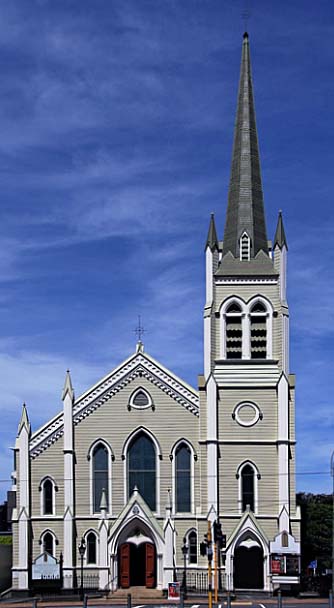
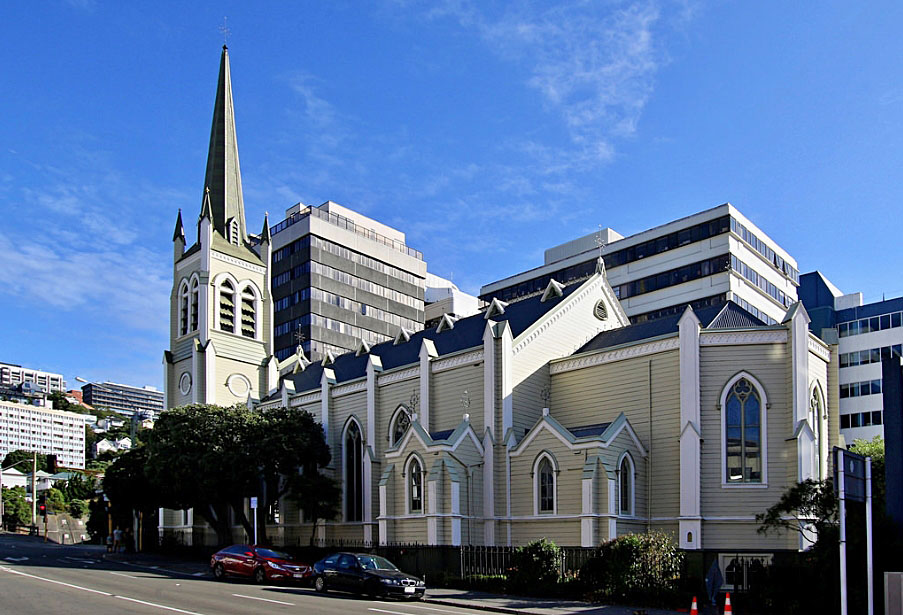
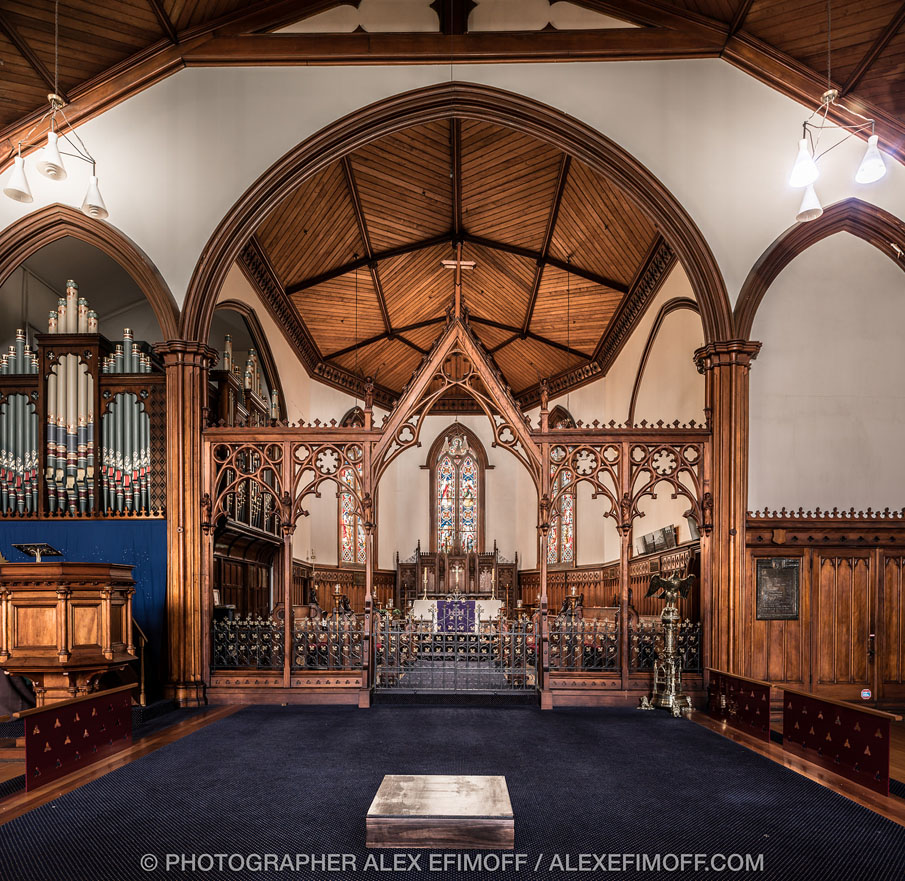
List Entry Information
Status
Listed
List Entry Status
Historic Place Category 1
Access
Private/No Public Access
List Number
229
Date Entered
18th March 1982
Date of Effect
18th March 1982
City/District Council
Wellington City
Region
Wellington Region
Extent of List Entry
Extent includes the land described as Lot 1 DP 53040 (RT WN22C/572), part of the land described as Legal Road, Wellington Land District and the building known as St Peter’s Church (Anglican) thereon.
Legal description
Lot 1 DP 53040 (RT WN22C/572) and Legal Road, Wellington Land District
Construction Professional
Name
Alington, William (Bill)
Type
Architect
Biography
Alington was born in Lower Hutt, New Zealand, in November 1929. He began his career as an architectural cadet in the New Zealand Ministry of Works (MoW) in 1949, before studying architecture at the Auckland University College School of Architecture (Auckland, New Zealand) from 1951-1955. Early influences of this time include Gordon Wilson, who was the Government Architect at the time, MoW cadet supervisor James Beard, who was to become something of a mentor to Alington during the early part of his career, and Professor R H Toy of Auckland University College School of Architecture. Upon returning to the MoW after his graduation, Alington was assigned to the Hydro-Electricity department where he worked for a short, but influential, time under Chris Valenduuk. In 1955 he married Margaret Hilda Broadhead. They have three children: Elisabeth Hilda (1959), Giles Hildebrand (1961), and Catherine Beatrice (1962). In 1956 Alington left New Zealand, travelling to London, Europe, and on a Fulbright Travelling Scholarship, to Illinois in the United States. During 1956-1957 he worked in the London office of Robert Matthew and Johnson-Marshall on, among other projects, New Zealand House (London, England). During this time he and his wife Margaret embarked on a tour of western Europe, fulfilling his desire to see firsthand the large mediaeval cathedrals, as well as key works of Modernist architecture including Le Corbusier's Ronchamp Chapel and Unite d'Habitation in Marseilles. From 1957-1959 Alington studied towards a Masters Degree at the University of Illinois' School of Architecture (Urbana, United States). While in the United States Alington took the opportunity to visit buildings by Frank Lloyd-Wright and Mies van der Rohe, and had occasion to meet with Mies van der Rohe. On his return to New Zealand Alington resumed work as an architect with the MoW, with notable buildings of this time including the Gisborne Courthouse (Gisborne, 1962), the Alington house, and the Meterological Office (Wellington 1965). His design work since moving into the private practice of Gabites and Beard consists largely of institutional work for civic authorities and educational institutions (including: Upper Hutt Civic Centre, Upper Hutt, 1966, NZIA Silver Medal; Waipa County Offices, Te Awamutu, 1976 NZIA Bronze Medal; Massey University Halls of Residence, Palmerston North, 1970, NZIA Bronze Medal; Wellington High School, Wellington, 1978; NZ Anglican Chinese Mission, Wellington, 1978). In 1972, Alington was appointed Honorary Lecturer and Tutor at Victoria University of Wellington's School of Architecture & Design, lecturing in architectural history. He also taught at Auckland University as a Visiting Lecturer in 1982. Other professional posts held include: NZIA Branch Committee Executive Member (1961-1969), NZIA IA Councillor, Vice President, Branch Chairman (1977-1979), and Architectural Centre President (1970-1972).
Name
Turnbull, Thomas
Type
Architect
Biography
Thomas Turnbull (1824-1907) was born and educated in Scotland and trained under David Bryce, Her Majesty's Architect. He travelled to Melbourne in 1851 and after nine years there moved to San Francisco. He arrived in New Zealand in 1871 and soon established a thriving business. His son William, a distinguished architect in his own right, became a partner in the firm in 1891. Turnbull was a member of the Royal Institute of British Architects. He was a pioneer in the design of buildings to withstand earthquakes and he was responsible for breaking down prejudice against the use of permanent materials for building construction. He specialised in masonry construction for commercial purposes but was also responsible for some fine houses. Among his most important buildings were the Willis Street churches of St Peter (1879) and St John (1885), the former National Mutual Building (1883-84), the General Assembly Library (1899) and the former Bank of New Zealand Head Office (1901), all in Wellington.
Name
Murdoch & Rose
Type
Builder
Biography
No biography is currently available for this construction professional
Name
Tennent, Hugh
Type
Architect
Biography
No biography is currently available for this construction professional
Construction Details
Start Year
1969
Type
Refurbishment/renovation
Start Year
1997
Type
Refurbishment/renovation
Historical and Associated Iwi / Hapū / Whānau
Completion Date
15th November 2021
Report Written By
Kerryn Pollock
Information Sources
Anon, ‘St Peter’s Parish – at the Heart of the City’ (undated),
Anon, ‘St Peter’s Parish – at the Heart of the City’ (undated), St Peter’s Anglican Church website https://www.stpetersonwillis.org.nz/about-us/about
Other Information
This place was identified as significant under previous legislation with different information requirements. It remains significant under the current legislation. There is opportunity under our legislation and policies to add to this information. Further information about this place may be available from the Central Regional Office of Heritage New Zealand Pouhere Taonga. A fully referenced upgrade report is available on request from the Central Region Office of Heritage New Zealand Pouhere Taonga. Please note that entry on the New Zealand Heritage List/Rarangi Korero identifies only the heritage values of the property concerned, and should not be construed as advice on the state of the property, or as a comment of its soundness or safety, including in regard to earthquake risk, safety in the event of fire, or insanitary conditions.
Current Usages
Uses: Religion
Specific Usage: Church
Former Usages
General Usage: Religion
Specific Usage: Church
Themes
Rainbow List
Web Links
description:
Current Usages
Uses: Religion
Specific Usage: Church
Former Usages
General Usage: Religion
Specific Usage: Church
Themes
Rainbow List
Web Links
description:
Location
Get the latest heritage news, features and events delivered
straight to your inbox.
