DonateSupporterVisit Heritage
  • Tūrangawaewae
    Places
  • Tira Māori
    Māori Heritage
  • Poutairangahia
    Archaeology
  • Rauemi
    Resources
  • Mō Tātou
    About Us
  • New Zealand Heritage List
  • Nominate and submit
  • Explore the List
  • National Historic Landmarks
  • Plaques
  • Rainbow List Project
  • Lost heritage
  • Visit Heritage
  • Our properties
  • Turnbull House Project
  • Collections
  • Shop
  • Tohu Whenua
  • Tira Māori
  • Conserving Māori heritage
  • Marae built heritage
  • Māori heritage on the List
  • Hinemihi—Te Hokinga Mai
  • What is archaeology?
  • Is there a site on my property?
  • What are my legal requirements?
  • Affecting an archaeological site
  • Declaring an archaeological site
  • Archaeology FAQs
  • Archaeology Digital Library
  • Archaeology guidelines and templates
  • Resources
  • Funding
  • Publications
  • Sustainable management guides
  • Disaster recovery
  • Podcasts & digital resources
  • Education Hub
  • Conservation plans
  • About
  • Board
  • Māori Heritage Council
  • Senior Staff
  • Offices
  • Contact us
  • Careers
  • Covenants
  • Fast-track
  • Corporate documents
  • Currently consulting on
  • Our submissions
  • News
Quick links
Rārangi Kōrero | The List
Explore the List
National Historic Landmarks
Ngā Manawhenua o Aotearoa me ōna Kōrero Tūturu
Quick links
Tapuwae
A Vision for Places of Māori Heritage
Funding for Māori Heritage
Resources
Quick links
Archaeological Authority Portal
Applying for an archaeological authority
Archaeology FAQs
Browse the most frequently asked questions about archaeological authorities and the archaeological process.
Quick links
Quick links
Contact us
Offices
DonateSupporterVisit Heritage
  • Tūrangawaewae
    Places
  • Tira Māori
    Māori Heritage
  • Poutairangahia
    Archaeology
  • Rauemi
    Resources
  • Mō Tātou
    About Us
  • New Zealand Heritage List
  • Nominate and submit
  • Explore the List
  • National Historic Landmarks
  • Plaques
  • Rainbow List Project
  • Lost heritage
  • Visit Heritage
  • Our properties
  • Turnbull House Project
  • Collections
  • Shop
  • Tohu Whenua
  • Tira Māori
  • Conserving Māori heritage
  • Marae built heritage
  • Māori heritage on the List
  • Hinemihi—Te Hokinga Mai
  • What is archaeology?
  • Is there a site on my property?
  • What are my legal requirements?
  • Affecting an archaeological site
  • Declaring an archaeological site
  • Archaeology FAQs
  • Archaeology Digital Library
  • Archaeology guidelines and templates
  • Resources
  • Funding
  • Publications
  • Sustainable management guides
  • Disaster recovery
  • Podcasts & digital resources
  • Education Hub
  • Conservation plans
  • About
  • Board
  • Māori Heritage Council
  • Senior Staff
  • Offices
  • Contact us
  • Careers
  • Covenants
  • Fast-track
  • Corporate documents
  • Currently consulting on
  • Our submissions
  • News
Quick links
Rārangi Kōrero | The List
Explore the List
National Historic Landmarks
Ngā Manawhenua o Aotearoa me ōna Kōrero Tūturu
Quick links
Tapuwae
A Vision for Places of Māori Heritage
Funding for Māori Heritage
Resources
Quick links
Archaeological Authority Portal
Applying for an archaeological authority
Archaeology FAQs
Browse the most frequently asked questions about archaeological authorities and the archaeological process.
Quick links
Quick links
Contact us
Offices
  • Places
  • Nominate and submit
  • National Historic Landmarks
  • Places
  • Nominate and submit
  • National Historic Landmarks
  • Tira Māori
  • Conserving Māori heritage
  • Marae built heritage
  • Tira Māori
  • Conserving Māori heritage
  • Marae built heritage
  • Archaeological authorities
  • Archaeology Digital Library
  • Archaeological authorities
  • Archaeology Digital Library
  • All resources
  • Publications
  • Funding
  • All resources
  • Publications
  • Funding
  • FAQs
  • FAQs
Follow us on:
Places
  • Places
  • Nominate and submit
  • National Historic Landmarks
Tira Māori
  • Tira Māori
  • Conserving Māori heritage
  • Marae built heritage
Archaeology
  • Archaeological authorities
  • Archaeology Digital Library
Resources
  • All resources
  • Publications
  • Funding
FAQs
  • FAQs
Follow us on
HomePrivacyTerms and conditionsAbout this site
© Heritage New Zealand Pouhere Taonga 2026.
 
Masonic Hall (Former)

32 Kelvin Street, INVERCARGILL

Public

Historic Place Category 1

List No. 388

Quick links:
List GalleryLocationDetails
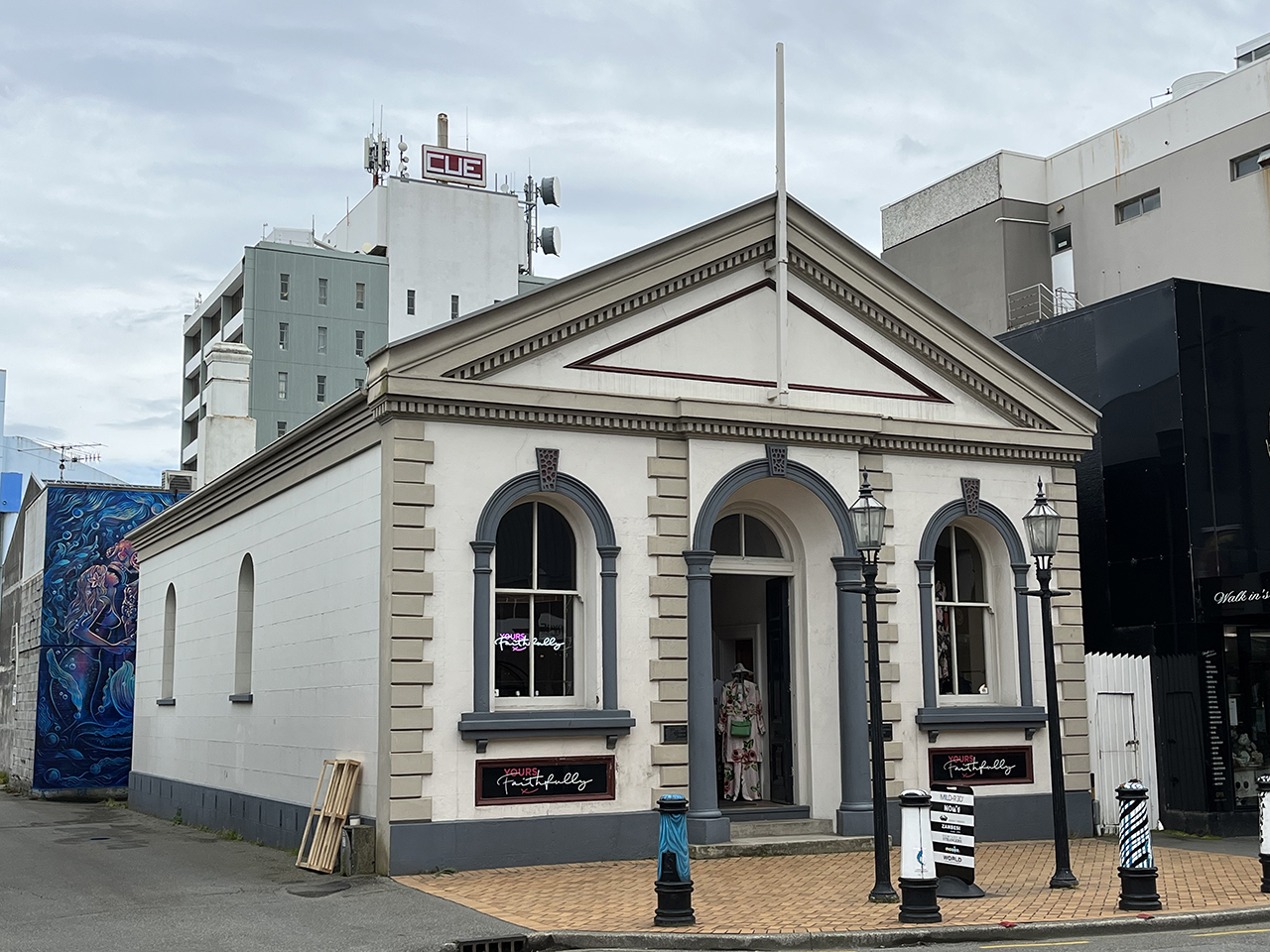
Built as a Masonic Hall in 1864, and used as the Southland Provincial Council Chambers from 1866 until 1870, this modest structure is one of only two buildings associated with New Zealand’s short-lived system of Provincial Government. It has historic and architectural significance.

The Southern Cross Lodge No. 9 was established in 1863, following meetings where Masons from different constitutions met to discuss forming a lodge. Their first petition to the United Grand Lodge of England was turned down, but a second petition was granted and issued on 12 January 1864 as the Southern Cross Lodge no. 997. The first Consecration Meeting was attended by 34 Master Masons, and in its first year the lodge admitted 21 affiliates. Initial meetings were held at a room in Watson’s Hotel, until the hall was consecrated.

In March 1864, part of Section 11, Block IX, with a frontage to Kelvin Street, was purchased. Architects Taylor and Marchant invited tenders in March 1864. John Hill’s tender of £1,000 was selected. The hall was consecrated on 9 November 1864.

The lodge got into financial difficulties, and the mortgagee (and contractor for the building) John Hill offered it to the Provincial Government. After some discussion and controversy, the property was conveyed to the Superintendent of Southland in August 1866, and the building became known as the Southland Provincial Chambers.

The lodge continued to meet at the hall, sharing the meeting space with the new owners. As the lodge recovered from the slump of the mid-1860s, members offered to buy back the building but the Provincial Government declined. The Southland Provincial Council met at the hall until 1870, when the province was abolished at which time the building was taken over the by Crown. Between 1871 and 1878 the building was used as a courthouse for sessions of the Supreme Court and the District Court, and when there were no sittings of the courts, as chambers for the Invercargill Borough Council (the first election for which took place in 1871). After a new courthouse was opened in 1880, the building was solely occupied by the Invercargill Borough Council.

By the end of the century, the ‘Council Hall’ was too small. At a meeting in May 1897, Invercargill mayor J.A. Hanan told the councillors that everyone admitted that ‘the present accommodation was far too small and that an enlargement was absolutely necessary.’ Not only was the building too small, but it presented the town in a bad light, a town of such status ‘should have a building that was a credit to the town. The mayor was ashamed of taking the Governor of Victoria around the town, and listen to the Governor’s ‘glowing eulogies of our street architecture’ only to have to visit the ‘despicable little edifice in Kelvin street.’ In 1906, most of the council offices moved to the new town hall. The old building was retained as offices for the traffic and gas departments of the council. These departments remained in the building until 1959. In 1963, the building was sold to Calder Mackay Limited who retained ownership into the 1970s. In 1979 the New Zealand Historic Places Trust bought the building. The southern addition was removed in 1979. In 2017, the former Masonic Hall provides retail premises.
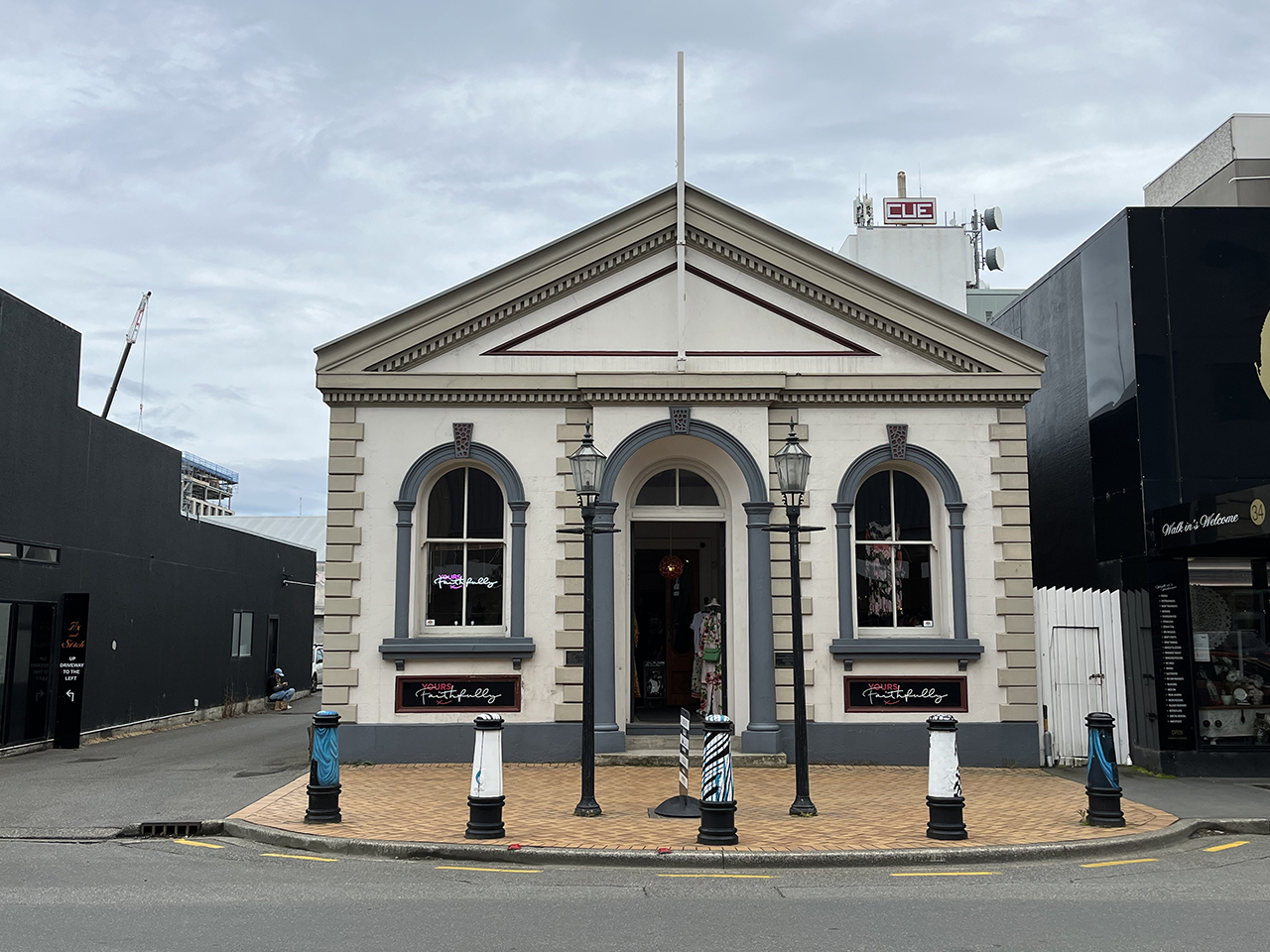
Masonic Hall (Former), Invercargill | Sarah Gallagher | 08/12/2022 | Heritage New Zealand Pouhere Taonga

List Entry Information

Overview

Status
Listed

List Entry Status
Historic Place Category 1

Access
Able to Visit

List Number
388

Date Entered
22nd November 1984

Date of Effect
22nd November 1984

City/District Council
Invercargill City

Region
Southland Region

Extent of List Entry

Extent includes the land described as Lot 1 DP 2153 (RT SLB1/524, NZ Gazette 1880 p.345), Southland Land District, and the building known as the Masonic Hall (Former), thereon.

Legal description

Lot 1 DP 2153 (RT SLB1/524, NZ Gazette 1880 p.345), Southland Land District

Detailed List Entry

Construction Professional

Name

John Marchant

Type

Architect

Biography

John Marchant served with his stepfather on the Tigura Railway in Rio de Janero, and later carried out surveys in Victoria. In 1863, he followed the call of gold to New Zealand, before settling in Invercargill. In 1865, he joined the public service as the first Government geological surveyor. In 1879, he became surveyor for Wellington, and a commissioner of Crown Lands in 1884. In 1902, he was appointed Surveyor-general. Marchant died in 1920.

Name

J.B. Taylor

Type

Architect

Biography

Taylor and Marchant advertised as architects, surveyors, land estate agents and auctioneers in Invercargill between September 1863 and July 1864. They had previously worked for the Government of Victoria as surveyors. Marchant and Taylor dissolved their partnership in August 1864. Taylor went into partnership with Henry Monkman as Auctioneer, Land and Estate Agent, trading as Monkman and Taylor. Little else is known about Taylor’s life.

Name

John Hill

Type

Builder

Biography

John Hill is listed as a builder and contractor in the 1866-1867 Steven’s and Bartholomew’s New Zealand Directory. Hill worked in the Southland area from 1862 until the mid-1870s. In October 1875, he and fellow contractors James and Andrew McMenamin filed for bankruptcy, after which, Hill may have left the business.

Construction Details

Start Year

1864

Type

Original Construction

Start Year

1897

Finish Year

1900

Type

Addition

Description

Addition to the south side

Start Year

1979

Finish Year

1979

Type

Modification

Description

Addition removed

Reference

Completion Date

15th January 2018

Report Written By

Heather Bauchop

Information Sources

New Zealand Freemason

NZ Freemason magazine, Issue 2 June 2014

Report Written By

This place was identified as significant under previous legislation with different information requirements. It remains significant under the current legislation. There is opportunity under our legislation and policies to add to this information. Further information about this place may be available from the Otago/Southland Office of Heritage New Zealand Pouhere Taonga. Please note that entry on the New Zealand Heritage List/Rarangi Korero identifies only the heritage values of the property concerned, and should not be construed as advice on the state of the property, or as a comment of its soundness or safety, including in regard to earthquake risk, safety in the event of fire, or insanitary conditions. A fully referenced upgrade report is available on request from the Otago/Southland Office of Heritage New Zealand

Further Information

Current Usages

Uses: Civic Facilities

Specific Usage: Historic Property

Uses: Trade

Specific Usage: Shop

Former Usages

General Usage:: Civic Facilities

Specific Usage: Masonic Lodge

General Usage:: Government

Specific Usage: Council/local government building

Themes

Web Links

Overview

Status

Listed

List Entry Status

Historic Place Category 1

Access

Able to Visit

List Number

388

Date Entered

22nd November 1984

Date of Effect

22nd November 1984

City/District Council

Invercargill City

Region

Southland Region

Extent of List Entry

Extent includes the land described as Lot 1 DP 2153 (RT SLB1/524, NZ Gazette 1880 p.345), Southland Land District, and the building known as the Masonic Hall (Former), thereon.

Legal description

Lot 1 DP 2153 (RT SLB1/524, NZ Gazette 1880 p.345), Southland Land District

Status

Listed

List Entry Status

Historic Place Category 1

Access

Able to Visit

List Number

388

Date Entered

22nd November 1984

Date of Effect

22nd November 1984

City/District Council

Invercargill City

Region

Southland Region

Extent of List Entry

Extent includes the land described as Lot 1 DP 2153 (RT SLB1/524, NZ Gazette 1880 p.345), Southland Land District, and the building known as the Masonic Hall (Former), thereon.

Legal description

Lot 1 DP 2153 (RT SLB1/524, NZ Gazette 1880 p.345), Southland Land District

Construction Information

Construction Professional

Name

John Marchant

Type

Architect

Biography

John Marchant served with his stepfather on the Tigura Railway in Rio de Janero, and later carried out surveys in Victoria. In 1863, he followed the call of gold to New Zealand, before settling in Invercargill. In 1865, he joined the public service as the first Government geological surveyor. In 1879, he became surveyor for Wellington, and a commissioner of Crown Lands in 1884. In 1902, he was appointed Surveyor-general. Marchant died in 1920.

Name

J.B. Taylor

Type

Architect

Biography

Taylor and Marchant advertised as architects, surveyors, land estate agents and auctioneers in Invercargill between September 1863 and July 1864. They had previously worked for the Government of Victoria as surveyors. Marchant and Taylor dissolved their partnership in August 1864. Taylor went into partnership with Henry Monkman as Auctioneer, Land and Estate Agent, trading as Monkman and Taylor. Little else is known about Taylor’s life.

Name

John Hill

Type

Builder

Biography

John Hill is listed as a builder and contractor in the 1866-1867 Steven’s and Bartholomew’s New Zealand Directory. Hill worked in the Southland area from 1862 until the mid-1870s. In October 1875, he and fellow contractors James and Andrew McMenamin filed for bankruptcy, after which, Hill may have left the business.

Construction Details

Start Year

1864

Type

Original Construction

Start Year

1897

Finish Year

1900

Type

Addition

Description

Addition to the south side

Start Year

1979

Finish Year

1979

Type

Modification

Description

Addition removed

Construction Professional

Name

John Marchant

Type

Architect

Biography

John Marchant served with his stepfather on the Tigura Railway in Rio de Janero, and later carried out surveys in Victoria. In 1863, he followed the call of gold to New Zealand, before settling in Invercargill. In 1865, he joined the public service as the first Government geological surveyor. In 1879, he became surveyor for Wellington, and a commissioner of Crown Lands in 1884. In 1902, he was appointed Surveyor-general. Marchant died in 1920.

Name

J.B. Taylor

Type

Architect

Biography

Taylor and Marchant advertised as architects, surveyors, land estate agents and auctioneers in Invercargill between September 1863 and July 1864. They had previously worked for the Government of Victoria as surveyors. Marchant and Taylor dissolved their partnership in August 1864. Taylor went into partnership with Henry Monkman as Auctioneer, Land and Estate Agent, trading as Monkman and Taylor. Little else is known about Taylor’s life.

Name

John Hill

Type

Builder

Biography

John Hill is listed as a builder and contractor in the 1866-1867 Steven’s and Bartholomew’s New Zealand Directory. Hill worked in the Southland area from 1862 until the mid-1870s. In October 1875, he and fellow contractors James and Andrew McMenamin filed for bankruptcy, after which, Hill may have left the business.

Construction Details

Start Year

1864

Type

Original Construction

Start Year

1897

Finish Year

1900

Type

Addition

Description

Addition to the south side

Start Year

1979

Finish Year

1979

Type

Modification

Description

Addition removed

Reference

Historical and Associated Iwi / Hapū / Whānau

Completion Date

15th January 2018

Report Written By

Heather Bauchop

Information Sources

New Zealand Freemason

NZ Freemason magazine, Issue 2 June 2014

Other Information

This place was identified as significant under previous legislation with different information requirements. It remains significant under the current legislation. There is opportunity under our legislation and policies to add to this information. Further information about this place may be available from the Otago/Southland Office of Heritage New Zealand Pouhere Taonga. Please note that entry on the New Zealand Heritage List/Rarangi Korero identifies only the heritage values of the property concerned, and should not be construed as advice on the state of the property, or as a comment of its soundness or safety, including in regard to earthquake risk, safety in the event of fire, or insanitary conditions. A fully referenced upgrade report is available on request from the Otago/Southland Office of Heritage New Zealand

Historical and Associated Iwi / Hapū / Whānau

Completion Date

15th January 2018

Report Written By

Heather Bauchop

Information Sources

New Zealand Freemason

NZ Freemason magazine, Issue 2 June 2014

Other Information

This place was identified as significant under previous legislation with different information requirements. It remains significant under the current legislation. There is opportunity under our legislation and policies to add to this information. Further information about this place may be available from the Otago/Southland Office of Heritage New Zealand Pouhere Taonga. Please note that entry on the New Zealand Heritage List/Rarangi Korero identifies only the heritage values of the property concerned, and should not be construed as advice on the state of the property, or as a comment of its soundness or safety, including in regard to earthquake risk, safety in the event of fire, or insanitary conditions. A fully referenced upgrade report is available on request from the Otago/Southland Office of Heritage New Zealand

Further Information

Current Usages

Uses: Civic Facilities

Specific Usage: Historic Property

Uses: Trade

Specific Usage: Shop

Former Usages

General Usage: Civic Facilities

Specific Usage: Masonic Lodge

General Usage: Government

Specific Usage: Council/local government building

Current Usages

Uses: Civic Facilities

Specific Usage: Historic Property

Uses: Trade

Specific Usage: Shop

Former Usages

General Usage: Civic Facilities

Specific Usage: Masonic Lodge

General Usage: Government

Specific Usage: Council/local government building

Location

Loading
Related listings
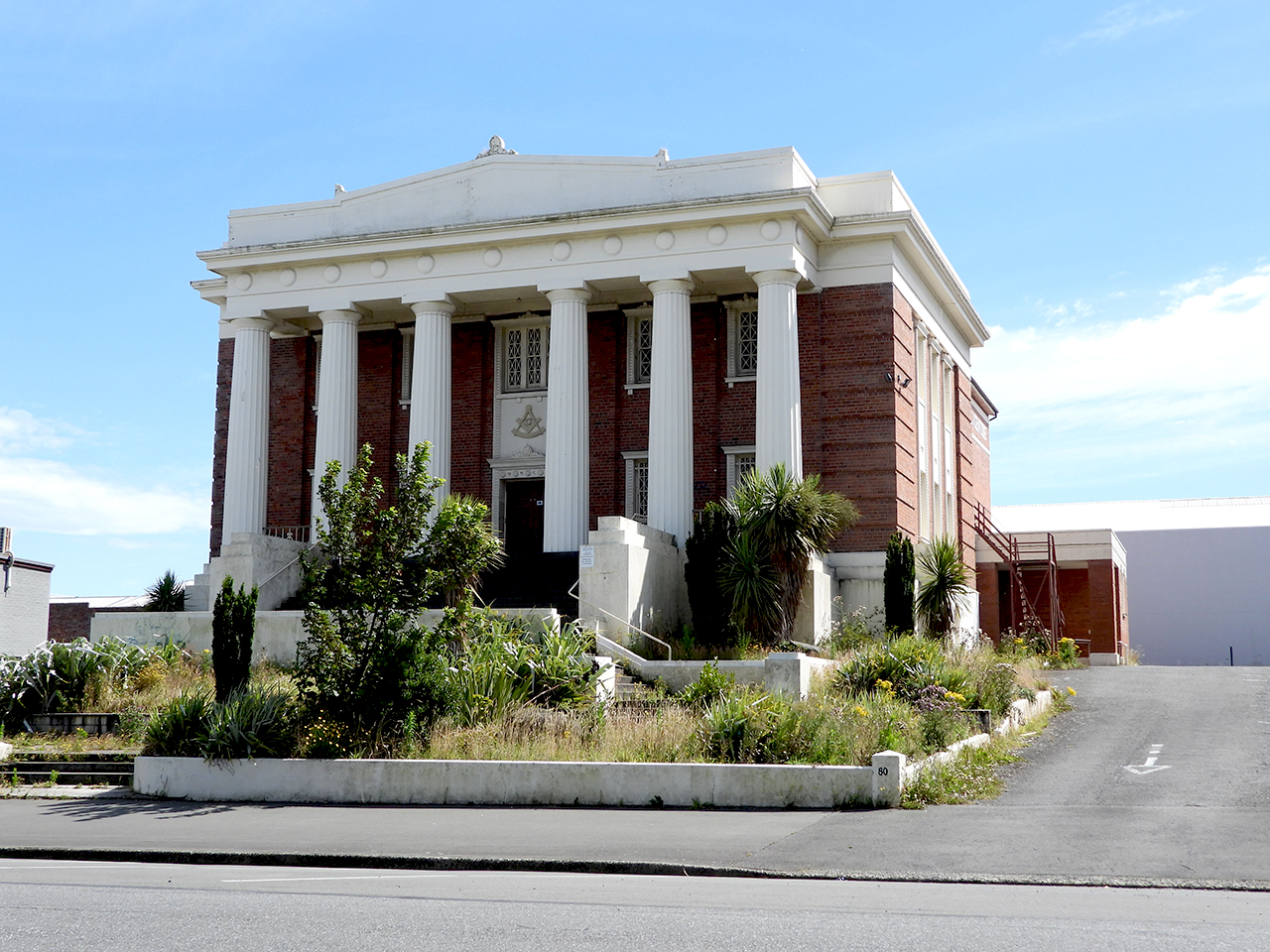
Masonic Hall (Former), Invercargill. CC BY Licence
Masonic Hall (Former)
Canterbury Provincial Government Buildings, Christchurch
Canterbury Provincial Government Buildings
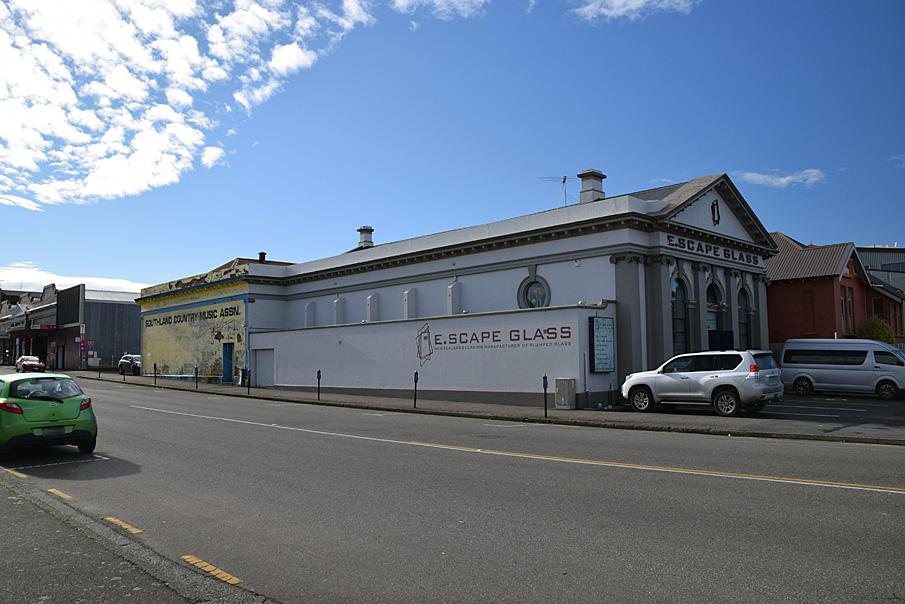
Masonic Hall (Former), Invercargill. Image courtesy of Robin Miller
Masonic Hall (Former)
Canterbury Provincial Government Buildings, Christchurch
Canterbury Provincial Government Buildings
Masonic Hall (Former), Invercargill. CC BY Licence
Masonic Hall (Former)
Masonic Hall (Former), Invercargill. Image courtesy of Robin Miller
Masonic Hall (Former)
Sign up to hear more

Get the latest heritage news, features and events delivered
straight to your inbox.

Subscribe