DonateMembershipVisit Heritage
  • Tūrangawaewae
    Places
  • Tira Māori
    Māori Heritage
  • Poutairangahia
    Archaeology
  • Rauemi
    Resources
  • Mō Tātou
    About Us
  • New Zealand Heritage List
  • Nominate and submit
  • Explore the List
  • National Historic Landmarks
  • Plaques
  • Rainbow List Project
  • Lost heritage
  • Visit Heritage
  • Our properties
  • Turnbull House Project
  • Collections
  • Shop
  • Tohu Whenua
  • Tira Māori
  • Conserving Māori heritage
  • Marae built heritage
  • Māori heritage on the List
  • Hinemihi—Te Hokinga Mai
  • What is archaeology?
  • Is there a site on my property?
  • What are my legal requirements?
  • Affecting an archaeological site
  • Declaring an archaeological site
  • Archaeology FAQs
  • Archaeology Digital Library
  • Archaeology guidelines and templates
  • Resources
  • Funding
  • Publications
  • Sustainable management guides
  • Disaster recovery
  • Podcasts & digital resources
  • Education Hub
  • Conservation plans
  • About
  • Board
  • Māori Heritage Council
  • Senior Staff
  • Offices
  • Contact us
  • Careers
  • Covenants
  • Fast-track
  • Corporate documents
  • Currently consulting on
  • Our submissions
  • News
  • Covid-19 response
Quick links
Rārangi Kōrero | The List
Explore the List
National Historic Landmarks
Ngā Manawhenua o Aotearoa me ōna Kōrero Tūturu
Quick links
Tapuwae
A Vision for Places of Māori Heritage
Funding for Māori Heritage
Resources
Quick links
Archaeological Authority Portal
Applying for an archaeological authority
Archaeology FAQs
Browse the most frequently asked questions about archaeological authorities and the archaeological process.
Quick links
Quick links
News
News Keep up to date with Heritage New Zealand Pouhere Taonga
Membership
Membership Find out more and sign up today
DonateMembershipVisit Heritage
  • Tūrangawaewae
    Places
  • Tira Māori
    Māori Heritage
  • Poutairangahia
    Archaeology
  • Rauemi
    Resources
  • Mō Tātou
    About Us
  • New Zealand Heritage List
  • Nominate and submit
  • Explore the List
  • National Historic Landmarks
  • Plaques
  • Rainbow List Project
  • Lost heritage
  • Visit Heritage
  • Our properties
  • Turnbull House Project
  • Collections
  • Shop
  • Tohu Whenua
  • Tira Māori
  • Conserving Māori heritage
  • Marae built heritage
  • Māori heritage on the List
  • Hinemihi—Te Hokinga Mai
  • What is archaeology?
  • Is there a site on my property?
  • What are my legal requirements?
  • Affecting an archaeological site
  • Declaring an archaeological site
  • Archaeology FAQs
  • Archaeology Digital Library
  • Archaeology guidelines and templates
  • Resources
  • Funding
  • Publications
  • Sustainable management guides
  • Disaster recovery
  • Podcasts & digital resources
  • Education Hub
  • Conservation plans
  • About
  • Board
  • Māori Heritage Council
  • Senior Staff
  • Offices
  • Contact us
  • Careers
  • Covenants
  • Fast-track
  • Corporate documents
  • Currently consulting on
  • Our submissions
  • News
  • Covid-19 response
Quick links
Rārangi Kōrero | The List
Explore the List
National Historic Landmarks
Ngā Manawhenua o Aotearoa me ōna Kōrero Tūturu
Quick links
Tapuwae
A Vision for Places of Māori Heritage
Funding for Māori Heritage
Resources
Quick links
Archaeological Authority Portal
Applying for an archaeological authority
Archaeology FAQs
Browse the most frequently asked questions about archaeological authorities and the archaeological process.
Quick links
Quick links
News
News Keep up to date with Heritage New Zealand Pouhere Taonga
Membership
Membership Find out more and sign up today
  • Places
  • Nominate and submit
  • National Historic Landmarks
  • Places
  • Nominate and submit
  • National Historic Landmarks
  • Tira Māori
  • Conserving Māori heritage
  • Marae built heritage
  • Tira Māori
  • Conserving Māori heritage
  • Marae built heritage
  • Archaeological authorities
  • Archaeology Digital Library
  • Archaeological authorities
  • Archaeology Digital Library
  • All resources
  • Publications
  • Funding
  • All resources
  • Publications
  • Funding
  • FAQs
  • FAQs
Follow us on:
Places
  • Places
  • Nominate and submit
  • National Historic Landmarks
Tira Māori
  • Tira Māori
  • Conserving Māori heritage
  • Marae built heritage
Archaeology
  • Archaeological authorities
  • Archaeology Digital Library
Resources
  • All resources
  • Publications
  • Funding
FAQs
  • FAQs
Follow us on
HomePrivacyTerms and conditionsAbout this site
© Heritage New Zealand Pouhere Taonga 2026.
 
One Tree Hill Obelisk

One Tree Hill summit, One Tree Hill, AUCKLAND

Public

Historic Place Category 1

List No. 4601

Quick links:
List GalleryLocationDetails
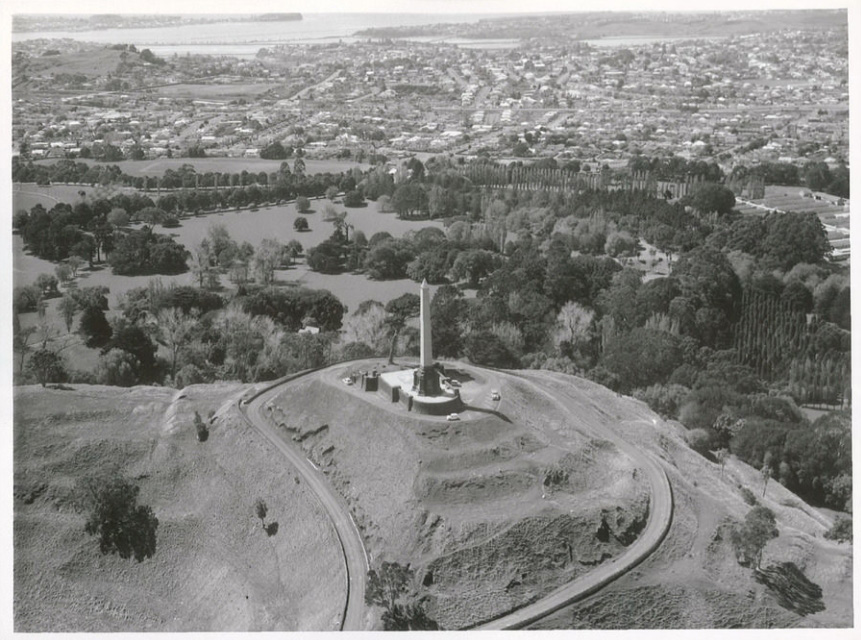
The obelisk is an Auckland icon, standing on the summit of the Maori pa at Maungakiekie - also known as One Tree Hill - in the centre of Cornwall Park. Originally erected for Auckland's centenary celebrations in 1940, it formed part of the bequest of Sir John Logan Campbell, to commemorate his admiration of 'the achievements and character of the great Maori people'. Campbell, who arrived as one of Auckland's pioneer settlers in 1840, lived and worked among local Maori before making his fortune as a general merchant and businessman. He died in 1912 after gifting Cornwall Park to the city, and is buried on top of One Tree Hill.

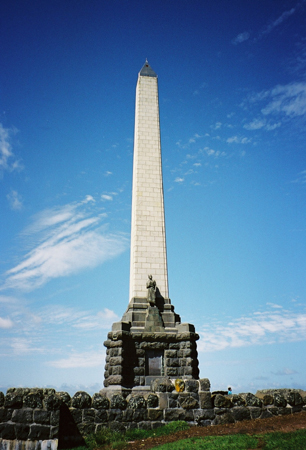
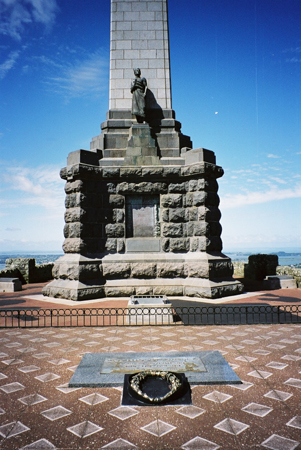
The obelisk is roughly 30 m (100 feet) tall and surrounded by a paved area, incorporating Logan Campbell's grave. Obelisks were popular as funerary monuments in nineteenth-century Europe, and elsewhere. The memorial includes a bronze Maori statue, cast by the sculptor Richard Gross, of a man with a huia feather in his hair and mere in his raised right hand. Four bronze plaques around the plinth commemorate Campbell's bequest, and provide a mid twentieth-century account of Maori migration and the 1840 Treaty of Waitangi. They are notable for being inscribed in both English and Maori, and affirm Maori as the first peoples of New Zealand. Retaining powerful symbolism, few modifications have been made to the monument since its construction, although a nearby Monterey Pine on the summit was removed in 2001. This had been damaged by Treaty of Waitangi activists, who believed that a non-indigenous species in such a location was inappropriate.

One Tree Hill Obelisk has considerable significance as a symbol of biculturalism and respect between Maori and Pakeha, and lies on a site of great importance to Maori. It commemorates a prominent early pioneer who gifted the land to the city for public use, preserving a large part of the pa for posterity. It is the most dramatic of several monuments in Cornwall Park that commemorate Logan Campbell, and plays an important role as an Auckland landmark and icon. The obelisk is one of the most prominent monuments in the region, while its statue is considered the earliest casting of a Maori figure in Auckland. The monument demonstrates the educational function of public parks in the twentieth century, and the importance of cultural conciliation in the years surrounding the Second World War. It is held in high public esteem for its symbolic qualities, and as a popular sight and vantage point.
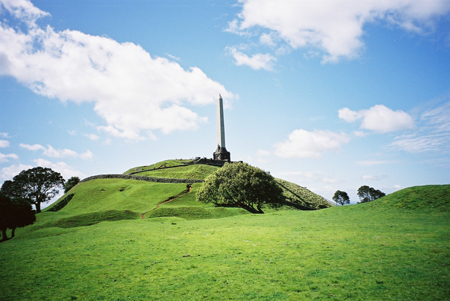
One Tree Hill Obelisk, Auckland | Martin Jones | 29/10/2001 | Heritage New Zealand
One Tree Hill Obelisk, Auckland | Martin Jones | 18/09/2001 | Heritage New Zealand
One Tree Hill Obelisk, Auckland. October 1965. Image courtesy of www.flickr.com CC Licence 2.0 | Mr G Riethmaier | Archives New Zealand
One Tree Hill Obelisk, Auckland | Martin Jones | 29/10/2001 | Heritage New Zealand
One Tree Hill Obelisk, Auckland | Martin Jones | 18/09/2001 | Heritage New Zealand
One Tree Hill Obelisk, Auckland. October 1965. Image courtesy of www.flickr.com CC Licence 2.0 | Mr G Riethmaier | Archives New Zealand

List Entry Information

Overview

Status
Listed

List Entry Status
Historic Place Category 1

Access
Able to Visit

List Number
4601

Date Entered
16th November 1989

Date of Effect
16th November 1989

City/District Council
Auckland Council

Region
Auckland Council

Legal description

Pt Allot 11 Sec 12 Sbrs of Auckland, One Tree Hill Domain Recreation Reserve (NZ Gazette 1980 p.313)

Detailed List Entry
Significance

Historic Significance

Historical Significance or Value The monument on Maungakiekie is important in its honouring of both the Maori people of Tamaki-makau-rau and John Logan Campbell, one of the first European settlers of the area and 'Father of Auckland City'. Although it has been in place for only 50 years it has achieved a significant visual and historical importance to the people of Auckland, Maori and Pakeha.

Physical Significance

ARCHITECTURAL QUALITY: The Auckland region has few obelisks. The One Tree Hill obelisk is the largest and most prominent. The combination of obelisk and bronze statue have a unity confined as they are within the courtyard and walls. The base of the monument is unusual in its sustained form. This was the first statue in the form of a Maori figure to be erected in Auckland. LANDMARK VALUE The obelisk on the summit of Maungakiekie is highly visible from most parts of Auckland and the surrounding countryside from Manukau Heads, the Bombay Hills and much of the Hauraki Gulf. It is a visual focal point of the city.

Construction Professional

Name

Gross, Richard Oliver

Type

Sculptor

Biography

Gross was born in England and immigrated to New Zealand in 1914 having been trained in sculpture at the London Camberwell School of Art under Albert Toft. Toft was a regular exhibitor at the Royal Academy of Arts from 1885. Gross' works include the Auckland Domain gates' statues, Wellington Citizen's Peace Memorial, the Savage Memorial at Orakei, the carved lion head fountain on the Carillon at Wellington and the stone lion in the Auckland Domain Wintergardens. At one time Gross was the only New Zealand sculptor casting in bronze at his own foundry. Gross was president of the Auckland Society of Arts for ten years, chairman of the McKelvie Trust Board and chairman of the Associated Art Societies of New Zealand.

Name

Abbott, Richard Atkinson

Type

Architect

Biography

Abbott (1883-1954) began his career in the office of C L N Arnold and became his partner in 1910. Abbott, whose career began prior to the passing of the New Zealand Institute of Architects Act in 1913, became registered under that Act. He is best known for the design of Auckland Grammar School (1913) which is one of the earliest Spanish Mission style buildings in New Zealand. He also designed several branch buildings for the Bank of New Zealand including the Upper Symonds Street branch (1937) and several buildings at King's College, Middlemore, including the Memorial Chapel (World War I), the Memorial Library (World War II) and the Assembly Hall (1954). Abbott was active in the New Zealand Institute of Architects, serving on its Council (1926-28), and on its Education Committee (1926-36). In addition he was Chairman of the Auckland branch of the Institute (1927-28). Abbott was born at Parnell, Auckland. He was educated at St John's College and King's College after which he joined the architectural firm established in the 1870s by Charles Le Nevre Arnold. Abbot became Arnold's partner in practice in 1910. After Arnold's retirement in 1927, Abbot remained in sole practice for a time, but was later joined by G.I. Hole. Abbott's first major achievement was in 1913 when he submitted the winning design for the Auckland Grammar School. The janitor's cottage was part of the design brief. Abbot became a Fellow of the New Zealand Institute of Architects in 1913. Five years later he prepared the winning site layout for the King's College site at Middlemore. In contrast to Auckland Grammar School, the buildings on the King's College campus were designed in a more conservative Gothic collegiate style. In addition to the main building at King's (Kings College Main Block, NZHPT Registration # 529, Category II historic place), Abbott designed the memorial church to Old Boys who died in the First World War (Kings College Chapel, NZHPT Registration # 90, Category I historic place); the library; a memorial to old boys killed in the Second World War; and the School's assembly hall. For over 25 years Abbot was the architect for the Bank of New Zealand in the Auckland region. He is also remembered as the designer of the One Tree Hill Obelisk (NZHPT Registration # 4601, Category I historic place), constructed on Maungakiekie, One Tree Hill in 1939-1940.

Construction Details

Type

Other

Description

Pa site

Period

1600s-1700s

Start Year

1822

Type

Other

Description

Pa reoccupied

Start Year

1847

Type

Other

Description

Site of early colonial signal station

Start Year

1939

Finish Year

1940

Type

Original Construction

Description

Construction of obelisk, including statue

Start Year

1941

Type

Relocation

Description

Removal of statue

Start Year

1946

Type

Reconstruction

Description

Re-erection of statue

Construction Materials

The shaft of the obelisk is of reinforced concrete with Coromandel tonolite facing.

Notable Features

Registration covers the structure, its fixtures and finishes. It also includes the elevated paved court around its base, the semi-circular retaining wall and two flights of stairs giving access to the court. The structure is associated with the grave of John Logan Campbell and lies on the site of Maungakiekie pa.

Historical Narrative

Maungakiekie (One Tree Hill) has a long association with Tamaki-makau-rau and the Waiohua people. The monument was financed from a bequest by Sir John Logan Campbell, the 'Father of Auckland'. Campbell was fascinated by the obelisks he had seen in Egypt and it was his wish that this monument to the Maori people should take this form. Land for the monument was set aside in 1912 around Campbell's grave on the summit. The area was enlarged in 1936 to accommodate the monument and obelisk. Work was completed by August 1940. The statue was removed for safety for the duration of the war and re-erected again in 1946. The monument was formally unveiled in 1948.

Physical Description

ARCHITECTURAL DESCRIPTION: The shaft sits on a 7.6m high base, having four diagonal braces, with foundations extending 4.3m below the surface of the surrounding court. A basalt stone random rubble wall 3.3m in height, with battered face, retains the sub-base of the courtyard and obelisk. The obelisk is 30.8m (100ft) high. The tonolite-faced shaft has been rubbed rather than polished. The edges of each face have a groove running along the length of the shaft giving the corners the appearance of incipient ovolo moulding. The pyramid cap is sheathed in stainless steel. The base and buttresses are of alternately rusticated basalt blocks and rubbed stone wedges. A corbel course of rusticated stone projects near the top of the base. Above this the stone is stepped. A cast bronze statue, 2.3m tall, stands on a corbelled base with chamfered angles, on the north side of the base. The statue is of a rangatira, semi-draped in a cloak. He holds a mere in his right hand. The monument stands on an elevated paved court, enclosed by a semi-circular retaining wall. Two flights of stairs give access to the courtyard.

Reference

Completion Date

21st August 2001

Report Written By

Martin Jones

Information Sources

Auckland Public Libraries

Auckland Public Libraries

Cobb, 1994

John Cobb, Cornwall Park: The Story of a Man's Vision, Auckland, 1994

Woodward, 1972

Robin Woodward, 'Public Sculptures in Auckland, 1895 - 1971', MA Thesis, University of Auckland, 1972

Hayward, 1987

Bruce W. Hayward, 'Granite and Marble: a guide to building stones in New Zealand', Geological Society of New Zealand Guidebook, No.8

New Zealand Herald

New Zealand Herald, 12 July 1932, p. 6; 28 September 1933, p. 6.

New Zealand Historic Places Trust (NZHPT)

New Zealand Historic Places Trust

Reed, 1955

A. W. Reed, Auckland: City of the Seas, Wellington, 1955

Stone, 1982

R. C. J. Stone, Young Logan Campbell, Auckland, 1982

Stone, 1987

R. C. J Stone, The Father and his Gift: John Logan Campbell's Later Years, Auckland, 1987

Fleming, 1980

John Fleming, Hugh Honour and N. Pevsner, Dictionary of Architecture, London, 1980 The Penguin Dictionary of Architecture, Third Edition, Harmondsworth 1980

Beattie, 1983

S Beattie, The New Sculptors, London 1983

Graves, 1970 (reprint)

A Graves, The Royal Academy of Fine Arts Exhibitions 1769-1904, London, 1970 (reprint)

Weave, 1915

L Weave, Memorials and Monuments, London, 1915

Whittick, 1935

A Whittick, Symbols for Designers, London, 1935

Whittick, 1945

A Whittick, War Memorials, London, 1945

Journal of the Polynesian Society

Journal of the Polynesian Society

Obituary Scrap Book

Obituary Scrap Book

Auckland Museum Library

Auckland Museum Library

Auckland Architecture School Library

Auckland Architecture School Library

Report Written By

This historic place was registered under the Historic Places Act 1980. This report includes the text from the original Building Classification Committee report considered by the NZHPT Board at the time of registration. Please note that entry on the New Zealand Heritage List/Rarangi Korero identifies only the heritage values of the property concerned, and should not be construed as advice on the state of the property, or as a comment of its soundness or safety, including in regard to earthquake risk, safety in the event of fire, or insanitary conditions.

Further Information

Current Usages

Uses: Commemoration

Specific Usage: Memorial - Early settler

Uses: Commemoration

Specific Usage: Memorial - Particular person or group

Former Usages

Themes

Of Significance to Maori

Web Links

Overview

Status

Listed

List Entry Status

Historic Place Category 1

Access

Able to Visit

List Number

4601

Date Entered

16th November 1989

Date of Effect

16th November 1989

City/District Council

Auckland Council

Region

Auckland Council

Legal description

Pt Allot 11 Sec 12 Sbrs of Auckland, One Tree Hill Domain Recreation Reserve (NZ Gazette 1980 p.313)

Status

Listed

List Entry Status

Historic Place Category 1

Access

Able to Visit

List Number

4601

Date Entered

16th November 1989

Date of Effect

16th November 1989

City/District Council

Auckland Council

Region

Auckland Council

Legal description

Pt Allot 11 Sec 12 Sbrs of Auckland, One Tree Hill Domain Recreation Reserve (NZ Gazette 1980 p.313)

Significance

Why is this place significant?

Historic Significance

Historical Significance or Value The monument on Maungakiekie is important in its honouring of both the Maori people of Tamaki-makau-rau and John Logan Campbell, one of the first European settlers of the area and 'Father of Auckland City'. Although it has been in place for only 50 years it has achieved a significant visual and historical importance to the people of Auckland, Maori and Pakeha.

Physical Significance

ARCHITECTURAL QUALITY: The Auckland region has few obelisks. The One Tree Hill obelisk is the largest and most prominent. The combination of obelisk and bronze statue have a unity confined as they are within the courtyard and walls. The base of the monument is unusual in its sustained form. This was the first statue in the form of a Maori figure to be erected in Auckland. LANDMARK VALUE The obelisk on the summit of Maungakiekie is highly visible from most parts of Auckland and the surrounding countryside from Manukau Heads, the Bombay Hills and much of the Hauraki Gulf. It is a visual focal point of the city.

Why is this place significant?

Historic Significance

Historical Significance or Value The monument on Maungakiekie is important in its honouring of both the Maori people of Tamaki-makau-rau and John Logan Campbell, one of the first European settlers of the area and 'Father of Auckland City'. Although it has been in place for only 50 years it has achieved a significant visual and historical importance to the people of Auckland, Maori and Pakeha.

Physical Significance

ARCHITECTURAL QUALITY: The Auckland region has few obelisks. The One Tree Hill obelisk is the largest and most prominent. The combination of obelisk and bronze statue have a unity confined as they are within the courtyard and walls. The base of the monument is unusual in its sustained form. This was the first statue in the form of a Maori figure to be erected in Auckland. LANDMARK VALUE The obelisk on the summit of Maungakiekie is highly visible from most parts of Auckland and the surrounding countryside from Manukau Heads, the Bombay Hills and much of the Hauraki Gulf. It is a visual focal point of the city.

Construction Information

Construction Professional

Name

Gross, Richard Oliver

Type

Sculptor

Biography

Gross was born in England and immigrated to New Zealand in 1914 having been trained in sculpture at the London Camberwell School of Art under Albert Toft. Toft was a regular exhibitor at the Royal Academy of Arts from 1885. Gross' works include the Auckland Domain gates' statues, Wellington Citizen's Peace Memorial, the Savage Memorial at Orakei, the carved lion head fountain on the Carillon at Wellington and the stone lion in the Auckland Domain Wintergardens. At one time Gross was the only New Zealand sculptor casting in bronze at his own foundry. Gross was president of the Auckland Society of Arts for ten years, chairman of the McKelvie Trust Board and chairman of the Associated Art Societies of New Zealand.

Name

Abbott, Richard Atkinson

Type

Architect

Biography

Abbott (1883-1954) began his career in the office of C L N Arnold and became his partner in 1910. Abbott, whose career began prior to the passing of the New Zealand Institute of Architects Act in 1913, became registered under that Act. He is best known for the design of Auckland Grammar School (1913) which is one of the earliest Spanish Mission style buildings in New Zealand. He also designed several branch buildings for the Bank of New Zealand including the Upper Symonds Street branch (1937) and several buildings at King's College, Middlemore, including the Memorial Chapel (World War I), the Memorial Library (World War II) and the Assembly Hall (1954). Abbott was active in the New Zealand Institute of Architects, serving on its Council (1926-28), and on its Education Committee (1926-36). In addition he was Chairman of the Auckland branch of the Institute (1927-28). Abbott was born at Parnell, Auckland. He was educated at St John's College and King's College after which he joined the architectural firm established in the 1870s by Charles Le Nevre Arnold. Abbot became Arnold's partner in practice in 1910. After Arnold's retirement in 1927, Abbot remained in sole practice for a time, but was later joined by G.I. Hole. Abbott's first major achievement was in 1913 when he submitted the winning design for the Auckland Grammar School. The janitor's cottage was part of the design brief. Abbot became a Fellow of the New Zealand Institute of Architects in 1913. Five years later he prepared the winning site layout for the King's College site at Middlemore. In contrast to Auckland Grammar School, the buildings on the King's College campus were designed in a more conservative Gothic collegiate style. In addition to the main building at King's (Kings College Main Block, NZHPT Registration # 529, Category II historic place), Abbott designed the memorial church to Old Boys who died in the First World War (Kings College Chapel, NZHPT Registration # 90, Category I historic place); the library; a memorial to old boys killed in the Second World War; and the School's assembly hall. For over 25 years Abbot was the architect for the Bank of New Zealand in the Auckland region. He is also remembered as the designer of the One Tree Hill Obelisk (NZHPT Registration # 4601, Category I historic place), constructed on Maungakiekie, One Tree Hill in 1939-1940.

Construction Details

Type

Other

Description

Pa site

Period

1600s-1700s

Start Year

1822

Type

Other

Description

Pa reoccupied

Start Year

1847

startYearCirca

Type

Other

Description

Site of early colonial signal station

Start Year

1939

Finish Year

1940

Type

Original Construction

Description

Construction of obelisk, including statue

Start Year

1941

Type

Relocation

Description

Removal of statue

Start Year

1946

Type

Reconstruction

Description

Re-erection of statue

Construction Materials

The shaft of the obelisk is of reinforced concrete with Coromandel tonolite facing.

Notable Features

Registration covers the structure, its fixtures and finishes. It also includes the elevated paved court around its base, the semi-circular retaining wall and two flights of stairs giving access to the court. The structure is associated with the grave of John Logan Campbell and lies on the site of Maungakiekie pa.

Construction Professional

Name

Gross, Richard Oliver

Type

Sculptor

Biography

Gross was born in England and immigrated to New Zealand in 1914 having been trained in sculpture at the London Camberwell School of Art under Albert Toft. Toft was a regular exhibitor at the Royal Academy of Arts from 1885. Gross' works include the Auckland Domain gates' statues, Wellington Citizen's Peace Memorial, the Savage Memorial at Orakei, the carved lion head fountain on the Carillon at Wellington and the stone lion in the Auckland Domain Wintergardens. At one time Gross was the only New Zealand sculptor casting in bronze at his own foundry. Gross was president of the Auckland Society of Arts for ten years, chairman of the McKelvie Trust Board and chairman of the Associated Art Societies of New Zealand.

Name

Abbott, Richard Atkinson

Type

Architect

Biography

Abbott (1883-1954) began his career in the office of C L N Arnold and became his partner in 1910. Abbott, whose career began prior to the passing of the New Zealand Institute of Architects Act in 1913, became registered under that Act. He is best known for the design of Auckland Grammar School (1913) which is one of the earliest Spanish Mission style buildings in New Zealand. He also designed several branch buildings for the Bank of New Zealand including the Upper Symonds Street branch (1937) and several buildings at King's College, Middlemore, including the Memorial Chapel (World War I), the Memorial Library (World War II) and the Assembly Hall (1954). Abbott was active in the New Zealand Institute of Architects, serving on its Council (1926-28), and on its Education Committee (1926-36). In addition he was Chairman of the Auckland branch of the Institute (1927-28). Abbott was born at Parnell, Auckland. He was educated at St John's College and King's College after which he joined the architectural firm established in the 1870s by Charles Le Nevre Arnold. Abbot became Arnold's partner in practice in 1910. After Arnold's retirement in 1927, Abbot remained in sole practice for a time, but was later joined by G.I. Hole. Abbott's first major achievement was in 1913 when he submitted the winning design for the Auckland Grammar School. The janitor's cottage was part of the design brief. Abbot became a Fellow of the New Zealand Institute of Architects in 1913. Five years later he prepared the winning site layout for the King's College site at Middlemore. In contrast to Auckland Grammar School, the buildings on the King's College campus were designed in a more conservative Gothic collegiate style. In addition to the main building at King's (Kings College Main Block, NZHPT Registration # 529, Category II historic place), Abbott designed the memorial church to Old Boys who died in the First World War (Kings College Chapel, NZHPT Registration # 90, Category I historic place); the library; a memorial to old boys killed in the Second World War; and the School's assembly hall. For over 25 years Abbot was the architect for the Bank of New Zealand in the Auckland region. He is also remembered as the designer of the One Tree Hill Obelisk (NZHPT Registration # 4601, Category I historic place), constructed on Maungakiekie, One Tree Hill in 1939-1940.

Construction Details

Type

Other

Description

Pa site

Period

1600s-1700s

Start Year

1822

Type

Other

Description

Pa reoccupied

Start Year

1847

startYearCirca

Type

Other

Description

Site of early colonial signal station

Start Year

1939

Finish Year

1940

Type

Original Construction

Description

Construction of obelisk, including statue

Start Year

1941

Type

Relocation

Description

Removal of statue

Start Year

1946

Type

Reconstruction

Description

Re-erection of statue

Construction Materials

The shaft of the obelisk is of reinforced concrete with Coromandel tonolite facing.

Notable Features

Registration covers the structure, its fixtures and finishes. It also includes the elevated paved court around its base, the semi-circular retaining wall and two flights of stairs giving access to the court. The structure is associated with the grave of John Logan Campbell and lies on the site of Maungakiekie pa.

Historical Narrative

Maungakiekie (One Tree Hill) has a long association with Tamaki-makau-rau and the Waiohua people. The monument was financed from a bequest by Sir John Logan Campbell, the 'Father of Auckland'. Campbell was fascinated by the obelisks he had seen in Egypt and it was his wish that this monument to the Maori people should take this form. Land for the monument was set aside in 1912 around Campbell's grave on the summit. The area was enlarged in 1936 to accommodate the monument and obelisk. Work was completed by August 1940. The statue was removed for safety for the duration of the war and re-erected again in 1946. The monument was formally unveiled in 1948.

Maungakiekie (One Tree Hill) has a long association with Tamaki-makau-rau and the Waiohua people. The monument was financed from a bequest by Sir John Logan Campbell, the 'Father of Auckland'. Campbell was fascinated by the obelisks he had seen in Egypt and it was his wish that this monument to the Maori people should take this form. Land for the monument was set aside in 1912 around Campbell's grave on the summit. The area was enlarged in 1936 to accommodate the monument and obelisk. Work was completed by August 1940. The statue was removed for safety for the duration of the war and re-erected again in 1946. The monument was formally unveiled in 1948.

Physical Description

ARCHITECTURAL DESCRIPTION: The shaft sits on a 7.6m high base, having four diagonal braces, with foundations extending 4.3m below the surface of the surrounding court. A basalt stone random rubble wall 3.3m in height, with battered face, retains the sub-base of the courtyard and obelisk. The obelisk is 30.8m (100ft) high. The tonolite-faced shaft has been rubbed rather than polished. The edges of each face have a groove running along the length of the shaft giving the corners the appearance of incipient ovolo moulding. The pyramid cap is sheathed in stainless steel. The base and buttresses are of alternately rusticated basalt blocks and rubbed stone wedges. A corbel course of rusticated stone projects near the top of the base. Above this the stone is stepped. A cast bronze statue, 2.3m tall, stands on a corbelled base with chamfered angles, on the north side of the base. The statue is of a rangatira, semi-draped in a cloak. He holds a mere in his right hand. The monument stands on an elevated paved court, enclosed by a semi-circular retaining wall. Two flights of stairs give access to the courtyard.

ARCHITECTURAL DESCRIPTION: The shaft sits on a 7.6m high base, having four diagonal braces, with foundations extending 4.3m below the surface of the surrounding court. A basalt stone random rubble wall 3.3m in height, with battered face, retains the sub-base of the courtyard and obelisk. The obelisk is 30.8m (100ft) high. The tonolite-faced shaft has been rubbed rather than polished. The edges of each face have a groove running along the length of the shaft giving the corners the appearance of incipient ovolo moulding. The pyramid cap is sheathed in stainless steel. The base and buttresses are of alternately rusticated basalt blocks and rubbed stone wedges. A corbel course of rusticated stone projects near the top of the base. Above this the stone is stepped. A cast bronze statue, 2.3m tall, stands on a corbelled base with chamfered angles, on the north side of the base. The statue is of a rangatira, semi-draped in a cloak. He holds a mere in his right hand. The monument stands on an elevated paved court, enclosed by a semi-circular retaining wall. Two flights of stairs give access to the courtyard.

Reference

Historical and Associated Iwi / Hapū / Whānau

Completion Date

21st August 2001

Report Written By

Martin Jones

Information Sources

Auckland Public Libraries

Auckland Public Libraries

Cobb, 1994

John Cobb, Cornwall Park: The Story of a Man's Vision, Auckland, 1994

Woodward, 1972

Robin Woodward, 'Public Sculptures in Auckland, 1895 - 1971', MA Thesis, University of Auckland, 1972

Hayward, 1987

Bruce W. Hayward, 'Granite and Marble: a guide to building stones in New Zealand', Geological Society of New Zealand Guidebook, No.8

New Zealand Herald

New Zealand Herald, 12 July 1932, p. 6; 28 September 1933, p. 6.

New Zealand Historic Places Trust (NZHPT)

New Zealand Historic Places Trust

Reed, 1955

A. W. Reed, Auckland: City of the Seas, Wellington, 1955

Stone, 1982

R. C. J. Stone, Young Logan Campbell, Auckland, 1982

Stone, 1987

R. C. J Stone, The Father and his Gift: John Logan Campbell's Later Years, Auckland, 1987

Fleming, 1980

John Fleming, Hugh Honour and N. Pevsner, Dictionary of Architecture, London, 1980 The Penguin Dictionary of Architecture, Third Edition, Harmondsworth 1980

Beattie, 1983

S Beattie, The New Sculptors, London 1983

Graves, 1970 (reprint)

A Graves, The Royal Academy of Fine Arts Exhibitions 1769-1904, London, 1970 (reprint)

Weave, 1915

L Weave, Memorials and Monuments, London, 1915

Whittick, 1935

A Whittick, Symbols for Designers, London, 1935

Whittick, 1945

A Whittick, War Memorials, London, 1945

Journal of the Polynesian Society

Journal of the Polynesian Society

Obituary Scrap Book

Obituary Scrap Book

Auckland Museum Library

Auckland Museum Library

Auckland Architecture School Library

Auckland Architecture School Library

Other Information

This historic place was registered under the Historic Places Act 1980. This report includes the text from the original Building Classification Committee report considered by the NZHPT Board at the time of registration. Please note that entry on the New Zealand Heritage List/Rarangi Korero identifies only the heritage values of the property concerned, and should not be construed as advice on the state of the property, or as a comment of its soundness or safety, including in regard to earthquake risk, safety in the event of fire, or insanitary conditions.

Historical and Associated Iwi / Hapū / Whānau

Completion Date

21st August 2001

Report Written By

Martin Jones

Information Sources

Auckland Public Libraries

Auckland Public Libraries

Cobb, 1994

John Cobb, Cornwall Park: The Story of a Man's Vision, Auckland, 1994

Woodward, 1972

Robin Woodward, 'Public Sculptures in Auckland, 1895 - 1971', MA Thesis, University of Auckland, 1972

Hayward, 1987

Bruce W. Hayward, 'Granite and Marble: a guide to building stones in New Zealand', Geological Society of New Zealand Guidebook, No.8

New Zealand Herald

New Zealand Herald, 12 July 1932, p. 6; 28 September 1933, p. 6.

New Zealand Historic Places Trust (NZHPT)

New Zealand Historic Places Trust

Reed, 1955

A. W. Reed, Auckland: City of the Seas, Wellington, 1955

Stone, 1982

R. C. J. Stone, Young Logan Campbell, Auckland, 1982

Stone, 1987

R. C. J Stone, The Father and his Gift: John Logan Campbell's Later Years, Auckland, 1987

Fleming, 1980

John Fleming, Hugh Honour and N. Pevsner, Dictionary of Architecture, London, 1980 The Penguin Dictionary of Architecture, Third Edition, Harmondsworth 1980

Beattie, 1983

S Beattie, The New Sculptors, London 1983

Graves, 1970 (reprint)

A Graves, The Royal Academy of Fine Arts Exhibitions 1769-1904, London, 1970 (reprint)

Weave, 1915

L Weave, Memorials and Monuments, London, 1915

Whittick, 1935

A Whittick, Symbols for Designers, London, 1935

Whittick, 1945

A Whittick, War Memorials, London, 1945

Journal of the Polynesian Society

Journal of the Polynesian Society

Obituary Scrap Book

Obituary Scrap Book

Auckland Museum Library

Auckland Museum Library

Auckland Architecture School Library

Auckland Architecture School Library

Other Information

This historic place was registered under the Historic Places Act 1980. This report includes the text from the original Building Classification Committee report considered by the NZHPT Board at the time of registration. Please note that entry on the New Zealand Heritage List/Rarangi Korero identifies only the heritage values of the property concerned, and should not be construed as advice on the state of the property, or as a comment of its soundness or safety, including in regard to earthquake risk, safety in the event of fire, or insanitary conditions.

Further Information

Current Usages

Uses: Commemoration

Specific Usage: Memorial - Early settler

Uses: Commemoration

Specific Usage: Memorial - Particular person or group

Themes

Of Significance to Maori

Current Usages

Uses: Commemoration

Specific Usage: Memorial - Early settler

Uses: Commemoration

Specific Usage: Memorial - Particular person or group

Themes

Of Significance to Maori

Location

Loading
Related listings
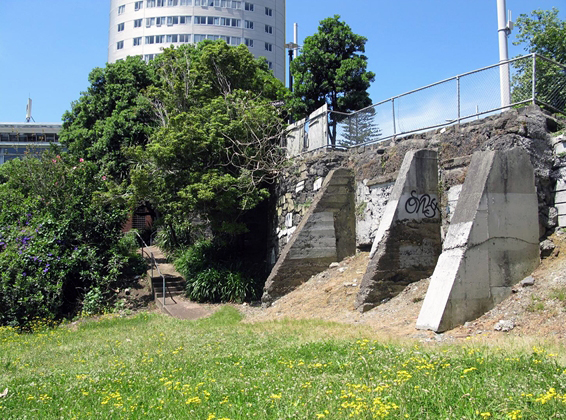
Logan Bank. Concrete wall remnants retaining Anzac Avenue
Logan Bank
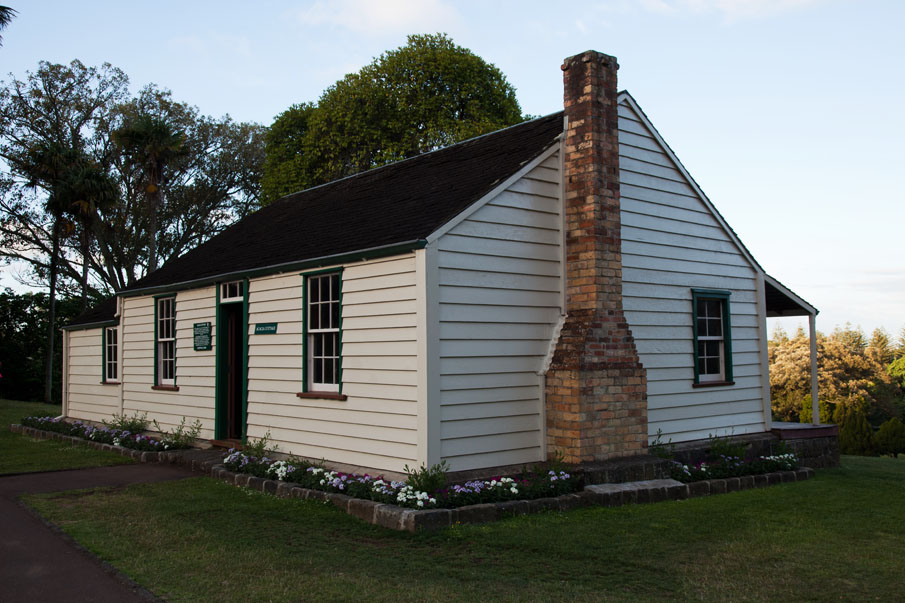
Acacia Cottage, Cornwall Park, Auckland. CC BY-SA 2.0 Image courtesy of commons.wikimedia.org
Acacia Cottage
Acacia Cottage, Cornwall Park, Auckland. CC BY-SA 2.0 Image courtesy of commons.wikimedia.org
Acacia Cottage
Logan Bank. Concrete wall remnants retaining Anzac Avenue
Logan Bank
Stay up to date with Heritage this month