Both iwi history and archaeological evidence show Māori occupation in the Ōtākou / Otago region since the 12th century. Today, Kāi Tahu mana whenua is recognised over a large part of Te Wai Pounamu.
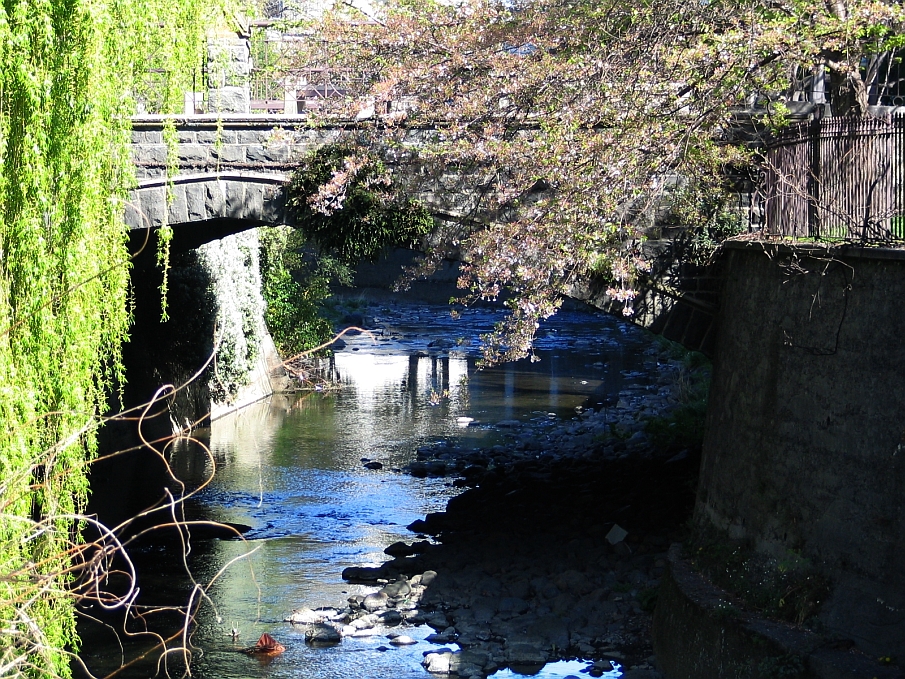
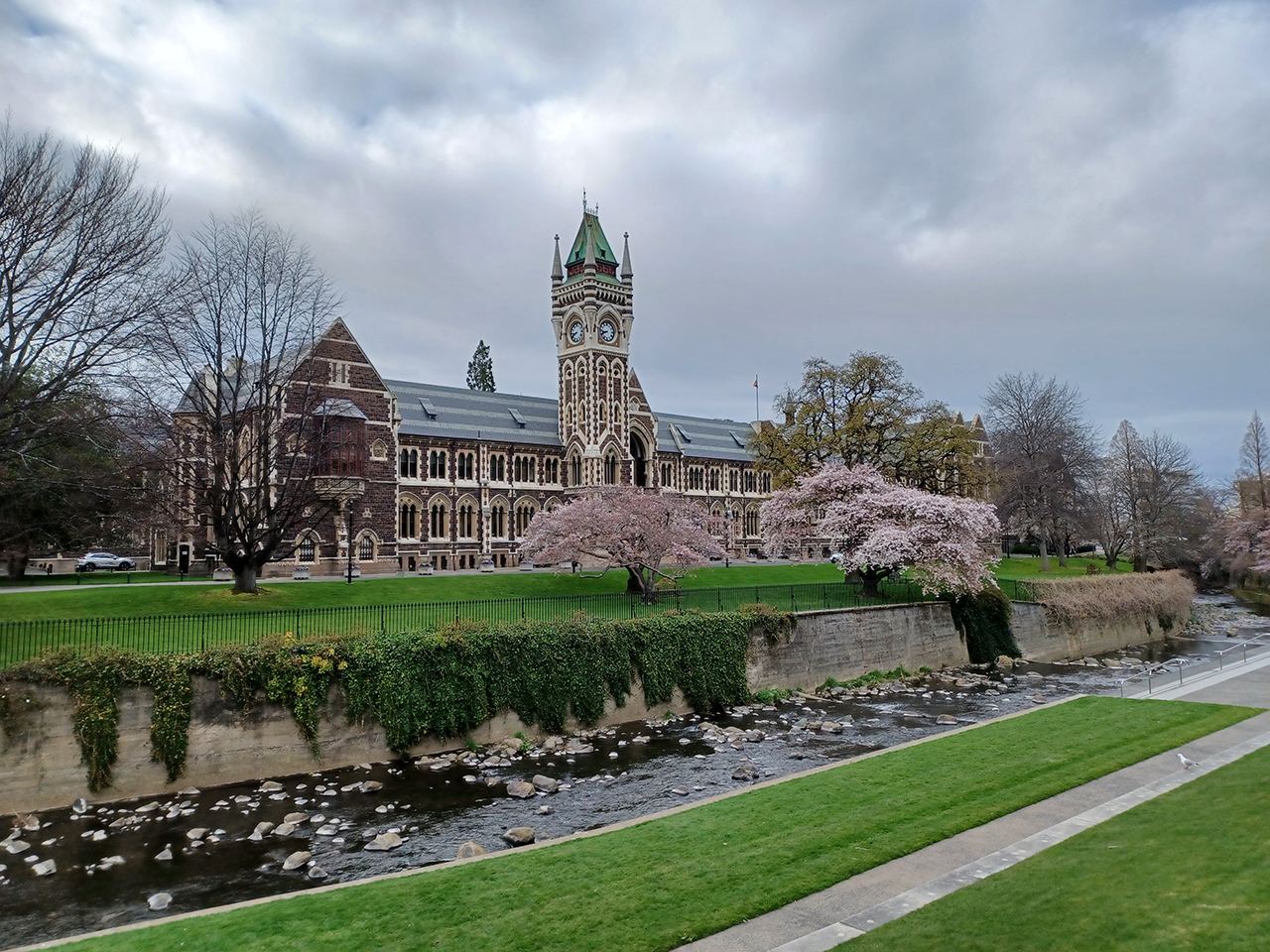
Kāti Māmoe and Waitaha shared occupation are always acknowledged. The hapū Kai Te Pahi, Kāti Moki, and Kāti Taoka still maintain their presence and responsibility as kaitiaki in this region. Traditional Māori place names include Ōwheo (the Water of Leith), a river that runs directly in front of the Clock Tower building and through campus, would have facilitated travel by waka from the coast to places further inland and the mouth of Ōwheo, known as Te Tutai o Te Matauira, was likely a valuable settlement area for accessing kaimoana and other resources.
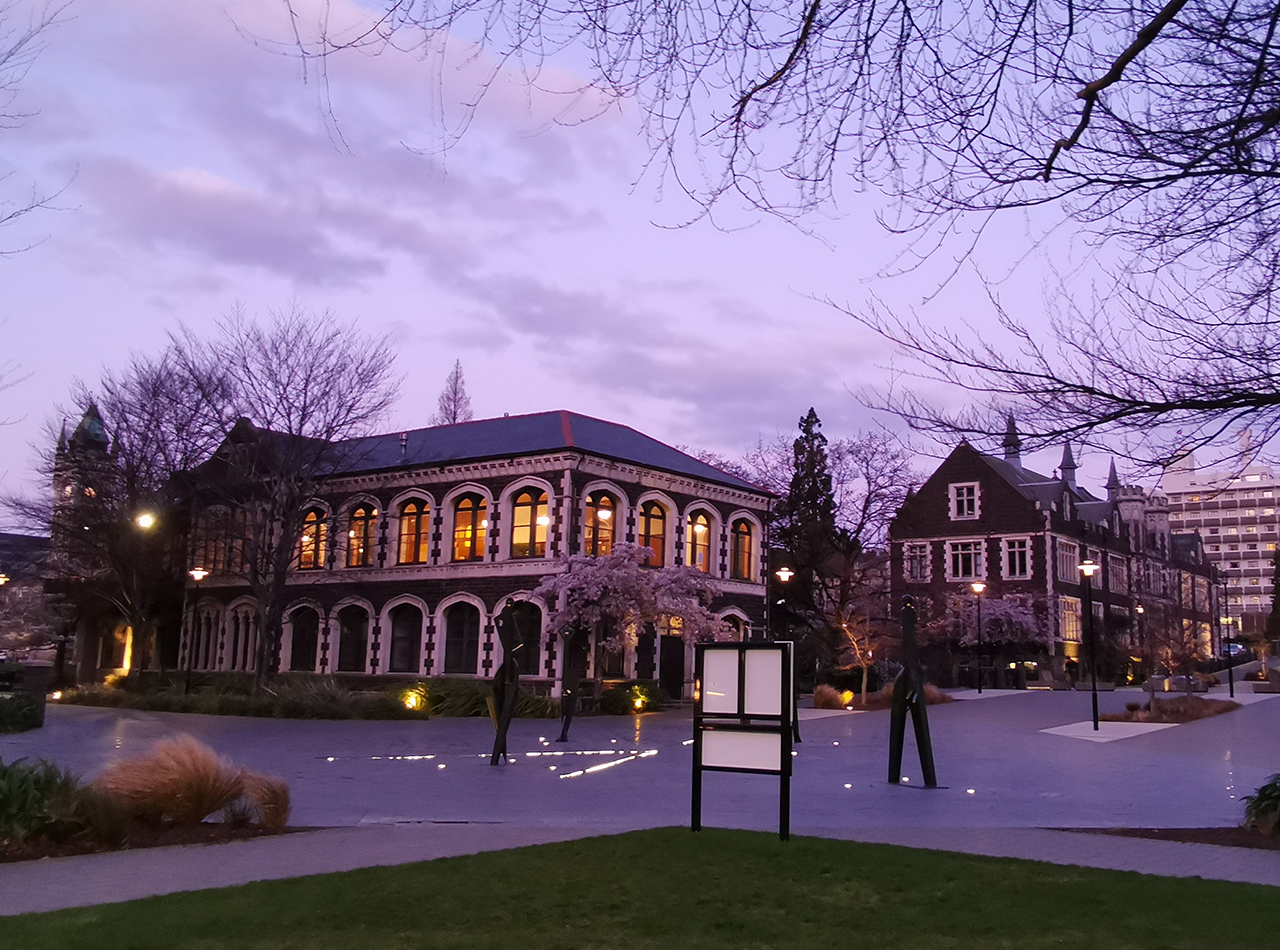
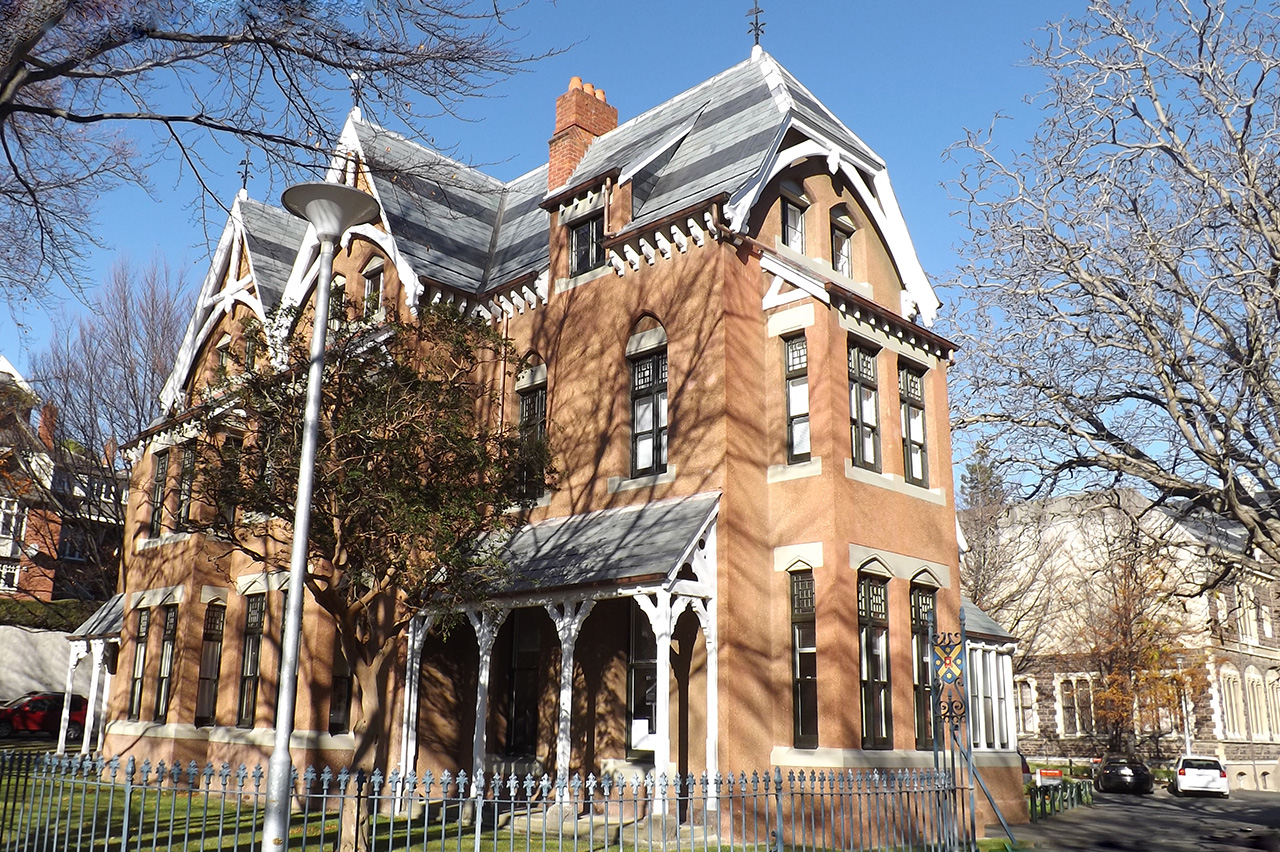
The Otago Provincial Council established New Zealand’s first university in 1869.5 The complex of university buildings built between 1878 and the 1920s constitutes a major example of nineteenth and early twentieth-century gothic in New Zealand. In 1876 architect Maxwell Bury (1825-1912) won the competition for the design of the Clock Tower (List No. 62) and Geology (List No. 4765) Professorial Houses (List No. 4406) buildings for the Otago University in 1877. Architect Edmund Anscombe (1874-1948) faithfully followed the style set by Bury as the campus continued to grow over the decades.
A School of Mines was envisioned early in the establishment of the University and in 1878 the school was established with Professor G.H.F. Ulrich (1830-1900) as its first director. This was the only institution in New Zealand which ran a university degree in mining and metallurgy. However, Richard Seddon (1845-1906), Minister of Mines, was opposed to the school and saw
it as an “elitist institution” and stated there would be no more funds unless evening classes were conducted and fees reduced.
The School of Mines moved into a new building in 1890 known as “the old tin shed.9 By 1892, evening classes were unpopular and it was impossible to examine specimens through a microscope with flickering gas lamps. A dredging boom occurred in Otago which increased the interest in mining courses. By 1899 there were 50 students, and the school became overcrowded and short of equipment. Professor Ulrich widened the school’s scope by becoming the first serious mineralogist in Australasia and under Ulrich, the School was compared to the famous Royal School of Mines for 1909.
Despite Seddon’s continual efforts to move the School out of Otago, a rowdy protest saw the School retained in Dunedin. In 1907 Parliament voted for £4000 ($820,936) for a new building and this increased by £5000 ($1034,463) the next year. The building to house the School of Mines was completed in 1909 designed by Edmund Anscombe and meant the students and staff no longer had to contend with a leaky tin shed.
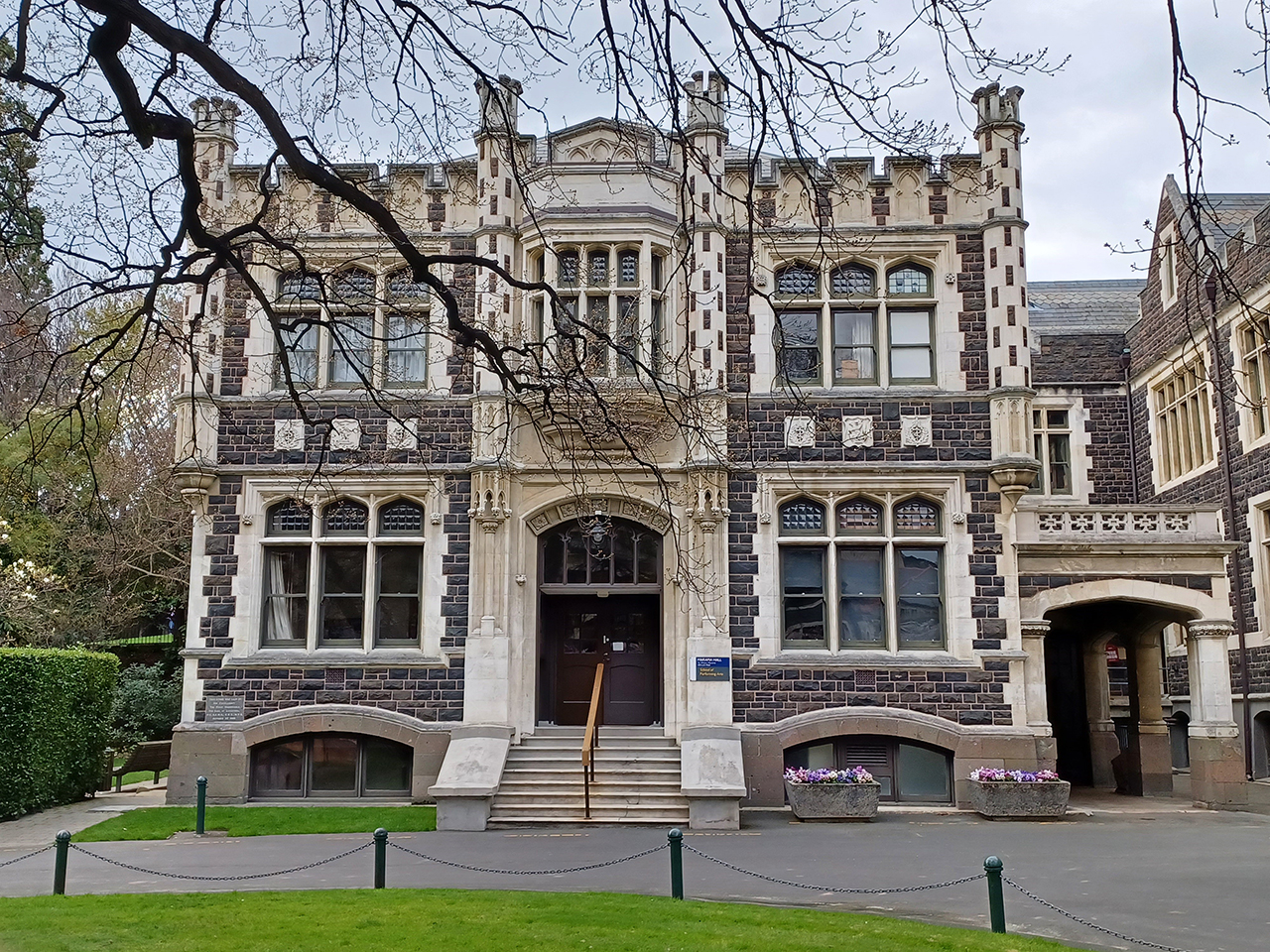
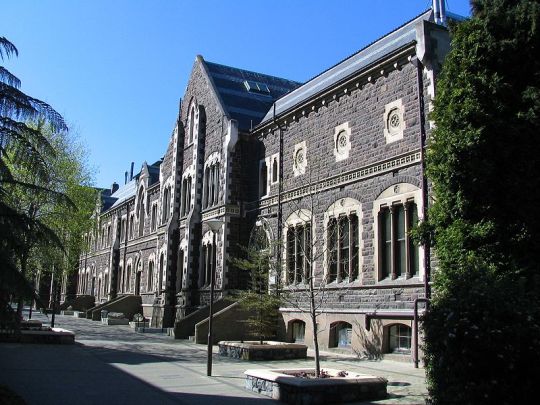
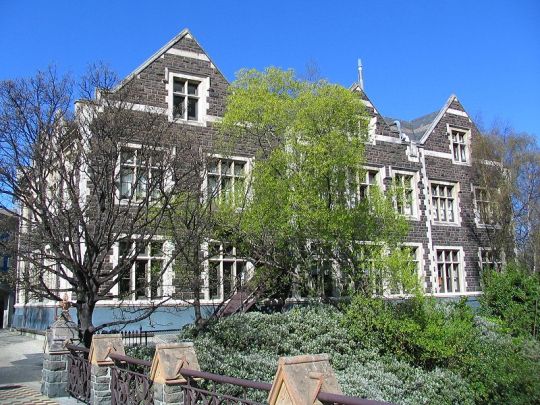
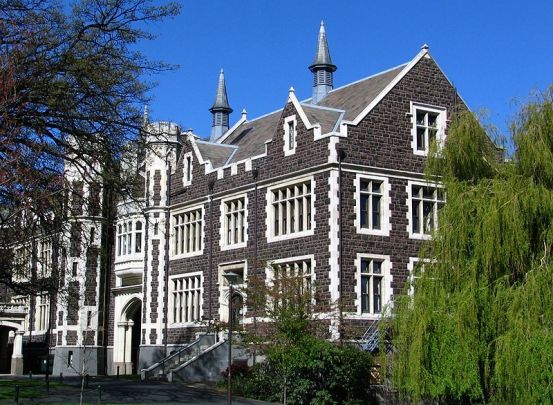
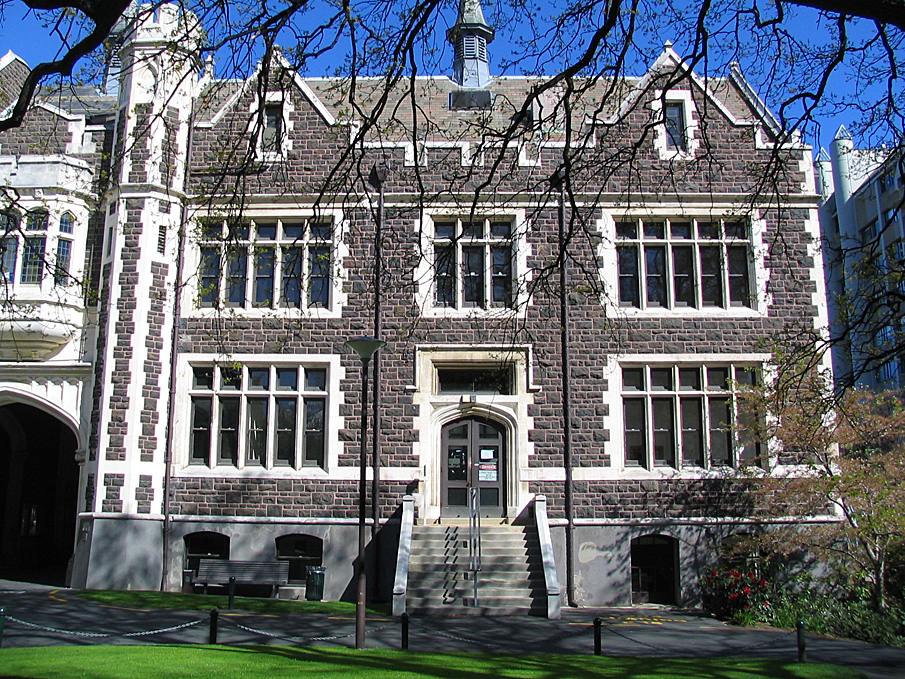
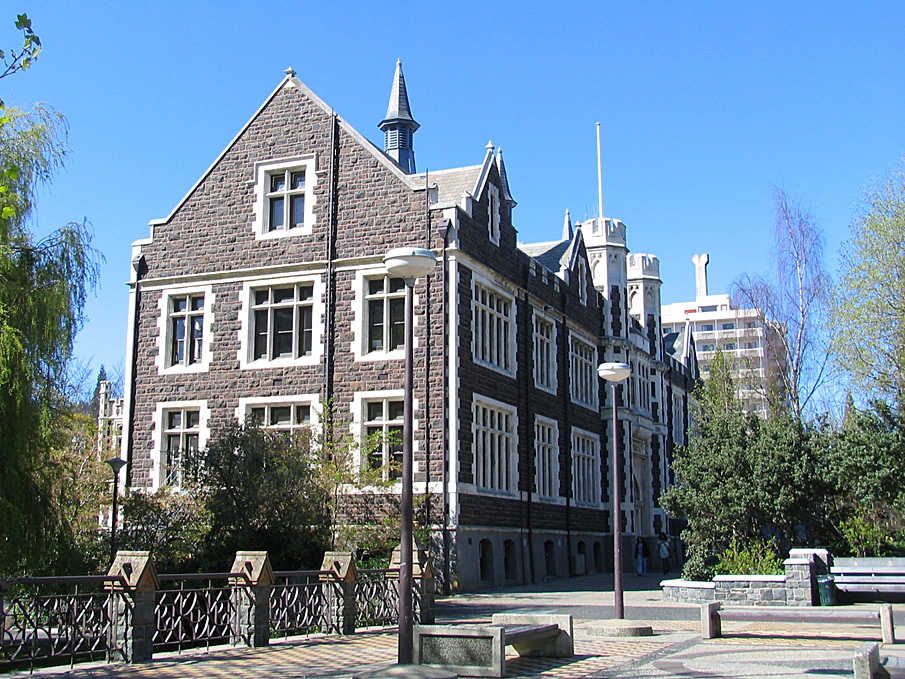
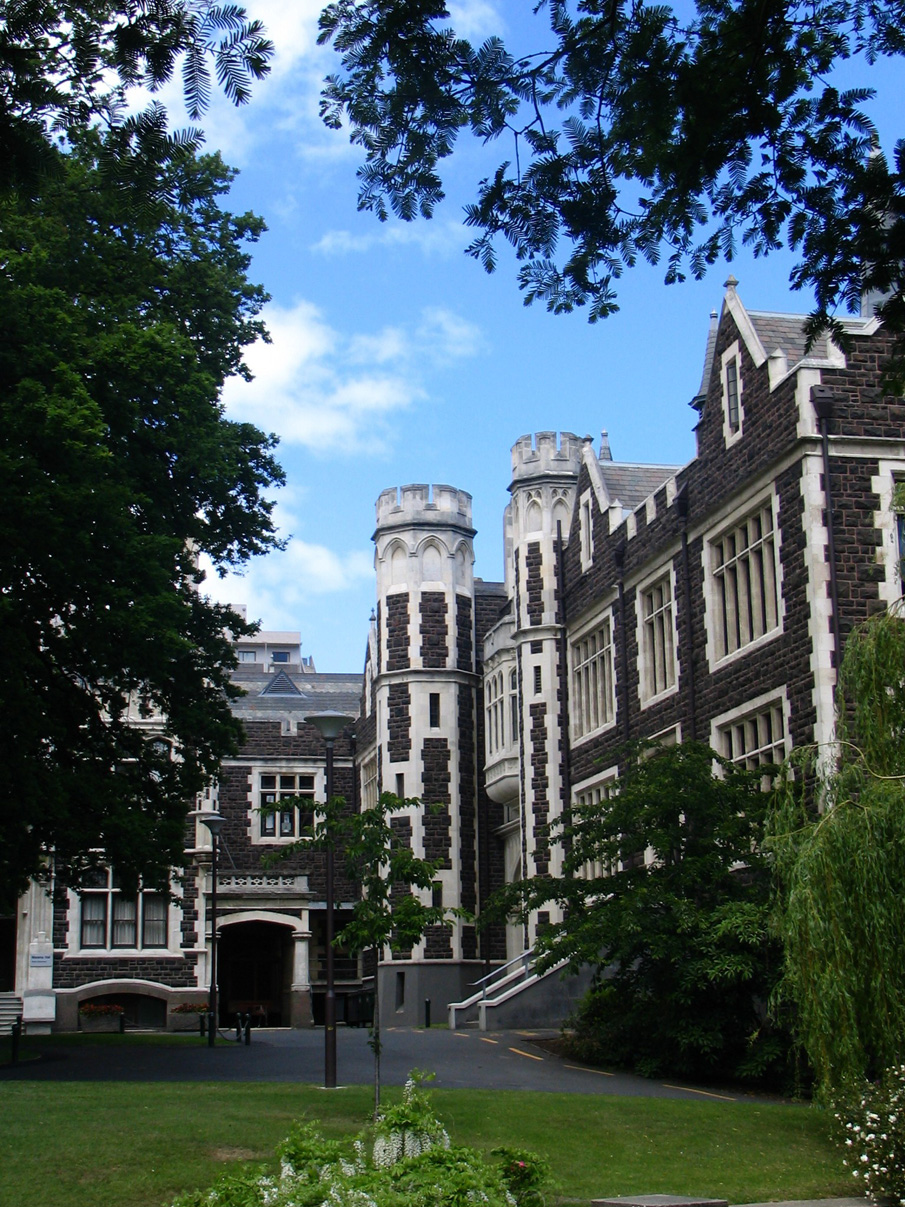
The new school was constructed of Leith Valley andesite with Oamaru stone facings with a slate roof. It had three lecture rooms, eight laboratories, a museum, a small library, photographic rooms, storerooms and cellars. It had electricity installed to enable better lighting. The windows were plainer than in the main blocks and have square tops. When Allen Hall (List No 2225) was built in 1912-14, the two buildings were then connected by the entrance Archway.
The outbreak of the First World War had a huge impact on the School with students enlisting. After WWII, New Zealand’s interest in industrialisation increased and the new Professor, GJ Williams, planned to implement a diploma in coal mining as well as expanding into surveying.
However, the emphasis on the coal industry was short-lived as the country’s focus turned to oil and electricity. The School of Mines was transferred to Auckland in 1962 leaving the smaller Department of Mineral Technology in the building. Surveying was moved into the Department of Science. Mineral Technology was finally transferred north in 1986 and the building now houses the Department of Marketing. There is one remaining remnant from the School of Mines - a rock-crushing machine which remains immovable in the basement.
List Entry Information
Status
Listed
List Entry Status
Historic Place Category 1
Access
Private/No Public Access
List Number
4771
Date Entered
27th July 1988
Date of Effect
27th July 1988
City/District Council
Dunedin City
Region
Otago Region
Extent of List Entry
Extent includes the land/part of the land described as Pt Block LXXI TN OF Dunedin, (RT OT299/36), Otago Land District, and building thereon.
Legal description
Pt Block LXXI TN OF Dunedin, (RT OT299/36), Otago Land District
Status
Listed
List Entry Status
Historic Place Category 1
Access
Private/No Public Access
List Number
4771
Date Entered
27th July 1988
Date of Effect
27th July 1988
City/District Council
Dunedin City
Region
Otago Region
Extent of List Entry
Extent includes the land/part of the land described as Pt Block LXXI TN OF Dunedin, (RT OT299/36), Otago Land District, and building thereon.
Legal description
Pt Block LXXI TN OF Dunedin, (RT OT299/36), Otago Land District
Why is this place significant?
Historic Significance
Historical Significance or Value Otago University was opened in 1871 and is the oldest of the New Zealand universities. One of the first professors, Professor J G Black, taught metallurgy as part of his Natural Sciences courses, but in 1878 a School of Mines was established with Professor G H F Ulrich as its first director. This was the only institution in NZ which ran a university degree in mining and metallurgy. The Otago School of Mines has shown a steady progression in its reputation and influence on the world scene of mining. It began on gold mining work, but Professor Ulrich widened its scope by becoming the first serious mineralogist in Australasia. Professor Park, director until the 1930s, was a man of great personality and confidence. He attracted good students who were accepted world-wide as sound mining men. Professor G J Williams in the mid twentieth century was more scholarly and began with work on tin mineralisation in Stewart Island. He worked overseas in Spain and advised several of the big mining companies of the world. On his retirement he worked for UNESCO in Teheran. The School of Mines was transferred to Auckland in 1960 leaving the smaller Department of Mineral Technology in the building. This department was transferred north in 1986 and the building now houses the Department of Marketing (though a rock crushing machine remains immovable in the basement).
Physical Significance
Architectural Significance: A part of the Gothic complex of University buildings built between 1878 and the 1920s, which constitutes a major example of nineteenth and early twentieth century gothic in New Zealand, impressive in its size and completeness. Townscape/Landmark Significance: An important street frontage building for the University complex.
Why is this place significant?
Historic Significance
Historical Significance or Value Otago University was opened in 1871 and is the oldest of the New Zealand universities. One of the first professors, Professor J G Black, taught metallurgy as part of his Natural Sciences courses, but in 1878 a School of Mines was established with Professor G H F Ulrich as its first director. This was the only institution in NZ which ran a university degree in mining and metallurgy. The Otago School of Mines has shown a steady progression in its reputation and influence on the world scene of mining. It began on gold mining work, but Professor Ulrich widened its scope by becoming the first serious mineralogist in Australasia. Professor Park, director until the 1930s, was a man of great personality and confidence. He attracted good students who were accepted world-wide as sound mining men. Professor G J Williams in the mid twentieth century was more scholarly and began with work on tin mineralisation in Stewart Island. He worked overseas in Spain and advised several of the big mining companies of the world. On his retirement he worked for UNESCO in Teheran. The School of Mines was transferred to Auckland in 1960 leaving the smaller Department of Mineral Technology in the building. This department was transferred north in 1986 and the building now houses the Department of Marketing (though a rock crushing machine remains immovable in the basement).
Physical Significance
Architectural Significance: A part of the Gothic complex of University buildings built between 1878 and the 1920s, which constitutes a major example of nineteenth and early twentieth century gothic in New Zealand, impressive in its size and completeness. Townscape/Landmark Significance: An important street frontage building for the University complex.
Construction Professional
Name
Anscombe, Edmund
Type
Architect
Biography
Anscombe (1874-1948) was born in Sussex and came to New Zealand as a child. He began work as a builder's apprentice in Dunedin and in 1901 went to America to study architecture. He returned to Dunedin in 1907 and designed the School of Mines building for the University of Otago. The success of this design gained him the position of architect to the University. Five of the main University buildings were designed by Anscombe, as well as Otago Girls' High School and several of Dunedin's finest commercial buildings including the Lindo Ferguson Building (1927) and the Haynes building. Anscombe moved to Wellington about 1928 and was known for his work as the designer of the Centennial Exhibition (1939-1940). Anscombe had travelled extensively and had visited major exhibitions in Australia, Germany and America. The practice of Edmund Anscombe and Associates, Architects, had offices in the Dunedin, Wellington and Hawkes Bay districts, and Anscombe's buildings include the Vocational Centre for Disabled Servicemen, Wellington (1943), Sargent Art Gallery, Wanganui, and several blocks of flats including Anscombe Flats, 212 Oriental Parade (1937) and Franconia, 136 The Terrace (1938), both in Wellington. As well as being interested in the housing problem, Anscombe held strong views concerning the industrial advancement of New Zealand. (See also http://www.dnzb.govt.nz/dnzb/ )
Construction Details
Start Year
1909
Type
Original Construction
Construction Materials
Constructed of Leith Valley andesite with Oamaru stone facings and a slate roof.
Notable Features
The strongly designed stonework in contrasting dark grey and white stone, its association with New Zealand's only university courses in mining until 1960.
Construction Professional
Name
Anscombe, Edmund
Type
Architect
Biography
Anscombe (1874-1948) was born in Sussex and came to New Zealand as a child. He began work as a builder's apprentice in Dunedin and in 1901 went to America to study architecture. He returned to Dunedin in 1907 and designed the School of Mines building for the University of Otago. The success of this design gained him the position of architect to the University. Five of the main University buildings were designed by Anscombe, as well as Otago Girls' High School and several of Dunedin's finest commercial buildings including the Lindo Ferguson Building (1927) and the Haynes building. Anscombe moved to Wellington about 1928 and was known for his work as the designer of the Centennial Exhibition (1939-1940). Anscombe had travelled extensively and had visited major exhibitions in Australia, Germany and America. The practice of Edmund Anscombe and Associates, Architects, had offices in the Dunedin, Wellington and Hawkes Bay districts, and Anscombe's buildings include the Vocational Centre for Disabled Servicemen, Wellington (1943), Sargent Art Gallery, Wanganui, and several blocks of flats including Anscombe Flats, 212 Oriental Parade (1937) and Franconia, 136 The Terrace (1938), both in Wellington. As well as being interested in the housing problem, Anscombe held strong views concerning the industrial advancement of New Zealand. (See also http://www.dnzb.govt.nz/dnzb/ )
Construction Details
Start Year
1909
Type
Original Construction
Construction Materials
Constructed of Leith Valley andesite with Oamaru stone facings and a slate roof.
Notable Features
The strongly designed stonework in contrasting dark grey and white stone, its association with New Zealand's only university courses in mining until 1960.
Architectural Description (Style): Anscombe faithfully followed the style set by Bury, which has been described as Domestic Gothic but Bury was influenced by Sir George Gilbert Scott's design for Glasgow University built in 1870. Bury improved on Scott's design with more lively gothic details. Modifications: Exterior unmodified but interior now modified for various teaching roles and more recently for the Department of Marketing.
Historical and Associated Iwi / Hapū / Whānau
Completion Date
2nd November 2024
Report Written By
Alison Breese
Information Sources
New Zealand Historic Places Trust (NZHPT)
New Zealand Historic Places Trust
Stacpoole, 1976
John Stacpoole, Colonial Architecture in New Zealand, Wellington, 1976
Heritage New Zealand
Clarke, 2018
Alison Clarke, Otago: 150 Years of New Zealand’s First University, Otago University Press, Dunedin, 2018.
Bowron, 2013
Bowron, Greg, 'Anscombe, Edmund', Dictionary of New Zealand Biography, first published in 1998, updated July 2013, Te Ara - the Encyclopedia of New Zealand, https://teara.govt.nz/en/biographies/4a17/anscombe-edmund (accessed 24 May 2023)
Marchant, 1993
Marchant, Anne, 'Bury, Maxwell', Dictionary of New Zealand Biography, first published in 1993. Te Ara - the Encyclopedia of New Zealand, https://teara.govt.nz/en/biographies/2b52/bury-maxwell (accessed 24 May 2023)
Nathan, Simon and Hayward, Bruce, 2023
Nathan, Simon and Hayward, Bruce, 'Building stone - Igneous rocks', Te Ara - the Encyclopedia of New Zealand, http://www.TeAra.govt.nz/en/photograph/8085/otago-university-clock-tower (accessed 16 May 2023)
Russell, Tristan and Greig, Karen, 2020
Russell, Tristan and Greig, Karen,’ Archaeological Assessment: Proposed landscaping between Castle Theatre and Information Services Building’, University of Otago, 2020.
Strachan, 1973
Strachan, J, ‘Report on the University Clock Tower Building’, for New Zealand Historic Places Trust, 1973.
Parry, 1979
Parry, AG, ‘Mining – its own business’, Otago Daily Times, 28 April, 1979.
Wilson, 2015
Wilson, John, 'Scots - Education', Te Ara - the Encyclopedia of New Zealand, http://www.TeAra.govt.nz/en/artwork/190/clock-tower-block-university-of-otago
Other Information
A fully referenced copy of the Upgrade Report is available upon request from the Otago/Southland Area Office of Heritage New Zealand Pouhere Taonga Disclaimer Please note that entry on the New Zealand Heritage List/Rārangi Kōrero identifies only the heritage values of the property concerned, and should not be construed as advice on the state of the property, or as a comment of its soundness or safety, including in regard to earthquake risk, safety in the event of fire, or insanitary conditions. Archaeological sites are protected by the Heritage New Zealand Pouhere Taonga Act 2014, regardless of whether they are entered on the New Zealand Heritage List/Rārangi Kōrero or not. Archaeological sites include ‘places associated with pre-1900 human activity, where there may be evidence relating to the history of New Zealand’. This List entry report should not be read as a statement on whether or not the archaeological provisions of the Act apply to the property (s) concerned. Please contact your local Heritage New Zealand office for archaeological advice.
Historical and Associated Iwi / Hapū / Whānau
Completion Date
2nd November 2024
Report Written By
Alison Breese
Information Sources
New Zealand Historic Places Trust (NZHPT)
New Zealand Historic Places Trust
Stacpoole, 1976
John Stacpoole, Colonial Architecture in New Zealand, Wellington, 1976
Heritage New Zealand
Clarke, 2018
Alison Clarke, Otago: 150 Years of New Zealand’s First University, Otago University Press, Dunedin, 2018.
Bowron, 2013
Bowron, Greg, 'Anscombe, Edmund', Dictionary of New Zealand Biography, first published in 1998, updated July 2013, Te Ara - the Encyclopedia of New Zealand, https://teara.govt.nz/en/biographies/4a17/anscombe-edmund (accessed 24 May 2023)
Marchant, 1993
Marchant, Anne, 'Bury, Maxwell', Dictionary of New Zealand Biography, first published in 1993. Te Ara - the Encyclopedia of New Zealand, https://teara.govt.nz/en/biographies/2b52/bury-maxwell (accessed 24 May 2023)
Nathan, Simon and Hayward, Bruce, 2023
Nathan, Simon and Hayward, Bruce, 'Building stone - Igneous rocks', Te Ara - the Encyclopedia of New Zealand, http://www.TeAra.govt.nz/en/photograph/8085/otago-university-clock-tower (accessed 16 May 2023)
Russell, Tristan and Greig, Karen, 2020
Russell, Tristan and Greig, Karen,’ Archaeological Assessment: Proposed landscaping between Castle Theatre and Information Services Building’, University of Otago, 2020.
Strachan, 1973
Strachan, J, ‘Report on the University Clock Tower Building’, for New Zealand Historic Places Trust, 1973.
Parry, 1979
Parry, AG, ‘Mining – its own business’, Otago Daily Times, 28 April, 1979.
Wilson, 2015
Wilson, John, 'Scots - Education', Te Ara - the Encyclopedia of New Zealand, http://www.TeAra.govt.nz/en/artwork/190/clock-tower-block-university-of-otago
Other Information
A fully referenced copy of the Upgrade Report is available upon request from the Otago/Southland Area Office of Heritage New Zealand Pouhere Taonga Disclaimer Please note that entry on the New Zealand Heritage List/Rārangi Kōrero identifies only the heritage values of the property concerned, and should not be construed as advice on the state of the property, or as a comment of its soundness or safety, including in regard to earthquake risk, safety in the event of fire, or insanitary conditions. Archaeological sites are protected by the Heritage New Zealand Pouhere Taonga Act 2014, regardless of whether they are entered on the New Zealand Heritage List/Rārangi Kōrero or not. Archaeological sites include ‘places associated with pre-1900 human activity, where there may be evidence relating to the history of New Zealand’. This List entry report should not be read as a statement on whether or not the archaeological provisions of the Act apply to the property (s) concerned. Please contact your local Heritage New Zealand office for archaeological advice.
Former Usages
General Usage: Education
Specific Usage: University
Former Usages
General Usage: Education
Specific Usage: University
Location
Related listings


Stay up to date with Heritage this month