DonateMembershipVisit Heritage
  • Tūrangawaewae
    Places
  • Tira Māori
    Māori Heritage
  • Poutairangahia
    Archaeology
  • Rauemi
    Resources
  • Mō Tātou
    About Us
  • New Zealand Heritage List
  • Nominate and submit
  • Explore the List
  • National Historic Landmarks
  • Plaques
  • Rainbow List Project
  • Lost heritage
  • Visit Heritage
  • Our properties
  • Turnbull House Project
  • Collections
  • Shop
  • Tohu Whenua
  • Tira Māori
  • Conserving Māori heritage
  • Marae built heritage
  • Māori heritage on the List
  • Hinemihi—Te Hokinga Mai
  • What is archaeology?
  • Is there a site on my property?
  • What are my legal requirements?
  • Affecting an archaeological site
  • Declaring an archaeological site
  • Archaeology FAQs
  • Archaeology Digital Library
  • Archaeology guidelines and templates
  • Resources
  • Funding
  • Publications
  • Sustainable management guides
  • Disaster recovery
  • Podcasts & digital resources
  • Education Hub
  • Conservation plans
  • About
  • Board
  • Māori Heritage Council
  • Senior Staff
  • Offices
  • Contact us
  • Careers
  • Covenants
  • Fast-track
  • Corporate documents
  • Currently consulting on
  • Our submissions
  • News
  • Covid-19 response
Quick links
Rārangi Kōrero | The List
Explore the List
National Historic Landmarks
Ngā Manawhenua o Aotearoa me ōna Kōrero Tūturu
Quick links
Tapuwae
A Vision for Places of Māori Heritage
Funding for Māori Heritage
Resources
Quick links
Archaeological Authority Portal
Applying for an archaeological authority
Archaeology FAQs
Browse the most frequently asked questions about archaeological authorities and the archaeological process.
Quick links
Quick links
News
News Keep up to date with Heritage New Zealand Pouhere Taonga
Membership
Membership Find out more and sign up today
DonateMembershipVisit Heritage
  • Tūrangawaewae
    Places
  • Tira Māori
    Māori Heritage
  • Poutairangahia
    Archaeology
  • Rauemi
    Resources
  • Mō Tātou
    About Us
  • New Zealand Heritage List
  • Nominate and submit
  • Explore the List
  • National Historic Landmarks
  • Plaques
  • Rainbow List Project
  • Lost heritage
  • Visit Heritage
  • Our properties
  • Turnbull House Project
  • Collections
  • Shop
  • Tohu Whenua
  • Tira Māori
  • Conserving Māori heritage
  • Marae built heritage
  • Māori heritage on the List
  • Hinemihi—Te Hokinga Mai
  • What is archaeology?
  • Is there a site on my property?
  • What are my legal requirements?
  • Affecting an archaeological site
  • Declaring an archaeological site
  • Archaeology FAQs
  • Archaeology Digital Library
  • Archaeology guidelines and templates
  • Resources
  • Funding
  • Publications
  • Sustainable management guides
  • Disaster recovery
  • Podcasts & digital resources
  • Education Hub
  • Conservation plans
  • About
  • Board
  • Māori Heritage Council
  • Senior Staff
  • Offices
  • Contact us
  • Careers
  • Covenants
  • Fast-track
  • Corporate documents
  • Currently consulting on
  • Our submissions
  • News
  • Covid-19 response
Quick links
Rārangi Kōrero | The List
Explore the List
National Historic Landmarks
Ngā Manawhenua o Aotearoa me ōna Kōrero Tūturu
Quick links
Tapuwae
A Vision for Places of Māori Heritage
Funding for Māori Heritage
Resources
Quick links
Archaeological Authority Portal
Applying for an archaeological authority
Archaeology FAQs
Browse the most frequently asked questions about archaeological authorities and the archaeological process.
Quick links
Quick links
News
News Keep up to date with Heritage New Zealand Pouhere Taonga
Membership
Membership Find out more and sign up today
  • Places
  • Nominate and submit
  • National Historic Landmarks
  • Places
  • Nominate and submit
  • National Historic Landmarks
  • Tira Māori
  • Conserving Māori heritage
  • Marae built heritage
  • Tira Māori
  • Conserving Māori heritage
  • Marae built heritage
  • Archaeological authorities
  • Archaeology Digital Library
  • Archaeological authorities
  • Archaeology Digital Library
  • All resources
  • Publications
  • Funding
  • All resources
  • Publications
  • Funding
  • FAQs
  • FAQs
Follow us on:
Places
  • Places
  • Nominate and submit
  • National Historic Landmarks
Tira Māori
  • Tira Māori
  • Conserving Māori heritage
  • Marae built heritage
Archaeology
  • Archaeological authorities
  • Archaeology Digital Library
Resources
  • All resources
  • Publications
  • Funding
FAQs
  • FAQs
Follow us on
HomePrivacyTerms and conditionsAbout this site
© Heritage New Zealand Pouhere Taonga 2026.
 
Trout Hatchery

331 Hardy Street, NELSON

Private

Historic Place Category 1

List No. 5115

Quick links:
List GalleryLocationDetails
Built in 1867, the Trout Hatchery that was constructed in Hardy Street, Nelson provides rare, early evidence of the late nineteenth-century trend towards the acclimatisation and propagation of English flora and fauna in New Zealand. From the 1860s, acclimatisation societies were established throughout the country by English emigrants who wished to recreate the environment and food sources they had known 'back home' while at the same time trialling crops, timber and animals that could improve their food supply and provide them with income. The Nelson Acclimatisation Society was established in 1863. Prompted by contemporary English experiments in the artificial reproduction of trout in fish hatcheries, the spread of the trout was one of the key areas on which Society chose to focus. In 1866 the secretary of the Society, Frederick Huddleston, wrote to the Nelson Provincial Council suggesting that a fish hatchery be established in the city to 'bring within our reach...an ample supply of wholesome and agreeable nourishment'. The council agreed to give the society all possible help 'to so praiseworthy an object' and Huddleston immediately began to construct a hatchery to plans he had obtained from the then leading English expert on the subject, Frank Buckland [1826-1880]. The following year Buckland was presented with a silver claret jug from the New Zealand government for his services to fish hatching.

The Trout Hatchery was constructed under Huddleston's supervision near the Nelson Provincial Council Buildings. Completed in 1867, the structure, together with three ponds for holding the fish, cost just £180 2s 3d. Hatcheries were designed to protect ova from uneven temperatures, predators and light which hinder the hatching process. Buckland's hatchery is hexagonal in plan and constructed of timber. Covered in trelliswork, the hatchery was four metres high and featured a strong door and narrow window that allowed a dim light into the building. The corrugated iron roof was capped by a ventilator, which helped keep the building cool during hatching season. Originally, the centre of the hatchery was occupied by three large, lead trays lined with boiled gravel, according to Buckland's directions. The fish eggs were spread over the gravel and water was piped into the trays from a stream on the east side of the hatchery. The water flowed over the eggs and then out of the building and into the fish ponds constructed outside.

In 1868 Huddleston travelled to Australia to bring back the first brown trout ova. They would be hatched successfully in the new building and used to stock local streams. In 1874 Premier Sir Julius Vogel [1835-1899] tasted the fish at a public dinner and commented favourably on its flavour. Regulations by the Provincial Council protected the trout spawned by the Society and from 1876 licenses were required before fishing was permitted; a move that effectively prevented Maori from fishing for eels in their traditional grounds. In the 1890s, the society began meeting in the hatchery and, to accommodate this additional function, seating and a concrete floor were installed. By the early twentieth-century, the impetus that had driven acclimatisation began to wane as the negative impact of introducing foreign species into the New Zealand environment became better understood. However, the propagation of trout remained popular. The Trout Hatchery was used until 1929, when a new hatchery was constructed east of the building. The three fishponds were demolished but the hatchery was taken over by the Nelson Angler's Club and used as clubrooms until the 1970s. Used as a storage facility for several years after this date, the Trout Hatchery is now a recognised historic asset. Constructed on Crown land that was declared an historic reserve in 1991, the building is actively managed by the Department of Conservation.

The Trout Hatchery is of great national and international significance. It is a very rare, surviving example of a hatchery designed and constructed in the 1860s, the period when hatcheries were first being developed in both Europe and New Zealand. It is of particular interest as it was based on a design by Frank Buckland, who was instrumental in developing the artificial fish hatching process in England and is still commemorated annually in that country. The Trout Hatchery is of architectural and educational significance as it embodies nineteenth-century theories on the conditions necessary for hatching to take place. It is of considerable historical interest as tangible evidence of early settler aspirations to recreate 'a little England' in the New Zealand environment. It dates from an early period in the history of Pakeha settlement in New Zealand and forms part of a wider historical landscape of acclimatisation and propagation of foreign species in New Zealand, the legacy of which continues to impact severely on New Zealand's indigenous environment.
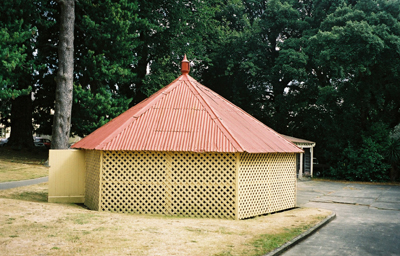
Trout Hatchery, Nelson | Rebecca O'Brien | 03/02/2003 | Heritage New Zealand
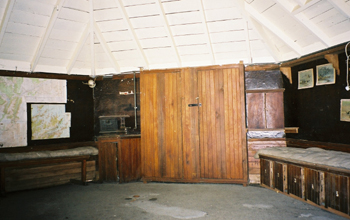
Trout Hatchery, Nelson. Interior | Rebecca O'Brien | 03/02/2003 | Heritage New Zealand
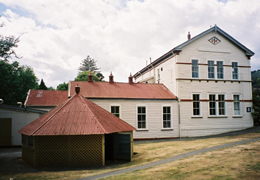
Trout Hatchery, Nelson. The buildings at the rear are the former Polytech which were originally used as a mill from which the hatchery obtained its water. | Rebecca O'Brien | 03/02/2003 | Heritage New Zealand
Trout Hatchery, Nelson | Rebecca O'Brien | 03/02/2003 | Heritage New Zealand
Trout Hatchery, Nelson. Interior | Rebecca O'Brien | 03/02/2003 | Heritage New Zealand
Trout Hatchery, Nelson. The buildings at the rear are the former Polytech which were originally used as a mill from which the hatchery obtained its water. | Rebecca O'Brien | 03/02/2003 | Heritage New Zealand

List Entry Information

Overview

Status
Listed

List Entry Status
Historic Place Category 1

Access
Private/No Public Access

List Number
5115

Date Entered
28th June 1990

Date of Effect
28th June 1990

City/District Council
Nelson City

Region
Nelson Region

Extent of List Entry

Extent of registration is the land described as Pt Sec 202 CITY OF Nelson (NZ Gazette 1990 p. 3737), Nelson Land District and the building known as Trout Hatchery thereon, and its fittings and fixtures

Legal description

Pt Sec 202 CITY OF Nelson (NZ Gazette 1990 p. 3737), Nelson Land District

Location Description

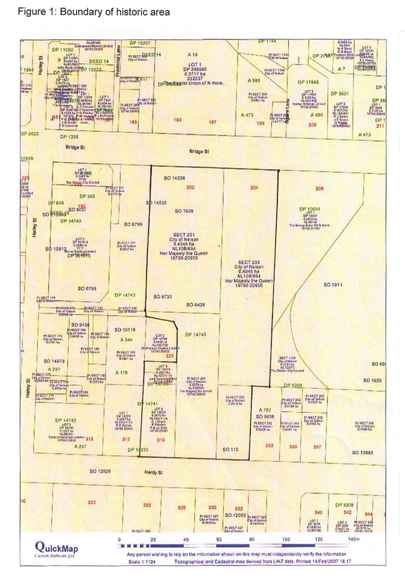
On Hardy Street in between the former Hardy Street Girls' School and the former Technical School and within the Albion Square Historic Area which is bounded on the north and south side by Hardy Street and Bridge Street in Nelson.

Detailed List Entry
Significance

Historic Significance

Historical Significance or Value This historic place was registered under the Historic Places Act 1980. The following text is from the original Building Classification Committee report considered by the NZHPT Board at the time of registration. HISTORICAL SIGNIFICANCE The earliest trout hatcheries in America were built in 1866 in Washington State, and the first commercially based hatcheries appeared in Great Britian in 1868. New Zealand was clearly developing trout hatcheries to provide for recreational fishing at the same time. The Nelson Trout Hatchery, built in 1867, is possibly one of the oldest such buildings surviving in the world. The unusual design and purpose of the Trout Hatchery make it a curiosity amongst the collection of historic buildings in the Nelson government grounds.

Physical Significance

This historic place was registered under the Historic Places Act 1980. The following text is from the original Building Classification Committee report considered by the NZHPT Board at the time of registration. ARCHITECTURAL QUALITY: The hexagonal shape of the trout hatchery building is visually attractive. The trelliswork cladding and the iron ventilator at the apex are features which in appearance transcend the purely utilitarian. TOWNSCAPE/LANDMARK VALUE: An important building in its park-like setting.

Construction Professional

Name

Buckland, Frank

Type

Architect

Biography

No biography is currently available for this construction professional

Construction Details

Start Year

1867

Type

Original Construction

Start Year

1890

Type

Modification

Description

Padded seats with lockers placed around the walls

Start Year

1890

Type

Modification

Description

Concrete floor installed

Start Year

1897

Type

Modification

Description

New Fish Box installed

Start Year

1905

Type

Modification

Description

New roof placed on building

Construction Materials

Hexagonal building clad with trelliswork constructed of timber with a hexagonal pyramid roof of corrugated iron and a concrete floor

Notable Features

Trellis wall cladding; iron ventilator.

Historical Narrative

This historic place was registered under the Historic Places Act 1980. The following text is from the original Building Classification Committee report considered by the NZHPT Board at the time of registration. DESCRIPTION: The Nelson Acclimatisation Society was established in 1863. In June 1867 the Superintendent of Nelson Province gave approval for the construction of three ponds and a hatching house near the Government Buildings. These were completed by 12 September 1867. A shipment of carp was received from Tasmania in December 1867 to stock the new ponds. The first brown trout ova were brought from Australia by Frederick Huddleston, Secretary of the Society, in August 1868, and these were successfully hatched in the new hatchery and used to stock local streams. The Trout Hatchery was used until 1930. The Nelson Anglers' Club used the old hatchery for meetings until about 1970. The building is now used for storage by the Nelson Electoral Returning Officer.

Physical Description

This historic place was registered under the Historic Places Act 1980. The following text is from the original Building Classification Committee report considered by the NZHPT Board at the time of registration. ARCHITECT/ENGINEER/DESIGNER: Frank Buckland, an Englishman, supplied plans and specifications to Frederick Huddleston, the Secretary of the Nelson Acclimatisation Society who directed the building of the hatchery and ponds on the basis of the information supplied by Buckland. ARCHITECTURAL DESCRIPTION: The Trout Hatchery has a hexagonal plan, each side being 3.3 metres in length with walls 1.7 metres high. The roof form is a hexagonal pyramid capped by an iron ventilator 4 metres from ground level. The eaves overhang the walls by about 300mm and have no guttering. The wall exteriors are clad with diagonal trelliswork. There is a plain door in the western side of the building and two narrow windows are placed immediately beneath the eaves on the northern wall. The rafters support 150mm wide sarking covered with corrugated iron. There is constructional evidence of there having been former vents in the north and south facets of the roof. The interior walls have tongue-and-groove lining covered with scrim and wallpapers. There are several electric light fittings and lengths of water pipe installed around the interior of the hatchery, most of them disused. MODIFICATIONS: A concrete floor was poured some years after the original construction date. The interior wall linings are also more recent, probably dating from the 1930s. The north facing windows have been covered with plywood and the roof vents have been covered over by subsequent roofing maintenance.

Reference

Completion Date

28th February 2003

Report Written By

Rebecca O'Brien

Information Sources

Burgess, 1967

G. Burgess, 'The Curious World of Frank Buckland', London, 1967

Department of Conservation

Department of Conservation

Hobbs, 1948

D. Hobbs, Trout Fisheries in New Zealand; Their Development and Management, Wellington, 1948

Manners, 1898

H. Manners, The Trout; by the Marquess of Granby; with chapters on breeding by F. H. Custance; cookery by Alexander Innes Shand, London, 1898

Plans

Architectural Drawings/Plans

Sowman, 1968

W. Sowman, Meadow, mountain, forest and stream: the provincial history of the Nelson Acclimatisation Society, Nelson, 1968

Report Written By

A fully referenced version of this report is available from the NZHPT Central Region Office This historic place was registered under the Historic Places Act 1980. This report includes the text from the original Building Classification Committee report considered by the NZHPT Board at the time of registration. Please note that entry on the New Zealand Heritage List/Rarangi Korero identifies only the heritage values of the property concerned, and should not be construed as advice on the state of the property, or as a comment of its soundness or safety, including in regard to earthquake risk, safety in the event of fire, or insanitary conditions.

Further Information

Current Usages

Uses: Civic Facilities

Specific Usage: Historic or recreation reserve

Former Usages

General Usage:: Civic Facilities

Specific Usage: Club rooms/building

Themes

Web Links

Overview

Status

Listed

List Entry Status

Historic Place Category 1

Access

Private/No Public Access

List Number

5115

Date Entered

28th June 1990

Date of Effect

28th June 1990

City/District Council

Nelson City

Region

Nelson Region

Extent of List Entry

Extent of registration is the land described as Pt Sec 202 CITY OF Nelson (NZ Gazette 1990 p. 3737), Nelson Land District and the building known as Trout Hatchery thereon, and its fittings and fixtures

Legal description

Pt Sec 202 CITY OF Nelson (NZ Gazette 1990 p. 3737), Nelson Land District

Location Description

On Hardy Street in between the former Hardy Street Girls' School and the former Technical School and within the Albion Square Historic Area which is bounded on the north and south side by Hardy Street and Bridge Street in Nelson.

Status

Listed

List Entry Status

Historic Place Category 1

Access

Private/No Public Access

List Number

5115

Date Entered

28th June 1990

Date of Effect

28th June 1990

City/District Council

Nelson City

Region

Nelson Region

Extent of List Entry

Extent of registration is the land described as Pt Sec 202 CITY OF Nelson (NZ Gazette 1990 p. 3737), Nelson Land District and the building known as Trout Hatchery thereon, and its fittings and fixtures

Legal description

Pt Sec 202 CITY OF Nelson (NZ Gazette 1990 p. 3737), Nelson Land District

Location Description

On Hardy Street in between the former Hardy Street Girls' School and the former Technical School and within the Albion Square Historic Area which is bounded on the north and south side by Hardy Street and Bridge Street in Nelson.

Significance

Why is this place significant?

Historic Significance

Historical Significance or Value This historic place was registered under the Historic Places Act 1980. The following text is from the original Building Classification Committee report considered by the NZHPT Board at the time of registration. HISTORICAL SIGNIFICANCE The earliest trout hatcheries in America were built in 1866 in Washington State, and the first commercially based hatcheries appeared in Great Britian in 1868. New Zealand was clearly developing trout hatcheries to provide for recreational fishing at the same time. The Nelson Trout Hatchery, built in 1867, is possibly one of the oldest such buildings surviving in the world. The unusual design and purpose of the Trout Hatchery make it a curiosity amongst the collection of historic buildings in the Nelson government grounds.

Physical Significance

This historic place was registered under the Historic Places Act 1980. The following text is from the original Building Classification Committee report considered by the NZHPT Board at the time of registration. ARCHITECTURAL QUALITY: The hexagonal shape of the trout hatchery building is visually attractive. The trelliswork cladding and the iron ventilator at the apex are features which in appearance transcend the purely utilitarian. TOWNSCAPE/LANDMARK VALUE: An important building in its park-like setting.

Why is this place significant?

Historic Significance

Historical Significance or Value This historic place was registered under the Historic Places Act 1980. The following text is from the original Building Classification Committee report considered by the NZHPT Board at the time of registration. HISTORICAL SIGNIFICANCE The earliest trout hatcheries in America were built in 1866 in Washington State, and the first commercially based hatcheries appeared in Great Britian in 1868. New Zealand was clearly developing trout hatcheries to provide for recreational fishing at the same time. The Nelson Trout Hatchery, built in 1867, is possibly one of the oldest such buildings surviving in the world. The unusual design and purpose of the Trout Hatchery make it a curiosity amongst the collection of historic buildings in the Nelson government grounds.

Physical Significance

This historic place was registered under the Historic Places Act 1980. The following text is from the original Building Classification Committee report considered by the NZHPT Board at the time of registration. ARCHITECTURAL QUALITY: The hexagonal shape of the trout hatchery building is visually attractive. The trelliswork cladding and the iron ventilator at the apex are features which in appearance transcend the purely utilitarian. TOWNSCAPE/LANDMARK VALUE: An important building in its park-like setting.

Construction Information

Construction Professional

Name

Buckland, Frank

Type

Architect

Biography

No biography is currently available for this construction professional

Construction Details

Start Year

1867

Type

Original Construction

Start Year

1890

Type

Modification

Description

Padded seats with lockers placed around the walls

Start Year

1890

startYearCirca

Type

Modification

Description

Concrete floor installed

Start Year

1897

Type

Modification

Description

New Fish Box installed

Start Year

1905

Type

Modification

Description

New roof placed on building

Construction Materials

Hexagonal building clad with trelliswork constructed of timber with a hexagonal pyramid roof of corrugated iron and a concrete floor

Notable Features

Trellis wall cladding; iron ventilator.

Construction Professional

Name

Buckland, Frank

Type

Architect

Biography

No biography is currently available for this construction professional

Construction Details

Start Year

1867

Type

Original Construction

Start Year

1890

Type

Modification

Description

Padded seats with lockers placed around the walls

Start Year

1890

startYearCirca

Type

Modification

Description

Concrete floor installed

Start Year

1897

Type

Modification

Description

New Fish Box installed

Start Year

1905

Type

Modification

Description

New roof placed on building

Construction Materials

Hexagonal building clad with trelliswork constructed of timber with a hexagonal pyramid roof of corrugated iron and a concrete floor

Notable Features

Trellis wall cladding; iron ventilator.

Historical Narrative

This historic place was registered under the Historic Places Act 1980. The following text is from the original Building Classification Committee report considered by the NZHPT Board at the time of registration. DESCRIPTION: The Nelson Acclimatisation Society was established in 1863. In June 1867 the Superintendent of Nelson Province gave approval for the construction of three ponds and a hatching house near the Government Buildings. These were completed by 12 September 1867. A shipment of carp was received from Tasmania in December 1867 to stock the new ponds. The first brown trout ova were brought from Australia by Frederick Huddleston, Secretary of the Society, in August 1868, and these were successfully hatched in the new hatchery and used to stock local streams. The Trout Hatchery was used until 1930. The Nelson Anglers' Club used the old hatchery for meetings until about 1970. The building is now used for storage by the Nelson Electoral Returning Officer.

This historic place was registered under the Historic Places Act 1980. The following text is from the original Building Classification Committee report considered by the NZHPT Board at the time of registration. DESCRIPTION: The Nelson Acclimatisation Society was established in 1863. In June 1867 the Superintendent of Nelson Province gave approval for the construction of three ponds and a hatching house near the Government Buildings. These were completed by 12 September 1867. A shipment of carp was received from Tasmania in December 1867 to stock the new ponds. The first brown trout ova were brought from Australia by Frederick Huddleston, Secretary of the Society, in August 1868, and these were successfully hatched in the new hatchery and used to stock local streams. The Trout Hatchery was used until 1930. The Nelson Anglers' Club used the old hatchery for meetings until about 1970. The building is now used for storage by the Nelson Electoral Returning Officer.

Physical Description

This historic place was registered under the Historic Places Act 1980. The following text is from the original Building Classification Committee report considered by the NZHPT Board at the time of registration. ARCHITECT/ENGINEER/DESIGNER: Frank Buckland, an Englishman, supplied plans and specifications to Frederick Huddleston, the Secretary of the Nelson Acclimatisation Society who directed the building of the hatchery and ponds on the basis of the information supplied by Buckland. ARCHITECTURAL DESCRIPTION: The Trout Hatchery has a hexagonal plan, each side being 3.3 metres in length with walls 1.7 metres high. The roof form is a hexagonal pyramid capped by an iron ventilator 4 metres from ground level. The eaves overhang the walls by about 300mm and have no guttering. The wall exteriors are clad with diagonal trelliswork. There is a plain door in the western side of the building and two narrow windows are placed immediately beneath the eaves on the northern wall. The rafters support 150mm wide sarking covered with corrugated iron. There is constructional evidence of there having been former vents in the north and south facets of the roof. The interior walls have tongue-and-groove lining covered with scrim and wallpapers. There are several electric light fittings and lengths of water pipe installed around the interior of the hatchery, most of them disused. MODIFICATIONS: A concrete floor was poured some years after the original construction date. The interior wall linings are also more recent, probably dating from the 1930s. The north facing windows have been covered with plywood and the roof vents have been covered over by subsequent roofing maintenance.

This historic place was registered under the Historic Places Act 1980. The following text is from the original Building Classification Committee report considered by the NZHPT Board at the time of registration. ARCHITECT/ENGINEER/DESIGNER: Frank Buckland, an Englishman, supplied plans and specifications to Frederick Huddleston, the Secretary of the Nelson Acclimatisation Society who directed the building of the hatchery and ponds on the basis of the information supplied by Buckland. ARCHITECTURAL DESCRIPTION: The Trout Hatchery has a hexagonal plan, each side being 3.3 metres in length with walls 1.7 metres high. The roof form is a hexagonal pyramid capped by an iron ventilator 4 metres from ground level. The eaves overhang the walls by about 300mm and have no guttering. The wall exteriors are clad with diagonal trelliswork. There is a plain door in the western side of the building and two narrow windows are placed immediately beneath the eaves on the northern wall. The rafters support 150mm wide sarking covered with corrugated iron. There is constructional evidence of there having been former vents in the north and south facets of the roof. The interior walls have tongue-and-groove lining covered with scrim and wallpapers. There are several electric light fittings and lengths of water pipe installed around the interior of the hatchery, most of them disused. MODIFICATIONS: A concrete floor was poured some years after the original construction date. The interior wall linings are also more recent, probably dating from the 1930s. The north facing windows have been covered with plywood and the roof vents have been covered over by subsequent roofing maintenance.

Reference

Historical and Associated Iwi / Hapū / Whānau

Completion Date

28th February 2003

Report Written By

Rebecca O'Brien

Information Sources

Burgess, 1967

G. Burgess, 'The Curious World of Frank Buckland', London, 1967

Department of Conservation

Department of Conservation

Hobbs, 1948

D. Hobbs, Trout Fisheries in New Zealand; Their Development and Management, Wellington, 1948

Manners, 1898

H. Manners, The Trout; by the Marquess of Granby; with chapters on breeding by F. H. Custance; cookery by Alexander Innes Shand, London, 1898

Plans

Architectural Drawings/Plans

Sowman, 1968

W. Sowman, Meadow, mountain, forest and stream: the provincial history of the Nelson Acclimatisation Society, Nelson, 1968

Other Information

A fully referenced version of this report is available from the NZHPT Central Region Office This historic place was registered under the Historic Places Act 1980. This report includes the text from the original Building Classification Committee report considered by the NZHPT Board at the time of registration. Please note that entry on the New Zealand Heritage List/Rarangi Korero identifies only the heritage values of the property concerned, and should not be construed as advice on the state of the property, or as a comment of its soundness or safety, including in regard to earthquake risk, safety in the event of fire, or insanitary conditions.

Historical and Associated Iwi / Hapū / Whānau

Completion Date

28th February 2003

Report Written By

Rebecca O'Brien

Information Sources

Burgess, 1967

G. Burgess, 'The Curious World of Frank Buckland', London, 1967

Department of Conservation

Department of Conservation

Hobbs, 1948

D. Hobbs, Trout Fisheries in New Zealand; Their Development and Management, Wellington, 1948

Manners, 1898

H. Manners, The Trout; by the Marquess of Granby; with chapters on breeding by F. H. Custance; cookery by Alexander Innes Shand, London, 1898

Plans

Architectural Drawings/Plans

Sowman, 1968

W. Sowman, Meadow, mountain, forest and stream: the provincial history of the Nelson Acclimatisation Society, Nelson, 1968

Other Information

A fully referenced version of this report is available from the NZHPT Central Region Office This historic place was registered under the Historic Places Act 1980. This report includes the text from the original Building Classification Committee report considered by the NZHPT Board at the time of registration. Please note that entry on the New Zealand Heritage List/Rarangi Korero identifies only the heritage values of the property concerned, and should not be construed as advice on the state of the property, or as a comment of its soundness or safety, including in regard to earthquake risk, safety in the event of fire, or insanitary conditions.

Further Information

Current Usages

Uses: Civic Facilities

Specific Usage: Historic or recreation reserve

Former Usages

General Usage: Civic Facilities

Specific Usage: Club rooms/building

Current Usages

Uses: Civic Facilities

Specific Usage: Historic or recreation reserve

Former Usages

General Usage: Civic Facilities

Specific Usage: Club rooms/building

Location

Loading
Related listings
Albion Square Historic Area. Plan of Historic Area from registration report
Albion Square Historic Area
Albion Square Historic Area. Plan of Historic Area from registration report
Albion Square Historic Area
Stay up to date with Heritage this month