DonateSupporterVisit Heritage
  • Tūrangawaewae
    Places
  • Tira Māori
    Māori Heritage
  • Poutairangahia
    Archaeology
  • Rauemi
    Resources
  • Mō Tātou
    About Us
  • New Zealand Heritage List
  • Nominate and submit
  • Explore the List
  • National Historic Landmarks
  • Plaques
  • Rainbow List Project
  • Lost heritage
  • Visit Heritage
  • Our properties
  • Turnbull House Project
  • Collections
  • Shop
  • Tohu Whenua
  • Tira Māori
  • Conserving Māori heritage
  • Marae built heritage
  • Māori heritage on the List
  • Hinemihi—Te Hokinga Mai
  • What is archaeology?
  • Is there a site on my property?
  • What are my legal requirements?
  • Affecting an archaeological site
  • Declaring an archaeological site
  • Archaeology FAQs
  • Archaeology Digital Library
  • Archaeology guidelines and templates
  • Resources
  • Funding
  • Publications
  • Sustainable management guides
  • Disaster recovery
  • Podcasts & digital resources
  • Education Hub
  • Conservation plans
  • About
  • Board
  • Māori Heritage Council
  • Senior Staff
  • Offices
  • Contact us
  • Careers
  • Covenants
  • Fast-track
  • Corporate documents
  • Currently consulting on
  • Our submissions
  • News
  • Covid-19 response
Quick links
Rārangi Kōrero | The List
Explore the List
National Historic Landmarks
Ngā Manawhenua o Aotearoa me ōna Kōrero Tūturu
Quick links
Tapuwae
A Vision for Places of Māori Heritage
Funding for Māori Heritage
Resources
Quick links
Archaeological Authority Portal
Applying for an archaeological authority
Archaeology FAQs
Browse the most frequently asked questions about archaeological authorities and the archaeological process.
Quick links
Quick links
Contact us
Offices
DonateSupporterVisit Heritage
  • Tūrangawaewae
    Places
  • Tira Māori
    Māori Heritage
  • Poutairangahia
    Archaeology
  • Rauemi
    Resources
  • Mō Tātou
    About Us
  • New Zealand Heritage List
  • Nominate and submit
  • Explore the List
  • National Historic Landmarks
  • Plaques
  • Rainbow List Project
  • Lost heritage
  • Visit Heritage
  • Our properties
  • Turnbull House Project
  • Collections
  • Shop
  • Tohu Whenua
  • Tira Māori
  • Conserving Māori heritage
  • Marae built heritage
  • Māori heritage on the List
  • Hinemihi—Te Hokinga Mai
  • What is archaeology?
  • Is there a site on my property?
  • What are my legal requirements?
  • Affecting an archaeological site
  • Declaring an archaeological site
  • Archaeology FAQs
  • Archaeology Digital Library
  • Archaeology guidelines and templates
  • Resources
  • Funding
  • Publications
  • Sustainable management guides
  • Disaster recovery
  • Podcasts & digital resources
  • Education Hub
  • Conservation plans
  • About
  • Board
  • Māori Heritage Council
  • Senior Staff
  • Offices
  • Contact us
  • Careers
  • Covenants
  • Fast-track
  • Corporate documents
  • Currently consulting on
  • Our submissions
  • News
  • Covid-19 response
Quick links
Rārangi Kōrero | The List
Explore the List
National Historic Landmarks
Ngā Manawhenua o Aotearoa me ōna Kōrero Tūturu
Quick links
Tapuwae
A Vision for Places of Māori Heritage
Funding for Māori Heritage
Resources
Quick links
Archaeological Authority Portal
Applying for an archaeological authority
Archaeology FAQs
Browse the most frequently asked questions about archaeological authorities and the archaeological process.
Quick links
Quick links
Contact us
Offices
  • Places
  • Nominate and submit
  • National Historic Landmarks
  • Places
  • Nominate and submit
  • National Historic Landmarks
  • Tira Māori
  • Conserving Māori heritage
  • Marae built heritage
  • Tira Māori
  • Conserving Māori heritage
  • Marae built heritage
  • Archaeological authorities
  • Archaeology Digital Library
  • Archaeological authorities
  • Archaeology Digital Library
  • All resources
  • Publications
  • Funding
  • All resources
  • Publications
  • Funding
  • FAQs
  • FAQs
Follow us on:
Places
  • Places
  • Nominate and submit
  • National Historic Landmarks
Tira Māori
  • Tira Māori
  • Conserving Māori heritage
  • Marae built heritage
Archaeology
  • Archaeological authorities
  • Archaeology Digital Library
Resources
  • All resources
  • Publications
  • Funding
FAQs
  • FAQs
Follow us on
HomePrivacyTerms and conditionsAbout this site
© Heritage New Zealand Pouhere Taonga 2026.
 
Ponga Whare

Wharekauri Station, Wharekauri Road, CHATHAM ISLANDS

Private

Historic Place Category 1

List No. 5399

Quick links:
List GalleryLocationDetails
Ponga Whare, constructed circa 1867 at Wharekauri Station on Rēkohu/Wharekauri (Chatham Islands), is among the oldest surviving European-era domestic structures on the islands and holds outstanding historical and architectural significance. Built for station owner Edward Chudleigh, the dwelling was constructed using ponga (tree fern trunks) (Cyathea cunninghamii) and local timbers – a distinctive adaptation to the islands’ remote environment and limited building resources. This vernacular building style was once common to the Chatham Islands during the mid to late nineteenth century. Oral and written sources suggest that Māori prisoners transported to the Chathams following the East Coast conflicts of the 1860s may have provided labour for its construction. The whare therefore stands at a unique intersection of early pastoral life, penal-labour dynamics, Māori resistance, and colonial settlement in one of Aotearoa New Zealand’s most isolated settings.

Lying east of New Zealand, the Chatham Islands include two inhabited islands – Rēkohu/Wharekauri (Chatham Island) and Rangihaute/Rangiāuria (Pitt Island) – together with several uninhabited islands. Settling the island in several migration phases, the latest of which was in the early 1400s, the Chatham Islands are home to Moriori, descendants of East Polynesian settlers with a distinct language and culture. The islands were rich in birdlife, eels and seafood. The kōpi (karaka tree), brought to the islands by Moriori, supported their subsistence and contributed to a thriving culture. Their society is shaped by a collective decision to live without killing, later cemented by Nunuku’s law, a pacifist doctrine that forbids killing and warfare. European contact began in 1791 with the arrival of the brig HMS Chatham, followed by European sealers from the 1830s. In 1835, the whaling brig Lord Rodney brought Ngāti Mutunga and Ngāti Tama from Te Whanganui-a-Tara to the Chatham Islands. Both European arrival, and that of Ngāti Mutunga and Ngāti Tama, had significant and lasting impacts on Moriori including significant population decline due to killing and enslavement. In 2001 the Waitangi Tribunal found that the Crown had failed Moriori by not providing protection, land security, and support.

Edward Chudleigh, a prominent figure in early island agriculture, commissioned the Ponga Whare around 1867. Chudleigh arrived from England in 1861 and initially settled in Canterbury. In 1866, he and a business partner, Hoel Pattison, moved to Rēkohu and leased land along the northern coast, which became known as the 'Maori Wharekauri Block'. Whilst the Ponga Whare is recognised as a structure built in 1867 for Edward Chudleigh, it is located in a cultural landscape of exceptional importance to Moriori, the tangata whenua tuturu ake (original inhabitants) of Rēkohu/Wharekauri (Chatham Islands). The northern coastline where the building is located forms part of an area recognised under the Moriori Claims Settlement Act 2021 through an exclusive statutory overlay, reflecting its extreme importance as a settlement place with significant customary fishing grounds, and extensive urupā. This overlay area borders Wharekauri Station, in a landscape shaped by layers of successive Moriori, Māori, and European use.

The construction of Ponga Whare coincided with another episode of Māori displacement from Aotearoa: the transportation by the Crown to the Chatham Islands of Pai Mārire prisoners from Taranaki and Tūranganui-a-Kiwa. Among those transported were people of Rongowhakaata and other Tūranganui iwi, held without trial under harsh conditions, confined, and used for labour on station properties and government works. Their labour built Ponga Whare to the design of a ship’s carpenter, believed to be William Gordon Jacobs. Ponga Whare’s association with this episode links it to wider colonial policies of suppression and punishment of Māori resistance movements. The place therefore reflects not only colonial settlement, but also the endurance of Māori communities removed from Aotearoa under extreme duress, and the intersections between Indigenous agency and imposed labour within a colonised landscape.

In 1870 a Native Land Court was convened on the island. This was preceded by a preliminary survey in 1867, which divided the island into five large blocks. The large block size was likely to have been to facilitate a prompt survey and to reduce costs. The Native Land Court awarded the Wharekauri Block to Māori claimants, who leased it almost immediately. Two small reserves were set aside for Moriori (Wharekauri 2 - 600 acres and Wharekauri 3 - 50 acres) in the land to the east of Wharekauri Station. The Ngāti Mutunga claim to mana whenua in parts of the Wharekauri rohe, based on assertions of conquest and subsequent occupation and through takahi (walking the land), was tested in 2001 through the Waitangi Tribunal process, which found that ‘the main relief by far is due to the Moriori people’.

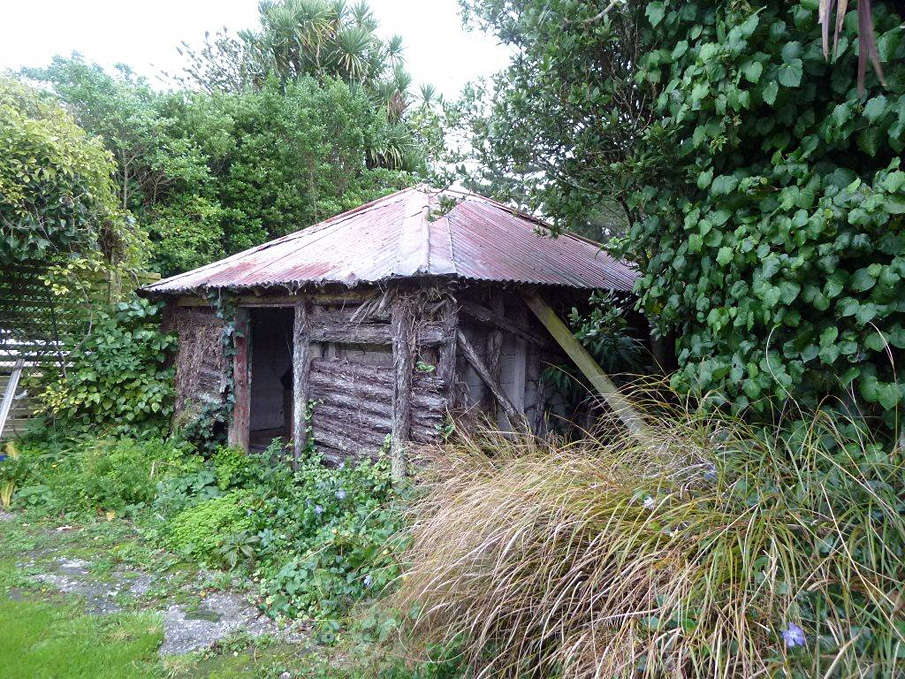
The Ponga Whare is a small, single-storey rectangular dwelling constructed primarily of ponga with supplementary timber framing and corrugated iron roofing. The timber framing is likely Chatham Island hakapiri (Olearia traversiorum). Originally the structure was roofed in thatch and clad internally with rough-sawn timber boards. Its form is simple – a rectangular plan with a central door on the east side featuring a thumb latch and an arch-shaped cut-out opening in the top part of the door. There is a small window opening in the west elevation, and interior lining of horizontal dressed tongue and groove boarding. The floor shows evidence of bricked and timbered areas but appears to have been primarily earth. The use of ponga as an external walling material is unique within New Zealand domestic architecture and demonstrates adaptation to local resources where durable hardwoods were scarce. Whilst modest in scale, the building’s materials and construction typify the ingenuity and resilience of early builders. It is the last known remaining ponga structure on Rēkohu/Wharekauri/Chatham.

Throughout the later nineteenth and twentieth centuries, Ponga Whare remained in use as seasonal accommodation and a storage facility, including as an apple house. By the 2000s it had fallen into disrepair and was at risk of collapse. A conservation and restoration project in the 2020s, led by Tourism Chatham Islands with support from Heritage New Zealand Pouhere Taonga, reinstated structural stability, replaced decaying lower wall sections with ponga material, and ensured conservation of surviving nineteenth-century fabric. It remains a well-known landmark on Rēkohu/ Wharekauri/Chatham, contributing to local identity and linking residents and visitors with the layered history of occupation, penal labour, and resilience that defines the Chatham Islands’ story. Ponga Whare is on private land and not open to the public without permission.
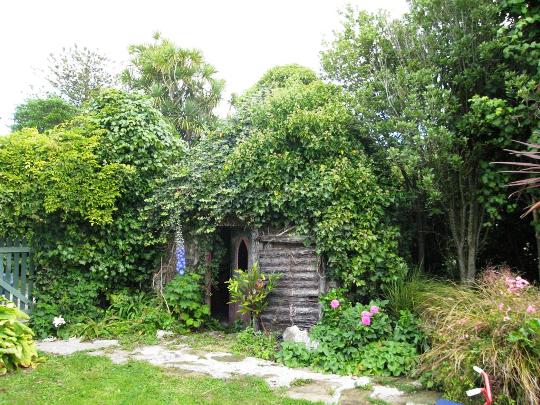
Ponga Whare | Alison Dangerfield | 03/04/2008 | NZ Historic Places Trust
Ponga Whare | Pam Bain | 22/05/2013 | NZ Historic Places Trust
Ponga Whare | Alison Dangerfield | 03/04/2008 | NZ Historic Places Trust
Ponga Whare | Pam Bain | 22/05/2013 | NZ Historic Places Trust

List Entry Information

Overview

Status
Listed

List Entry Status
Historic Place Category 1

Access
Private/No Public Access

List Number
5399

Date Entered
20th February 1992

Date of Effect
20th February 1992

City/District Council
Chatham Islands Territory

Region
Area Outside Region

Extent of List Entry

Extent includes part of the land described as Sec 1 SO 36546 (RT WN41B/743), Wellington Land District, and the building known as Ponga Whare thereon. See map tabled at the Rārangi Kōrero Committee meeting on 29 January 2026.

Legal description

Sec 1 SO 36546 (RT WN41B/743), Wellington Land District

Detailed List Entry
Significance

Historic Significance

Historical Significance or Value The building has associations with the Hauhau prisoners and the important leader, Te Kooti. It was built for William Chudleigh, who was a significant Pakeha figure on Chatham Island, being a leading figure, successful farmer, and the first Justice of the Peace.

Physical Significance

ARCHITECTURAL QUALITY: The Ponga Whare is a good example of a vernacular building style, once common to the Chatham Islands. It is a building fit for its purpose, that of providing temporary accommodation, until a more permanent structure could be built. It is the only remaining example of this type of building on the Chathams. TOWNSCAPE/LANDMARK VALUE: At present, limited. It is covered with a heavy mat of creepers.

Construction Professional

Name

Hauhau prisoners

Type

Builder

Biography

Evidence from diaries and newspaper reports from the period attests that Ponga Whare on the Chatham Islands was constructed by Hauhau prisoners confined on the island from 1866.

Name

Brent Withers

Type

Architect

Biography

Brent Withers (DPA Architects) - 2022 restoration and conservation work of Ponga Whare on the Chatham Islands

Name

Tajh Bullivant

Type

Builder

Biography

Tajh Bullivant (TB Builders Ltd) - 2022 restoration and conservation work of Ponga Whare on the Chatham Islands

Construction Details

Start Year

2022

Type

Restoration

Description

Strengthening and repair of the building using ponga logs from the site. Relevelling the interior. Replacement of framing. Treatment for borer. Restoration of door hinges. Installation of drainage and walkway viewing platform.

Start Year

1991

Type

Maintenance/repairs

Description

Removal of ivy covering the building.

Start Year

1867

Type

Original Construction

Type

Modification

Description

Replacement of thatched roof with corrugated iron.

Period

Unknown

Start Year

2010

Finish Year

2011

Type

Maintenance/repairs

Description

Removal of ivy covering the building; drain dug along south side of building to facilitate removal of water run-off from roof.

Construction Materials

Timber frame (probably akeake) with timber in the round, exterior lining is horizontal ponga logs, internal lining is horizontal dressed tongue and groove boarding. Roof has wooden rafters with dressed tongue and groove sarking, roof sheathing is corrugated iron.

Notable Features

The ponga construction

Physical Description

ARCHITECT/ENGINEER/DESIGNER: It is not known who designed the Ponga Whare, but it was built by Hauhau prisoners interred on Chatham Island. ARCHITECTURAL DESCRIPTION: The Ponga Whare is a small rectangular building of one room. It has a steep pitched hipped-roof. There is a central door at one end of the building, the door being constructed of wooden boards, with a thumb latch and an arch-shaped opening cut out of the centre, which was covered in gauze for light and ventilation. At the opposite end of the whare is a window opening, there is no window now present. The floor appears to have been earth, although there are remains of bricked and timbered areas. The ceiling beams are visible in the interior. Historical photographs indicate the roof was originally thatched, it is now clad with corrugated iron. MODIFICATIONS: None

Reference

Completion Date

20th October 2025

Report Written By

Anna Renton-Green

Information Sources

King, 2000

M King, Moriori: A People Rediscovered, Revised Edition, Penguin Publishers, Auckland, 2000

Waitangi Tribunal, 2001

Rekohu A Report on Moriori and Ngati Mutunga Claims in the Chatham Islands, Wai 64, Waitangi Tribunal report, 2001; https://forms.justice.govt.nz/search/Documents/WT/wt_DOC_68595363/Rekohu%20Report%202016%20Reprint.pdf

Treaty Settlements, 2020

Moriori and The Trustees of the Moriori Imi Settlement Trust and The Crown Deed of Settlement of Historical Claims, 14 February 2020; https://whakatau.govt.nz/assets/Treaty-Settlements/ FIND_Treaty_Settlements/Moriori/DOS_documents/1.-Moriori-Deed-of-Settlement-Historical-Claims.pdf

Moriori Deed of Settlement

Moriori and The Trustees of the Moriori Imi Settlement Trust and The Crown Deed of Settlement Schedule, Attachments; https://whakatau.govt.nz/assets/Publications/4.-Moriori-Deed-of-Settlement-Attachments-schedule.pdf

Rongowhakaata Deed of Settlement

Rongowhakaata Including Nga Uri o Te Kooti Rikirangi and The Trustees of the Rongowhakaata Settlement Trust and The Crown Deed of Settlement of Historical Claims, 30 September 2011; https://www.govt.nz/assets/Documents/OTS/Rongowhakaata/Rongowhakaata-Deed-of-Settlement-30-Sep-2011.pdf?utm_

Phillipson, 1994

Grant Phillipson, ‘Report to the Waitangi Tribunal on Matters of Relevance to the Chatham Island Claims Wai 64, Including the Intervention of Government in the Affairs of the Maori Land Court’, Waitangi Tribunal, Wai 64, Doc #A16; https://forms.justice.govt.nz/search/Documents/WT/ wt_DOC_94018669/Wai%2064%2C%20A016.pdf

Withers, 2021

Brent Withers, Ponga Whare A Record and Condition Report, 23 July 2021

Chatham Islands Council

Chatham Islands Council, Historic Places; https://www.cic.govt.nz/services/community-and-culture/historic-places_

Cochrane, 2006

Chris Cochrane, Ponga Whare, Conservation Report for the New Zealand Historic Places Trust, 21 February 2006

Report Written By

A fully referenced copy of the Upgrade Report is available upon request from the Central Regional Office of Heritage New Zealand Pouhere Taonga. Disclaimer Please note that entry on the New Zealand Heritage List/Rārangi Kōrero identifies only the heritage values of the property concerned, and should not be construed as advice on the state of the property, or as a comment of its soundness or safety, including in regard to earthquake risk, safety in the event of fire, or insanitary conditions. Archaeological sites are protected by the Heritage New Zealand Pouhere Taonga Act 2014, regardless of whether they are entered on the New Zealand Heritage List/Rārangi Kōrero or not. Archaeological sites include ‘places associated with pre-1900 human activity, where there may be evidence relating to the history of New Zealand’. This List entry report should not be read as a statement on whether or not the archaeological provisions of the Act apply to the property(s) concerned. Please contact your local Heritage New Zealand office for archaeological advice.

Further Information

Current Usages

Former Usages

General Usage:: Accommodation

Specific Usage: House

General Usage:: Accommodation

Specific Usage: Shed/store - Residential out-building

General Usage:: Agriculture

Specific Usage: Fruit shed/ store

Themes

Web Links

Overview

Status

Listed

List Entry Status

Historic Place Category 1

Access

Private/No Public Access

List Number

5399

Date Entered

20th February 1992

Date of Effect

20th February 1992

City/District Council

Chatham Islands Territory

Region

Area Outside Region

Extent of List Entry

Extent includes part of the land described as Sec 1 SO 36546 (RT WN41B/743), Wellington Land District, and the building known as Ponga Whare thereon. See map tabled at the Rārangi Kōrero Committee meeting on 29 January 2026.

Legal description

Sec 1 SO 36546 (RT WN41B/743), Wellington Land District

Status

Listed

List Entry Status

Historic Place Category 1

Access

Private/No Public Access

List Number

5399

Date Entered

20th February 1992

Date of Effect

20th February 1992

City/District Council

Chatham Islands Territory

Region

Area Outside Region

Extent of List Entry

Extent includes part of the land described as Sec 1 SO 36546 (RT WN41B/743), Wellington Land District, and the building known as Ponga Whare thereon. See map tabled at the Rārangi Kōrero Committee meeting on 29 January 2026.

Legal description

Sec 1 SO 36546 (RT WN41B/743), Wellington Land District

Significance

Why is this place significant?

Historic Significance

Historical Significance or Value The building has associations with the Hauhau prisoners and the important leader, Te Kooti. It was built for William Chudleigh, who was a significant Pakeha figure on Chatham Island, being a leading figure, successful farmer, and the first Justice of the Peace.

Physical Significance

ARCHITECTURAL QUALITY: The Ponga Whare is a good example of a vernacular building style, once common to the Chatham Islands. It is a building fit for its purpose, that of providing temporary accommodation, until a more permanent structure could be built. It is the only remaining example of this type of building on the Chathams. TOWNSCAPE/LANDMARK VALUE: At present, limited. It is covered with a heavy mat of creepers.

Why is this place significant?

Historic Significance

Historical Significance or Value The building has associations with the Hauhau prisoners and the important leader, Te Kooti. It was built for William Chudleigh, who was a significant Pakeha figure on Chatham Island, being a leading figure, successful farmer, and the first Justice of the Peace.

Physical Significance

ARCHITECTURAL QUALITY: The Ponga Whare is a good example of a vernacular building style, once common to the Chatham Islands. It is a building fit for its purpose, that of providing temporary accommodation, until a more permanent structure could be built. It is the only remaining example of this type of building on the Chathams. TOWNSCAPE/LANDMARK VALUE: At present, limited. It is covered with a heavy mat of creepers.

Construction Information

Construction Professional

Name

Hauhau prisoners

Type

Builder

Biography

Evidence from diaries and newspaper reports from the period attests that Ponga Whare on the Chatham Islands was constructed by Hauhau prisoners confined on the island from 1866.

Name

Brent Withers

Type

Architect

Biography

Brent Withers (DPA Architects) - 2022 restoration and conservation work of Ponga Whare on the Chatham Islands

Name

Tajh Bullivant

Type

Builder

Biography

Tajh Bullivant (TB Builders Ltd) - 2022 restoration and conservation work of Ponga Whare on the Chatham Islands

Construction Details

Start Year

2022

Type

Restoration

Description

Strengthening and repair of the building using ponga logs from the site. Relevelling the interior. Replacement of framing. Treatment for borer. Restoration of door hinges. Installation of drainage and walkway viewing platform.

Start Year

1991

Type

Maintenance/repairs

Description

Removal of ivy covering the building.

Start Year

1867

startYearCirca

Type

Original Construction

Type

Modification

Description

Replacement of thatched roof with corrugated iron.

Period

Unknown

Start Year

2010

Finish Year

2011

Type

Maintenance/repairs

Description

Removal of ivy covering the building; drain dug along south side of building to facilitate removal of water run-off from roof.

Construction Materials

Timber frame (probably akeake) with timber in the round, exterior lining is horizontal ponga logs, internal lining is horizontal dressed tongue and groove boarding. Roof has wooden rafters with dressed tongue and groove sarking, roof sheathing is corrugated iron.

Notable Features

The ponga construction

Construction Professional

Name

Hauhau prisoners

Type

Builder

Biography

Evidence from diaries and newspaper reports from the period attests that Ponga Whare on the Chatham Islands was constructed by Hauhau prisoners confined on the island from 1866.

Name

Brent Withers

Type

Architect

Biography

Brent Withers (DPA Architects) - 2022 restoration and conservation work of Ponga Whare on the Chatham Islands

Name

Tajh Bullivant

Type

Builder

Biography

Tajh Bullivant (TB Builders Ltd) - 2022 restoration and conservation work of Ponga Whare on the Chatham Islands

Construction Details

Start Year

2022

Type

Restoration

Description

Strengthening and repair of the building using ponga logs from the site. Relevelling the interior. Replacement of framing. Treatment for borer. Restoration of door hinges. Installation of drainage and walkway viewing platform.

Start Year

1991

Type

Maintenance/repairs

Description

Removal of ivy covering the building.

Start Year

1867

startYearCirca

Type

Original Construction

Type

Modification

Description

Replacement of thatched roof with corrugated iron.

Period

Unknown

Start Year

2010

Finish Year

2011

Type

Maintenance/repairs

Description

Removal of ivy covering the building; drain dug along south side of building to facilitate removal of water run-off from roof.

Construction Materials

Timber frame (probably akeake) with timber in the round, exterior lining is horizontal ponga logs, internal lining is horizontal dressed tongue and groove boarding. Roof has wooden rafters with dressed tongue and groove sarking, roof sheathing is corrugated iron.

Notable Features

The ponga construction

Physical Description

ARCHITECT/ENGINEER/DESIGNER: It is not known who designed the Ponga Whare, but it was built by Hauhau prisoners interred on Chatham Island. ARCHITECTURAL DESCRIPTION: The Ponga Whare is a small rectangular building of one room. It has a steep pitched hipped-roof. There is a central door at one end of the building, the door being constructed of wooden boards, with a thumb latch and an arch-shaped opening cut out of the centre, which was covered in gauze for light and ventilation. At the opposite end of the whare is a window opening, there is no window now present. The floor appears to have been earth, although there are remains of bricked and timbered areas. The ceiling beams are visible in the interior. Historical photographs indicate the roof was originally thatched, it is now clad with corrugated iron. MODIFICATIONS: None

ARCHITECT/ENGINEER/DESIGNER: It is not known who designed the Ponga Whare, but it was built by Hauhau prisoners interred on Chatham Island. ARCHITECTURAL DESCRIPTION: The Ponga Whare is a small rectangular building of one room. It has a steep pitched hipped-roof. There is a central door at one end of the building, the door being constructed of wooden boards, with a thumb latch and an arch-shaped opening cut out of the centre, which was covered in gauze for light and ventilation. At the opposite end of the whare is a window opening, there is no window now present. The floor appears to have been earth, although there are remains of bricked and timbered areas. The ceiling beams are visible in the interior. Historical photographs indicate the roof was originally thatched, it is now clad with corrugated iron. MODIFICATIONS: None

Reference

Historical and Associated Iwi / Hapū / Whānau

Completion Date

20th October 2025

Report Written By

Anna Renton-Green

Information Sources

King, 2000

M King, Moriori: A People Rediscovered, Revised Edition, Penguin Publishers, Auckland, 2000

Waitangi Tribunal, 2001

Rekohu A Report on Moriori and Ngati Mutunga Claims in the Chatham Islands, Wai 64, Waitangi Tribunal report, 2001; https://forms.justice.govt.nz/search/Documents/WT/wt_DOC_68595363/Rekohu%20Report%202016%20Reprint.pdf

Treaty Settlements, 2020

Moriori and The Trustees of the Moriori Imi Settlement Trust and The Crown Deed of Settlement of Historical Claims, 14 February 2020; https://whakatau.govt.nz/assets/Treaty-Settlements/ FIND_Treaty_Settlements/Moriori/DOS_documents/1.-Moriori-Deed-of-Settlement-Historical-Claims.pdf

Moriori Deed of Settlement

Moriori and The Trustees of the Moriori Imi Settlement Trust and The Crown Deed of Settlement Schedule, Attachments; https://whakatau.govt.nz/assets/Publications/4.-Moriori-Deed-of-Settlement-Attachments-schedule.pdf

Rongowhakaata Deed of Settlement

Rongowhakaata Including Nga Uri o Te Kooti Rikirangi and The Trustees of the Rongowhakaata Settlement Trust and The Crown Deed of Settlement of Historical Claims, 30 September 2011; https://www.govt.nz/assets/Documents/OTS/Rongowhakaata/Rongowhakaata-Deed-of-Settlement-30-Sep-2011.pdf?utm_

Phillipson, 1994

Grant Phillipson, ‘Report to the Waitangi Tribunal on Matters of Relevance to the Chatham Island Claims Wai 64, Including the Intervention of Government in the Affairs of the Maori Land Court’, Waitangi Tribunal, Wai 64, Doc #A16; https://forms.justice.govt.nz/search/Documents/WT/ wt_DOC_94018669/Wai%2064%2C%20A016.pdf

Withers, 2021

Brent Withers, Ponga Whare A Record and Condition Report, 23 July 2021

Chatham Islands Council

Chatham Islands Council, Historic Places; https://www.cic.govt.nz/services/community-and-culture/historic-places_

Cochrane, 2006

Chris Cochrane, Ponga Whare, Conservation Report for the New Zealand Historic Places Trust, 21 February 2006

Other Information

A fully referenced copy of the Upgrade Report is available upon request from the Central Regional Office of Heritage New Zealand Pouhere Taonga. Disclaimer Please note that entry on the New Zealand Heritage List/Rārangi Kōrero identifies only the heritage values of the property concerned, and should not be construed as advice on the state of the property, or as a comment of its soundness or safety, including in regard to earthquake risk, safety in the event of fire, or insanitary conditions. Archaeological sites are protected by the Heritage New Zealand Pouhere Taonga Act 2014, regardless of whether they are entered on the New Zealand Heritage List/Rārangi Kōrero or not. Archaeological sites include ‘places associated with pre-1900 human activity, where there may be evidence relating to the history of New Zealand’. This List entry report should not be read as a statement on whether or not the archaeological provisions of the Act apply to the property(s) concerned. Please contact your local Heritage New Zealand office for archaeological advice.

Historical and Associated Iwi / Hapū / Whānau

Completion Date

20th October 2025

Report Written By

Anna Renton-Green

Information Sources

King, 2000

M King, Moriori: A People Rediscovered, Revised Edition, Penguin Publishers, Auckland, 2000

Waitangi Tribunal, 2001

Rekohu A Report on Moriori and Ngati Mutunga Claims in the Chatham Islands, Wai 64, Waitangi Tribunal report, 2001; https://forms.justice.govt.nz/search/Documents/WT/wt_DOC_68595363/Rekohu%20Report%202016%20Reprint.pdf

Treaty Settlements, 2020

Moriori and The Trustees of the Moriori Imi Settlement Trust and The Crown Deed of Settlement of Historical Claims, 14 February 2020; https://whakatau.govt.nz/assets/Treaty-Settlements/ FIND_Treaty_Settlements/Moriori/DOS_documents/1.-Moriori-Deed-of-Settlement-Historical-Claims.pdf

Moriori Deed of Settlement

Moriori and The Trustees of the Moriori Imi Settlement Trust and The Crown Deed of Settlement Schedule, Attachments; https://whakatau.govt.nz/assets/Publications/4.-Moriori-Deed-of-Settlement-Attachments-schedule.pdf

Rongowhakaata Deed of Settlement

Rongowhakaata Including Nga Uri o Te Kooti Rikirangi and The Trustees of the Rongowhakaata Settlement Trust and The Crown Deed of Settlement of Historical Claims, 30 September 2011; https://www.govt.nz/assets/Documents/OTS/Rongowhakaata/Rongowhakaata-Deed-of-Settlement-30-Sep-2011.pdf?utm_

Phillipson, 1994

Grant Phillipson, ‘Report to the Waitangi Tribunal on Matters of Relevance to the Chatham Island Claims Wai 64, Including the Intervention of Government in the Affairs of the Maori Land Court’, Waitangi Tribunal, Wai 64, Doc #A16; https://forms.justice.govt.nz/search/Documents/WT/ wt_DOC_94018669/Wai%2064%2C%20A016.pdf

Withers, 2021

Brent Withers, Ponga Whare A Record and Condition Report, 23 July 2021

Chatham Islands Council

Chatham Islands Council, Historic Places; https://www.cic.govt.nz/services/community-and-culture/historic-places_

Cochrane, 2006

Chris Cochrane, Ponga Whare, Conservation Report for the New Zealand Historic Places Trust, 21 February 2006

Other Information

A fully referenced copy of the Upgrade Report is available upon request from the Central Regional Office of Heritage New Zealand Pouhere Taonga. Disclaimer Please note that entry on the New Zealand Heritage List/Rārangi Kōrero identifies only the heritage values of the property concerned, and should not be construed as advice on the state of the property, or as a comment of its soundness or safety, including in regard to earthquake risk, safety in the event of fire, or insanitary conditions. Archaeological sites are protected by the Heritage New Zealand Pouhere Taonga Act 2014, regardless of whether they are entered on the New Zealand Heritage List/Rārangi Kōrero or not. Archaeological sites include ‘places associated with pre-1900 human activity, where there may be evidence relating to the history of New Zealand’. This List entry report should not be read as a statement on whether or not the archaeological provisions of the Act apply to the property(s) concerned. Please contact your local Heritage New Zealand office for archaeological advice.

Further Information

Former Usages

General Usage: Accommodation

Specific Usage: House

General Usage: Accommodation

Specific Usage: Shed/store - Residential out-building

General Usage: Agriculture

Specific Usage: Fruit shed/ store

Former Usages

General Usage: Accommodation

Specific Usage: House

General Usage: Accommodation

Specific Usage: Shed/store - Residential out-building

General Usage: Agriculture

Specific Usage: Fruit shed/ store

Location

Loading
Sign up to hear more

Get the latest heritage news, features and events delivered
straight to your inbox.

Subscribe