

Rewi Alley’s House in Moeawatea Valley has historical significance for its connection to this notable New Zealander and for its role as a rehabilitation home to returned soldiers.
Moeawatea Valley in Taranaki is formed by a tributary stream of the Whenuakura River, and the leading ridge running north/south between the two is remembered as a route for Māori parties travelling between the Taranaki and Whanganui regions. Pākehā farming families settled in the valley between 1905 and 1910, and the cottage was built in approximately 1918 by an unestablished individual, either a Mr Jim Hunter or possibly a Mr Perkins. Initially it was home to Hunter and his wife, who sold his farm and the cottage to Rewi Alley and Jack Stevens between 1920 and 1921.
Alley served in France during the First World War and reunited with his friend Jack Stevens upon returning to New Zealand in 1919. Pooling their war gratuities, and those of Alley’s late brother, Eric, they purchased the rehabilitation farm in the Moeawatea Valley. Moving into the cottage in 1921, Alley and Stevens added a lean-to for a kitchen and bathroom, clearing bush and shearing as many as 100 sheep a day, sometimes working 16-hour days. Graffiti Alley and Stevens left is visible inside the cottage. Alley recalled that his time in Moeawatea affectionately: ‘it cleared away a lot of the war dreams and brought me down to earth, teaching me anew the value of simplicity. I began to learn much of struggle and other basic things that later stood me in good stead.’
A historic slump in wool prices meant Alley and Stevens couldn’t earn enough income to support both men, and with Stevens’ resolution to marry, Alley chose to walk off the farm and travelled to China in 1927. He went on to become a social reformer and prolific writer. Seeing how poverty affected Chinese communities he spent his holidays assisting relief efforts for the 1929 famine. During the Second Sino-Japanese War, Alley improved Chinese industrial efforts, founding the Gung Ho movement and establishing technical schools. He later joined the Communist Party of China, remaining pro-communism despite imprisonment during the Cultural Revolution, and wrote frequently on communism in China. Various biographers reported that Alley was homosexual, and he never married. By his death in 1987, Alley had dedicated sixty years to China.
After Stevens the farm and cottage passed hands over the years and while the lean-to was expanded on, the cottage fell into disrepair following poor use by pig-hunters. The cottage has undergone a number of repairs since the 1980s.
Moeawatea Valley in Taranaki is formed by a tributary stream of the Whenuakura River, and the leading ridge running north/south between the two is remembered as a route for Māori parties travelling between the Taranaki and Whanganui regions. Pākehā farming families settled in the valley between 1905 and 1910, and the cottage was built in approximately 1918 by an unestablished individual, either a Mr Jim Hunter or possibly a Mr Perkins. Initially it was home to Hunter and his wife, who sold his farm and the cottage to Rewi Alley and Jack Stevens between 1920 and 1921.
Alley served in France during the First World War and reunited with his friend Jack Stevens upon returning to New Zealand in 1919. Pooling their war gratuities, and those of Alley’s late brother, Eric, they purchased the rehabilitation farm in the Moeawatea Valley. Moving into the cottage in 1921, Alley and Stevens added a lean-to for a kitchen and bathroom, clearing bush and shearing as many as 100 sheep a day, sometimes working 16-hour days. Graffiti Alley and Stevens left is visible inside the cottage. Alley recalled that his time in Moeawatea affectionately: ‘it cleared away a lot of the war dreams and brought me down to earth, teaching me anew the value of simplicity. I began to learn much of struggle and other basic things that later stood me in good stead.’
A historic slump in wool prices meant Alley and Stevens couldn’t earn enough income to support both men, and with Stevens’ resolution to marry, Alley chose to walk off the farm and travelled to China in 1927. He went on to become a social reformer and prolific writer. Seeing how poverty affected Chinese communities he spent his holidays assisting relief efforts for the 1929 famine. During the Second Sino-Japanese War, Alley improved Chinese industrial efforts, founding the Gung Ho movement and establishing technical schools. He later joined the Communist Party of China, remaining pro-communism despite imprisonment during the Cultural Revolution, and wrote frequently on communism in China. Various biographers reported that Alley was homosexual, and he never married. By his death in 1987, Alley had dedicated sixty years to China.
After Stevens the farm and cottage passed hands over the years and while the lean-to was expanded on, the cottage fell into disrepair following poor use by pig-hunters. The cottage has undergone a number of repairs since the 1980s.
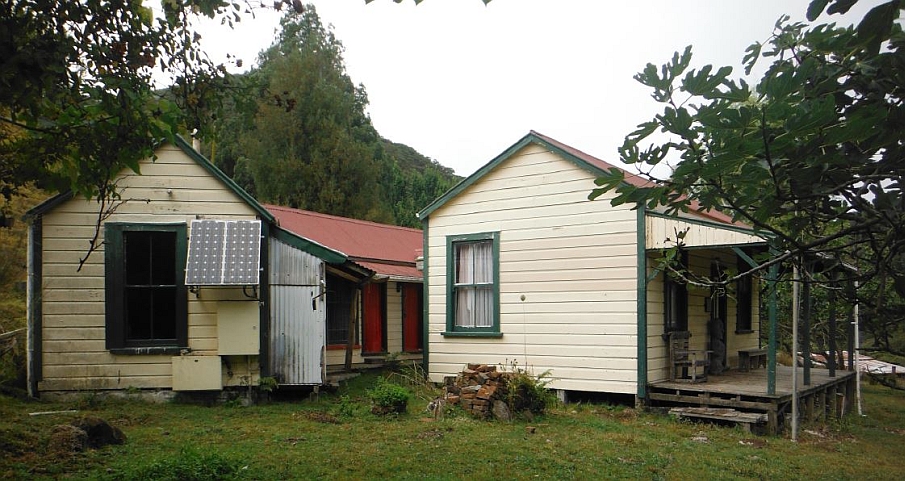
Rewi Alley's House, South Taranaki | Nathan Sutherland | 28/08/2018 | South Taranaki District Council
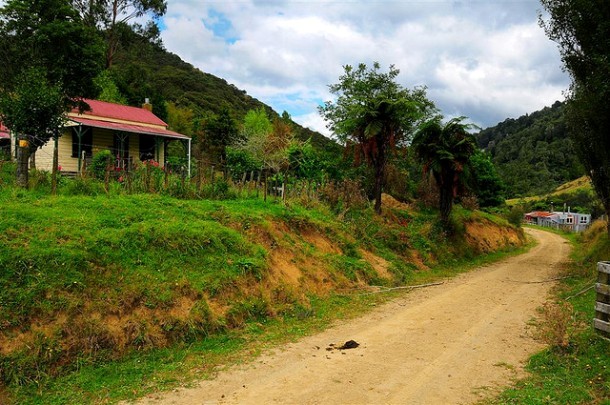
Rewi Alley's House, South Taranaki | Heritage New Zealand Pouhere Taonga
Rewi Alley's House, South Taranaki | Nathan Sutherland | 28/08/2018 | South Taranaki District Council
Rewi Alley's House, South Taranaki | Heritage New Zealand Pouhere Taonga
