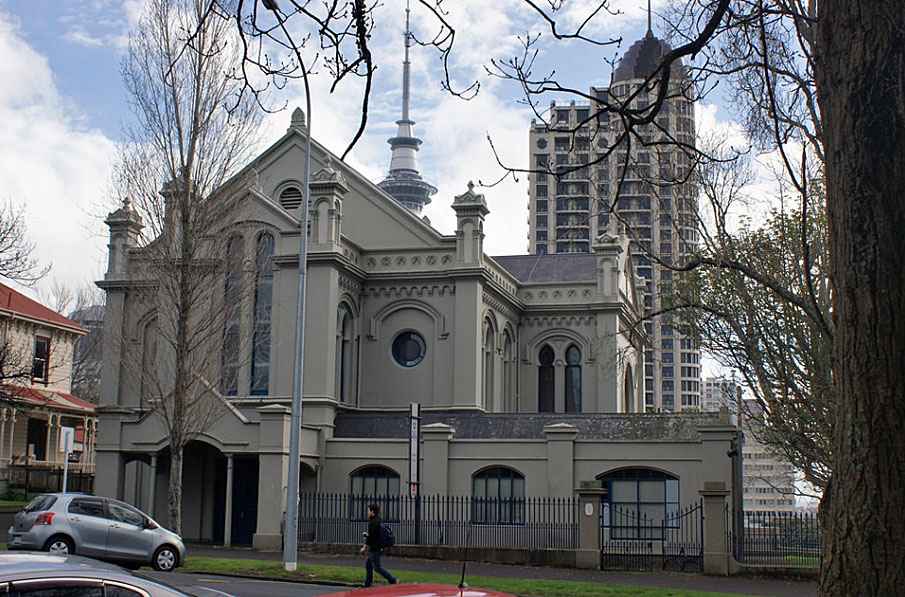
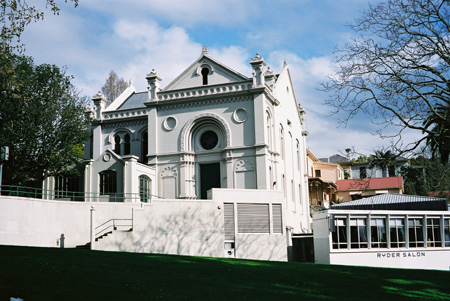
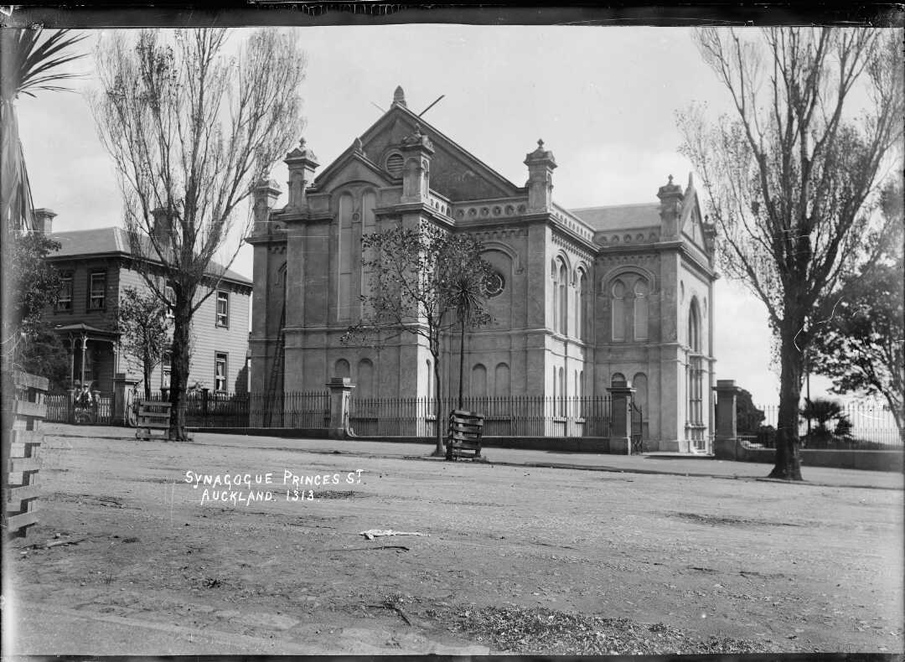
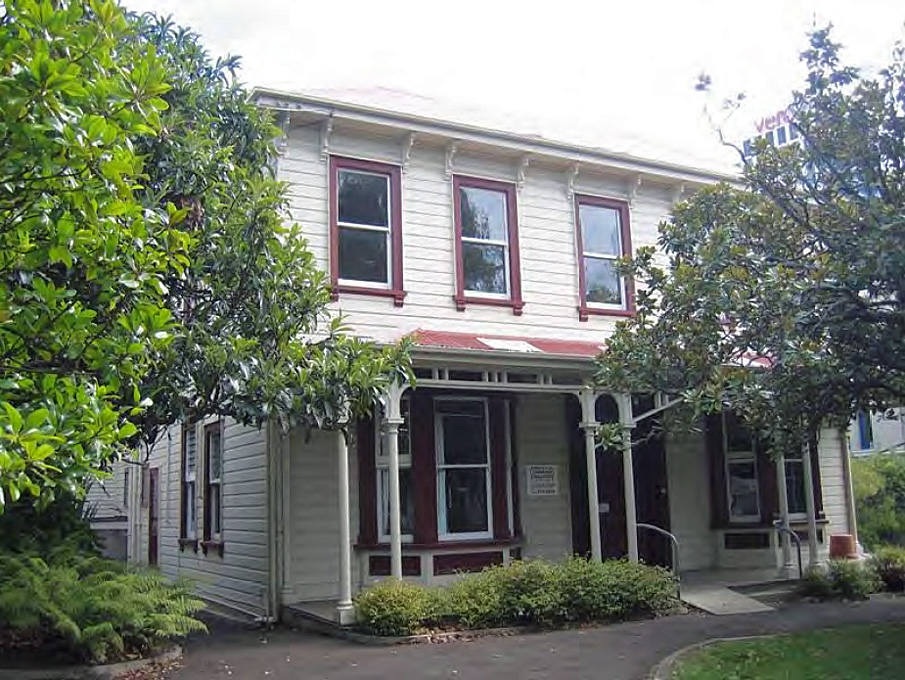
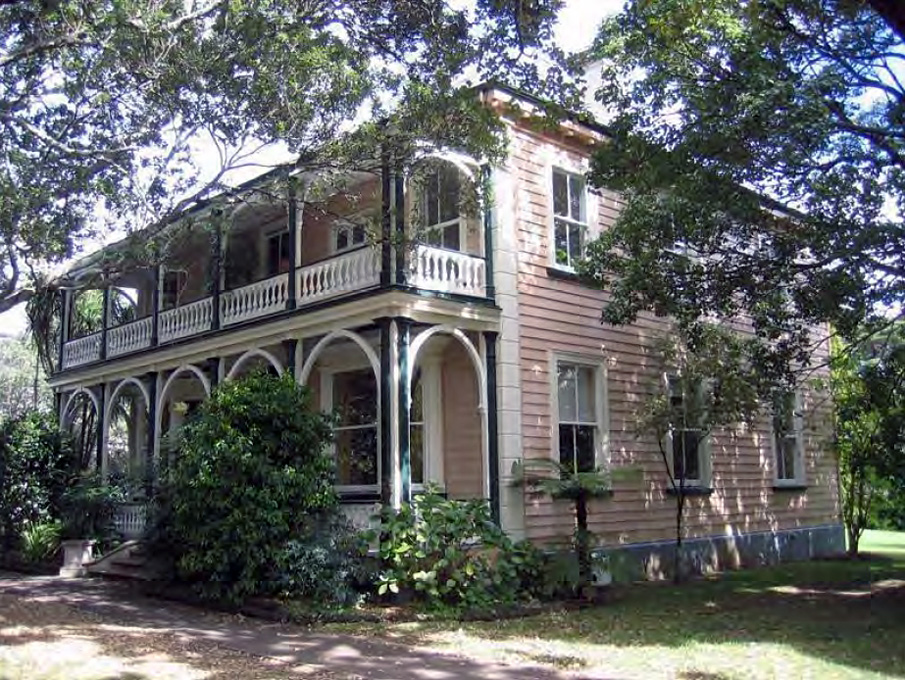
This Princes Street building is one of only two nineteenth-century synagogues surviving in New Zealand, and the only one of this date in the North Island. The other is located in Dunedin. It was built in 1884-1885 after the Jewish community grew too large for their earlier building in nearby Emily Place. Constructed using early 'scoria-lime' concrete technology, the ornate synagogue was erected on a parkland site next to a row of villas belonging, in some cases, to members of the congregation. It overlooks the commercial district of Auckland in one of the most sought-after addresses in the town. Its prominent location appears to be unusual, reflecting a degree of confidence not found in all parts of the Jewish diaspora. Construction was aided by successful members of the early colonial business community, including David Nathan (1816-1886) and Philip Aaron Philips (1831-1913), the first mayor of Auckland and later town clerk.
The building exhibits a mixture of exotic styles, including Romanesque and Moorish. It was apparently modelled on the lavish Glasgow Synagogue in Scotland, which was erected in 1881. Designed by the local architect Edward Bartley, the Auckland synagogue was built using advanced local technology. This included mass concrete walls employing hydraulic lime developed near Auckland, and decorative details in moulded Keene's cement. The highly decorated interior has an apsidal tabernacle at its eastern end, and galleries on three sides for female members of the congregation. A basement was used for educational and social purposes, to which a school annexe was added in 1914. This was replaced by a modernist-style meeting hall before the congregation moved to new premises in 1969. The building was conserved in the 1980s and subsequent usage has included functioning for a period as a bank.
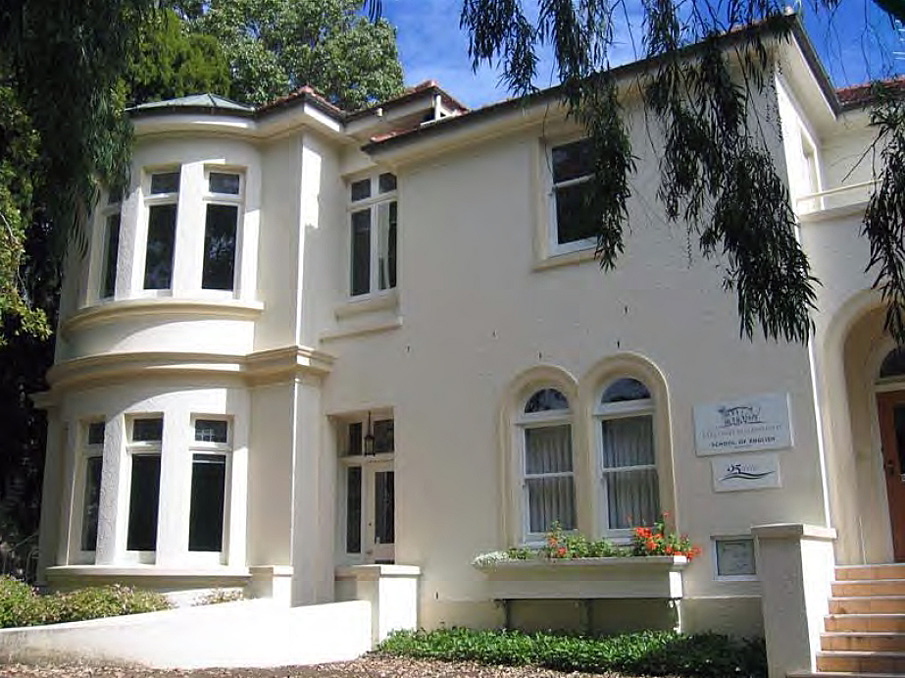
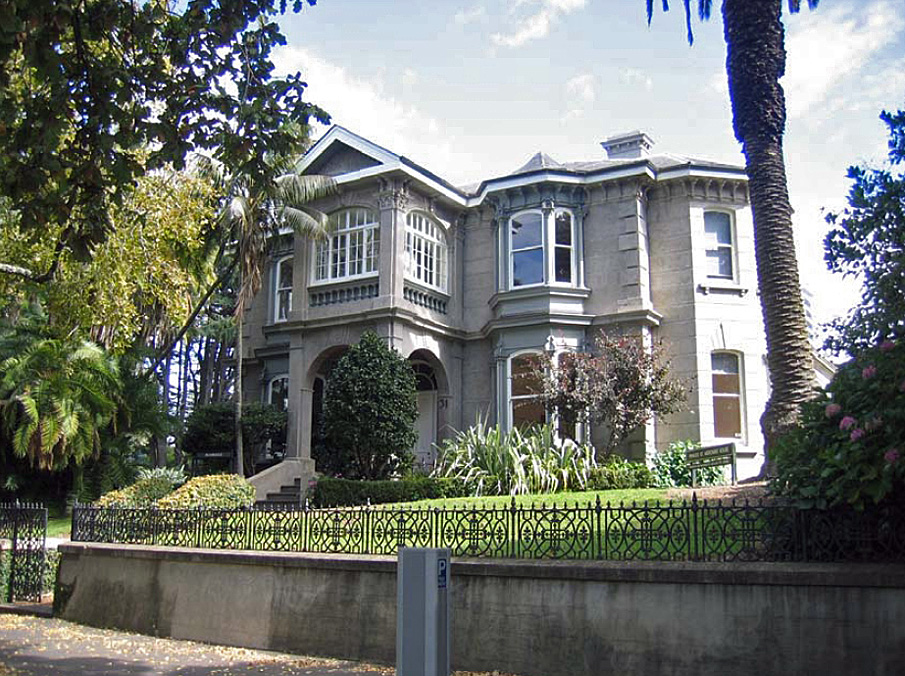
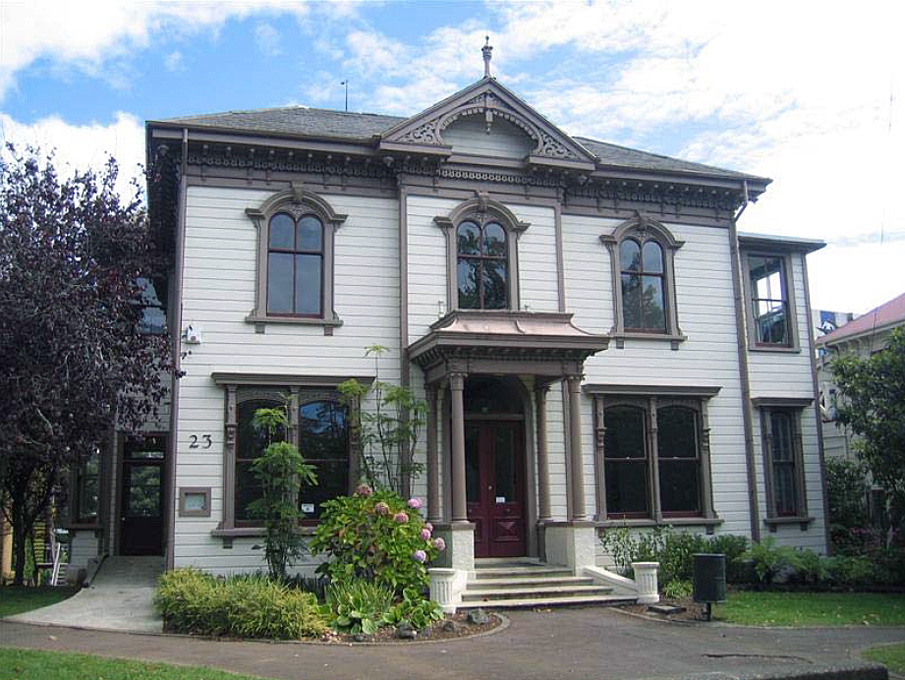
The building is of national and international significance as the best-preserved nineteenth-century synagogue in New Zealand, and a very rare survivor from the colonial period. It is a unique expression of Jewish religious and cultural identity in New Zealand, being the only remaining synagogue used for worship during both the nineteenth and twentieth centuries. It is a reminder of the important contribution made by the Jewish community to colonial and later settlement, and the success of many of its members. It reflects the strength and confidence of the Auckland Jewish community, which made a fundamental contribution to the civic life and commercial development of the town. The layout of the building is intimately linked with Jewish religious practice, and embodies distinct approaches to spiritual and social life, including those involving gender. It is highly unusual in aspects of its style and construction, incorporating an early use of mass concrete employing local hydraulic lime. The synagogue reflects close links with British Jewry, and is important for its association with other historic buildings in the vicinity. It is the focus of one of the best-preserved colonial Jewish landscapes in New Zealand, and is an integral part of the only intact nineteenth-century residential streetscape in central Auckland.
The building exhibits a mixture of exotic styles, including Romanesque and Moorish. It was apparently modelled on the lavish Glasgow Synagogue in Scotland, which was erected in 1881. Designed by the local architect Edward Bartley, the Auckland synagogue was built using advanced local technology. This included mass concrete walls employing hydraulic lime developed near Auckland, and decorative details in moulded Keene's cement. The highly decorated interior has an apsidal tabernacle at its eastern end, and galleries on three sides for female members of the congregation. A basement was used for educational and social purposes, to which a school annexe was added in 1914. This was replaced by a modernist-style meeting hall before the congregation moved to new premises in 1969. The building was conserved in the 1980s and subsequent usage has included functioning for a period as a bank.
The building is of national and international significance as the best-preserved nineteenth-century synagogue in New Zealand, and a very rare survivor from the colonial period. It is a unique expression of Jewish religious and cultural identity in New Zealand, being the only remaining synagogue used for worship during both the nineteenth and twentieth centuries. It is a reminder of the important contribution made by the Jewish community to colonial and later settlement, and the success of many of its members. It reflects the strength and confidence of the Auckland Jewish community, which made a fundamental contribution to the civic life and commercial development of the town. The layout of the building is intimately linked with Jewish religious practice, and embodies distinct approaches to spiritual and social life, including those involving gender. It is highly unusual in aspects of its style and construction, incorporating an early use of mass concrete employing local hydraulic lime. The synagogue reflects close links with British Jewry, and is important for its association with other historic buildings in the vicinity. It is the focus of one of the best-preserved colonial Jewish landscapes in New Zealand, and is an integral part of the only intact nineteenth-century residential streetscape in central Auckland.