Quick links


Quick links
Quick links
Quick links
Quick links
Quick links
209 Kerikeri Road, KERIKERI
Private
Historic Place Category 1
List No. 68
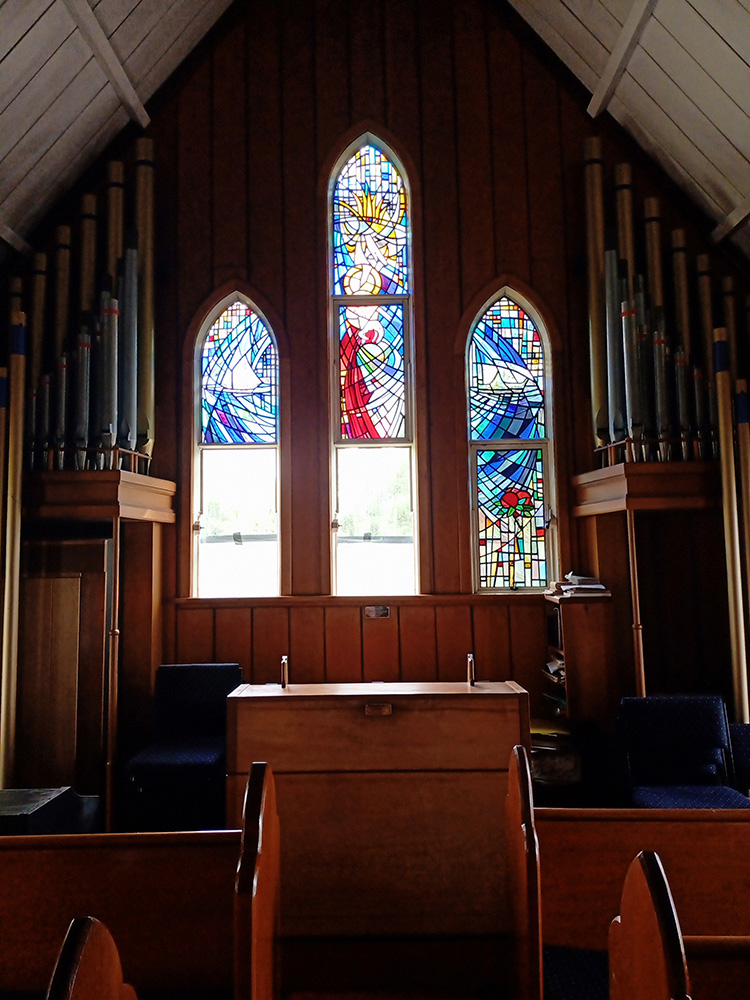
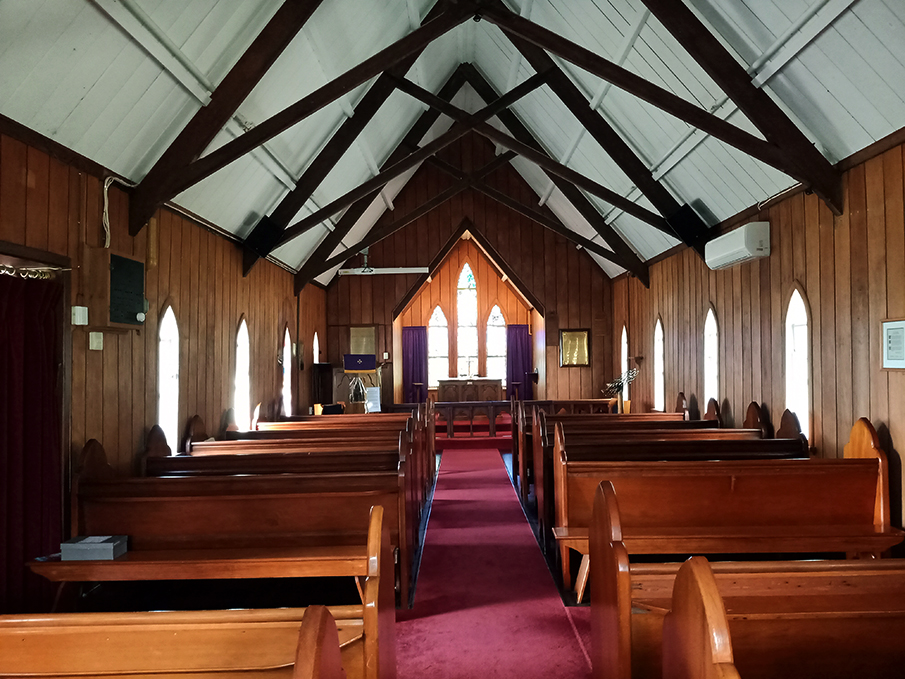
List Entry Information
Status
Listed
List Entry Status
Historic Place Category 1
Access
Private/No Public Access
List Number
68
Date Entered
27th June 1985
Date of Effect
27th June 1985
City/District Council
Far North District
Region
Northland Region
Extent of List Entry
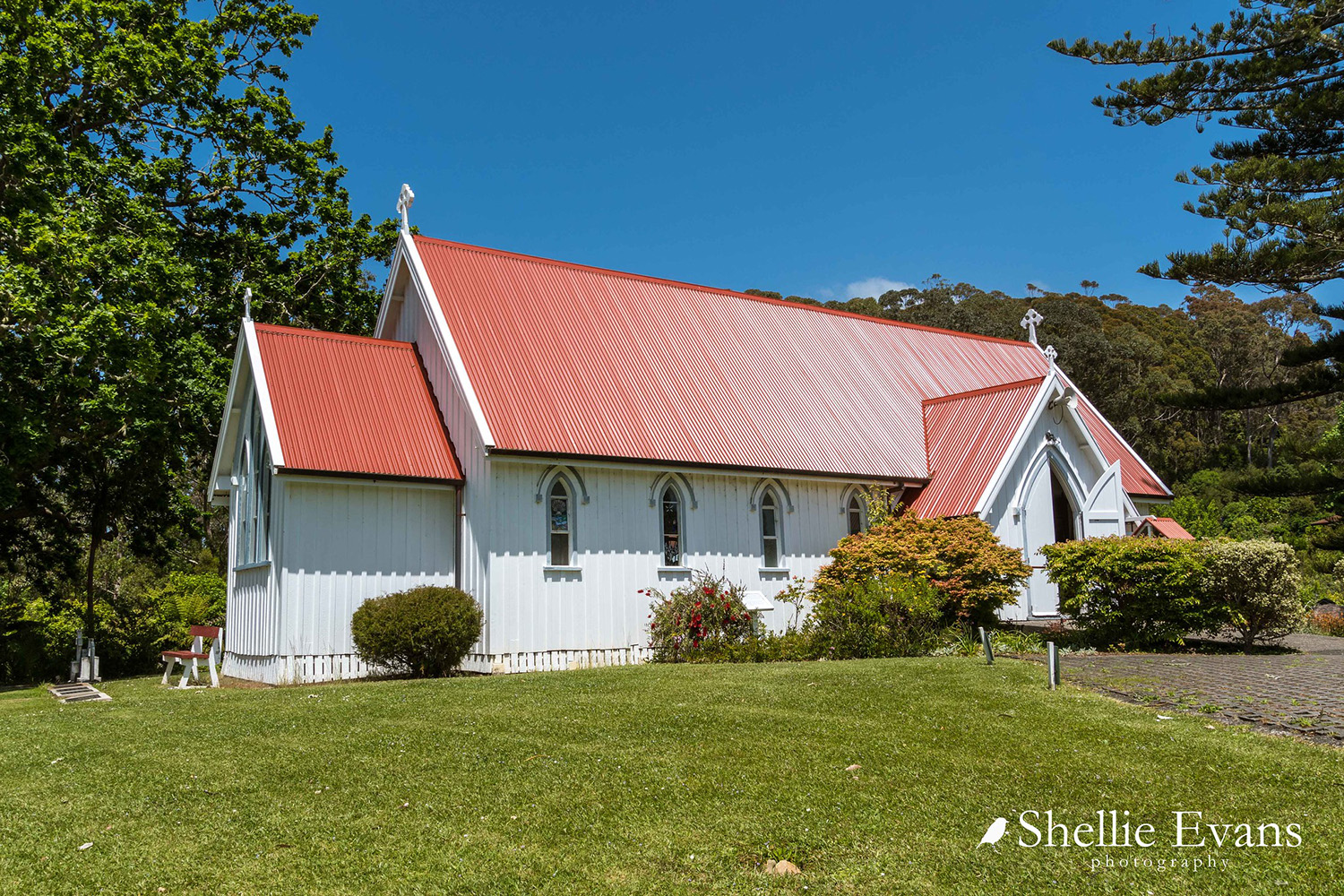
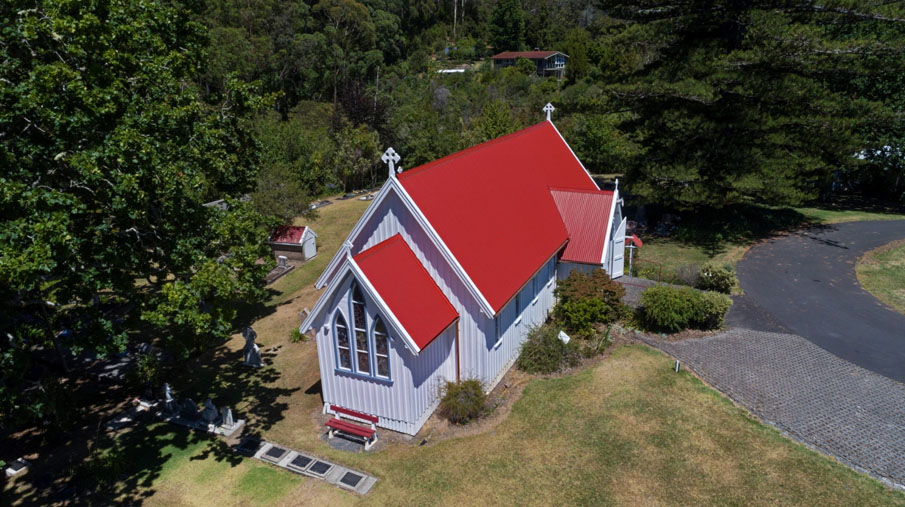
Extent includes the land described as Pt OLC 39 (RT NA1592/100), North Auckland Land District and the building and churchyard known as St James' Church (Anglican) thereon, and its fittings and fixtures. (Refer to map in Appendix 1 for further information).
Legal description
Pt OLC 39 (RT NA1592/100), North Auckland Land District
Status
Listed
List Entry Status
Historic Place Category 1
Access
Private/No Public Access
List Number
68
Date Entered
27th June 1985
Date of Effect
27th June 1985
City/District Council
Far North District
Region
Northland Region
Extent of List Entry
Extent includes the land described as Pt OLC 39 (RT NA1592/100), North Auckland Land District and the building and churchyard known as St James' Church (Anglican) thereon, and its fittings and fixtures. (Refer to map in Appendix 1 for further information).
Legal description
Pt OLC 39 (RT NA1592/100), North Auckland Land District
Construction Professional
Name
Clarke, Marsden
Type
Architect
Biography
No biography is currently available for this construction professional
Name
Cook, W
Type
Builder
Biography
No biography is currently available for this construction professional
Construction Details
Start Year
1829
Type
Other
Description
Site of chapel
Start Year
1835
Type
Other
Description
Churchyard in use for burial
Start Year
1878
Type
Original Construction
Description
Construction of St James' Church
Start Year
1910
Type
Modification
Description
Roof shingles replaced by corrugated iron
Start Year
1963
Type
Addition
Description
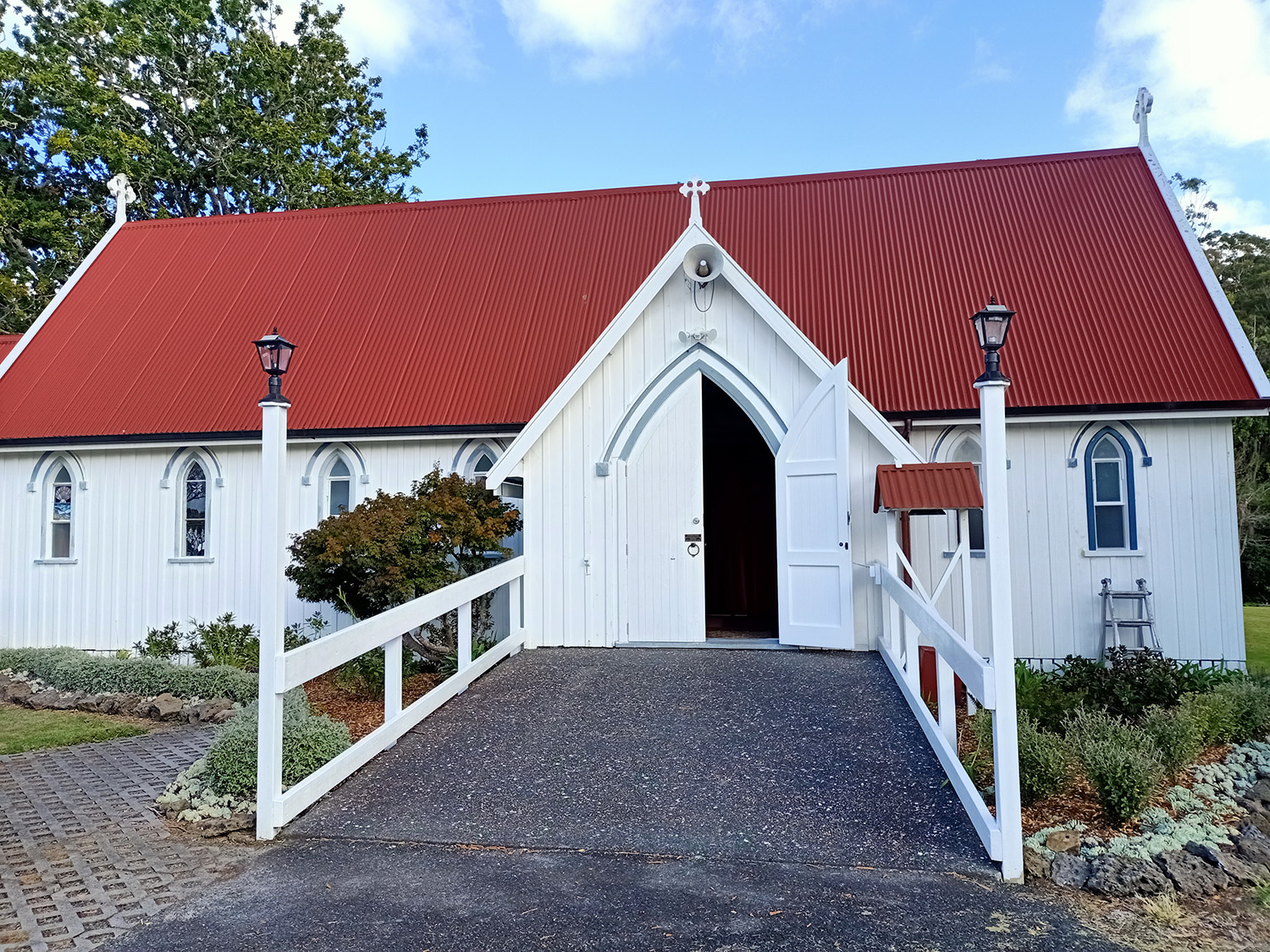
Extension of nave and vestry/porch
Start Year
1969
Type
Addition
Description
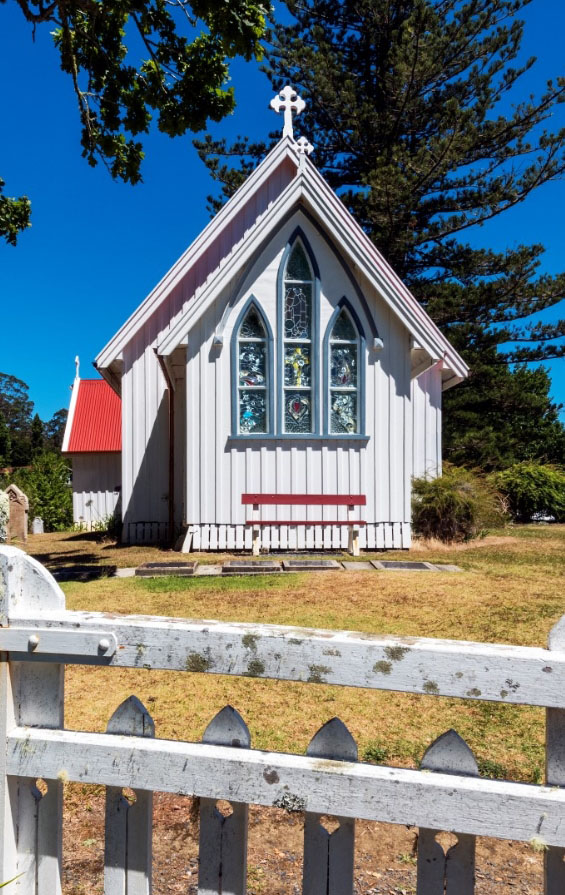
Extension of sanctuary/chancel
Start Year
2013
Type
Modification
Description
New roof.
Notable Features
Registration covers the building, its fixtures and finishes. It also includes recent modifications. The structure is associated with gravestones, inhumations and the buried remains of an 1829 chapel in its churchyard.
Construction Professional
Name
Clarke, Marsden
Type
Architect
Biography
No biography is currently available for this construction professional
Name
Cook, W
Type
Builder
Biography
No biography is currently available for this construction professional
Construction Details
Start Year
1829
Type
Other
Description
Site of chapel
Start Year
1835
Type
Other
Description
Churchyard in use for burial
Start Year
1878
Type
Original Construction
Description
Construction of St James' Church
Start Year
1910
Type
Modification
Description
Roof shingles replaced by corrugated iron
Start Year
1963
Type
Addition
Description
Extension of nave and vestry/porch
Start Year
1969
Type
Addition
Description
Extension of sanctuary/chancel
Start Year
2013
Type
Modification
Description
New roof.
Notable Features
Registration covers the building, its fixtures and finishes. It also includes recent modifications. The structure is associated with gravestones, inhumations and the buried remains of an 1829 chapel in its churchyard.
Historical and Associated Iwi / Hapū / Whānau
Public NZAA Number
P05/530
Completion Date
25th June 2008
Report Written By
Martin Jones and Joan McKenzie
Information Sources
Church of the Province of New Zealand, 1969
Church of the Province of New Zealand Bay of Islands Parochial District, A Lamp Still Burns in Kerikeri, Whangarei, 1969
Pickmere, 1994
Nancy Pickmere, Kerikeri: Heritage of Dreams, Russell, 1994
Pickmere, 1986
Nancy Pickmere, Whangarei: The Founding Years, Whangarei, 1986
Ross, 1967 (5)
R. M. Ross, 'St James' Church, Kerikeri', unpublished ms., Auckland, 1967 (held by NZHPT, Auckland)
Watson, 1997
A P B Watson, Chapel to Church: An Account of the Setting Up of the Mission Station at Kerikeri in 1819 and of the Events that Followed During the Years 1824-1997, 3rd ed., Kerikeri, 1997
Porter, 1983 (2)
Frances Porter (ed.), Historic Buildings of New Zealand: North Island (2nd edn.), Auckland, 1983
Other Information
This place was identified as significant under previous legislation with different information requirements. It remains significant under the current legislation. There is opportunity under our legislation and policies to add to this information. Further information about this place may be available from the Northland Office of Heritage New Zealand Pouhere Taonga. St James' Church (Anglican) is part of a cultural site considered to be a high priority for immediate world heritage listing and which has been included on New Zealand's Tentative World Heritage List. A fully referenced registration report is available from the NZHPT Northern Region Office. Please note that entry on the New Zealand Heritage List/Rarangi Korero identifies only the heritage values of the property concerned, and should not be construed as advice on the state of the property, or as a comment of its soundness or safety, including in regard to earthquake risk, safety in the event of fire, or insanitary conditions.
Historical and Associated Iwi / Hapū / Whānau
Public NZAA Number
P05/530
Completion Date
25th June 2008
Report Written By
Martin Jones and Joan McKenzie
Information Sources
Church of the Province of New Zealand, 1969
Church of the Province of New Zealand Bay of Islands Parochial District, A Lamp Still Burns in Kerikeri, Whangarei, 1969
Pickmere, 1994
Nancy Pickmere, Kerikeri: Heritage of Dreams, Russell, 1994
Pickmere, 1986
Nancy Pickmere, Whangarei: The Founding Years, Whangarei, 1986
Ross, 1967 (5)
R. M. Ross, 'St James' Church, Kerikeri', unpublished ms., Auckland, 1967 (held by NZHPT, Auckland)
Watson, 1997
A P B Watson, Chapel to Church: An Account of the Setting Up of the Mission Station at Kerikeri in 1819 and of the Events that Followed During the Years 1824-1997, 3rd ed., Kerikeri, 1997
Porter, 1983 (2)
Frances Porter (ed.), Historic Buildings of New Zealand: North Island (2nd edn.), Auckland, 1983
Other Information
This place was identified as significant under previous legislation with different information requirements. It remains significant under the current legislation. There is opportunity under our legislation and policies to add to this information. Further information about this place may be available from the Northland Office of Heritage New Zealand Pouhere Taonga. St James' Church (Anglican) is part of a cultural site considered to be a high priority for immediate world heritage listing and which has been included on New Zealand's Tentative World Heritage List. A fully referenced registration report is available from the NZHPT Northern Region Office. Please note that entry on the New Zealand Heritage List/Rarangi Korero identifies only the heritage values of the property concerned, and should not be construed as advice on the state of the property, or as a comment of its soundness or safety, including in regard to earthquake risk, safety in the event of fire, or insanitary conditions.
Current Usages
Uses: Funerary Sites
Specific Usage: Cemetery/Graveyard/Burial Ground
Uses: Funerary Sites
Specific Usage: Grave surrounds/ railing
Uses: Funerary Sites
Specific Usage: Headstone
Uses: Religion
Specific Usage: Church
Uses: Religion
Specific Usage: Churchyard
Former Usages
General Usage: Funerary Sites
Specific Usage: Cemetery/Graveyard/Burial Ground
General Usage: Funerary Sites
Specific Usage: Grave surrounds/ railing
General Usage: Funerary Sites
Specific Usage: Headstone
General Usage: Religion
Specific Usage: Church
General Usage: Religion
Specific Usage: Churchyard
Current Usages
Uses: Funerary Sites
Specific Usage: Cemetery/Graveyard/Burial Ground
Uses: Funerary Sites
Specific Usage: Grave surrounds/ railing
Uses: Funerary Sites
Specific Usage: Headstone
Uses: Religion
Specific Usage: Church
Uses: Religion
Specific Usage: Churchyard
Former Usages
General Usage: Funerary Sites
Specific Usage: Cemetery/Graveyard/Burial Ground
General Usage: Funerary Sites
Specific Usage: Grave surrounds/ railing
General Usage: Funerary Sites
Specific Usage: Headstone
General Usage: Religion
Specific Usage: Church
General Usage: Religion
Specific Usage: Churchyard
Location
Get the latest heritage news, features and events delivered
straight to your inbox.
