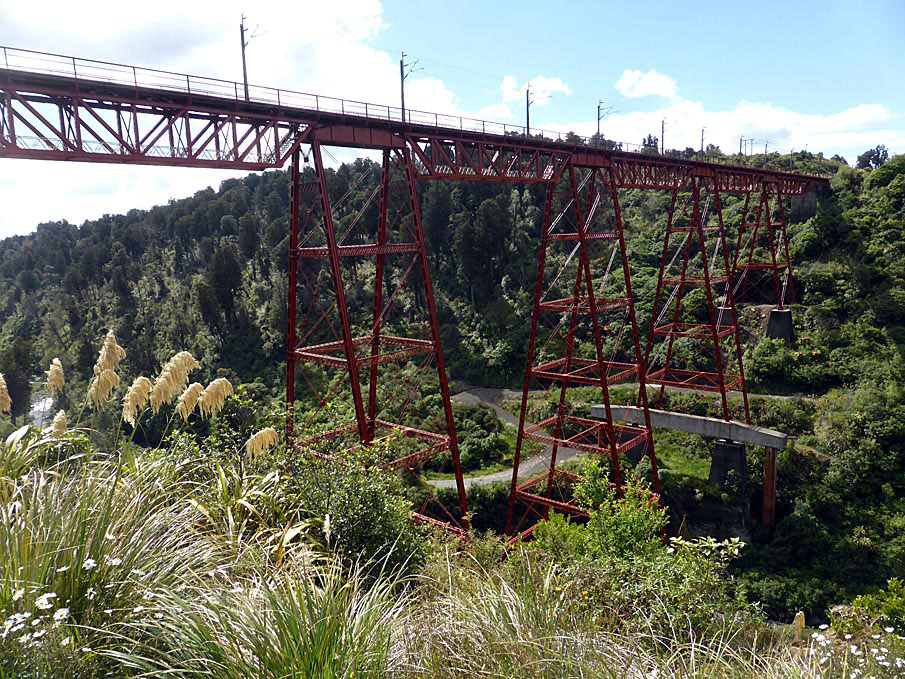
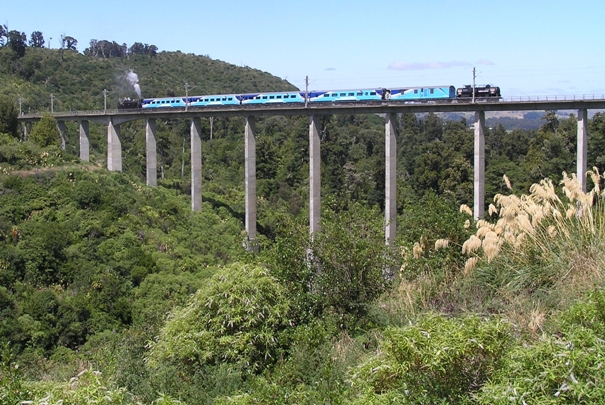
At 10.15pm a lahar, caused by the collapse of the walls containing the crater-lake on Mt Ruapehu, reached Tangiwai in the form of a dense wave of water, sand and boulders, and it washed away the rail-bridge over the river. Five minutes later, when the Wellington-to-Auckland Express train attempted to cross the bridge, its locomotive and six front carriages were plunged into the flooded Whangaehu River. The lives of 151 people were lost as a result.
On 31 December 1953 a ceremony was held to inter the unidentified victims in the Karori Cemetery. A year after the disaster, the Wellington-to-Auckland express dropped a wreath into the Whangaehu River from the new railway bridge in memory of those who had died. It was the first act to commemorate the disaster and has since become a tradition. Four years later, the official memorial of the disaster, paid for by the Government, was unveiled at the Karori Cemetery.
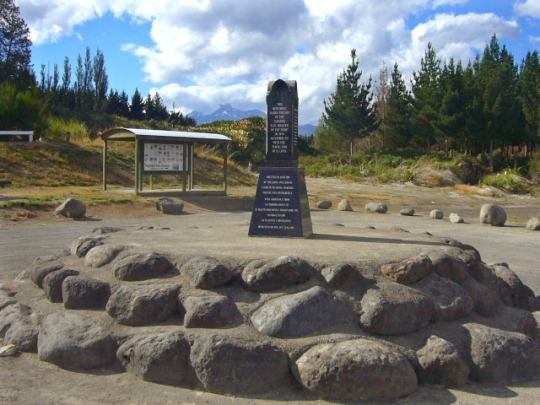
On the tenth anniversary of the disaster a memorial ceremony, attended by more than 300 people, was held at Tangiwai. A small white cross was erected at the site for the occasion. In response to the need for a permanent focal point for grief, the Tangiwai Memorial obelisk was erected in place of the cross in 1989. The obelisk was designed by the New Zealand Master Monumental Masons Association Inc and erected by Anderson Memorials, Wanganui. More than 200 people attended the unveiling ceremony. In 1994 the site of the disaster, 1.7130 hectares of land covered in toi toi, lupin and flax and adjacent to the Whangaehu River, was declared an historic reserve.
On the 50th anniversary of the disaster a small ceremony attended by approximately 40 people was held at the National Tangiwai Memorial in Wellington. The main ceremony was held at the site of the disaster, at Tangiwai, where the obelisk was unveiled for a second time following the addition of two new inscriptions. Approximately 1000 people, including the Governor-General and the Prime Minister, attended the ceremony.
The Tangiwai site, with its proximity to the actual disaster site, remains the most important focus for New Zealanders of the country's worst railway disaster. It is historically important as the site of the disaster, and has social value as an essential reference point for commemoration ceremonies for those who died. The place is imbued with the spirit of the accident and provides a powerful experiential connection between past and present.


List Entry Information
Status
Listed
List Entry Status
Historic Place Category 1
Access
Able to Visit
List Number
7591
Date Entered
14th April 2005
Date of Effect
14th April 2005
City/District Council
Ruapehu District
Region
Horizons (Manawatū-Whanganui) Region
Extent of List Entry
Registration includes the 1.7130 ha of land comprised in the Tangiwai Historic Reserve as described in New Zealand Gazette 1994, p.4346, and the Tangiwai Disaster Memorial thereon, and the sightlines to the Whangaehu River, the replacement rail-bridge, and the site of the original rail-bridge.
Legal description
Sec 1 Blk XII, Karioi SD, SO36503 (NZ Gazette 1994 p.4346), Wellington Land District
Location Description
Beside State Highway 49, between Ohakune and Waiouru.
Status
Listed
List Entry Status
Historic Place Category 1
Access
Able to Visit
List Number
7591
Date Entered
14th April 2005
Date of Effect
14th April 2005
City/District Council
Ruapehu District
Region
Horizons (Manawatū-Whanganui) Region
Extent of List Entry
Registration includes the 1.7130 ha of land comprised in the Tangiwai Historic Reserve as described in New Zealand Gazette 1994, p.4346, and the Tangiwai Disaster Memorial thereon, and the sightlines to the Whangaehu River, the replacement rail-bridge, and the site of the original rail-bridge.
Legal description
Sec 1 Blk XII, Karioi SD, SO36503 (NZ Gazette 1994 p.4346), Wellington Land District
Location Description
Beside State Highway 49, between Ohakune and Waiouru.
Why is this place significant?
Cultural Significance
Social Significance The Tangiwai Historic Reserve has social significance. While it was the location where the disaster occurred, it was not intended to serve as an official memorial site. An official memorial was unveiled at the Karori Cemetery in Wellington on 26 March 1957. Designed by government architect Francis Gordon Wilson (1900-1959), and paid for from government funds, the memorial indicates the national nature of the impact of the disaster. It is inscribed with the names of the 151 victims of the disaster and is constructed around the graves of the 16 victims unidentified at the time of the burial. In addition, official commemorative ceremonies have been held at this site every year. Despite the construction of this 'national' memorial, the memorial in the Karori Cemetery has served primarily as a private memorial site for those families whose relatives are buried beneath it. This function may have been influenced by the use of the site prior to the construction of the national memorial in 1957 as a private burial ground. For instance, the first ceremony held there was a memorial for the then remaining unidentified bodies of those killed in the disaster. The need to acknowledge the disaster in the years between the disaster and the construction of the national memorial may have promoted the informal gathering at what is now the Tangiwai Historic Reserve. This 'grass-roots' gathering gradually became a tradition among the friends, families and relatives of those killed in the disaster. By the tenth anniversary this tradition had become sufficiently entrenched for the erection of a small white cross to commemorate and acknowledge the significance of the site. By 1989 a permanent memorial had been constructed to serve as a focus for the annual commemorations. By the 50th anniversary, the strength of the annual commemorations held at Tangiwai exceeded those held at the Karori Cemetery and made the site the natural venue for the official ceremony in acknowledgement of those killed. While just 40 people attended the commemorations at the National Memorial, an estimated 1000 people were present at Tangiwai in 2003. The Tangiwai Historic Reserve has become an essential reference point in the associated community's identity or sense of self. Spiritual Significance When considering the question 'What is Social Value?', the Australian Heritage Commission concluded that 'Place can be seen as not primarily physical but rather as experiential. Places are widely conceived of as having an essential component of character, identity and spirit'. The Tangiwai Historic Reserve is such a place. It is the site that most vividly recalls for New Zealanders the memory of the Tangiwai disaster. The place is imbued with the spirit of the disaster and provides a powerful experiential connection between past and present. For those with, and even for those without, a direct connection New Zealand's worst train disaster, this is the site (the land and the adjacent Whangaehu River) that holds the most significance. The nearby riverbanks are where the rescuers came to help survivors, and where emergency services and volunteer helpers based their operations. The replacement bridge is within clear line of sight. It is to the Tangiwai Historic Reserve that people come to remember the disaster. This has been demonstrated by the annual, informal gatherings of survivors, family and friends associated with those lost in the disaster at the site. These gathering have occurred despite the construction of an official, national memorial in Wellington and the observance of official commemorative ceremonies on that site.
Historic Significance
Historical Significance or Value According to philosopher Edward S. Casey, place memory is 'the stabilizing persistence of place as a container of experiences that contributes so powerfully to its intrinsic memorability'. For New Zealanders, the Tangiwai Historic Reserve is the place that evokes the memory of the 'Tangiwai Disaster', when 151 died after their train plunged into the Whangaehu River on Christmas Eve, 1953. It is this powerful association of the reserve with the disaster that imbues the reserve with its significance or value. Historical Significance The Tangiwai Historic Reserve has national historical significance as the site of the Tangiwai Disaster, an event perceived of as a national tragedy. On Christmas Eve 1953, train No. 626 left Wellington at 3.00pm bound for Auckland with four first-class carriages and five second-class carriages, a brake van and a postal van. At approximately 10.15pm, the central pillars of rail bridge no. 136 were swept away by the raging floodwaters of the Whangaehu River after a lahar roared into the river from a crater on nearby Mount Ruapehu. The lahar was caused by the collapse of the walls containing the crater-lake on the mountain, which allowed the lake waters to flow down the mountainside picking up large quantities of volcanic ash and boulders to form a thick slurry of rapidly travelling mud. Approximately 7 minutes later, at 10.22pm, train No.626 approached the bridge site. The locomotive KA949 and six carriages tumbled into the swollen river. Of the 285 persons on the train, 134 were rescued, and 151 were killed. The news of the disaster, the eighth biggest in the world, became known to most New Zealanders early on Christmas Day and 'shocked celebrations to a standstill'. A Board of Inquiry was appointed to establish the cause of the disaster, and to determine how a similar event could be prevented and, as a result, an early warning system was installed on the Whangaehu River. A national memorial of the disaster was constructed over the graves of some of the victims in Karori Cemetery, in Wellington. Despite this, on the anniversary of the disaster, the victims have been commemorated by an informal gathering of survivors, family, friends, railway personnel and government officials at the site of the accident. In 1963 a focus for these gatherings was created when a small wooden cross was erected. This cross was replaced in 1989 by a granite obelisk. In 1994, the importance of the disaster site to those associated with the accident was formally acknowledged when it was declared an historic reserve. This formal acknowledgement of the importance of the site was further emphasised on the 50th anniversary of the disaster in 2003, when the official ceremonies were held at the Tangiwai historic reserve.
Why is this place Category 1 / Category 2?
Detail Of Assessed Criteria
(b) The association of the place with events, persons, or ideas of importance in New Zealand history: The site is associated with the Tangiwai disaster, New Zealand's worst rail disaster, and the subsequent, informal annual memorial services held there since 1954 in remembrance of those who were killed. (e)The community association with, or public esteem for, the place: The Tangiwai Disaster is considered a national disaster. New Zealanders, as a community, were affected by this event and the site became the natural gathering place for those wishing to commemorate those killed in the accident. In particular, however, the communities of Wellington, Taihape and Waiouru suffered losses. The Tangiwai Memorial, which constructed in 1989 in acknowledgement of the significance of the site, was funded by many sectors of these communities. The Reserve, as a place where people gather, as a focal point for the community when remembering the disaster, is therefore held in high esteem. (f) The potential of the place for public education: As Dolores Hayden has noted, 'it is place's very same assault on all ways of knowing (sight, sound, smell, touch, and taste) that makes it powerful as a source of memory, as a weave where one strand ties in another'. Tangiwai Historic Reserve is located on the site that the Tangiwai Disaster occurred and, as such, has potential to 'trigger memories' for those associated with the accident. The proximity of Mt Ruapehu, the replacement railway bridge and the river put people in touch with the scene in which the disaster was played out. At the same time as the places 'trigger memories for insiders, who have shared a common past', it also serves to 'represent shared pasts to outsiders who might be interested in knowing about them in the present'. The Reserve includes a number of tools which could be used by an 'outsider' to interpret the significance of the site. The obelisk memorial, which conveys some sense of the space as a 'sacred site', specifically states that it 'marks the site of the Tangiwai Rail Disaster' and provides details of the accident. In addition, the Reserve includes information boards, which provide more detailed information about the disaster. The Reserve is also well signposted and is easily accessible to the public. (h) The symbolic or commemorative value of the place: The Tangiwai Historic Reserve has symbolic or commemorative value. It is the site at which commemorative gatherings of families, friends and others associated with those killed in the accident have met on an annual basis since 1953. The obelisk memorial, which replaced a white wooden cross in 1989, indicates the importance of the Reserve as the site of the disaster. Despite its simple nature, which allows the terrain and the climate to set the scene, the memorial conveys the impression of 'sacred space' and demonstrates the importance of that space to those who funded the structure.
Why is this place significant?
Cultural Significance
Social Significance The Tangiwai Historic Reserve has social significance. While it was the location where the disaster occurred, it was not intended to serve as an official memorial site. An official memorial was unveiled at the Karori Cemetery in Wellington on 26 March 1957. Designed by government architect Francis Gordon Wilson (1900-1959), and paid for from government funds, the memorial indicates the national nature of the impact of the disaster. It is inscribed with the names of the 151 victims of the disaster and is constructed around the graves of the 16 victims unidentified at the time of the burial. In addition, official commemorative ceremonies have been held at this site every year. Despite the construction of this 'national' memorial, the memorial in the Karori Cemetery has served primarily as a private memorial site for those families whose relatives are buried beneath it. This function may have been influenced by the use of the site prior to the construction of the national memorial in 1957 as a private burial ground. For instance, the first ceremony held there was a memorial for the then remaining unidentified bodies of those killed in the disaster. The need to acknowledge the disaster in the years between the disaster and the construction of the national memorial may have promoted the informal gathering at what is now the Tangiwai Historic Reserve. This 'grass-roots' gathering gradually became a tradition among the friends, families and relatives of those killed in the disaster. By the tenth anniversary this tradition had become sufficiently entrenched for the erection of a small white cross to commemorate and acknowledge the significance of the site. By 1989 a permanent memorial had been constructed to serve as a focus for the annual commemorations. By the 50th anniversary, the strength of the annual commemorations held at Tangiwai exceeded those held at the Karori Cemetery and made the site the natural venue for the official ceremony in acknowledgement of those killed. While just 40 people attended the commemorations at the National Memorial, an estimated 1000 people were present at Tangiwai in 2003. The Tangiwai Historic Reserve has become an essential reference point in the associated community's identity or sense of self. Spiritual Significance When considering the question 'What is Social Value?', the Australian Heritage Commission concluded that 'Place can be seen as not primarily physical but rather as experiential. Places are widely conceived of as having an essential component of character, identity and spirit'. The Tangiwai Historic Reserve is such a place. It is the site that most vividly recalls for New Zealanders the memory of the Tangiwai disaster. The place is imbued with the spirit of the disaster and provides a powerful experiential connection between past and present. For those with, and even for those without, a direct connection New Zealand's worst train disaster, this is the site (the land and the adjacent Whangaehu River) that holds the most significance. The nearby riverbanks are where the rescuers came to help survivors, and where emergency services and volunteer helpers based their operations. The replacement bridge is within clear line of sight. It is to the Tangiwai Historic Reserve that people come to remember the disaster. This has been demonstrated by the annual, informal gatherings of survivors, family and friends associated with those lost in the disaster at the site. These gathering have occurred despite the construction of an official, national memorial in Wellington and the observance of official commemorative ceremonies on that site.
Historic Significance
Historical Significance or Value According to philosopher Edward S. Casey, place memory is 'the stabilizing persistence of place as a container of experiences that contributes so powerfully to its intrinsic memorability'. For New Zealanders, the Tangiwai Historic Reserve is the place that evokes the memory of the 'Tangiwai Disaster', when 151 died after their train plunged into the Whangaehu River on Christmas Eve, 1953. It is this powerful association of the reserve with the disaster that imbues the reserve with its significance or value. Historical Significance The Tangiwai Historic Reserve has national historical significance as the site of the Tangiwai Disaster, an event perceived of as a national tragedy. On Christmas Eve 1953, train No. 626 left Wellington at 3.00pm bound for Auckland with four first-class carriages and five second-class carriages, a brake van and a postal van. At approximately 10.15pm, the central pillars of rail bridge no. 136 were swept away by the raging floodwaters of the Whangaehu River after a lahar roared into the river from a crater on nearby Mount Ruapehu. The lahar was caused by the collapse of the walls containing the crater-lake on the mountain, which allowed the lake waters to flow down the mountainside picking up large quantities of volcanic ash and boulders to form a thick slurry of rapidly travelling mud. Approximately 7 minutes later, at 10.22pm, train No.626 approached the bridge site. The locomotive KA949 and six carriages tumbled into the swollen river. Of the 285 persons on the train, 134 were rescued, and 151 were killed. The news of the disaster, the eighth biggest in the world, became known to most New Zealanders early on Christmas Day and 'shocked celebrations to a standstill'. A Board of Inquiry was appointed to establish the cause of the disaster, and to determine how a similar event could be prevented and, as a result, an early warning system was installed on the Whangaehu River. A national memorial of the disaster was constructed over the graves of some of the victims in Karori Cemetery, in Wellington. Despite this, on the anniversary of the disaster, the victims have been commemorated by an informal gathering of survivors, family, friends, railway personnel and government officials at the site of the accident. In 1963 a focus for these gatherings was created when a small wooden cross was erected. This cross was replaced in 1989 by a granite obelisk. In 1994, the importance of the disaster site to those associated with the accident was formally acknowledged when it was declared an historic reserve. This formal acknowledgement of the importance of the site was further emphasised on the 50th anniversary of the disaster in 2003, when the official ceremonies were held at the Tangiwai historic reserve.
Why is this place Category 1 / Category 2?
Detail Of Assessed Criteria
(b) The association of the place with events, persons, or ideas of importance in New Zealand history: The site is associated with the Tangiwai disaster, New Zealand's worst rail disaster, and the subsequent, informal annual memorial services held there since 1954 in remembrance of those who were killed. (e)The community association with, or public esteem for, the place: The Tangiwai Disaster is considered a national disaster. New Zealanders, as a community, were affected by this event and the site became the natural gathering place for those wishing to commemorate those killed in the accident. In particular, however, the communities of Wellington, Taihape and Waiouru suffered losses. The Tangiwai Memorial, which constructed in 1989 in acknowledgement of the significance of the site, was funded by many sectors of these communities. The Reserve, as a place where people gather, as a focal point for the community when remembering the disaster, is therefore held in high esteem. (f) The potential of the place for public education: As Dolores Hayden has noted, 'it is place's very same assault on all ways of knowing (sight, sound, smell, touch, and taste) that makes it powerful as a source of memory, as a weave where one strand ties in another'. Tangiwai Historic Reserve is located on the site that the Tangiwai Disaster occurred and, as such, has potential to 'trigger memories' for those associated with the accident. The proximity of Mt Ruapehu, the replacement railway bridge and the river put people in touch with the scene in which the disaster was played out. At the same time as the places 'trigger memories for insiders, who have shared a common past', it also serves to 'represent shared pasts to outsiders who might be interested in knowing about them in the present'. The Reserve includes a number of tools which could be used by an 'outsider' to interpret the significance of the site. The obelisk memorial, which conveys some sense of the space as a 'sacred site', specifically states that it 'marks the site of the Tangiwai Rail Disaster' and provides details of the accident. In addition, the Reserve includes information boards, which provide more detailed information about the disaster. The Reserve is also well signposted and is easily accessible to the public. (h) The symbolic or commemorative value of the place: The Tangiwai Historic Reserve has symbolic or commemorative value. It is the site at which commemorative gatherings of families, friends and others associated with those killed in the accident have met on an annual basis since 1953. The obelisk memorial, which replaced a white wooden cross in 1989, indicates the importance of the Reserve as the site of the disaster. Despite its simple nature, which allows the terrain and the climate to set the scene, the memorial conveys the impression of 'sacred space' and demonstrates the importance of that space to those who funded the structure.
Construction Professional
Name
New Zealand Master Monumental Masons Association Inc
Type
Designer
Biography
No biography is currently available for this construction professional
Name
Anderson Memorials, Wanganui
Type
Carver
Biography
No biography is currently available for this construction professional
Construction Details
Start Year
1953
Type
Other
Description
Tangiwai Rail Disaster.
Start Year
1957
Type
Other
Description
National memorial unveiled in Karori Cemetery, Wellington.
Start Year
1963
Type
Addition
Description
White cross erected at disaster site.
Start Year
1989
Type
Addition
Description
New memorial unveiled at disaster site.
Start Year
1994
Type
Other
Description
Disaster site gazetted as a reserve.
Start Year
2003
Type
Addition
Description
Inscriptions added to 1989 memorial.
Construction Materials
'African Grey' Granite 4-sided obelisk with granite post on an 'African grey' granite dais, set on a stepped concrete platform inset with river stones.
Notable Features
Registration includes the 1.7130 ha of land comprised in the Tangiwai Historic Reserve as described in New Zealand Gazette 1994, p.4346, and the Tangiwai Disaster Memorial thereon, and the sightlines to the Whangaehu River, the replacement rail-bridge, and the site of the original rail-bridge.
Construction Professional
Name
New Zealand Master Monumental Masons Association Inc
Type
Designer
Biography
No biography is currently available for this construction professional
Name
Anderson Memorials, Wanganui
Type
Carver
Biography
No biography is currently available for this construction professional
Construction Details
Start Year
1953
Type
Other
Description
Tangiwai Rail Disaster.
Start Year
1957
Type
Other
Description
National memorial unveiled in Karori Cemetery, Wellington.
Start Year
1963
Type
Addition
Description
White cross erected at disaster site.
Start Year
1989
Type
Addition
Description
New memorial unveiled at disaster site.
Start Year
1994
Type
Other
Description
Disaster site gazetted as a reserve.
Start Year
2003
Type
Addition
Description
Inscriptions added to 1989 memorial.
Construction Materials
'African Grey' Granite 4-sided obelisk with granite post on an 'African grey' granite dais, set on a stepped concrete platform inset with river stones.
Notable Features
Registration includes the 1.7130 ha of land comprised in the Tangiwai Historic Reserve as described in New Zealand Gazette 1994, p.4346, and the Tangiwai Disaster Memorial thereon, and the sightlines to the Whangaehu River, the replacement rail-bridge, and the site of the original rail-bridge.
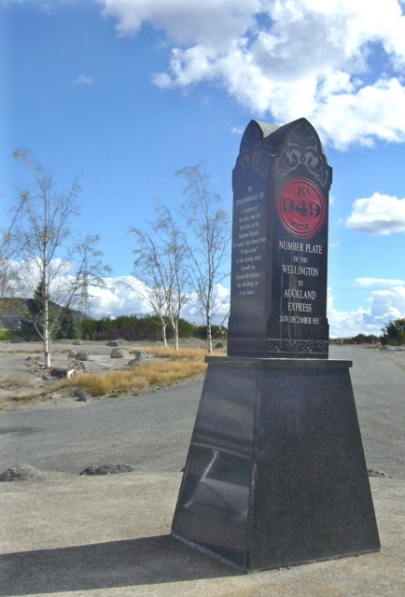
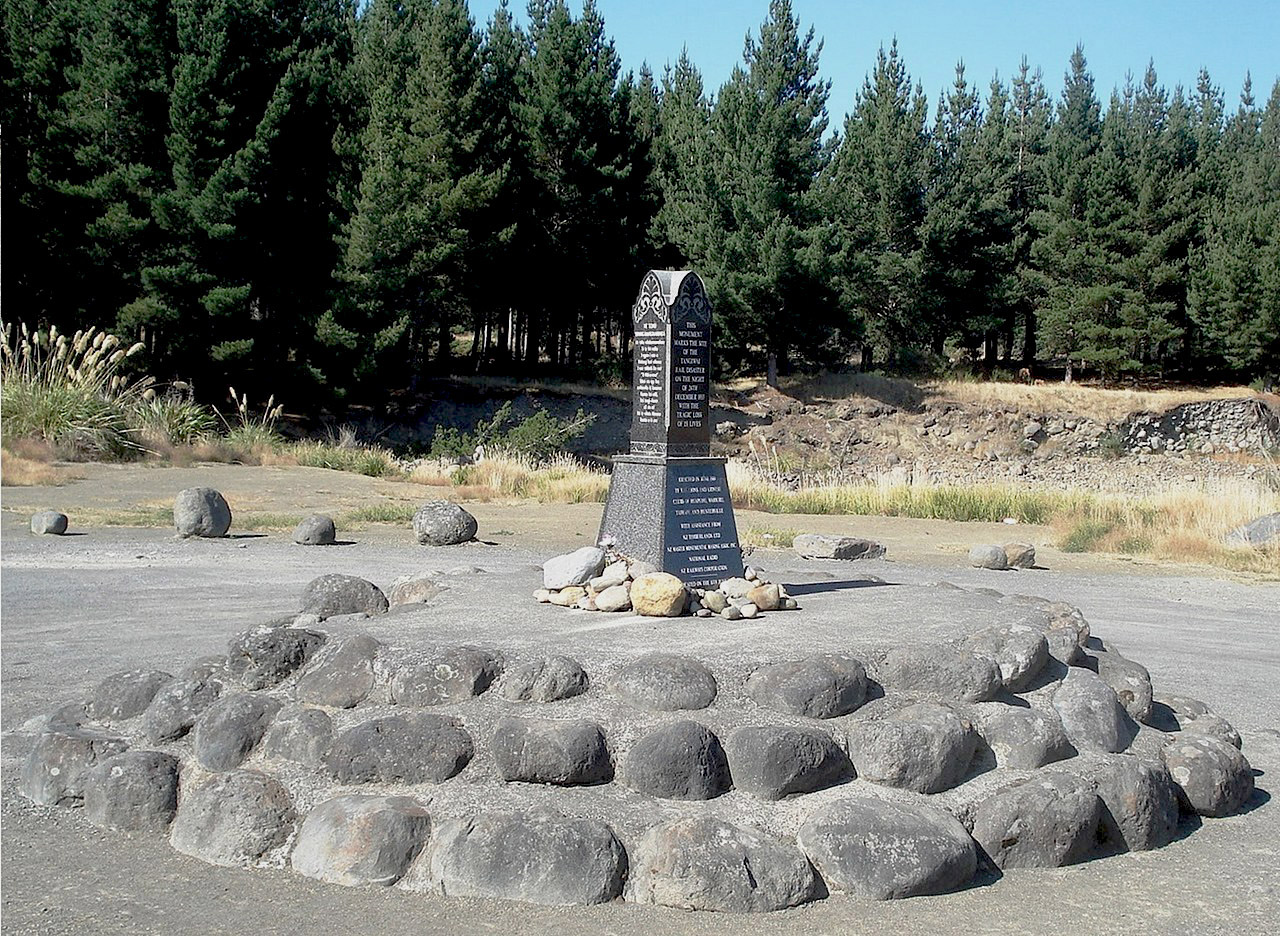
On Christmas Eve 1953, train No. 626 left Wellington at 3.00pm bound for Auckland with four first-class carriages and five-second class carriages, a brake van and a postal van. The train was carrying a total of 285 passengers and crew. The night was clear and the weather was fine. At 10.20pm, the train passed the Tangiwai Flag Station, which was located approximately 1 mile (1.6 kilometres) from the rail bridge over the Whangaehu River. It was reported to be travelling 'slower than usual' at about 40 miles per hour. Five minutes beforehand, at approximately 10.15pm, the central pillars of that same rail bridge (No. 136) had been swept away by the raging floodwaters of the Whangaehu River after a lahar roared into the river from a crater on nearby Mount Ruapehu. The lahar was caused by the collapse of the walls containing the crater-lake on the mountain, which allowed the lake waters to flow down the mountainside picking up large quantities of volcanic ash and boulders to form a thick slurry of rapidly travelling mud. The slurry reached Tangiwai in the form of a dense wave of water, sand and boulders. Geologist James Healy reported as follows: Above the railway bridge the flood spread out across the flats, depositing sand and boulders and reached a depth of 20 feet [6.01 metres] at the bridge. It piled up to cross the highway and highway-bridge, depositing sand and flooding across the highway for several hundred yards, and swept on down the river. The lahar was estimated to have a density of approximately 1.6 pounds per cubic inch, and a speed of approximately 10 miles per hour. This meant that the lahar had transporting abilities many times that of a normal river in flood, and Healy estimated that the fourth pier of the bridge would have been carried away in its entirety almost immediately after first contact by the lahar. Upstream from the bridge, boulders up to 4 feet (1.2 metres) in diameter were found. Forty-five minutes later, the river had subsided markedly, and by daybreak the scene resembled a 'mud estuary at low tide'. The flood rise in the river, which measured between 15 to 17 feet (4.6 to 5.2 metres), also destroyed Strachan's bridge at Karioi, Ngamoki Bridge, and the Whangaehu Valley Road Bridge. At 10.22pm, shortly after the lahar had reached the bridge, the Wellington to Auckland express train No.626 approached the bridge site. Seconds before Arthur Cyril Ellis, a postal worker from Taihape, had waved a torch in an attempt to stop the train causing the driver, Charles Parker, to make an emergency application of the breaks. He was too late. The locomotive KA949 and the five second-class carriages of No. 626 tumbled into the swollen river. The sixth carriage was left dangling at the end of the rails at about a 45-degree angle. A witness standing on the road on the northern bank of the Whangaehu River observed the locomotive suddenly nose-dive into the river; and noted that 'the rest of the train was left stationary with the lights burning in the carriages'. The noise of the roaring river and boulders was, in his words 'terrific' and he could not hear the train crash as it plunged into the water. Ellis saw the carriages that had fallen 'floating down the river with the lights still on'. Ellis noted that 'after they had travelled about 40 yards they disappeared and I no longer saw the lights'. In an attempt to rescue the passengers in the sixth carriage, Ellis and guard William Inglis boarded the train. Shortly afterwards, the carriage plunged into the river. With the assistance of two passengers, Ellis and Inglis managed to rescue 21 of the passengers trapped on board by lifting them through the broken windows of the carriage. Within half an hour further help had arrived, and a Disaster Co-ordination Centre was set up at the Ohakune Railway Station. Army personnel from Waiouru and Navy personnel from HMS Irirangi, as well as civilians helped to retrieve the bodies and rescue the survivors, many of whom were 'shocked, filthy, choked with silt and half blind with oil'. Of the 285 persons on the train, 134 were found to be safe. Altogether, the bodies of 131 people, most of whom had either drowned or been asphyxiated by silt, were recovered. A further 20 were never found, bringing the casualty list to a total of 151 persons. Heavy moving equipment arrived from north and south and carriages and debris were removed. In the meantime rail traffic was diverted via New Plymouth and road traffic through the back roads. The Public Works Department and the Railways Department worked night and day and within a week the rail line was re-opened with temporary central pillars for the bridge in place. The news of the disaster became known to most New Zealanders early in Christmas Day and what was then the world's eighth biggest railway disaster 'shocked celebrations to a standstill'. An information bureau was established at the Railway Social Hall in Wellington and was open 24 hours a day to answer queries about the accident. The bodies of the victims were transferred to Wellington on 28 December and, on 31 December 1953, a ceremony was held to inter the unidentified victims in the Karori Cemetery. Prince Phillip, who had arrived in Auckland with Queen Elizabeth II just 40 hours before the accident, attended the funeral. On the last day of her tour the Queen awarded the George Medal and British Empire Medal to those who had distinguished themselves during the aftermath of the disaster. On 18 January 1954 the then Prime Minister Sidney George Holland (1893-1961) established a Board of Inquiry to establish the cause of the disaster, determine whether it could have been prevented and to inquire into methods of preventing a similar occurrence. The Board reported its findings on 23 April 1954. It found that the cause of the accident had been the 'sudden release from the Crater Lake on Mount Ruapehu'. The Board emphasised the destructive nature of this release and found that no government personnel were to blame for the collapse of the rail-bridge. However, the Board also noted that it was known that lahars had occurred in the Whangaehu in 1861, 1889, 1895, and 1925, and that severe flooding had resulted on at least four occasions. The recommendations of the Board that measures be undertaken to prevent a similar accident were heeded and resulted, in 1968, in the establishment of an early warning system upstream on the Whangaehu River. A year after the disaster, the Wellington to Auckland express dropped a wreath into the Whangaehu River from the new railway bridge in memory of those who had died. It was the first act to commemorate the disaster and has since become a tradition. The first official memorial of the disaster was unveiled at the Karori Cemetery in Wellington on 26 March 1957. Designed by government architect Francis Gordon Wilson (1900-1959), the memorial includes a marble stone inscribed with the names of the 151 victims of the disaster and is constructed around the graves of the 16 victims unidentified at the time of the burial. On the tenth anniversary of the disaster, on 24 December 1963, more than 300 people journeyed to Tangiwai, where a small white cross, erected for the occasion, marked the site of the disaster. Family and friends of those who had died had informally observed the anniversary of the accident at the Tangiwai site, and shortly after the anniversary, survivors, descendants and relatives of those who perished, union representatives and corporate sponsors formed the Tangiwai Disaster Memorial Committee. The aim of the committee was to obtain sufficient funds to 'erect a suitable shrine on the site and to provide an engineering scholarship in the field of travel safety'. Their patron, politician Walter Nash (1882-1968) launched their appeal for funds in 1964. While an informal ceremony continued to be held each year at Tangiwai in memory of the disaster, the permanent marker was not completed until 1989. It was designed by the New Zealand Master Monumental Masons Association Inc and erected by Anderson Memorials, Wanganui. Its primary sponsors, who are acknowledged on the memorial itself, included members of the Lions and Lioness clubs of Ruapehu, Waiouru, Taihape and Hunterville; New Zealand Timberlands Ltd; National Radio; the New Zealand Railways Incorporation; and NZ Master Monumental Masons Association. The memorial, which consisted of a circular platform outlined with river boulders, and an obelisk made from granite, was located where the wrecked carriages of the train had lain. On 14 June 1989 survivors of the disaster and relatives of those who had died joined more than 200 people for the unveiling ceremony. The memorial was dedicated by the Reverend Tom Hawira of Raetihi and a service was conducted by Father Neal Wilson of Waiouru and now serves as a focus for the annual memorial ceremony. In 1994 the site was made an historic reserve.' Sunday 21 December 2003 was the 50th anniversary of the disaster. A small ceremony attended by approximately 40 people, was held at the Tangiwai National Memorial in Karori Cemetery in Wellington. This ceremony was attended primarily by the families of those buried at the site. Yet the main ceremony was held at the site of the disaster, at Tangiwai, where the obelisk was unveiled for a second time following the addition of two new inscriptions. The ceremony was attended by approximately 1000 people, including the Governor-General, the Prime Minister, Ministers of the Crown, Members of the Opposition, and personnel from the Army, Navy and civilian rescue organisations, as well as the survivors and families of the victims. The Tangiwai site, with its proximity to the actual disaster site, remains the most important focus for New Zealanders of the country's worst railway disaster.
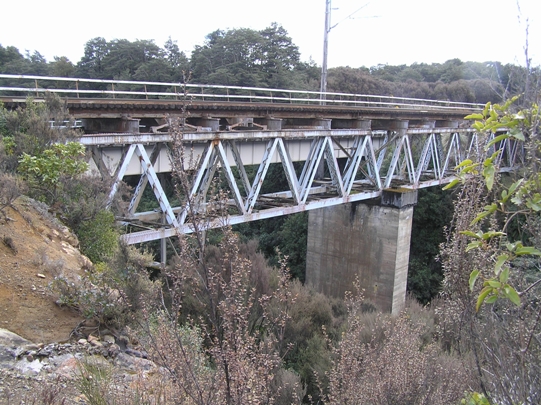
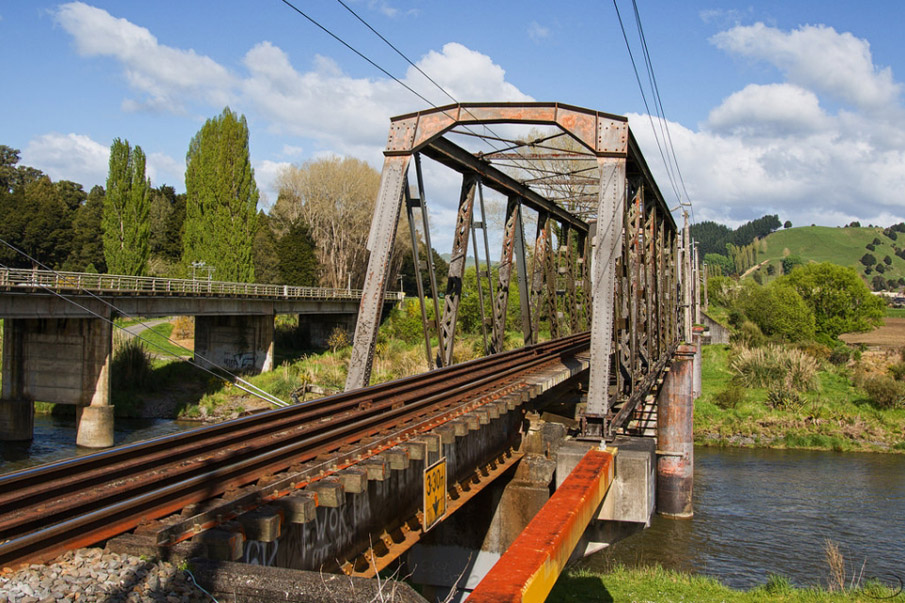
The Tangiwai Memorial Reserve consists of 1.7130 hectares of land. The land is bounded by the Whangaehu River bank in the north and east, State Highway 49 in the south, and an adjacent property in the west. It is located next to the replacement Tangiwai Rail Bridge and beside the Whangaehu River. The reserve includes information boards and picnic tables, which are set amongst the toi toi, flax, and lupin. The Tangiwai Disaster Memorial, unveiled 14 June 1989, is located less than 200 metres from the replacement Tangiwai Rail Bridge in a small roadside rest area. The memorial marks the site of the disaster and it is its proximity to the site of the accident that lends the structure its significance. The obelisk is in the centre of the asphalt ring road and rests on a circular platform. The edges of the platform are marked with river stones, which are also embedded in the rise of the steps. The 'African Grey' granite obelisk features inscriptions that memorialise the disaster.
Historical and Associated Iwi / Hapū / Whānau
Completion Date
21st September 2004
Report Written By
Rebecca O'Brien
Information Sources
Archives New Zealand (Wgtn)
Archives New Zealand (Wellington)
Board of Inquiry
Board of Inquiry
Boon, 1990
K. Boon, 'The Tangiwai Railway Disaster', Petone, 1990
Conly, 1986
Geoff Conly, Stewart Graham, Tragedy on the Track: Tangiwai & other New Zealand Railway Accidents, Wellington, 1986
Hayden, 1999
D. Hayden, The Power of Place, London, 1999
Other Information
A fully referenced registration report is available from the NZHPT Central Region Office Please note that entry on the New Zealand Heritage List/Rarangi Korero identifies only the heritage values of the property concerned, and should not be construed as advice on the state of the property, or as a comment of its soundness or safety, including in regard to earthquake risk, safety in the event of fire, or insanitary conditions.
Historical and Associated Iwi / Hapū / Whānau
Completion Date
21st September 2004
Report Written By
Rebecca O'Brien
Information Sources
Archives New Zealand (Wgtn)
Archives New Zealand (Wellington)
Board of Inquiry
Board of Inquiry
Boon, 1990
K. Boon, 'The Tangiwai Railway Disaster', Petone, 1990
Conly, 1986
Geoff Conly, Stewart Graham, Tragedy on the Track: Tangiwai & other New Zealand Railway Accidents, Wellington, 1986
Hayden, 1999
D. Hayden, The Power of Place, London, 1999
Other Information
A fully referenced registration report is available from the NZHPT Central Region Office Please note that entry on the New Zealand Heritage List/Rarangi Korero identifies only the heritage values of the property concerned, and should not be construed as advice on the state of the property, or as a comment of its soundness or safety, including in regard to earthquake risk, safety in the event of fire, or insanitary conditions.
Current Usages
Uses: Commemoration
Specific Usage: Memorial - Disaster
Uses: Transport
Specific Usage: Rail - transport - other
Former Usages
General Usage: Commemoration
Specific Usage: Memorial - Disaster
General Usage: Transport
Specific Usage: Rail - transport - other
Themes
North Island Main Trunk Line
Current Usages
Uses: Commemoration
Specific Usage: Memorial - Disaster
Uses: Transport
Specific Usage: Rail - transport - other
Former Usages
General Usage: Commemoration
Specific Usage: Memorial - Disaster
General Usage: Transport
Specific Usage: Rail - transport - other
Themes
North Island Main Trunk Line
Location
Related listings


Stay up to date with Heritage this month