DonateSupporterVisit Heritage
  • Tūrangawaewae
    Places
  • Tira Māori
    Māori Heritage
  • Poutairangahia
    Archaeology
  • Rauemi
    Resources
  • Mō Tātou
    About Us
  • New Zealand Heritage List
  • Nominate and submit
  • Explore the List
  • National Historic Landmarks
  • Plaques
  • Rainbow List Project
  • Lost heritage
  • Visit Heritage
  • Our properties
  • Turnbull House Project
  • Collections
  • Shop
  • Tohu Whenua
  • Tira Māori
  • Conserving Māori heritage
  • Marae built heritage
  • Māori heritage on the List
  • Hinemihi—Te Hokinga Mai
  • What is archaeology?
  • Is there a site on my property?
  • What are my legal requirements?
  • Affecting an archaeological site
  • Declaring an archaeological site
  • Archaeology FAQs
  • Archaeology Digital Library
  • Archaeology guidelines and templates
  • Resources
  • Funding
  • Publications
  • Sustainable management guides
  • Disaster recovery
  • Podcasts & digital resources
  • Education Hub
  • Conservation plans
  • About
  • Board
  • Māori Heritage Council
  • Senior Staff
  • Offices
  • Contact us
  • Careers
  • Covenants
  • Fast-track
  • Corporate documents
  • Currently consulting on
  • Our submissions
  • News
  • Covid-19 response
Quick links
Rārangi Kōrero | The List
Explore the List
National Historic Landmarks
Ngā Manawhenua o Aotearoa me ōna Kōrero Tūturu
Quick links
Tapuwae
A Vision for Places of Māori Heritage
Funding for Māori Heritage
Resources
Quick links
Archaeological Authority Portal
Applying for an archaeological authority
Archaeology FAQs
Browse the most frequently asked questions about archaeological authorities and the archaeological process.
Quick links
Quick links
Contact us
Offices
DonateSupporterVisit Heritage
  • Tūrangawaewae
    Places
  • Tira Māori
    Māori Heritage
  • Poutairangahia
    Archaeology
  • Rauemi
    Resources
  • Mō Tātou
    About Us
  • New Zealand Heritage List
  • Nominate and submit
  • Explore the List
  • National Historic Landmarks
  • Plaques
  • Rainbow List Project
  • Lost heritage
  • Visit Heritage
  • Our properties
  • Turnbull House Project
  • Collections
  • Shop
  • Tohu Whenua
  • Tira Māori
  • Conserving Māori heritage
  • Marae built heritage
  • Māori heritage on the List
  • Hinemihi—Te Hokinga Mai
  • What is archaeology?
  • Is there a site on my property?
  • What are my legal requirements?
  • Affecting an archaeological site
  • Declaring an archaeological site
  • Archaeology FAQs
  • Archaeology Digital Library
  • Archaeology guidelines and templates
  • Resources
  • Funding
  • Publications
  • Sustainable management guides
  • Disaster recovery
  • Podcasts & digital resources
  • Education Hub
  • Conservation plans
  • About
  • Board
  • Māori Heritage Council
  • Senior Staff
  • Offices
  • Contact us
  • Careers
  • Covenants
  • Fast-track
  • Corporate documents
  • Currently consulting on
  • Our submissions
  • News
  • Covid-19 response
Quick links
Rārangi Kōrero | The List
Explore the List
National Historic Landmarks
Ngā Manawhenua o Aotearoa me ōna Kōrero Tūturu
Quick links
Tapuwae
A Vision for Places of Māori Heritage
Funding for Māori Heritage
Resources
Quick links
Archaeological Authority Portal
Applying for an archaeological authority
Archaeology FAQs
Browse the most frequently asked questions about archaeological authorities and the archaeological process.
Quick links
Quick links
Contact us
Offices
  • Places
  • Nominate and submit
  • National Historic Landmarks
  • Places
  • Nominate and submit
  • National Historic Landmarks
  • Tira Māori
  • Conserving Māori heritage
  • Marae built heritage
  • Tira Māori
  • Conserving Māori heritage
  • Marae built heritage
  • Archaeological authorities
  • Archaeology Digital Library
  • Archaeological authorities
  • Archaeology Digital Library
  • All resources
  • Publications
  • Funding
  • All resources
  • Publications
  • Funding
  • FAQs
  • FAQs
Follow us on:
Places
  • Places
  • Nominate and submit
  • National Historic Landmarks
Tira Māori
  • Tira Māori
  • Conserving Māori heritage
  • Marae built heritage
Archaeology
  • Archaeological authorities
  • Archaeology Digital Library
Resources
  • All resources
  • Publications
  • Funding
FAQs
  • FAQs
Follow us on
HomePrivacyTerms and conditionsAbout this site
© Heritage New Zealand Pouhere Taonga 2026.
 
Christ Church (Anglican)

State Highway 2, PUKEHOU

Private

Historic Place Category 1

List No. 1036
Quick links:
List GalleryLocationDetails
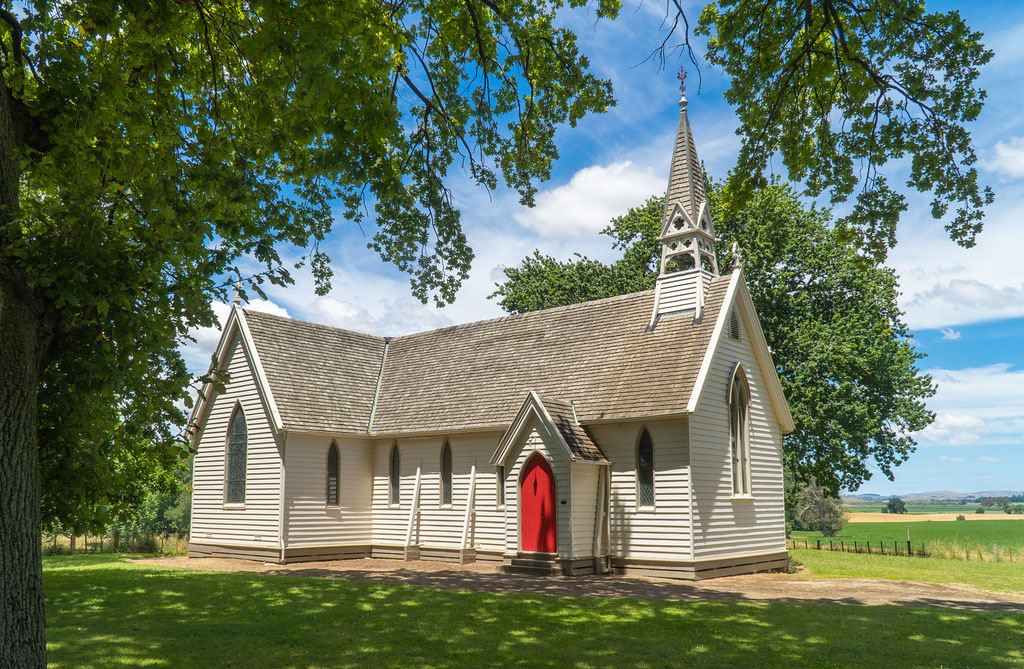
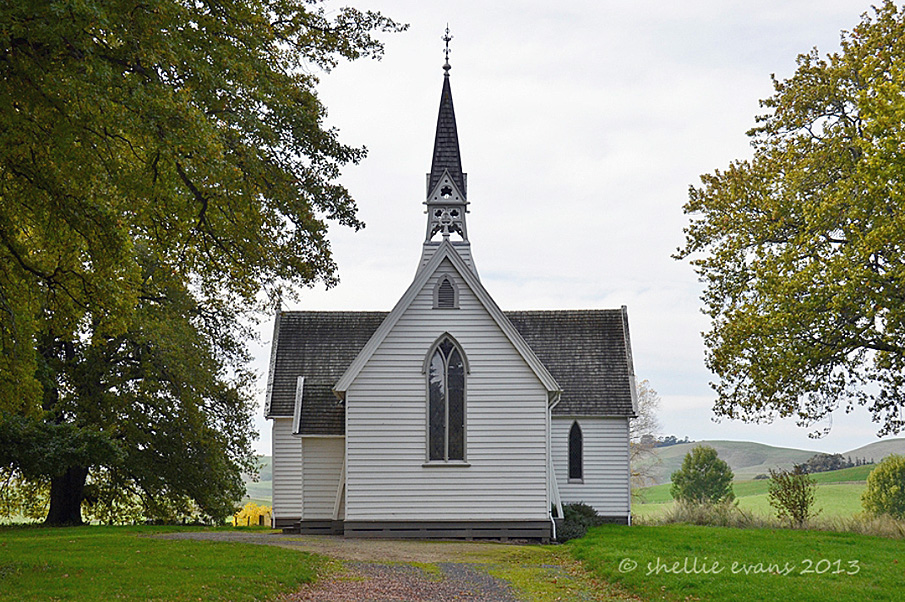
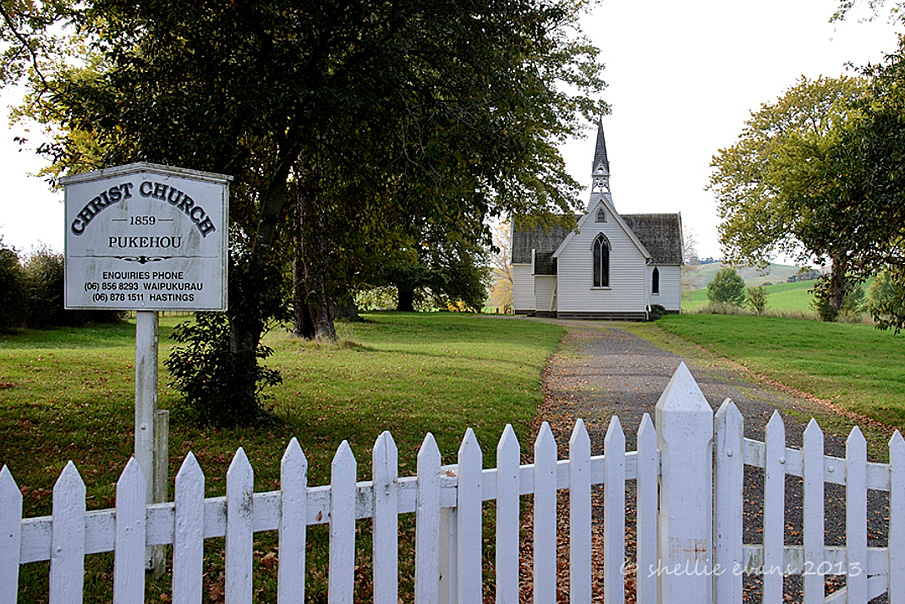
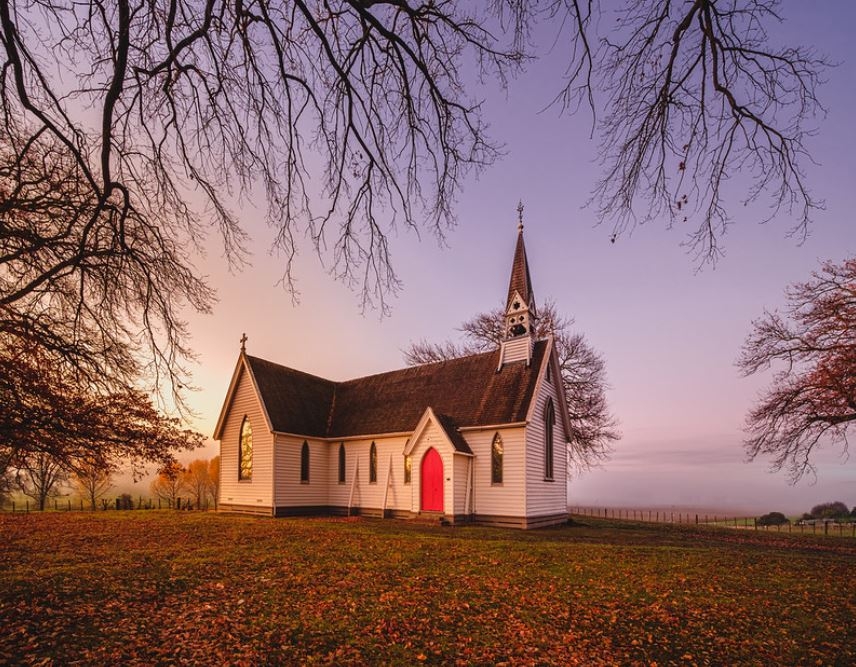
Christ Church, Pukehou, built in 1859 by the founder of Te Aute School, Archdeacon Samuel Williams, is the oldest church in Hawke's Bay.

Samuel Williams was born in England in 1822. Soon after he was born his parents, the Anglican clergyman, Henry Williams, and Marianne Coldham, left to become missionaries in New Zealand. Samuel spent most of his childhood in Paihia and Waimate. At the age of 17 he became a teacher at the Anglican missionary school of St John's, Auckland. He was ordained as a deacon in September 1846. In the same year married his cousin Mary Williams, the daughter of William and Jane Williams. In the following year the couple were assigned to Otaki to help the mission established by Octavius Hadfield. Here Samuel organised a system of Maori schools and supervised the building of Rangiatea. In about 1853, at the request of Governor Sir George Grey, Samuel and his family moved to the Hawke's Bay to set up a school at Te Aute. This school had been established by an agreement between the Ngati Te Whatu-i-apiti leader, Te Hapuku (?-1878), and a number of Maori from the Heretaunga region with Grey. Its establishment led to the Crown acquiring large portions of the Hawke's Bay. Samuel opened the school in 1854 with 12 pupils.

In 1859 Samuel built Christ Church at Pukehou, not far from the school at Te Aute. The church was built in an elegant Gothic Revival style - a style popular with the Anglican Church. It was constructed of native timber (totara) and a roof of totara shingles. It is believed that the oaks outside the church were planted at about the same time the church was built. The church was for both Maori and Pakeha. In that same year a disastrous fire, combined with a change in the government Maori schooling policy, forced Samuel to close the school. Christ Church continued to serve the surrounding community. The first recorded wedding in the church register was in December 1860 when John Davies Ormond (1831?-1917), runholder, politician, and, later, Provincial Superintendent of Hawke's Bay, married Hannah Richardson. In 1872 Samuel re-established the school. Te Aute College used the church at Pukehou until a college chapel was built in 1901. In the meantime the church was extended to accommodate larger congregations. In 1881 a chancel was added. In 1893 the transepts were added and the chancel extended. The vestry was also moved to where it is currently situated. Samuel died in 1907, and both he and his wife (d.1900) are buried not far from Pukehou.

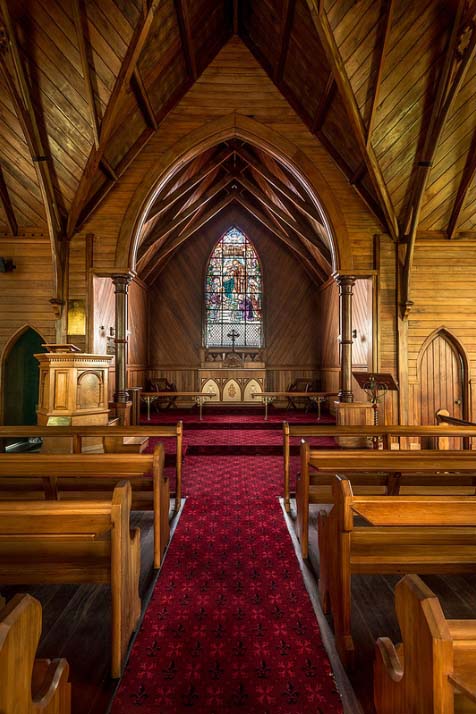
Christ Church remained part of the Waiapu Diocese until 1912, at which time it became part of the newly formed Otane Parish. Over the years the church gained a number of chattels, most importantly the stain glass windows by John Bonor and Karl Parsons, renowned Arts and Crafts artist. In 1983 the Otane Parish was divided and Christ Church once again became part of the Waiapu Diocese. At this time Christ Church was closed for regular services. Since 1983 Christ Church has been run by a committee. This committee maintains the church and allows it to be used for occasional services, weddings, and concerts. In 2001/2002 a complete restoration was undertaken with the help of the Lotteries Commission and the New Zealand Historic Places Trust.

Christ Church, Pukehou, is significant as the oldest church in the Waiapu Diocese and Hawke's Bay province. It is associated with Archdeacon Samuel Williams, a notable missionary, and J. D. Ormond. For many years, it was the centre of religious life at Te Aute College. The church has considerable architectural merit as an elegant example of Gothic Revival architecture, enhanced by the two principal stained glass windows. It is a significant picturesque landmark on State Highway 2.
Christ Church (Anglican), Pukehou. Image courtesy of www.flickr.com | Andrew Caldwell | 06/06/2020 | Andrew Caldwell
Christ Church (Anglican), Pukehou. CC BY-NC-SA 2.0 Image courtesy of www.flickr.com | Nick Thompson | 06/01/2021 | Nick Thompson
Christ Church (Anglican), Pukehou. Image courtesy of www.flickr.com | Shellie Evans - flyingkiwigirl | 15/05/2013 | Shellie Evans
Christ Church (Anglican), Pukehou. Interior. Image courtesy of www.flickr.com | Andrew Caldwell | 04/05/2013 | Andrew Caldwell
Christ Church (Anglican), Pukehou. Image courtesy of www.flickr.com | Andrew Caldwell | 06/06/2020 | Andrew Caldwell
Christ Church (Anglican), Pukehou. CC BY-NC-SA 2.0 Image courtesy of www.flickr.com | Nick Thompson | 06/01/2021 | Nick Thompson
Christ Church (Anglican), Pukehou. Image courtesy of www.flickr.com | Shellie Evans - flyingkiwigirl | 15/05/2013 | Shellie Evans
Christ Church (Anglican), Pukehou. Interior. Image courtesy of www.flickr.com | Andrew Caldwell | 04/05/2013 | Andrew Caldwell

List Entry Information

Overview

Status
Listed

List Entry Status
Historic Place Category 1

Access
Private/No Public Access

List Number
1036

Date Entered
19th April 1990

Date of Effect
19th April 1990

City/District Council
Hastings District

Region
Hawke's Bay Region

Legal description

All DP 2648 of papaaruhe 4A Blk XVI Maraekakaho SD

Detailed List Entry
Significance

Historic Significance

Historical Significance or Value The oldest church in the Waiapu diocese and Hawkes Bay province, Christ Church is significant by reason of its association with Archdeacon Samuel Williams.

Physical Significance

ARCHITECTURAL QUALITY: Christ Church is a building of considerable architectural quality by virtue of its tasteful and elegant use of the Gothic Revival style, enhanced by the two principal stained glass windows. TOWNSCAPE/LANDMARK VALUE: Christ Church is a picturesque structure standing amid mature oaks and set back from State Highway 2.

Construction Professional

Name

Williams, Sammuel (1822-1907)

Type

Builder

Biography

Samuel Williams was a son of the missionary Henry Williams. He was educated at St John's College in Waimate and Tamaki and was ordained in 1852. At this time he was working as a missionary at Otaki where he established and directed a number of schools. Governor Grey induced him to transfer to Hawkes Bay, promising an endowment of 4000 acres of Crown land, and a similar amount from a local tribe if he would establish a school for Maori youth there. The school he founded in 1854 was the well known Te Aute College. He served the church as rural dean of Hawkes Bay 1854-88, becoming archdeacon in 1888 and Canon of St Johns Cathedral, Napier, in 1889.

Construction Details

Type

Modification

Description

Date unknown Church tied internally with steel rods.

Start Year

1859

Type

Original Construction

Start Year

1881

Type

Addition

Description

Chancel constructed

Start Year

1893

Type

Addition

Description

Transepts constructed

Start Year

1957

Finish Year

1959

Type

Modification

Description

Wooden foundations replaced with concrete foundations

Start Year

1959

Type

Modification

Description

Totara shingles replaced with cedar shingles

Construction Materials

Timber framing and weatherboards; shingle roof, originally totara but replaced with cedar.

Historical Narrative

Christ Church was built by the Rev. Samuel Williams who was notable as a missionary and founder of Te Aute College, at the time when the church in Hawkes Bay was still a Maori institution. It is now part of the parochial district of Otane which was established in 1914 with five churches all erected before that date.

Physical Description

ARCHITECT/ENGINEER/DESIGNER: Probably Rev. Samuel WILLIAMS (1822-1907) ARCHITECTURAL DESCRIPTION: Christ Church, Pukehou is a timber Gothic Revival church in a simplified colonial form. This is emphasised in the basic rectangular form of the nave, with its steeply pitched roof. The dominant feature of the Early English style is emphasised by the appropriately slender pointed arch windows, known to the English Ecclesiologists as lancet windows. External buttresses brace the nave of the building while the interior walls of the church are clad with kauri timber panelling in geometrical arrangements to give a decorative effect. Steel rods brace the structure internally. There are three stained glass windows, two of them being designs by John Bonnor and Karl Parsons respectively.

Reference

Completion Date

1st November 2002

Report Written By

Helen McCracken

Information Sources

Dominion

Dominion, 16 Jul 1915, p. 9.

Woods, 1997

Sybil M. Woods, Samuel Williams of Te Aute, Te Rau Herald Print, Gisborne 1997 (1st ed: c.1981).

Hawkes Bay Herald Tribune

Hawkes Bay Herald Tribune

Rosevear, 1960

William Rosevear, Waiapu: The Story of a Diocese, Hamilton, 1960

Green, 1920

A R Green, 'J.H. Bonnor; An Appreciation' Studio, 79, 1920

Report Written By

This historic place was registered under the Historic Places Act 1980. This report includes the text from the original Building Classification Committee report considered by the NZHPT Board at the time of registration. Please note that entry on the New Zealand Heritage List/Rarangi Korero identifies only the heritage values of the property concerned, and should not be construed as advice on the state of the property, or as a comment of its soundness or safety, including in regard to earthquake risk, safety in the event of fire, or insanitary conditions.

Further Information

Current Usages

Uses: Religion

Specific Usage: Church

Former Usages

Themes

Web Links

Overview

Status

Listed

List Entry Status

Historic Place Category 1

Access

Private/No Public Access

List Number

1036

Date Entered

19th April 1990

Date of Effect

19th April 1990

City/District Council

Hastings District

Region

Hawke's Bay Region

Legal description

All DP 2648 of papaaruhe 4A Blk XVI Maraekakaho SD

Status

Listed

List Entry Status

Historic Place Category 1

Access

Private/No Public Access

List Number

1036

Date Entered

19th April 1990

Date of Effect

19th April 1990

City/District Council

Hastings District

Region

Hawke's Bay Region

Legal description

All DP 2648 of papaaruhe 4A Blk XVI Maraekakaho SD

Significance

Why is this place significant?

Historic Significance

Historical Significance or Value The oldest church in the Waiapu diocese and Hawkes Bay province, Christ Church is significant by reason of its association with Archdeacon Samuel Williams.

Physical Significance

ARCHITECTURAL QUALITY: Christ Church is a building of considerable architectural quality by virtue of its tasteful and elegant use of the Gothic Revival style, enhanced by the two principal stained glass windows. TOWNSCAPE/LANDMARK VALUE: Christ Church is a picturesque structure standing amid mature oaks and set back from State Highway 2.

Why is this place significant?

Historic Significance

Historical Significance or Value The oldest church in the Waiapu diocese and Hawkes Bay province, Christ Church is significant by reason of its association with Archdeacon Samuel Williams.

Physical Significance

ARCHITECTURAL QUALITY: Christ Church is a building of considerable architectural quality by virtue of its tasteful and elegant use of the Gothic Revival style, enhanced by the two principal stained glass windows. TOWNSCAPE/LANDMARK VALUE: Christ Church is a picturesque structure standing amid mature oaks and set back from State Highway 2.

Construction Information

Construction Professional

Name

Williams, Sammuel (1822-1907)

Type

Builder

Biography

Samuel Williams was a son of the missionary Henry Williams. He was educated at St John's College in Waimate and Tamaki and was ordained in 1852. At this time he was working as a missionary at Otaki where he established and directed a number of schools. Governor Grey induced him to transfer to Hawkes Bay, promising an endowment of 4000 acres of Crown land, and a similar amount from a local tribe if he would establish a school for Maori youth there. The school he founded in 1854 was the well known Te Aute College. He served the church as rural dean of Hawkes Bay 1854-88, becoming archdeacon in 1888 and Canon of St Johns Cathedral, Napier, in 1889.

Construction Details

Type

Modification

Description

Date unknown Church tied internally with steel rods.

Start Year

1859

Type

Original Construction

Start Year

1881

Type

Addition

Description

Chancel constructed

Start Year

1893

Type

Addition

Description

Transepts constructed

Start Year

1957

Finish Year

1959

Type

Modification

Description

Wooden foundations replaced with concrete foundations

Start Year

1959

Type

Modification

Description

Totara shingles replaced with cedar shingles

Construction Materials

Timber framing and weatherboards; shingle roof, originally totara but replaced with cedar.

Construction Professional

Name

Williams, Sammuel (1822-1907)

Type

Builder

Biography

Samuel Williams was a son of the missionary Henry Williams. He was educated at St John's College in Waimate and Tamaki and was ordained in 1852. At this time he was working as a missionary at Otaki where he established and directed a number of schools. Governor Grey induced him to transfer to Hawkes Bay, promising an endowment of 4000 acres of Crown land, and a similar amount from a local tribe if he would establish a school for Maori youth there. The school he founded in 1854 was the well known Te Aute College. He served the church as rural dean of Hawkes Bay 1854-88, becoming archdeacon in 1888 and Canon of St Johns Cathedral, Napier, in 1889.

Construction Details

Type

Modification

Description

Date unknown Church tied internally with steel rods.

Start Year

1859

Type

Original Construction

Start Year

1881

Type

Addition

Description

Chancel constructed

Start Year

1893

Type

Addition

Description

Transepts constructed

Start Year

1957

Finish Year

1959

Type

Modification

Description

Wooden foundations replaced with concrete foundations

Start Year

1959

Type

Modification

Description

Totara shingles replaced with cedar shingles

Construction Materials

Timber framing and weatherboards; shingle roof, originally totara but replaced with cedar.

Historical Narrative

Christ Church was built by the Rev. Samuel Williams who was notable as a missionary and founder of Te Aute College, at the time when the church in Hawkes Bay was still a Maori institution. It is now part of the parochial district of Otane which was established in 1914 with five churches all erected before that date.

Christ Church was built by the Rev. Samuel Williams who was notable as a missionary and founder of Te Aute College, at the time when the church in Hawkes Bay was still a Maori institution. It is now part of the parochial district of Otane which was established in 1914 with five churches all erected before that date.

Physical Description

ARCHITECT/ENGINEER/DESIGNER: Probably Rev. Samuel WILLIAMS (1822-1907) ARCHITECTURAL DESCRIPTION: Christ Church, Pukehou is a timber Gothic Revival church in a simplified colonial form. This is emphasised in the basic rectangular form of the nave, with its steeply pitched roof. The dominant feature of the Early English style is emphasised by the appropriately slender pointed arch windows, known to the English Ecclesiologists as lancet windows. External buttresses brace the nave of the building while the interior walls of the church are clad with kauri timber panelling in geometrical arrangements to give a decorative effect. Steel rods brace the structure internally. There are three stained glass windows, two of them being designs by John Bonnor and Karl Parsons respectively.

ARCHITECT/ENGINEER/DESIGNER: Probably Rev. Samuel WILLIAMS (1822-1907) ARCHITECTURAL DESCRIPTION: Christ Church, Pukehou is a timber Gothic Revival church in a simplified colonial form. This is emphasised in the basic rectangular form of the nave, with its steeply pitched roof. The dominant feature of the Early English style is emphasised by the appropriately slender pointed arch windows, known to the English Ecclesiologists as lancet windows. External buttresses brace the nave of the building while the interior walls of the church are clad with kauri timber panelling in geometrical arrangements to give a decorative effect. Steel rods brace the structure internally. There are three stained glass windows, two of them being designs by John Bonnor and Karl Parsons respectively.

Reference

Historical and Associated Iwi / Hapū / Whānau

Completion Date

1st November 2002

Report Written By

Helen McCracken

Information Sources

Dominion

Dominion, 16 Jul 1915, p. 9.

Woods, 1997

Sybil M. Woods, Samuel Williams of Te Aute, Te Rau Herald Print, Gisborne 1997 (1st ed: c.1981).

Hawkes Bay Herald Tribune

Hawkes Bay Herald Tribune

Rosevear, 1960

William Rosevear, Waiapu: The Story of a Diocese, Hamilton, 1960

Green, 1920

A R Green, 'J.H. Bonnor; An Appreciation' Studio, 79, 1920

Other Information

This historic place was registered under the Historic Places Act 1980. This report includes the text from the original Building Classification Committee report considered by the NZHPT Board at the time of registration. Please note that entry on the New Zealand Heritage List/Rarangi Korero identifies only the heritage values of the property concerned, and should not be construed as advice on the state of the property, or as a comment of its soundness or safety, including in regard to earthquake risk, safety in the event of fire, or insanitary conditions.

Historical and Associated Iwi / Hapū / Whānau

Completion Date

1st November 2002

Report Written By

Helen McCracken

Information Sources

Dominion

Dominion, 16 Jul 1915, p. 9.

Woods, 1997

Sybil M. Woods, Samuel Williams of Te Aute, Te Rau Herald Print, Gisborne 1997 (1st ed: c.1981).

Hawkes Bay Herald Tribune

Hawkes Bay Herald Tribune

Rosevear, 1960

William Rosevear, Waiapu: The Story of a Diocese, Hamilton, 1960

Green, 1920

A R Green, 'J.H. Bonnor; An Appreciation' Studio, 79, 1920

Other Information

This historic place was registered under the Historic Places Act 1980. This report includes the text from the original Building Classification Committee report considered by the NZHPT Board at the time of registration. Please note that entry on the New Zealand Heritage List/Rarangi Korero identifies only the heritage values of the property concerned, and should not be construed as advice on the state of the property, or as a comment of its soundness or safety, including in regard to earthquake risk, safety in the event of fire, or insanitary conditions.

Further Information

Current Usages

Uses: Religion

Specific Usage: Church

Current Usages

Uses: Religion

Specific Usage: Church

Location

Loading
Sign up to hear more

Get the latest heritage news, features and events delivered
straight to your inbox.

Subscribe