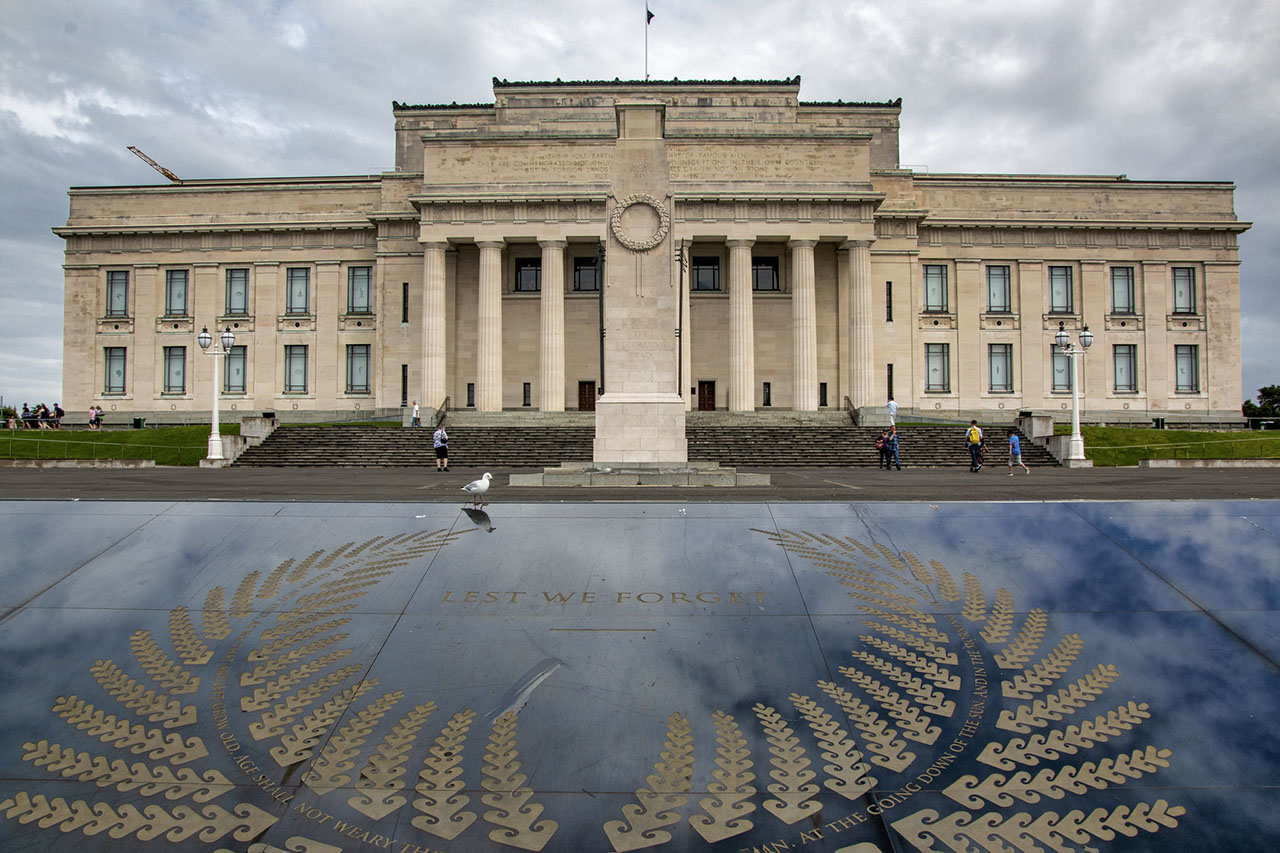
The Auckland Cenotaph is a memorial to soldiers from Auckland Province who died in both World Wars, and provides a focal point for remembrance ceremonies held on Anzac Day (25 April). Originally commemorating those who fell in the First World War (1914-1918), its meaning has been expanded to encompass those from the province who died in the Second World War (1939-1945) too. The memorial overlooks the city from the Auckland Domain, on a rise previously known as Pukekawa. It was erected in 1929 in front of the Auckland War Memorial Museum, which was completed in the same year. Construction was funded by public and government subscription as part of a relief project to help the unemployed. Its architects - Grierson, Aimer and Draffin - had served in the war, and conceived the cenotaph and museum as part of the same scheme.
The memorial is surrounded by a Court of Honour, and consists of rectangular pylon surmounted by a sarcophagus and bronze wreath. Its simple, Stripped Classical design is modelled on the 1920 Empire Cenotaph in Whitehall, London, designed by Edwin Lutyens. The Auckland cenotaph was considered to be the most faithful replica of the Whitehall memorial in the empire, reflecting New Zealand's role as a major British partner during the First World War. Imperial ties are also demonstrated through its use of imported Portland stone, which was used in structures of public importance in Britain, and which was also used to face the adjacent museum. Consecrated by the Archbishop of New Zealand in November 1929, the cenotaph has been little modified beyond the engraving of dates on its east and west faces, marking the duration of the Second World War.
The Auckland Cenotaph has considerable spiritual significance as the focus of Anzac Day commemorations in the city, when those who died in war are remembered. It is important for its connections with the two world wars, when so many Maori and Pakeha died. Its construction was an expression of New Zealanders' feeling about the Great War, being funded and built by people with a direct experience of that conflict. Architecturally, it demonstrates the strength of Imperial ties in the 1920s, while taking on broader meanings as a focus for national remembrance. The monument is prominently located in its immediate landscape, and also visible from afar. It has strong associations with other places in the Auckland Domain including the Auckland War Memorial Museum, with conceptual links to Pukekaroa pa - where a peace-making ceremony was held between Tainui and Ngapuhi in 1828 - and the Maori battle site of Toki Whatinui.
The memorial is surrounded by a Court of Honour, and consists of rectangular pylon surmounted by a sarcophagus and bronze wreath. Its simple, Stripped Classical design is modelled on the 1920 Empire Cenotaph in Whitehall, London, designed by Edwin Lutyens. The Auckland cenotaph was considered to be the most faithful replica of the Whitehall memorial in the empire, reflecting New Zealand's role as a major British partner during the First World War. Imperial ties are also demonstrated through its use of imported Portland stone, which was used in structures of public importance in Britain, and which was also used to face the adjacent museum. Consecrated by the Archbishop of New Zealand in November 1929, the cenotaph has been little modified beyond the engraving of dates on its east and west faces, marking the duration of the Second World War.
The Auckland Cenotaph has considerable spiritual significance as the focus of Anzac Day commemorations in the city, when those who died in war are remembered. It is important for its connections with the two world wars, when so many Maori and Pakeha died. Its construction was an expression of New Zealanders' feeling about the Great War, being funded and built by people with a direct experience of that conflict. Architecturally, it demonstrates the strength of Imperial ties in the 1920s, while taking on broader meanings as a focus for national remembrance. The monument is prominently located in its immediate landscape, and also visible from afar. It has strong associations with other places in the Auckland Domain including the Auckland War Memorial Museum, with conceptual links to Pukekaroa pa - where a peace-making ceremony was held between Tainui and Ngapuhi in 1828 - and the Maori battle site of Toki Whatinui.
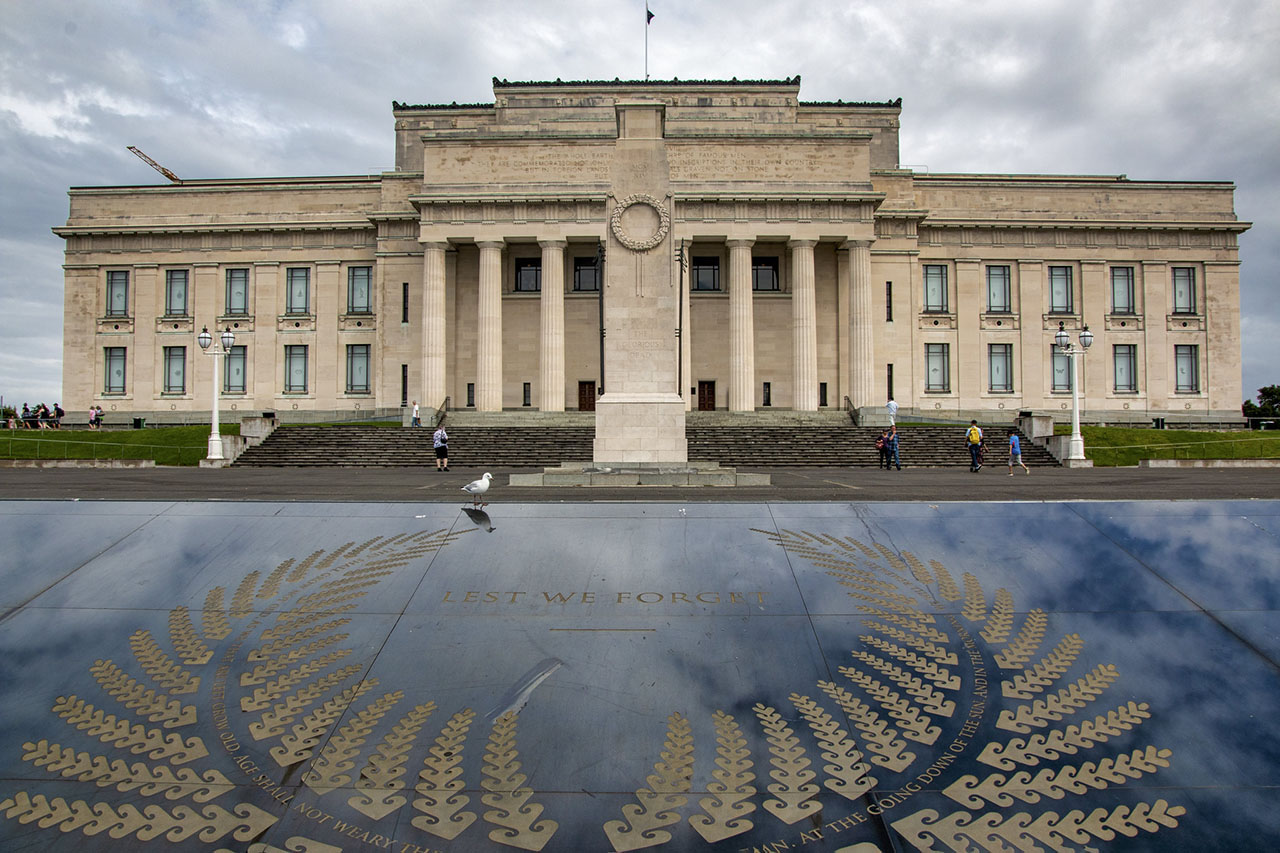
Cenotaph, Auckland Domain, Auckland. CC BY-NC-SA 2.0 Image courtesy of www.flickr.com | Jim Hoffman | 17/02/2018 | Jim Hoffman
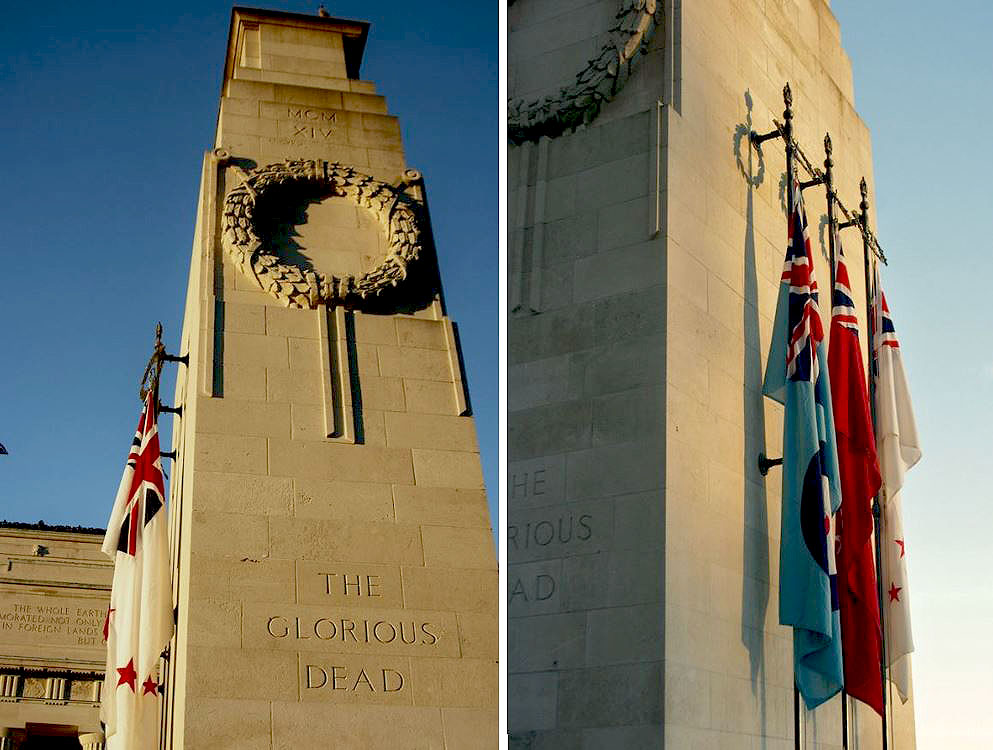
Cenotaph, Auckland Domain, Auckland. Image courtesy of www.flickr.com | PhilBee NZ - Phil Braithwaite | 24/04/2012 | Phil Braithwaite
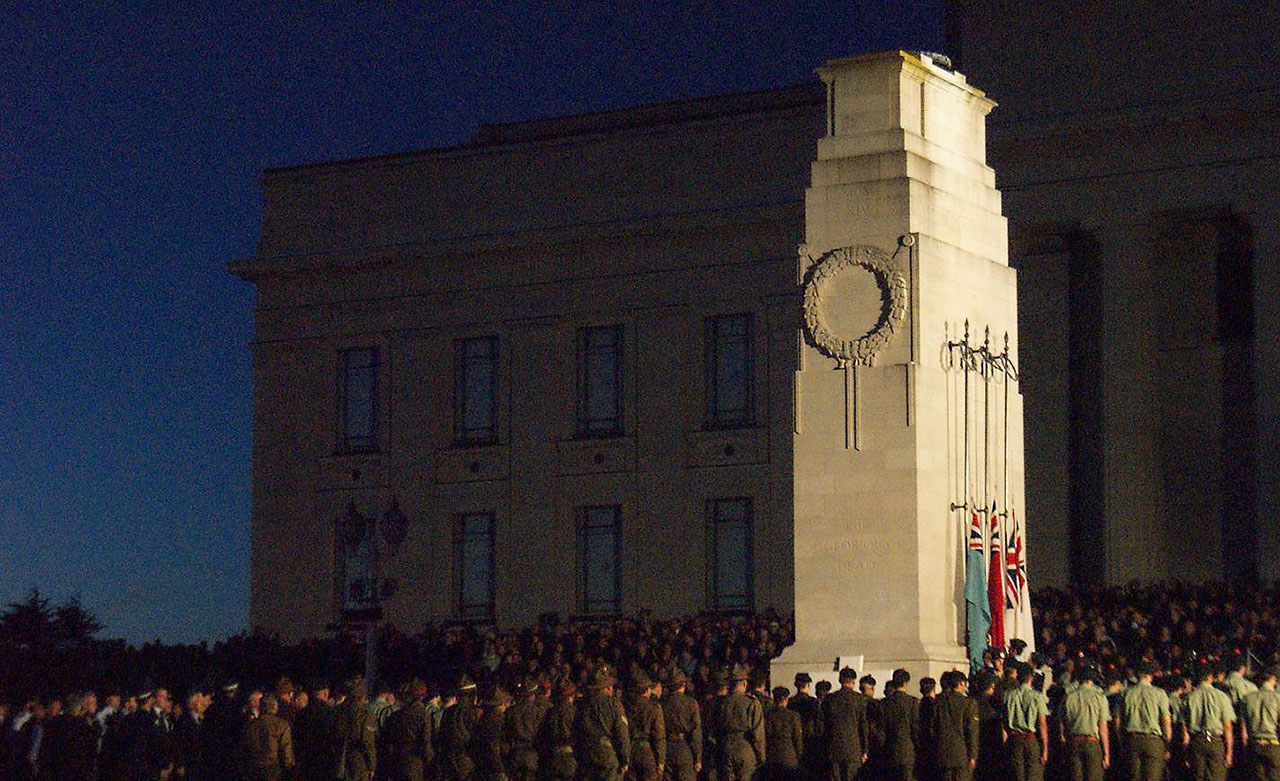
Cenotaph, Auckland Domain, Auckland. Image courtesy of www.flickr.com | PhilBee NZ - Phil Braithwaite | 25/04/2012 | Phil Braithwaite
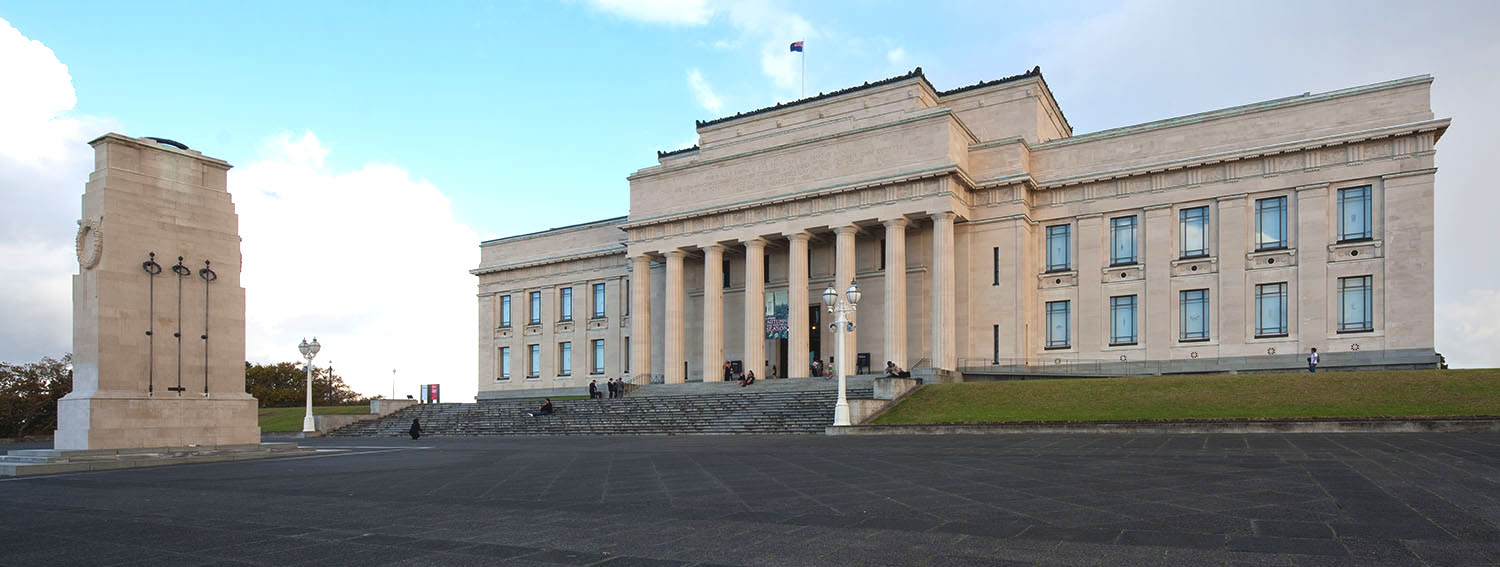
Cenotaph, Auckland Domain, Auckland. CC BY-NC-SA 2.0 Image courtesy of www.flickr.com | russellstreet | 01/05/2010 | russellstreet
Cenotaph, Auckland Domain, Auckland. CC BY-NC-SA 2.0 Image courtesy of www.flickr.com | Jim Hoffman | 17/02/2018 | Jim Hoffman
Cenotaph, Auckland Domain, Auckland. Image courtesy of www.flickr.com | PhilBee NZ - Phil Braithwaite | 24/04/2012 | Phil Braithwaite
Cenotaph, Auckland Domain, Auckland. Image courtesy of www.flickr.com | PhilBee NZ - Phil Braithwaite | 25/04/2012 | Phil Braithwaite
Cenotaph, Auckland Domain, Auckland. CC BY-NC-SA 2.0 Image courtesy of www.flickr.com | russellstreet | 01/05/2010 | russellstreet