DonateMembershipVisit Heritage
  • Tūrangawaewae
    Places
  • Tira Māori
    Māori Heritage
  • Poutairangahia
    Archaeology
  • Rauemi
    Resources
  • Mō Tātou
    About Us
  • New Zealand Heritage List
  • Nominate and submit
  • Explore the List
  • National Historic Landmarks
  • Plaques
  • Rainbow List Project
  • Lost heritage
  • Visit Heritage
  • Our properties
  • Turnbull House Project
  • Collections
  • Shop
  • Tohu Whenua
  • Tira Māori
  • Conserving Māori heritage
  • Marae built heritage
  • Māori heritage on the List
  • Hinemihi—Te Hokinga Mai
  • What is archaeology?
  • Is there a site on my property?
  • What are my legal requirements?
  • Affecting an archaeological site
  • Declaring an archaeological site
  • Archaeology FAQs
  • Archaeology Digital Library
  • Archaeology guidelines and templates
  • Resources
  • Funding
  • Publications
  • Sustainable management guides
  • Disaster recovery
  • Podcasts & digital resources
  • Education Hub
  • Conservation plans
  • About
  • Board
  • Māori Heritage Council
  • Senior Staff
  • Offices
  • Contact us
  • Careers
  • Covenants
  • Fast-track
  • Corporate documents
  • Currently consulting on
  • Our submissions
  • News
  • Covid-19 response
Quick links
Rārangi Kōrero | The List
Explore the List
National Historic Landmarks
Ngā Manawhenua o Aotearoa me ōna Kōrero Tūturu
Quick links
Tapuwae
A Vision for Places of Māori Heritage
Funding for Māori Heritage
Resources
Quick links
Archaeological Authority Portal
Applying for an archaeological authority
Archaeology FAQs
Browse the most frequently asked questions about archaeological authorities and the archaeological process.
Quick links
Quick links
News
News Keep up to date with Heritage New Zealand Pouhere Taonga
Membership
Membership Find out more and sign up today
DonateMembershipVisit Heritage
  • Tūrangawaewae
    Places
  • Tira Māori
    Māori Heritage
  • Poutairangahia
    Archaeology
  • Rauemi
    Resources
  • Mō Tātou
    About Us
  • New Zealand Heritage List
  • Nominate and submit
  • Explore the List
  • National Historic Landmarks
  • Plaques
  • Rainbow List Project
  • Lost heritage
  • Visit Heritage
  • Our properties
  • Turnbull House Project
  • Collections
  • Shop
  • Tohu Whenua
  • Tira Māori
  • Conserving Māori heritage
  • Marae built heritage
  • Māori heritage on the List
  • Hinemihi—Te Hokinga Mai
  • What is archaeology?
  • Is there a site on my property?
  • What are my legal requirements?
  • Affecting an archaeological site
  • Declaring an archaeological site
  • Archaeology FAQs
  • Archaeology Digital Library
  • Archaeology guidelines and templates
  • Resources
  • Funding
  • Publications
  • Sustainable management guides
  • Disaster recovery
  • Podcasts & digital resources
  • Education Hub
  • Conservation plans
  • About
  • Board
  • Māori Heritage Council
  • Senior Staff
  • Offices
  • Contact us
  • Careers
  • Covenants
  • Fast-track
  • Corporate documents
  • Currently consulting on
  • Our submissions
  • News
  • Covid-19 response
Quick links
Rārangi Kōrero | The List
Explore the List
National Historic Landmarks
Ngā Manawhenua o Aotearoa me ōna Kōrero Tūturu
Quick links
Tapuwae
A Vision for Places of Māori Heritage
Funding for Māori Heritage
Resources
Quick links
Archaeological Authority Portal
Applying for an archaeological authority
Archaeology FAQs
Browse the most frequently asked questions about archaeological authorities and the archaeological process.
Quick links
Quick links
News
News Keep up to date with Heritage New Zealand Pouhere Taonga
Membership
Membership Find out more and sign up today
  • Places
  • Nominate and submit
  • National Historic Landmarks
  • Places
  • Nominate and submit
  • National Historic Landmarks
  • Tira Māori
  • Conserving Māori heritage
  • Marae built heritage
  • Tira Māori
  • Conserving Māori heritage
  • Marae built heritage
  • Archaeological authorities
  • Archaeology Digital Library
  • Archaeological authorities
  • Archaeology Digital Library
  • All resources
  • Publications
  • Funding
  • All resources
  • Publications
  • Funding
  • FAQs
  • FAQs
Follow us on:
Places
  • Places
  • Nominate and submit
  • National Historic Landmarks
Tira Māori
  • Tira Māori
  • Conserving Māori heritage
  • Marae built heritage
Archaeology
  • Archaeological authorities
  • Archaeology Digital Library
Resources
  • All resources
  • Publications
  • Funding
FAQs
  • FAQs
Follow us on
HomePrivacyTerms and conditionsAbout this site
© Heritage New Zealand Pouhere Taonga 2026.
 
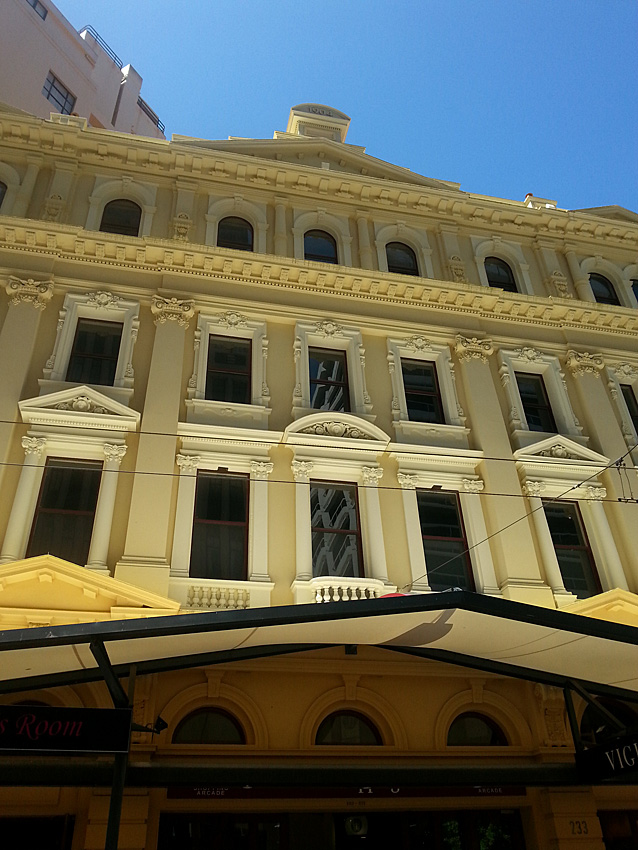
Bank of New Zealand Building (No. 2)

233 Lambton Quay, WELLINGTON

Private

Historic Place Category 2

List No. 1336

Quick links:
List GalleryLocationDetails
The significance of the former Bank of New Zealand Building (No.2) is due to its association with the Bank of New Zealand and its prominent architecture. It was part of the bank’s head office complex for nearly 70 years, and was designed by one of Wellington's most important architectural firms, Thomas Turnbull and Sons. The building forms an important part of the Lambton Quay streetscape, along with its neighbouring Bank of New Zealand buildings, and contributes to the heritage values of the South Lambton Quay Historic Area registration.

This building was erected in 1904 for the Wellington Building and Investment Company, which was founded in 1886 as a real estate investment company. In 1909, it was renamed Wellington Investment Trustee's Agency. The building was fitted into a small urban site and while not having the visual impact of the main Bank of New Zealand Building (No. 1) that it adjoins to the south, it is of similar general design and has the same distinguishing features of Classical and Renaissance architecture. It completed a collection of three Turnbull designs in the block. Thomas Turnbull designed a number of domestic, commercial and church buildings, especially in Wellington in the late nineteenth and early twentieth centuries. His son William, a distinguished architect in his own right, became a partner in the firm in 1891.

The Bank of New Zealand No.2 Building facade is symmetrical, with the main entry capped by a heavy portico complete with large corbels and a triangular pediment. The solid piers of the base are rusticated, as are the attached columns. The windows vary over the four levels of the building. The ground floor windows are recessed into semi-circular arches with a plain cornice above. This cornice serves as a shallow plinth for the giant Ionic order that rises over the first and second storeys. This giant order is capped by a plain entablature above the second floor windows. There is now a verandah above the ground floor level.

The building was leased to the Phoenix Assurance Co. Ltd in 1906 for eight years and was then purchased by the Bank of New Zealand in 1917, to become part of its head office. The Wellington City Council bought all four former BNZ buildings in 1975 in exchange for the new BNZ centre land in Willis Street. Prior to the bank's removal to its new head office in 1985, the Securities and Manager's departments of the Wellington Branch were housed on the ground floor, the cafe was on the top floor and the head office occupied the middle floors. After the bank moved out of the building it saw little use for a decade, although parts of BNZ buildings No.1 and No.2 were used for Fringe Festival performances during the 1990 Wellington Festival of the Arts. Work began in 1997 on converting the building into a retail centre known as the Old Bank Arcade, which incorporated its neighbouring BNZ buildings. Today the BNZ No. 2 building houses various retail shops. The NZHPT has had notification at various times of internal modifications to the shop layouts.
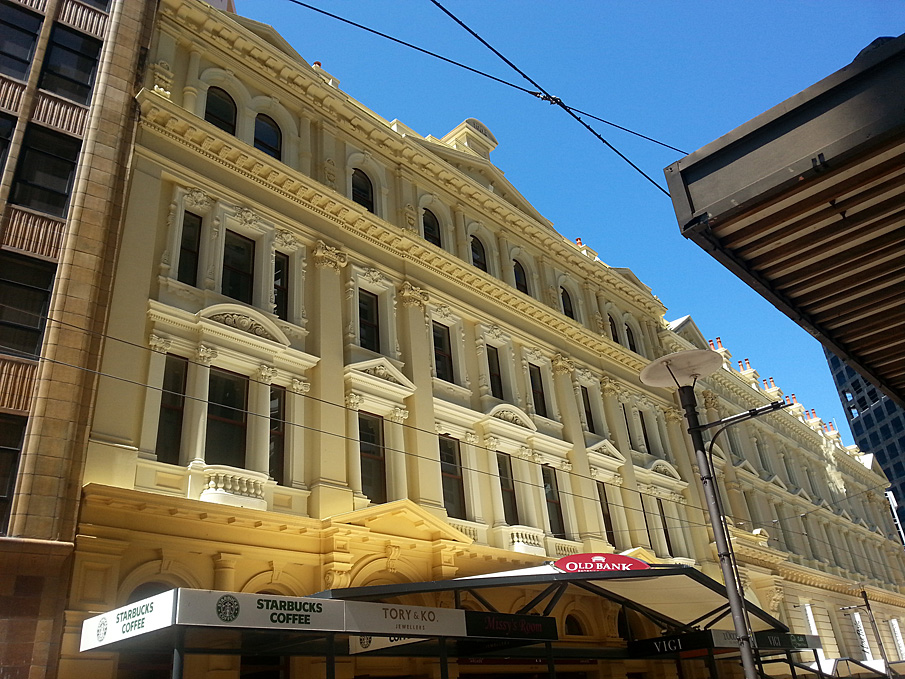
Bank of New Zealand Building (No. 2) | Chris Horwell | 22/11/2015 | Heritage New Zealand

List Entry Information

Overview

Status
Listed

List Entry Status
Historic Place Category 2

Access
Private/No Public Access

List Number
1336

Date Entered
25th November 1982

Date of Effect
25th November 1982

City/District Council
Wellington City

Region
Wellington Region

Extent of List Entry

Extent is part of the land described as Lot 1 DP 85253 (RT WN 53A/831), Wellington Land District and the building known as Bank of New Zealand Building (No. 2) thereon.

Legal description

Lot 1 DP 85253 (RT WN 53A/831), Wellington Land District

Detailed List Entry

Construction Professional

Name

Turnbull, Thomas

Type

Architect

Biography

Thomas Turnbull (1824-1907) was born and educated in Scotland and trained under David Bryce, Her Majesty's Architect. He travelled to Melbourne in 1851 and after nine years there moved to San Francisco. He arrived in New Zealand in 1871 and soon established a thriving business. His son William, a distinguished architect in his own right, became a partner in the firm in 1891. Turnbull was a member of the Royal Institute of British Architects. He was a pioneer in the design of buildings to withstand earthquakes and he was responsible for breaking down prejudice against the use of permanent materials for building construction. He specialised in masonry construction for commercial purposes but was also responsible for some fine houses. Among his most important buildings were the Willis Street churches of St Peter (1879) and St John (1885), the former National Mutual Building (1883-84), the General Assembly Library (1899) and the former Bank of New Zealand Head Office (1901), all in Wellington.

Construction Details

Start Year

1904

Type

Original Construction

Start Year

1997

Type

Modification

Description

Conversion into retail centre

Reference

Completion Date

3rd April 2014

Report Written By

Vivienne Morrell

Report Written By

This place was identified as significant under previous legislation with different information requirements. It remains significant under the current legislation. There is opportunity under our legislation and policies to add to this information. Further information about this place may be available from the Central Regional Office of Heritage New Zealand Pouhere Taonga. A fully referenced upgrade report is availble from the Central Regional Office of the NZHPT. Please note that entry on the New Zealand Heritage List/Rarangi Korero identifies only the heritage values of the property concerned, and should not be construed as advice on the state of the property, or as a comment of its soundness or safety, including in regard to earthquake risk, safety in the event of fire, or insanitary conditions.

Further Information

Current Usages

Uses: Trade

Specific Usage: Shopping/retail complex

Former Usages

General Usage:: Finance

Specific Usage: Bank

General Usage:: Finance

Specific Usage: Finance - other

Themes

Web Links

Overview

Status

Listed

List Entry Status

Historic Place Category 2

Access

Private/No Public Access

List Number

1336

Date Entered

25th November 1982

Date of Effect

25th November 1982

City/District Council

Wellington City

Region

Wellington Region

Extent of List Entry

Extent is part of the land described as Lot 1 DP 85253 (RT WN 53A/831), Wellington Land District and the building known as Bank of New Zealand Building (No. 2) thereon.

Legal description

Lot 1 DP 85253 (RT WN 53A/831), Wellington Land District

Status

Listed

List Entry Status

Historic Place Category 2

Access

Private/No Public Access

List Number

1336

Date Entered

25th November 1982

Date of Effect

25th November 1982

City/District Council

Wellington City

Region

Wellington Region

Extent of List Entry

Extent is part of the land described as Lot 1 DP 85253 (RT WN 53A/831), Wellington Land District and the building known as Bank of New Zealand Building (No. 2) thereon.

Legal description

Lot 1 DP 85253 (RT WN 53A/831), Wellington Land District

Construction Information

Construction Professional

Name

Turnbull, Thomas

Type

Architect

Biography

Thomas Turnbull (1824-1907) was born and educated in Scotland and trained under David Bryce, Her Majesty's Architect. He travelled to Melbourne in 1851 and after nine years there moved to San Francisco. He arrived in New Zealand in 1871 and soon established a thriving business. His son William, a distinguished architect in his own right, became a partner in the firm in 1891. Turnbull was a member of the Royal Institute of British Architects. He was a pioneer in the design of buildings to withstand earthquakes and he was responsible for breaking down prejudice against the use of permanent materials for building construction. He specialised in masonry construction for commercial purposes but was also responsible for some fine houses. Among his most important buildings were the Willis Street churches of St Peter (1879) and St John (1885), the former National Mutual Building (1883-84), the General Assembly Library (1899) and the former Bank of New Zealand Head Office (1901), all in Wellington.

Construction Details

Start Year

1904

Type

Original Construction

Start Year

1997

Type

Modification

Description

Conversion into retail centre

Construction Professional

Name

Turnbull, Thomas

Type

Architect

Biography

Thomas Turnbull (1824-1907) was born and educated in Scotland and trained under David Bryce, Her Majesty's Architect. He travelled to Melbourne in 1851 and after nine years there moved to San Francisco. He arrived in New Zealand in 1871 and soon established a thriving business. His son William, a distinguished architect in his own right, became a partner in the firm in 1891. Turnbull was a member of the Royal Institute of British Architects. He was a pioneer in the design of buildings to withstand earthquakes and he was responsible for breaking down prejudice against the use of permanent materials for building construction. He specialised in masonry construction for commercial purposes but was also responsible for some fine houses. Among his most important buildings were the Willis Street churches of St Peter (1879) and St John (1885), the former National Mutual Building (1883-84), the General Assembly Library (1899) and the former Bank of New Zealand Head Office (1901), all in Wellington.

Construction Details

Start Year

1904

Type

Original Construction

Start Year

1997

Type

Modification

Description

Conversion into retail centre

Reference

Historical and Associated Iwi / Hapū / Whānau

Completion Date

3rd April 2014

Report Written By

Vivienne Morrell

Other Information

This place was identified as significant under previous legislation with different information requirements. It remains significant under the current legislation. There is opportunity under our legislation and policies to add to this information. Further information about this place may be available from the Central Regional Office of Heritage New Zealand Pouhere Taonga. A fully referenced upgrade report is availble from the Central Regional Office of the NZHPT. Please note that entry on the New Zealand Heritage List/Rarangi Korero identifies only the heritage values of the property concerned, and should not be construed as advice on the state of the property, or as a comment of its soundness or safety, including in regard to earthquake risk, safety in the event of fire, or insanitary conditions.

Historical and Associated Iwi / Hapū / Whānau

Completion Date

3rd April 2014

Report Written By

Vivienne Morrell

Other Information

This place was identified as significant under previous legislation with different information requirements. It remains significant under the current legislation. There is opportunity under our legislation and policies to add to this information. Further information about this place may be available from the Central Regional Office of Heritage New Zealand Pouhere Taonga. A fully referenced upgrade report is availble from the Central Regional Office of the NZHPT. Please note that entry on the New Zealand Heritage List/Rarangi Korero identifies only the heritage values of the property concerned, and should not be construed as advice on the state of the property, or as a comment of its soundness or safety, including in regard to earthquake risk, safety in the event of fire, or insanitary conditions.

Further Information

Current Usages

Uses: Trade

Specific Usage: Shopping/retail complex

Former Usages

General Usage: Finance

Specific Usage: Bank

General Usage: Finance

Specific Usage: Finance - other

Current Usages

Uses: Trade

Specific Usage: Shopping/retail complex

Former Usages

General Usage: Finance

Specific Usage: Bank

General Usage: Finance

Specific Usage: Finance - other

Location

Loading
Related listings
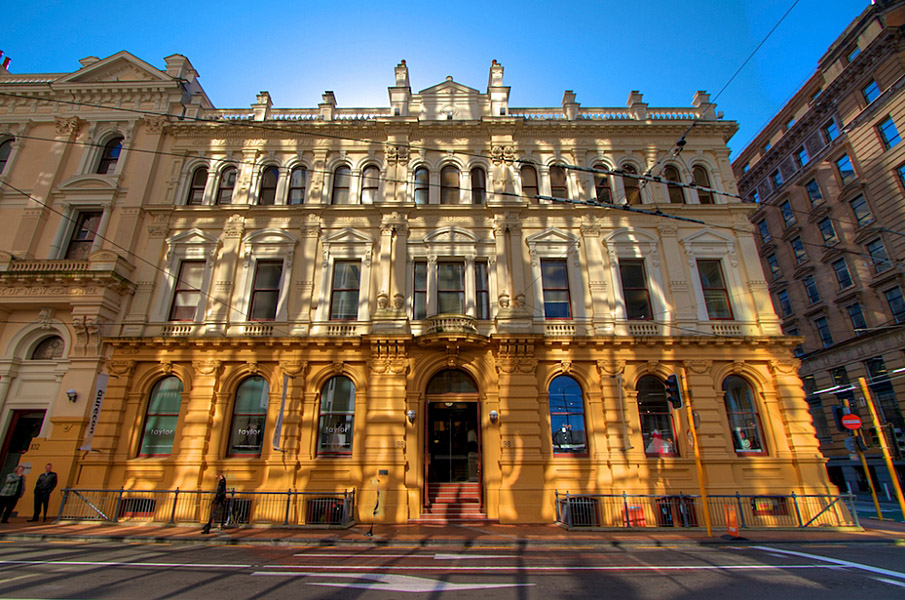
Bank of New Zealand Building (No 3), Wellington. CC Licence 2.0 Image courtesy of commons.wikimedia.org
Bank of New Zealand Building (No 3)
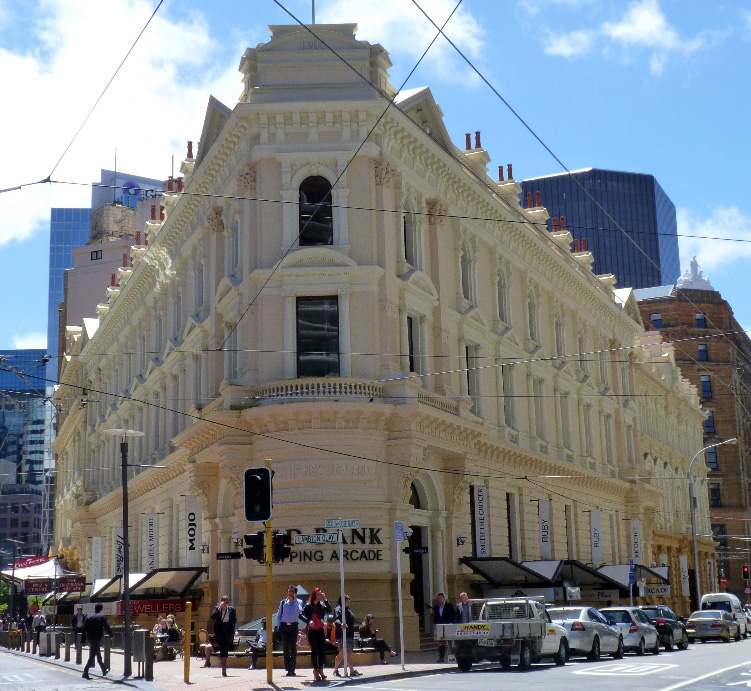
Bank of New Zealand Building (No 1), Wellington. Image courtesy of www.flickr.com
Bank of New Zealand Building (No 1)
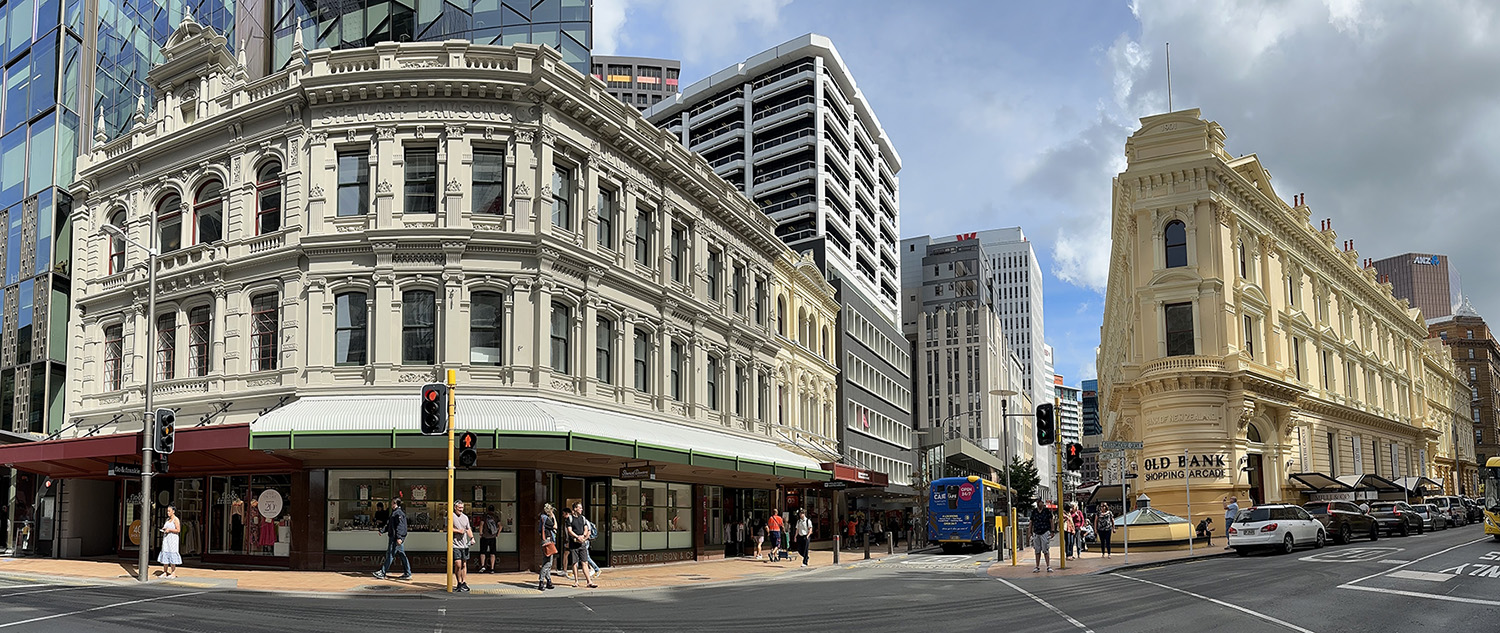
South Lambton Quay Historic Area, Wellington. CC BY-SA 4.0 Image courtesy of commons.wikimedia.org
South Lambton Quay Historic Area
Bank of New Zealand Building (No 1), Wellington. Image courtesy of www.flickr.com
Bank of New Zealand Building (No 1)
Bank of New Zealand Building (No 3), Wellington. CC Licence 2.0 Image courtesy of commons.wikimedia.org
Bank of New Zealand Building (No 3)
South Lambton Quay Historic Area, Wellington. CC BY-SA 4.0 Image courtesy of commons.wikimedia.org
South Lambton Quay Historic Area
Stay up to date with Heritage this month