

In 1897 another building was erected adjacent to this and fronting Johnston Street and Lambton Quay. This building was designed by T Turnbull and included the latest in roofing material (i.e: reinforced molthoid).
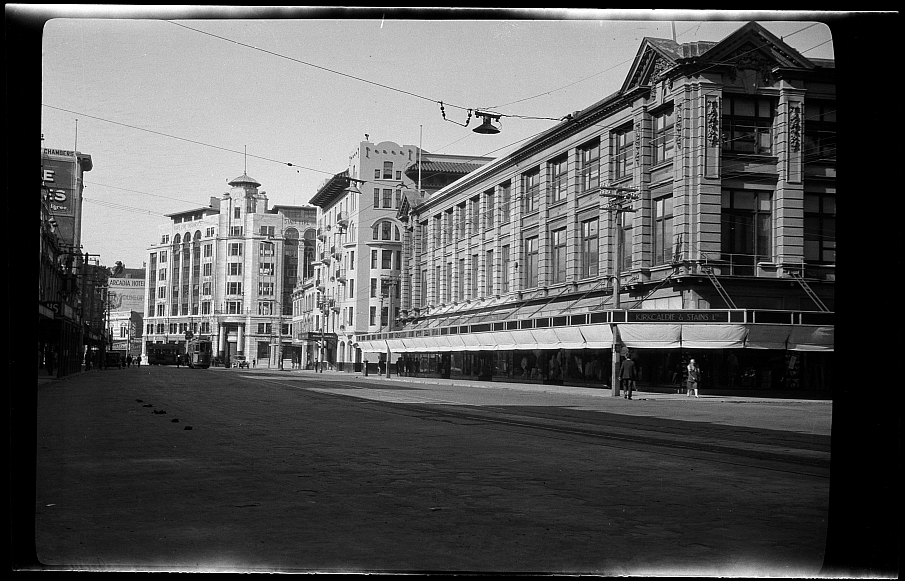
In 1924 the back of the centre building was severely damaged by a fire and L Williams was employed to design a new façade that would include the original façade on the Johnson Street, Lambton Quay intersection.
In 1942 a major earthquake damaged the building and Gar Young, Morton and Young were commissioned to carry out the repairs.
List Entry Information
Status
Listed
List Entry Status
Historic Place Category 2
Access
Private/No Public Access
List Number
1402
Date Entered
22nd April 1993
Date of Effect
22nd April 1993
City/District Council
Wellington City
Region
Wellington Region
Legal description
Lots 1,2,11 DP 10804 & Lots 94-97 Prov Govt Reclaim
Status
Listed
List Entry Status
Historic Place Category 2
Access
Private/No Public Access
List Number
1402
Date Entered
22nd April 1993
Date of Effect
22nd April 1993
City/District Council
Wellington City
Region
Wellington Region
Legal description
Lots 1,2,11 DP 10804 & Lots 94-97 Prov Govt Reclaim
Why is this place significant?
Historic Significance
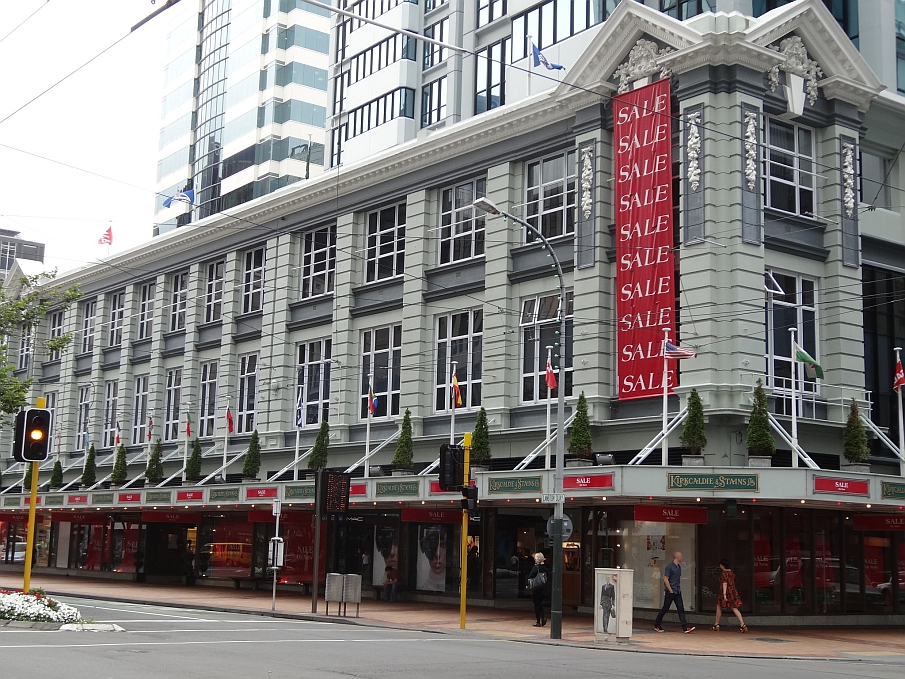
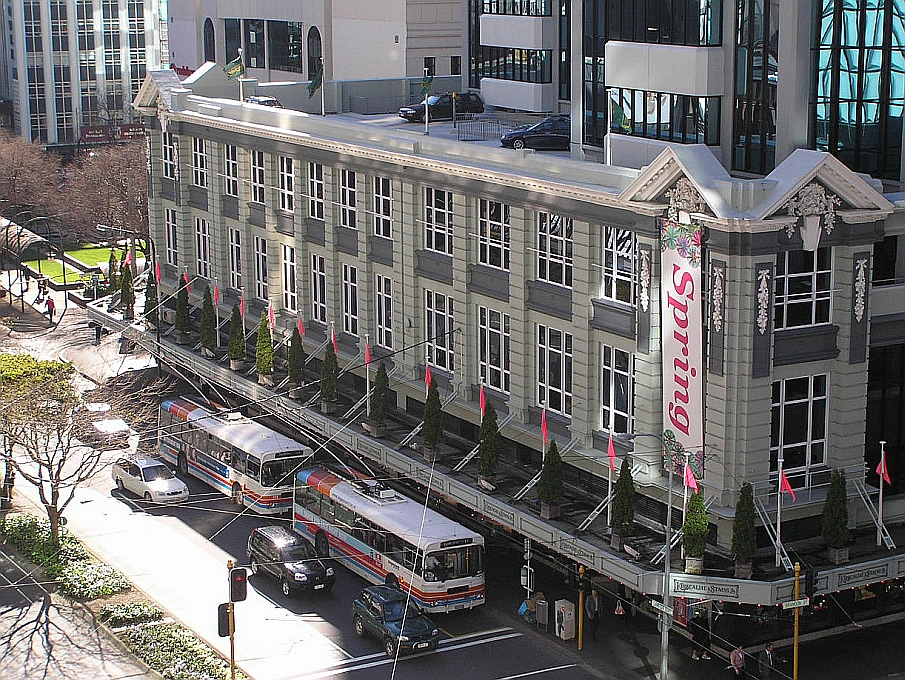
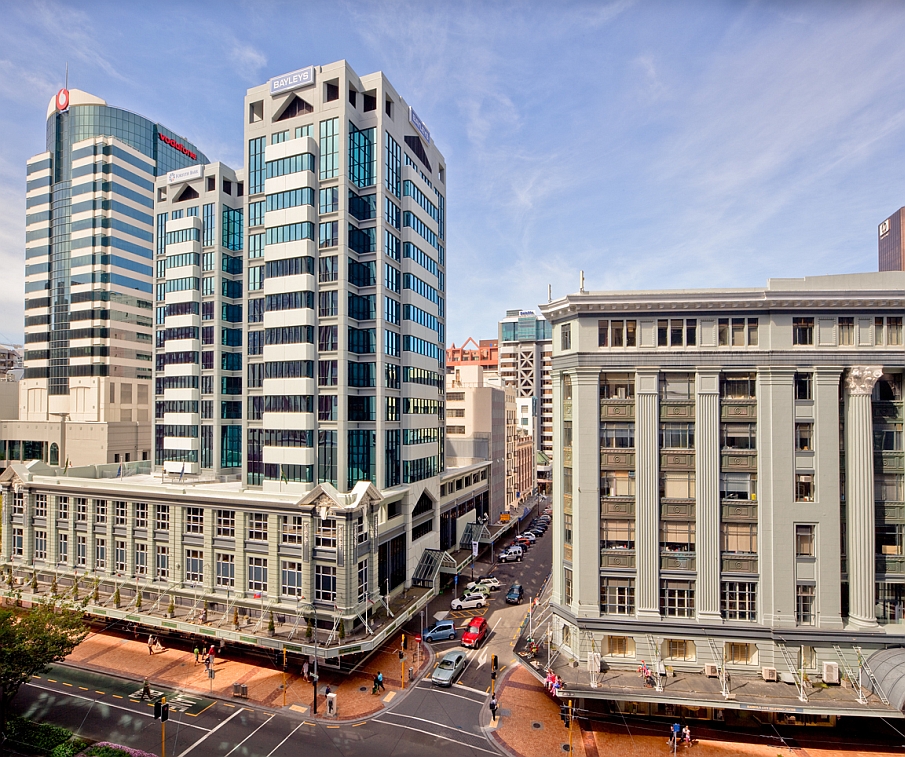
Historical Significance or Value The following text is from the original registration report considered by the NZHPT Board at the time of registration. Historical Significance: Kirkcaldie and Stains began in 1863 and this retailing institution has traded in Lambton Quay on various sites since then. The company first occupied part of the present site in 1868 when Julius Toxward designed a wooden store on the corner of Lambton Quay and Brandon Street. Progressively, sections of the area now occupied by the department store were acquired by Kirkcaldie and Stains. A heavily embellished Thomas Turnbull designed masonry building was erected in 1897 on Lambton Quay. By 1909 this building was flanked by two deliberately similar buildings designed by Turnbull's son William. These buildings form the basis of today's building. In 1928 Llewellyn E Williams joined the two corner sections and in the process Turnbull's 1897 building was demolished. With the four storey pedimented section on Johnston Street and a separate four storey building on Brandon Street these buildings, together form a part of one of Wellington's most historic retailing sites. Although modified in 1942 during re-strengthening, Kirkcaldie and Stains is little changed from the 1920's and with its attractive Edwardian origins this remains one of Wellingtons most esteemed retailing stores. It is significant for its historical association with one of New Zealand's oldest commercial retailing firms.
Why is this place significant?
Historic Significance
Historical Significance or Value The following text is from the original registration report considered by the NZHPT Board at the time of registration. Historical Significance: Kirkcaldie and Stains began in 1863 and this retailing institution has traded in Lambton Quay on various sites since then. The company first occupied part of the present site in 1868 when Julius Toxward designed a wooden store on the corner of Lambton Quay and Brandon Street. Progressively, sections of the area now occupied by the department store were acquired by Kirkcaldie and Stains. A heavily embellished Thomas Turnbull designed masonry building was erected in 1897 on Lambton Quay. By 1909 this building was flanked by two deliberately similar buildings designed by Turnbull's son William. These buildings form the basis of today's building. In 1928 Llewellyn E Williams joined the two corner sections and in the process Turnbull's 1897 building was demolished. With the four storey pedimented section on Johnston Street and a separate four storey building on Brandon Street these buildings, together form a part of one of Wellington's most historic retailing sites. Although modified in 1942 during re-strengthening, Kirkcaldie and Stains is little changed from the 1920's and with its attractive Edwardian origins this remains one of Wellingtons most esteemed retailing stores. It is significant for its historical association with one of New Zealand's oldest commercial retailing firms.
Construction Professional
Name
Fletcher Construction Company
Type
Builder
Biography
Fletcher Construction Company was founded by Scottish-born James Fletcher (1886-1974), the son of a builder. Six months after his arrival in Dunedin in 1908, Fletcher formed a house-building partnership with Bert Morris. They soon moved into larger-scale construction work, building the St Kilda Town Hall (1911), and the main dormitory block and Ross Chapel at Knox College (1912). Fletcher's brothers, William, Andrew and John joined the business in 1911, which then became known as Fletcher Brothers. A branch was opened in Invercargill. While holidaying in Auckland in 1916, James tendered for the construction of the the Auckland City Markets. By 1919 the company, then known as Fletcher Construction, was firmly established in Auckland and Wellington. Notable landmarks constructed by the company during the Depression included the Auckland University College Arts Building (completed 1926); Landmark House (the former Auckland Electric Power Board Building, 1927); Auckland Civic Theatre (1929); the Chateau Tongariro (1929); and the Dominion Museum, Wellington (1934). Prior to the election of the first Labour Government, Fletcher (a Reform supporter) had advised the Labour Party on housing policy as hbe believed in large-scale planning and in the inter-dependence of government and business. However, he declined an approach by Prime Minister Michael Joseph Savage in December 1935 to sell the company to the government, when the latter wanted to ensure the large-scale production of rental state housing. Although Fletchers ultimately went on to build many of New Zealand's state houses, for several years Residential Construction Ltd (the subsidiary established to undertake their construction) sustained heavy financial losses. Fletcher Construction became a public company, Fletcher Holdings, in 1940. Already Fletchers' interests were wide ranging: brickyards, engineering shops, joinery factories, marble quarries, structural steel plants and other enterprises had been added the original construction firm. Further expansion could only be undertaken with outside capital. During the Second World War James Fletcher, having retired as chairman of Fletcher Holdings, was seconded to the newly created position of Commissioner of State Construction which he held during 1942 and 1943. Directly responsible to Prime Minister Peter Fraser, Fletcher had almost complete control over the deployment of workers and resources. He also became the Commissioner of the Ministry of Works, set up in 1943, a position he held until December 1945. In 1981 Fletcher Holdings; Tasman Pulp and Paper; and Challenge Corporation amalgamated to form Fletcher Challenge Ltd, at that time New Zealand's largest company. Williamson Construction Company - main contract
Name
Turnbull, Thomas
Type
Architect
Biography
Thomas Turnbull (1824-1907) was born and educated in Scotland and trained under David Bryce, Her Majesty's Architect. He travelled to Melbourne in 1851 and after nine years there moved to San Francisco. He arrived in New Zealand in 1871 and soon established a thriving business. His son William, a distinguished architect in his own right, became a partner in the firm in 1891. Turnbull was a member of the Royal Institute of British Architects. He was a pioneer in the design of buildings to withstand earthquakes and he was responsible for breaking down prejudice against the use of permanent materials for building construction. He specialised in masonry construction for commercial purposes but was also responsible for some fine houses. Among his most important buildings were the Willis Street churches of St Peter (1879) and St John (1885), the former National Mutual Building (1883-84), the General Assembly Library (1899) and the former Bank of New Zealand Head Office (1901), all in Wellington.
Name
Williams, Llewellyn
Type
Architect
Biography
Mr Llewellyn Williams of Wellington, who had special experience in the Art Deco style of architecture. Williams migrated to New Zealand in 1919 after studying in France and Italy (Embassy Theatre website). He was well known as an architect in Wellington. He was also responsible for the design of many new theatres around the country, including the De Lux (now the Embassy) Theatre in Wellington (1924), The Regent (1926) and Kings (1936) cinemas in Wellington (both demolished), and the Avon cinema in Christchurch (1934)(Embassy Trust website and NZHPT on-line register).
Construction Details
Start Year
1897
Type
Original Construction
Description
Johnson Street - Lambton Quay.
Construction Materials
Walls of brick, cast iron columns, R.S.J cast in-situ concrete , timber floors and trusses in roof, Cast iron roof.
Construction Professional
Name
Fletcher Construction Company
Type
Builder
Biography
Fletcher Construction Company was founded by Scottish-born James Fletcher (1886-1974), the son of a builder. Six months after his arrival in Dunedin in 1908, Fletcher formed a house-building partnership with Bert Morris. They soon moved into larger-scale construction work, building the St Kilda Town Hall (1911), and the main dormitory block and Ross Chapel at Knox College (1912). Fletcher's brothers, William, Andrew and John joined the business in 1911, which then became known as Fletcher Brothers. A branch was opened in Invercargill. While holidaying in Auckland in 1916, James tendered for the construction of the the Auckland City Markets. By 1919 the company, then known as Fletcher Construction, was firmly established in Auckland and Wellington. Notable landmarks constructed by the company during the Depression included the Auckland University College Arts Building (completed 1926); Landmark House (the former Auckland Electric Power Board Building, 1927); Auckland Civic Theatre (1929); the Chateau Tongariro (1929); and the Dominion Museum, Wellington (1934). Prior to the election of the first Labour Government, Fletcher (a Reform supporter) had advised the Labour Party on housing policy as hbe believed in large-scale planning and in the inter-dependence of government and business. However, he declined an approach by Prime Minister Michael Joseph Savage in December 1935 to sell the company to the government, when the latter wanted to ensure the large-scale production of rental state housing. Although Fletchers ultimately went on to build many of New Zealand's state houses, for several years Residential Construction Ltd (the subsidiary established to undertake their construction) sustained heavy financial losses. Fletcher Construction became a public company, Fletcher Holdings, in 1940. Already Fletchers' interests were wide ranging: brickyards, engineering shops, joinery factories, marble quarries, structural steel plants and other enterprises had been added the original construction firm. Further expansion could only be undertaken with outside capital. During the Second World War James Fletcher, having retired as chairman of Fletcher Holdings, was seconded to the newly created position of Commissioner of State Construction which he held during 1942 and 1943. Directly responsible to Prime Minister Peter Fraser, Fletcher had almost complete control over the deployment of workers and resources. He also became the Commissioner of the Ministry of Works, set up in 1943, a position he held until December 1945. In 1981 Fletcher Holdings; Tasman Pulp and Paper; and Challenge Corporation amalgamated to form Fletcher Challenge Ltd, at that time New Zealand's largest company. Williamson Construction Company - main contract
Name
Turnbull, Thomas
Type
Architect
Biography
Thomas Turnbull (1824-1907) was born and educated in Scotland and trained under David Bryce, Her Majesty's Architect. He travelled to Melbourne in 1851 and after nine years there moved to San Francisco. He arrived in New Zealand in 1871 and soon established a thriving business. His son William, a distinguished architect in his own right, became a partner in the firm in 1891. Turnbull was a member of the Royal Institute of British Architects. He was a pioneer in the design of buildings to withstand earthquakes and he was responsible for breaking down prejudice against the use of permanent materials for building construction. He specialised in masonry construction for commercial purposes but was also responsible for some fine houses. Among his most important buildings were the Willis Street churches of St Peter (1879) and St John (1885), the former National Mutual Building (1883-84), the General Assembly Library (1899) and the former Bank of New Zealand Head Office (1901), all in Wellington.
Name
Williams, Llewellyn
Type
Architect
Biography
Mr Llewellyn Williams of Wellington, who had special experience in the Art Deco style of architecture. Williams migrated to New Zealand in 1919 after studying in France and Italy (Embassy Theatre website). He was well known as an architect in Wellington. He was also responsible for the design of many new theatres around the country, including the De Lux (now the Embassy) Theatre in Wellington (1924), The Regent (1926) and Kings (1936) cinemas in Wellington (both demolished), and the Avon cinema in Christchurch (1934)(Embassy Trust website and NZHPT on-line register).
Construction Details
Start Year
1897
Type
Original Construction
Description
Johnson Street - Lambton Quay.
Construction Materials
Walls of brick, cast iron columns, R.S.J cast in-situ concrete , timber floors and trusses in roof, Cast iron roof.
The following text is from the original registration report considered by the NZHPT Board at the time of registration. Style: Stripped commercial classic of Victorian period. Architects/Engineers: 1897-1907 Thomas Turnbull & Sons 1928 L E Williams 1942 Gray Young, Morton & Young Builders: Fletcher Construction 1928, Wellington Building Ltd 1942
The following text is from the original registration report considered by the NZHPT Board at the time of registration. Style: Stripped commercial classic of Victorian period. Architects/Engineers: 1897-1907 Thomas Turnbull & Sons 1928 L E Williams 1942 Gray Young, Morton & Young Builders: Fletcher Construction 1928, Wellington Building Ltd 1942
Historical and Associated Iwi / Hapū / Whānau
Other Information
A copy of the original report is available from the NZHPT Central Region office Please note that entry on the New Zealand Heritage List/Rarangi Korero identifies only the heritage values of the property concerned, and should not be construed as advice on the state of the property, or as a comment of its soundness or safety, including in regard to earthquake risk, safety in the event of fire, or insanitary conditions. The following text is from the original registration report considered by the NZHPT Board at the time of registration.
Historical and Associated Iwi / Hapū / Whānau
Other Information
A copy of the original report is available from the NZHPT Central Region office Please note that entry on the New Zealand Heritage List/Rarangi Korero identifies only the heritage values of the property concerned, and should not be construed as advice on the state of the property, or as a comment of its soundness or safety, including in regard to earthquake risk, safety in the event of fire, or insanitary conditions. The following text is from the original registration report considered by the NZHPT Board at the time of registration.
Former Usages
General Usage: Trade
Specific Usage: Shop
Former Usages
General Usage: Trade
Specific Usage: Shop
