The Benvenue Memorial is an obelisk constructed in 1883-5 to commemorate the heroic efforts, survivors and deaths in May 1882 in what is the best-remembered of the many shipping calamities of Timaru’s early days as a port. It has historical, social and aesthetic significance or value.
Unusually heavy seas on 14 May 1882 affected the six vessels anchored in Timaru’s port. Two of these were the Benvenue and City of Perth, which broke their moorings and were driven onto the rocks at the foot of cliffs near Caroline Bay (now called Benvenue Cliffs). The crews took to lifeboats and reached the safety of the breakwater. An attempt was then made to save the drifting City of Perth. A number of surfboats and whaleboats were launched but tragically seven drowned while attempting to secure another anchor for the City of Perth and a further two died subsequently. The City of Perth was refloated, undamaged, but the Benvenue was a total loss. In recognition of the ‘self-sacrificing bravery and daring of scores of men involved in rescue efforts’, it was decided that a monument should be erected to testify such heroism. The citizens of Timaru were very active in contributing funds for the monument. Designs by Engineer T Roberts were prepared and accepted in 1883 and the first part of the memorial, a pedestal, was erected shortly afterwards by local stonemason, S McBride. In July 1885 the granite obelisk arrived from Scotland aboard the ship the Allegiance and the remainder of the memorial was completed the following month.
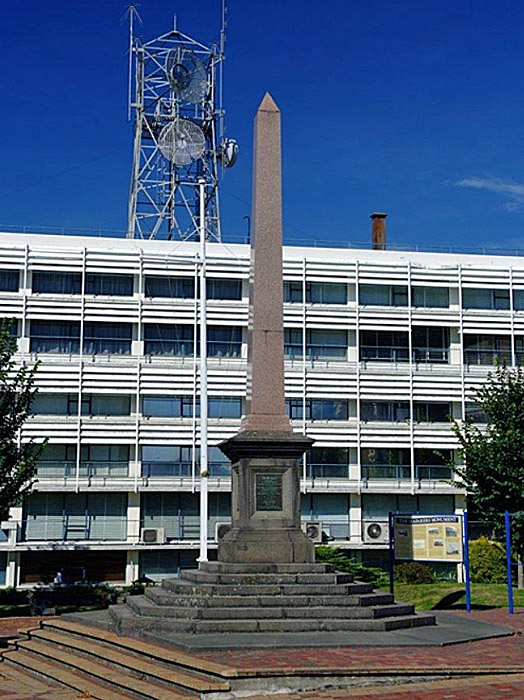
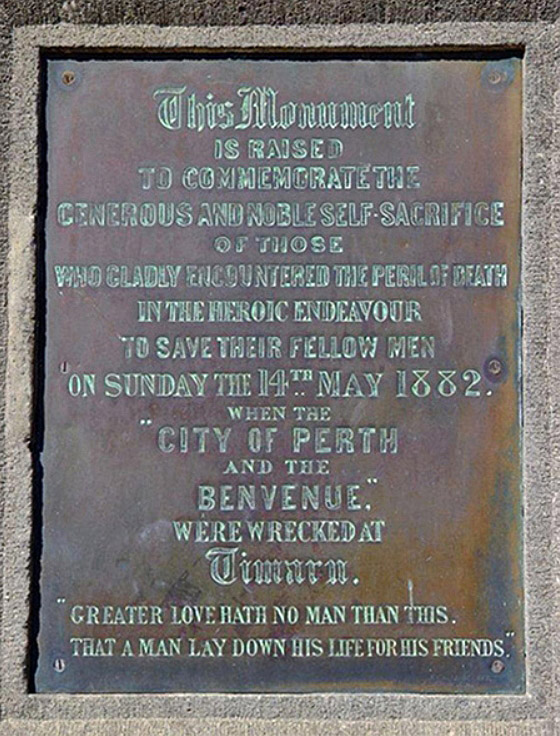
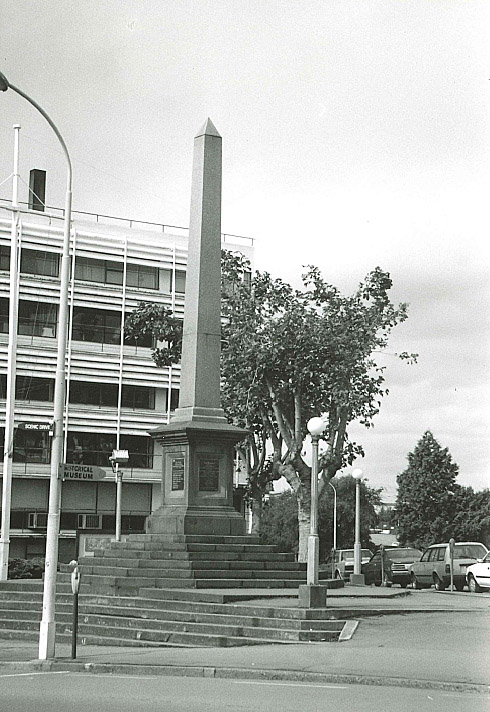
Situated at the northern corner of the triangle between Perth Street, Sophia Street and King George Place, the Benvenue Memorial has an octagonal base approximately five metres at the bottom, rising by six steps of cut bluestone to a height of 0.9 metres above the ground, with a square pedestal of polished dolorite, just over 2 metres high and 1.5 metres square with panelled sides, moulded base and a cornice. Above rises an obelisk of polished red Aberdeen granite, six metres high (the apex being nearly ten metres above the ground level). Let into three of panels on the sides of the pedestal are brass plates bearing the inscriptions explaining the shipwreck event of May 1882, list the names of the nine dead, those who survived, and the captains of the two ships.
The siting of the memorial was controversial. A number of people at the time of its construction thought that the ‘wrecks monument’ ought to have been established at the cemetery, rather than at its conspicuous place in the town. The calamity of the shipwrecks led to improvements to the breakwater and port safety. Services and parades have been held at the memorial at key anniversaries, notably thirty years after the event in 1912 and the fiftieth anniversary in 1932.
Unusually heavy seas on 14 May 1882 affected the six vessels anchored in Timaru’s port. Two of these were the Benvenue and City of Perth, which broke their moorings and were driven onto the rocks at the foot of cliffs near Caroline Bay (now called Benvenue Cliffs). The crews took to lifeboats and reached the safety of the breakwater. An attempt was then made to save the drifting City of Perth. A number of surfboats and whaleboats were launched but tragically seven drowned while attempting to secure another anchor for the City of Perth and a further two died subsequently. The City of Perth was refloated, undamaged, but the Benvenue was a total loss. In recognition of the ‘self-sacrificing bravery and daring of scores of men involved in rescue efforts’, it was decided that a monument should be erected to testify such heroism. The citizens of Timaru were very active in contributing funds for the monument. Designs by Engineer T Roberts were prepared and accepted in 1883 and the first part of the memorial, a pedestal, was erected shortly afterwards by local stonemason, S McBride. In July 1885 the granite obelisk arrived from Scotland aboard the ship the Allegiance and the remainder of the memorial was completed the following month.
Situated at the northern corner of the triangle between Perth Street, Sophia Street and King George Place, the Benvenue Memorial has an octagonal base approximately five metres at the bottom, rising by six steps of cut bluestone to a height of 0.9 metres above the ground, with a square pedestal of polished dolorite, just over 2 metres high and 1.5 metres square with panelled sides, moulded base and a cornice. Above rises an obelisk of polished red Aberdeen granite, six metres high (the apex being nearly ten metres above the ground level). Let into three of panels on the sides of the pedestal are brass plates bearing the inscriptions explaining the shipwreck event of May 1882, list the names of the nine dead, those who survived, and the captains of the two ships.
The siting of the memorial was controversial. A number of people at the time of its construction thought that the ‘wrecks monument’ ought to have been established at the cemetery, rather than at its conspicuous place in the town. The calamity of the shipwrecks led to improvements to the breakwater and port safety. Services and parades have been held at the memorial at key anniversaries, notably thirty years after the event in 1912 and the fiftieth anniversary in 1932.