DonateMembershipVisit Heritage
  • Tūrangawaewae
    Places
  • Tira Māori
    Māori Heritage
  • Poutairangahia
    Archaeology
  • Rauemi
    Resources
  • Mō Tātou
    About Us
  • New Zealand Heritage List
  • Nominate and submit
  • Explore the List
  • National Historic Landmarks
  • Plaques
  • Rainbow List Project
  • Lost heritage
  • Visit Heritage
  • Our properties
  • Turnbull House Project
  • Collections
  • Shop
  • Tohu Whenua
  • Tira Māori
  • Conserving Māori heritage
  • Marae built heritage
  • Māori heritage on the List
  • Hinemihi—Te Hokinga Mai
  • What is archaeology?
  • Is there a site on my property?
  • What are my legal requirements?
  • Affecting an archaeological site
  • Declaring an archaeological site
  • Archaeology FAQs
  • Archaeology Digital Library
  • Archaeology guidelines and templates
  • Resources
  • Funding
  • Publications
  • Sustainable management guides
  • Disaster recovery
  • Podcasts & digital resources
  • Education Hub
  • Conservation plans
  • About
  • Board
  • Māori Heritage Council
  • Senior Staff
  • Offices
  • Contact us
  • Careers
  • Covenants
  • Fast-track
  • Corporate documents
  • Currently consulting on
  • Our submissions
  • News
  • Covid-19 response
Quick links
Rārangi Kōrero | The List
Explore the List
National Historic Landmarks
Ngā Manawhenua o Aotearoa me ōna Kōrero Tūturu
Quick links
Tapuwae
A Vision for Places of Māori Heritage
Funding for Māori Heritage
Resources
Quick links
Archaeological Authority Portal
Applying for an archaeological authority
Archaeology FAQs
Browse the most frequently asked questions about archaeological authorities and the archaeological process.
Quick links
Quick links
News
News Keep up to date with Heritage New Zealand Pouhere Taonga
Membership
Membership Find out more and sign up today
DonateMembershipVisit Heritage
  • Tūrangawaewae
    Places
  • Tira Māori
    Māori Heritage
  • Poutairangahia
    Archaeology
  • Rauemi
    Resources
  • Mō Tātou
    About Us
  • New Zealand Heritage List
  • Nominate and submit
  • Explore the List
  • National Historic Landmarks
  • Plaques
  • Rainbow List Project
  • Lost heritage
  • Visit Heritage
  • Our properties
  • Turnbull House Project
  • Collections
  • Shop
  • Tohu Whenua
  • Tira Māori
  • Conserving Māori heritage
  • Marae built heritage
  • Māori heritage on the List
  • Hinemihi—Te Hokinga Mai
  • What is archaeology?
  • Is there a site on my property?
  • What are my legal requirements?
  • Affecting an archaeological site
  • Declaring an archaeological site
  • Archaeology FAQs
  • Archaeology Digital Library
  • Archaeology guidelines and templates
  • Resources
  • Funding
  • Publications
  • Sustainable management guides
  • Disaster recovery
  • Podcasts & digital resources
  • Education Hub
  • Conservation plans
  • About
  • Board
  • Māori Heritage Council
  • Senior Staff
  • Offices
  • Contact us
  • Careers
  • Covenants
  • Fast-track
  • Corporate documents
  • Currently consulting on
  • Our submissions
  • News
  • Covid-19 response
Quick links
Rārangi Kōrero | The List
Explore the List
National Historic Landmarks
Ngā Manawhenua o Aotearoa me ōna Kōrero Tūturu
Quick links
Tapuwae
A Vision for Places of Māori Heritage
Funding for Māori Heritage
Resources
Quick links
Archaeological Authority Portal
Applying for an archaeological authority
Archaeology FAQs
Browse the most frequently asked questions about archaeological authorities and the archaeological process.
Quick links
Quick links
News
News Keep up to date with Heritage New Zealand Pouhere Taonga
Membership
Membership Find out more and sign up today
  • Places
  • Nominate and submit
  • National Historic Landmarks
  • Places
  • Nominate and submit
  • National Historic Landmarks
  • Tira Māori
  • Conserving Māori heritage
  • Marae built heritage
  • Tira Māori
  • Conserving Māori heritage
  • Marae built heritage
  • Archaeological authorities
  • Archaeology Digital Library
  • Archaeological authorities
  • Archaeology Digital Library
  • All resources
  • Publications
  • Funding
  • All resources
  • Publications
  • Funding
  • FAQs
  • FAQs
Follow us on:
Places
  • Places
  • Nominate and submit
  • National Historic Landmarks
Tira Māori
  • Tira Māori
  • Conserving Māori heritage
  • Marae built heritage
Archaeology
  • Archaeological authorities
  • Archaeology Digital Library
Resources
  • All resources
  • Publications
  • Funding
FAQs
  • FAQs
Follow us on
HomePrivacyTerms and conditionsAbout this site
© Heritage New Zealand Pouhere Taonga 2026.
 
Antrim House

63 Boulcott Street, WELLINGTON

Public

Historic Place Category 1

List No. 208

Quick links:
List GalleryLocationDetails
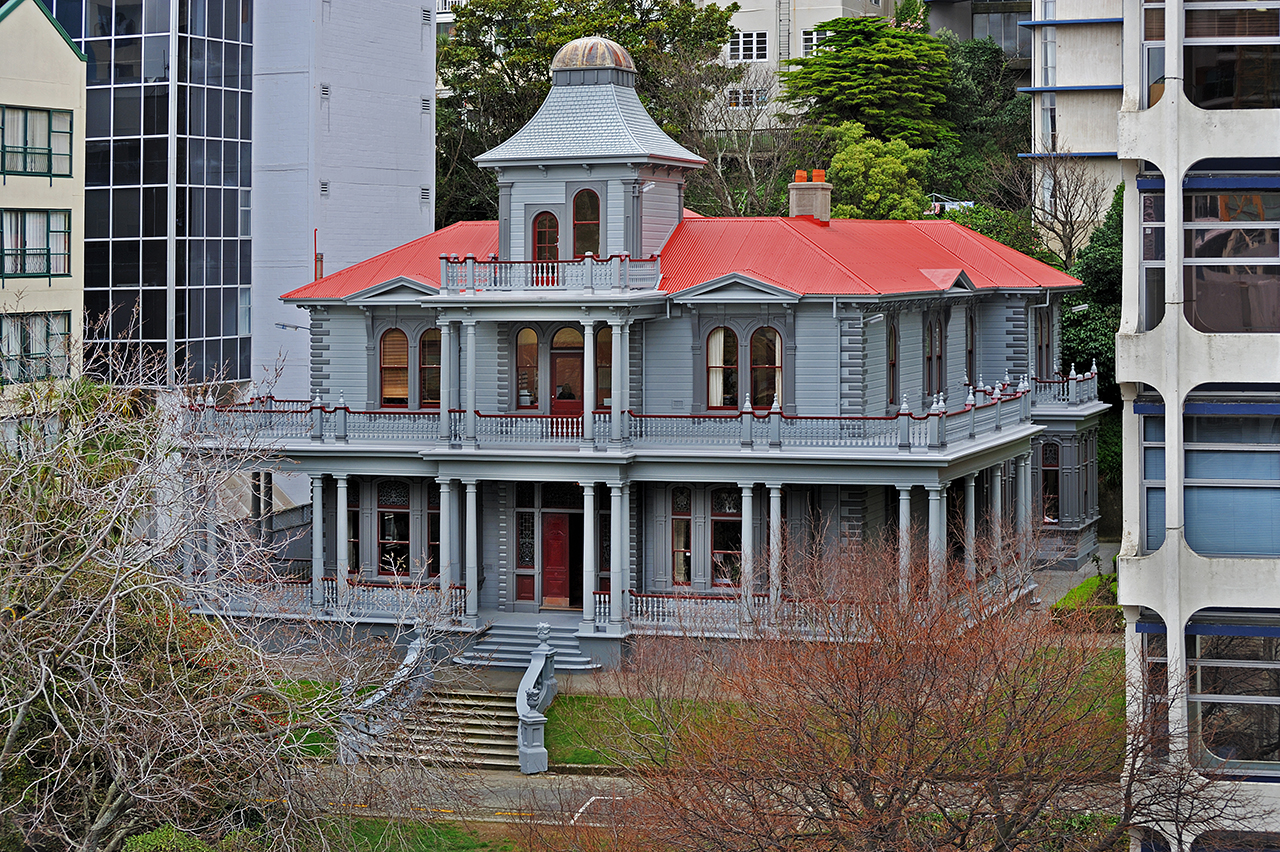
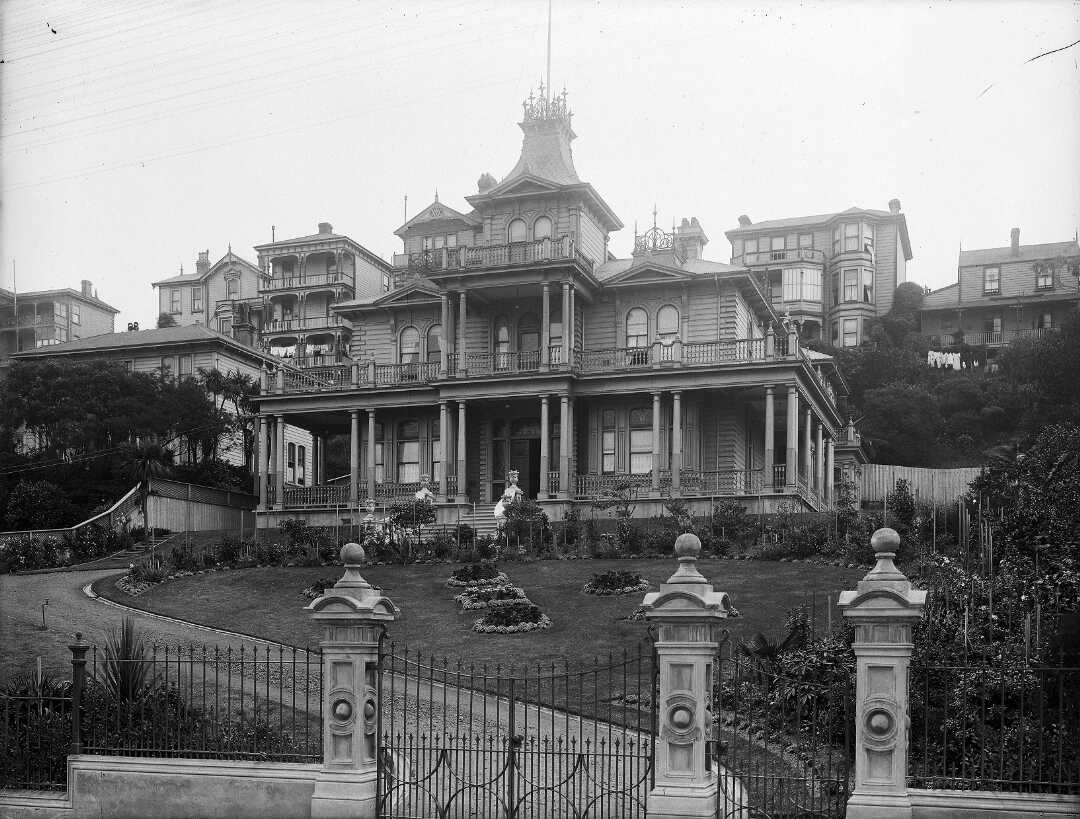
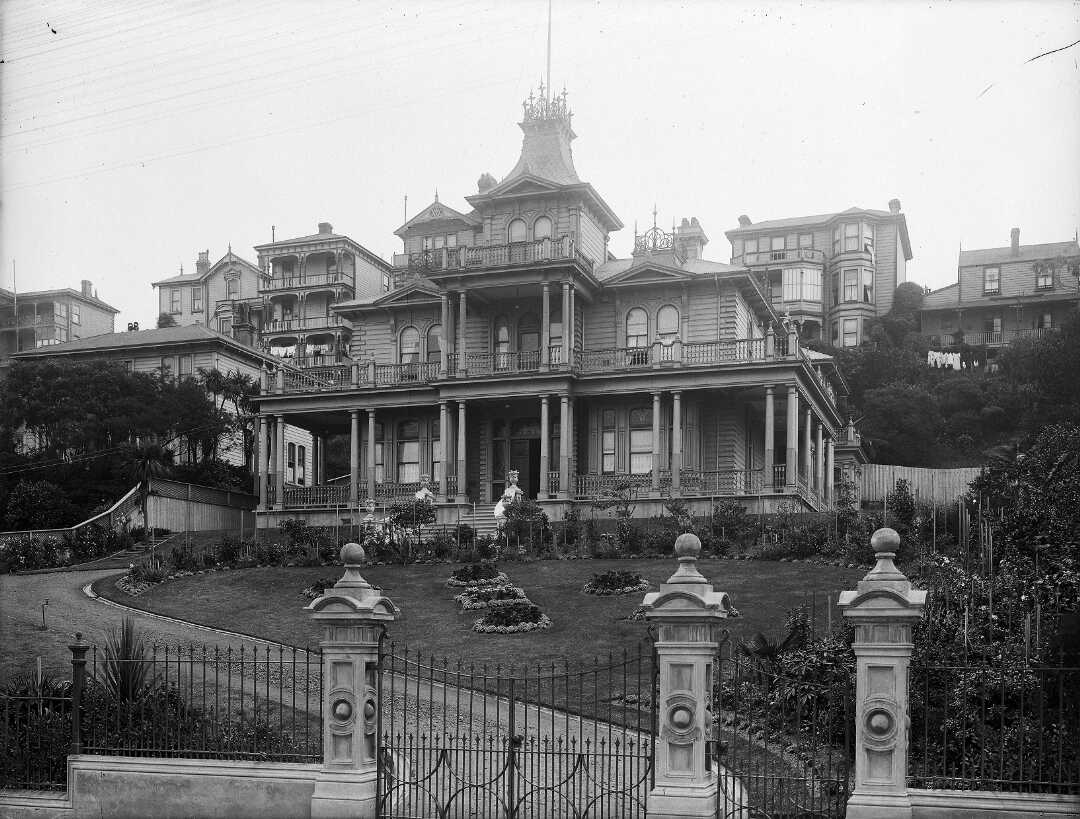
Antrim House, completed in 1905 for Robert Hannah (1845-1930) and his wife Hannah Hannah (1852-1928), is a significant historic dwelling in the city of Wellington.

Robert Hannah was born in County Antrim, Northern Ireland in 1845. In his youth he was apprenticed as a boot-maker, and at the age of about 18 immigrated to Australia. Around 1866 he joined the flood of migrants to New Zealand in search of their fortunes on the gold fields, settling in the West Coast town of Charleston where he opened his first boot shop. Hannah eventually moved to Wellington in 1874, where he opened a boot shop in Lambton Quay. This was followed five years later by a boot factory and associated retail shop in Cuba Street. Known as R. Hannah and Co, Ltd., the firm quickly grew with a factory in Lambton Quay (1894) and then later in Leeds Street (1908). In 1875 Robert married Hannah Fergusson, a recent immigrant from Ireland. The couple were to have eight children.

Robert, Hannah, and their young family moved to Boulcott Street about 1878. At that time Boulcott Street was considered to be one of the better streets in the city, being the home of noted Wellingtonians, John Plimmer (1812-1905), Sir Walter Buller (1833-1912), and T. G. McCarthy (1833-1912). In 1894 the family moved to a residence in Khandallah, known as Tara Hall. During this time Robert Hannah served on the Onslow Borough Council. The family returned to Boulcott Street by 1898, moving into a house remembered as 'Tera Tangata'. In 1901 they acquired the adjacent property, which was destined to become the site of a new home, Antrim House.

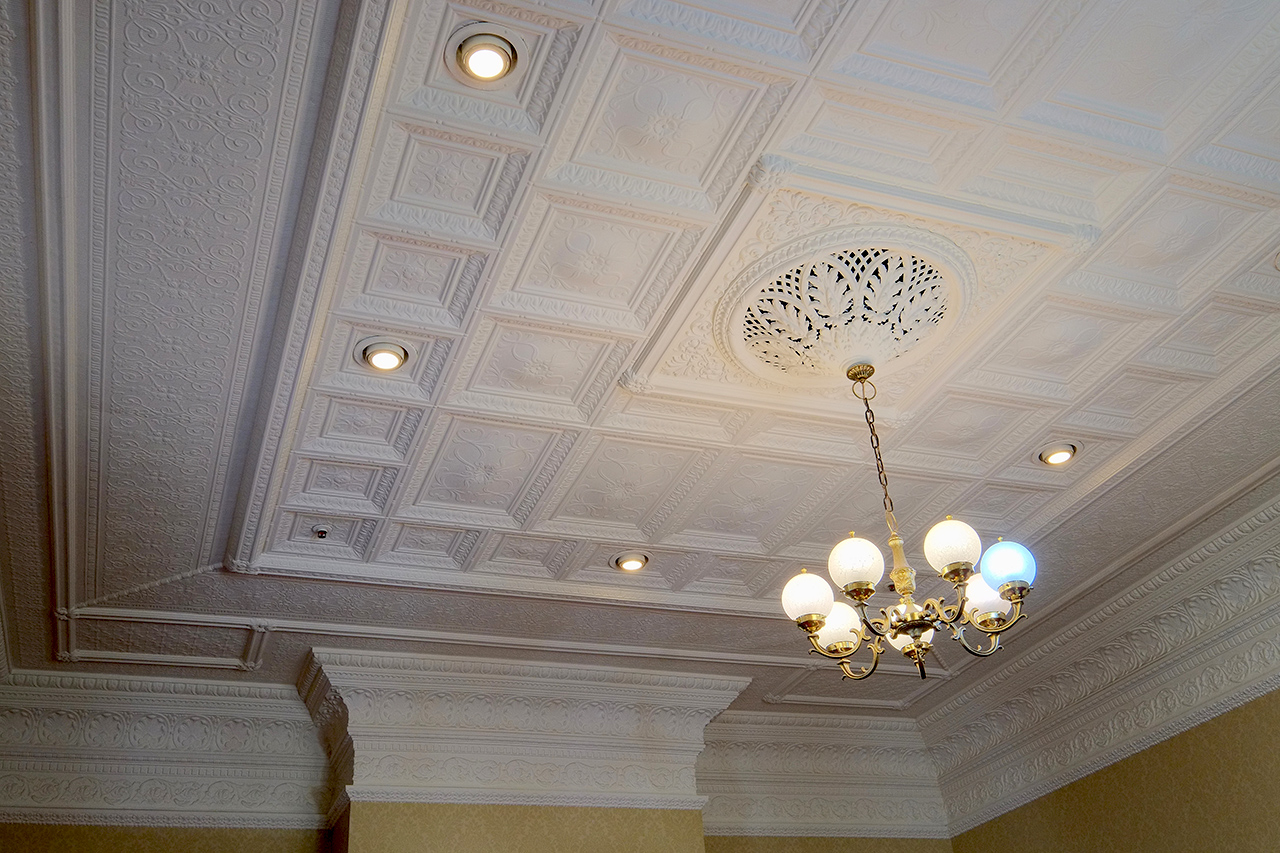
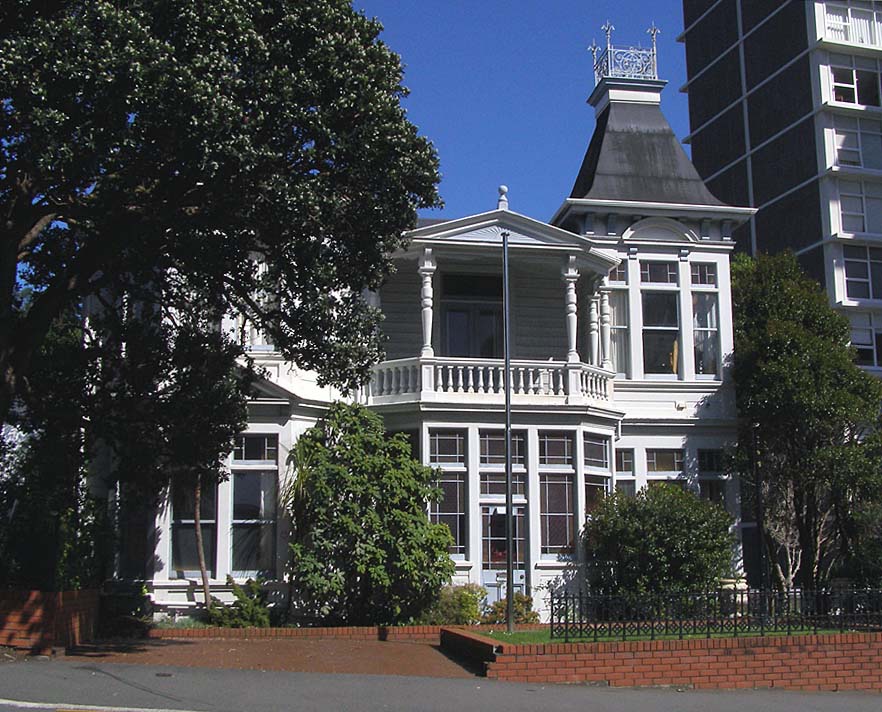
Robert Hannah commissioned Thomas Turnbull and Sons to design the new house. This architectural firm had had a previous association with Hannah, having designed a factory at the back of Hannah's Lambton Quay store in 1894. It is almost certain that William Turnbull designed and oversaw the construction of the house, as his father Thomas, had by that stage retired. Constructed mainly of kauri and heart totara on concrete foundations, Antrim House was (and still is) a fine example of an Edwardian Italianate house. The two-storey building with tower, topped with a mansard roof, was an impressive residence situated on a large section with garden and out-buildings. Within the house, imported pressed metal ceilings and kauri panelling added to the house's opulence, and bore testimony to the success of Hannah and his company.

The family moved into the house late in 1905. It was home to 10 members of the family and a number of domestic staff. Hannah Hannah died in 1928 and two years later Robert Hannah followed her. At the time of his death Robert Hannah had 30 shops throughout the country.

From 1931 the house was leased by the family for use as an exclusive residential hotel. In 1938 the house was sold by the Hannah estate, but continued to be used as a hotel. In July 1940 the upper storey of the house was severely damaged by fire but due to war shortages the owners were unable to restore the house to its former state. Instead a simpler style was chosen, utilising Art Deco motifs. The grand staircase was replaced and the decorative ironwork from the tower was removed. In 1949 the New Zealand Government acquired the house with the intention that it would be used to accommodate visiting VIPs. This did not eventuate and the Department of Labour ran the house as a Public Service Hostel for young men.

During the 1970s the New Zealand Historic Places Trust became concerned at the future of Antrim House. When, in 1977, the hostel was closed, the Trust lobbied the government to preserve the building. Finally in 1978 it was agreed that Antrim House would become the new headquarters of the Historic Places Trust. Extensive repairs and maintenance were carried out over the next few years by the Ministry of Works, and the house was opened by the Minister of Internal Affairs, Alan Highet, on 26 May 1981. In recent years the Trust has carried out various renovations, and it is now occupied by its National Office.

Antrim House has great historic significance as the home of the successful Wellington businessman and founder of R. Hannah and Co, Ltd., Robert Hannah. For over 40 years, following the death of Hannah, the house was a home for a number of people, first as a private hotel and then as a government hostel for young civil servants. It is the longest standing head office of the New Zealand Historic Places Trust. It has architectural significance as a fine example of an Edwardian Italianate style house designed by a notable architect, William Turnbull. It is a prominent landmark, particularly as it is one of only a few houses left in what was once a predominantly a residential street, and it is still surrounded by its grounds and trees.
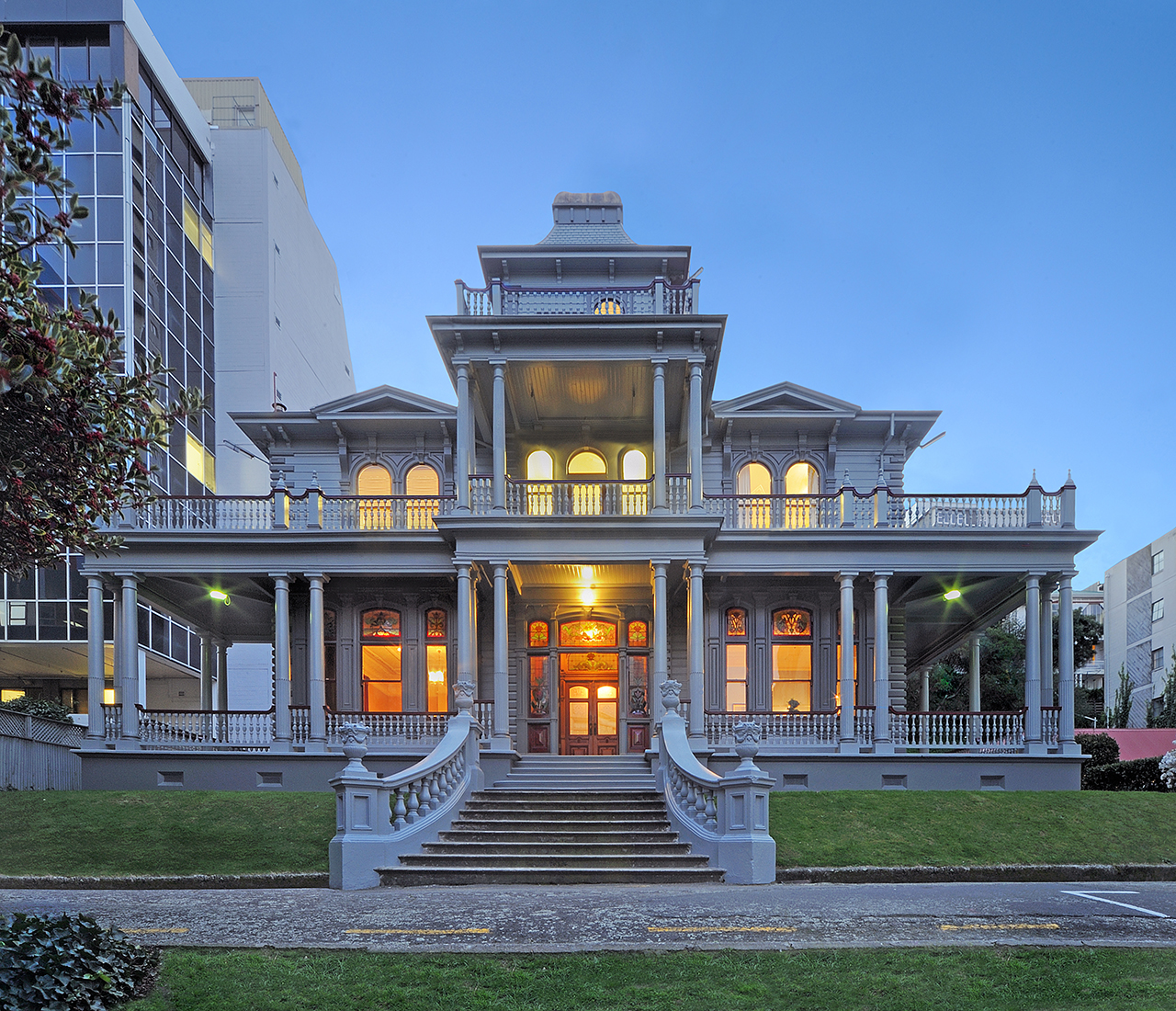
Antrim House, Wellington | 29/05/2024 | Heritage New Zealand Pouhere Taonga
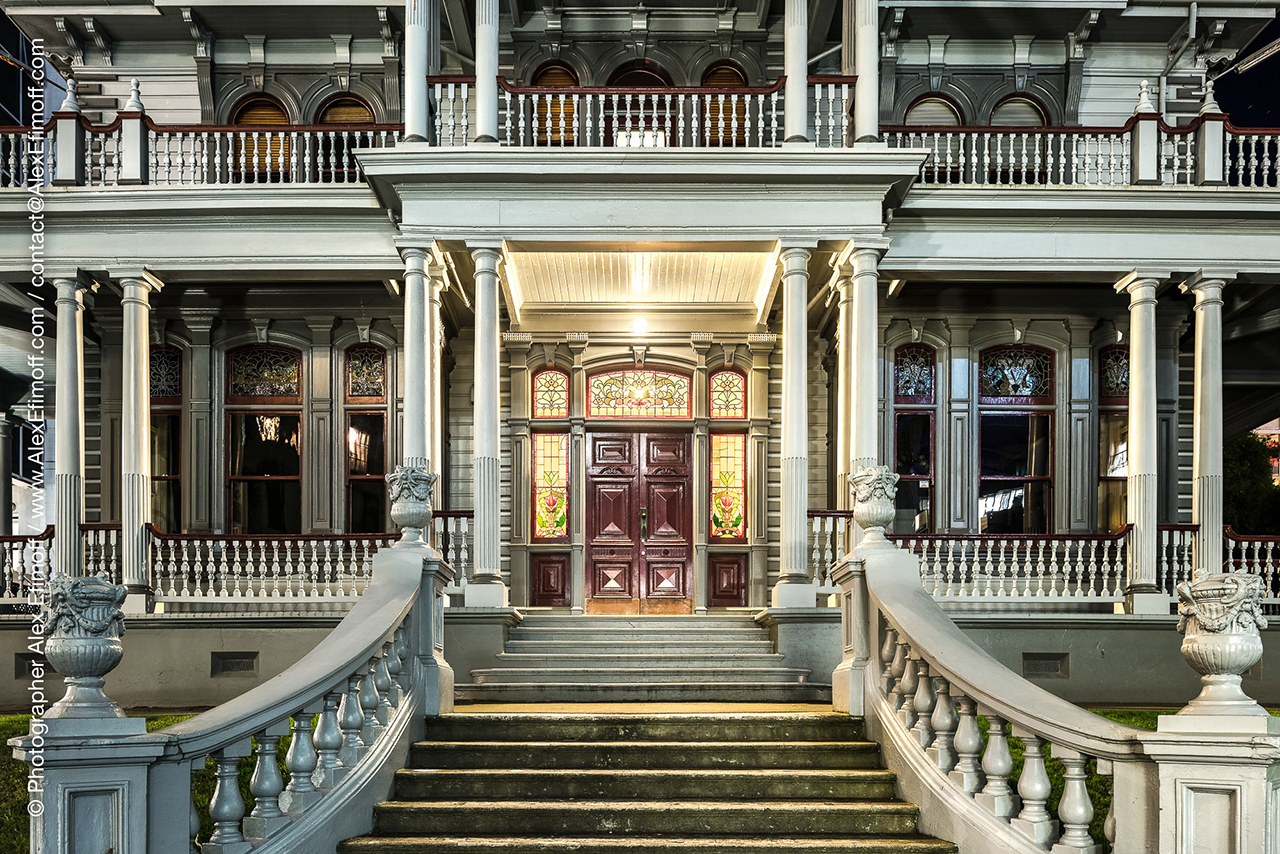
Antrim House, Wellington. Exterior detail | 29/05/2024 | Heritage New Zealand Pouhere Taonga
Antrim House, Wellington. Drawing Room embossed pressed tin ceiling made by the Wunderlich Co. of Sydney in 1905 Image courtesy of commons.wikimedia.org | Pseudopanax | 30/10/2021 | Public Domain - Wikimedia Commons
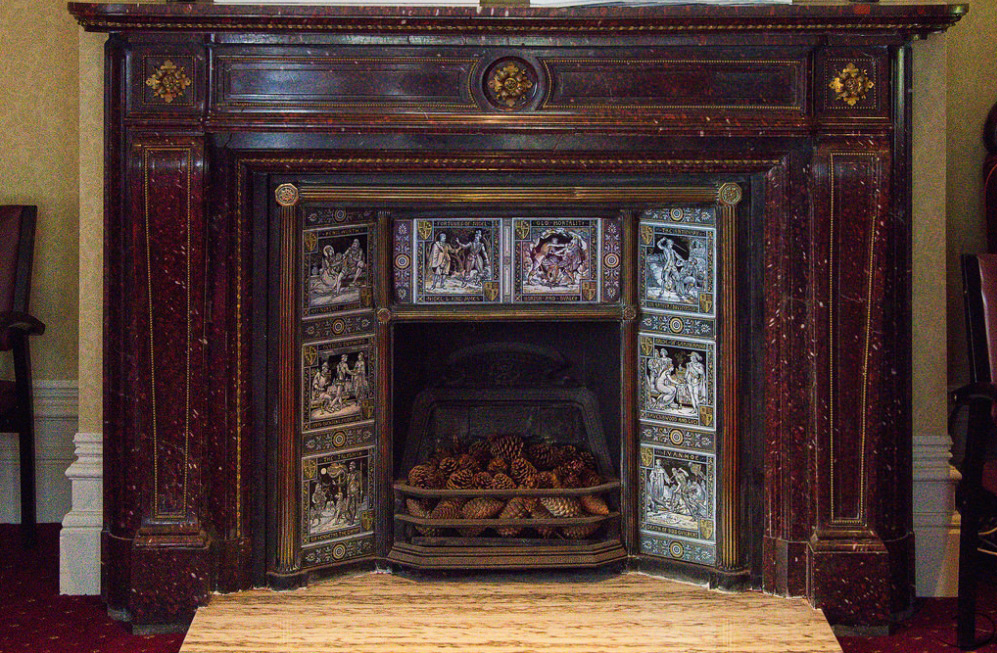
Antrim House, Wellington. The Hannah Room marble fireplace originally from the BNZ Manger's Office in Dunedin | 29/05/2024 | Heritage New Zealand Pouhere Taonga
Antrim House, Wellington. Interior kauri front doors, with wood carved decoration, stained glass surround and Ferguson Coat of Arms | C Horwell | 25/02/2022 | Heritage New Zealand Pouhere Taonga
Antrim House, Wellington. 1906. Permission of the Alexander Turnbull Library National Library of New Zealand Te Puna Matauranga o Aotearoa, must be obtained before any re-use of this image. | Sydney Charles Smith | Alexander Turnbull Library
Antrim House, Wellington | 29/05/2024 | Heritage New Zealand Pouhere Taonga
Antrim House, Wellington. Exterior detail | 29/05/2024 | Heritage New Zealand Pouhere Taonga
Antrim House, Wellington. Drawing Room embossed pressed tin ceiling made by the Wunderlich Co. of Sydney in 1905 Image courtesy of commons.wikimedia.org | Pseudopanax | 30/10/2021 | Public Domain - Wikimedia Commons
Antrim House, Wellington. The Hannah Room marble fireplace originally from the BNZ Manger's Office in Dunedin | 29/05/2024 | Heritage New Zealand Pouhere Taonga
Antrim House, Wellington. Interior kauri front doors, with wood carved decoration, stained glass surround and Ferguson Coat of Arms | C Horwell | 25/02/2022 | Heritage New Zealand Pouhere Taonga
Antrim House, Wellington. 1906. Permission of the Alexander Turnbull Library National Library of New Zealand Te Puna Matauranga o Aotearoa, must be obtained before any re-use of this image. | Sydney Charles Smith | Alexander Turnbull Library

List Entry Information

Overview

Status
Listed

List Entry Status
Historic Place Category 1

Access
Able to Visit

List Number
208

Date Entered
26th November 1981

Date of Effect
26th November 1981

City/District Council
Wellington City

Region
Wellington Region

Legal description

Sec 1335 Town of Wellington (RT WN21B/228), Wellington Land District

Detailed List Entry

Construction Professional

Name

Turnbull, William (1868-1941)

Type

Architect

Biography

William Turnbull (1868-1941) entered the architectural office of his father Thomas (1825-1907) in 1882, and received a professional education from him. In 1890, William visited Melbourne and Sydney and was engaged in the office of J A Gordon, a Melbourne architect who at that time was engaged in the design of several major commercial buildings including the Melbourne (now Victoria) Markets. In 1891 William returned to Wellington and was admitted into partnership in the firm of Thomas Turnbull and Son. This was one of the foremost architectural practices in the city at the turn of the century and it continued after Thomas Turnbull's death in 1907. William became a Fellow of the Royal Institute of British Architects in 1906, designing many important early twentieth century buildings in Wellington such as 12 Boulcott Street (1902), Turnbull House (1918), and the Wellington Free Ambulance Building (1932). The range and variety of his adaptation of architectural styles show him to be fully versed in virtually every contemporary architectural style and to have special skills and flair for masonry design.

Construction Details

Start Year

1904

Finish Year

1905

Type

Original Construction

Start Year

1931

Type

Modification

Description

Modifications to convert house to private hotel, including the addition of fire escapes

Start Year

1934

Finish Year

1938

Type

Modification

Description

Alterations to the conservatory. Shower also fitted

Start Year

1938

Type

Modification

Description

Two showers installed in the cloakroom downstairs

Start Year

1940

Type

Other

Description

Main staircase, landing, and stained glass windows, extensively damaged by fire

Start Year

1940

Type

Reconstruction

Description

Restoration of house after fire. Work carried out by G. H. Calley, under supervision of architect, William Fielding

Start Year

1979

Finish Year

1980

Type

Modification

Description

Alterations to building to accommodate New Zealand Historic Places Trust

Start Year

1990

Finish Year

2000

Type

Modification

Description

Renovation of boardroom, hallway, conservatory, and stables

Reference

Public NZAA Number

R27/427

Completion Date

4th February 2002

Report Written By

Helen McCracken

Information Sources

Attwell, 1992

Peter Attwell, Antrim House and its occupants, New Zealand Historic Places Trust/Pouhere Taonga, Wellington, 1992

Evening Post

Evening Post, 27 Jun 1919, p.7.

Report Written By

This place was identified as significant under previous legislation with different information requirements. It remains significant under the current legislation. There is opportunity under our legislation and policies to add to this information. Further information about this place may be available from the Central Regional Office of Heritage New Zealand Pouhere Taonga. Please note that entry on the New Zealand Heritage List/Rarangi Korero identifies only the heritage values of the property concerned, and should not be construed as advice on the state of the property, or as a comment of its soundness or safety, including in regard to earthquake risk, safety in the event of fire, or insanitary conditions.

Further Information

Current Usages

Uses: Government

Specific Usage: Government office building

Former Usages

General Usage:: Accommodation

Specific Usage: Hotel

General Usage:: Accommodation

Specific Usage: House

Themes

Web Links

description: Heritage New Zealand website Places to Visit

url: http://www.heritage.org.nz/places/places-to-visit/wellington-region/antrim-house

Overview

Status

Listed

List Entry Status

Historic Place Category 1

Access

Able to Visit

List Number

208

Date Entered

26th November 1981

Date of Effect

26th November 1981

City/District Council

Wellington City

Region

Wellington Region

Legal description

Sec 1335 Town of Wellington (RT WN21B/228), Wellington Land District

Status

Listed

List Entry Status

Historic Place Category 1

Access

Able to Visit

List Number

208

Date Entered

26th November 1981

Date of Effect

26th November 1981

City/District Council

Wellington City

Region

Wellington Region

Legal description

Sec 1335 Town of Wellington (RT WN21B/228), Wellington Land District

Construction Information

Construction Professional

Name

Turnbull, William (1868-1941)

Type

Architect

Biography

William Turnbull (1868-1941) entered the architectural office of his father Thomas (1825-1907) in 1882, and received a professional education from him. In 1890, William visited Melbourne and Sydney and was engaged in the office of J A Gordon, a Melbourne architect who at that time was engaged in the design of several major commercial buildings including the Melbourne (now Victoria) Markets. In 1891 William returned to Wellington and was admitted into partnership in the firm of Thomas Turnbull and Son. This was one of the foremost architectural practices in the city at the turn of the century and it continued after Thomas Turnbull's death in 1907. William became a Fellow of the Royal Institute of British Architects in 1906, designing many important early twentieth century buildings in Wellington such as 12 Boulcott Street (1902), Turnbull House (1918), and the Wellington Free Ambulance Building (1932). The range and variety of his adaptation of architectural styles show him to be fully versed in virtually every contemporary architectural style and to have special skills and flair for masonry design.

Construction Details

Start Year

1904

Finish Year

1905

Type

Original Construction

Start Year

1931

Type

Modification

Description

Modifications to convert house to private hotel, including the addition of fire escapes

Start Year

1934

startYearCirca

Finish Year

1938

Type

Modification

Description

Alterations to the conservatory. Shower also fitted

Start Year

1938

startYearCirca

Type

Modification

Description

Two showers installed in the cloakroom downstairs

Start Year

1940

Type

Other

Description

Main staircase, landing, and stained glass windows, extensively damaged by fire

Start Year

1940

Type

Reconstruction

Description

Restoration of house after fire. Work carried out by G. H. Calley, under supervision of architect, William Fielding

Start Year

1979

Finish Year

1980

Type

Modification

Description

Alterations to building to accommodate New Zealand Historic Places Trust

Start Year

1990

startYearCirca

Finish Year

2000

Type

Modification

Description

Renovation of boardroom, hallway, conservatory, and stables

Construction Professional

Name

Turnbull, William (1868-1941)

Type

Architect

Biography

William Turnbull (1868-1941) entered the architectural office of his father Thomas (1825-1907) in 1882, and received a professional education from him. In 1890, William visited Melbourne and Sydney and was engaged in the office of J A Gordon, a Melbourne architect who at that time was engaged in the design of several major commercial buildings including the Melbourne (now Victoria) Markets. In 1891 William returned to Wellington and was admitted into partnership in the firm of Thomas Turnbull and Son. This was one of the foremost architectural practices in the city at the turn of the century and it continued after Thomas Turnbull's death in 1907. William became a Fellow of the Royal Institute of British Architects in 1906, designing many important early twentieth century buildings in Wellington such as 12 Boulcott Street (1902), Turnbull House (1918), and the Wellington Free Ambulance Building (1932). The range and variety of his adaptation of architectural styles show him to be fully versed in virtually every contemporary architectural style and to have special skills and flair for masonry design.

Construction Details

Start Year

1904

Finish Year

1905

Type

Original Construction

Start Year

1931

Type

Modification

Description

Modifications to convert house to private hotel, including the addition of fire escapes

Start Year

1934

startYearCirca

Finish Year

1938

Type

Modification

Description

Alterations to the conservatory. Shower also fitted

Start Year

1938

startYearCirca

Type

Modification

Description

Two showers installed in the cloakroom downstairs

Start Year

1940

Type

Other

Description

Main staircase, landing, and stained glass windows, extensively damaged by fire

Start Year

1940

Type

Reconstruction

Description

Restoration of house after fire. Work carried out by G. H. Calley, under supervision of architect, William Fielding

Start Year

1979

Finish Year

1980

Type

Modification

Description

Alterations to building to accommodate New Zealand Historic Places Trust

Start Year

1990

startYearCirca

Finish Year

2000

Type

Modification

Description

Renovation of boardroom, hallway, conservatory, and stables

Reference

Historical and Associated Iwi / Hapū / Whānau

Public NZAA Number

R27/427

Completion Date

4th February 2002

Report Written By

Helen McCracken

Information Sources

Attwell, 1992

Peter Attwell, Antrim House and its occupants, New Zealand Historic Places Trust/Pouhere Taonga, Wellington, 1992

Evening Post

Evening Post, 27 Jun 1919, p.7.

Other Information

This place was identified as significant under previous legislation with different information requirements. It remains significant under the current legislation. There is opportunity under our legislation and policies to add to this information. Further information about this place may be available from the Central Regional Office of Heritage New Zealand Pouhere Taonga. Please note that entry on the New Zealand Heritage List/Rarangi Korero identifies only the heritage values of the property concerned, and should not be construed as advice on the state of the property, or as a comment of its soundness or safety, including in regard to earthquake risk, safety in the event of fire, or insanitary conditions.

Historical and Associated Iwi / Hapū / Whānau

Public NZAA Number

R27/427

Completion Date

4th February 2002

Report Written By

Helen McCracken

Information Sources

Attwell, 1992

Peter Attwell, Antrim House and its occupants, New Zealand Historic Places Trust/Pouhere Taonga, Wellington, 1992

Evening Post

Evening Post, 27 Jun 1919, p.7.

Other Information

This place was identified as significant under previous legislation with different information requirements. It remains significant under the current legislation. There is opportunity under our legislation and policies to add to this information. Further information about this place may be available from the Central Regional Office of Heritage New Zealand Pouhere Taonga. Please note that entry on the New Zealand Heritage List/Rarangi Korero identifies only the heritage values of the property concerned, and should not be construed as advice on the state of the property, or as a comment of its soundness or safety, including in regard to earthquake risk, safety in the event of fire, or insanitary conditions.

Further Information

Current Usages

Uses: Government

Specific Usage: Government office building

Former Usages

General Usage: Accommodation

Specific Usage: Hotel

General Usage: Accommodation

Specific Usage: House

Web Links

description: Heritage New Zealand website Places to Visit

url: http://www.heritage.org.nz/places/places-to-visit/wellington-region/antrim-house

Current Usages

Uses: Government

Specific Usage: Government office building

Former Usages

General Usage: Accommodation

Specific Usage: Hotel

General Usage: Accommodation

Specific Usage: House

Web Links

description: Heritage New Zealand website Places to Visit

url: http://www.heritage.org.nz/places/places-to-visit/wellington-region/antrim-house

Location

Loading
Related listings
Somerled House
Somerled House
Somerled House
Somerled House
Stay up to date with Heritage this month