

The building occupies two former lots created as part of an 1885 residential subdivision on the east side of Symonds Street. Lot 8, the northern-most of the two sections, was the entrance to the well-known Cintra property, once the residence of Sir Arthur Myers. To the south, Lot 7 was occupied by a timber dwelling erected for widow Mary Ann Pilkington, said to have been built in 1885.
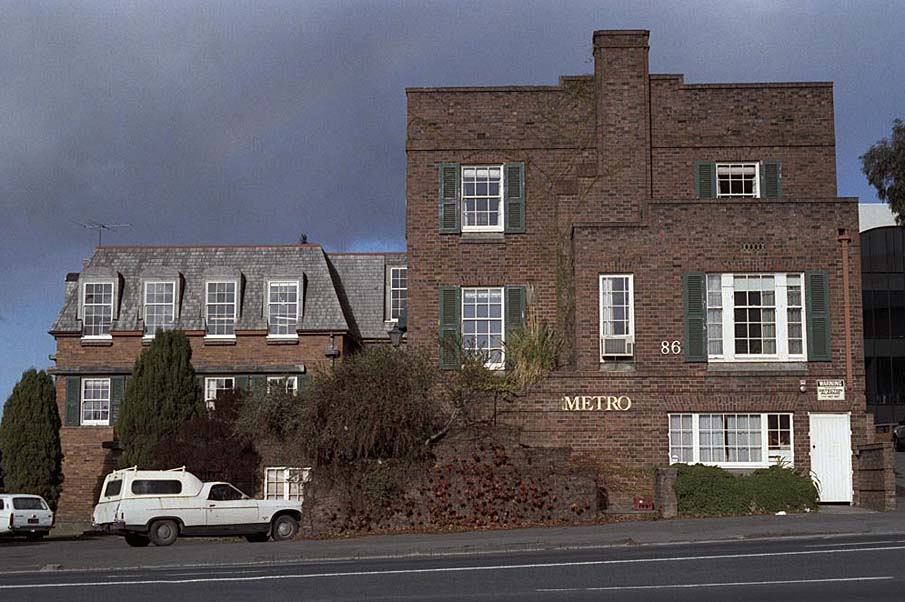
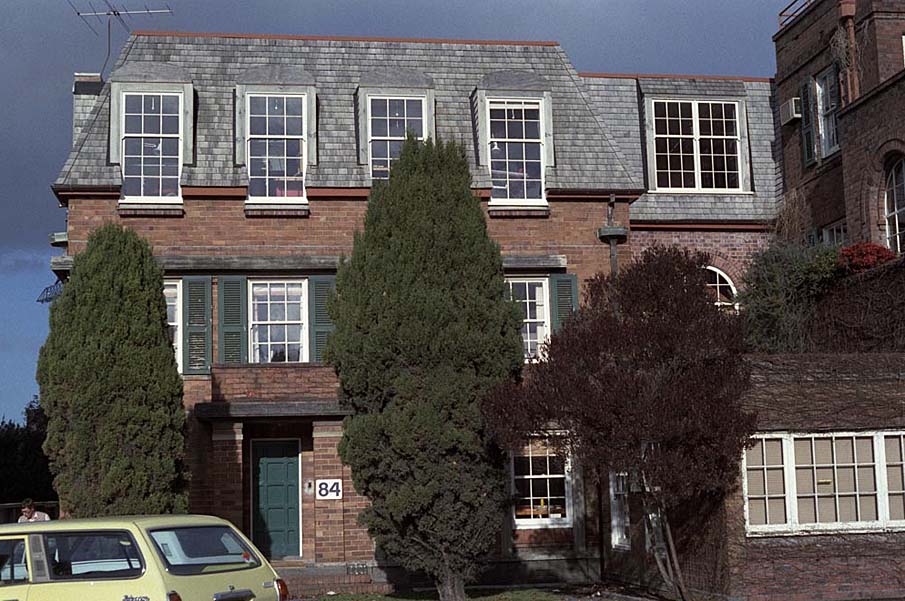
The house at 84 Symonds Street was built in 1935-6 for trailing-blazing general practitioner Dr Elaine Gurr (1896–1996). In the 1920s Gurr had worked for the Department of Health setting up the country’s first antenatal clinics, and training Plunket nurses and midwives. In 1932 she set up a general practice in Symonds Street, and three years later had this house built. She worked and lived there for 30 years. Gurr later became the first woman to be made an honorary fellow of the Royal New Zealand College of General Practitioners. The house was erected as a two-storey brick building, with the front half of the ground floor taken up by waiting and consulting rooms, with a dining room, kitchen and small bedroom behind. Upstairs was a lounge, two more bedrooms and a sunroom; a standalone garage was at the front. The design, by M.K. Draffin was neo-Georgian - an architectural style that was synonymous with upper-middle-class concepts of good taste during the inter-war period. Draffin was already a notable architect, having won a NZIA Gold Medal (with Grierson and Aimer) for the Auckland War Memorial Museum a few years previously.
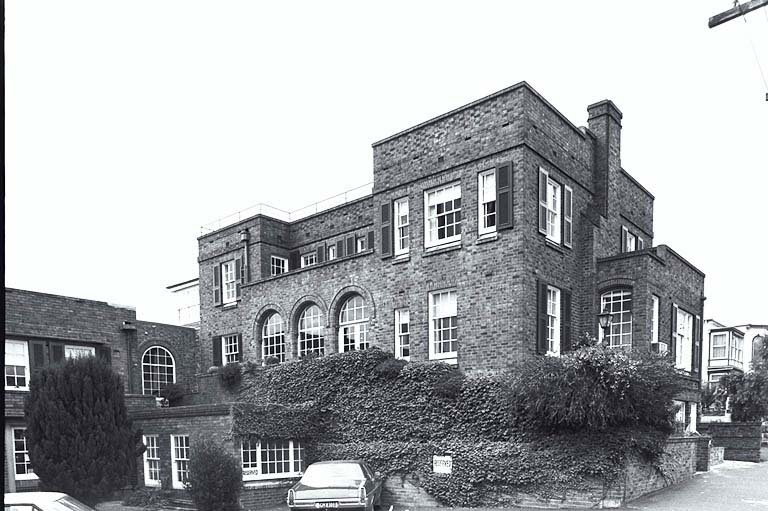
In 1937, Draffin similarly designed the adjoining 86 Symonds Street for another notable medical practitioner, physician Dr Alexander Henderson Kirker (1899-1970). This residence was two storeys plus a basement, built of double brick with a series of flat roofs. In the basement was a billiard room and a built-in garage - the latter being an early example of a feature that has since become commonplace. The ground floor was designed to delineate public and private spaces, with the consulting room at the front of the house, with other spaces such as the hall, study and staircase further buffering residential activities (the kitchen and dining) at the back. Three bedrooms and a lounge were on the first floor. The study, with large arched windows, opened onto a terrace.
Not long after his residence was built, Kirker went overseas to serve with the New Zealand Medical Corps in the Second World War (1939-45) and while there married a New Zealand WAAF, Joan Johnston. The couple returned to live in the house for 30 years; in 1950 an extension, also by Draffin, created two new bedrooms on the first floor. In 1959 the interior was altered, the family moved upstairs and the ground floor rented out as rooms for other medical practitioners, reinforcing the continued attractiveness of Symonds Street for medical rooms. Although of a less constrained style than the Gurr house, the Draffin-designed Kirker residence also exhibited neo-Georgian influences evident in small-paned windows framed by louvred shutters, semi-circular windows on the north elevation of the principal storey, and plain brickwork with string courses. A building in the round with elevations quite distinct one from the other in their style, the residence was a notable element in the local streetscape.
In the 1970s, the two residences were sold and combined under the same legal title, and joined together with a brick addition. Later in the 1970s a new floor, with a mansard roof, was added to the top of both 84 Symonds Street and the recent addition, to add more office space. Along with the addition, both underwent internal alterations to convert them into offices. The building has since housed various businesses, including an art gallery and spa. A café was added into the basement area of 86 Symonds Street in 2003.
List Entry Information
Status
Listed
List Entry Status
Historic Place Category 2
Access
Private/No Public Access
List Number
2635
Date Entered
26th November 1981
Date of Effect
26th November 1981
City/District Council
Auckland Council
Region
Auckland Council
Extent of List Entry
Extent includes the land described as Lot 1 DP 104901 (RT NA57D/990), North Auckland Land District, and the building known as Doctors’ Residences (Former) thereon.
Legal description
Lot 1 DP 104901 (RT NA57D/990) North Auckland Land District
Status
Listed
List Entry Status
Historic Place Category 2
Access
Private/No Public Access
List Number
2635
Date Entered
26th November 1981
Date of Effect
26th November 1981
City/District Council
Auckland Council
Region
Auckland Council
Extent of List Entry
Extent includes the land described as Lot 1 DP 104901 (RT NA57D/990), North Auckland Land District, and the building known as Doctors’ Residences (Former) thereon.
Legal description
Lot 1 DP 104901 (RT NA57D/990) North Auckland Land District
Construction Professional
Name
Good, A.J.
Type
Builder
Biography
Born In London, Arthur James Good (c.1884-1960) was manager of Julian Brothers when the firm built the Auckland Railway Station in 1928-30. He was also manager of A. J. Good Ltd, building contractors, until his retirement in 1957. He was responsible for constructing the Devonport Post Office in 1938.
Name
Draffin, Malcolm Keith
Type
Architect
Biography
Malcolm Draffin (1890-1964) was born in Auckland and educated at Auckland Grammar School. His architectural apprenticeship began in 1906 with J.W. Walker and in 1910 he joined Edward Bartley. He became a full partner in 1914 when the firm became known as Edward Bartley and Son and M.K. Draffin. Draffin served with the NZ Field Engineers in World War I and following the war he travelled in Europe and attended the Architectural Association School in London. On his return to New Zealand he became sole partner in the firm of Edward Bartley and Son and M.K. Draffin. In 1922 he became a partner with H.C. Grierson and K.W. Aimer when they jointly won the competition to design the Auckland War Memorial Museum. Their design subsequently won them the New Zealand Institute of Architects gold medal. The partnership was dissolved in 1932 and Draffin and his son later went into partnership as M.K. and R.F. Draffin. In 1960 this became M.K. and R.F. Draffin and Lawry. Draffin was president of the New Zealand Institute of Architects in 1951 and 1952. Some of M.K. Draffin's best known work includes (with Grierson, Aimer and Draffin) the Auckland War Memorial Museum (1929), Parnell Public Library, Auckland (1923), Wellington Citizens War Memorial (1929), and the former South British Insurance Company building, Auckland (1927-28). On his own or in partnership with his son he designed the Northern Roller Mills, Auckland (1941-43), the Bank of New South Wales, Auckland, and additions to the War Memorial Museum.
Construction Details
Start Year
1885
startYearCirca
Type
Original Construction
Description
Original construction of timber house at 86 Symonds Street
Start Year
1935
Type
Original Construction
Description
Original construction of 84 Symonds Street
Start Year
1936
startYearCirca
Type
Demolished - prior building
Description
Demolition of timber house at 86 Symonds Street
Start Year
1937
Type
Original Construction
Description
Original construction of 86 Symonds Street
Type
Addition
Description
two bedroom, first floor (86 Symonds Street)
Period
1950s
Type
Addition
Description
connecting 84 and 86 Symonds Street
Period
1970s
Type
Modification
Description
major internal renovations
Period
1970s
Start Year
2003
Type
Modification
Description
Partition walls removed, first floor, café developed in basement (86 Symonds Street)
Construction Professional
Name
Good, A.J.
Type
Builder
Biography
Born In London, Arthur James Good (c.1884-1960) was manager of Julian Brothers when the firm built the Auckland Railway Station in 1928-30. He was also manager of A. J. Good Ltd, building contractors, until his retirement in 1957. He was responsible for constructing the Devonport Post Office in 1938.
Name
Draffin, Malcolm Keith
Type
Architect
Biography
Malcolm Draffin (1890-1964) was born in Auckland and educated at Auckland Grammar School. His architectural apprenticeship began in 1906 with J.W. Walker and in 1910 he joined Edward Bartley. He became a full partner in 1914 when the firm became known as Edward Bartley and Son and M.K. Draffin. Draffin served with the NZ Field Engineers in World War I and following the war he travelled in Europe and attended the Architectural Association School in London. On his return to New Zealand he became sole partner in the firm of Edward Bartley and Son and M.K. Draffin. In 1922 he became a partner with H.C. Grierson and K.W. Aimer when they jointly won the competition to design the Auckland War Memorial Museum. Their design subsequently won them the New Zealand Institute of Architects gold medal. The partnership was dissolved in 1932 and Draffin and his son later went into partnership as M.K. and R.F. Draffin. In 1960 this became M.K. and R.F. Draffin and Lawry. Draffin was president of the New Zealand Institute of Architects in 1951 and 1952. Some of M.K. Draffin's best known work includes (with Grierson, Aimer and Draffin) the Auckland War Memorial Museum (1929), Parnell Public Library, Auckland (1923), Wellington Citizens War Memorial (1929), and the former South British Insurance Company building, Auckland (1927-28). On his own or in partnership with his son he designed the Northern Roller Mills, Auckland (1941-43), the Bank of New South Wales, Auckland, and additions to the War Memorial Museum.
Construction Details
Start Year
1885
startYearCirca
Type
Original Construction
Description
Original construction of timber house at 86 Symonds Street
Start Year
1935
Type
Original Construction
Description
Original construction of 84 Symonds Street
Start Year
1936
startYearCirca
Type
Demolished - prior building
Description
Demolition of timber house at 86 Symonds Street
Start Year
1937
Type
Original Construction
Description
Original construction of 86 Symonds Street
Type
Addition
Description
two bedroom, first floor (86 Symonds Street)
Period
1950s
Type
Addition
Description
connecting 84 and 86 Symonds Street
Period
1970s
Type
Modification
Description
major internal renovations
Period
1970s
Start Year
2003
Type
Modification
Description
Partition walls removed, first floor, café developed in basement (86 Symonds Street)
Historical and Associated Iwi / Hapū / Whānau
Completion Date
29th June 2015
Report Written By
Elizabeth Cox
Information Sources
Auckland Star
Auckland Star
Dictionary of New Zealand Biography
Dictionary of New Zealand Biography
Gilmour, Aom
Gilmour, Aom, ‘College Roll: Kirker, Alexander Henderson’, Royal Australian College of Physicians, http://www.racp.org.nz/page/library/college-roll/college-roll-detail&id=470
Other Information
This place was identified as significant under previous legislation with different information requirements. It remains significant under the current legislation. There is opportunity under our legislation and policies to add to this information. Further information about this place may be available from the Northern Regional Office of Heritage New Zealand Pouhere Taonga. Please note that entry on the New Zealand Heritage List/Rarangi Korero identifies only the heritage values of the property concerned, and should not be construed as advice on the state of the property, or as a comment of its soundness or safety, including in regard to earthquake risk, safety in the event of fire, or insanitary conditions. A fully referenced upgrade report is available on request from the Northern Region Office of Heritage New Zealand.
Historical and Associated Iwi / Hapū / Whānau
Completion Date
29th June 2015
Report Written By
Elizabeth Cox
Information Sources
Auckland Star
Auckland Star
Dictionary of New Zealand Biography
Dictionary of New Zealand Biography
Gilmour, Aom
Gilmour, Aom, ‘College Roll: Kirker, Alexander Henderson’, Royal Australian College of Physicians, http://www.racp.org.nz/page/library/college-roll/college-roll-detail&id=470
Other Information
This place was identified as significant under previous legislation with different information requirements. It remains significant under the current legislation. There is opportunity under our legislation and policies to add to this information. Further information about this place may be available from the Northern Regional Office of Heritage New Zealand Pouhere Taonga. Please note that entry on the New Zealand Heritage List/Rarangi Korero identifies only the heritage values of the property concerned, and should not be construed as advice on the state of the property, or as a comment of its soundness or safety, including in regard to earthquake risk, safety in the event of fire, or insanitary conditions. A fully referenced upgrade report is available on request from the Northern Region Office of Heritage New Zealand.
Current Usages
Uses: Trade
Specific Usage: Cafe
Uses: Trade
Specific Usage: Office building/Offices
Former Usages
General Usage: Accommodation
Specific Usage: House
General Usage: Health
Specific Usage: Doctor’s Surgery
Current Usages
Uses: Trade
Specific Usage: Cafe
Uses: Trade
Specific Usage: Office building/Offices
Former Usages
General Usage: Accommodation
Specific Usage: House
General Usage: Health
Specific Usage: Doctor’s Surgery
Location
Sign up to hear more
Get the latest heritage news, features and events delivered
straight to your inbox.
