DonateMembershipVisit Heritage
  • Tūrangawaewae
    Places
  • Tira Māori
    Māori Heritage
  • Poutairangahia
    Archaeology
  • Rauemi
    Resources
  • Mō Tātou
    About Us
  • New Zealand Heritage List
  • Nominate and submit
  • Explore the List
  • National Historic Landmarks
  • Plaques
  • Rainbow List Project
  • Lost heritage
  • Visit Heritage
  • Our properties
  • Turnbull House Project
  • Collections
  • Shop
  • Tohu Whenua
  • Tira Māori
  • Conserving Māori heritage
  • Marae built heritage
  • Māori heritage on the List
  • Hinemihi—Te Hokinga Mai
  • What is archaeology?
  • Is there a site on my property?
  • What are my legal requirements?
  • Affecting an archaeological site
  • Declaring an archaeological site
  • Archaeology FAQs
  • Archaeology Digital Library
  • Archaeology guidelines and templates
  • Resources
  • Funding
  • Publications
  • Sustainable management guides
  • Disaster recovery
  • Podcasts & digital resources
  • Education Hub
  • Conservation plans
  • About
  • Board
  • Māori Heritage Council
  • Senior Staff
  • Offices
  • Contact us
  • Careers
  • Covenants
  • Fast-track
  • Corporate documents
  • Currently consulting on
  • Our submissions
  • News
  • Covid-19 response
Quick links
Rārangi Kōrero | The List
Explore the List
National Historic Landmarks
Ngā Manawhenua o Aotearoa me ōna Kōrero Tūturu
Quick links
Tapuwae
A Vision for Places of Māori Heritage
Funding for Māori Heritage
Resources
Quick links
Archaeological Authority Portal
Applying for an archaeological authority
Archaeology FAQs
Browse the most frequently asked questions about archaeological authorities and the archaeological process.
Quick links
Quick links
News
News Keep up to date with Heritage New Zealand Pouhere Taonga
Membership
Membership Find out more and sign up today
DonateMembershipVisit Heritage
  • Tūrangawaewae
    Places
  • Tira Māori
    Māori Heritage
  • Poutairangahia
    Archaeology
  • Rauemi
    Resources
  • Mō Tātou
    About Us
  • New Zealand Heritage List
  • Nominate and submit
  • Explore the List
  • National Historic Landmarks
  • Plaques
  • Rainbow List Project
  • Lost heritage
  • Visit Heritage
  • Our properties
  • Turnbull House Project
  • Collections
  • Shop
  • Tohu Whenua
  • Tira Māori
  • Conserving Māori heritage
  • Marae built heritage
  • Māori heritage on the List
  • Hinemihi—Te Hokinga Mai
  • What is archaeology?
  • Is there a site on my property?
  • What are my legal requirements?
  • Affecting an archaeological site
  • Declaring an archaeological site
  • Archaeology FAQs
  • Archaeology Digital Library
  • Archaeology guidelines and templates
  • Resources
  • Funding
  • Publications
  • Sustainable management guides
  • Disaster recovery
  • Podcasts & digital resources
  • Education Hub
  • Conservation plans
  • About
  • Board
  • Māori Heritage Council
  • Senior Staff
  • Offices
  • Contact us
  • Careers
  • Covenants
  • Fast-track
  • Corporate documents
  • Currently consulting on
  • Our submissions
  • News
  • Covid-19 response
Quick links
Rārangi Kōrero | The List
Explore the List
National Historic Landmarks
Ngā Manawhenua o Aotearoa me ōna Kōrero Tūturu
Quick links
Tapuwae
A Vision for Places of Māori Heritage
Funding for Māori Heritage
Resources
Quick links
Archaeological Authority Portal
Applying for an archaeological authority
Archaeology FAQs
Browse the most frequently asked questions about archaeological authorities and the archaeological process.
Quick links
Quick links
News
News Keep up to date with Heritage New Zealand Pouhere Taonga
Membership
Membership Find out more and sign up today
  • Places
  • Nominate and submit
  • National Historic Landmarks
  • Places
  • Nominate and submit
  • National Historic Landmarks
  • Tira Māori
  • Conserving Māori heritage
  • Marae built heritage
  • Tira Māori
  • Conserving Māori heritage
  • Marae built heritage
  • Archaeological authorities
  • Archaeology Digital Library
  • Archaeological authorities
  • Archaeology Digital Library
  • All resources
  • Publications
  • Funding
  • All resources
  • Publications
  • Funding
  • FAQs
  • FAQs
Follow us on:
Places
  • Places
  • Nominate and submit
  • National Historic Landmarks
Tira Māori
  • Tira Māori
  • Conserving Māori heritage
  • Marae built heritage
Archaeology
  • Archaeological authorities
  • Archaeology Digital Library
Resources
  • All resources
  • Publications
  • Funding
FAQs
  • FAQs
Follow us on
HomePrivacyTerms and conditionsAbout this site
© Heritage New Zealand Pouhere Taonga 2026.
 
Sign of the Takahe

200 Hackthorne Road and Dyers Pass Road, Cashmere, CHRISTCHURCH

Private

Historic Place Category 1

List No. 275
Quick links:
List GalleryLocationDetails
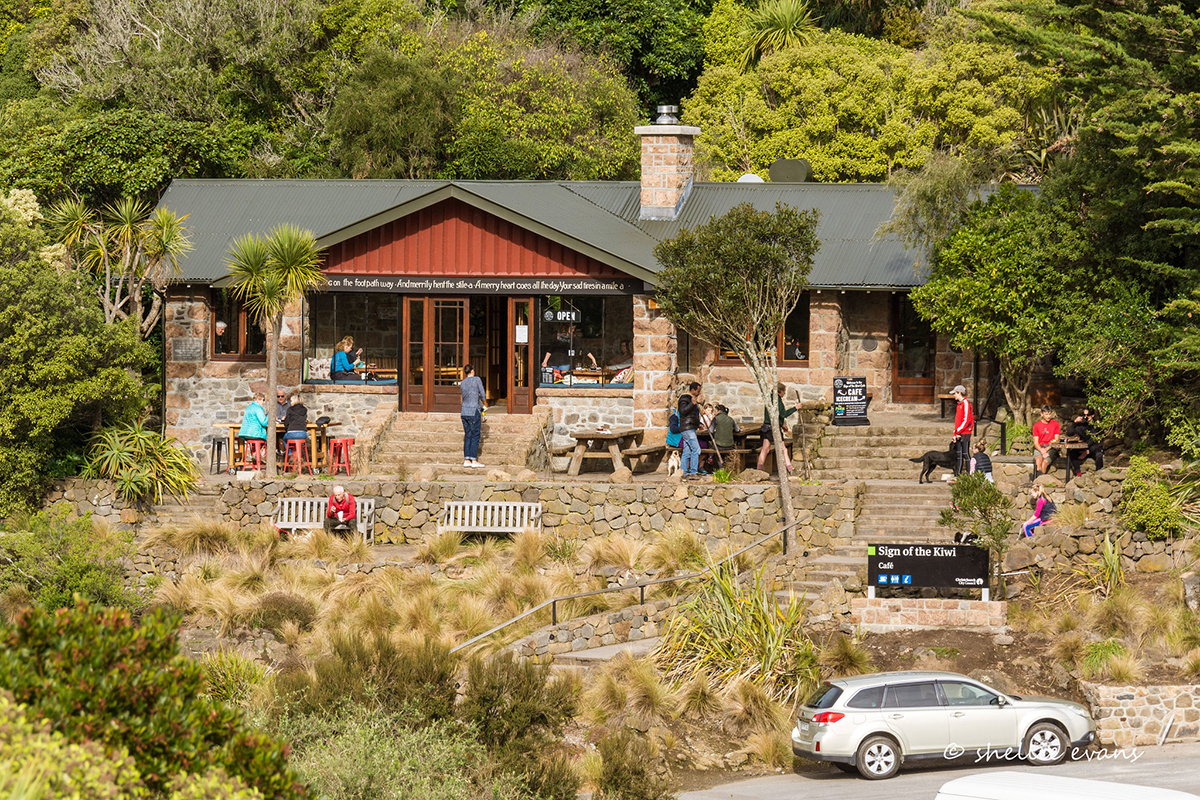
This building was constructed between 1918 and 1946, with the first section opening to the public in 1920. It was part of Harry (Henry George) Ell's (1862-1934) scheme for a road along the summit of the Port Hills, which border Christchurch to the south. Ell planned to construct a road that would run from Godley Head to Akaroa via Gebbies Pass and would have resthouses along the way. He was dedicated to preserving the last remnants of native bush on the hills and persuaded local landowners to sell or donate land. The Sign of the Takahe was the largest and most ambitious of Ell's resthouses. (The other rest houses include the Sign of the Bellbird (1914), the Sign of the Kiwi (1915) and the Sign of the Packhorse (1916).)

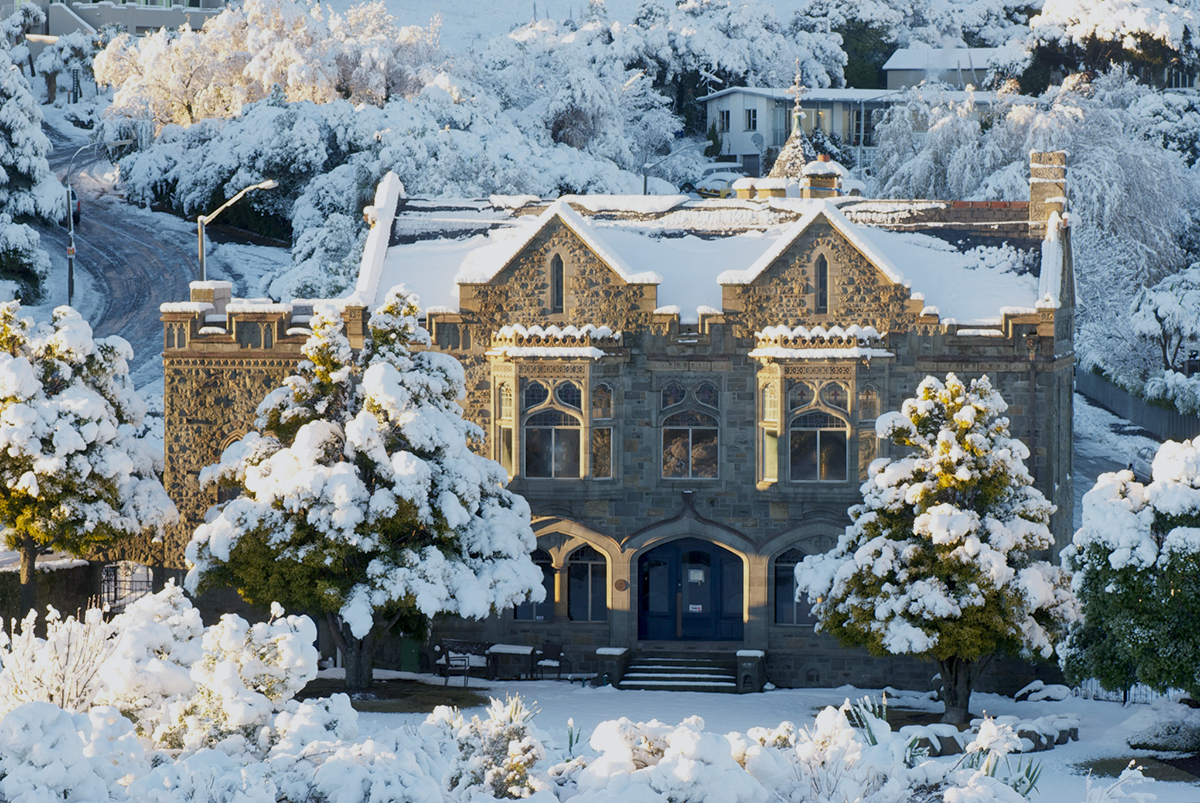
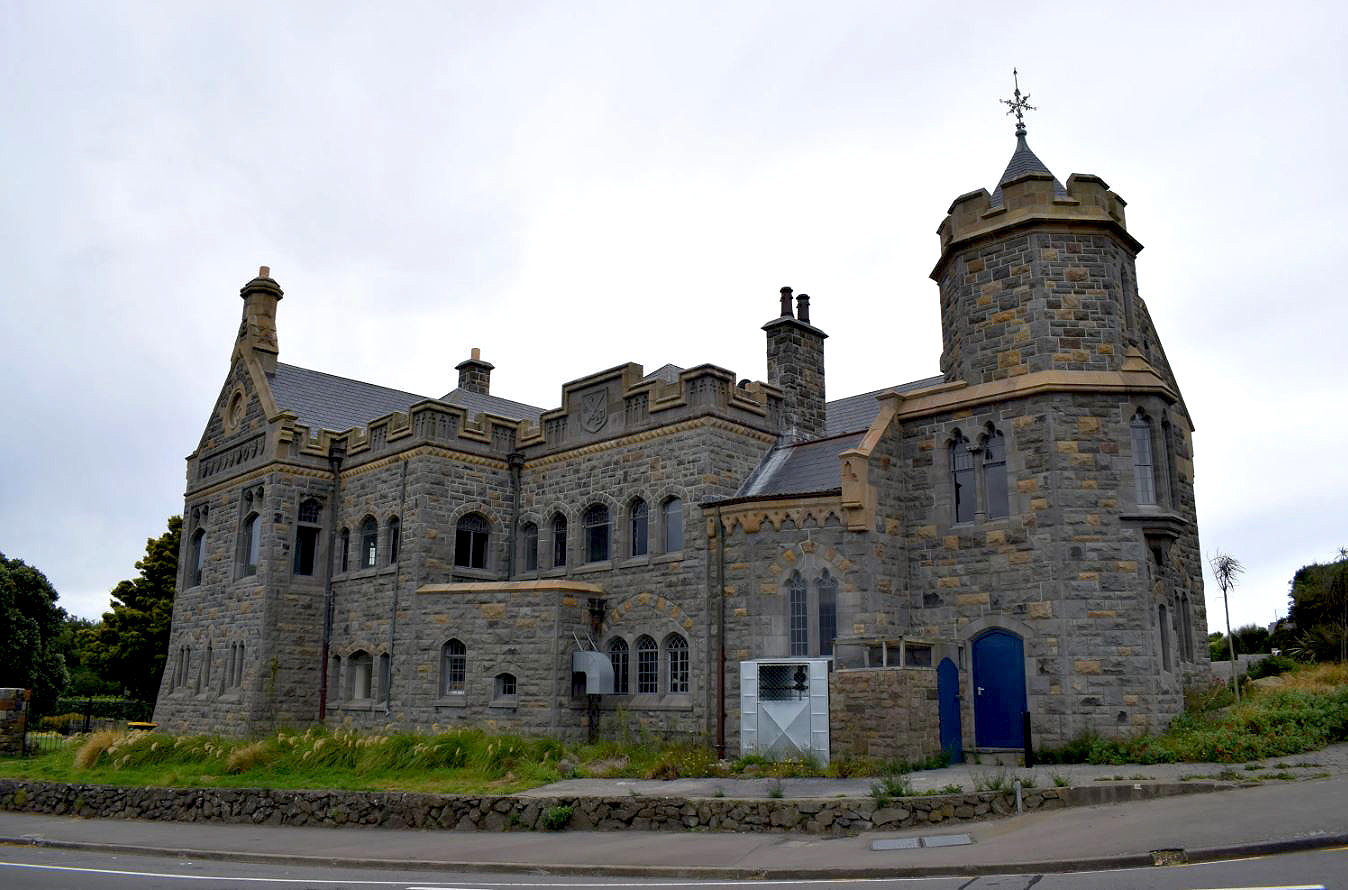
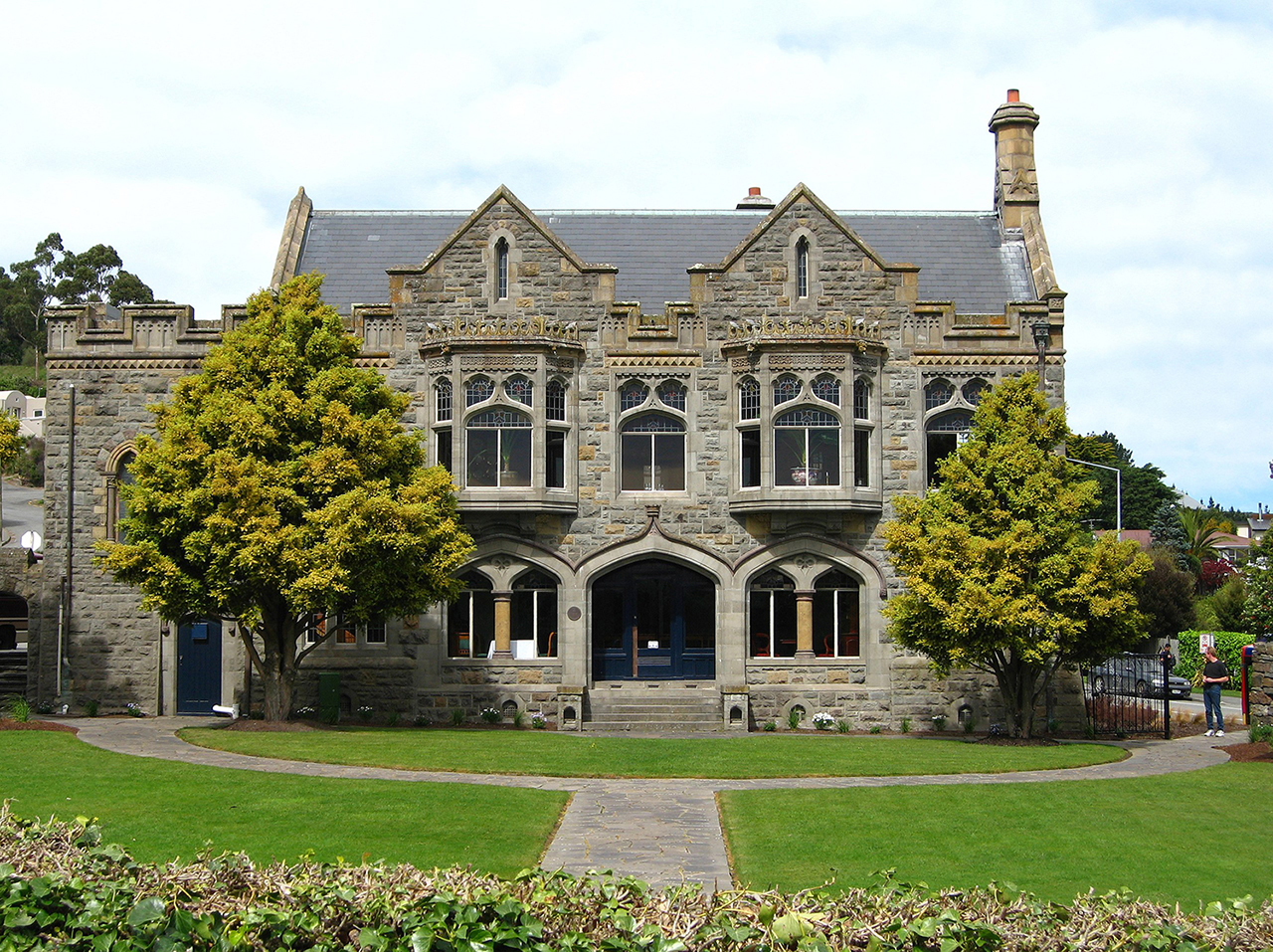
The Sign of the Takahe is a stone building designed in the Gothic style. Ell had originally intended it to be a replica of a Dickensian inn, but by 1923 he was looking at Gothic architecture of the thirteenth, fourteenth and fifteenth centuries for inspiration. The resulting building is two-storeyed with an asymmetrical plan and a crenellated three-storeyed tower on the southeast corner. The northwest facade, which overlooks the Canterbury Plains, features two oriel windows. Although conceived by Ell, J.G. Collins, a local architect, became involved with the Sign of the Takahe project. The date of his first involvement is uncertain. The earliest known drawing of the Takahe by Collins dates from 1934 but it is unclear how much involvement he had prior to this date. The construction of the Takahe had started before plans were drawn for the building, though Collins' influence on the final design of the building is marked.

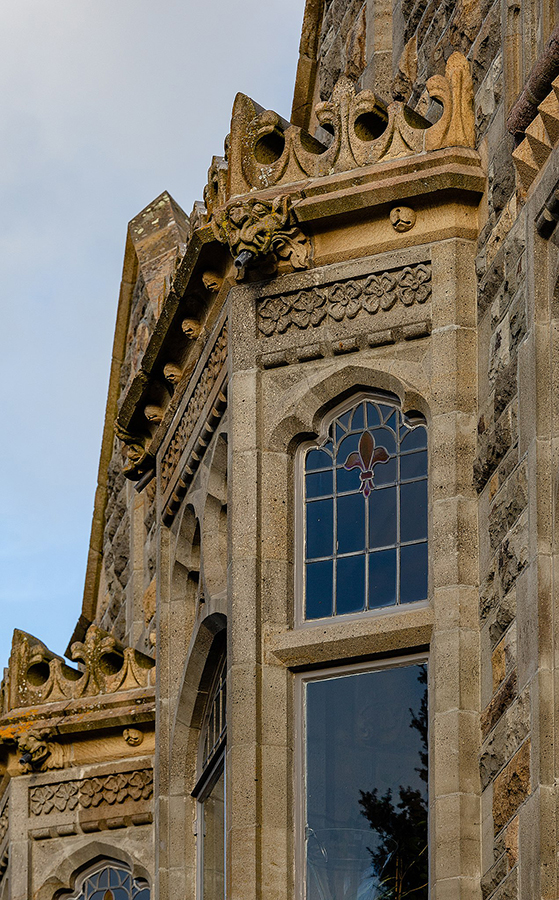
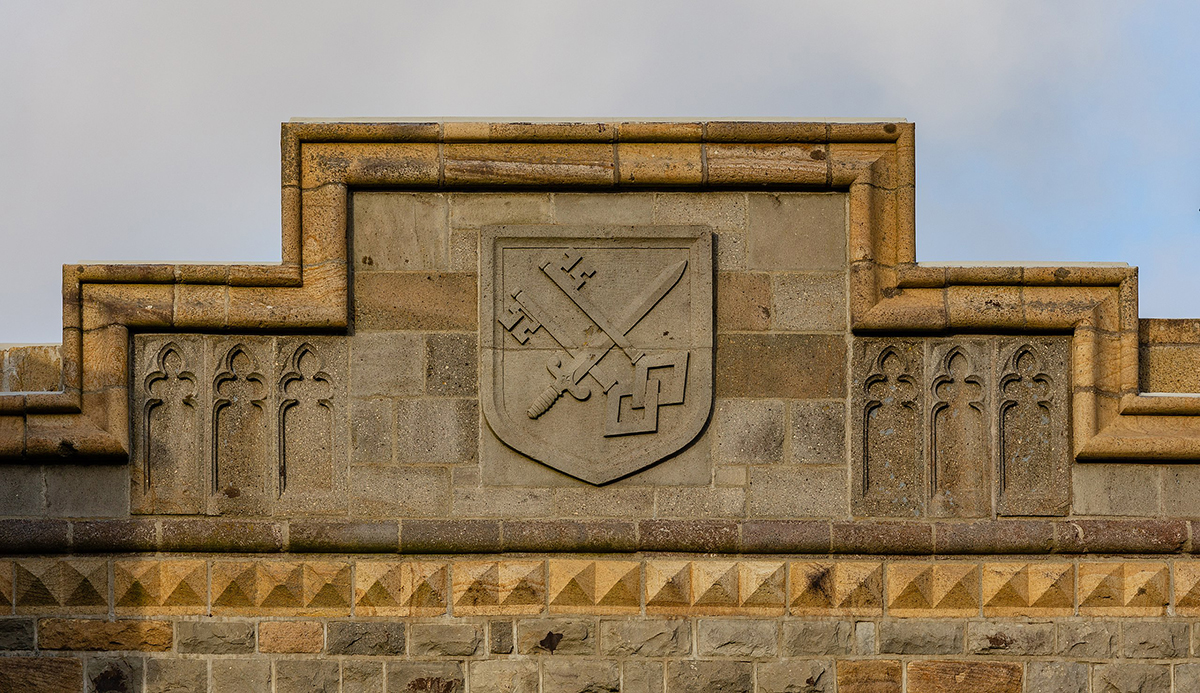
Ell struggled financially with his Summit Road project and the boards he established to help with the scheme often publicly refused to pay the debts Ell had incurred in the building of his scheme. The Sign of the Takahe was saved by the Depression work schemes, which enabled Ell to use government-funded unemployed workers, many of whom were skilled artisans. These men produced the fine detailed carving in both wood and stone that typify the Sign of the Takahe both inside and out. Elll died in 1934 but many of the men working for him continued to labour on the Sign of the Takahe until the outbreak of the Second World War. The Summit Road Trust was established after Ell's death to continue his work and the Takahe officially opened in 1949.

This building is significant as the most elaborate of the four rest houses constructed as part of Ell's Summit Road project. It is a wonderful blend of various Gothic architectural periods. An impressive collection of heraldry hung inside includes the coats of arms for many of the early Canterbury settler families, governors- general and prime ministers. The Sign of the Takahe is open to the public as a restaurant and is a popular place for sightseers.
Sign of the Takahe, Cashmere Christchurch. CC BY-SA 3.0 Image courtesy of commons.wikimedia.org | Greg O'Beirne | 30/09/2006 | Greg O'Beirne - Wikimedia Commons
Sign of the Takahe, Cashmere Christchurch. CC BY-NC 2.0 Image courtesy of www.flickr.com | Jon Sullivan | 07/06/2012 | Jon Sullivan
Sign of the Takahe, Cashmere Christchurch. Image courtesy of www.jontynz.com | Jonty Crane | 02/05/2018 | Jonty Crane
Sign of the Takahe, Cashmere Christchurch. Exterior detail CC BY-SA 4.0 Image courtesy of commons.wikimedia.org | Michal Klajban | 25/02/2020 | Michal Klajban - Wikimedia Commons
Sign of the Takahe, Cashmere, Christchurch. Exterior detail CC BY-SA 4.0 Image courtesy of commons.wikimedia.org | Michal Klajban | 25/02/2020 | Michal Klajban - Wikimedia Commons
Sign of the Takahe, Cashmere, Christchurch. Interior detail CC BY-NC-ND 2.0 Image courtesy of www.flickr.com | David Casteel | 05/10/2004 | David Casteel
Sign of the Takahe, Cashmere Christchurch. CC BY-SA 3.0 Image courtesy of commons.wikimedia.org | Greg O'Beirne | 30/09/2006 | Greg O'Beirne - Wikimedia Commons
Sign of the Takahe, Cashmere Christchurch. CC BY-NC 2.0 Image courtesy of www.flickr.com | Jon Sullivan | 07/06/2012 | Jon Sullivan
Sign of the Takahe, Cashmere Christchurch. Image courtesy of www.jontynz.com | Jonty Crane | 02/05/2018 | Jonty Crane
Sign of the Takahe, Cashmere Christchurch. Exterior detail CC BY-SA 4.0 Image courtesy of commons.wikimedia.org | Michal Klajban | 25/02/2020 | Michal Klajban - Wikimedia Commons
Sign of the Takahe, Cashmere, Christchurch. Exterior detail CC BY-SA 4.0 Image courtesy of commons.wikimedia.org | Michal Klajban | 25/02/2020 | Michal Klajban - Wikimedia Commons
Sign of the Takahe, Cashmere, Christchurch. Interior detail CC BY-NC-ND 2.0 Image courtesy of www.flickr.com | David Casteel | 05/10/2004 | David Casteel

List Entry Information

Overview

Status
Listed

List Entry Status
Historic Place Category 1

Access
Private/No Public Access

List Number
275

Date Entered
2nd April 1985

Date of Effect
2nd April 1985

City/District Council
Christchurch City

Region
Canterbury Region

Legal description

Lot 16 DP 6163 (RT CB374/164), Lot 63 DP 4030 (RT CB293/34), Canterbury Land District

Location Description

Corner of Dyers Pass Road and Hackthorne Road.

Detailed List Entry

Construction Professional

Name

Collins, John Goddard

Type

Architect

Biography

Collins practised as an architect with the firm of Collins and Harman from 1903 until 1955. He was competent in a variety of styles, from Gothic Revival, as seen in Canterbury College (c.1905-23), through to the modernist, post-war styles of architecture. The South British Insurance Company building (1951) is an example of the latter. Collins was particularly noted for his attention to detail, as cna be seen in the Sign of the Takahe (1918-46). He was the architect for Nazareth House (first block 1909; west wing 1929; chapel (1939) and much of Christchurch Hospital, including the Nurses' Home and Chapel. For this last building, Collins furnished plans and supervised construction free of charge.

Name

Ell, Henry George (Harry)

Type

Designer

Biography

Henry George Ell (1862-1934), more commonly known as Harry, is primarily remembered as the instigator of the Summit Road, which runs along the crest of the Port Hills in Christchurch. Born in Christchurch he left school and worked on a sheep station and then in a wool-scouring works. He served as a member of the Armed Constabulary at Parihaka in Taranaki from 1881-1884. He then returned to Christchurch and held a number of other jobs. From 1884 he became involved in local politics and in 1899 he was elected to Parliament as an independent liberal member. He was noted for his interest in welfare and education issues, and for his interest in the conservation of New Zealand's native flora and fauna. It was partly due to his energy and passion for conservation that led to the passing of the Scenery Preservation Bill in 1903. After he unsuccessfully stood for Parliament in 1919, 1922 and 1925, Ell devoted his time to the Summit Road scheme, which he had begun in 1906. His plan was to establish a series of reserves along the tops of the Port Hills, joined by a road and serviced by a series of rest-houses along the way. By the 1930s Ell had obtained a string of reserves along the Port Hills and large portions of the road had been completed. Three of his rest-houses, the Sign of the Bellbird, the Sign of the Packhorse and the Sign of Kiwi had been built by 1920: the last and most elaborate, Sign of the Takahe, was erected with the help of relief workers during the Depression. Ell did not live to see his last rest-house completed, but his 'Angels', as the relief workers were known, continued, completing the Sign of the Takahe in 1949. Ell constantly struggled to find funding for his Summit Hills project and developed a reputation as an intolerant oddity. However, his determination and hard work left Christchurch with a wonderful legacy, which is widely used by many today.

Construction Details

Start Year

1918

Finish Year

1946

Type

Original Construction

Reference

Completion Date

18th October 2001

Report Written By

Melanie Lovell-Smith

Information Sources

Ogilvie, 1991

Gordon Ogilvie, The Port Hills of Christchurch, Auckland, 1991

Lochhead, 1994

Kirsty McMillan, 'The Sign of the Takahe', in Ian Lochhead (ed), A Century of Architectural Drawing : Works from the Armson-Collins Collection, Christchurch, 1994, pp.7-9

Report Written By

This place was identified as significant under previous legislation with different information requirements. It remains significant under the current legislation. There is opportunity under our legislation and policies to add to this information. Further information about this place may be available from the Southern Regional Office of Heritage New Zealand Pouhere Taonga. Please note that entry on the New Zealand Heritage List/Rarangi Korero identifies only the heritage values of the property concerned, and should not be construed as advice on the state of the property, or as a comment of its soundness or safety, including in regard to earthquake risk, safety in the event of fire, or insanitary conditions.

Further Information

Current Usages

Uses: Trade

Specific Usage: Restaurant/cafe/tearoom

Former Usages

General Usage:: Trade

Specific Usage: Restaurant/cafe/tearoom

Themes

Web Links

Overview

Status

Listed

List Entry Status

Historic Place Category 1

Access

Private/No Public Access

List Number

275

Date Entered

2nd April 1985

Date of Effect

2nd April 1985

City/District Council

Christchurch City

Region

Canterbury Region

Legal description

Lot 16 DP 6163 (RT CB374/164), Lot 63 DP 4030 (RT CB293/34), Canterbury Land District

Location Description

Corner of Dyers Pass Road and Hackthorne Road.

Status

Listed

List Entry Status

Historic Place Category 1

Access

Private/No Public Access

List Number

275

Date Entered

2nd April 1985

Date of Effect

2nd April 1985

City/District Council

Christchurch City

Region

Canterbury Region

Legal description

Lot 16 DP 6163 (RT CB374/164), Lot 63 DP 4030 (RT CB293/34), Canterbury Land District

Location Description

Corner of Dyers Pass Road and Hackthorne Road.

Construction Information

Construction Professional

Name

Collins, John Goddard

Type

Architect

Biography

Collins practised as an architect with the firm of Collins and Harman from 1903 until 1955. He was competent in a variety of styles, from Gothic Revival, as seen in Canterbury College (c.1905-23), through to the modernist, post-war styles of architecture. The South British Insurance Company building (1951) is an example of the latter. Collins was particularly noted for his attention to detail, as cna be seen in the Sign of the Takahe (1918-46). He was the architect for Nazareth House (first block 1909; west wing 1929; chapel (1939) and much of Christchurch Hospital, including the Nurses' Home and Chapel. For this last building, Collins furnished plans and supervised construction free of charge.

Name

Ell, Henry George (Harry)

Type

Designer

Biography

Henry George Ell (1862-1934), more commonly known as Harry, is primarily remembered as the instigator of the Summit Road, which runs along the crest of the Port Hills in Christchurch. Born in Christchurch he left school and worked on a sheep station and then in a wool-scouring works. He served as a member of the Armed Constabulary at Parihaka in Taranaki from 1881-1884. He then returned to Christchurch and held a number of other jobs. From 1884 he became involved in local politics and in 1899 he was elected to Parliament as an independent liberal member. He was noted for his interest in welfare and education issues, and for his interest in the conservation of New Zealand's native flora and fauna. It was partly due to his energy and passion for conservation that led to the passing of the Scenery Preservation Bill in 1903. After he unsuccessfully stood for Parliament in 1919, 1922 and 1925, Ell devoted his time to the Summit Road scheme, which he had begun in 1906. His plan was to establish a series of reserves along the tops of the Port Hills, joined by a road and serviced by a series of rest-houses along the way. By the 1930s Ell had obtained a string of reserves along the Port Hills and large portions of the road had been completed. Three of his rest-houses, the Sign of the Bellbird, the Sign of the Packhorse and the Sign of Kiwi had been built by 1920: the last and most elaborate, Sign of the Takahe, was erected with the help of relief workers during the Depression. Ell did not live to see his last rest-house completed, but his 'Angels', as the relief workers were known, continued, completing the Sign of the Takahe in 1949. Ell constantly struggled to find funding for his Summit Hills project and developed a reputation as an intolerant oddity. However, his determination and hard work left Christchurch with a wonderful legacy, which is widely used by many today.

Construction Details

Start Year

1918

Finish Year

1946

Type

Original Construction

Construction Professional

Name

Collins, John Goddard

Type

Architect

Biography

Collins practised as an architect with the firm of Collins and Harman from 1903 until 1955. He was competent in a variety of styles, from Gothic Revival, as seen in Canterbury College (c.1905-23), through to the modernist, post-war styles of architecture. The South British Insurance Company building (1951) is an example of the latter. Collins was particularly noted for his attention to detail, as cna be seen in the Sign of the Takahe (1918-46). He was the architect for Nazareth House (first block 1909; west wing 1929; chapel (1939) and much of Christchurch Hospital, including the Nurses' Home and Chapel. For this last building, Collins furnished plans and supervised construction free of charge.

Name

Ell, Henry George (Harry)

Type

Designer

Biography

Henry George Ell (1862-1934), more commonly known as Harry, is primarily remembered as the instigator of the Summit Road, which runs along the crest of the Port Hills in Christchurch. Born in Christchurch he left school and worked on a sheep station and then in a wool-scouring works. He served as a member of the Armed Constabulary at Parihaka in Taranaki from 1881-1884. He then returned to Christchurch and held a number of other jobs. From 1884 he became involved in local politics and in 1899 he was elected to Parliament as an independent liberal member. He was noted for his interest in welfare and education issues, and for his interest in the conservation of New Zealand's native flora and fauna. It was partly due to his energy and passion for conservation that led to the passing of the Scenery Preservation Bill in 1903. After he unsuccessfully stood for Parliament in 1919, 1922 and 1925, Ell devoted his time to the Summit Road scheme, which he had begun in 1906. His plan was to establish a series of reserves along the tops of the Port Hills, joined by a road and serviced by a series of rest-houses along the way. By the 1930s Ell had obtained a string of reserves along the Port Hills and large portions of the road had been completed. Three of his rest-houses, the Sign of the Bellbird, the Sign of the Packhorse and the Sign of Kiwi had been built by 1920: the last and most elaborate, Sign of the Takahe, was erected with the help of relief workers during the Depression. Ell did not live to see his last rest-house completed, but his 'Angels', as the relief workers were known, continued, completing the Sign of the Takahe in 1949. Ell constantly struggled to find funding for his Summit Hills project and developed a reputation as an intolerant oddity. However, his determination and hard work left Christchurch with a wonderful legacy, which is widely used by many today.

Construction Details

Start Year

1918

Finish Year

1946

Type

Original Construction

Reference

Historical and Associated Iwi / Hapū / Whānau

Completion Date

18th October 2001

Report Written By

Melanie Lovell-Smith

Information Sources

Ogilvie, 1991

Gordon Ogilvie, The Port Hills of Christchurch, Auckland, 1991

Lochhead, 1994

Kirsty McMillan, 'The Sign of the Takahe', in Ian Lochhead (ed), A Century of Architectural Drawing : Works from the Armson-Collins Collection, Christchurch, 1994, pp.7-9

Other Information

This place was identified as significant under previous legislation with different information requirements. It remains significant under the current legislation. There is opportunity under our legislation and policies to add to this information. Further information about this place may be available from the Southern Regional Office of Heritage New Zealand Pouhere Taonga. Please note that entry on the New Zealand Heritage List/Rarangi Korero identifies only the heritage values of the property concerned, and should not be construed as advice on the state of the property, or as a comment of its soundness or safety, including in regard to earthquake risk, safety in the event of fire, or insanitary conditions.

Historical and Associated Iwi / Hapū / Whānau

Completion Date

18th October 2001

Report Written By

Melanie Lovell-Smith

Information Sources

Ogilvie, 1991

Gordon Ogilvie, The Port Hills of Christchurch, Auckland, 1991

Lochhead, 1994

Kirsty McMillan, 'The Sign of the Takahe', in Ian Lochhead (ed), A Century of Architectural Drawing : Works from the Armson-Collins Collection, Christchurch, 1994, pp.7-9

Other Information

This place was identified as significant under previous legislation with different information requirements. It remains significant under the current legislation. There is opportunity under our legislation and policies to add to this information. Further information about this place may be available from the Southern Regional Office of Heritage New Zealand Pouhere Taonga. Please note that entry on the New Zealand Heritage List/Rarangi Korero identifies only the heritage values of the property concerned, and should not be construed as advice on the state of the property, or as a comment of its soundness or safety, including in regard to earthquake risk, safety in the event of fire, or insanitary conditions.

Further Information

Current Usages

Uses: Trade

Specific Usage: Restaurant/cafe/tearoom

Former Usages

General Usage: Trade

Specific Usage: Restaurant/cafe/tearoom

Current Usages

Uses: Trade

Specific Usage: Restaurant/cafe/tearoom

Former Usages

General Usage: Trade

Specific Usage: Restaurant/cafe/tearoom

Location

Loading
Related listings
Sign of the Kiwi, Christchurch. CC BY-NC-ND 2.0 Image courtesy of www.flickr.com
Sign of the Kiwi
Sign of the Kiwi, Christchurch. CC BY-NC-ND 2.0 Image courtesy of www.flickr.com
Sign of the Kiwi
Stay up to date with Heritage this month