Quick links


Quick links
Quick links
Quick links
Quick links
Quick links
23 Cass Street, KAIAPOI
Private
Historic Place Category 1
List No. 285
List Entry Information
Status
Listed
List Entry Status
Historic Place Category 1
Access
Private/No Public Access
List Number
285
Date Entered
27th June 1985
Date of Effect
27th June 1985
City/District Council
Waimakariri District
Region
Canterbury Region
Extent of List Entry
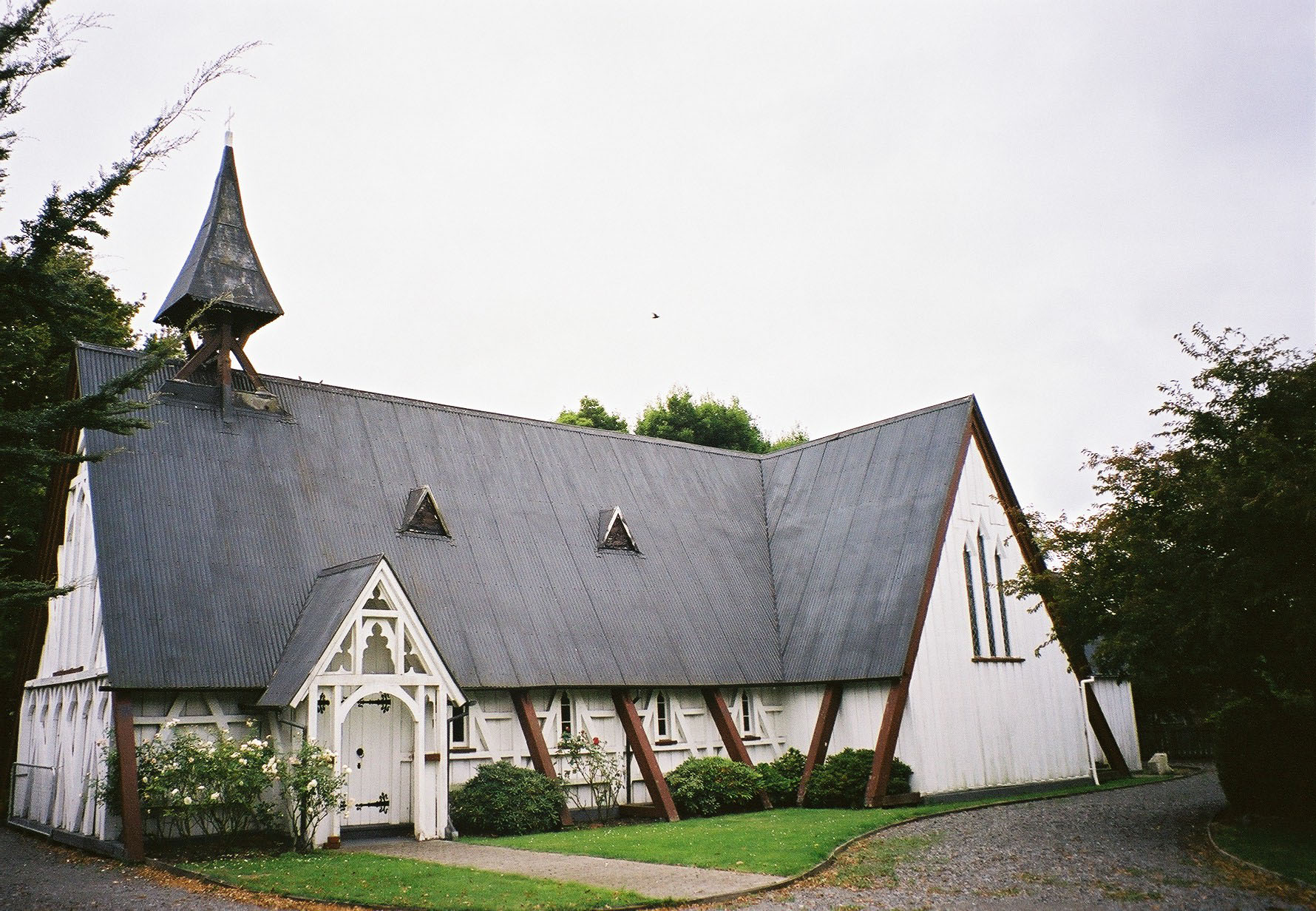
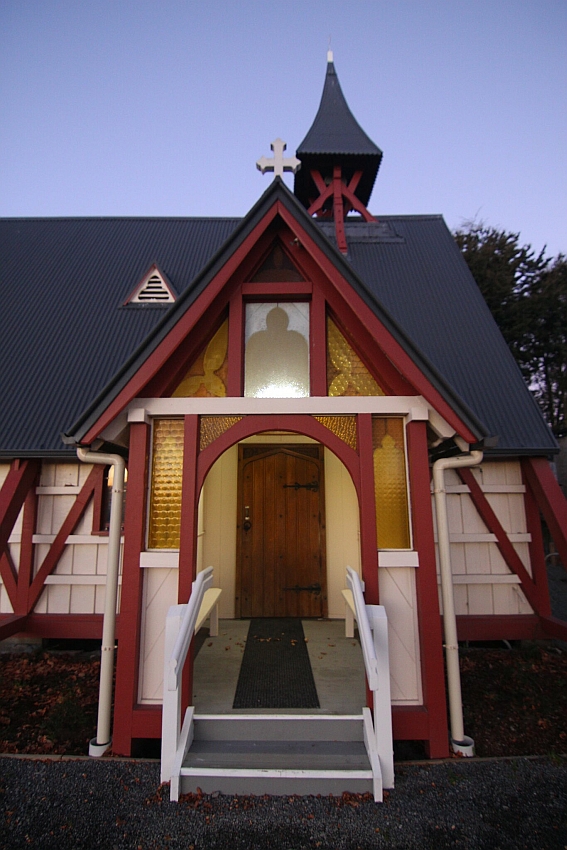
Extent includes the land described as Lot 3 DP 26905 (RT CB10A/317), Canterbury Land District and the building known as St Bartholomew's Church (Anglican) thereon. No other buildings on the land parcel are included in the extent.
Legal description
Lot 3 DP 26905 (RT CB10A/317), Canterbury Land District
Status
Listed
List Entry Status
Historic Place Category 1
Access
Private/No Public Access
List Number
285
Date Entered
27th June 1985
Date of Effect
27th June 1985
City/District Council
Waimakariri District
Region
Canterbury Region
Extent of List Entry
Extent includes the land described as Lot 3 DP 26905 (RT CB10A/317), Canterbury Land District and the building known as St Bartholomew's Church (Anglican) thereon. No other buildings on the land parcel are included in the extent.
Legal description
Lot 3 DP 26905 (RT CB10A/317), Canterbury Land District
Construction Professional
Name
Mountfort, Benjamin Woolfield
Type
Architect
Biography
Benjamin Woolfield Mountfort (1825-98) trained as an architect in England, in the office of Richard Cromwell Carpenter, a member of the Cambridge Camden Society (later the Ecclesiological Society). He arrived in Canterbury in 1850. Mountfort was New Zealand's pre-eminent Gothic Revival architect and, according to architectural historian Ian Lochhead, 'did most to shape the architectural character of nineteenth-century Christchurch.' The buildings he designed were almost exclusively in the Gothic Revival style. During his career he designed many churches and additions to churches; those still standing include the Trinity Congregational Church in Christchurch (1874), St Mary's Church in Parnell, Auckland and the Church of the Good Shepherd in Phillipstown, Christchurch (1884). In 1857 he became the first architect to the province of Canterbury. He designed the Canterbury Provincial Council Buildings in three stages from 1858 to 1865. The stone chamber of this building can be considered the greatest accomplishment of his career. He was involved in many important commissions from the 1870s, including the Canterbury Museum (1869-82) and the Clock-tower Block on the Canterbury College campus (1876-77). He was also involved in the construction of Christchurch's Cathedral and made several major modifications to the original design. Mountfort introduced a number of High Victorian elements to New Zealand architecture, such as the use of constructional polychromy, probably first used in New Zealand in the stone tower of the Canterbury Provincial Government Buildings (1859). Overall, his oeuvre reveals a consistent and virtually unerring application of Puginian principles including a commitment to the Gothic style, honest use of materials and picturesque utility. The result was the construction of inventive and impressive buildings of outstanding quality. He died in Christchurch in 1898. A belfry at the Church of the Good Shepherd in Phillipstown, the church he attended for the last ten years of his life, was erected in his honour.
Name
Jones, Henry (c.1825-1890)
Type
Builder
Biography
No biography is currently available for this construction professional
Construction Details
Start Year
1855
Type
Original Construction
Description
Completed by Christmas Day
Start Year
1859
startYearCirca
Finish Year
1860
Type
Relocation
Description
To present site. Reopened 1860 with the addition of a bell tower
Start Year
1862
Type
Addition
Description
Addition of transepts and chancel
Start Year
1907
Type
Modification
Description
Reroofed with Marseilles tiles
Start Year
1979
Type
Modification
Description
Roof tiles removed and replaced with corrugated iron
Start Year
1924
Type
Modification
Description
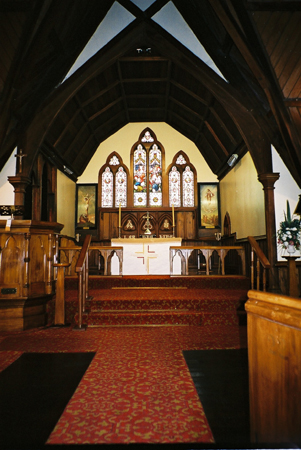
Redecoration of chancel and sanctuary, possibly with help of Frederick Gurnsey. Not yet confirmed
Start Year
1854
Type
Designed
Construction Materials
Local totara and matai.
Notable Features
Two of the stained glass windows are noted by art historian Fiona Ciaran in her catalogue raisonne of Canterbury stained glass. The window in the eastern sanctuary, which depicts the four evangelists, was installed around 1884 and is attributed to Lavers, Barraud and Westlake of London. The second, St Bartholomew the Apostle, was installed in the nave in 1977-1978 and was designed by Graham Stewart of Christchurch.
Construction Professional
Name
Mountfort, Benjamin Woolfield
Type
Architect
Biography
Benjamin Woolfield Mountfort (1825-98) trained as an architect in England, in the office of Richard Cromwell Carpenter, a member of the Cambridge Camden Society (later the Ecclesiological Society). He arrived in Canterbury in 1850. Mountfort was New Zealand's pre-eminent Gothic Revival architect and, according to architectural historian Ian Lochhead, 'did most to shape the architectural character of nineteenth-century Christchurch.' The buildings he designed were almost exclusively in the Gothic Revival style. During his career he designed many churches and additions to churches; those still standing include the Trinity Congregational Church in Christchurch (1874), St Mary's Church in Parnell, Auckland and the Church of the Good Shepherd in Phillipstown, Christchurch (1884). In 1857 he became the first architect to the province of Canterbury. He designed the Canterbury Provincial Council Buildings in three stages from 1858 to 1865. The stone chamber of this building can be considered the greatest accomplishment of his career. He was involved in many important commissions from the 1870s, including the Canterbury Museum (1869-82) and the Clock-tower Block on the Canterbury College campus (1876-77). He was also involved in the construction of Christchurch's Cathedral and made several major modifications to the original design. Mountfort introduced a number of High Victorian elements to New Zealand architecture, such as the use of constructional polychromy, probably first used in New Zealand in the stone tower of the Canterbury Provincial Government Buildings (1859). Overall, his oeuvre reveals a consistent and virtually unerring application of Puginian principles including a commitment to the Gothic style, honest use of materials and picturesque utility. The result was the construction of inventive and impressive buildings of outstanding quality. He died in Christchurch in 1898. A belfry at the Church of the Good Shepherd in Phillipstown, the church he attended for the last ten years of his life, was erected in his honour.
Name
Jones, Henry (c.1825-1890)
Type
Builder
Biography
No biography is currently available for this construction professional
Construction Details
Start Year
1855
Type
Original Construction
Description
Completed by Christmas Day
Start Year
1859
startYearCirca
Finish Year
1860
Type
Relocation
Description
To present site. Reopened 1860 with the addition of a bell tower
Start Year
1862
Type
Addition
Description
Addition of transepts and chancel
Start Year
1907
Type
Modification
Description
Reroofed with Marseilles tiles
Start Year
1979
Type
Modification
Description
Roof tiles removed and replaced with corrugated iron
Start Year
1924
Type
Modification
Description
Redecoration of chancel and sanctuary, possibly with help of Frederick Gurnsey. Not yet confirmed
Start Year
1854
Type
Designed
Construction Materials
Local totara and matai.
Notable Features
Two of the stained glass windows are noted by art historian Fiona Ciaran in her catalogue raisonne of Canterbury stained glass. The window in the eastern sanctuary, which depicts the four evangelists, was installed around 1884 and is attributed to Lavers, Barraud and Westlake of London. The second, St Bartholomew the Apostle, was installed in the nave in 1977-1978 and was designed by Graham Stewart of Christchurch.
Historical and Associated Iwi / Hapū / Whānau
Completion Date
28th March 2002
Report Written By
Melanie Lovell-Smith
Information Sources
Bulletin of New Zealand Art History
Bulletin of New Zealand Art History
Ciaran, 1998
Fiona Ciaran, Stained Glass Windows of Canterbury, New Zealand. A Catalogue Raisonne, Dunedin, 1998
Dictionary of New Zealand Biography
Dictionary of New Zealand Biography
Evans, 1953
John Heber Evans, St Bartholomew's Church: a century of work and witness in Kaiapoi and district: a history of the church, 1853-1953, [Christchurch], 1953.
Wood, 1993
Pauline Wood, Kaiapoi: A Search for Identity, Rangiora, 1993
Hodgson, n.d.
C.W.D. Hodgson, The Parish of Kaiapoi 1853-1982, [Christchurch], n.d.
Lochhead, 1999
Ian Lochhead, A Dream of Spires: Benjamin Mountfort and the Gothic Revival, Christchurch, 1999
Shaw, 1997 (2003)
Peter Shaw, A History of New Zealand Architecture, Auckland, 1997
Other Information
This place was identified as significant under previous legislation with different information requirements. It remains significant under the current legislation. There is opportunity under our legislation and policies to add to this information. Further information about this place may be available from the Southern Regional Office of Heritage New Zealand Pouhere Taonga. Please note that entry on the New Zealand Heritage List/Rarangi Korero identifies only the heritage values of the property concerned, and should not be construed as advice on the state of the property, or as a comment of its soundness or safety, including in regard to earthquake risk, safety in the event of fire, or insanitary conditions.
Historical and Associated Iwi / Hapū / Whānau
Completion Date
28th March 2002
Report Written By
Melanie Lovell-Smith
Information Sources
Bulletin of New Zealand Art History
Bulletin of New Zealand Art History
Ciaran, 1998
Fiona Ciaran, Stained Glass Windows of Canterbury, New Zealand. A Catalogue Raisonne, Dunedin, 1998
Dictionary of New Zealand Biography
Dictionary of New Zealand Biography
Evans, 1953
John Heber Evans, St Bartholomew's Church: a century of work and witness in Kaiapoi and district: a history of the church, 1853-1953, [Christchurch], 1953.
Wood, 1993
Pauline Wood, Kaiapoi: A Search for Identity, Rangiora, 1993
Hodgson, n.d.
C.W.D. Hodgson, The Parish of Kaiapoi 1853-1982, [Christchurch], n.d.
Lochhead, 1999
Ian Lochhead, A Dream of Spires: Benjamin Mountfort and the Gothic Revival, Christchurch, 1999
Shaw, 1997 (2003)
Peter Shaw, A History of New Zealand Architecture, Auckland, 1997
Other Information
This place was identified as significant under previous legislation with different information requirements. It remains significant under the current legislation. There is opportunity under our legislation and policies to add to this information. Further information about this place may be available from the Southern Regional Office of Heritage New Zealand Pouhere Taonga. Please note that entry on the New Zealand Heritage List/Rarangi Korero identifies only the heritage values of the property concerned, and should not be construed as advice on the state of the property, or as a comment of its soundness or safety, including in regard to earthquake risk, safety in the event of fire, or insanitary conditions.
Current Usages
Uses: Religion
Specific Usage: Church
Former Usages
General Usage: Religion
Specific Usage: Church
Current Usages
Uses: Religion
Specific Usage: Church
Former Usages
General Usage: Religion
Specific Usage: Church
Location
Get the latest heritage news, features and events delivered
straight to your inbox.
