

Robert Thompson Batley arrived in New Zealand aged 14, and after some years working on sheep stations in the Hawke’s Bay area and managing the nearby Erewhon Station at inland Patea in the Rangitkei district, he settled in Moawhango in 1882 with his wife. Batley supplemented his extensive sheep running and wool exporting interests with the construction of a store, school, post office, gaol and accommodation rooms, among other buildings in the township. A photo from c.1900-1910 shows part of the extensive complex of buildings on Batley’s estate, including a large family homestead which had grown from the original 1880s cottage. He assisted the local Ngati Whiti community with the establishment of a flourmill at Tikirere, and with their representation at the Native Land Court case to establish their ownership of land in the district. For this he was adopted by them as ‘Papa Patere.’ His influence in the settlement also earned him the name ‘King of Moawhango,’ and in 1904 he was described as ‘the accepted father of the whole district’.
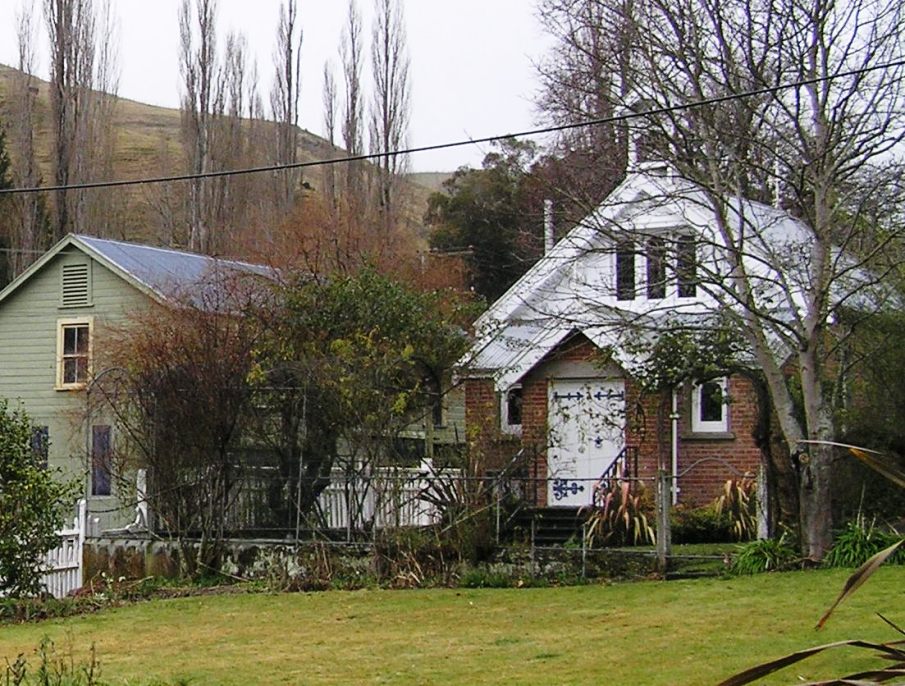
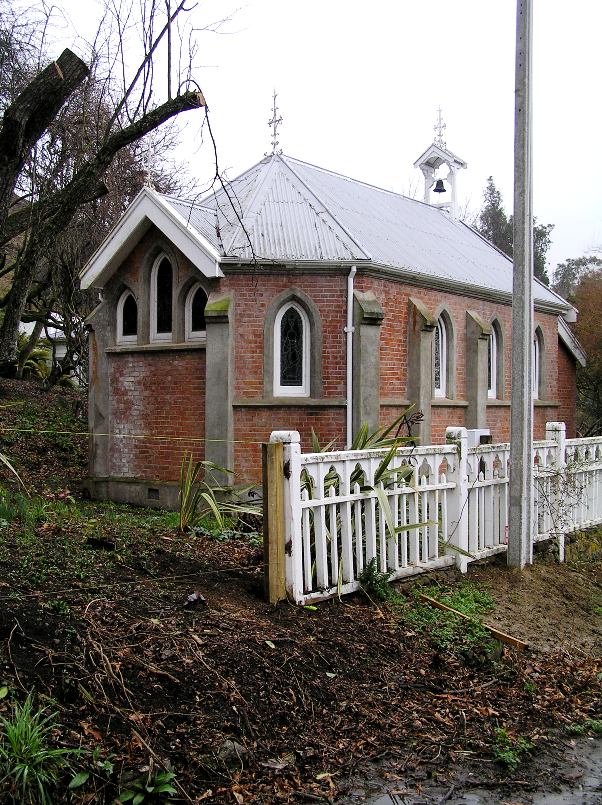
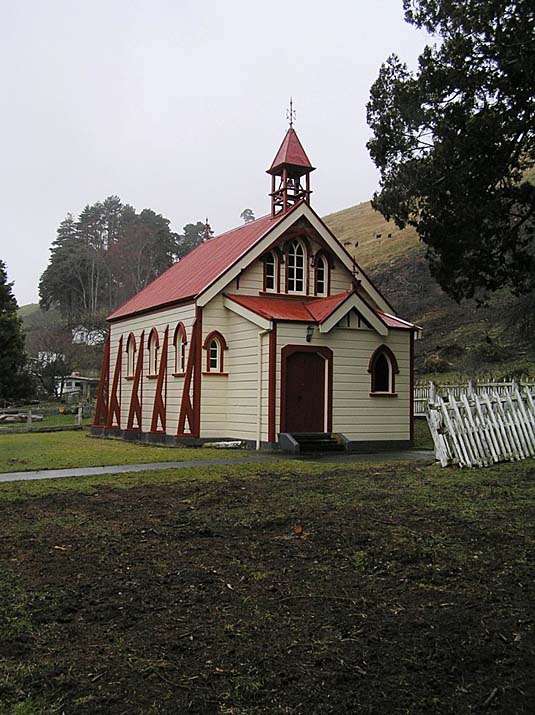
Robert and Emily had ten children, but were struck by tragedy in 1899 when their eldest, Nellie, drowned at Port Chalmers. In her memory, the Batleys constructed a small chapel in the grounds of their homestead. Alfred Atkins designed the Gothic Revival style building, and Russell & Bignell of Wanganui were the builders of the red brick and concrete structure, which was described as ‘the only church building of this material in the diocese.’ The interior was plastered to complement the matai flooring and chamfered rimu roof framing. A carved reredos, made by a Mr Dewson, is a feature of special note.
Within a few years of the chapel’s opening, one of the Batley’s sons also tragically drowned. Robert Thompson Batley died in 1917 and Emily in 1927, and both were buried in the family plot to the rear of the chapel. Today the chapel contains memorial plaques to many members of the Batley family, and the chapel is the venue for family services and is also used by the local Anglican community.
The Batley Memorial Chapel is of historic, social and architectural heritage significance, for its direct link with pioneer Robert Thompson Batley and his family, who had a lasting influence on the district. The Chapel is part of a collection of estate buildings which duplicate the English gentry’s provision of religious, educational and social buildings on their estate for their families and retainers.
List Entry Information
Status
Listed
List Entry Status
Historic Place Category 2
Access
Private/No Public Access
List Number
3308
Date Entered
13th December 1990
Date of Effect
13th December 1990
City/District Council
Rangitīkei District
Region
Horizons (Manawatū-Whanganui) Region
Extent of List Entry
Extent of registration is part of the land described as Lot 1 DP 90833 (RT WN57D/911), Wellington Land District, and the building known as Batley Memorial Chapel thereon, and its fittings and fixtures, and a reasonable curtilage including the associated cemetery.
Legal description
Lot 1 DP 90833 (RT WN57D/911), Wellington Land District
Status
Listed
List Entry Status
Historic Place Category 2
Access
Private/No Public Access
List Number
3308
Date Entered
13th December 1990
Date of Effect
13th December 1990
City/District Council
Rangitīkei District
Region
Horizons (Manawatū-Whanganui) Region
Extent of List Entry
Extent of registration is part of the land described as Lot 1 DP 90833 (RT WN57D/911), Wellington Land District, and the building known as Batley Memorial Chapel thereon, and its fittings and fixtures, and a reasonable curtilage including the associated cemetery.
Legal description
Lot 1 DP 90833 (RT WN57D/911), Wellington Land District
Why is this place significant?
Historic Significance
Historical Significance or Value Batley Memorial Chapel commemorates thirteen deceased members of the Batley family and has been in that family for four generations, covering a period of 88 years. The chapel is part of a collection of estate buildings which duplicate the English gentry's traditional provision of religious, educational and social buildings on their estates for their families and retainers. A long established and well known farming family, the Batleys, through marriage, have also had a close association with the Chambers family of Hawkes Bay and with one of New Zealand's pre-eminent architects, William Gummer.
Physical Significance
ARCHITECTURAL QUALITY: Part of a complex of buildings on the Batley Estate, including a gaol, store, schoolhouse and homestead, the Batley Memorial Chapel is a fine example of a small ecclesiastical building in a simple Gothic Revival style. With its apsidal chancel and gabled porch, the chapel is as pleasing, proportioned design. On its completion in 1902, it was said to be the only church building constructed of brick and concrete in the Diocese of Wellington. TOWNSCAPE/LANDMARK VALUE: Unfortunately the development of the public road through the Batley Estate at Moawhango has resulted in the group of buildings being bisected and hence the chapel appears somewhat isolated.
Why is this place significant?
Historic Significance
Historical Significance or Value Batley Memorial Chapel commemorates thirteen deceased members of the Batley family and has been in that family for four generations, covering a period of 88 years. The chapel is part of a collection of estate buildings which duplicate the English gentry's traditional provision of religious, educational and social buildings on their estates for their families and retainers. A long established and well known farming family, the Batleys, through marriage, have also had a close association with the Chambers family of Hawkes Bay and with one of New Zealand's pre-eminent architects, William Gummer.
Physical Significance
ARCHITECTURAL QUALITY: Part of a complex of buildings on the Batley Estate, including a gaol, store, schoolhouse and homestead, the Batley Memorial Chapel is a fine example of a small ecclesiastical building in a simple Gothic Revival style. With its apsidal chancel and gabled porch, the chapel is as pleasing, proportioned design. On its completion in 1902, it was said to be the only church building constructed of brick and concrete in the Diocese of Wellington. TOWNSCAPE/LANDMARK VALUE: Unfortunately the development of the public road through the Batley Estate at Moawhango has resulted in the group of buildings being bisected and hence the chapel appears somewhat isolated.
Construction Professional
Name
Atkins, Alfred A.
Type
Architect
Biography
Atkins (1850-1919) was born in Birmingham, England, on 12 June 1850. He studied for seven years at the School of Science and Art in Birmingham under John Millward, a consulting engineer. In 1875 he immigrated to New Zealand, his first job being the Waitara to Wanganui railway line. This was followed in 1879 by his appointment as Engineer to what became the Waitotara County Council. In addition to being an Associate Member of the Institute of Civil Engineers to which he was elected in 1886, he was also a Fellow of the Royal Institute of British Architects from 1888 and a member of the Royal Sanitary Institute from 1891. During the 1890s Atkins was in partnership for a time with Frederick de Jersey Clere at Wanganui and Wellington. Some of the more notable buildings completed in this period were the Wanganui Technical School in 1892, Wanganui College with Clere in 1894, Wanganui Museum in 1894 and the Wanganui Hospital in 1897. In 1903 he designed the Ward Observatory in Wanganui. Atkins moved to Wellington in 1908 and set up practice with Roger Bacon. Over the next decade the firm designed many banks and public buildings, their work including several buildings at Wanganui Collegiate School (1909-1910), Cook Hospital, Gisborne (1911), Wairoa Hospital (1912) and much domestic work in Wellington. Atkins died in 1919. The firm known as Atkins and Bacon continues today as Gooch Mitchell Macdiarmid.
Construction Details
Start Year
1902
Type
Original Construction
Construction Materials
Concrete foundations; walls of locally made bricks (320mm thick). Timber framed roof clad with galvanised corrugated iron.
Notable Features
Carved reredos Cast iron finials
Construction Professional
Name
Atkins, Alfred A.
Type
Architect
Biography
Atkins (1850-1919) was born in Birmingham, England, on 12 June 1850. He studied for seven years at the School of Science and Art in Birmingham under John Millward, a consulting engineer. In 1875 he immigrated to New Zealand, his first job being the Waitara to Wanganui railway line. This was followed in 1879 by his appointment as Engineer to what became the Waitotara County Council. In addition to being an Associate Member of the Institute of Civil Engineers to which he was elected in 1886, he was also a Fellow of the Royal Institute of British Architects from 1888 and a member of the Royal Sanitary Institute from 1891. During the 1890s Atkins was in partnership for a time with Frederick de Jersey Clere at Wanganui and Wellington. Some of the more notable buildings completed in this period were the Wanganui Technical School in 1892, Wanganui College with Clere in 1894, Wanganui Museum in 1894 and the Wanganui Hospital in 1897. In 1903 he designed the Ward Observatory in Wanganui. Atkins moved to Wellington in 1908 and set up practice with Roger Bacon. Over the next decade the firm designed many banks and public buildings, their work including several buildings at Wanganui Collegiate School (1909-1910), Cook Hospital, Gisborne (1911), Wairoa Hospital (1912) and much domestic work in Wellington. Atkins died in 1919. The firm known as Atkins and Bacon continues today as Gooch Mitchell Macdiarmid.
Construction Details
Start Year
1902
Type
Original Construction
Construction Materials
Concrete foundations; walls of locally made bricks (320mm thick). Timber framed roof clad with galvanised corrugated iron.
Notable Features
Carved reredos Cast iron finials
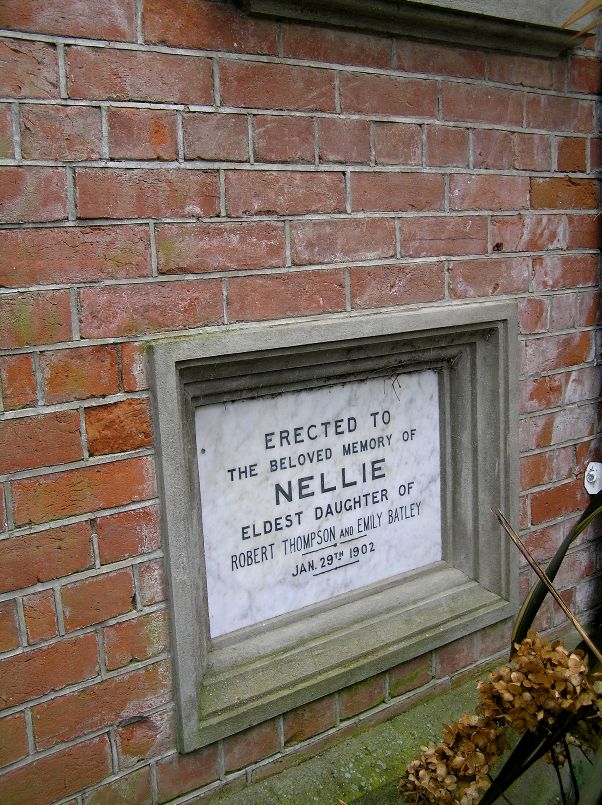
ARCHITECTURAL DESCRIPTION26 Jan 2009 This small chapel is basically rectangular in plan with an apsidal chancel at one end balancing an entry porch at the other. Both the chancel and the porch have a centrally placed gable. The chancel is semi-hectagonal and has cast iron finials at the gable end and at the roof apex. The porch is a lean-to with a gabled entry and there is a marble tablet dedicating the chapel. It reads 'Erected to the beloved memory of Nellie, eldest daughter of Robert Thompson and Emily Batley, January 29th, 1902'. The chapel now has a total of 13 such plaques commemorating members of the family. The roof of the nave is pitched and has a belfry at the porch end. Above the lean-to the gable end is clad with vertical boards and battens while elsewhere walls are brick and have concrete buttresses and lancet windows between. The interior has plastered walls and exposed and chamfered rimu trusses. The height of the chapel is 6 metres to the ridge while in plan it measures 12 x 6 metres. MODIFICATIONS: No major modifications.
ARCHITECTURAL DESCRIPTION26 Jan 2009 This small chapel is basically rectangular in plan with an apsidal chancel at one end balancing an entry porch at the other. Both the chancel and the porch have a centrally placed gable. The chancel is semi-hectagonal and has cast iron finials at the gable end and at the roof apex. The porch is a lean-to with a gabled entry and there is a marble tablet dedicating the chapel. It reads 'Erected to the beloved memory of Nellie, eldest daughter of Robert Thompson and Emily Batley, January 29th, 1902'. The chapel now has a total of 13 such plaques commemorating members of the family. The roof of the nave is pitched and has a belfry at the porch end. Above the lean-to the gable end is clad with vertical boards and battens while elsewhere walls are brick and have concrete buttresses and lancet windows between. The interior has plastered walls and exposed and chamfered rimu trusses. The height of the chapel is 6 metres to the ridge while in plan it measures 12 x 6 metres. MODIFICATIONS: No major modifications.
Historical and Associated Iwi / Hapū / Whānau
Completion Date
22nd June 2012
Report Written By
Blyss Wagstaff
Information Sources
Cyclopedia of New Zealand, 1897
Cyclopedia Company, Industrial, descriptive, historical, biographical facts, figures, illustrations, Wellington, N.Z, 1897-1908, Vol.1, Wellington, 1897
North and South Magazine
North and South Magazine
Cresswell, 1956
Douglas D R Cresswell. Early New Zealand Families Second Series, Whitcombe and Tombs Ltd, 1956
Journal of the Whanganui Historical Society Inc.
Journal of the Whanganui Historical Society Inc.
Church Chronicle
The Church Chronicle
Other Information
A fully referenced Upgrade Report is available from the Central Region office of NZHPT. This historic place was registered under the Historic Places Act 1980. This report includes the text from the original Building Classification Committee report considered by the NZHPT Board at the time of registration. Please note that entry on the New Zealand Heritage List/Rarangi Korero identifies only the heritage values of the property concerned, and should not be construed as advice on the state of the property, or as a comment of its soundness or safety, including in regard to earthquake risk, safety in the event of fire, or insanitary conditions.
Historical and Associated Iwi / Hapū / Whānau
Completion Date
22nd June 2012
Report Written By
Blyss Wagstaff
Information Sources
Cyclopedia of New Zealand, 1897
Cyclopedia Company, Industrial, descriptive, historical, biographical facts, figures, illustrations, Wellington, N.Z, 1897-1908, Vol.1, Wellington, 1897
North and South Magazine
North and South Magazine
Cresswell, 1956
Douglas D R Cresswell. Early New Zealand Families Second Series, Whitcombe and Tombs Ltd, 1956
Journal of the Whanganui Historical Society Inc.
Journal of the Whanganui Historical Society Inc.
Church Chronicle
The Church Chronicle
Other Information
A fully referenced Upgrade Report is available from the Central Region office of NZHPT. This historic place was registered under the Historic Places Act 1980. This report includes the text from the original Building Classification Committee report considered by the NZHPT Board at the time of registration. Please note that entry on the New Zealand Heritage List/Rarangi Korero identifies only the heritage values of the property concerned, and should not be construed as advice on the state of the property, or as a comment of its soundness or safety, including in regard to earthquake risk, safety in the event of fire, or insanitary conditions.
Current Usages
Uses: Commemoration
Specific Usage: Memorial - Particular person or group
Uses: Commemoration
Specific Usage: Memorial building (hall, museum, church, school, library etc)
Uses: Funerary Sites
Specific Usage: Cemetery/Graveyard/Burial Ground
Uses: Religion
Specific Usage: Chapel
Former Usages
General Usage: Commemoration
Specific Usage: Memorial - Particular person or group
General Usage: Commemoration
Specific Usage: Memorial building (hall, museum, church, school, library etc)
General Usage: Funerary Sites
Specific Usage: Cemetery/Graveyard/Burial Ground
Themes
Of Significance to Maori
Current Usages
Uses: Commemoration
Specific Usage: Memorial - Particular person or group
Uses: Commemoration
Specific Usage: Memorial building (hall, museum, church, school, library etc)
Uses: Funerary Sites
Specific Usage: Cemetery/Graveyard/Burial Ground
Uses: Religion
Specific Usage: Chapel
Former Usages
General Usage: Commemoration
Specific Usage: Memorial - Particular person or group
General Usage: Commemoration
Specific Usage: Memorial building (hall, museum, church, school, library etc)
General Usage: Funerary Sites
Specific Usage: Cemetery/Graveyard/Burial Ground
Themes
Of Significance to Maori
Location
Sign up to hear more
Get the latest heritage news, features and events delivered
straight to your inbox.
