Quick links


Quick links
Quick links
Quick links
Quick links
Quick links
Ngaio Marsh House (Former)
37 Valley Road, CHRISTCHURCH
Public
Historic Place Category 1
List No. 3673
Quick links:
List GalleryLocationDetails
37 Valley Road, CHRISTCHURCH
Public
Historic Place Category 1
List No. 3673
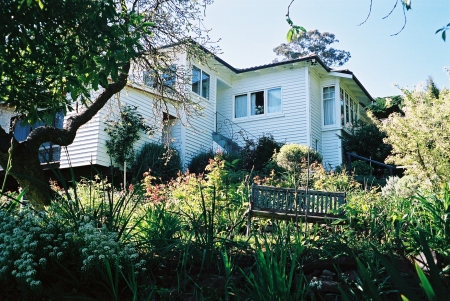
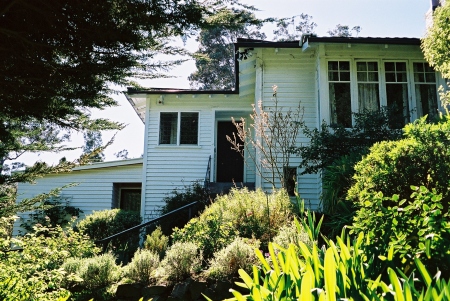


List Entry Information
Status
Listed
List Entry Status
Historic Place Category 1
Access
Able to Visit
List Number
3673
Date Entered
27th June 1985
Date of Effect
27th June 1985
City/District Council
Christchurch City
Region
Canterbury Region
Legal description
Lot 2 DP 19885
Status
Listed
List Entry Status
Historic Place Category 1
Access
Able to Visit
List Number
3673
Date Entered
27th June 1985
Date of Effect
27th June 1985
City/District Council
Christchurch City
Region
Canterbury Region
Legal description
Lot 2 DP 19885
Construction Professional
Name
Seager, Samuel Hurst
Type
Architect
Biography
Seager (1855-1933) studied at Canterbury College between 1880-82. He trained in Christchurch in the offices of Benjamin Woolfield Mountfort (1825-1898) and Alfred William Simpson before completing his qualifications in London in 1884. In 1885, shortly after his return to Christchurch, he won a competition for the design of the new Municipal Chambers, and this launched his career. Seager achieved renown for his domestic architecture. He was one of the earliest New Zealand architects to move away from historical styles and seek design with a New Zealand character. The Sign of the Kiwi, Christchurch (1917) illustrates this aspect of his work. He is also known for his larger Arts and Crafts style houses such as Daresbury, Christchurch (1899). Between 1893 and 1903 Seager taught architecture and design at the Canterbury University College School of Art. He was a pioneer in town planning, having a particular interest in the "garden city" concept. Some of these ideas were expressed in a group of houses designed as a unified and landscaped precinct on Sumner Spur (1902-14). He became an authority on the lighting of art galleries. After World War I he was appointed by the Imperial War Graves Commission to design war memorials in Gallipoli, Belgium and France. In New Zealand he designed the Massey Memorial, Point Halswell, Wellington (1925).
Construction Details
Start Year
1906
Finish Year
1907
Type
Original Construction
Start Year
1948
Type
Addition
Description
Additions by Helmore and Cotterill
Start Year
1956
startYearCirca
Finish Year
1959
Type
Addition
Description
Additions to front bedroom which removed the semi-circular verandah
Start Year
1980
Type
Addition
Description
Additions - ground floor studio. Architect - Don Donnithorne
Construction Professional
Name
Seager, Samuel Hurst
Type
Architect
Biography
Seager (1855-1933) studied at Canterbury College between 1880-82. He trained in Christchurch in the offices of Benjamin Woolfield Mountfort (1825-1898) and Alfred William Simpson before completing his qualifications in London in 1884. In 1885, shortly after his return to Christchurch, he won a competition for the design of the new Municipal Chambers, and this launched his career. Seager achieved renown for his domestic architecture. He was one of the earliest New Zealand architects to move away from historical styles and seek design with a New Zealand character. The Sign of the Kiwi, Christchurch (1917) illustrates this aspect of his work. He is also known for his larger Arts and Crafts style houses such as Daresbury, Christchurch (1899). Between 1893 and 1903 Seager taught architecture and design at the Canterbury University College School of Art. He was a pioneer in town planning, having a particular interest in the "garden city" concept. Some of these ideas were expressed in a group of houses designed as a unified and landscaped precinct on Sumner Spur (1902-14). He became an authority on the lighting of art galleries. After World War I he was appointed by the Imperial War Graves Commission to design war memorials in Gallipoli, Belgium and France. In New Zealand he designed the Massey Memorial, Point Halswell, Wellington (1925).
Construction Details
Start Year
1906
Finish Year
1907
Type
Original Construction
Start Year
1948
Type
Addition
Description
Additions by Helmore and Cotterill
Start Year
1956
startYearCirca
Finish Year
1959
Type
Addition
Description
Additions to front bedroom which removed the semi-circular verandah
Start Year
1980
Type
Addition
Description
Additions - ground floor studio. Architect - Don Donnithorne
Historical and Associated Iwi / Hapū / Whānau
Completion Date
30th August 2001
Report Written By
Melanie Lovell-Smith
Information Sources
Lewis, 1991
Margaret Lewis, 'Ngaio Marsh, A Life', Wellington, 1991
MacDonald, 1991
Charlotte MacDonald, Merimeri Penfold, & Bridget Williams (eds), 'The Book of New Zealand Women - Ko kui ma te Kaupapa', Wellington, 1991
Marsh, 1966
Ngaio March, 'Black Beech and Honeydew', London, 1966
Conservation Plan
Conservation Plan
Other Information
This place was identified as significant under previous legislation with different information requirements. It remains significant under the current legislation. There is opportunity under our legislation and policies to add to this information. Further information about this place may be available from the Southern Regional Office of Heritage New Zealand Pouhere Taonga. Please note that entry on the New Zealand Heritage List/Rarangi Korero identifies only the heritage values of the property concerned, and should not be construed as advice on the state of the property, or as a comment of its soundness or safety, including in regard to earthquake risk, safety in the event of fire, or insanitary conditions.
Historical and Associated Iwi / Hapū / Whānau
Completion Date
30th August 2001
Report Written By
Melanie Lovell-Smith
Information Sources
Lewis, 1991
Margaret Lewis, 'Ngaio Marsh, A Life', Wellington, 1991
MacDonald, 1991
Charlotte MacDonald, Merimeri Penfold, & Bridget Williams (eds), 'The Book of New Zealand Women - Ko kui ma te Kaupapa', Wellington, 1991
Marsh, 1966
Ngaio March, 'Black Beech and Honeydew', London, 1966
Conservation Plan
Conservation Plan
Other Information
This place was identified as significant under previous legislation with different information requirements. It remains significant under the current legislation. There is opportunity under our legislation and policies to add to this information. Further information about this place may be available from the Southern Regional Office of Heritage New Zealand Pouhere Taonga. Please note that entry on the New Zealand Heritage List/Rarangi Korero identifies only the heritage values of the property concerned, and should not be construed as advice on the state of the property, or as a comment of its soundness or safety, including in regard to earthquake risk, safety in the event of fire, or insanitary conditions.
Current Usages
Uses: Civic Facilities
Specific Usage: Historic Property
Former Usages
General Usage: Accommodation
Specific Usage: Artist's Residence
General Usage: Accommodation
Specific Usage: House
Current Usages
Uses: Civic Facilities
Specific Usage: Historic Property
Former Usages
General Usage: Accommodation
Specific Usage: Artist's Residence
General Usage: Accommodation
Specific Usage: House
Location
Get the latest heritage news, features and events delivered
straight to your inbox.
