DonateMembershipVisit Heritage
  • Tūrangawaewae
    Places
  • Tira Māori
    Māori Heritage
  • Poutairangahia
    Archaeology
  • Rauemi
    Resources
  • Mō Tātou
    About Us
  • New Zealand Heritage List
  • Nominate and submit
  • Explore the List
  • National Historic Landmarks
  • Plaques
  • Rainbow List Project
  • Lost heritage
  • Visit Heritage
  • Our properties
  • Turnbull House Project
  • Collections
  • Shop
  • Tohu Whenua
  • Tira Māori
  • Conserving Māori heritage
  • Marae built heritage
  • Māori heritage on the List
  • Hinemihi—Te Hokinga Mai
  • What is archaeology?
  • Is there a site on my property?
  • What are my legal requirements?
  • Affecting an archaeological site
  • Declaring an archaeological site
  • Archaeology FAQs
  • Archaeology Digital Library
  • Archaeology guidelines and templates
  • Resources
  • Funding
  • Publications
  • Sustainable management guides
  • Disaster recovery
  • Podcasts & digital resources
  • Education Hub
  • Conservation plans
  • About
  • Board
  • Māori Heritage Council
  • Senior Staff
  • Offices
  • Contact us
  • Careers
  • Covenants
  • Fast-track
  • Corporate documents
  • Currently consulting on
  • Our submissions
  • News
  • Covid-19 response
Quick links
Rārangi Kōrero | The List
Explore the List
National Historic Landmarks
Ngā Manawhenua o Aotearoa me ōna Kōrero Tūturu
Quick links
Tapuwae
A Vision for Places of Māori Heritage
Funding for Māori Heritage
Resources
Quick links
Archaeological Authority Portal
Applying for an archaeological authority
Archaeology FAQs
Browse the most frequently asked questions about archaeological authorities and the archaeological process.
Quick links
Quick links
News
News Keep up to date with Heritage New Zealand Pouhere Taonga
Membership
Membership Find out more and sign up today
DonateMembershipVisit Heritage
  • Tūrangawaewae
    Places
  • Tira Māori
    Māori Heritage
  • Poutairangahia
    Archaeology
  • Rauemi
    Resources
  • Mō Tātou
    About Us
  • New Zealand Heritage List
  • Nominate and submit
  • Explore the List
  • National Historic Landmarks
  • Plaques
  • Rainbow List Project
  • Lost heritage
  • Visit Heritage
  • Our properties
  • Turnbull House Project
  • Collections
  • Shop
  • Tohu Whenua
  • Tira Māori
  • Conserving Māori heritage
  • Marae built heritage
  • Māori heritage on the List
  • Hinemihi—Te Hokinga Mai
  • What is archaeology?
  • Is there a site on my property?
  • What are my legal requirements?
  • Affecting an archaeological site
  • Declaring an archaeological site
  • Archaeology FAQs
  • Archaeology Digital Library
  • Archaeology guidelines and templates
  • Resources
  • Funding
  • Publications
  • Sustainable management guides
  • Disaster recovery
  • Podcasts & digital resources
  • Education Hub
  • Conservation plans
  • About
  • Board
  • Māori Heritage Council
  • Senior Staff
  • Offices
  • Contact us
  • Careers
  • Covenants
  • Fast-track
  • Corporate documents
  • Currently consulting on
  • Our submissions
  • News
  • Covid-19 response
Quick links
Rārangi Kōrero | The List
Explore the List
National Historic Landmarks
Ngā Manawhenua o Aotearoa me ōna Kōrero Tūturu
Quick links
Tapuwae
A Vision for Places of Māori Heritage
Funding for Māori Heritage
Resources
Quick links
Archaeological Authority Portal
Applying for an archaeological authority
Archaeology FAQs
Browse the most frequently asked questions about archaeological authorities and the archaeological process.
Quick links
Quick links
News
News Keep up to date with Heritage New Zealand Pouhere Taonga
Membership
Membership Find out more and sign up today
  • Places
  • Nominate and submit
  • National Historic Landmarks
  • Places
  • Nominate and submit
  • National Historic Landmarks
  • Tira Māori
  • Conserving Māori heritage
  • Marae built heritage
  • Tira Māori
  • Conserving Māori heritage
  • Marae built heritage
  • Archaeological authorities
  • Archaeology Digital Library
  • Archaeological authorities
  • Archaeology Digital Library
  • All resources
  • Publications
  • Funding
  • All resources
  • Publications
  • Funding
  • FAQs
  • FAQs
Follow us on:
Places
  • Places
  • Nominate and submit
  • National Historic Landmarks
Tira Māori
  • Tira Māori
  • Conserving Māori heritage
  • Marae built heritage
Archaeology
  • Archaeological authorities
  • Archaeology Digital Library
Resources
  • All resources
  • Publications
  • Funding
FAQs
  • FAQs
Follow us on
HomePrivacyTerms and conditionsAbout this site
© Heritage New Zealand Pouhere Taonga 2026.
 
Brew Tower

Main Road (S.H.2), MANGATAINOKA

Public

Historic Place Category 1

List No. 3961

Quick links:
List GalleryLocationDetails
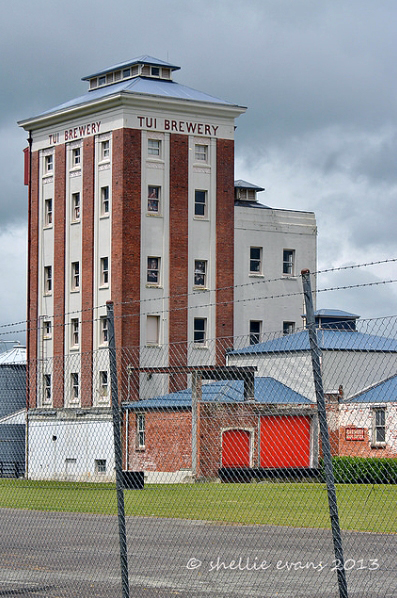
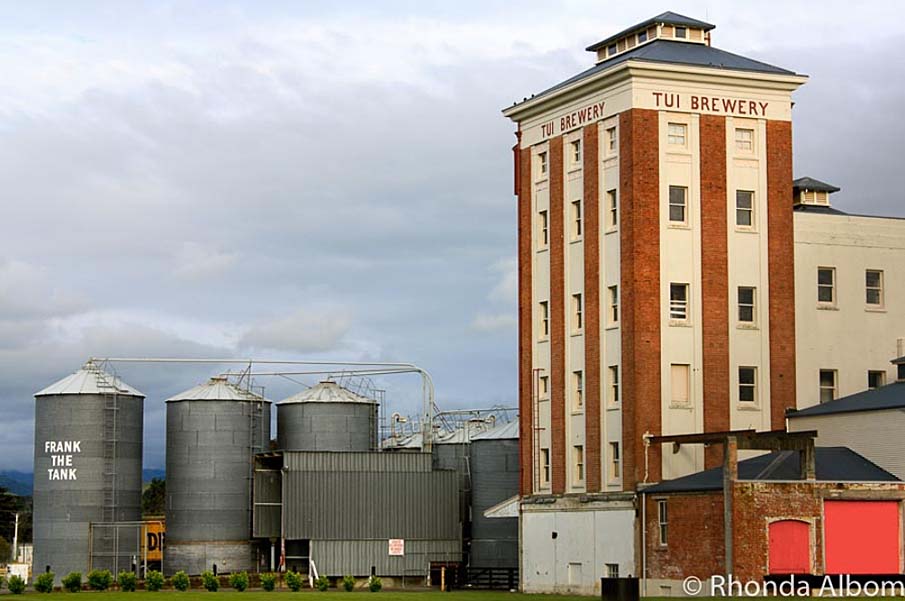
The Brew Tower, Mangatainoka, has dominated the approach to the settlement since 1931, when it was constructed by Tui Brewery Ltd on a site first used to brew beer over 42 years earlier.

Henry Wagstaff, a former sawmiller, started a small brewery in Mangatainoka in 1889. Water from the Mangatainoka River proved particularly suitable for brewing high-class ale and, just four years later, the local newspaper commented that 'the liquor turned out by Mr Wagstaff has earned for itself an excellent reputation'. In 1903 Wagstaff sold his company to Henry Cowan, a cooper from Auckland who renamed it the 'North Island Brewery'. The following year the brewery won first prize for its East India Pale Ale at the Palmerston North Agricultural and Pastoral show. This marked the turning point for the brewery and sales grew steadily for the next decade, from 912 hogsheads in 1908 to 2271 six years later. In 1923 the successful company was renamed Tui Brewery Ltd. When competition from breweries in Woodville and Masterton prompted a decision to bottle beer in Wellington in 1928, the business expanded further, and the profits allowed the company to build a new brewing tower in 1931.

Designed by architects Gummer and Ford and built by Fletchers Construction Company for £4978, this seven-storey, brick tower was constructed to allow the brewers to use gravity to turn malt into beer. Strangely, when construction of the Stripped Classical style building began in 1931, the builders left out the lift and stairs, preventing the workers from transporting malt up to the top of the building. This problem was not finally resolved until 1938, when a lift was added to the exterior of the tower.

The brewing process began on the sixth floor where malt was mixed in the hot liquor tank with water sourced from a tank on the top storey. This broke it down into fermentable sugars called 'wort'. The sugars were separated from the insoluble husks in the Lauter Tun on level five. Hops and sugar were added, and then the mixture was strained through a vessel with a false floor that collected the hops while allowing the hot liquid to pour down into the refrigerator room on the second floor. Yeast was added to the cooled liquid to convert it into beer. In the underground basement originally excavated by Wagstaff, the beer was fermented for a second time to create sparkling ale. The filtered beer was then stored in casks on the ground floor.

From the 1950s, increased competition forced many smaller breweries to close. The Tui Brewery survived by adopting a more economical brewing process called double-strength brewing, and began focussing on the pre-filled flagon trade. In 1964 the brewery won the prestigious franchise to brew Guinness beer, a three-year contract that prompted the purchase of a new plant that produced beer of a higher quality. Five years later the brewery was sold to Dominion Breweries, the second largest beer manufacturer in New Zealand. A new complex was built around the tower in 1974 and a year later the brewery was renamed DB Central Brewery Limited. Although Tui beer continues to be manufactured on the site, Brew Tower has not been used as part of this process since the new complex was built. The only section of the building still in use is the basement, which has been converted into a bar where visitors can sample the beer after a tour of the complex. Since its closure, a replica model of the landmark building has been used in a number of advertisements, and it is now a nationally recognised symbol of the local tradition and history behind the manufacturing of Tui beer.

The Brew Tower has national significance as one of the few remaining examples of an early commercial brewery. The tower is still sufficiently intact to demonstrate the manner in which gravity was used to convert malt into beer before the use of pumps became common in the brewing process. This gives the building technological importance and offers an insight into part of New Zealand's industrial history. It is important as a historical marker of the successful expansion of a local brewing industry and as a significant source of employment in the small town of Mangatainoka. The Brew Tower is held in high esteem as a symbol of Tui beer. It is also an important and nationally recognised landmark.
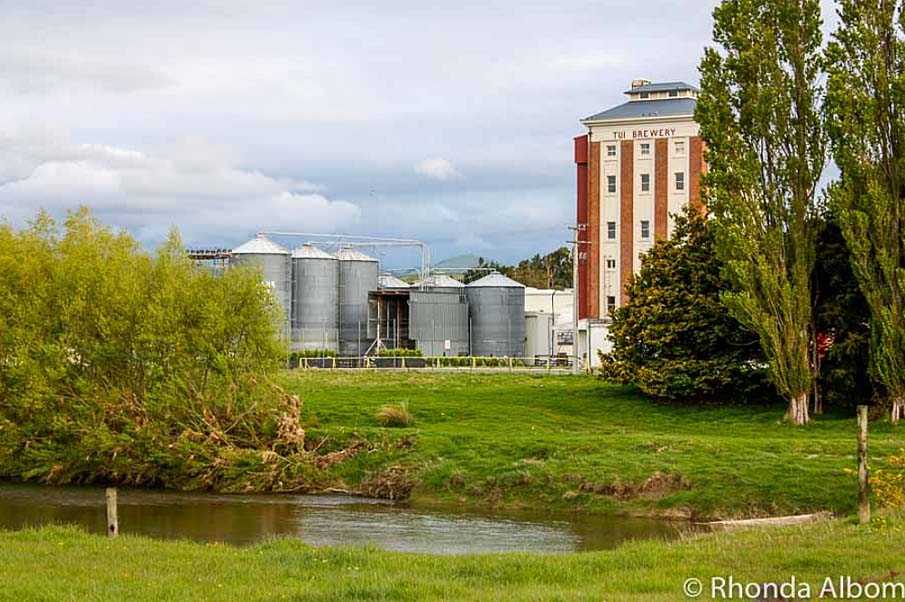
Brew Tower (aka Tui Brewery), Mangatainoka. Image courtesy of www.albomadventures.com | 01/09/2014 | Rhonda Albom
Brew Tower (aka Tui Brewery), Mangatainoka. Image courtesy of www.flickr.com | Shellie Evans - flyingkiwigirl | 16/11/2013 | Shellie Evans
Brew Tower (aka Tui Brewery), Mangatainoka. Image courtesy of www.albomadventures.com | 02/09/2014 | Rhonda Albom
Brew Tower (aka Tui Brewery), Mangatainoka. Image courtesy of www.albomadventures.com | 01/09/2014 | Rhonda Albom
Brew Tower (aka Tui Brewery), Mangatainoka. Image courtesy of www.flickr.com | Shellie Evans - flyingkiwigirl | 16/11/2013 | Shellie Evans
Brew Tower (aka Tui Brewery), Mangatainoka. Image courtesy of www.albomadventures.com | 02/09/2014 | Rhonda Albom

List Entry Information

Overview

Status
Listed

List Entry Status
Historic Place Category 1

Access
Able to Visit

List Number
3961

Date Entered
21st September 1989

Date of Effect
21st September 1989

City/District Council
Tararua District

Region
Horizons (Manawatū-Whanganui) Region

Legal description

All DP836 All DP5566 Lot1 DP 18939 Blks IV XVII Mangahao SD

Detailed List Entry

Construction Professional

Name

Gummer & Ford

Type

Architectural Partnership

Biography

The architectural partnership of Gummer and Ford was established in 1923, and became one of national importance. William Henry Gummer (1884-1966) was articled to W.A. Holman, an Auckland architect, and was elected as an Associate of the Royal Institute of British Architects in 1910. In the period 1908-1913 he travelled in the United Kingdom, Europe and the United States. During this time he worked for Sir Edwin Lutyens, leading English architect of the time, and for Daniel Burnham in Chicago. Burnham was a major American architect and one of the founders of the influential Chicago School of Architecture. Gummer joined the firm of Hoggard and Prouse of Auckland and Wellington in 1913. In 1914 he was elected a Fellow of the New Zealand Institute of Architects, was president of the Institute from 1933-34 and was later elected a life member. Charles Reginald Ford (1880- 1972) was born in England and served in the Royal Navy. He was later with Captain Scott's 1901-1904 expedition to Antarctica. He trained as an architect working in Wanganui as an engineer. In 1926 he wrote the first treatise on earthquake and building construction in the English language. Ford was president of the New Zealand Institute of Architects from 1921-22. Buildings designed by the partnership include the State Insurance Building Wellington, (1940) the Dilworth Building (1926), the Guardian Trust Building and the Domain Wintergardens (1921 and 1928), all in Auckland, and the Dominion Museum (1936) in Wellington. Gummer and Ford were awarded Gold Medals from the New Zealand Institute of Architects for the designs of Auckland Railway Station and Remuera Library. Gummer was one of the most outstanding architects working in New Zealand in the first half of this century and was responsible for the stylistically and structurally advanced Tauroa (1916), Craggy Range (1919), Arden (1926), and Te Mata (1935) homesteads at Havelock North.

Construction Details

Start Year

1931

Type

Original Construction

Start Year

1938

Type

Modification

Description

Lift added to building exterior

Start Year

1974

Type

Modification

Description

Basement converted into a bar

Construction Materials

A seven-storey tower constructed from brick and designed in the Stripped Classical style.

Notable Features

Beer brewing facilties extant inside the tower

Reference

Completion Date

5th December 2002

Report Written By

Rebecca O'Brien

Information Sources

Dominion Breweries, 1989

Dominion Breweries, The Best Little Brewery in Australasia; DB Central Brewery Centennial 1889-1989, Mangatainoka, 1989

McLauchlan, 1994

Gordon McLauchlan, The Story of Beer: Beer and Brewing - A New Zealand History, Auckland, 1994

Report Written By

This place was identified as significant under previous legislation with different information requirements. It remains significant under the current legislation. There is opportunity under our legislation and policies to add to this information. Further information about this place may be available from the Central Regional Office of Heritage New Zealand Pouhere Taonga. A fully referenced version of this report is available from the NZHPT Central Region office Please note that entry on the New Zealand Heritage List/Rarangi Korero identifies only the heritage values of the property concerned, and should not be construed as advice on the state of the property, or as a comment of its soundness or safety, including in regard to earthquake risk, safety in the event of fire, or insanitary conditions.

Further Information

Current Usages

Uses: Trade

Specific Usage: Pub/bar/tavern/public hotel

Former Usages

General Usage:: Manufacturing

Specific Usage: Brewery

Themes

Web Links

description:

url: http://www.tui.co.nz/default.asp?s1=tui%20brewery

Overview

Status

Listed

List Entry Status

Historic Place Category 1

Access

Able to Visit

List Number

3961

Date Entered

21st September 1989

Date of Effect

21st September 1989

City/District Council

Tararua District

Region

Horizons (Manawatū-Whanganui) Region

Legal description

All DP836 All DP5566 Lot1 DP 18939 Blks IV XVII Mangahao SD

Status

Listed

List Entry Status

Historic Place Category 1

Access

Able to Visit

List Number

3961

Date Entered

21st September 1989

Date of Effect

21st September 1989

City/District Council

Tararua District

Region

Horizons (Manawatū-Whanganui) Region

Legal description

All DP836 All DP5566 Lot1 DP 18939 Blks IV XVII Mangahao SD

Construction Information

Construction Professional

Name

Gummer & Ford

Type

Architectural Partnership

Biography

The architectural partnership of Gummer and Ford was established in 1923, and became one of national importance. William Henry Gummer (1884-1966) was articled to W.A. Holman, an Auckland architect, and was elected as an Associate of the Royal Institute of British Architects in 1910. In the period 1908-1913 he travelled in the United Kingdom, Europe and the United States. During this time he worked for Sir Edwin Lutyens, leading English architect of the time, and for Daniel Burnham in Chicago. Burnham was a major American architect and one of the founders of the influential Chicago School of Architecture. Gummer joined the firm of Hoggard and Prouse of Auckland and Wellington in 1913. In 1914 he was elected a Fellow of the New Zealand Institute of Architects, was president of the Institute from 1933-34 and was later elected a life member. Charles Reginald Ford (1880- 1972) was born in England and served in the Royal Navy. He was later with Captain Scott's 1901-1904 expedition to Antarctica. He trained as an architect working in Wanganui as an engineer. In 1926 he wrote the first treatise on earthquake and building construction in the English language. Ford was president of the New Zealand Institute of Architects from 1921-22. Buildings designed by the partnership include the State Insurance Building Wellington, (1940) the Dilworth Building (1926), the Guardian Trust Building and the Domain Wintergardens (1921 and 1928), all in Auckland, and the Dominion Museum (1936) in Wellington. Gummer and Ford were awarded Gold Medals from the New Zealand Institute of Architects for the designs of Auckland Railway Station and Remuera Library. Gummer was one of the most outstanding architects working in New Zealand in the first half of this century and was responsible for the stylistically and structurally advanced Tauroa (1916), Craggy Range (1919), Arden (1926), and Te Mata (1935) homesteads at Havelock North.

Construction Details

Start Year

1931

Type

Original Construction

Start Year

1938

Type

Modification

Description

Lift added to building exterior

Start Year

1974

Type

Modification

Description

Basement converted into a bar

Construction Materials

A seven-storey tower constructed from brick and designed in the Stripped Classical style.

Notable Features

Beer brewing facilties extant inside the tower

Construction Professional

Name

Gummer & Ford

Type

Architectural Partnership

Biography

The architectural partnership of Gummer and Ford was established in 1923, and became one of national importance. William Henry Gummer (1884-1966) was articled to W.A. Holman, an Auckland architect, and was elected as an Associate of the Royal Institute of British Architects in 1910. In the period 1908-1913 he travelled in the United Kingdom, Europe and the United States. During this time he worked for Sir Edwin Lutyens, leading English architect of the time, and for Daniel Burnham in Chicago. Burnham was a major American architect and one of the founders of the influential Chicago School of Architecture. Gummer joined the firm of Hoggard and Prouse of Auckland and Wellington in 1913. In 1914 he was elected a Fellow of the New Zealand Institute of Architects, was president of the Institute from 1933-34 and was later elected a life member. Charles Reginald Ford (1880- 1972) was born in England and served in the Royal Navy. He was later with Captain Scott's 1901-1904 expedition to Antarctica. He trained as an architect working in Wanganui as an engineer. In 1926 he wrote the first treatise on earthquake and building construction in the English language. Ford was president of the New Zealand Institute of Architects from 1921-22. Buildings designed by the partnership include the State Insurance Building Wellington, (1940) the Dilworth Building (1926), the Guardian Trust Building and the Domain Wintergardens (1921 and 1928), all in Auckland, and the Dominion Museum (1936) in Wellington. Gummer and Ford were awarded Gold Medals from the New Zealand Institute of Architects for the designs of Auckland Railway Station and Remuera Library. Gummer was one of the most outstanding architects working in New Zealand in the first half of this century and was responsible for the stylistically and structurally advanced Tauroa (1916), Craggy Range (1919), Arden (1926), and Te Mata (1935) homesteads at Havelock North.

Construction Details

Start Year

1931

Type

Original Construction

Start Year

1938

Type

Modification

Description

Lift added to building exterior

Start Year

1974

Type

Modification

Description

Basement converted into a bar

Construction Materials

A seven-storey tower constructed from brick and designed in the Stripped Classical style.

Notable Features

Beer brewing facilties extant inside the tower

Reference

Historical and Associated Iwi / Hapū / Whānau

Completion Date

5th December 2002

Report Written By

Rebecca O'Brien

Information Sources

Dominion Breweries, 1989

Dominion Breweries, The Best Little Brewery in Australasia; DB Central Brewery Centennial 1889-1989, Mangatainoka, 1989

McLauchlan, 1994

Gordon McLauchlan, The Story of Beer: Beer and Brewing - A New Zealand History, Auckland, 1994

Other Information

This place was identified as significant under previous legislation with different information requirements. It remains significant under the current legislation. There is opportunity under our legislation and policies to add to this information. Further information about this place may be available from the Central Regional Office of Heritage New Zealand Pouhere Taonga. A fully referenced version of this report is available from the NZHPT Central Region office Please note that entry on the New Zealand Heritage List/Rarangi Korero identifies only the heritage values of the property concerned, and should not be construed as advice on the state of the property, or as a comment of its soundness or safety, including in regard to earthquake risk, safety in the event of fire, or insanitary conditions.

Historical and Associated Iwi / Hapū / Whānau

Completion Date

5th December 2002

Report Written By

Rebecca O'Brien

Information Sources

Dominion Breweries, 1989

Dominion Breweries, The Best Little Brewery in Australasia; DB Central Brewery Centennial 1889-1989, Mangatainoka, 1989

McLauchlan, 1994

Gordon McLauchlan, The Story of Beer: Beer and Brewing - A New Zealand History, Auckland, 1994

Other Information

This place was identified as significant under previous legislation with different information requirements. It remains significant under the current legislation. There is opportunity under our legislation and policies to add to this information. Further information about this place may be available from the Central Regional Office of Heritage New Zealand Pouhere Taonga. A fully referenced version of this report is available from the NZHPT Central Region office Please note that entry on the New Zealand Heritage List/Rarangi Korero identifies only the heritage values of the property concerned, and should not be construed as advice on the state of the property, or as a comment of its soundness or safety, including in regard to earthquake risk, safety in the event of fire, or insanitary conditions.

Further Information

Current Usages

Uses: Trade

Specific Usage: Pub/bar/tavern/public hotel

Former Usages

General Usage: Manufacturing

Specific Usage: Brewery

Web Links

description:

url: http://www.tui.co.nz/default.asp?s1=tui%20brewery

Current Usages

Uses: Trade

Specific Usage: Pub/bar/tavern/public hotel

Former Usages

General Usage: Manufacturing

Specific Usage: Brewery

Web Links

description:

url: http://www.tui.co.nz/default.asp?s1=tui%20brewery

Location

Loading
Stay up to date with Heritage this month