DonateSupporterVisit Heritage
  • Tūrangawaewae
    Places
  • Tira Māori
    Māori Heritage
  • Poutairangahia
    Archaeology
  • Rauemi
    Resources
  • Mō Tātou
    About Us
  • New Zealand Heritage List
  • Nominate and submit
  • Explore the List
  • National Historic Landmarks
  • Plaques
  • Rainbow List Project
  • Lost heritage
  • Visit Heritage
  • Our properties
  • Turnbull House Project
  • Collections
  • Shop
  • Tohu Whenua
  • Tira Māori
  • Conserving Māori heritage
  • Marae built heritage
  • Māori heritage on the List
  • Hinemihi—Te Hokinga Mai
  • What is archaeology?
  • Is there a site on my property?
  • What are my legal requirements?
  • Affecting an archaeological site
  • Declaring an archaeological site
  • Archaeology FAQs
  • Archaeology Digital Library
  • Archaeology guidelines and templates
  • Resources
  • Funding
  • Publications
  • Sustainable management guides
  • Disaster recovery
  • Podcasts & digital resources
  • Education Hub
  • Conservation plans
  • About
  • Board
  • Māori Heritage Council
  • Senior Staff
  • Offices
  • Contact us
  • Careers
  • Covenants
  • Fast-track
  • Corporate documents
  • Currently consulting on
  • Our submissions
  • News
Quick links
Rārangi Kōrero | The List
Explore the List
National Historic Landmarks
Ngā Manawhenua o Aotearoa me ōna Kōrero Tūturu
Quick links
Tapuwae
A Vision for Places of Māori Heritage
Funding for Māori Heritage
Resources
Quick links
Archaeological Authority Portal
Applying for an archaeological authority
Archaeology FAQs
Browse the most frequently asked questions about archaeological authorities and the archaeological process.
Quick links
Quick links
Contact us
Offices
DonateSupporterVisit Heritage
  • Tūrangawaewae
    Places
  • Tira Māori
    Māori Heritage
  • Poutairangahia
    Archaeology
  • Rauemi
    Resources
  • Mō Tātou
    About Us
  • New Zealand Heritage List
  • Nominate and submit
  • Explore the List
  • National Historic Landmarks
  • Plaques
  • Rainbow List Project
  • Lost heritage
  • Visit Heritage
  • Our properties
  • Turnbull House Project
  • Collections
  • Shop
  • Tohu Whenua
  • Tira Māori
  • Conserving Māori heritage
  • Marae built heritage
  • Māori heritage on the List
  • Hinemihi—Te Hokinga Mai
  • What is archaeology?
  • Is there a site on my property?
  • What are my legal requirements?
  • Affecting an archaeological site
  • Declaring an archaeological site
  • Archaeology FAQs
  • Archaeology Digital Library
  • Archaeology guidelines and templates
  • Resources
  • Funding
  • Publications
  • Sustainable management guides
  • Disaster recovery
  • Podcasts & digital resources
  • Education Hub
  • Conservation plans
  • About
  • Board
  • Māori Heritage Council
  • Senior Staff
  • Offices
  • Contact us
  • Careers
  • Covenants
  • Fast-track
  • Corporate documents
  • Currently consulting on
  • Our submissions
  • News
Quick links
Rārangi Kōrero | The List
Explore the List
National Historic Landmarks
Ngā Manawhenua o Aotearoa me ōna Kōrero Tūturu
Quick links
Tapuwae
A Vision for Places of Māori Heritage
Funding for Māori Heritage
Resources
Quick links
Archaeological Authority Portal
Applying for an archaeological authority
Archaeology FAQs
Browse the most frequently asked questions about archaeological authorities and the archaeological process.
Quick links
Quick links
Contact us
Offices
  • Places
  • Nominate and submit
  • National Historic Landmarks
  • Places
  • Nominate and submit
  • National Historic Landmarks
  • Tira Māori
  • Conserving Māori heritage
  • Marae built heritage
  • Tira Māori
  • Conserving Māori heritage
  • Marae built heritage
  • Archaeological authorities
  • Archaeology Digital Library
  • Archaeological authorities
  • Archaeology Digital Library
  • All resources
  • Publications
  • Funding
  • All resources
  • Publications
  • Funding
  • FAQs
  • FAQs
Follow us on:
Places
  • Places
  • Nominate and submit
  • National Historic Landmarks
Tira Māori
  • Tira Māori
  • Conserving Māori heritage
  • Marae built heritage
Archaeology
  • Archaeological authorities
  • Archaeology Digital Library
Resources
  • All resources
  • Publications
  • Funding
FAQs
  • FAQs
Follow us on
HomePrivacyTerms and conditionsAbout this site
© Heritage New Zealand Pouhere Taonga 2026.
 
Central Police Station (Former)

21 Dunbar Street and High Street, DUNEDIN

Private

Historic Place Category 2

List No. 4748

Quick links:
List GalleryLocationDetails
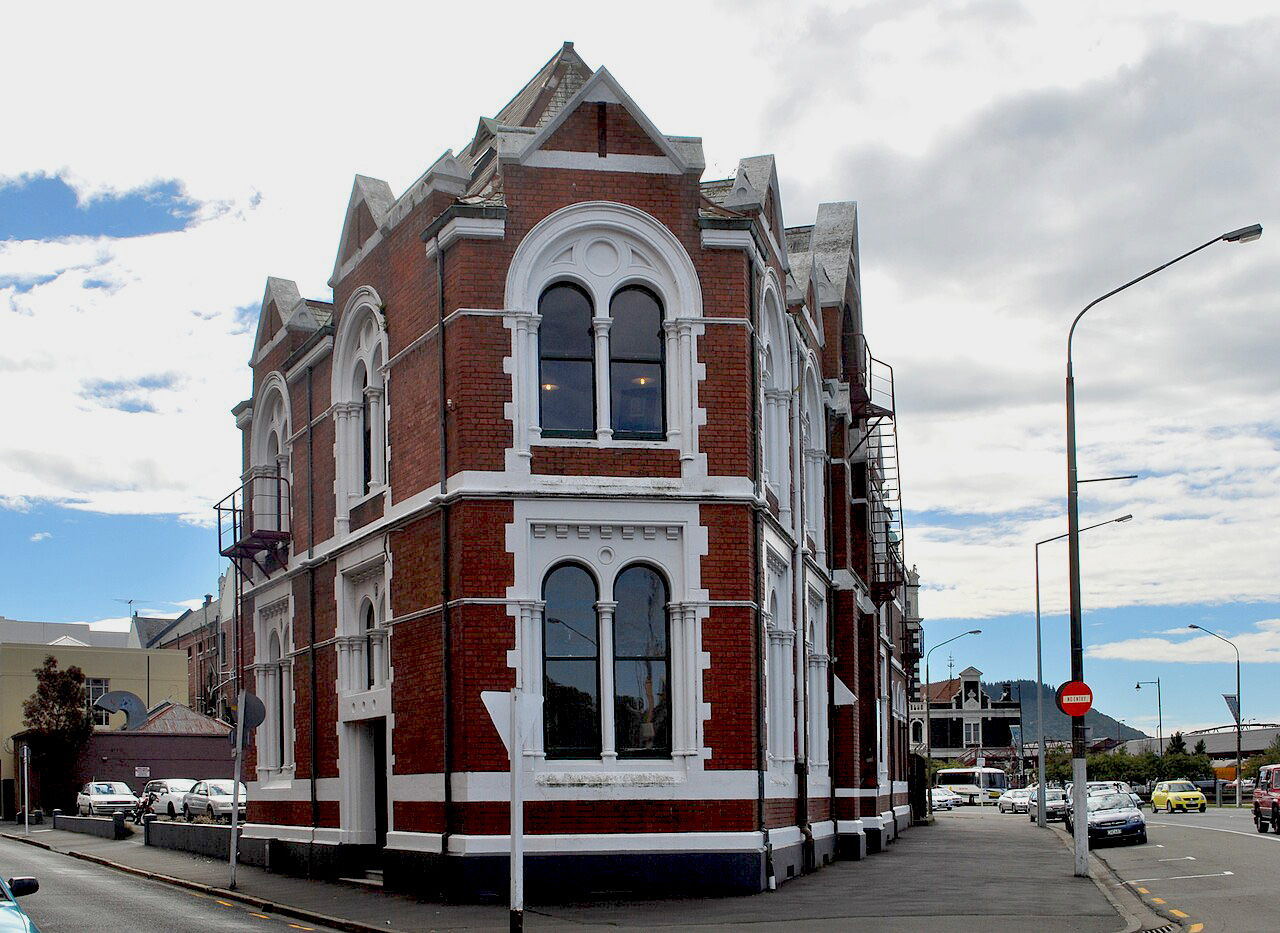
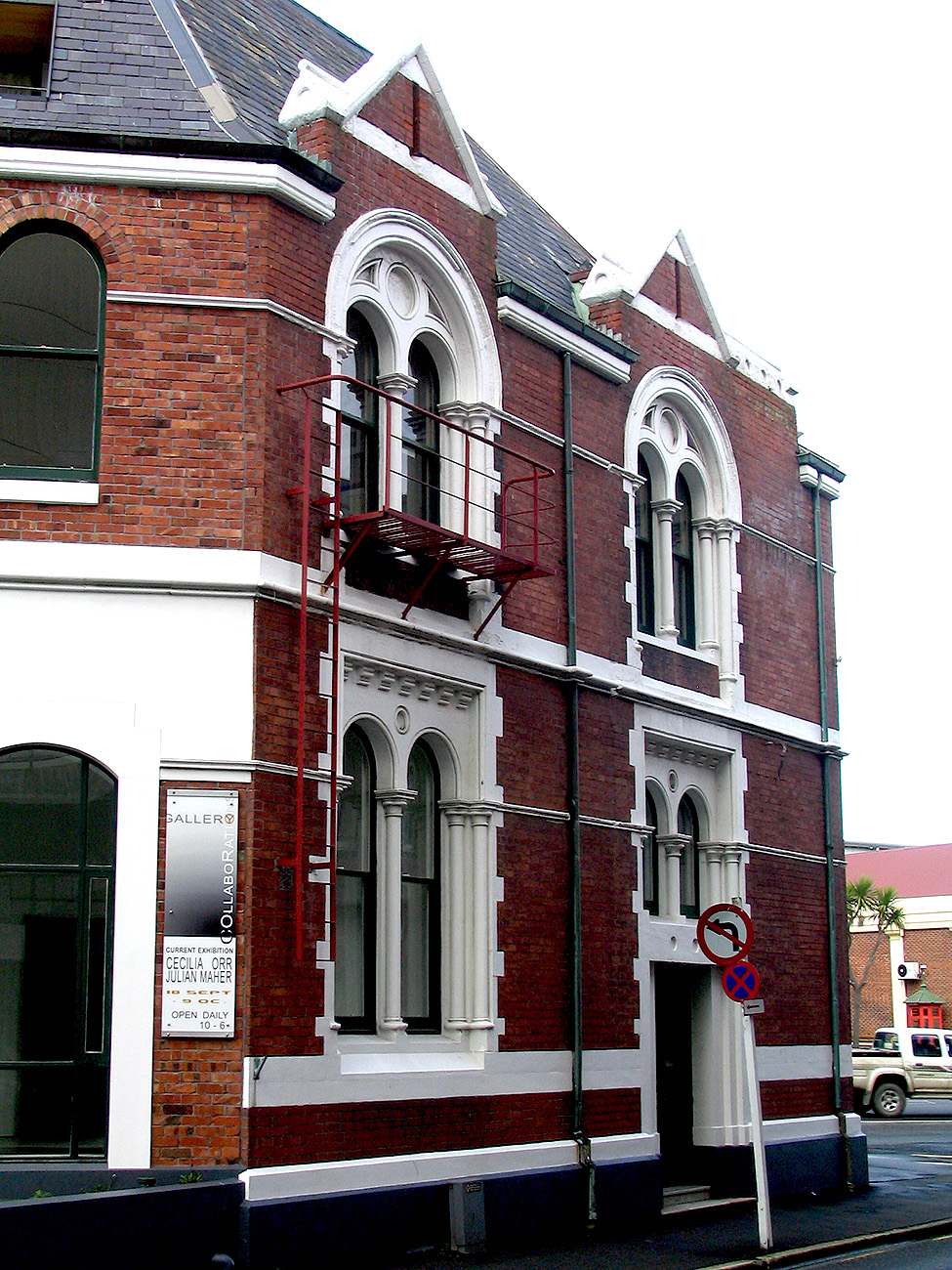
One of the key buildings in Dunedin’s justice precinct, the Central Police Station (Former) designed in Venetian Renaissance style in 1890 by Public Works Department architect William Crichton, has historic, architectural, aesthetic, and social significance.

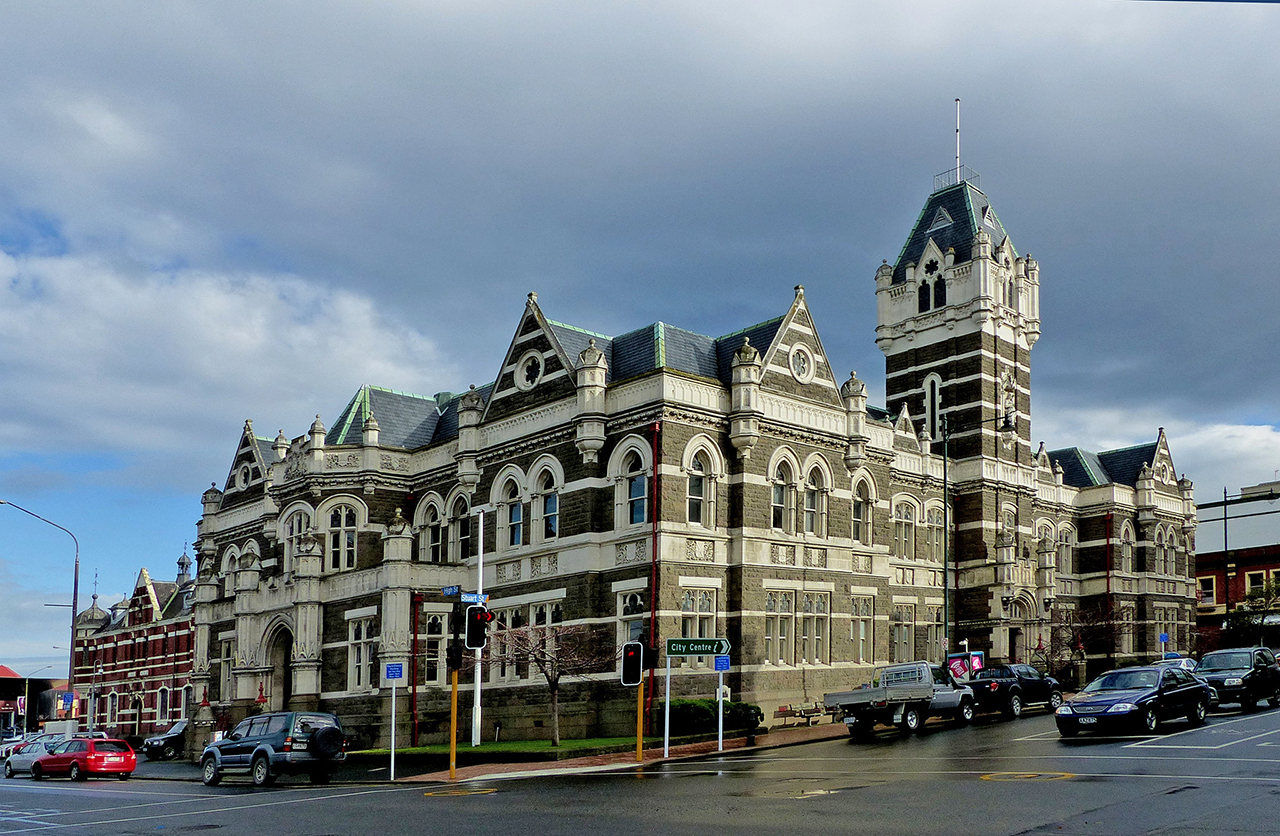
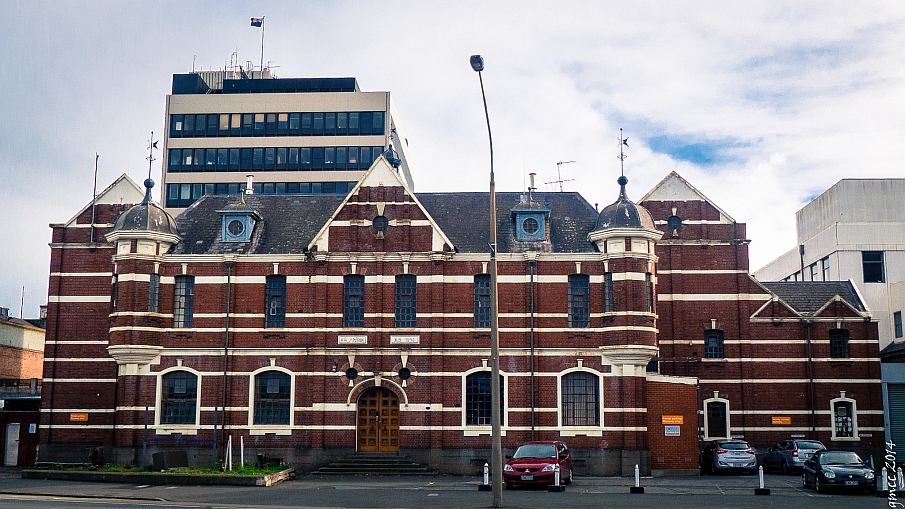
Located on an irregular shaped corner section within the block which also houses the Dunedin Prison (Former) (List No. 4035, Category 1) and the Dunedin Law Courts (List No. 4374, Category 1), this land was the site of Dunedin’s first courthouse. The construction of Dunedin’s Central Police Station marked the start of a substantial redevelopment of these judicial buildings. It was designed by William Crichton of the Public Works Department in ‘Venetian Renaissance’ style. Tenders were invited in May 1890, with Invercargill contractors McLeod and Shaw winning the contract with their tender of £5,857.

The new building opened in June 1891 – and was known as the Central Police Station, and less commonly as the Police Barracks. The Evening Star described the ‘police barracks’ as a two-and-half-storey cavity-brick building was built on concrete foundations, damp proofed with asphalt. A course of Port Chalmers stone was also used in the base. The brick was pointed with black mortar. The lower string course and window sills were of Waikawa stone. Oamaru stone was used on the columns, caps, and arches to the windows and door openings. The roof was Westmoreland slate. The building was described as ‘business-like’ ‘without advertising itself as a place of detention.’ The surrounds of the building were asphalted. A Boyle’s patent ventilation system piped fresh air through the building. Rooms included the inspector’s room, a clerks’ room, a sergeant major’s room, detectives’ room, mess room, kitchen, watch house, and domestic facilities. Upstairs were six dormitories and a constable’s day room. On the top attic floor was a large room. The lock-up area of the building contained three cells for women and off a separate corridor, four cells for men. Stables were located at the rear of the building.

The police remained in the building until 1915, after which they were based in the adjoining Dunedin Prison, but used the old building as barracks.

The former Central Police Station had a range of government occupants: the Lands and Deeds, and in the 1930s, the Unemployment Board. In 1941 six government departments were housed in the former police station building; the Marine Department, the Mines Department, the National Service Department, the Housing Construction Department, the Government Laboratories and the Marine Department’s Inspector of Machinery. The National Service Department was amalgamated with the Labour Department in 1947, and became the Labour Department. In 1975, The Labour Department moved into John Wickliffe House.

In 1985, it was proposed that the unoccupied building be demolished, and though a 1930s addition was demolished, public action saved the rest of the building. The building continued to be threatened by demolition until William Gordon and Joan Matilda Stevenson bought it in 1990. They renovated the building in 1993-1994, turning it building into a “viable working property”, whilst retaining the historic façade and in turn enhancing the historic precinct in which it is located. The renovation itself won the 1993 David Cox Memorial Award, an award given in order to recognise and encourage excellence in the restoration, conservation, and continued use of historic buildings and structures in Otago. The building then became home to several offices. In 2018, the former Central Police Station still provides office accommodation.
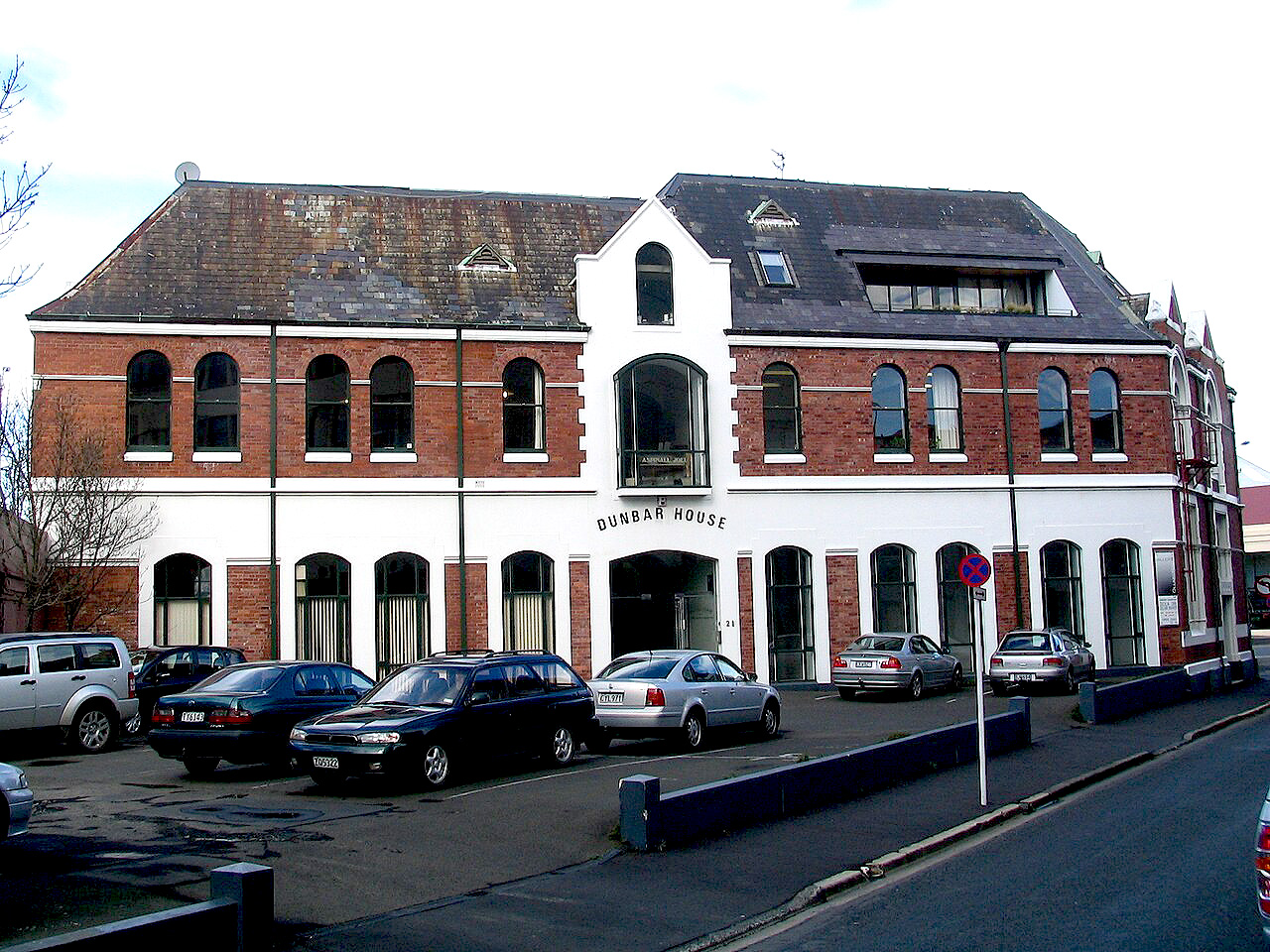
Central Police Station (Former), Dunedin CC BY-SA 3.0 Image courtesy of commons.wikimedia.org | Benchill | 24/08/2009 | Benchill - Wikimedia Commons
Central Police Station (Former), Dunedin CC BY-SA 3.0 Image courtesy of commons.wikimedia.org | Mattinbgn | 10/03/2011 | Mattinbgn - Wikimedia Commons
Central Police Station (Former), Dunedin CC BY-SA 3.0 Image courtesy of commons.wikimedia.org | Benchill | 24/08/2009 | Benchill - Wikimedia Commons
Central Police Station (Former), Dunedin CC BY-SA 3.0 Image courtesy of commons.wikimedia.org | Mattinbgn | 10/03/2011 | Mattinbgn - Wikimedia Commons
Central Police Station (Former), Dunedin CC BY-SA 3.0 Image courtesy of commons.wikimedia.org | Benchill | 24/08/2009 | Benchill - Wikimedia Commons

List Entry Information

Overview

Status
Listed

List Entry Status
Historic Place Category 2

Access
Private/No Public Access

List Number
4748

Date Entered
25th September 1986

Date of Effect
25th September 1986

City/District Council
Dunedin City

Region
Otago Region

Extent of List Entry

Extent includes part of the land described as Lot 1 DP 21190 (RT OT13A/739), Otago Land District and the building known as the Dunedin Police Station (Former) thereon. Refer to the extent map tabled at the Rārangi Kōrero Committee meeting on 26 July 2018.

Legal description

Lot 1 DP 29110 (RT OT13a/739), Otago Land District

Detailed List Entry

Construction Professional

Name

Crichton, William

Type

Architect

Biography

William Crichton (1862-1928) was born in England in 1862. He trained as an architect under James Hicks of Redruth, before immigrating to New Zealand in 1879. Upon his arrival he joined the Colonial Architects Office. When Crichton designed the Dunedin Police Station in 1890 he was employed by the Public Works Department. One year later, in 1891, he established his own architectural firm. The same year he won the competition for the design of the Wellington Municipal Library, and in 1901 he won second prize for the Wellington Town Hall competition. In 1901 Crichton and James Hector McKay founded the firm Crichton and McKay. McKay had previously been in a partnership with Robert Roy MacGregor from 1898-1901. With the addition of Vivian Haughton in the 1920s the firm became Crichton, McKay & Haughton. Other notable works by Crichton, McKay & Haughton includes the Huddart Parker Building (1923) and the Dominion Building (1926-1927) in Wellington.

Name

McLeod and Shaw

Type

Builder

Biography

No biography is currently available for this construction professional

Name

Lindsay Gillies

Type

Architect

Biography

Lindsay Gillies was responsible for the extensive repairs and remodelling of the Dunedin Central Police Station (4748) in 1992-1994.

Name

Graham Stevens

Type

Builder

Biography

Graham Stevens was the contractor for the work being done on the Dunedin Central Police Station in 1992-1994.

Construction Details

Start Year

1891

Type

Original Construction

Start Year

1890

Type

Designed

Type

Addition

Description

Wing added

Period

1930s

Start Year

1985

Type

Partial Demolition

Description

Addition demolished

Start Year

1993

Finish Year

1994

Type

Refurbishment/renovation

Description

Renovated and turned into offices

Reference

Completion Date

22nd May 2018

Report Written By

Janny Sjaaholm

Information Sources

Evening Star

Evening Star

PhD Thesis

Peter Richardson, ‘Building the Dominion: Government Architecture in New Zealand 1840-1922’ PhD Thesis, Unversity of Canterbury, 1988

Report Written By

This place was identified as significant under previous legislation with different information requirements. It remains significant under the current legislation. There is opportunity under our legislation and policies to add to this information. Further information about this place may be available from the Otago/Southland Office of Heritage New Zealand Pouhere Taonga. Please note that entry on the New Zealand Heritage List/Rarangi Korero identifies only the heritage values of the property concerned, and should not be construed as advice on the state of the property, or as a comment of its soundness or safety, including in regard to earthquake risk, safety in the event of fire, or insanitary conditions. A fully referenced upgrade report is available on request from the Otago/Southland Area Office of Heritage New Zealand.

Further Information

Current Usages

Uses: Trade

Specific Usage: Office building/Offices

Former Usages

General Usage:: Civic Facilities

Specific Usage: Art Gallery

General Usage:: Government

Specific Usage: Government office building

General Usage:: Law Enforcement

Specific Usage: Police station

Themes

Web Links

Overview

Status

Listed

List Entry Status

Historic Place Category 2

Access

Private/No Public Access

List Number

4748

Date Entered

25th September 1986

Date of Effect

25th September 1986

City/District Council

Dunedin City

Region

Otago Region

Extent of List Entry

Extent includes part of the land described as Lot 1 DP 21190 (RT OT13A/739), Otago Land District and the building known as the Dunedin Police Station (Former) thereon. Refer to the extent map tabled at the Rārangi Kōrero Committee meeting on 26 July 2018.

Legal description

Lot 1 DP 29110 (RT OT13a/739), Otago Land District

Status

Listed

List Entry Status

Historic Place Category 2

Access

Private/No Public Access

List Number

4748

Date Entered

25th September 1986

Date of Effect

25th September 1986

City/District Council

Dunedin City

Region

Otago Region

Extent of List Entry

Extent includes part of the land described as Lot 1 DP 21190 (RT OT13A/739), Otago Land District and the building known as the Dunedin Police Station (Former) thereon. Refer to the extent map tabled at the Rārangi Kōrero Committee meeting on 26 July 2018.

Legal description

Lot 1 DP 29110 (RT OT13a/739), Otago Land District

Construction Information

Construction Professional

Name

Crichton, William

Type

Architect

Biography

William Crichton (1862-1928) was born in England in 1862. He trained as an architect under James Hicks of Redruth, before immigrating to New Zealand in 1879. Upon his arrival he joined the Colonial Architects Office. When Crichton designed the Dunedin Police Station in 1890 he was employed by the Public Works Department. One year later, in 1891, he established his own architectural firm. The same year he won the competition for the design of the Wellington Municipal Library, and in 1901 he won second prize for the Wellington Town Hall competition. In 1901 Crichton and James Hector McKay founded the firm Crichton and McKay. McKay had previously been in a partnership with Robert Roy MacGregor from 1898-1901. With the addition of Vivian Haughton in the 1920s the firm became Crichton, McKay & Haughton. Other notable works by Crichton, McKay & Haughton includes the Huddart Parker Building (1923) and the Dominion Building (1926-1927) in Wellington.

Name

McLeod and Shaw

Type

Builder

Biography

No biography is currently available for this construction professional

Name

Lindsay Gillies

Type

Architect

Biography

Lindsay Gillies was responsible for the extensive repairs and remodelling of the Dunedin Central Police Station (4748) in 1992-1994.

Name

Graham Stevens

Type

Builder

Biography

Graham Stevens was the contractor for the work being done on the Dunedin Central Police Station in 1992-1994.

Construction Details

Start Year

1891

Type

Original Construction

Start Year

1890

Type

Designed

Type

Addition

Description

Wing added

Period

1930s

Start Year

1985

Type

Partial Demolition

Description

Addition demolished

Start Year

1993

Finish Year

1994

Type

Refurbishment/renovation

Description

Renovated and turned into offices

Construction Professional

Name

Crichton, William

Type

Architect

Biography

William Crichton (1862-1928) was born in England in 1862. He trained as an architect under James Hicks of Redruth, before immigrating to New Zealand in 1879. Upon his arrival he joined the Colonial Architects Office. When Crichton designed the Dunedin Police Station in 1890 he was employed by the Public Works Department. One year later, in 1891, he established his own architectural firm. The same year he won the competition for the design of the Wellington Municipal Library, and in 1901 he won second prize for the Wellington Town Hall competition. In 1901 Crichton and James Hector McKay founded the firm Crichton and McKay. McKay had previously been in a partnership with Robert Roy MacGregor from 1898-1901. With the addition of Vivian Haughton in the 1920s the firm became Crichton, McKay & Haughton. Other notable works by Crichton, McKay & Haughton includes the Huddart Parker Building (1923) and the Dominion Building (1926-1927) in Wellington.

Name

McLeod and Shaw

Type

Builder

Biography

No biography is currently available for this construction professional

Name

Lindsay Gillies

Type

Architect

Biography

Lindsay Gillies was responsible for the extensive repairs and remodelling of the Dunedin Central Police Station (4748) in 1992-1994.

Name

Graham Stevens

Type

Builder

Biography

Graham Stevens was the contractor for the work being done on the Dunedin Central Police Station in 1992-1994.

Construction Details

Start Year

1891

Type

Original Construction

Start Year

1890

Type

Designed

Type

Addition

Description

Wing added

Period

1930s

Start Year

1985

Type

Partial Demolition

Description

Addition demolished

Start Year

1993

Finish Year

1994

Type

Refurbishment/renovation

Description

Renovated and turned into offices

Reference

Historical and Associated Iwi / Hapū / Whānau

Completion Date

22nd May 2018

Report Written By

Janny Sjaaholm

Information Sources

Evening Star

Evening Star

PhD Thesis

Peter Richardson, ‘Building the Dominion: Government Architecture in New Zealand 1840-1922’ PhD Thesis, Unversity of Canterbury, 1988

Other Information

This place was identified as significant under previous legislation with different information requirements. It remains significant under the current legislation. There is opportunity under our legislation and policies to add to this information. Further information about this place may be available from the Otago/Southland Office of Heritage New Zealand Pouhere Taonga. Please note that entry on the New Zealand Heritage List/Rarangi Korero identifies only the heritage values of the property concerned, and should not be construed as advice on the state of the property, or as a comment of its soundness or safety, including in regard to earthquake risk, safety in the event of fire, or insanitary conditions. A fully referenced upgrade report is available on request from the Otago/Southland Area Office of Heritage New Zealand.

Historical and Associated Iwi / Hapū / Whānau

Completion Date

22nd May 2018

Report Written By

Janny Sjaaholm

Information Sources

Evening Star

Evening Star

PhD Thesis

Peter Richardson, ‘Building the Dominion: Government Architecture in New Zealand 1840-1922’ PhD Thesis, Unversity of Canterbury, 1988

Other Information

This place was identified as significant under previous legislation with different information requirements. It remains significant under the current legislation. There is opportunity under our legislation and policies to add to this information. Further information about this place may be available from the Otago/Southland Office of Heritage New Zealand Pouhere Taonga. Please note that entry on the New Zealand Heritage List/Rarangi Korero identifies only the heritage values of the property concerned, and should not be construed as advice on the state of the property, or as a comment of its soundness or safety, including in regard to earthquake risk, safety in the event of fire, or insanitary conditions. A fully referenced upgrade report is available on request from the Otago/Southland Area Office of Heritage New Zealand.

Further Information

Current Usages

Uses: Trade

Specific Usage: Office building/Offices

Former Usages

General Usage: Civic Facilities

Specific Usage: Art Gallery

General Usage: Government

Specific Usage: Government office building

General Usage: Law Enforcement

Specific Usage: Police station

Current Usages

Uses: Trade

Specific Usage: Office building/Offices

Former Usages

General Usage: Civic Facilities

Specific Usage: Art Gallery

General Usage: Government

Specific Usage: Government office building

General Usage: Law Enforcement

Specific Usage: Police station

Location

Loading
Related listings
Dunedin Law Courts, Dunedin. Image courtesy of www.flickr.com
Dunedin Law Courts
Dunedin Prison (Former), Dunedin. CC BY-NC 2.0 Image courtesy of www.flickr.com
Dunedin Prison (Former)
Dunedin Prison (Former), Dunedin. CC BY-NC 2.0 Image courtesy of www.flickr.com
Dunedin Prison (Former)
Dunedin Law Courts, Dunedin. Image courtesy of www.flickr.com
Dunedin Law Courts
Sign up to hear more

Get the latest heritage news, features and events delivered
straight to your inbox.

Subscribe