Quick links


Quick links
Quick links
Quick links
Quick links
Quick links
Sewell and Weld Street, HOKITIKA
Public
Historic Place Category 2
List No. 5054
List Entry Information
Status
Listed
List Entry Status
Historic Place Category 2
Access
Able to Visit
List Number
5054
Date Entered
21st September 1989
Date of Effect
21st September 1989
City/District Council
Westland District
Region
West Coast Region
Extent of List Entry
Extent includes part of the land described as Legal Road, Westland Land District and the structure known as the Memorial Clock Tower thereon. Refer to the extent map tabled at the Heritage New Zealand Board meeting on 25 June 2015.
Legal description
Legal Road, Westland Land District
Status
Listed
List Entry Status
Historic Place Category 2
Access
Able to Visit
List Number
5054
Date Entered
21st September 1989
Date of Effect
21st September 1989
City/District Council
Westland District
Region
West Coast Region
Extent of List Entry
Extent includes part of the land described as Legal Road, Westland Land District and the structure known as the Memorial Clock Tower thereon. Refer to the extent map tabled at the Heritage New Zealand Board meeting on 25 June 2015.
Legal description
Legal Road, Westland Land District
Why is this place significant?
Historic Significance
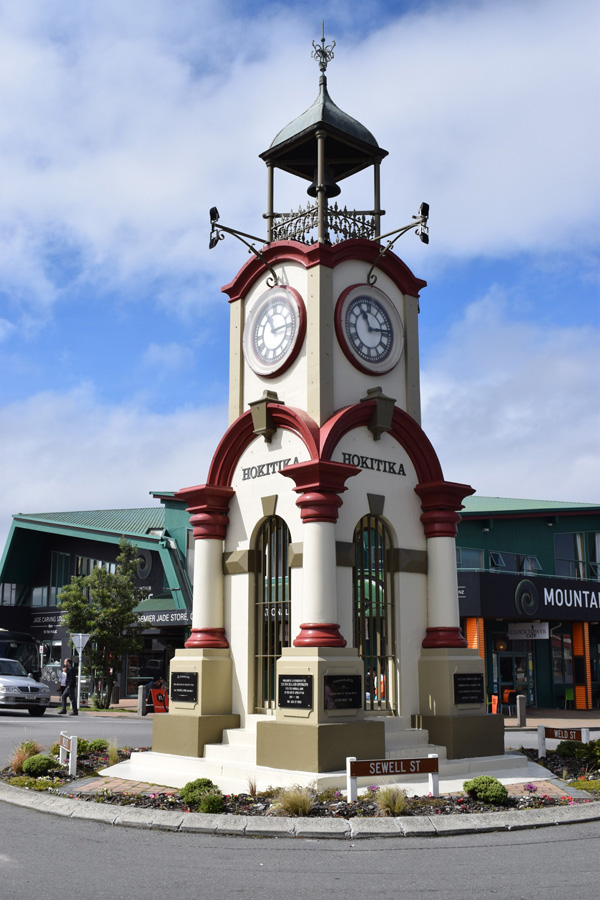
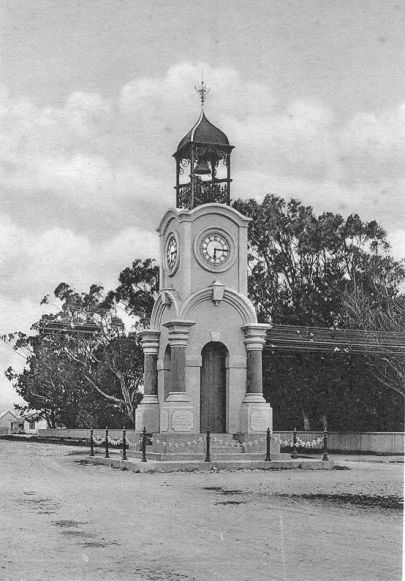
Historical significance or value The Memorial Clock Tower has historical value. It contributes towards an understanding of local recognition of New Zealand’s involvement in the South African (Boer) War. It is a relatively intact representative example from a suite of locally funded memorials that were erected around the country to commemorate what was New Zealand’s first international deployment of troops.
Physical Significance
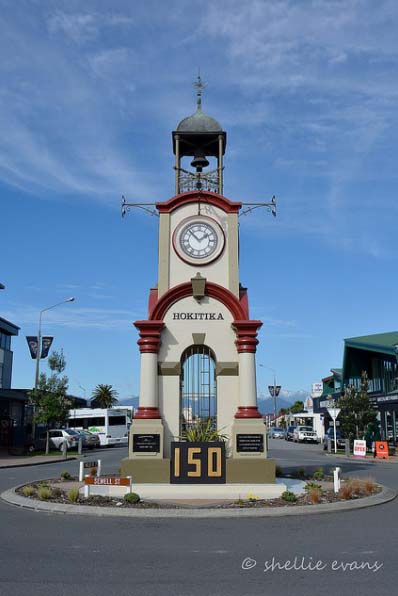
Aesthetic significance or value The Memorial Clock Tower has aesthetic value. Located in a prominent position at the centre of a main roundabout, it includes visual qualities that elicit an emotional response. It is described as one of the most photographed structures in the area.
Why is this place significant?
Historic Significance
Historical significance or value The Memorial Clock Tower has historical value. It contributes towards an understanding of local recognition of New Zealand’s involvement in the South African (Boer) War. It is a relatively intact representative example from a suite of locally funded memorials that were erected around the country to commemorate what was New Zealand’s first international deployment of troops.
Physical Significance
Aesthetic significance or value The Memorial Clock Tower has aesthetic value. Located in a prominent position at the centre of a main roundabout, it includes visual qualities that elicit an emotional response. It is described as one of the most photographed structures in the area.
Construction Professional
Name
W.Parkinson & Co.
Type
Builder
Biography
Stonemason
Construction Details
Start Year
1903
Type
Original Construction
Start Year
1957
Type
Modification
Description
Belfry replaced
Construction Professional
Name
W.Parkinson & Co.
Type
Builder
Biography
Stonemason
Construction Details
Start Year
1903
Type
Original Construction
Start Year
1957
Type
Modification
Description
Belfry replaced
Historical and Associated Iwi / Hapū / Whānau
Completion Date
2nd April 2015
Report Written By
Robyn Burgess
Other Information
This place was identified as significant under previous legislation with different information requirements. It remains significant under the current legislation. There is opportunity under our legislation and policies to add to this information. Further information about this place may be available from the Southern Regional Office of Heritage New Zealand Pouhere Taonga. Please note that entry on the New Zealand Heritage List/Rarangi Korero identifies only the heritage values of the property concerned, and should not be construed as advice on the state of the property, or as a comment of its soundness or safety, including in regard to earthquake risk, safety in the event of fire, or insanitary conditions. A fully referenced upgrade report is available on request from the Southern Regional Office of Heritage New Zealand
Historical and Associated Iwi / Hapū / Whānau
Completion Date
2nd April 2015
Report Written By
Robyn Burgess
Other Information
This place was identified as significant under previous legislation with different information requirements. It remains significant under the current legislation. There is opportunity under our legislation and policies to add to this information. Further information about this place may be available from the Southern Regional Office of Heritage New Zealand Pouhere Taonga. Please note that entry on the New Zealand Heritage List/Rarangi Korero identifies only the heritage values of the property concerned, and should not be construed as advice on the state of the property, or as a comment of its soundness or safety, including in regard to earthquake risk, safety in the event of fire, or insanitary conditions. A fully referenced upgrade report is available on request from the Southern Regional Office of Heritage New Zealand
Current Usages
Uses: Civic Facilities
Specific Usage: Clocktower/ clock
Uses: Commemoration
Specific Usage: Memorial - South African War
Uses: Commemoration
Specific Usage: Monuments, memorial, site of particular event - other
Current Usages
Uses: Civic Facilities
Specific Usage: Clocktower/ clock
Uses: Commemoration
Specific Usage: Memorial - South African War
Uses: Commemoration
Specific Usage: Monuments, memorial, site of particular event - other
Location
Get the latest heritage news, features and events delivered
straight to your inbox.
