Quick links


Quick links
Quick links
Quick links
Quick links
Quick links
438 East Tākaka Road and Back Road, EAST TĀKAKA
Private
Historic Place Category 1
List No. 5113
List Entry Information
Status
Listed
List Entry Status
Historic Place Category 1
Access
Private/No Public Access
List Number
5113
Date Entered
13th December 1990
Date of Effect
13th December 1990
City/District Council
Tasman District
Region
Tasman Region
Extent of List Entry
Extent includes the land described as Pt Sec 27 Square 11 (RT NL69/64), Nelson Land District and the building known as East Tākaka Church thereon, and the associated cemetery
Legal description
Pt Sec 27 Square 11 (RT NL69/64), Nelson Land District
Status
Listed
List Entry Status
Historic Place Category 1
Access
Private/No Public Access
List Number
5113
Date Entered
13th December 1990
Date of Effect
13th December 1990
City/District Council
Tasman District
Region
Tasman Region
Extent of List Entry
Extent includes the land described as Pt Sec 27 Square 11 (RT NL69/64), Nelson Land District and the building known as East Tākaka Church thereon, and the associated cemetery
Legal description
Pt Sec 27 Square 11 (RT NL69/64), Nelson Land District
Why is this place significant?
Historic Significance
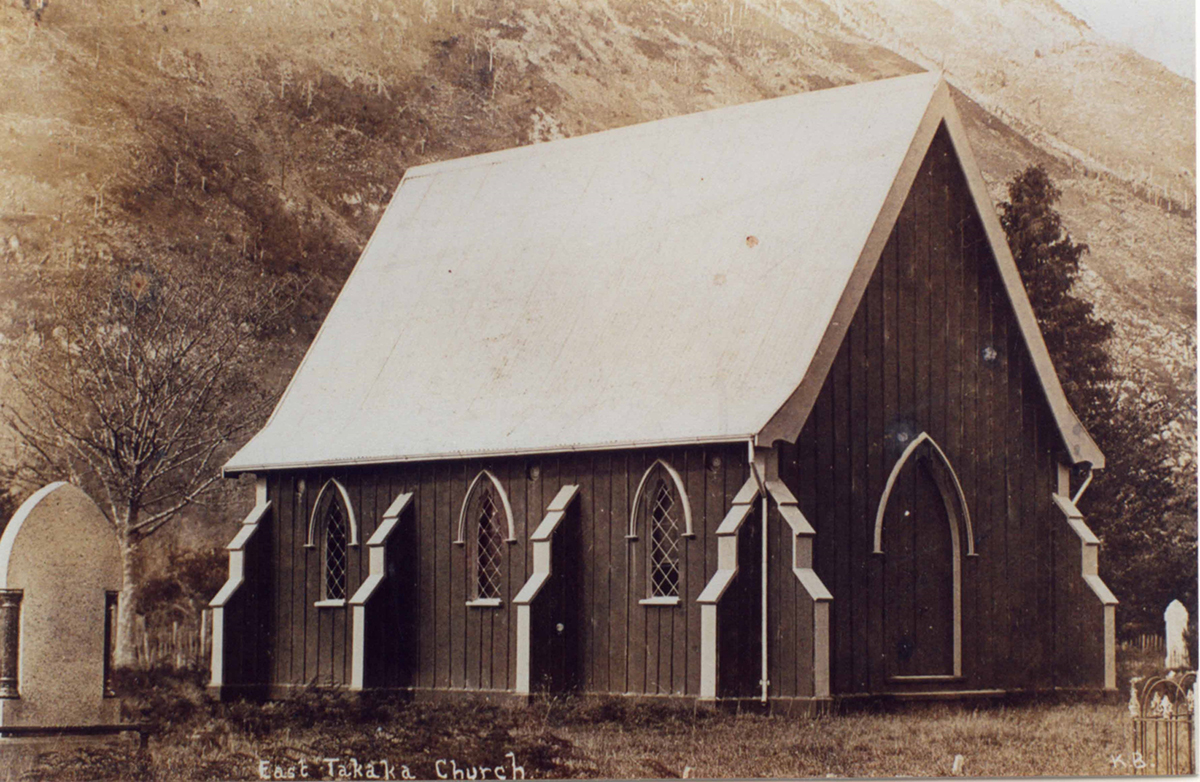
Historical Significance or Value The East Takaka Church has served the protestant community of East Takaka and the surrounding area for over 120 years.
Physical Significance
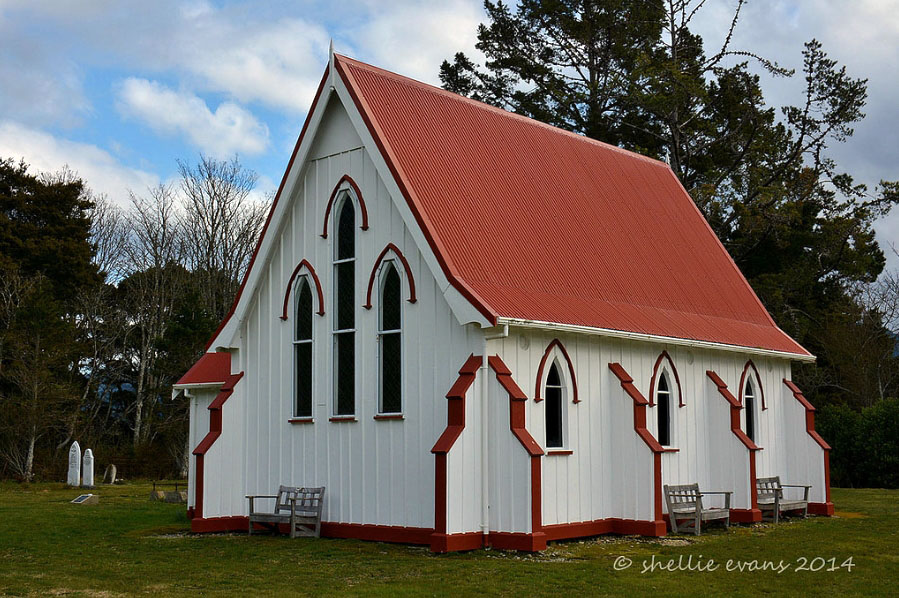
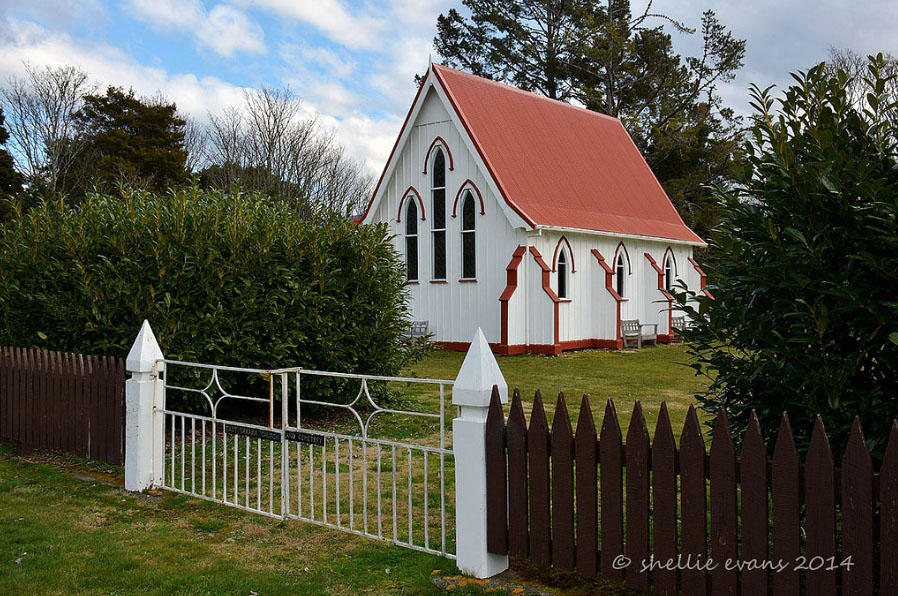
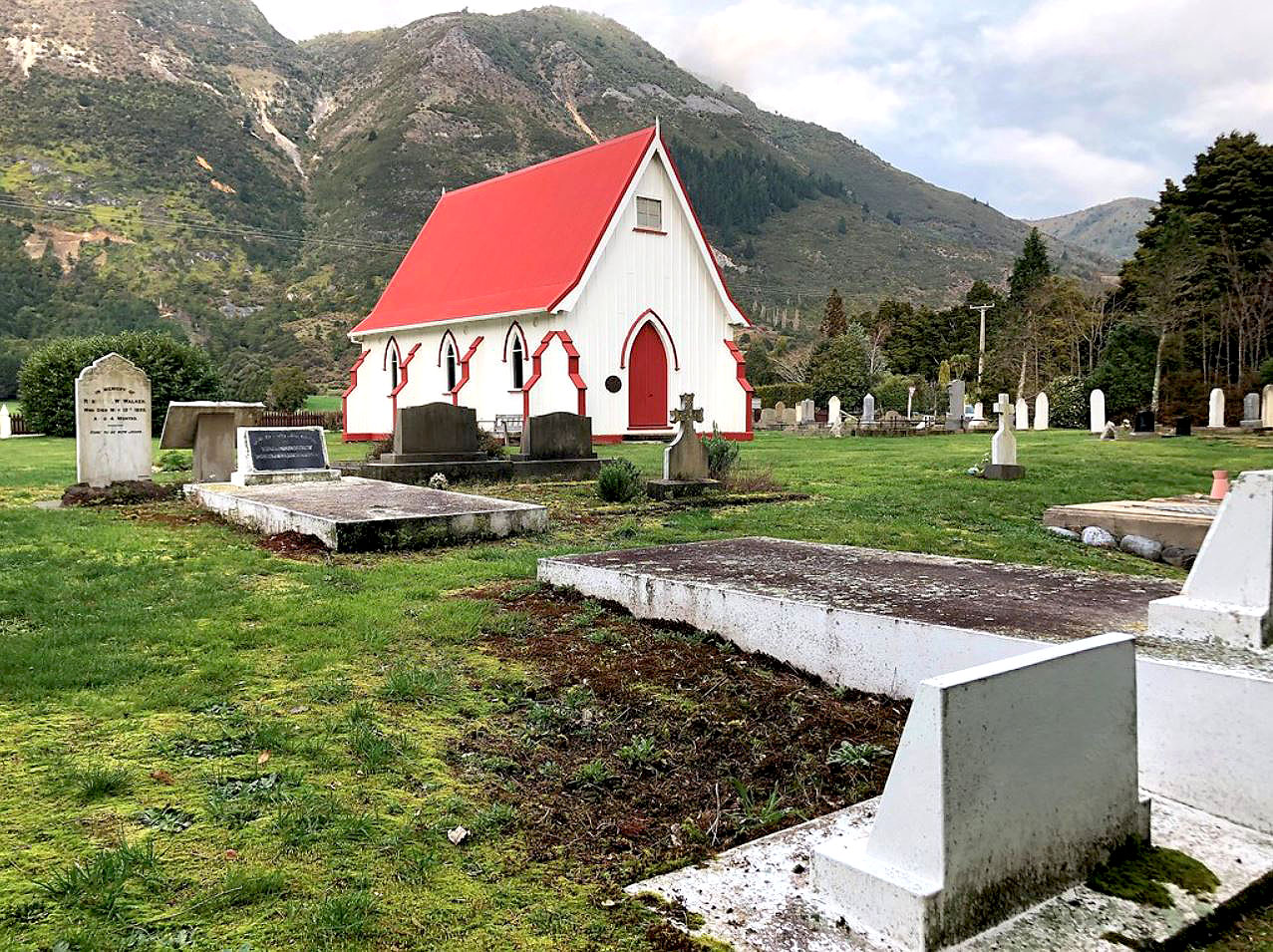
ARCHITECTURAL QUALITY: A fine example of the small Gothic Revival churches built in timber throughout New Zealand in the second half of last century, East Takaka Church is also one of the oldest churches in Golden Bay. TOWNSCAPE/LANDMARK VALUE: East Takaka church and cemetery sit quietly in a mature garden setting and are not prominent in the surrounding rural landscape.
Why is this place significant?
Historic Significance
Historical Significance or Value The East Takaka Church has served the protestant community of East Takaka and the surrounding area for over 120 years.
Physical Significance
ARCHITECTURAL QUALITY: A fine example of the small Gothic Revival churches built in timber throughout New Zealand in the second half of last century, East Takaka Church is also one of the oldest churches in Golden Bay. TOWNSCAPE/LANDMARK VALUE: East Takaka church and cemetery sit quietly in a mature garden setting and are not prominent in the surrounding rural landscape.
Construction Details
Start Year
1899
Type
Addition
Description
vestry added to southern façade
Type
Modification
Description
replacement of leadlight windows on northern façade (replaced with plain glass)
Period
Unknown
Start Year
1987
Type
Modification
Description
placement of protective aluminium windows over three stained glass windows on eastern façade
Start Year
1988
Type
Modification
Description
affixing of Nelson Historical Society plaque on western façade
Start Year
1991
startYearCirca
Type
Refurbishment/renovation
Description
re-piling and repair, renewal of windows on northern façade, protective aluminium windows placed over small leadlight windows on southern façade
Start Year
2009
startYearCirca
Type
Modification
Description
Re-roofing and painting
Start Year
1868
Type
Original Construction
Construction Materials
Timber piles, timber frame with vertical board and batten cladding. Corrugated galvanised iron roof.
Construction Details
Start Year
1899
Type
Addition
Description
vestry added to southern façade
Type
Modification
Description
replacement of leadlight windows on northern façade (replaced with plain glass)
Period
Unknown
Start Year
1987
Type
Modification
Description
placement of protective aluminium windows over three stained glass windows on eastern façade
Start Year
1988
Type
Modification
Description
affixing of Nelson Historical Society plaque on western façade
Start Year
1991
startYearCirca
Type
Refurbishment/renovation
Description
re-piling and repair, renewal of windows on northern façade, protective aluminium windows placed over small leadlight windows on southern façade
Start Year
2009
startYearCirca
Type
Modification
Description
Re-roofing and painting
Start Year
1868
Type
Original Construction
Construction Materials
Timber piles, timber frame with vertical board and batten cladding. Corrugated galvanised iron roof.
ARCHITECTURAL DESCRIPTION: The East Takaka church is a small wooden Gothic Revival building, with east-west orientation. It has a pitched roof with short simple finials and sprockets which form projecting eaves. Each side wall has two buttresses, and there are angle buttresses at each of the four corners. The double doors on the west facade are in the shape of a pointed arch, and have a decorative hood-mould. On the east end, above the altar, are three lancet windows with green stained glass in a decorative pattern. Each of these is now protected by an aluminium- framed window fitted on the outside. The north facade has a single lancet window between each adjacent pair of buttresses. The south facade also has a lancet window between the first two pairs of buttresses, while a gabled vestry is located in the third bay on that side. The vertical wooden battens of the vestry are slightly wider than those elsewhere, and the vestry window has plain glass while lead-light windows are used elsewhere. All windows have simple decorative hood-moulds. There are three circular vents on each of the north and south walls, a triangular one on the east end and a rectangular one on the west wall, all high up at the level of the eave. The interior has exposed wall framing and rafters. Every third pair of rafters has scissor-bracing. There is no distinction between nave and chancel. MODIFICATIONS: No major modifications. c.1985 - Aluminium framed windows fixed to outside of east windows.
ARCHITECTURAL DESCRIPTION: The East Takaka church is a small wooden Gothic Revival building, with east-west orientation. It has a pitched roof with short simple finials and sprockets which form projecting eaves. Each side wall has two buttresses, and there are angle buttresses at each of the four corners. The double doors on the west facade are in the shape of a pointed arch, and have a decorative hood-mould. On the east end, above the altar, are three lancet windows with green stained glass in a decorative pattern. Each of these is now protected by an aluminium- framed window fitted on the outside. The north facade has a single lancet window between each adjacent pair of buttresses. The south facade also has a lancet window between the first two pairs of buttresses, while a gabled vestry is located in the third bay on that side. The vertical wooden battens of the vestry are slightly wider than those elsewhere, and the vestry window has plain glass while lead-light windows are used elsewhere. All windows have simple decorative hood-moulds. There are three circular vents on each of the north and south walls, a triangular one on the east end and a rectangular one on the west wall, all high up at the level of the eave. The interior has exposed wall framing and rafters. Every third pair of rafters has scissor-bracing. There is no distinction between nave and chancel. MODIFICATIONS: No major modifications. c.1985 - Aluminium framed windows fixed to outside of east windows.
Historical and Associated Iwi / Hapū / Whānau
Completion Date
21st June 2022
Report Written By
Joanna Barnes-Wylie
Information Sources
Alexander Turnbull Library
Alexander Turnbull Library, Wellington
Ault, 1958
H. Ault, The Nelson Narrative; The Story of the Church of England in the Diocese of Nelson, New Zealand, Nelson, 1958
Land Information New Zealand (LINZ)
Land Information New Zealand
Colonist
The Colonist
Examiner
Examiner
Motueka - Golden Bay News
Motueka - Golden Bay News
Other Information
A fully referenced copy of the upgrade report is available on request from the Central Regional Office of Heritage New Zealand Pouhere Taonga This historic place was registered under the Historic Places Act 1980. This report includes the text from the original Building Classification Committee report considered by the NZHPT Board at the time of registration. Please note that entry on the New Zealand Heritage List/Rarangi Korero identifies only the heritage values of the property concerned, and should not be construed as advice on the state of the property, or as a comment of its soundness or safety, including in regard to earthquake risk, safety in the event of fire, or insanitary conditions.
Historical and Associated Iwi / Hapū / Whānau
Completion Date
21st June 2022
Report Written By
Joanna Barnes-Wylie
Information Sources
Alexander Turnbull Library
Alexander Turnbull Library, Wellington
Ault, 1958
H. Ault, The Nelson Narrative; The Story of the Church of England in the Diocese of Nelson, New Zealand, Nelson, 1958
Land Information New Zealand (LINZ)
Land Information New Zealand
Colonist
The Colonist
Examiner
Examiner
Motueka - Golden Bay News
Motueka - Golden Bay News
Other Information
A fully referenced copy of the upgrade report is available on request from the Central Regional Office of Heritage New Zealand Pouhere Taonga This historic place was registered under the Historic Places Act 1980. This report includes the text from the original Building Classification Committee report considered by the NZHPT Board at the time of registration. Please note that entry on the New Zealand Heritage List/Rarangi Korero identifies only the heritage values of the property concerned, and should not be construed as advice on the state of the property, or as a comment of its soundness or safety, including in regard to earthquake risk, safety in the event of fire, or insanitary conditions.
Current Usages
Uses: Civic Facilities
Specific Usage: Wedding Venue
Uses: Religion
Specific Usage: Church
Former Usages
General Usage: Religion
Specific Usage: Church
Current Usages
Uses: Civic Facilities
Specific Usage: Wedding Venue
Uses: Religion
Specific Usage: Church
Former Usages
General Usage: Religion
Specific Usage: Church
Location
Get the latest heritage news, features and events delivered
straight to your inbox.
