

"Willowmeade" homestead was built in 1858 on the property brought the previous year by Major John Larkins Cheese Richardson. Richardson was born in India, educated in England, and served in the army in India for 20 years before coming to New Zealand in 1856 with his three children, his wife having died 14 years earlier. The historical significance of "Willowmeade" lies in the fact that it was built for, and subsequently occupied by, Major Richardson (1810-1878), a prominent figure in Otago political and educational circles in the 1860s and 1870s. Richardson reluctantly entered provincial politics in 1860 when he was elected to represent Clutha
on the Provincial Council and in the following year he succeeded James Macandrew as Superintendent of the province. He held this position until 1863 and at the same time served as a member of the House of Representatives in successive governments until 1868. Thereafter Richardson served on the Legislative Council for twelve years, being Speaker for most of that time.
Perhaps his most important contribution to the development of Otago, however, occurred within the sphere of higher education. Richardson became Vice-Chancellor of the University of Otago when the University Council was constituted in 1869. He later succeeded Burns as Chancellor (1871-5). Concerned with the status of women in both education and industry, Richardson encouraged the establishment of Otago Girls' High School and wrote a pamphlet entitled "Employment of Females and Children in Workshops" which was published after his death. J L C Richardson's service to Otago was recognised by the award of a knighthood in 1874 and he died four years later at the age of sixty-eight.
Richardson sold the Willowmeade property in 1875 in order to pay off debts incurred by his son George in Fiji.
List Entry Information
Status
Listed
List Entry Status
Historic Place Category 1
Access
Private/No Public Access
List Number
5178
Date Entered
13th December 1990
Date of Effect
13th December 1990
City/District Council
Clutha District
Region
Otago Region
Legal description
Sec 8 Blk XVIII Clutha SD (RT OT10A/800), Otago Land District.
Status
Listed
List Entry Status
Historic Place Category 1
Access
Private/No Public Access
List Number
5178
Date Entered
13th December 1990
Date of Effect
13th December 1990
City/District Council
Clutha District
Region
Otago Region
Legal description
Sec 8 Blk XVIII Clutha SD (RT OT10A/800), Otago Land District.
Why is this place significant?
Historic Significance
Historical Significance or Value The historical significance of Willowmeade lies in its association with Sir John Richardson, a prominent figure in both national and local politics. Richardson's contribution to the development of Otago was considerable, particularly with regard to the development of higher education and Otago University.
Physical Significance
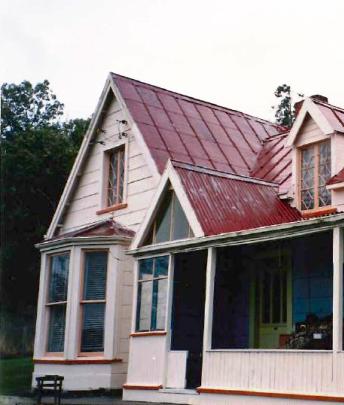
ARCHITECTURAL QUALITY: Largely unaltered, this house has stood for over one hundred and thirty years. It is notable for its wattle-and-daub construction and wooden linings marked to resemble stonework, its unusual roofing iron, leadlight windows which incorporate English Domestic Gothic Revival elements in their form and finish, and the care lavished on the disposition and finish of the principal rooms, particularly the living room and entrance hall. TOWNSCAPE/LANDMARK VALUE: "Willowmeade", standing on a rise overlooking the farmland, commands a magnificent view. The house complements its rural setting because of its siting in front of a stand of mature trees.
Why is this place significant?
Historic Significance
Historical Significance or Value The historical significance of Willowmeade lies in its association with Sir John Richardson, a prominent figure in both national and local politics. Richardson's contribution to the development of Otago was considerable, particularly with regard to the development of higher education and Otago University.
Physical Significance
ARCHITECTURAL QUALITY: Largely unaltered, this house has stood for over one hundred and thirty years. It is notable for its wattle-and-daub construction and wooden linings marked to resemble stonework, its unusual roofing iron, leadlight windows which incorporate English Domestic Gothic Revival elements in their form and finish, and the care lavished on the disposition and finish of the principal rooms, particularly the living room and entrance hall. TOWNSCAPE/LANDMARK VALUE: "Willowmeade", standing on a rise overlooking the farmland, commands a magnificent view. The house complements its rural setting because of its siting in front of a stand of mature trees.
Construction Professional
Name
Carr, William Young
Type
Builder
Biography
Builder. William Young Carr of Warepa, west of Balclutha, built "Willowmeade" and may have participated in its design.
Construction Details
Start Year
1858
Type
Original Construction
Construction Materials
Pit-sawn totara walls with wattle-and-daub infill. Pan iron and corrugated iron roofs, brick chimneys. Sash and casement windows.
Notable Features
Pan iron roofing; leaded casement windows; unusual wall construction.
Construction Professional
Name
Carr, William Young
Type
Builder
Biography
Builder. William Young Carr of Warepa, west of Balclutha, built "Willowmeade" and may have participated in its design.
Construction Details
Start Year
1858
Type
Original Construction
Construction Materials
Pit-sawn totara walls with wattle-and-daub infill. Pan iron and corrugated iron roofs, brick chimneys. Sash and casement windows.
Notable Features
Pan iron roofing; leaded casement windows; unusual wall construction.
ARCHITECTURAL DESCRIPTION: "Willowmeade" is a modest colonial homestead approximately fifteen kilometres south of Balclutha. The main section of the house, which is one-and-a-half storeys high, has an L-shaped plan and is surrounded by single storey lean-to structures on all but the east side. The exterior walls of the house are constructed of wattle-and-daub sandwiched between timber linings and are up to fifty-six centimetres thick. The main roof forms are clad in sheets of pan iron. These have straight ribs and are nailed on to battens which rest directly on the rafters now that the original bark purlins have disintegrated. The lean-to portions of the house have corrugated iron roofs. Rusticated weatherboard scored to imitate masonry construction line the exterior walls of the front of the house, which faces north, and the east wall of the cross gable. Elsewhere the house is clad in lapped weatherboards. Two half dog-house dormer windows and a window set into the apex of the cross gable light the upper floor which contains a stair landing with built-in cupboards and two bedrooms. These windows are set with leaded casements but elsewhere in the building plain sash windows light the rooms. Another decorative element within the facade is the front door which is inset with three pointed arched windows beneath a shallow fanlight. This door opens into a small entrance hall from which a steeply angled staircase rises in a quarter-turn curve. A decorative hall arch separates the entrance hall from a transverse passage which provides access to the living room and master bedroom and also communicates with a second passage between the bathroom and laundry. The door to the sun porch on the west side of the building opens off the master bedroom and on the opposite side of the house a modern concertina door separates the kitchen from the living room. The latter features a large bay window and a bracketed picture rail. MODIFICATIONS: Concertina door between the kitchen and living room fitted and two aluminium windows in south wall installed. West verandah enclosed to form additional bedroom and wall removed on first floor to form one large bedroom from two smaller ones. The north-facing verandah across the front of the house also appears to have been altered.
ARCHITECTURAL DESCRIPTION: "Willowmeade" is a modest colonial homestead approximately fifteen kilometres south of Balclutha. The main section of the house, which is one-and-a-half storeys high, has an L-shaped plan and is surrounded by single storey lean-to structures on all but the east side. The exterior walls of the house are constructed of wattle-and-daub sandwiched between timber linings and are up to fifty-six centimetres thick. The main roof forms are clad in sheets of pan iron. These have straight ribs and are nailed on to battens which rest directly on the rafters now that the original bark purlins have disintegrated. The lean-to portions of the house have corrugated iron roofs. Rusticated weatherboard scored to imitate masonry construction line the exterior walls of the front of the house, which faces north, and the east wall of the cross gable. Elsewhere the house is clad in lapped weatherboards. Two half dog-house dormer windows and a window set into the apex of the cross gable light the upper floor which contains a stair landing with built-in cupboards and two bedrooms. These windows are set with leaded casements but elsewhere in the building plain sash windows light the rooms. Another decorative element within the facade is the front door which is inset with three pointed arched windows beneath a shallow fanlight. This door opens into a small entrance hall from which a steeply angled staircase rises in a quarter-turn curve. A decorative hall arch separates the entrance hall from a transverse passage which provides access to the living room and master bedroom and also communicates with a second passage between the bathroom and laundry. The door to the sun porch on the west side of the building opens off the master bedroom and on the opposite side of the house a modern concertina door separates the kitchen from the living room. The latter features a large bay window and a bracketed picture rail. MODIFICATIONS: Concertina door between the kitchen and living room fitted and two aluminium windows in south wall installed. West verandah enclosed to form additional bedroom and wall removed on first floor to form one large bedroom from two smaller ones. The north-facing verandah across the front of the house also appears to have been altered.
Historical and Associated Iwi / Hapū / Whānau
Information Sources
Cyclopedia of New Zealand, 1905
Cyclopedia Company, Industrial, descriptive, historical, biographical facts, figures, illustrations, Wellington, N.Z, 1897-1908, Vol. 4 Otago and Southland, Cyclopedia Company, Christchurch, 1905
McLintock, 1949
McLintock, A.H., The History of Otago: The Origins and Growth of a Wakefield Class Settlement, Otago Centennial Historical Publications, Dunedin, 1949
Otago Daily Times
Otago Daily Times, 1 Jun 1915, p.10.
Other Information
This historic place was registered under the Historic Places Act 1980. This report includes the text from the original Building Classification Committee report considered by the NZHPT Board at the time of registration. Please note that entry on the New Zealand Heritage List/Rarangi Korero identifies only the heritage values of the property concerned, and should not be construed as advice on the state of the property, or as a comment of its soundness or safety, including in regard to earthquake risk, safety in the event of fire, or insanitary conditions.
Historical and Associated Iwi / Hapū / Whānau
Information Sources
Cyclopedia of New Zealand, 1905
Cyclopedia Company, Industrial, descriptive, historical, biographical facts, figures, illustrations, Wellington, N.Z, 1897-1908, Vol. 4 Otago and Southland, Cyclopedia Company, Christchurch, 1905
McLintock, 1949
McLintock, A.H., The History of Otago: The Origins and Growth of a Wakefield Class Settlement, Otago Centennial Historical Publications, Dunedin, 1949
Otago Daily Times
Otago Daily Times, 1 Jun 1915, p.10.
Other Information
This historic place was registered under the Historic Places Act 1980. This report includes the text from the original Building Classification Committee report considered by the NZHPT Board at the time of registration. Please note that entry on the New Zealand Heritage List/Rarangi Korero identifies only the heritage values of the property concerned, and should not be construed as advice on the state of the property, or as a comment of its soundness or safety, including in regard to earthquake risk, safety in the event of fire, or insanitary conditions.
Current Usages
Uses: Accommodation
Specific Usage: House
Former Usages
General Usage: Accommodation
Specific Usage: House
Current Usages
Uses: Accommodation
Specific Usage: House
Former Usages
General Usage: Accommodation
Specific Usage: House
