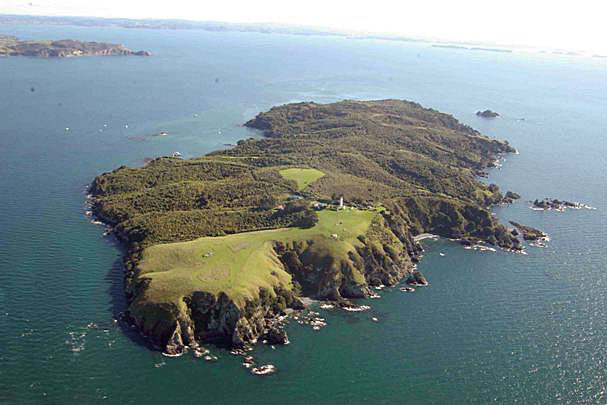
As one of the Hauraki Gulf Islands, Tiritiri Matangi was one of the floats of the ancestral fishing net of the explorer Toi te-Tuatahi. Within four years of the founding of Auckland in 1840, a buoy was placed off the east side of the island as a warning to European vessels approaching the colonial capital. One of thirteen locations mooted on the New Zealand Coast in 1861, the lighthouse was a provincial government initiative and was adopted in 1863 by the Marine Board which oversaw the erection of five of the seven lighthouses constructed before creation of the Marine Department in 1866.
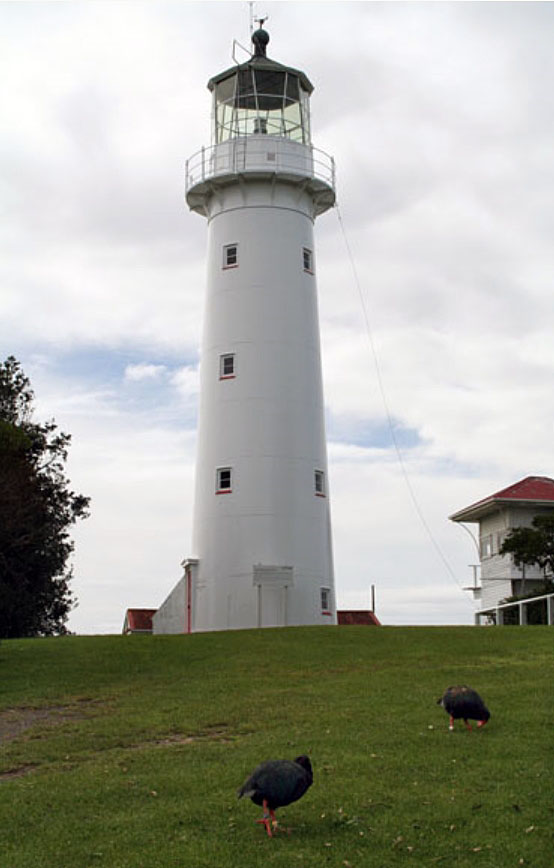
The tower was one of three designed for the colony by MacLean and Stilman of Westminster with input from Otago engineer James Balfour. It was cast in England in half-ton sections to enable haulage by bullocks to the elevated site. The foundations incorporated concrete at the base, an early use of the material in the colony. The first plate for the lighthouse was hoisted into place on 21 October 1864. Internally, the completed structure contained five stages: the lower level was an oil store; the second, the lamp-cleaning room; the third, the watch-room; the fourth and fifth contained the lamp. Construction was supervised by Richard Alymer and H. Rolton who accompanied the lighthouse, and equipment manufactured by Chance Brothers of Birmingham, from Britain. The exhibiting of the light on 1 January 1865, was followed a day later by that at Tairoa Heads; by Mana Island (Tiritiri’s twin) on 1 February; and Godley Head, and Dog Island later the same year.
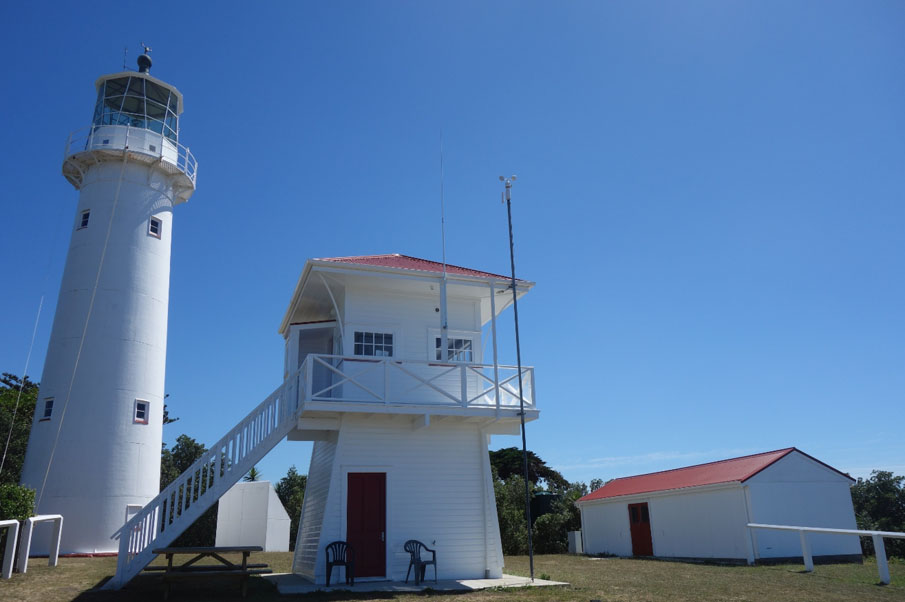
Notwithstanding the light’s range of 23 nautical miles, shipwrecks continued in the vicinity and included Marwell (1870), Triumph (1881) and Royal Tar (1901). Tiritiri was modified in 1879 when Doty burners were installed replacing colza (rapeseed) oil with paraffin as the fuel. In 1883, a red pane was added to the lantern, remaining until 1922. Reflecting changing technology, other maritime-related structures added included an Auckland Harbour Board signal station when pilotage became mandatory for most overseas vessels in 1912. The 1864 keepers’ houses were replaced in 1918. A Slaughters-Gun-Cotton-Foghorn and store was introduced in 1920, technology replaced in turn by a diaphone foghorn (1935), and an automatic fog detector (1975). In 1925, the light was converted to a flashing automatic acetylene light and came under Auckland Harbour Board control. Marine Department keepers were reintroduced in 1947 when the light returned to the coastal network under the Marine Department. A xenon light funded by a former Auckland Mayor Sir Ernest Davis was installed in 1964-5. The site was gazetted as scientific reserve in 1980. The keeper was withdrawn, later returning under the Department of Conservation. The lighthouse was solar powered and fully automated in 1990. In 2002, the light assembly was replaced by a modern rotating beacon powered by solar panels.
List Entry Information
Status
Listed
List Entry Status
Historic Place Category 1
Access
Private/No Public Access
List Number
5403
Date Entered
25th June 1992
Date of Effect
25th June 1992
City/District Council
Auckland Council
Region
Auckland Council
Extent of List Entry
Extent includes part of the land described as Sec 8 Blk III Tiritiri Survey District (NZ Gazette 1987, p.3439), North Auckland Land District and the structure known as Tiritiri Lighthouse including land extending ten metres from the base thereon. Refer to the extent map tabled at the Heritage New Zealand Board meeting on 3 September 2015.
Legal description
Sec 8 Blk III Tiritiri Survey District (NZ Gazette 1987, p.3439), North Auckland Land District
Status
Listed
List Entry Status
Historic Place Category 1
Access
Private/No Public Access
List Number
5403
Date Entered
25th June 1992
Date of Effect
25th June 1992
City/District Council
Auckland Council
Region
Auckland Council
Extent of List Entry
Extent includes part of the land described as Sec 8 Blk III Tiritiri Survey District (NZ Gazette 1987, p.3439), North Auckland Land District and the structure known as Tiritiri Lighthouse including land extending ten metres from the base thereon. Refer to the extent map tabled at the Heritage New Zealand Board meeting on 3 September 2015.
Legal description
Sec 8 Blk III Tiritiri Survey District (NZ Gazette 1987, p.3439), North Auckland Land District
Why is this place significant?
Historic Significance
Historical Significance or Value Tiritiri lighthouse is the oldest still in operation of the New Zealand Coast. It was one of the first lighthouses to be commissioned and erected under the auspices of the newly established Marine Board, the body responsible for the establishment of New Zealand's system of coastal lights. The lighthouse, which replaced an earlier buoy marking rocks near Tiritiri Island, represented a milestone in the development of the Auckland Province. By 1865 Auckland, still the capital of the colony, was the centre of an established overseas and coastal trade. The history of Tiritiri lighthouse illustrates change in marine light technology and fog warning mechanisms which played a significant role in the development of Auckland as a maritime centre.
Physical Significance
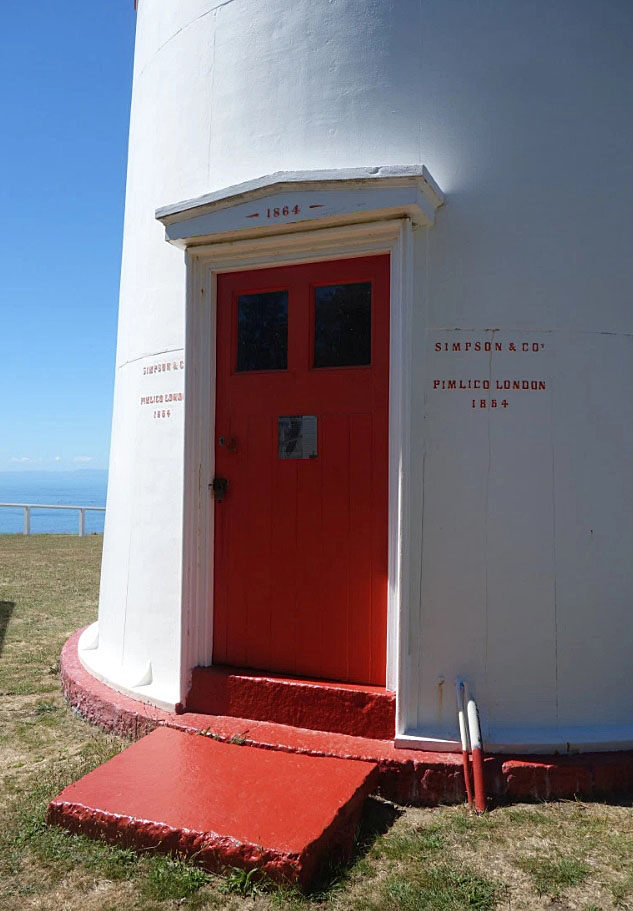
ARCHITECTURAL QUALITY: One of two near identical cast iron light towers manufactured by Simpson & Co. (the other being Cape Egmont, which was moved to the site from Mana Island in 1881), Tiritiri stands on its original site and is little changed apart from its modern light apparatus. LANDMARK SIGNIFICANCE: By the nature of its function, Tiritiri light tower is a prominent feature on the island. It is the nucleus of the former Marine Department lighthouse settlement (now Department of Conservation staff headquarters).
Why is this place significant?
Historic Significance
Historical Significance or Value Tiritiri lighthouse is the oldest still in operation of the New Zealand Coast. It was one of the first lighthouses to be commissioned and erected under the auspices of the newly established Marine Board, the body responsible for the establishment of New Zealand's system of coastal lights. The lighthouse, which replaced an earlier buoy marking rocks near Tiritiri Island, represented a milestone in the development of the Auckland Province. By 1865 Auckland, still the capital of the colony, was the centre of an established overseas and coastal trade. The history of Tiritiri lighthouse illustrates change in marine light technology and fog warning mechanisms which played a significant role in the development of Auckland as a maritime centre.
Physical Significance
ARCHITECTURAL QUALITY: One of two near identical cast iron light towers manufactured by Simpson & Co. (the other being Cape Egmont, which was moved to the site from Mana Island in 1881), Tiritiri stands on its original site and is little changed apart from its modern light apparatus. LANDMARK SIGNIFICANCE: By the nature of its function, Tiritiri light tower is a prominent feature on the island. It is the nucleus of the former Marine Department lighthouse settlement (now Department of Conservation staff headquarters).
Construction Professional
Name
Simpson and Co., Pimlico (Foundry)
Type
Builder
Biography
No biography is currently available for this construction professional
Name
Chance Brothers, Birmingham (Manufacturers of Lighthouse light apparatus)
Type
Builder
Biography
No biography is currently available for this construction professional
Name
Aylmer, Richard
Type
Engineer
Biography
Richard Aylmer, the Marine Board's lighthouse aruficer, came from England in 1864 aboard the ship which brought Tiritiri's prefabricated lighthouse and keepers houses. A civil engineer by profession, Aylmer designed Tiritiri's foundation and superintended the erection of the structure itself and its associated dwellings. Aylmer also supervised the construction of the lighthouse on Mana Island (Tiritiri's "twin") in 1986. Although erection of the Godley Head Light, Lyttelton was supervised by Thornton, Assistant Provincial Engineer for Canterbury, Aylmer went south for the fitting of the light apparatus. He was also sent to Farewell Spit to survey a suitable site for a light. Aylmer was elected an Associate Member of the Institute of Civil Engineers in 1865 and became a member of that Institute in 1879. He had earlier returned to England in 1867 where he practised engineering in Westminster, until 1902. The exact years of his birth and death are unknown.
Name
McLean and Stilman
Type
Designer
Biography
No biography is currently available for this construction professional
Construction Details
Start Year
1864
Type
Original Construction
Start Year
1879
Type
Modification
Description
Doty burners installed
Start Year
1883
Type
Modification
Description
To show red light over Flat Rock to Kawau Island
Start Year
1916
Type
Modification
Description
Incandescent burner installed
Start Year
1922
Type
Modification
Description
Red pane removed from lantern
Start Year
1925
Type
Modification
Description
Converted to flashing automatic acetylene light
Start Year
1965
Type
Modification
Description
Xenon light installed
Start Year
1955
Type
Modification
Description
Light converted to diesel-generated electric; new radio beacon installed
Start Year
1967
Type
Modification
Description
Mains reticulation
Start Year
1990
Type
Modification
Description
Solar panels installed
Start Year
2002
Type
Modification
Description
Light assembly replaced with modern rotating beacon.
Construction Materials
Foundation (excavated 3m below ground level) consisting of 914mm layer of concrete surmounted by scoria masonry 2.13m high and 5.6m in diameter. Tower plates bolted to squared scoria blocks by 63.5mm bolts 918mm long. Tower plates bolted together, fastened by "rust joints", caulked and cemented. Cast iron floor supported by iron girders radiating from a common centre pillar to the sides of the tower. Lantern - inclined metal sash bars glazed with 12.7mm thick plate. Copper sheathed roof.
Construction Professional
Name
Simpson and Co., Pimlico (Foundry)
Type
Builder
Biography
No biography is currently available for this construction professional
Name
Chance Brothers, Birmingham (Manufacturers of Lighthouse light apparatus)
Type
Builder
Biography
No biography is currently available for this construction professional
Name
Aylmer, Richard
Type
Engineer
Biography
Richard Aylmer, the Marine Board's lighthouse aruficer, came from England in 1864 aboard the ship which brought Tiritiri's prefabricated lighthouse and keepers houses. A civil engineer by profession, Aylmer designed Tiritiri's foundation and superintended the erection of the structure itself and its associated dwellings. Aylmer also supervised the construction of the lighthouse on Mana Island (Tiritiri's "twin") in 1986. Although erection of the Godley Head Light, Lyttelton was supervised by Thornton, Assistant Provincial Engineer for Canterbury, Aylmer went south for the fitting of the light apparatus. He was also sent to Farewell Spit to survey a suitable site for a light. Aylmer was elected an Associate Member of the Institute of Civil Engineers in 1865 and became a member of that Institute in 1879. He had earlier returned to England in 1867 where he practised engineering in Westminster, until 1902. The exact years of his birth and death are unknown.
Name
McLean and Stilman
Type
Designer
Biography
No biography is currently available for this construction professional
Construction Details
Start Year
1864
Type
Original Construction
Start Year
1879
Type
Modification
Description
Doty burners installed
Start Year
1883
Type
Modification
Description
To show red light over Flat Rock to Kawau Island
Start Year
1916
Type
Modification
Description
Incandescent burner installed
Start Year
1922
Type
Modification
Description
Red pane removed from lantern
Start Year
1925
Type
Modification
Description
Converted to flashing automatic acetylene light
Start Year
1965
Type
Modification
Description
Xenon light installed
Start Year
1955
Type
Modification
Description
Light converted to diesel-generated electric; new radio beacon installed
Start Year
1967
Type
Modification
Description
Mains reticulation
Start Year
1990
Type
Modification
Description
Solar panels installed
Start Year
2002
Type
Modification
Description
Light assembly replaced with modern rotating beacon.
Construction Materials
Foundation (excavated 3m below ground level) consisting of 914mm layer of concrete surmounted by scoria masonry 2.13m high and 5.6m in diameter. Tower plates bolted to squared scoria blocks by 63.5mm bolts 918mm long. Tower plates bolted together, fastened by "rust joints", caulked and cemented. Cast iron floor supported by iron girders radiating from a common centre pillar to the sides of the tower. Lantern - inclined metal sash bars glazed with 12.7mm thick plate. Copper sheathed roof.
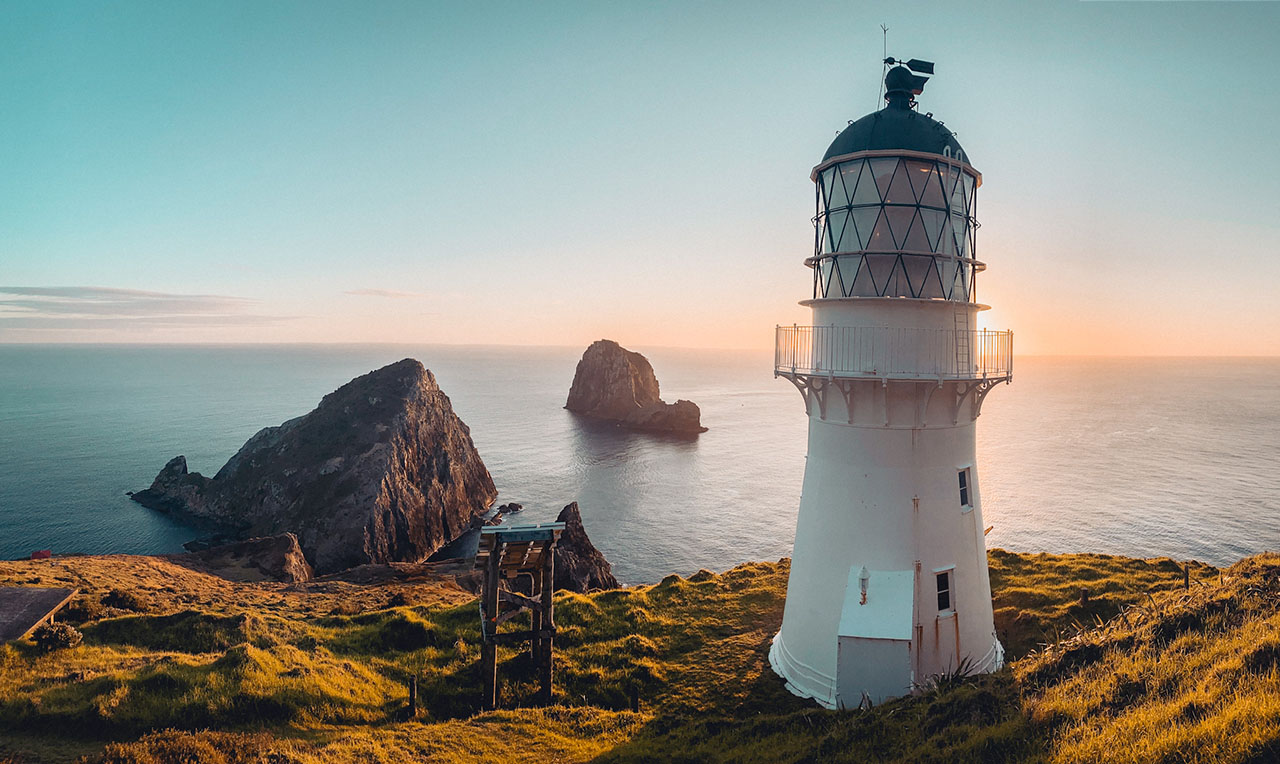
DESIGNERS: McLean & Stilmari, CE, London MANUFACTURERS: Tower & Simpson, London Lantern-Light Chance Bros, Birmingham SUPERVISING: ENGINEER Richard AYLMER (c.1830-c.1909) ARCHITECTURAL DESCRIPTION: Tiritiri's cast iron tower stands 14.63m high, and has a diameter of 4.72m directly above the base course, and 3.33m below the gallery. It is surmounted by a 6.7m high dodecagon lantern capped by metal ball, spindle and vane giving a total height from base course to vane of 21.33m. The shallow gabled head above the doorway bears the date 1864. The interior is divided into four "floors" each lit by three single sash timber-framed windows. A flight of iron steps winds clockwise within the tower connecting each room and leading to the lantern. Floor 1 was originally the oil store room where three 100 gallon tanks held 9 months supply of colza (refined rape seed oil) for the lamp. The fourth floor was the watch room. The lantern, of "English" construction, with fixed dioptric apparatus of second order (or size) was a system originally invented by Augustin Fresnel in 1822. The original lamp was a pressure or "moderator" lamp which had three concentric wicks. Around the inside of the lantern is the old trimming stage supported on ornamental brackets. MODIFICATIONS: The cast iron light tower and lantern have not been compromised by modification. Changes in lighting technology, however, have resulted in several changes in lighting mechanism, the most significant of which were conversion from fixed to flashing light in 1925 and in 1965 the installation of an 11-million candle power xenon light. 1879 Doty paraffin lamp replaced original colza burning lamp. 1916 A Chance's patent incandescent burner using vaporised kerosene installed. 1925 Automatic acetylene burning light installed and conversion from fixed to flashing light undertaken 1955 Conversion to diesel generated electricity. 1965 Xenon marine light installed (11-million candle-power). 1967 Submarine cable laid from Whangaparaoa Peninsula connecting Tiritiri with mainland power supply. 1983 11-million candle-power light downgraded to 1.25 -million candle-power. 1990 light output further reduced (to approximately 300,000 candle-power) Solar panels installed alongside structure replacing mainland power supply as energy source for lighthouse
Historical and Associated Iwi / Hapū / Whānau
Public NZAA Number
R10/596
Completion Date
27th June 2015
Report Written By
Joan McKenzie
Information Sources
Appendices to the Journals of the House of Representatives (AJHR)
Appendices to the Journals of the House of Representatives
Auckland Public Libraries
Auckland Star
Auckland Star
Churchman, 1989
G. Churchman, New Zealand Lighthouses, Wellington, 1989
Daily Southern Cross
Department of Conservation
Furkert, 1953
Frederick William Furkert, Early New Zealand Engineers, Wellington, 1953
Kelly, 2003
Michael Kelly, 'New Zealand Lighthouses: a National Heritage Identification Study', [Wellington], 2003
New Zealand Herald
New Zealand Herald, 12 July 1932, p. 6; 28 September 1933, p. 6.
New Zealander
New Zealander
Ross, 1975
John Ross, Lighthouses of New Zealand, Palmerston North: Dunmore Press, 1975
Taylor, 1975
Peter Taylor, As Darker Grows the Night, Auckland, 1975
Weekly News
Weekly News
New Zealand Nautical Almanac
New Zealand Nautical Almanac, Ministry of Transport, Marine Division
Gulf News
Gulf News
Rimmer, Anne
Rimmer Anne, ‘150th Anniversary of the Tiritiri Lighthouse’, p.4, URL http://www.maritimenz.govt.nz/Commercial/Shipping-safety/Aids-to-navigation/Lighthouses-of-NZ/Tiritiri_Matangi_150th_anniversary_of_Lighthouse.pdf
Other Information
This historic place was registered under the Historic Places Act 1980. This report includes the text from the original Building Classification Committee report considered by the NZHPT Board at the time of registration. Please note that entry on the New Zealand Heritage List/Rarangi Korero identifies only the heritage values of the property concerned, and should not be construed as advice on the state of the property, or as a comment of its soundness or safety, including in regard to earthquake risk, safety in the event of fire, or insanitary conditions. A fully referenced upgrade report is available on request from the Northern Region Office of Heritage New Zealand.
Historical and Associated Iwi / Hapū / Whānau
Public NZAA Number
R10/596
Completion Date
27th June 2015
Report Written By
Joan McKenzie
Information Sources
Appendices to the Journals of the House of Representatives (AJHR)
Appendices to the Journals of the House of Representatives
Auckland Public Libraries
Auckland Star
Auckland Star
Churchman, 1989
G. Churchman, New Zealand Lighthouses, Wellington, 1989
Daily Southern Cross
Department of Conservation
Furkert, 1953
Frederick William Furkert, Early New Zealand Engineers, Wellington, 1953
Kelly, 2003
Michael Kelly, 'New Zealand Lighthouses: a National Heritage Identification Study', [Wellington], 2003
New Zealand Herald
New Zealand Herald, 12 July 1932, p. 6; 28 September 1933, p. 6.
New Zealander
New Zealander
Ross, 1975
John Ross, Lighthouses of New Zealand, Palmerston North: Dunmore Press, 1975
Taylor, 1975
Peter Taylor, As Darker Grows the Night, Auckland, 1975
Weekly News
Weekly News
New Zealand Nautical Almanac
New Zealand Nautical Almanac, Ministry of Transport, Marine Division
Gulf News
Gulf News
Rimmer, Anne
Rimmer Anne, ‘150th Anniversary of the Tiritiri Lighthouse’, p.4, URL http://www.maritimenz.govt.nz/Commercial/Shipping-safety/Aids-to-navigation/Lighthouses-of-NZ/Tiritiri_Matangi_150th_anniversary_of_Lighthouse.pdf
Other Information
This historic place was registered under the Historic Places Act 1980. This report includes the text from the original Building Classification Committee report considered by the NZHPT Board at the time of registration. Please note that entry on the New Zealand Heritage List/Rarangi Korero identifies only the heritage values of the property concerned, and should not be construed as advice on the state of the property, or as a comment of its soundness or safety, including in regard to earthquake risk, safety in the event of fire, or insanitary conditions. A fully referenced upgrade report is available on request from the Northern Region Office of Heritage New Zealand.
Current Usages
Uses: Transport
Specific Usage: Lighthouse
Current Usages
Uses: Transport
Specific Usage: Lighthouse
Stay up to date with Heritage this month


