Quick links


Quick links
Quick links
Quick links
Quick links
Quick links
40 Koe Street, Ana Street and Midland Line, MOANA
Public
Historic Area
List No. 7054


List Entry Information
Status
Listed
List Entry Status
Historic Area
Access
Able to Visit
List Number
7054
Date Entered
21st September 1989
Date of Effect
21st September 1989
City/District Council
Grey District
Region
West Coast Region
Extent of List Entry
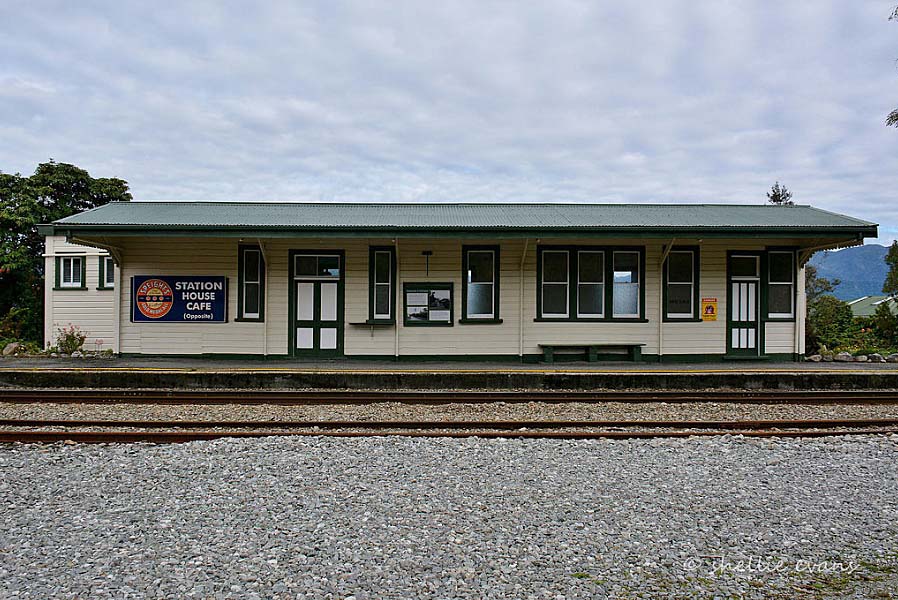
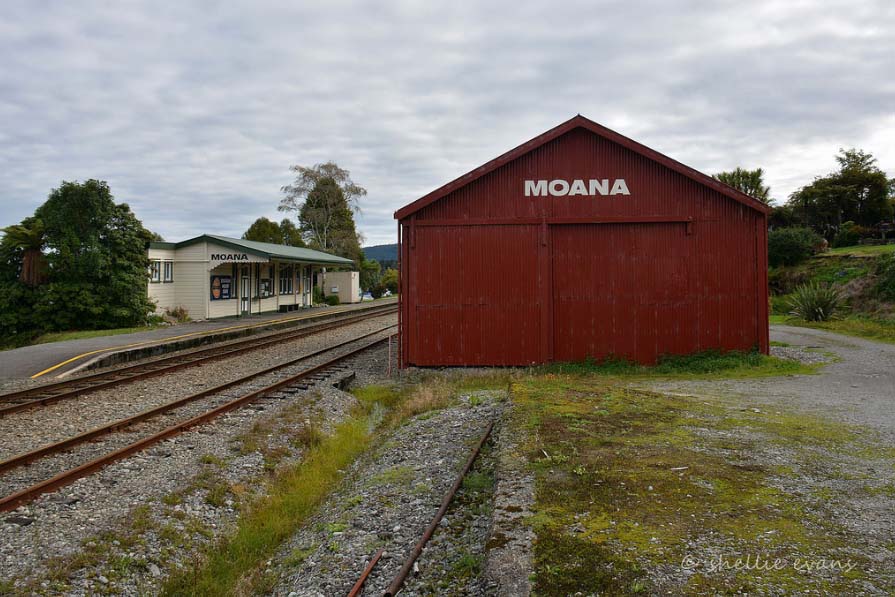
Extent includes part of the land described as Sec 122, Town of Moana, SO 10199 (RT WS5C/918 and WS5B/810) and Railway Land as shown on SO 876 & SO 9468, Westland Land District and the buildings and structures known as station building, the footbridge, the goods shed and the former station master’s house that make up the Moana Railway Station Historic Area thereon.
Legal description
Sec 122, Town of Moana, SO 10199 (RT WS5B/810) and Railway Land as shown on SO 876 & SO 9468, Westland Land District
Location Description
The Moana Railway Station Historic Area is accessible via Ana Street, MOANA. The Men's Public Toilets, Jigger Shed and Loading Bank have been demolished.
Why is this place Category 1 / Category 2?
Detail Of Assessed Criteria
This assessment was prepared on 26 May 2021 with reference to the criteria of the Heritage New Zealand Pouhere Taonga Act 2014.
Why is this place Category 1 / Category 2?
Detail Of Assessed Criteria
This assessment was prepared on 26 May 2021 with reference to the criteria of the Heritage New Zealand Pouhere Taonga Act 2014.
Construction Professional
Name
Troup, George Alexander
Type
Architect
Biography
G A Troup (1863-1941) was born in London in 1863 and educated in Scotland. He trained as an architect and engineer under C E Calvert of Edinburgh and came to New Zealand in 1884. After a short time with the Survey Department in Otago he became a draughtsman for New Zealand Railways in Dunedin and then, from 1888, in Wellington. Troup became Chief Draughtsman in 1894. He designed many station buildings throughout the county, some of which are still in use today; these buildings form an important part of New Zealand's landscape. His best known building is the Dunedin Railway Station (1904-07). He also designed the head office building in Wellington for Railways (1901, now demolished). Troup became a Fellow of the Royal Institute of British Architects in 1907. After World War I he was promoted to head the newly established Architectural Branch of New Zealand Railways. On retirement from Railways in 1925 he entered local body politics and was Mayor of Wellington from 1927 to 1931. Troup was prominent in the Presbyterian Church and founded the Presbyterian Young Men's Bible Class Union. He was an elder of the church for 47 years and also served on the governing bodies of several Wellington secondary schools. Education was a life-long interest and he was keenly involved in the training of engineering cadets in New Zealand Railways. Troup was knighted in 1937 and died in 1941. Last updated 1 October 2014 See also: James Veitch. 'Troup, George Alexander', Dictionary of New Zealand Biography, first published in 1993. Te Ara - the Encyclopedia of New Zealand, https://teara.govt.nz/en/biographies/2t49/troup-george-alexander
Construction Details
Start Year
1926
Type
Demolished - Fire
Description
Railway Station building destroyed by fire
Start Year
1926
Type
Reconstruction
Description
Replacement Railway Station building constructed
Start Year
1993
Type
Refurbishment/renovation
Description
Stationmaster’s House converted to café
Start Year
1993
startYearCirca
Finish Year
2004
Type
Partial Demolition
Description
Demolition of Men’s Public Toilets, Jigger Shed and Loading Bank
Start Year
1994
startYearCirca
Finish Year
2004
finishYearCirca
Type
Demolished - Other
Description
Demolition of Men's Public Toilets, Jigger Shed and Loading Bank
Start Year
1892
Type
Original Construction
Description
Opening of railway line from Brunner to Moana, Lake Brunner
Start Year
1895
Type
Original Construction
Description
Lean-to station building (with booking office and telephone station) and platform built
Start Year
1900
startYearCirca
Type
Original Construction
Description
Stationmaster’s house constructed
Start Year
1901
startYearCirca
Type
Modification
Description
Station extended and fireplace put in.
Start Year
1907
startYearCirca
Type
Additional building added to site
Description
Goods Shed constructed
startYearCirca
Type
Addition
Description
Footbridge
Period
1910s
Start Year
1911
Type
Modification
Description
Station building extended at west end (refreshment rooms)
Construction Materials
Timber, iron, corrugated iron
This historic place was registered under the Historic Places Act 1980. The following text is from the original Proposal for Classification report considered by the NZHPT Board at the time of registration. Moana Railway Station precinct including, Moana Railway Station, Loading Bank, Public Toilets, Jigger Shed, Goods Shed, Footbridge and Stationmaster's House.
This historic place was registered under the Historic Places Act 1980. The following text is from the original Proposal for Classification report considered by the NZHPT Board at the time of registration. Moana Railway Station precinct including, Moana Railway Station, Loading Bank, Public Toilets, Jigger Shed, Goods Shed, Footbridge and Stationmaster's House.
Historical and Associated Iwi / Hapū / Whānau
Completion Date
26th May 2021
Report Written By
Robyn Burgess
Other Information
A fully referenced upgrade report is available on request from the Canterbury/West Coast Area Office of Heritage New Zealand Please note that entry on the New Zealand Heritage List/Rarangi Korero identifies only the heritage values of the property concerned, and should not be construed as advice on the state of the property, or as a comment of its soundness or safety, including in regard to earthquake risk, safety in the event of fire, or insanitary conditions.
Current Usages
Uses: Trade
Specific Usage: Cafe
Uses: Transport
Specific Usage: Railway - shed
Uses: Transport
Specific Usage: Railway Footbridge
Uses: Transport
Specific Usage: Railway station/ platform/ refreshment room
Former Usages
General Usage: Communication
Specific Usage: Post Office
General Usage: Transport
Specific Usage: Railway housing
Web Links
description: Engineering NZ Heritage
url: https://www.engineeringnz.org/our-work/heritage/heritage-records/midland-railway/
Get the latest heritage news, features and events delivered
straight to your inbox.