List Entry Information
Status
Listed
List Entry Status
Historic Place Category 2
Access
Private/No Public Access
List Number
7293
Date Entered
14th December 1995
Date of Effect
14th December 1995
City/District Council
Auckland Council
Region
Auckland Council
Extent of List Entry
Extent includes part of the land described as Lot 1 DP 400096 (RT 399056), North Auckland Land District, and the building known as Excelsior Building (Former) thereon, and its fittings and fixtures.
Legal description
Lot 1 DP 400096 (RT 399056), North Auckland Land District
Status
Listed
List Entry Status
Historic Place Category 2
Access
Private/No Public Access
List Number
7293
Date Entered
14th December 1995
Date of Effect
14th December 1995
City/District Council
Auckland Council
Region
Auckland Council
Extent of List Entry
Extent includes part of the land described as Lot 1 DP 400096 (RT 399056), North Auckland Land District, and the building known as Excelsior Building (Former) thereon, and its fittings and fixtures.
Legal description
Lot 1 DP 400096 (RT 399056), North Auckland Land District
Why is this place significant?
Historic Significance
Historical Significance or Value This historic place was registered under the Historic Places Act 1993. The following text is from the original Recommendation for Registration considered by the NZHPT Board at the time of registration. The site of the Excelsior Building was originally leased by Herman Brown and John McKail Geddes of Brown, Barrett & Co., tea, coffee and spice merchants and general importers. The building was constructed c. 1898 and was leased to various businesses. In the early 1900s the large saddlery firm J.Wiseman & Sons was anchor tenant, supported by other businesses, including kauri gum merchants. The building was cut in half in the 1930s to permit the widening of Commerce St, the first Britomart development to scythe its way through the city's building stocks. Perhaps more than any other Britomart building, Excelsior House exemplifies the reconstruction that has been a recurring theme in the history of this part of the CBD since the cutting down of Point Britomart in the 1870s, because this building was cut in half in the 1930s to permit the widening of Commerce St. Since then the remnant has provided accommodation for a variety of shops, distributors and manufacturer's representatives, the BNZ regional offices and social clubs.
Physical Significance
This historic place was registered under the Historic Places Act 1993. The following text is from the original Recommendation for Registration considered by the NZHPT Board at the time of registration. Architectural: The Excelsior's interior has been modernised in the typical form of encasement of original walls, ceilings, posts and beams, with fibrous plaster board and timber veneers. The stairwells have been modernised in the same way with new balusters and handrails of c 1960s vintage. At the rear of the first floor there is one large aluminium window. There is also aluminium joinery in the west (side) wall which was built in the 1930s when part of the building was demolished to form Commerce St. Archaeological: Parts of the area have archaeological potential.
Why is this place Category 1 / Category 2?
Detail Of Assessed Criteria
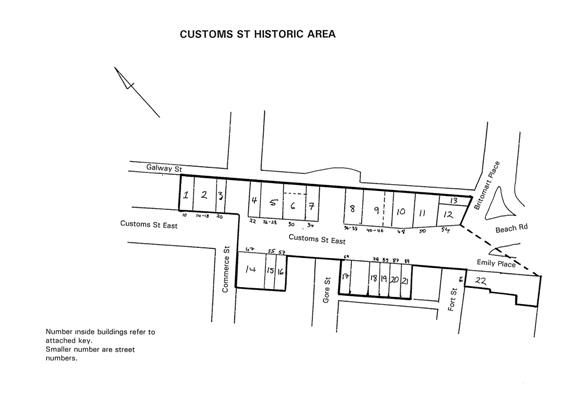
This historic place was registered under the Historic Places Act 1993. The following text is from the original Recommendation for Registration considered by the NZHPT Board at the time of registration. The following comments are made in relation to the criteria identified under S.23(2) of the Historic Places Act 1993. a) The extent to which the place reflects important and representative aspects of New Zealand history: The former Excelsior Building reflects the importance of merchandising warehouses to New Zealand cities. In a colony which lacked substantial manufacturing industries, importing was an important business activity. These merchandising warehouses were usually clustered around the interface between the waterfront and the central business district. b) The association of the place with events, persons or ideas of importance in New Zealand history: This building is directly related to another controversial development regarding the provision of public transport services in central Auckland - the first Britomart development. With the ill-judged transfer of the railway station to Beach Rd in 1930, the future of the site of the original station attracted much speculation. Standing only a few yards away from the inadequate Commerce St bus terminal, the land had a ready-made use. A firm decision to develop it as a municipal bus station was taken in 1933. There were the usual unavoidable delays - it took much to persuade the bus companies that the location was suitable. Eventually the land was leased from the Railways Department, construction starting late in 1936. Access roads were widened and the Britomart Place Bus Station opened in September 1937, the first of its kind in New Zealand. (G.W.A. Bush pp. 273) c) the potential of the place to provide knowledge of New Zealand history. The Customs St East buildings all stand on land reclaimed between 1879 and 1886 and therefore have archaeological significance. Reclamation of the seabed commenced in 1859. The outer edge of the northern side of Customs St was initially bounded by a muddy embankment and on the seaward side of the reclamation were massive stone retaining walls, Customs St provided access to a number of wharves constructed out across the mudflats of Commercial Bay to deeper water. Between 1879 and 1886 the reclamation continued in a northerly and easterly direction forming the land between Customs and Quay St. This is the land on which the warehouses now stand. It is probable that a large quantity of material will have been deposited on the sea bed from the wharves which is likely to include artefacts of historical and archaeological interest. k) The extent to which the place forms part of a wider historical and cultural complex or historical and cultural landscape: This warehouse is one of several Merchants' warehouses on the northern side of Customs St East. This impressive group of nineteenth and early twentieth century commercial buildings once formed the city's point of commercial contact with the rest of the colony and the world. Conclusion: The former Excelsior Building, 22 Customs St East, Auckland, is recommended for registration as a Category II as a place of historical and cultural heritage significance and value. The former Excelsior Building is one of a group of turn of the century merchandising warehouses built on Auckland's busy waterfront. It is particularly significant regarding its links to the first Britomart transport development in the 1930s.
Why is this place significant?
Historic Significance
Historical Significance or Value This historic place was registered under the Historic Places Act 1993. The following text is from the original Recommendation for Registration considered by the NZHPT Board at the time of registration. The site of the Excelsior Building was originally leased by Herman Brown and John McKail Geddes of Brown, Barrett & Co., tea, coffee and spice merchants and general importers. The building was constructed c. 1898 and was leased to various businesses. In the early 1900s the large saddlery firm J.Wiseman & Sons was anchor tenant, supported by other businesses, including kauri gum merchants. The building was cut in half in the 1930s to permit the widening of Commerce St, the first Britomart development to scythe its way through the city's building stocks. Perhaps more than any other Britomart building, Excelsior House exemplifies the reconstruction that has been a recurring theme in the history of this part of the CBD since the cutting down of Point Britomart in the 1870s, because this building was cut in half in the 1930s to permit the widening of Commerce St. Since then the remnant has provided accommodation for a variety of shops, distributors and manufacturer's representatives, the BNZ regional offices and social clubs.
Physical Significance
This historic place was registered under the Historic Places Act 1993. The following text is from the original Recommendation for Registration considered by the NZHPT Board at the time of registration. Architectural: The Excelsior's interior has been modernised in the typical form of encasement of original walls, ceilings, posts and beams, with fibrous plaster board and timber veneers. The stairwells have been modernised in the same way with new balusters and handrails of c 1960s vintage. At the rear of the first floor there is one large aluminium window. There is also aluminium joinery in the west (side) wall which was built in the 1930s when part of the building was demolished to form Commerce St. Archaeological: Parts of the area have archaeological potential.
Why is this place Category 1 / Category 2?
Detail Of Assessed Criteria
This historic place was registered under the Historic Places Act 1993. The following text is from the original Recommendation for Registration considered by the NZHPT Board at the time of registration. The following comments are made in relation to the criteria identified under S.23(2) of the Historic Places Act 1993. a) The extent to which the place reflects important and representative aspects of New Zealand history: The former Excelsior Building reflects the importance of merchandising warehouses to New Zealand cities. In a colony which lacked substantial manufacturing industries, importing was an important business activity. These merchandising warehouses were usually clustered around the interface between the waterfront and the central business district. b) The association of the place with events, persons or ideas of importance in New Zealand history: This building is directly related to another controversial development regarding the provision of public transport services in central Auckland - the first Britomart development. With the ill-judged transfer of the railway station to Beach Rd in 1930, the future of the site of the original station attracted much speculation. Standing only a few yards away from the inadequate Commerce St bus terminal, the land had a ready-made use. A firm decision to develop it as a municipal bus station was taken in 1933. There were the usual unavoidable delays - it took much to persuade the bus companies that the location was suitable. Eventually the land was leased from the Railways Department, construction starting late in 1936. Access roads were widened and the Britomart Place Bus Station opened in September 1937, the first of its kind in New Zealand. (G.W.A. Bush pp. 273) c) the potential of the place to provide knowledge of New Zealand history. The Customs St East buildings all stand on land reclaimed between 1879 and 1886 and therefore have archaeological significance. Reclamation of the seabed commenced in 1859. The outer edge of the northern side of Customs St was initially bounded by a muddy embankment and on the seaward side of the reclamation were massive stone retaining walls, Customs St provided access to a number of wharves constructed out across the mudflats of Commercial Bay to deeper water. Between 1879 and 1886 the reclamation continued in a northerly and easterly direction forming the land between Customs and Quay St. This is the land on which the warehouses now stand. It is probable that a large quantity of material will have been deposited on the sea bed from the wharves which is likely to include artefacts of historical and archaeological interest. k) The extent to which the place forms part of a wider historical and cultural complex or historical and cultural landscape: This warehouse is one of several Merchants' warehouses on the northern side of Customs St East. This impressive group of nineteenth and early twentieth century commercial buildings once formed the city's point of commercial contact with the rest of the colony and the world. Conclusion: The former Excelsior Building, 22 Customs St East, Auckland, is recommended for registration as a Category II as a place of historical and cultural heritage significance and value. The former Excelsior Building is one of a group of turn of the century merchandising warehouses built on Auckland's busy waterfront. It is particularly significant regarding its links to the first Britomart transport development in the 1930s.
Construction Details
Start Year
1898
startYearCirca
Type
Original Construction
Construction Details
Start Year
1898
startYearCirca
Type
Original Construction
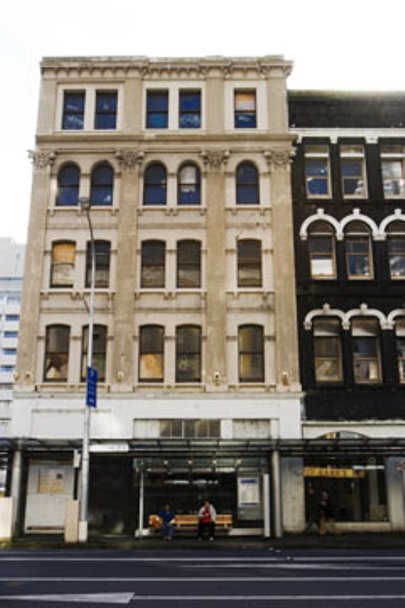
This historic place was registered under the Historic Places Act 1993. The following text is from the original Recommendation for Registration report for Customs Street Historic Area considered by the NZHPT Board at the time of registration. Originally "Excelsior House". Pilasters with Corinthian capitals break round headed and flat headed windows into bays, one storey attic above cornice, five storey, brick. Date of construction unknown, (possibly 1898?) site originally leased by Hermann Brown & John McKail Geddes of Brown, Barrett & Co., Tea, Coffee & Spice Merchants and General Importers. "Excelsior" was a brand name for one of their lines although upon removal from Wyndham to Customs Street East they conducted their business from what is now the "Masonic Club", No. 30. Half of the building was removed in the 1930's to widen Commerce Street. Architect: Not known.
This historic place was registered under the Historic Places Act 1993. The following text is from the original Recommendation for Registration report for Customs Street Historic Area considered by the NZHPT Board at the time of registration. Originally "Excelsior House". Pilasters with Corinthian capitals break round headed and flat headed windows into bays, one storey attic above cornice, five storey, brick. Date of construction unknown, (possibly 1898?) site originally leased by Hermann Brown & John McKail Geddes of Brown, Barrett & Co., Tea, Coffee & Spice Merchants and General Importers. "Excelsior" was a brand name for one of their lines although upon removal from Wyndham to Customs Street East they conducted their business from what is now the "Masonic Club", No. 30. Half of the building was removed in the 1930's to widen Commerce Street. Architect: Not known.
Historical and Associated Iwi / Hapū / Whānau
Information Sources
Auckland Public Libraries
Auckland Public Libraries
Auckland Weekly News
Auckland Weekly News
Bush, 1971
G .W. A. Bush, 'Decently and In Order: The Government of the City of Auckland 1840-1971', Auckland, 1971
Wises Post Office Directories
Wises Post Office Directories
Auckland City Council
Auckland City Council
Other Information
Copies of the original registration reports are available from the NZHPT Northern Region office The development of Stanbeth House and Excelsior House received a merit award in the commerical office category of the 2012 Property Council New Zealand Rider Levett Bucknall Property Industry Awards Please note that entry on the New Zealand Heritage List/Rarangi Korero identifies only the heritage values of the property concerned, and should not be construed as advice on the state of the property, or as a comment of its soundness or safety, including in regard to earthquake risk, safety in the event of fire, or insanitary conditions.
Historical and Associated Iwi / Hapū / Whānau
Information Sources
Auckland Public Libraries
Auckland Public Libraries
Auckland Weekly News
Auckland Weekly News
Bush, 1971
G .W. A. Bush, 'Decently and In Order: The Government of the City of Auckland 1840-1971', Auckland, 1971
Wises Post Office Directories
Wises Post Office Directories
Auckland City Council
Auckland City Council
Other Information
Copies of the original registration reports are available from the NZHPT Northern Region office The development of Stanbeth House and Excelsior House received a merit award in the commerical office category of the 2012 Property Council New Zealand Rider Levett Bucknall Property Industry Awards Please note that entry on the New Zealand Heritage List/Rarangi Korero identifies only the heritage values of the property concerned, and should not be construed as advice on the state of the property, or as a comment of its soundness or safety, including in regard to earthquake risk, safety in the event of fire, or insanitary conditions.
Former Usages
General Usage: Trade
Specific Usage: Warehouse/storage area
Former Usages
General Usage: Trade
Specific Usage: Warehouse/storage area