

List Entry Information
Status
Listed
List Entry Status
Historic Place Category 2
Access
Private/No Public Access
List Number
7340
Date Entered
25th October 1996
Date of Effect
25th October 1996
City/District Council
Dunedin City
Region
Otago Region
Legal description
Sec 18 Blk IV Otokia District
Status
Listed
List Entry Status
Historic Place Category 2
Access
Private/No Public Access
List Number
7340
Date Entered
25th October 1996
Date of Effect
25th October 1996
City/District Council
Dunedin City
Region
Otago Region
Legal description
Sec 18 Blk IV Otokia District
Why is this place significant?
Historic Significance
Historical Significance or Value This historic place was registered under the Historic Places Act 1993. The following text is from the original Recommendation for Registration considered by the NZHPT Board at the time of registration. In 1864 carpenter William Gibb Adam opened an accommodation house at Moeraki Bush (Otokia) halfway between Dunedin and Milton on the main route to the south. Together with the nearby Reliance Hotel, the Adams Accommodation House supplied the needs of travellers and serviced the gold escort. Business declined when the railway went through the district and after 1880 the building's became residential. The house remained in the Adams family until 1976.
Physical Significance
This historic place was registered under the Historic Places Act 1993. The following text is from the original Recommendation for Registration considered by the NZHPT Board at the time of registration. Architectural: Glenallen was originally built in 1858 as a simple Victorian gable ended Box House or Cottage. Later, in 1864, the building was expanded in size to turn the place into an accommodation house, a function which continued for nearly twenty years.
Why is this place Category 1 / Category 2?
Detail Of Assessed Criteria
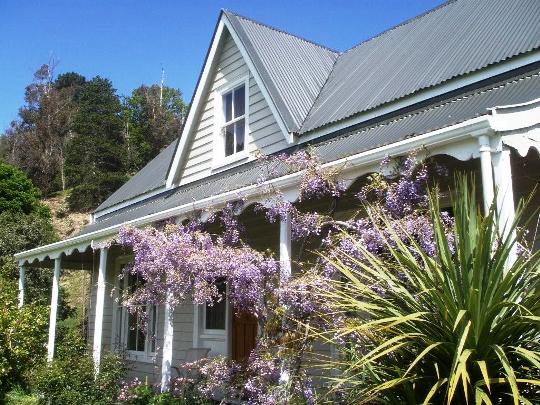
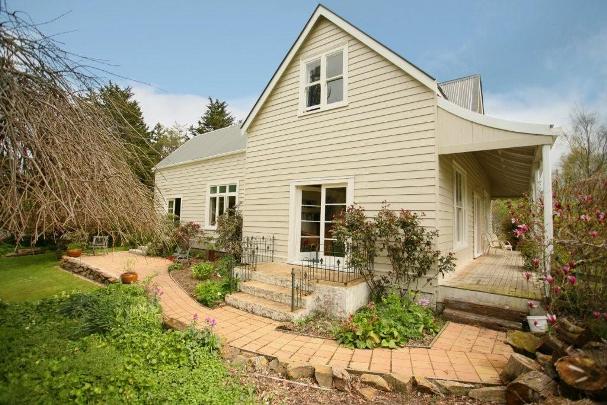
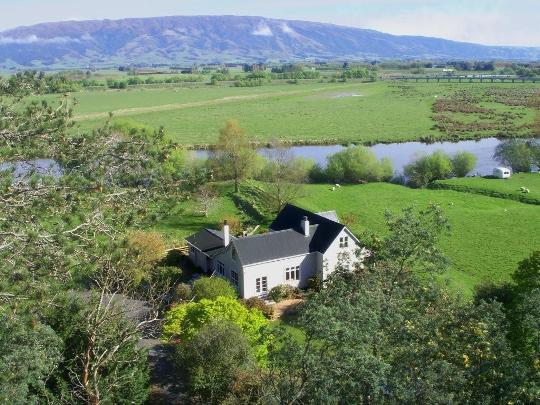
This historic place was registered under the Historic Places Act 1993. The following text is from the original Recommendation for Registration considered by the NZHPT Board at the time of registration. The following comments are made in relation to the criteria identified under S.23(2) of the Historic Places Act 1993. b) The association of the place with events, persons, or ideas of importance in New Zealand history: The Adam family owned Glenallen for more than one hundred and ten years. The family has local historical significance. Wayside accommodation houses were an important feature in colonial New Zealand when surface transport was slow and costly. g) The technical accomplishment or value, or design of the place: Glenallen, a former road side accommodation house during the years 1864-c.1880, was designed and built by the Adam brothers in Victorian Combined Box House or Cottage style. The building has a "T" plan with the original 1858 front (north) block having conventional gable ends with a steeply pitched roof and a verandah added later. In 1864 an additional block was placed at the rear at right angles to the front forming a "T". The construction of the place is original ship-lap weatherboard on conventional timber balloon framing. Six foot concrete piles replaced the original (presumably timber) piles around 1900 to overcome flood damage from the Taieri River. Decorative elements were few and far between on these early Victorian houses. The quality of the design relied more or less exclusively on its general form and function. The original design is intact and very evident on the original north and south east elevations of Glenallen. However, the verandah of Glenallen still retains its original decorative valance on the verandah, a noteworthy feature for an early styled house. Evidence of its accommodation house function comes down to the addition on the south east elevation forming a "T" with the original cottage, plus the opening up of the attic space with the addition of a gable dormer k) The extent to which the place forms part of a wider historical and cultural complex or historical and cultural landscape: Glenallen is a component of the main south road which provided Dunedin with a vital link first to its southern rural hinterland and then to the Central Otago gold fields in the years before the railway captured much of the traffic. The road's origins go back to 1849. By 1862 twenty miles of the Dunedin-Taieri Ferry road had been metalled; the first coaches had begun running the previous year. Conclusion: Glenallen, Otakia, Old Henly Rd, Mosgiel, is recommended for registration as a Category II as a place of historical and cultural heritage significance and value. Glenallen was built for William Gibb Adam in 1858 as a simple Victorian cottage which was expanded, a few years later, for use as an accommodation house. From the 1880s onwards the house was, once again, used as a private residence remaining in the Adams family until 1976.
Why is this place significant?
Historic Significance
Historical Significance or Value This historic place was registered under the Historic Places Act 1993. The following text is from the original Recommendation for Registration considered by the NZHPT Board at the time of registration. In 1864 carpenter William Gibb Adam opened an accommodation house at Moeraki Bush (Otokia) halfway between Dunedin and Milton on the main route to the south. Together with the nearby Reliance Hotel, the Adams Accommodation House supplied the needs of travellers and serviced the gold escort. Business declined when the railway went through the district and after 1880 the building's became residential. The house remained in the Adams family until 1976.
Physical Significance
This historic place was registered under the Historic Places Act 1993. The following text is from the original Recommendation for Registration considered by the NZHPT Board at the time of registration. Architectural: Glenallen was originally built in 1858 as a simple Victorian gable ended Box House or Cottage. Later, in 1864, the building was expanded in size to turn the place into an accommodation house, a function which continued for nearly twenty years.
Why is this place Category 1 / Category 2?
Detail Of Assessed Criteria
This historic place was registered under the Historic Places Act 1993. The following text is from the original Recommendation for Registration considered by the NZHPT Board at the time of registration. The following comments are made in relation to the criteria identified under S.23(2) of the Historic Places Act 1993. b) The association of the place with events, persons, or ideas of importance in New Zealand history: The Adam family owned Glenallen for more than one hundred and ten years. The family has local historical significance. Wayside accommodation houses were an important feature in colonial New Zealand when surface transport was slow and costly. g) The technical accomplishment or value, or design of the place: Glenallen, a former road side accommodation house during the years 1864-c.1880, was designed and built by the Adam brothers in Victorian Combined Box House or Cottage style. The building has a "T" plan with the original 1858 front (north) block having conventional gable ends with a steeply pitched roof and a verandah added later. In 1864 an additional block was placed at the rear at right angles to the front forming a "T". The construction of the place is original ship-lap weatherboard on conventional timber balloon framing. Six foot concrete piles replaced the original (presumably timber) piles around 1900 to overcome flood damage from the Taieri River. Decorative elements were few and far between on these early Victorian houses. The quality of the design relied more or less exclusively on its general form and function. The original design is intact and very evident on the original north and south east elevations of Glenallen. However, the verandah of Glenallen still retains its original decorative valance on the verandah, a noteworthy feature for an early styled house. Evidence of its accommodation house function comes down to the addition on the south east elevation forming a "T" with the original cottage, plus the opening up of the attic space with the addition of a gable dormer k) The extent to which the place forms part of a wider historical and cultural complex or historical and cultural landscape: Glenallen is a component of the main south road which provided Dunedin with a vital link first to its southern rural hinterland and then to the Central Otago gold fields in the years before the railway captured much of the traffic. The road's origins go back to 1849. By 1862 twenty miles of the Dunedin-Taieri Ferry road had been metalled; the first coaches had begun running the previous year. Conclusion: Glenallen, Otakia, Old Henly Rd, Mosgiel, is recommended for registration as a Category II as a place of historical and cultural heritage significance and value. Glenallen was built for William Gibb Adam in 1858 as a simple Victorian cottage which was expanded, a few years later, for use as an accommodation house. From the 1880s onwards the house was, once again, used as a private residence remaining in the Adams family until 1976.
Construction Details
Start Year
1858
Type
Original Construction
Construction Details
Start Year
1858
Type
Original Construction
Historical and Associated Iwi / Hapū / Whānau
Information Sources
Salmond, 1986
Jeremy Salmond, Old New Zealand Houses 1800-1940, Auckland, 1986, Reed Methuen
Shaw, 1949
Margaret Shaw and Edgar D. Farrant, The Taieri Plain: Tales of the Years that are Gone, Otago Centennial Historical Publications, Dunedin, 1949
Other Information
A copy of the original report is available from the NZHPT Southern region office Please note that entry on the New Zealand Heritage List/Rarangi Korero identifies only the heritage values of the property concerned, and should not be construed as advice on the state of the property, or as a comment of its soundness or safety, including in regard to earthquake risk, safety in the event of fire, or insanitary conditions.
Historical and Associated Iwi / Hapū / Whānau
Information Sources
Salmond, 1986
Jeremy Salmond, Old New Zealand Houses 1800-1940, Auckland, 1986, Reed Methuen
Shaw, 1949
Margaret Shaw and Edgar D. Farrant, The Taieri Plain: Tales of the Years that are Gone, Otago Centennial Historical Publications, Dunedin, 1949
Other Information
A copy of the original report is available from the NZHPT Southern region office Please note that entry on the New Zealand Heritage List/Rarangi Korero identifies only the heritage values of the property concerned, and should not be construed as advice on the state of the property, or as a comment of its soundness or safety, including in regard to earthquake risk, safety in the event of fire, or insanitary conditions.
Current Usages
Uses: Accommodation
Specific Usage: House
Former Usages
General Usage: Accommodation
Specific Usage: House
Current Usages
Uses: Accommodation
Specific Usage: House
Former Usages
General Usage: Accommodation
Specific Usage: House
