DonateSupporterVisit Heritage
  • Tūrangawaewae
    Places
  • Tira Māori
    Māori Heritage
  • Poutairangahia
    Archaeology
  • Rauemi
    Resources
  • Mō Tātou
    About Us
  • New Zealand Heritage List
  • Nominate and submit
  • Explore the List
  • National Historic Landmarks
  • Plaques
  • Rainbow List Project
  • Lost heritage
  • Visit Heritage
  • Our properties
  • Turnbull House Project
  • Collections
  • Shop
  • Tohu Whenua
  • Tira Māori
  • Conserving Māori heritage
  • Marae built heritage
  • Māori heritage on the List
  • Hinemihi—Te Hokinga Mai
  • What is archaeology?
  • Is there a site on my property?
  • What are my legal requirements?
  • Affecting an archaeological site
  • Declaring an archaeological site
  • Archaeology FAQs
  • Archaeology Digital Library
  • Archaeology guidelines and templates
  • Resources
  • Funding
  • Publications
  • Sustainable management guides
  • Disaster recovery
  • Podcasts & digital resources
  • Education Hub
  • Conservation plans
  • About
  • Board
  • Māori Heritage Council
  • Senior Staff
  • Offices
  • Contact us
  • Careers
  • Covenants
  • Fast-track
  • Corporate documents
  • Currently consulting on
  • Our submissions
  • News
  • Covid-19 response
Quick links
Rārangi Kōrero | The List
Explore the List
National Historic Landmarks
Ngā Manawhenua o Aotearoa me ōna Kōrero Tūturu
Quick links
Tapuwae
A Vision for Places of Māori Heritage
Funding for Māori Heritage
Resources
Quick links
Archaeological Authority Portal
Applying for an archaeological authority
Archaeology FAQs
Browse the most frequently asked questions about archaeological authorities and the archaeological process.
Quick links
Quick links
Contact us
Offices
DonateSupporterVisit Heritage
  • Tūrangawaewae
    Places
  • Tira Māori
    Māori Heritage
  • Poutairangahia
    Archaeology
  • Rauemi
    Resources
  • Mō Tātou
    About Us
  • New Zealand Heritage List
  • Nominate and submit
  • Explore the List
  • National Historic Landmarks
  • Plaques
  • Rainbow List Project
  • Lost heritage
  • Visit Heritage
  • Our properties
  • Turnbull House Project
  • Collections
  • Shop
  • Tohu Whenua
  • Tira Māori
  • Conserving Māori heritage
  • Marae built heritage
  • Māori heritage on the List
  • Hinemihi—Te Hokinga Mai
  • What is archaeology?
  • Is there a site on my property?
  • What are my legal requirements?
  • Affecting an archaeological site
  • Declaring an archaeological site
  • Archaeology FAQs
  • Archaeology Digital Library
  • Archaeology guidelines and templates
  • Resources
  • Funding
  • Publications
  • Sustainable management guides
  • Disaster recovery
  • Podcasts & digital resources
  • Education Hub
  • Conservation plans
  • About
  • Board
  • Māori Heritage Council
  • Senior Staff
  • Offices
  • Contact us
  • Careers
  • Covenants
  • Fast-track
  • Corporate documents
  • Currently consulting on
  • Our submissions
  • News
  • Covid-19 response
Quick links
Rārangi Kōrero | The List
Explore the List
National Historic Landmarks
Ngā Manawhenua o Aotearoa me ōna Kōrero Tūturu
Quick links
Tapuwae
A Vision for Places of Māori Heritage
Funding for Māori Heritage
Resources
Quick links
Archaeological Authority Portal
Applying for an archaeological authority
Archaeology FAQs
Browse the most frequently asked questions about archaeological authorities and the archaeological process.
Quick links
Quick links
Contact us
Offices
  • Places
  • Nominate and submit
  • National Historic Landmarks
  • Places
  • Nominate and submit
  • National Historic Landmarks
  • Tira Māori
  • Conserving Māori heritage
  • Marae built heritage
  • Tira Māori
  • Conserving Māori heritage
  • Marae built heritage
  • Archaeological authorities
  • Archaeology Digital Library
  • Archaeological authorities
  • Archaeology Digital Library
  • All resources
  • Publications
  • Funding
  • All resources
  • Publications
  • Funding
  • FAQs
  • FAQs
Follow us on:
Places
  • Places
  • Nominate and submit
  • National Historic Landmarks
Tira Māori
  • Tira Māori
  • Conserving Māori heritage
  • Marae built heritage
Archaeology
  • Archaeological authorities
  • Archaeology Digital Library
Resources
  • All resources
  • Publications
  • Funding
FAQs
  • FAQs
Follow us on
HomePrivacyTerms and conditionsAbout this site
© Heritage New Zealand Pouhere Taonga 2026.
 
Scott's Ferry Site

Parewanui Road, Port of Rangitikei, PAREWANUI

Public

Historic Place Category 1

List No. 7421

Quick links:
List GalleryLocationDetails
Scott's Ferry Site, with its restored barge, is a rare reminder of the importance ferries played in New Zealand in the days before bridges were common. Prior to the introduction of a coach service in the 1870s, the main route from Wellington north to Wanganui and beyond was around the coastline. It appears that by 1843 a ferry service had been established at Parewanui to take people across the mouth of the Rangitikei River. In 1850 Thomas Scott took on the duties of ferryman. Scott also established a trading post and accommodation house at Parewanui. He entered into agreements with local Maori, trading wheat, Indian corn and pigs. The popularity of Parewanui increased as more and more Pakeha settlers moved up the coast with their stock to take up their land in the Wanganui region and beyond. In addition, between 1850 and 1897 the nearby Port of Rangitikei (at the mouth of the river) became an important conduit for the region's produce.

When the Manawatu and Rangitikei county councils were established they took over the ferry service, continuing to employ Scott as the ferryman. Scott died in January 1892 and his widow, Charlotte, and her son took over the service. In April 1897 a large flood tore the banks of the river, destroying all bridges in its path and changing the course of the Rangitikei. The port was destroyed and the ferry site washed away. The ferry was eventually restored with government assistance. With the development of alternative forms of transport, including the North Island main trunk railway line (finished 1908), the need to maintain the ferry as a major transport link declined and, despite opposition from local settlers, it was closed in 1907. In 1908 the barge was sold to the Featherstone family at Parikino. The new owners used the barge to transfer stock across the Whanganui River. In the 1970s the barge was taken down the Whanganui River for an intended maritime museum. The museum never eventuated and the barge gradually sank into the mud of the riverbank. In 1989 the barge was raised and sited near the original Scott's Ferry site, and members of the local community undertook its restoration as a 1990 sesquicentennial project.

Today, Scott's Ferry Site is a rare memorial to a form of transport that was common in New Zealand in the nineteenth century. It is also associated with Thomas Scott, a notable figure in the history of the Rangitikei region.
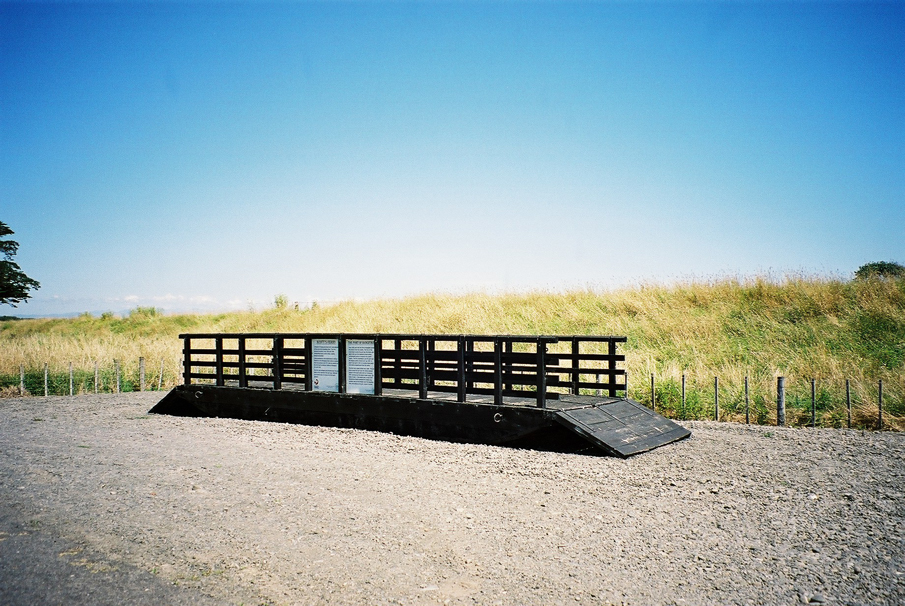
Scott's Ferry Site, Parewanui | Helen McCracken | 23/01/2002 | Heritage New Zealand Pouhere Taonga
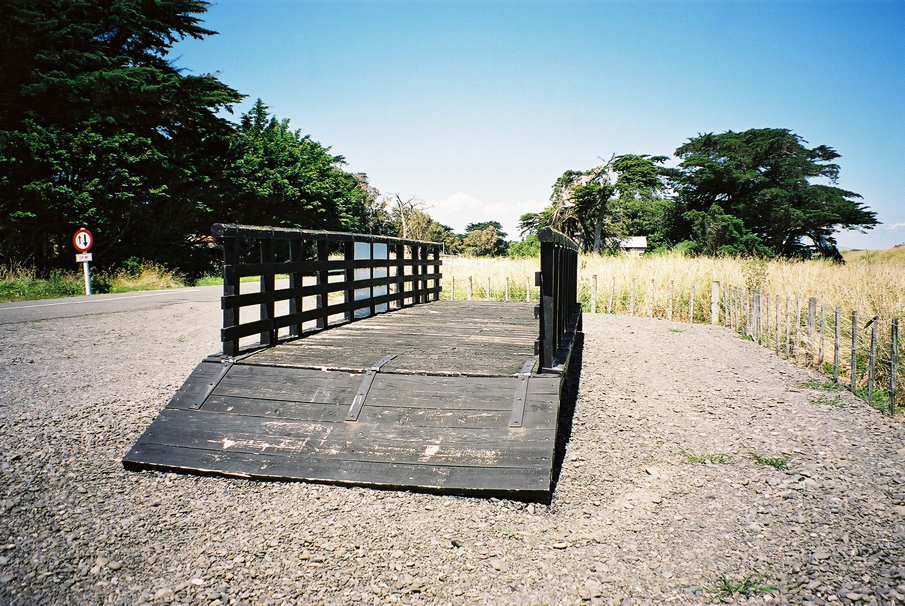
Scott's Ferry Site, Parewanui | Helen McCracken | 30/01/2002 | Heritage New Zealand Pouhere Taonga

Scott's Ferry Site, Parewanui | Helen McCracken | 23/01/2002 | Heritage New Zealand Pouhere Taonga
Scott's Ferry Site, Parewanui | Helen McCracken | 30/01/2002 | Heritage New Zealand Pouhere Taonga

List Entry Information

Overview

Status
Listed

List Entry Status
Historic Place Category 1

Access
Able to Visit

List Number
7421

Date Entered
17th April 1998

Date of Effect
17th April 1998

City/District Council
Rangitīkei District

Region
Horizons (Manawatū-Whanganui) Region

Extent of List Entry

Extent includes part of the land described as Pt Lot 2 DP 7133 (NZ Gazette 1975 p.1334), and part of Sec 457 Rangitikei District (NZ Gazette 1975 p.1624), Wellington Land District, and the structure associated with Scott’s Ferry Site thereon. Refer to the extent map tabled at the Heritage New Zealand Board meeting on 25 June 2015.

Legal description

Pt Lot 2 DP 7133 (NZ Gazette 1975 p.1334), Sec 457 Rangitikei District (NZ Gazette 1975 p.1624), Wellington Land District

Detailed List Entry
Significance

Historic Significance

Historical Significance or Value River Ferries crossed the Rangitikei river from 1843. The importance of this one, which served the strategically important coastal route north of Wellington, grew after Thomas Scott took it over in 1849 and ran it in conjunction with his other business activities. After he died in 1892, the Scott family continued to conduct the service. The ferry carried mail, passengers, soldiers and freight until Easter 1897 when a flood swept down the Rangitikei River, totally destroying the ferry site and the Port of Rangitikei. The ferry was reinstated in approximately the same position and operated until it was sold in 1908. The ferry then served on the Whanganui River where it sank in 1975. The craft was salvaged in 1990, restored and put on public display at the site of Scott's Ferry as a very rare example of a 19th century river ferry.

Detail Of Assessed Criteria

a) The extent to which th eplace reflects important or representative aspects of New Zealand history. River ferries were once numerous; they were of critical importance to transport and communications until communities could afford to build permanent bridges. Their history has been documented poorly in all but Otago / Southland, where the Tuapeka Mouth twin-pontoon ferry still operates and where a monograph on the ferries was published in 1995. Scott's Ferry did not trade for as long as the Tuapeka Mouth craft but its many years of service there and on the Whanganui River were nevertheless significant. The preservation of the ferry itself is very rare and makes this combination of land, water and vessel exceptional. The life of Thomas Scott, the principal operator, has been well recorded in secondary literature and features in both the 1940 and the 1990 national dictionaries of biography. b) The association of the place with events, persons, or ideas of importance in New Zealand history. Events: The ferry supported the settlement of its immediate district, but more importantly, served as a link in the strategically important coastal route north from Wellington, which was the principal link until the introduction of a coach service in the 1870s and the railway at a later date. The ferry carried mail, passesngers, soldiers and freight until Easter 1897 when a 'storm of gigantic proportions' generated a flood which swept down the Rangitikei River to totally destroy the ferry site and the Port of Rangitikei. The ferry was reinstated in approximately the same position and operated until sold in 1908. After that date the ferry served on the Whanganui River where it sank in 1975. The craft was salvaged in 1990, restored and put on display at the site of Scott's Ferry. Persons:The ferry is associated with Thomas Scott (1816-1892) the ferryman. A former militiaman, Scott ran the ferry in conjunction with an accommodation house situated on the north bank of the river. Like many such people, he also carried out other activities, serving also as a trader, postmaster and contract mail-carrier and ship pilot. 'A man of strong physique and courage [who] distinguished himself by carrying despatches on foot between Wellington and Taranaki', according to the entry in the 1940 Dictionary of New Zealand Biography, Scott was also convicted of assault and sly grogging. Charlotte, his second wife, took over the ferry in 1892. The family operated it under local authority contract until 1907 when the subsidy was withdrawn. Neither the accommodation house nor the store survive, making the ferry site and barge the only potential tangile memorial to the Scott family.

Construction Details

Start Year

1897

Type

Other

Description

Ferry site destroyed by flood

Start Year

1908

Type

Relocation

Description

Barge moved to Perikino

Type

Relocation

Description

Barge moved to Wanganui

Period

1970s

Start Year

1989

Type

Relocation

Description

Barge moved near to Scott's Ferry site

Start Year

1990

Type

Reconstruction

Description

Restoration of barge

Start Year

2004

Type

Relocation

Description

February floods wash barge off site

Construction Materials

Timber.

Reference

Completion Date

5th October 2001

Report Written By

Helen McCracken

Information Sources

Crawley, 1995

Judith Crawley, Submission to Historic Places Trust regarding Scott's Ferry, January 1995. See NZHPT 12023 073

Scholefield, 1940

G. H. Scholefield, A Dictionary of New Zealand Biography, Department of Internal Affairs, Wellington, 1940

Report Written By

Please note that entry on the New Zealand Heritage List/Rarangi Korero identifies only the heritage values of the property concerned, and should not be construed as advice on the state of the property, or as a comment of its soundness or safety, including in regard to earthquake risk, safety in the event of fire, or insanitary conditions.

Further Information

Current Usages

Uses: Civic Facilities

Specific Usage: Historic Property

Former Usages

Themes

Web Links

Overview

Status

Listed

List Entry Status

Historic Place Category 1

Access

Able to Visit

List Number

7421

Date Entered

17th April 1998

Date of Effect

17th April 1998

City/District Council

Rangitīkei District

Region

Horizons (Manawatū-Whanganui) Region

Extent of List Entry

Extent includes part of the land described as Pt Lot 2 DP 7133 (NZ Gazette 1975 p.1334), and part of Sec 457 Rangitikei District (NZ Gazette 1975 p.1624), Wellington Land District, and the structure associated with Scott’s Ferry Site thereon. Refer to the extent map tabled at the Heritage New Zealand Board meeting on 25 June 2015.

Legal description

Pt Lot 2 DP 7133 (NZ Gazette 1975 p.1334), Sec 457 Rangitikei District (NZ Gazette 1975 p.1624), Wellington Land District

Status

Listed

List Entry Status

Historic Place Category 1

Access

Able to Visit

List Number

7421

Date Entered

17th April 1998

Date of Effect

17th April 1998

City/District Council

Rangitīkei District

Region

Horizons (Manawatū-Whanganui) Region

Extent of List Entry

Extent includes part of the land described as Pt Lot 2 DP 7133 (NZ Gazette 1975 p.1334), and part of Sec 457 Rangitikei District (NZ Gazette 1975 p.1624), Wellington Land District, and the structure associated with Scott’s Ferry Site thereon. Refer to the extent map tabled at the Heritage New Zealand Board meeting on 25 June 2015.

Legal description

Pt Lot 2 DP 7133 (NZ Gazette 1975 p.1334), Sec 457 Rangitikei District (NZ Gazette 1975 p.1624), Wellington Land District

Significance

Why is this place significant?

Historic Significance

Historical Significance or Value River Ferries crossed the Rangitikei river from 1843. The importance of this one, which served the strategically important coastal route north of Wellington, grew after Thomas Scott took it over in 1849 and ran it in conjunction with his other business activities. After he died in 1892, the Scott family continued to conduct the service. The ferry carried mail, passengers, soldiers and freight until Easter 1897 when a flood swept down the Rangitikei River, totally destroying the ferry site and the Port of Rangitikei. The ferry was reinstated in approximately the same position and operated until it was sold in 1908. The ferry then served on the Whanganui River where it sank in 1975. The craft was salvaged in 1990, restored and put on public display at the site of Scott's Ferry as a very rare example of a 19th century river ferry.

Why is this place Category 1 / Category 2?

Detail Of Assessed Criteria

a) The extent to which th eplace reflects important or representative aspects of New Zealand history. River ferries were once numerous; they were of critical importance to transport and communications until communities could afford to build permanent bridges. Their history has been documented poorly in all but Otago / Southland, where the Tuapeka Mouth twin-pontoon ferry still operates and where a monograph on the ferries was published in 1995. Scott's Ferry did not trade for as long as the Tuapeka Mouth craft but its many years of service there and on the Whanganui River were nevertheless significant. The preservation of the ferry itself is very rare and makes this combination of land, water and vessel exceptional. The life of Thomas Scott, the principal operator, has been well recorded in secondary literature and features in both the 1940 and the 1990 national dictionaries of biography. b) The association of the place with events, persons, or ideas of importance in New Zealand history. Events: The ferry supported the settlement of its immediate district, but more importantly, served as a link in the strategically important coastal route north from Wellington, which was the principal link until the introduction of a coach service in the 1870s and the railway at a later date. The ferry carried mail, passesngers, soldiers and freight until Easter 1897 when a 'storm of gigantic proportions' generated a flood which swept down the Rangitikei River to totally destroy the ferry site and the Port of Rangitikei. The ferry was reinstated in approximately the same position and operated until sold in 1908. After that date the ferry served on the Whanganui River where it sank in 1975. The craft was salvaged in 1990, restored and put on display at the site of Scott's Ferry. Persons:The ferry is associated with Thomas Scott (1816-1892) the ferryman. A former militiaman, Scott ran the ferry in conjunction with an accommodation house situated on the north bank of the river. Like many such people, he also carried out other activities, serving also as a trader, postmaster and contract mail-carrier and ship pilot. 'A man of strong physique and courage [who] distinguished himself by carrying despatches on foot between Wellington and Taranaki', according to the entry in the 1940 Dictionary of New Zealand Biography, Scott was also convicted of assault and sly grogging. Charlotte, his second wife, took over the ferry in 1892. The family operated it under local authority contract until 1907 when the subsidy was withdrawn. Neither the accommodation house nor the store survive, making the ferry site and barge the only potential tangile memorial to the Scott family.

Why is this place significant?

Historic Significance

Historical Significance or Value River Ferries crossed the Rangitikei river from 1843. The importance of this one, which served the strategically important coastal route north of Wellington, grew after Thomas Scott took it over in 1849 and ran it in conjunction with his other business activities. After he died in 1892, the Scott family continued to conduct the service. The ferry carried mail, passengers, soldiers and freight until Easter 1897 when a flood swept down the Rangitikei River, totally destroying the ferry site and the Port of Rangitikei. The ferry was reinstated in approximately the same position and operated until it was sold in 1908. The ferry then served on the Whanganui River where it sank in 1975. The craft was salvaged in 1990, restored and put on public display at the site of Scott's Ferry as a very rare example of a 19th century river ferry.

Why is this place Category 1 / Category 2?

Detail Of Assessed Criteria

a) The extent to which th eplace reflects important or representative aspects of New Zealand history. River ferries were once numerous; they were of critical importance to transport and communications until communities could afford to build permanent bridges. Their history has been documented poorly in all but Otago / Southland, where the Tuapeka Mouth twin-pontoon ferry still operates and where a monograph on the ferries was published in 1995. Scott's Ferry did not trade for as long as the Tuapeka Mouth craft but its many years of service there and on the Whanganui River were nevertheless significant. The preservation of the ferry itself is very rare and makes this combination of land, water and vessel exceptional. The life of Thomas Scott, the principal operator, has been well recorded in secondary literature and features in both the 1940 and the 1990 national dictionaries of biography. b) The association of the place with events, persons, or ideas of importance in New Zealand history. Events: The ferry supported the settlement of its immediate district, but more importantly, served as a link in the strategically important coastal route north from Wellington, which was the principal link until the introduction of a coach service in the 1870s and the railway at a later date. The ferry carried mail, passesngers, soldiers and freight until Easter 1897 when a 'storm of gigantic proportions' generated a flood which swept down the Rangitikei River to totally destroy the ferry site and the Port of Rangitikei. The ferry was reinstated in approximately the same position and operated until sold in 1908. After that date the ferry served on the Whanganui River where it sank in 1975. The craft was salvaged in 1990, restored and put on display at the site of Scott's Ferry. Persons:The ferry is associated with Thomas Scott (1816-1892) the ferryman. A former militiaman, Scott ran the ferry in conjunction with an accommodation house situated on the north bank of the river. Like many such people, he also carried out other activities, serving also as a trader, postmaster and contract mail-carrier and ship pilot. 'A man of strong physique and courage [who] distinguished himself by carrying despatches on foot between Wellington and Taranaki', according to the entry in the 1940 Dictionary of New Zealand Biography, Scott was also convicted of assault and sly grogging. Charlotte, his second wife, took over the ferry in 1892. The family operated it under local authority contract until 1907 when the subsidy was withdrawn. Neither the accommodation house nor the store survive, making the ferry site and barge the only potential tangile memorial to the Scott family.

Construction Information

Construction Details

Start Year

1897

Type

Other

Description

Ferry site destroyed by flood

Start Year

1908

Type

Relocation

Description

Barge moved to Perikino

Type

Relocation

Description

Barge moved to Wanganui

Period

1970s

Start Year

1989

Type

Relocation

Description

Barge moved near to Scott's Ferry site

Start Year

1990

Type

Reconstruction

Description

Restoration of barge

Start Year

2004

Type

Relocation

Description

February floods wash barge off site

Construction Materials

Timber.

Construction Details

Start Year

1897

Type

Other

Description

Ferry site destroyed by flood

Start Year

1908

Type

Relocation

Description

Barge moved to Perikino

Type

Relocation

Description

Barge moved to Wanganui

Period

1970s

Start Year

1989

Type

Relocation

Description

Barge moved near to Scott's Ferry site

Start Year

1990

Type

Reconstruction

Description

Restoration of barge

Start Year

2004

Type

Relocation

Description

February floods wash barge off site

Construction Materials

Timber.

Reference

Historical and Associated Iwi / Hapū / Whānau

Completion Date

5th October 2001

Report Written By

Helen McCracken

Information Sources

Crawley, 1995

Judith Crawley, Submission to Historic Places Trust regarding Scott's Ferry, January 1995. See NZHPT 12023 073

Scholefield, 1940

G. H. Scholefield, A Dictionary of New Zealand Biography, Department of Internal Affairs, Wellington, 1940

Other Information

Please note that entry on the New Zealand Heritage List/Rarangi Korero identifies only the heritage values of the property concerned, and should not be construed as advice on the state of the property, or as a comment of its soundness or safety, including in regard to earthquake risk, safety in the event of fire, or insanitary conditions.

Historical and Associated Iwi / Hapū / Whānau

Completion Date

5th October 2001

Report Written By

Helen McCracken

Information Sources

Crawley, 1995

Judith Crawley, Submission to Historic Places Trust regarding Scott's Ferry, January 1995. See NZHPT 12023 073

Scholefield, 1940

G. H. Scholefield, A Dictionary of New Zealand Biography, Department of Internal Affairs, Wellington, 1940

Other Information

Please note that entry on the New Zealand Heritage List/Rarangi Korero identifies only the heritage values of the property concerned, and should not be construed as advice on the state of the property, or as a comment of its soundness or safety, including in regard to earthquake risk, safety in the event of fire, or insanitary conditions.

Further Information

Current Usages

Uses: Civic Facilities

Specific Usage: Historic Property

Current Usages

Uses: Civic Facilities

Specific Usage: Historic Property

Location

Loading
Sign up to hear more

Get the latest heritage news, features and events delivered
straight to your inbox.

Subscribe