

List Entry Information
Status
Listed
List Entry Status
Historic Place Category 2
Access
Private/No Public Access
List Number
7466
Date Entered
31st March 2000
Date of Effect
31st March 2000
City/District Council
Christchurch City
Region
Canterbury Region
Extent of List Entry
Extent includes the land described Lot 4 DP 8132 (RT CB385/226), Canterbury Land District and the building known as Pascoe House thereon.
Legal description
Lot 4 DP 8132 (RT CB385/226), Canterbury Land District
Status
Listed
List Entry Status
Historic Place Category 2
Access
Private/No Public Access
List Number
7466
Date Entered
31st March 2000
Date of Effect
31st March 2000
City/District Council
Christchurch City
Region
Canterbury Region
Extent of List Entry
Extent includes the land described Lot 4 DP 8132 (RT CB385/226), Canterbury Land District and the building known as Pascoe House thereon.
Legal description
Lot 4 DP 8132 (RT CB385/226), Canterbury Land District
Why is this place significant?
Physical Significance
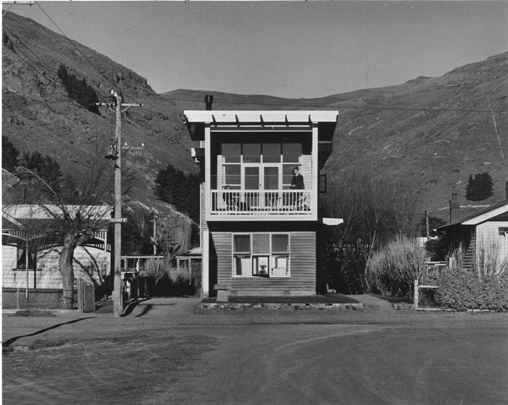
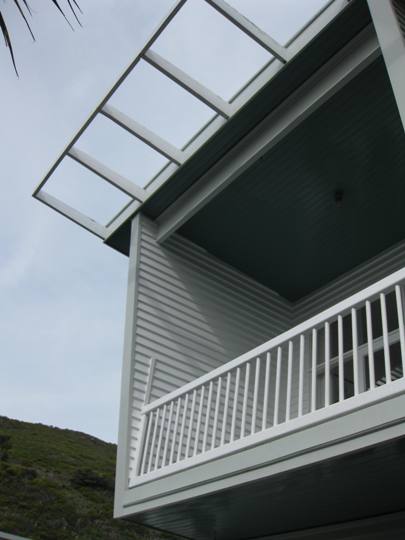
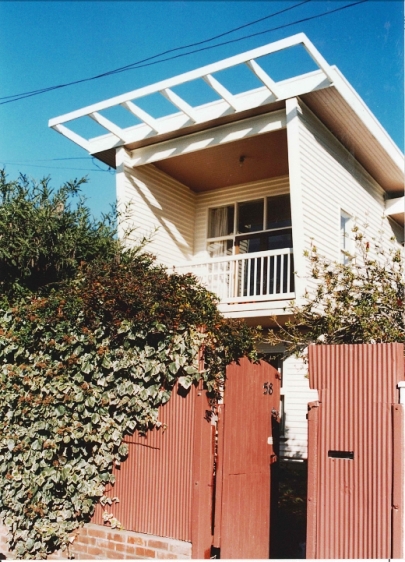
This historic place was registered under the Historic Places Act 1993. This report includes text from the original Historic Place Assessment Under Section 23 Criteria report considered by the NZHPT Board at the time of registration. Architectural: The Pascoe House was designed in the Post War Modern Domestic style of the period 1940-1960 Style indicators are: - Cubiform overall shape, - Overhang for shade, - Plain shiplapped weatherboard surface, - Large top-hung casement windows, - Timber balloon framing through two storeys, - Sloping flat roof, - Widely projecting eaves, - Open planning for some living areas inside, e.g. dining room, living room, kitchen and rumpus room, - Main living areas on first floor, - Standard three bedroom plan on ground floor, - Cantilevered wooden sunscreen.
Why is this place Category 1 / Category 2?
Detail Of Assessed Criteria
This historic place was registered under the Historic Places Act 1993. This report includes text from the original Historic Place Assessment Under Section 23 Criteria report considered by the NZHPT Board at the time of registration. 2.3(2) (g): The technical accomplishment or value, or design of the place: DATE: 1948 ARCHITECT: Paul Pascoe Paul Pascoe was a former pupil of Cecil Wood. In the early 1930s Pascoe worked in London with the Modernist Architectural Press and the Tecton Group returning to Christchurch in 1937-38 to become an assistant to Wood. The 1940 Centennial provided Pascoe with an opportunity, through the published Making New Zealand series, to advocate and encourage the development of a modern New Zealand house with a specifically vernacular identity. Pascoe was the architect of several modernist churches in the 1950s namely St Stephen's, Shirley, 1952, the well known Interdenominational Chapel at Arthur's Pass, 1956, and St Chad's, Linwood, 1959. Paul Pascoe was also the architect for the New Zealand Institute of Architects Gold medal award winning Christchurch International Airport, built in 1960. STYLE CODE: 83: Post War Modern Domestic style of the period 1940-1960. DESIGN: After World War II the International style started to make a world-wide impact, and buildings every-where began to look more and more similar. In spite of this powerful move towards uniformity, some recognisable New Zealand vernacular architecture began to evolve in the post-war period. This architecture is most often found in houses and other buildings of domestic scale and they were the creations of architects practising in the capital cities. The best known examples are houses by Vernon Brown in Auckland, Paul Pascoe in Christchurch, Cedric Firth in Wellington, and Kulka, Porsolt, and Cacala in Auckland. The Pascoe House was the result of Paul Pascoe's desire to create a specifically vernacular architecture in the Modernist mode but without conforming to the International style's disregard for regional variations based on climate, materials and cultural preferences. The defining feature of the Pascoe House, as a piece of modem vernacular New Zealand domestic architecture using standard readily available materials, is its three bedroom/living room/kitchen/rumpus room plan, and standard balloon framing extending through two storeys which determined the use of shiplapped weatherboarding. The introduction into Pascoe's design of panorama picture windows with top-hung casements was, in 1948, a Modernist feature ahead of its time in New Zealand, but this form of window was to become standard and conventional for domestic houses by the mid 1950s. The unconventional aspect of the plan which emphasised the Modernist idiom, was the sloping mono-pitch roof. The cantilevered wooden sunscreen - looking and acting much like a pergola - which projects out over the balcony at the dining room end of the living room as an extension of the roof, is a piece of pure artistic genius serving both a practical function as well as giving flair and style to the rising slope of the roof at this point. The plan of the Pascoe House is a simple rectangle, probably designed this way in order to fit on the site, but it has its unconventional aspects in locating the bedrooms on the ground floor and living/dining/kitchen rooms on the first floor - a kind of reversal of the plan of the traditional two storeyed New Zealand house with the bedrooms upstairs - but one nevertheless that was calculated to take advantage of sun and views. This plan also reflected the vernacular treatment by Pascoe of the International style by his responding to regional New Zealand factors such as an equable climate, but more particularly it established a New Zealand identity in terms of a plan which specified a three bedroom house as being the norm for the average New Zealand family. Overall the broad characteristics of the Pascoe House are its simplicity, lightness and unpretentiousness all of which emphasise its essentially domestic scale. 23(2)(m) Such additional criteria not inconsistent with those in paragraphs (a) to (k). In terms of registered comparative examples, the national register has only two listed modern houses, the Plishke House in Christchurch, 1940, built for Otto Frankel and Margaret Anderson, Category II, and the Vernon Brown House in Auckland, 1940, Category I. This significant gap in Modernist buildings is not particularly helpful when comparing the Pascoe House with a broad range of domestic houses that exemplify both International Modern designs and the search for a New Zealand Modern vernacular in domestic house design. However, the best way of making a comparative assessment of the architectural significance of the Pascoe House is to compare it with other unlisted Modernist designs and to point out some of the differences. Perhaps one of the better known Modernist houses in the International style is the Khan House in Ngaio, Wellington, designed by Ernst Plischke and built in 1941. The Khan house has the same Modernist antecedents as the Pascoe House, viz., open planning inside, the deliberate positioning of the house to utilize maximum sunlight and views of the hills and harbour of Wellington, an L-shaped plan, large areas of glass, and timber construction. What the Khan House did not have was the standard form of New Zealand timber balloon framing (which Plischke considered to be too restrictive in terms of stud distances), and standard window frames (as a result of Plischke extending the width between studs to three metres). Nor does the design place quite the same emphasis, as the Pascoe House does, on spaces designated for specific purposes such formal dining areas, kitchens, bathrooms and bedrooms. Two historians have pointed out that Plischke's interests were not with the search for a modern architecture of a New Zealand national character, and that this may be seen in the European emphasis in the planning of his houses. Comparatively speaking therefore, if we ask ourselves what are the special and outstanding features which distinguish the Pascoe House, we have to say that they reside in its specific concerns with planning for the average New Zealand family. Although the interior open planning and special and distinctive treatment of the balcony (with sunscreen and sloping flat-topped roof) is International Modernist in origin, the Pascoe House nevertheless asserts its New Zealand identity through its standard construction and economical interior designed for the average family (in this case the architect's own family) with specifically designated interior spaces in the form of three bedrooms, kitchen, living room with dining area, and rumpus room. This is not to say that (comparatively speaking) Plischke was not concerned with the same planning issues, and with providing a standard form of public housing that drew its identity from professional urban planning concepts. The only difference is, perhaps, that Paul Pascoe, like Cedric Firth, Vernon Brown, and other contemporaries, was working towards a type of house design that eventually became standard for some types of State House in the 1950s. From this point of view, this puts the Pascoe House in the same bracket as other contemporary designs which similarly expressed a search for a New Zealand identity - such places as the original Architectural Centre Model House called the "Demonstration House" designed largely by Al Gabites and built in Karori, Wellington, by the Architectural Centre in 1948-49, or, more particularly, like such places as the Vernon Brown House in Auckland, 1940, or the Cedric Firth House, Karori, Wellington, designed as his own house by Ernst Plischke's partner in 1941.
Why is this place significant?
Physical Significance
This historic place was registered under the Historic Places Act 1993. This report includes text from the original Historic Place Assessment Under Section 23 Criteria report considered by the NZHPT Board at the time of registration. Architectural: The Pascoe House was designed in the Post War Modern Domestic style of the period 1940-1960 Style indicators are: - Cubiform overall shape, - Overhang for shade, - Plain shiplapped weatherboard surface, - Large top-hung casement windows, - Timber balloon framing through two storeys, - Sloping flat roof, - Widely projecting eaves, - Open planning for some living areas inside, e.g. dining room, living room, kitchen and rumpus room, - Main living areas on first floor, - Standard three bedroom plan on ground floor, - Cantilevered wooden sunscreen.
Why is this place Category 1 / Category 2?
Detail Of Assessed Criteria
This historic place was registered under the Historic Places Act 1993. This report includes text from the original Historic Place Assessment Under Section 23 Criteria report considered by the NZHPT Board at the time of registration. 2.3(2) (g): The technical accomplishment or value, or design of the place: DATE: 1948 ARCHITECT: Paul Pascoe Paul Pascoe was a former pupil of Cecil Wood. In the early 1930s Pascoe worked in London with the Modernist Architectural Press and the Tecton Group returning to Christchurch in 1937-38 to become an assistant to Wood. The 1940 Centennial provided Pascoe with an opportunity, through the published Making New Zealand series, to advocate and encourage the development of a modern New Zealand house with a specifically vernacular identity. Pascoe was the architect of several modernist churches in the 1950s namely St Stephen's, Shirley, 1952, the well known Interdenominational Chapel at Arthur's Pass, 1956, and St Chad's, Linwood, 1959. Paul Pascoe was also the architect for the New Zealand Institute of Architects Gold medal award winning Christchurch International Airport, built in 1960. STYLE CODE: 83: Post War Modern Domestic style of the period 1940-1960. DESIGN: After World War II the International style started to make a world-wide impact, and buildings every-where began to look more and more similar. In spite of this powerful move towards uniformity, some recognisable New Zealand vernacular architecture began to evolve in the post-war period. This architecture is most often found in houses and other buildings of domestic scale and they were the creations of architects practising in the capital cities. The best known examples are houses by Vernon Brown in Auckland, Paul Pascoe in Christchurch, Cedric Firth in Wellington, and Kulka, Porsolt, and Cacala in Auckland. The Pascoe House was the result of Paul Pascoe's desire to create a specifically vernacular architecture in the Modernist mode but without conforming to the International style's disregard for regional variations based on climate, materials and cultural preferences. The defining feature of the Pascoe House, as a piece of modem vernacular New Zealand domestic architecture using standard readily available materials, is its three bedroom/living room/kitchen/rumpus room plan, and standard balloon framing extending through two storeys which determined the use of shiplapped weatherboarding. The introduction into Pascoe's design of panorama picture windows with top-hung casements was, in 1948, a Modernist feature ahead of its time in New Zealand, but this form of window was to become standard and conventional for domestic houses by the mid 1950s. The unconventional aspect of the plan which emphasised the Modernist idiom, was the sloping mono-pitch roof. The cantilevered wooden sunscreen - looking and acting much like a pergola - which projects out over the balcony at the dining room end of the living room as an extension of the roof, is a piece of pure artistic genius serving both a practical function as well as giving flair and style to the rising slope of the roof at this point. The plan of the Pascoe House is a simple rectangle, probably designed this way in order to fit on the site, but it has its unconventional aspects in locating the bedrooms on the ground floor and living/dining/kitchen rooms on the first floor - a kind of reversal of the plan of the traditional two storeyed New Zealand house with the bedrooms upstairs - but one nevertheless that was calculated to take advantage of sun and views. This plan also reflected the vernacular treatment by Pascoe of the International style by his responding to regional New Zealand factors such as an equable climate, but more particularly it established a New Zealand identity in terms of a plan which specified a three bedroom house as being the norm for the average New Zealand family. Overall the broad characteristics of the Pascoe House are its simplicity, lightness and unpretentiousness all of which emphasise its essentially domestic scale. 23(2)(m) Such additional criteria not inconsistent with those in paragraphs (a) to (k). In terms of registered comparative examples, the national register has only two listed modern houses, the Plishke House in Christchurch, 1940, built for Otto Frankel and Margaret Anderson, Category II, and the Vernon Brown House in Auckland, 1940, Category I. This significant gap in Modernist buildings is not particularly helpful when comparing the Pascoe House with a broad range of domestic houses that exemplify both International Modern designs and the search for a New Zealand Modern vernacular in domestic house design. However, the best way of making a comparative assessment of the architectural significance of the Pascoe House is to compare it with other unlisted Modernist designs and to point out some of the differences. Perhaps one of the better known Modernist houses in the International style is the Khan House in Ngaio, Wellington, designed by Ernst Plischke and built in 1941. The Khan house has the same Modernist antecedents as the Pascoe House, viz., open planning inside, the deliberate positioning of the house to utilize maximum sunlight and views of the hills and harbour of Wellington, an L-shaped plan, large areas of glass, and timber construction. What the Khan House did not have was the standard form of New Zealand timber balloon framing (which Plischke considered to be too restrictive in terms of stud distances), and standard window frames (as a result of Plischke extending the width between studs to three metres). Nor does the design place quite the same emphasis, as the Pascoe House does, on spaces designated for specific purposes such formal dining areas, kitchens, bathrooms and bedrooms. Two historians have pointed out that Plischke's interests were not with the search for a modern architecture of a New Zealand national character, and that this may be seen in the European emphasis in the planning of his houses. Comparatively speaking therefore, if we ask ourselves what are the special and outstanding features which distinguish the Pascoe House, we have to say that they reside in its specific concerns with planning for the average New Zealand family. Although the interior open planning and special and distinctive treatment of the balcony (with sunscreen and sloping flat-topped roof) is International Modernist in origin, the Pascoe House nevertheless asserts its New Zealand identity through its standard construction and economical interior designed for the average family (in this case the architect's own family) with specifically designated interior spaces in the form of three bedrooms, kitchen, living room with dining area, and rumpus room. This is not to say that (comparatively speaking) Plischke was not concerned with the same planning issues, and with providing a standard form of public housing that drew its identity from professional urban planning concepts. The only difference is, perhaps, that Paul Pascoe, like Cedric Firth, Vernon Brown, and other contemporaries, was working towards a type of house design that eventually became standard for some types of State House in the 1950s. From this point of view, this puts the Pascoe House in the same bracket as other contemporary designs which similarly expressed a search for a New Zealand identity - such places as the original Architectural Centre Model House called the "Demonstration House" designed largely by Al Gabites and built in Karori, Wellington, by the Architectural Centre in 1948-49, or, more particularly, like such places as the Vernon Brown House in Auckland, 1940, or the Cedric Firth House, Karori, Wellington, designed as his own house by Ernst Plischke's partner in 1941.
Construction Professional
Name
Pascoe, Paul
Type
Architect
Biography
Paul Pascoe (1908-1976) was born in Christchurch. Named Edward Arnold, he was always known as Paul. He began his architectural training in 1927 and was apprenticed to the well-known Christchurch architect Cecil Wood.In 1934 he travelled to Britain, where he gained first-hand experience of the modernist movement, working for the New Zealand architect Brian O'Rorke; the Architectural Press (publishers of The Architectural Review); and the Tecton Group. Pascoe returned to Christchurch in 1937 and entered into a short-lived partnership with his former employer, Wood. In 1938 he began practicing on his own. Towards the end of the Second World War he was joined in practice by Humphrey Hall. Their partnership, Pascoe and Hall, became well-known for their domestic designs and their adaptation of modern architectural ideas to New Zealand conditions. Together they designed over 100 residential and commercial buildings and authored several architectural articles. By 1955 Pascoe had decided to practice by himself once more and was soon commissioned to design the terminal buildings at Christchurch International Airport.His design for this won him the New Zealand Institute of Architects gold medal in 1960. He also became involved in a number of eccelesiastical projects in Canterbury, including the remodelling of the chapel at Christ's College, the eastern extensions to Christ Church Cathedral and the interdenominational chapel at Arthur's Pass. Pascoe formed another partnership with Walter Linton in 1963, which became known for their domestic designs.This firm, now known as Pascoe Linton Sellers, still operates today. (Ana Robertson, 'Pascoe, Arnold Paul 1908-1976', Dictionary of New Zealand Biography, Vol. 5, 1941-1960, Auckland, 2000, pp.399-400)
Construction Details
Start Year
1948
Type
Original Construction
Construction Materials
Sensitive alterations have been executed in the spirit of the original design, including a new kitchen and bathroom.
Construction Professional
Name
Pascoe, Paul
Type
Architect
Biography
Paul Pascoe (1908-1976) was born in Christchurch. Named Edward Arnold, he was always known as Paul. He began his architectural training in 1927 and was apprenticed to the well-known Christchurch architect Cecil Wood.In 1934 he travelled to Britain, where he gained first-hand experience of the modernist movement, working for the New Zealand architect Brian O'Rorke; the Architectural Press (publishers of The Architectural Review); and the Tecton Group. Pascoe returned to Christchurch in 1937 and entered into a short-lived partnership with his former employer, Wood. In 1938 he began practicing on his own. Towards the end of the Second World War he was joined in practice by Humphrey Hall. Their partnership, Pascoe and Hall, became well-known for their domestic designs and their adaptation of modern architectural ideas to New Zealand conditions. Together they designed over 100 residential and commercial buildings and authored several architectural articles. By 1955 Pascoe had decided to practice by himself once more and was soon commissioned to design the terminal buildings at Christchurch International Airport.His design for this won him the New Zealand Institute of Architects gold medal in 1960. He also became involved in a number of eccelesiastical projects in Canterbury, including the remodelling of the chapel at Christ's College, the eastern extensions to Christ Church Cathedral and the interdenominational chapel at Arthur's Pass. Pascoe formed another partnership with Walter Linton in 1963, which became known for their domestic designs.This firm, now known as Pascoe Linton Sellers, still operates today. (Ana Robertson, 'Pascoe, Arnold Paul 1908-1976', Dictionary of New Zealand Biography, Vol. 5, 1941-1960, Auckland, 2000, pp.399-400)
Construction Details
Start Year
1948
Type
Original Construction
Construction Materials
Sensitive alterations have been executed in the spirit of the original design, including a new kitchen and bathroom.
Historical and Associated Iwi / Hapū / Whānau
Completion Date
1st December 1998
Report Written By
Wayne Nelson
Other Information
NZIA Local Award Winner 2005, Category: Enduring Architecture A copy of the original report is available from the NZHPT Southern region office Please note that entry on the New Zealand Heritage List/Rarangi Korero identifies only the heritage values of the property concerned, and should not be construed as advice on the state of the property, or as a comment of its soundness or safety, including in regard to earthquake risk, safety in the event of fire, or insanitary conditions.
Historical and Associated Iwi / Hapū / Whānau
Completion Date
1st December 1998
Report Written By
Wayne Nelson
Other Information
NZIA Local Award Winner 2005, Category: Enduring Architecture A copy of the original report is available from the NZHPT Southern region office Please note that entry on the New Zealand Heritage List/Rarangi Korero identifies only the heritage values of the property concerned, and should not be construed as advice on the state of the property, or as a comment of its soundness or safety, including in regard to earthquake risk, safety in the event of fire, or insanitary conditions.
Current Usages
Uses: Accommodation
Specific Usage: House
Former Usages
General Usage: Accommodation
Specific Usage: House
Themes
Modern Movement
Current Usages
Uses: Accommodation
Specific Usage: House
Former Usages
General Usage: Accommodation
Specific Usage: House
Themes
Modern Movement
