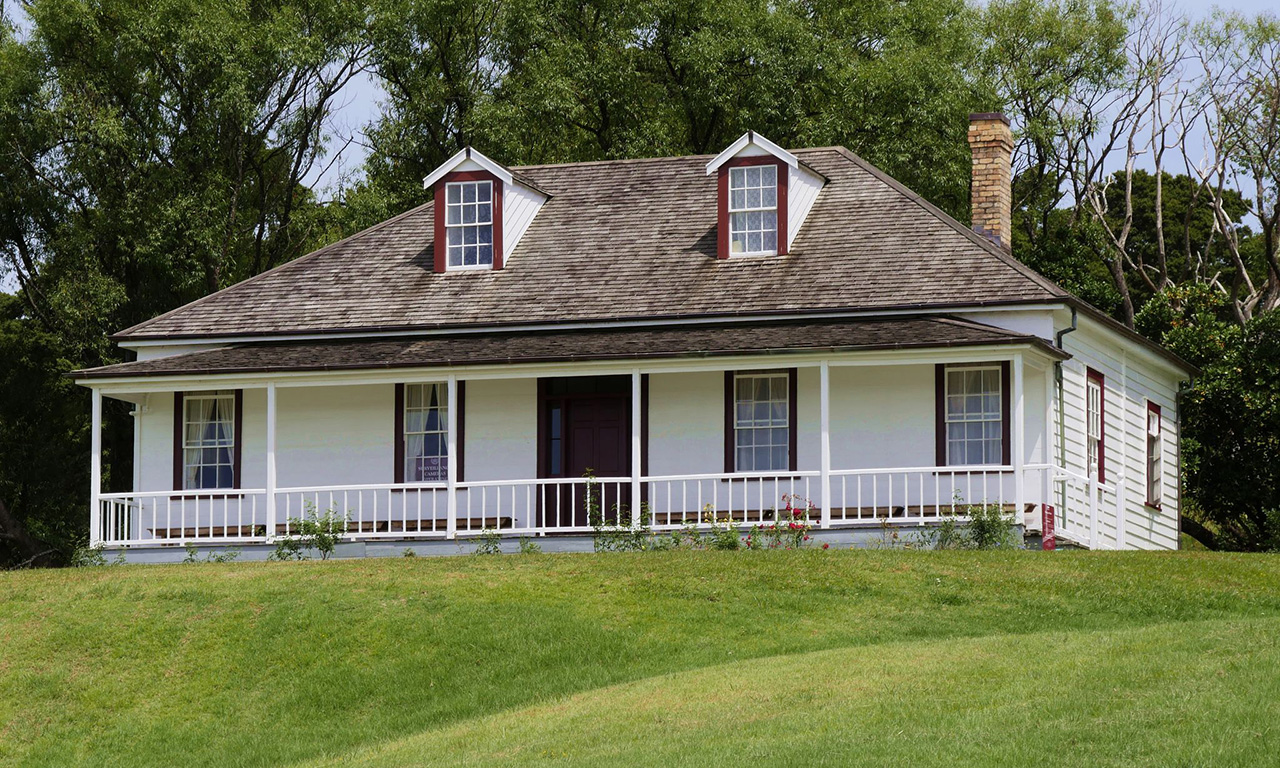
Māngungu Mission House is the oldest surviving structure associated with the Methodist Church in New Zealand, and is significant for its connections with the second major signing of the Treaty of Waitangi, New Zealand's founding document. Situated on a hillside overlooking the Hokianga Harbour in Northland, the house was originally constructed in 1838-1839 for the head of the Methodist Mission in New Zealand, the Reverend Nathaniel Turner (1793-1864) and his family, as part of the mission station at Māngungu. The station was the second to be established by the Wesleyan Missionary Society (WMS) in New Zealand, following the destruction of an earlier complex at Wesleydale, near Kaeo in 1827. Founded to spread the Methodist faith in the late eighteenth century, the WMS played an important role in the Christian conversion of Māori in northern New Zealand and indigenous peoples in other parts of the world. WMS missionaries also promoted European notions of labour and industry.
Created under the protection of the Ngāpuhi leader Eruera Maihi Patuone (?-1872) in 1828, the mission was sited close to the early shipyards at Horeke, whose Sydney-based owners were keen to encourage sobriety among their workforce by supporting the WMS venture. Incorporating a chapel, windmill and graveyard, the mission achieved considerable support among local Māori in the 1830s, with prominent converts including Patuone's brother, Tāmati Wāka Nene (?-1871). As a major focus of early contact between Māori and Pākehā in the region, the second major signing of the Treaty of Waitangi took place in front of the house on the 12th February 1840, where 70 chiefs added their assent before a crowd of up to 3,000 people. More chiefs signed the Treaty at Māngungu than at any other place in New Zealand. The Reverend John Hobbs (1800-1883), an early WMS member whose family occupied the house from early 1840, acted as interpreter at this occasion.
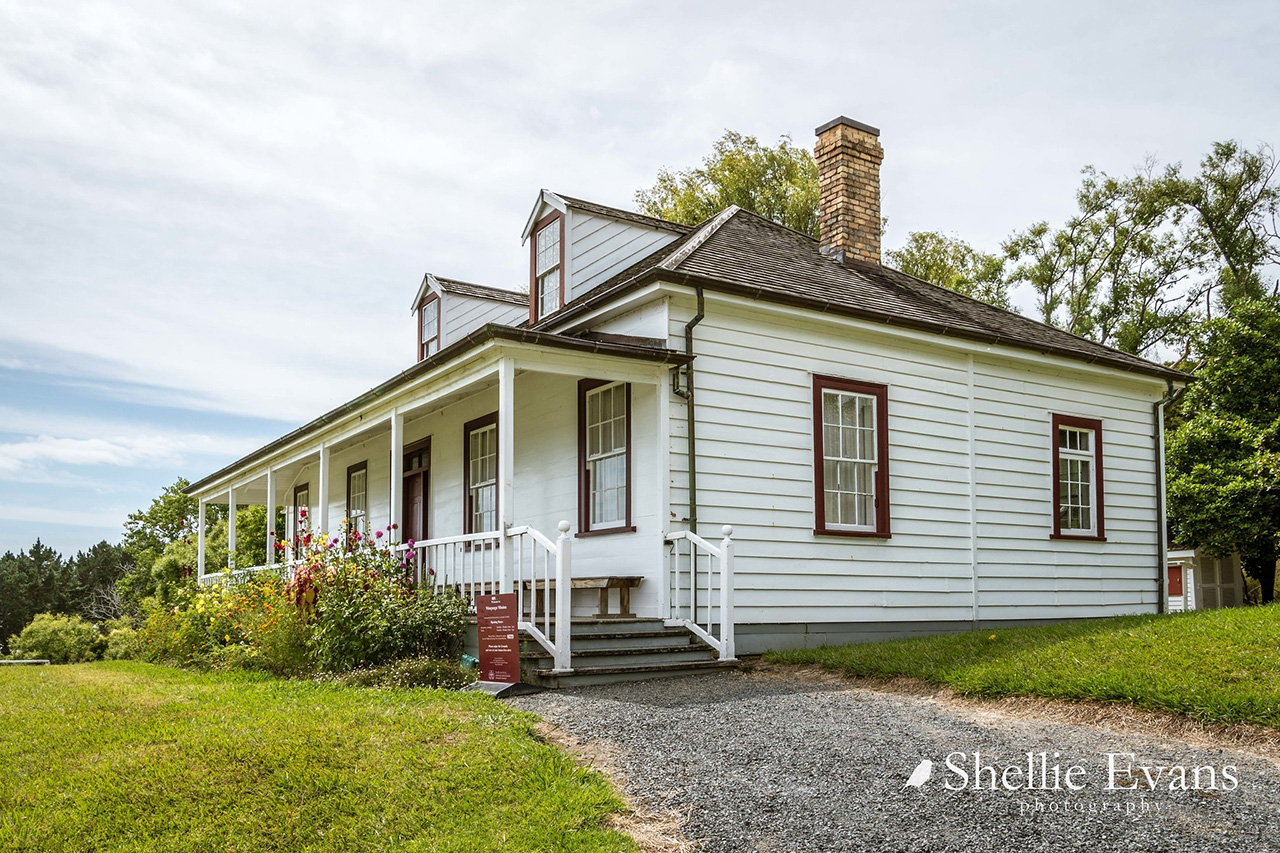
Considered to be the most skilled carpenter at the mission, the Reverend Hobbs had designed the single-storey structure employing a symmetrical, Georgian style. Built using the pegged timber-framed tradition of European vernacular housing, the house incorporated a hipped roof clad with timber shingles, and a verandah around possibly all four sides. The building was intended to accommodate the versatile needs of a missionary dwelling - including administration and the reception of visitors - and contained at least seven rooms. These included a large front parlour, a study and several bedrooms, while separate outbuildings contained the kitchen, servants' quarters, and storeroom. The structure was erected by a combination of missionary, Māori and hired Pākehā labour, and is said to have been built from kauri donated by local milling interests.
Employed for its original purpose until the station was closed in 1855, the house was subsequently moved on several occasions. After Māori interest in missionary work declined following the first New Zealand - or Northern - War (1845-1846), the structure was transported by boat to Onehunga, near Auckland. There, it served as a Methodist parsonage for the local settler community for nearly 70 years, during which time a new chimney and upper rooms were added. In 1921 the building was moved again to Grey Street, Onehunga, where it was employed as a private dwelling until being purchased by the Hokianga Historical Society in 1968 due to its historical significance. Moved back to Māngungu and placed close to its presumed original location, the mission house was restored on behalf of the New Zealand Historic Places Trust/Pouhere Taonga, when further alterations were made. It is currently open to the public as part of the mission site.
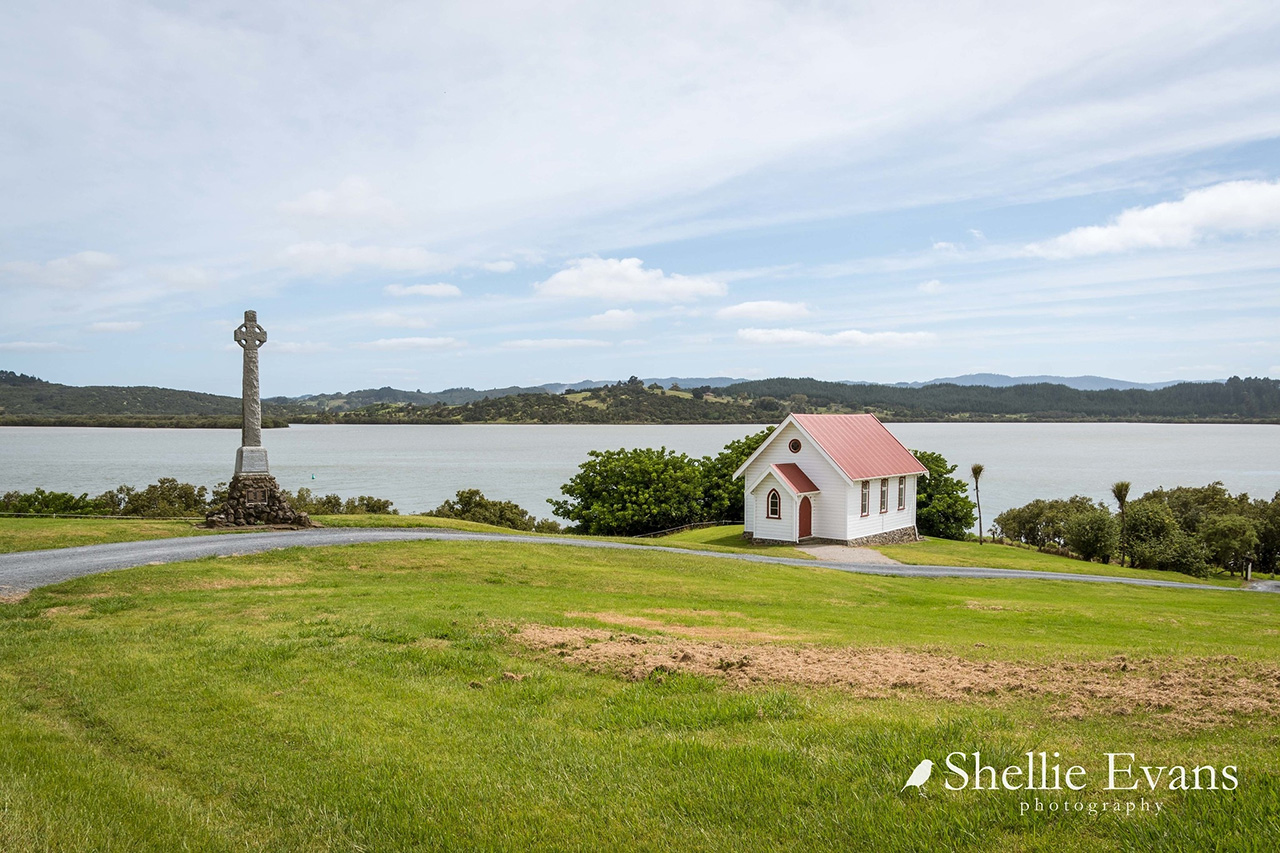
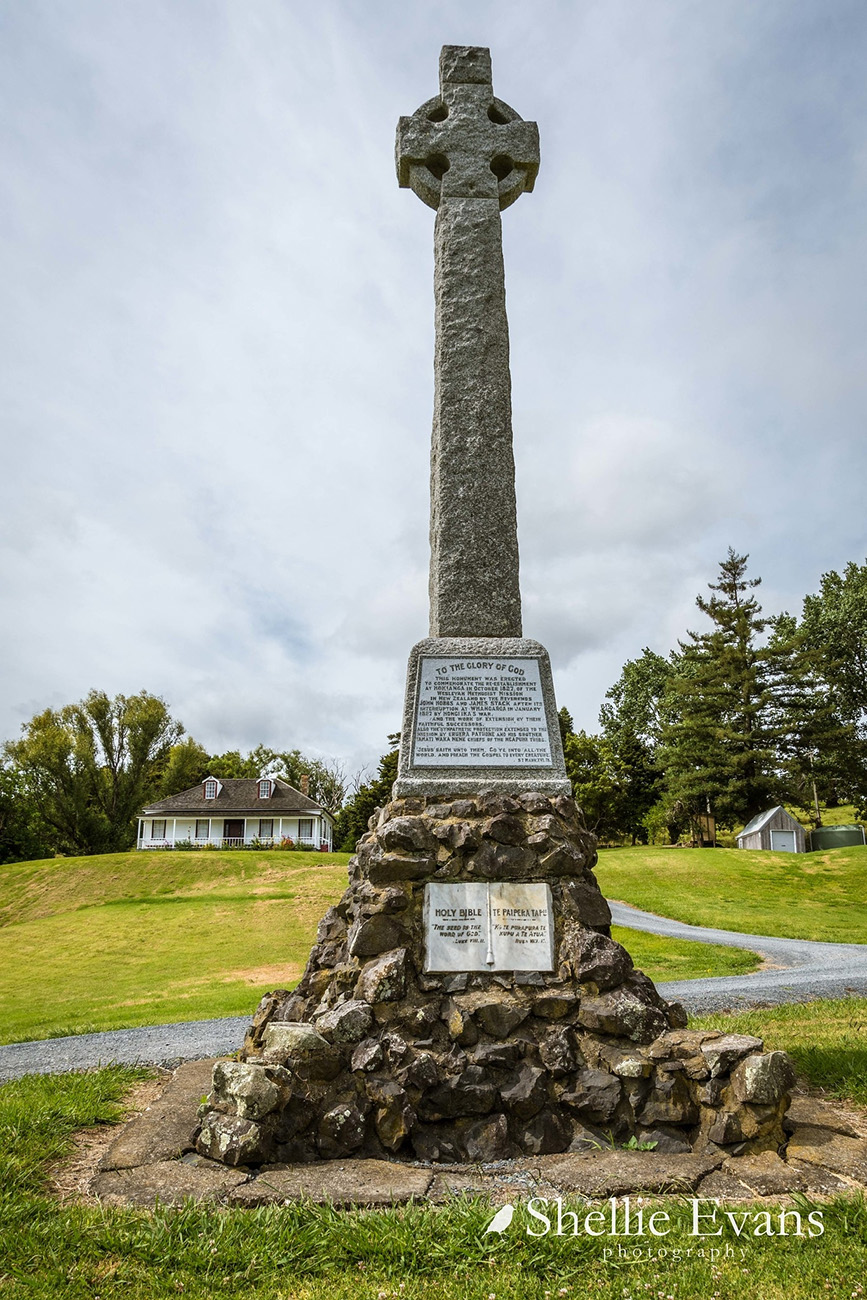
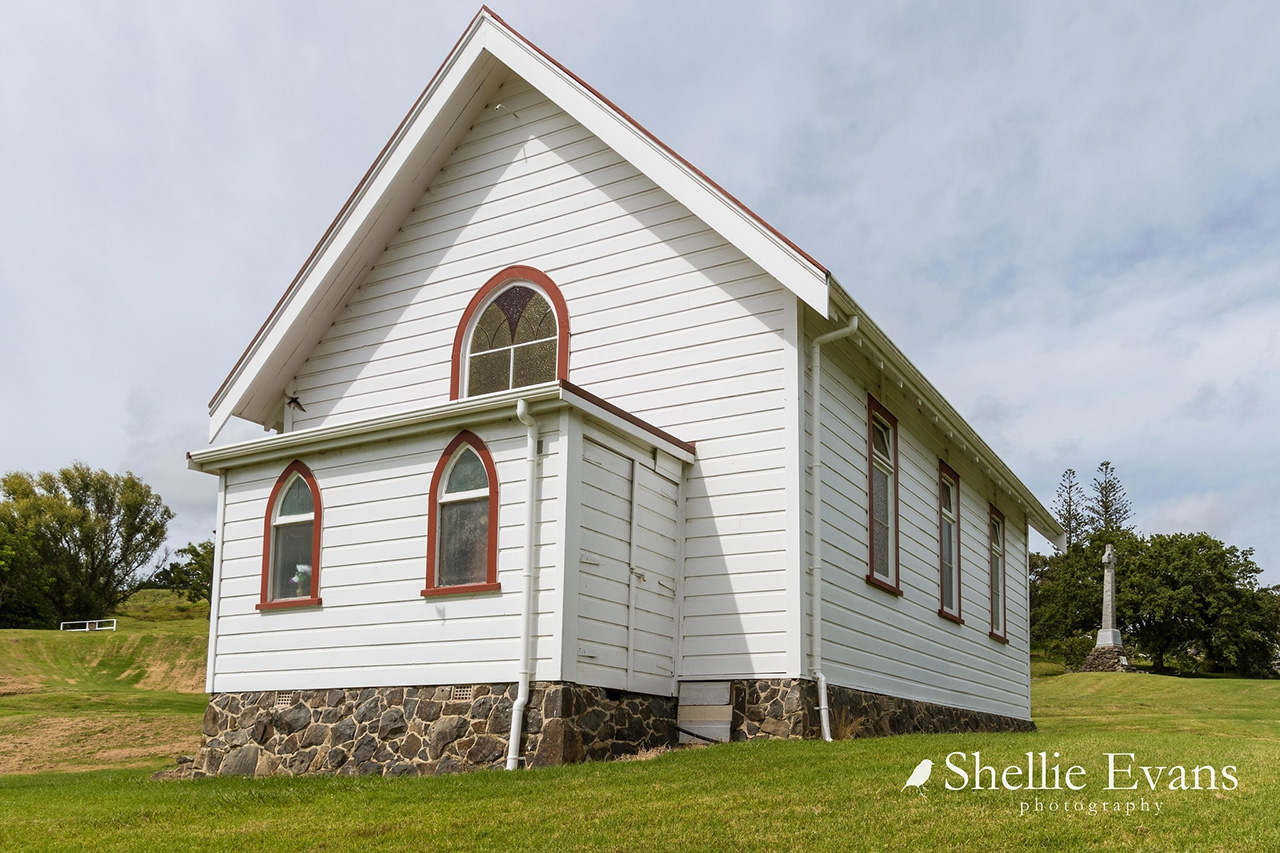
Māngungu Mission House is nationally and internationally significant as the earliest surviving Methodist building in New Zealand, and as part of the country's second-oldest Methodist mission site. It is closely associated with the Wesleyan Missionary Society, which played an important role in the Christian conversion of Māori in northern New Zealand, and indigenous peoples in other parts of the world. The building housed several prominent members of the WMS in New Zealand, including the Reverends John Hobbs and Nathaniel Turner, whose religious activities also encompassed Australia and the Pacific. The house is nationally significant for its association with the Treaty of Waitangi, and cultural contact between Māori and Pākehā before formal colonisation. It has played a particularly central role in the early bicultural history of the Hokianga. The building is architecturally valuable for demonstrating early nineteenth-century timber-framed construction techniques and methods of timber preparation, and is one of only a few surviving structures in the country that pre-dates New Zealand's establishment as a British colony in 1840. It is a prominent example of attitudes to timber housing as portable architecture. The house demonstrates the changing history of the Methodist Church in New Zealand, being associated with both missionary activity among Māori and the pastoral care of settler society in the later nineteenth and twentieth centuries. It is also part of an important historic and cultural landscape, which includes the site of the Māngungu mission, its early graveyard, a more recent church and a memorial cross erected on the centenary of the mission. The significant landscape also encompasses historic plantings and the adjacent Hokianga Harbour.
Created under the protection of the Ngāpuhi leader Eruera Maihi Patuone (?-1872) in 1828, the mission was sited close to the early shipyards at Horeke, whose Sydney-based owners were keen to encourage sobriety among their workforce by supporting the WMS venture. Incorporating a chapel, windmill and graveyard, the mission achieved considerable support among local Māori in the 1830s, with prominent converts including Patuone's brother, Tāmati Wāka Nene (?-1871). As a major focus of early contact between Māori and Pākehā in the region, the second major signing of the Treaty of Waitangi took place in front of the house on the 12th February 1840, where 70 chiefs added their assent before a crowd of up to 3,000 people. More chiefs signed the Treaty at Māngungu than at any other place in New Zealand. The Reverend John Hobbs (1800-1883), an early WMS member whose family occupied the house from early 1840, acted as interpreter at this occasion.
Considered to be the most skilled carpenter at the mission, the Reverend Hobbs had designed the single-storey structure employing a symmetrical, Georgian style. Built using the pegged timber-framed tradition of European vernacular housing, the house incorporated a hipped roof clad with timber shingles, and a verandah around possibly all four sides. The building was intended to accommodate the versatile needs of a missionary dwelling - including administration and the reception of visitors - and contained at least seven rooms. These included a large front parlour, a study and several bedrooms, while separate outbuildings contained the kitchen, servants' quarters, and storeroom. The structure was erected by a combination of missionary, Māori and hired Pākehā labour, and is said to have been built from kauri donated by local milling interests.
Employed for its original purpose until the station was closed in 1855, the house was subsequently moved on several occasions. After Māori interest in missionary work declined following the first New Zealand - or Northern - War (1845-1846), the structure was transported by boat to Onehunga, near Auckland. There, it served as a Methodist parsonage for the local settler community for nearly 70 years, during which time a new chimney and upper rooms were added. In 1921 the building was moved again to Grey Street, Onehunga, where it was employed as a private dwelling until being purchased by the Hokianga Historical Society in 1968 due to its historical significance. Moved back to Māngungu and placed close to its presumed original location, the mission house was restored on behalf of the New Zealand Historic Places Trust/Pouhere Taonga, when further alterations were made. It is currently open to the public as part of the mission site.
Māngungu Mission House is nationally and internationally significant as the earliest surviving Methodist building in New Zealand, and as part of the country's second-oldest Methodist mission site. It is closely associated with the Wesleyan Missionary Society, which played an important role in the Christian conversion of Māori in northern New Zealand, and indigenous peoples in other parts of the world. The building housed several prominent members of the WMS in New Zealand, including the Reverends John Hobbs and Nathaniel Turner, whose religious activities also encompassed Australia and the Pacific. The house is nationally significant for its association with the Treaty of Waitangi, and cultural contact between Māori and Pākehā before formal colonisation. It has played a particularly central role in the early bicultural history of the Hokianga. The building is architecturally valuable for demonstrating early nineteenth-century timber-framed construction techniques and methods of timber preparation, and is one of only a few surviving structures in the country that pre-dates New Zealand's establishment as a British colony in 1840. It is a prominent example of attitudes to timber housing as portable architecture. The house demonstrates the changing history of the Methodist Church in New Zealand, being associated with both missionary activity among Māori and the pastoral care of settler society in the later nineteenth and twentieth centuries. It is also part of an important historic and cultural landscape, which includes the site of the Māngungu mission, its early graveyard, a more recent church and a memorial cross erected on the centenary of the mission. The significant landscape also encompasses historic plantings and the adjacent Hokianga Harbour.