

The earliest permanent buildings in the Domain were erected soon after the reserve was brought under the Public Domains Act in 1882, and were overseen by the Te Aroha Hot Springs Board. By 1887, there were seven bath houses and a drinking fountain, with extensive grounds laid out to plans drawn up by Henry Crump, a local engineer and architect. Government money largely financed the development of the facilities, as well as the establishment of a railway from Auckland in 1886. As the centrepiece of the now-burgeoning town of Te Aroha, the spa became the first geothermal resort in the country to receive thousands of visitors on an annual basis. People came to bathe or ingest its waters for health reasons, but also to promenade, listen to music or play genteel forms of sport such as tennis, croquet and bowls. Spas had important associations in nineteenth-century European society as places where the well-to-do could relax and congregate in refined and beautiful surroundings.
Although the health and leisure aspects of the reserve were heavily promoted when it was taken over by the Department of Tourism and Health Resorts in 1903, the facilities went into a slow decline after government funding and visitor attention were steadily drawn to Rotorua. The Domain nevertheless remained an extremely popular destination until after the First World War (1914-1918), and continued in a reduced capacity as a spa thereafter. Following closure of many of its facilities in the 1950s and 1960s, the Domain was transferred to the control of the local council (now Matamata-Piako District Council) in 1979, while formally remaining in Crown ownership.
The former Domain Office was erected in 1894 as the first substantial building in the Domain not employed for bathing. It appears to have multiple uses from an early stage, incorporating a ticket office, library, general office and women's waiting room. Meetings of the Domain Board were also held on its premises until the Board's duties were fully handed over to the Tourist Department in 1903. The earliest deliberations of the Borough Council were similarly conducted in one of the rooms after this body was formed in 1898. Prior to its construction, many of these functions were held in separate buildings, both on and off the Domain site. The architect and builders of the new purpose-built structure are unknown, although £300 had been allocated for its construction and the creation of a cold swimming pool, located elsewhere in the reserve.
The Domain Board created the library as a recreational facility for visitors to the spa and is said to have stocked the 'Chief Home and Colonial papers'. The women's waiting room is likely to have provided a safe and supervised environment for female visitors to await engagements. By 1900, the building was also used for providing medical advice, after James Muir had been appointed by the Domain Board to provide free consultations on 'the judicious use of the baths and drinking waters'. This association with health care was to last for nearly a hundred years.
The office was extended in 1904-1905, soon after the transfer of the Domain's authority to the Department of Tourism in 1903. The additions were designed by an unknown architect in the Public Works Department and constructed by Messrs Mackie and Dudley at a total cost of just over £193. Extra facilities were provided for medical staff, following increased interest by the government in the science of Balneology and the promotion of health resorts. The library was also improved, with the Tourism Department making its facilities available to the townspeople. A small room at the rear of the building may have been created or modified to dispense tickets or towels for bathing. The Department used the remainder of the building as its administrative centre for the Domain, and as an office for the Government Tourist Agent.
A decline in the stature of the building occurred in the late 1930s, when council meetings and the library were moved to municipal buildings in the town. The government Tourist Office, however, remained with attached rooms for medical consultation. A general surgery occupied the structure until 1995, when the last doctor retired. The building has since been extensively conserved by the Matamata-Piako District Council, and is currently employed as a Visitor's Centre once again.
List Entry Information
Status
Listed
List Entry Status
Historic Place Category 2
Access
Able to Visit
List Number
765
Date Entered
11th December 2003
Date of Effect
11th December 2003
City/District Council
Matamata-Piako District
Region
Waikato Region
Extent of List Entry
Registration includes the structure, its footings and the ground beneath its footprint. It includes all fixtures and finishes. It excludes the more recent bowling pavilion and associated toilet, which conjoin the Domain Office on its eastern side.
Legal description
Sec 16 Blk IX Aroha SD (Recreation Reserve NZ Gazette 1882 p.1860)
Status
Listed
List Entry Status
Historic Place Category 2
Access
Able to Visit
List Number
765
Date Entered
11th December 2003
Date of Effect
11th December 2003
City/District Council
Matamata-Piako District
Region
Waikato Region
Extent of List Entry
Registration includes the structure, its footings and the ground beneath its footprint. It includes all fixtures and finishes. It excludes the more recent bowling pavilion and associated toilet, which conjoin the Domain Office on its eastern side.
Legal description
Sec 16 Blk IX Aroha SD (Recreation Reserve NZ Gazette 1882 p.1860)
Why is this place significant?
Historic Significance
Historical Significance or Value The building is historically significant for its role in the development and administration of the Domain as a spa resort, the establishment of a medical profession in Te Aroha, and civic life in the nineteenth- and early-twentieth-century township. It is of particular value for its close links with the early development of the tourist industry in New Zealand.
Physical Significance
The former Domain Office has aesthetic value for its appearance and visual contribution to the landscape of both the Te Aroha Hot Springs Domain and Whitaker Street. It is architecturally significant for its Italianate appearance, including its timber detailing designed to look like stone.
Why is this place Category 1 / Category 2?
Detail Of Assessed Criteria
The former Domain Office reflects important and representative aspects of New Zealand history, including civic administration, the role of Domain Boards, and the development of health care and early tourism in New Zealand. Currently operating as a visitor's centre, it has high potential for public education. The Domain Office is an integral part of an important historical and cultural landscape at the Hot Springs Domain, which is considered to be the best-preserved Victorian and early Edwardian spa in New Zealand. This landscape has been recognised in the Domain's registration by the New Zealand Historic Places Trust /Pouhere Taonga as a Historic Area (#7012).
Why is this place significant?
Historic Significance
Historical Significance or Value The building is historically significant for its role in the development and administration of the Domain as a spa resort, the establishment of a medical profession in Te Aroha, and civic life in the nineteenth- and early-twentieth-century township. It is of particular value for its close links with the early development of the tourist industry in New Zealand.
Physical Significance
The former Domain Office has aesthetic value for its appearance and visual contribution to the landscape of both the Te Aroha Hot Springs Domain and Whitaker Street. It is architecturally significant for its Italianate appearance, including its timber detailing designed to look like stone.
Why is this place Category 1 / Category 2?
Detail Of Assessed Criteria
The former Domain Office reflects important and representative aspects of New Zealand history, including civic administration, the role of Domain Boards, and the development of health care and early tourism in New Zealand. Currently operating as a visitor's centre, it has high potential for public education. The Domain Office is an integral part of an important historical and cultural landscape at the Hot Springs Domain, which is considered to be the best-preserved Victorian and early Edwardian spa in New Zealand. This landscape has been recognised in the Domain's registration by the New Zealand Historic Places Trust /Pouhere Taonga as a Historic Area (#7012).
Construction Professional
Name
Mackie & Dudley
Type
Builder
Biography
Reg No.765 - 1904-1905 extension
Construction Details
Start Year
1894
Type
Original Construction
Start Year
1904
Finish Year
1905
Type
Addition
Description
Eastern extension added on northern side
Start Year
1955
startYearCirca
Type
Modification
Description
Internal alterations
Start Year
1997
Finish Year
1998
Type
Modification
Description
Modifications, including removal of 1950s alterations
Construction Materials
Timber frame and weatherboards, with timber piles and a corrugated iron roof
Construction Professional
Name
Mackie & Dudley
Type
Builder
Biography
Reg No.765 - 1904-1905 extension
Construction Details
Start Year
1894
Type
Original Construction
Start Year
1904
Finish Year
1905
Type
Addition
Description
Eastern extension added on northern side
Start Year
1955
startYearCirca
Type
Modification
Description
Internal alterations
Start Year
1997
Finish Year
1998
Type
Modification
Description
Modifications, including removal of 1950s alterations
Construction Materials
Timber frame and weatherboards, with timber piles and a corrugated iron roof
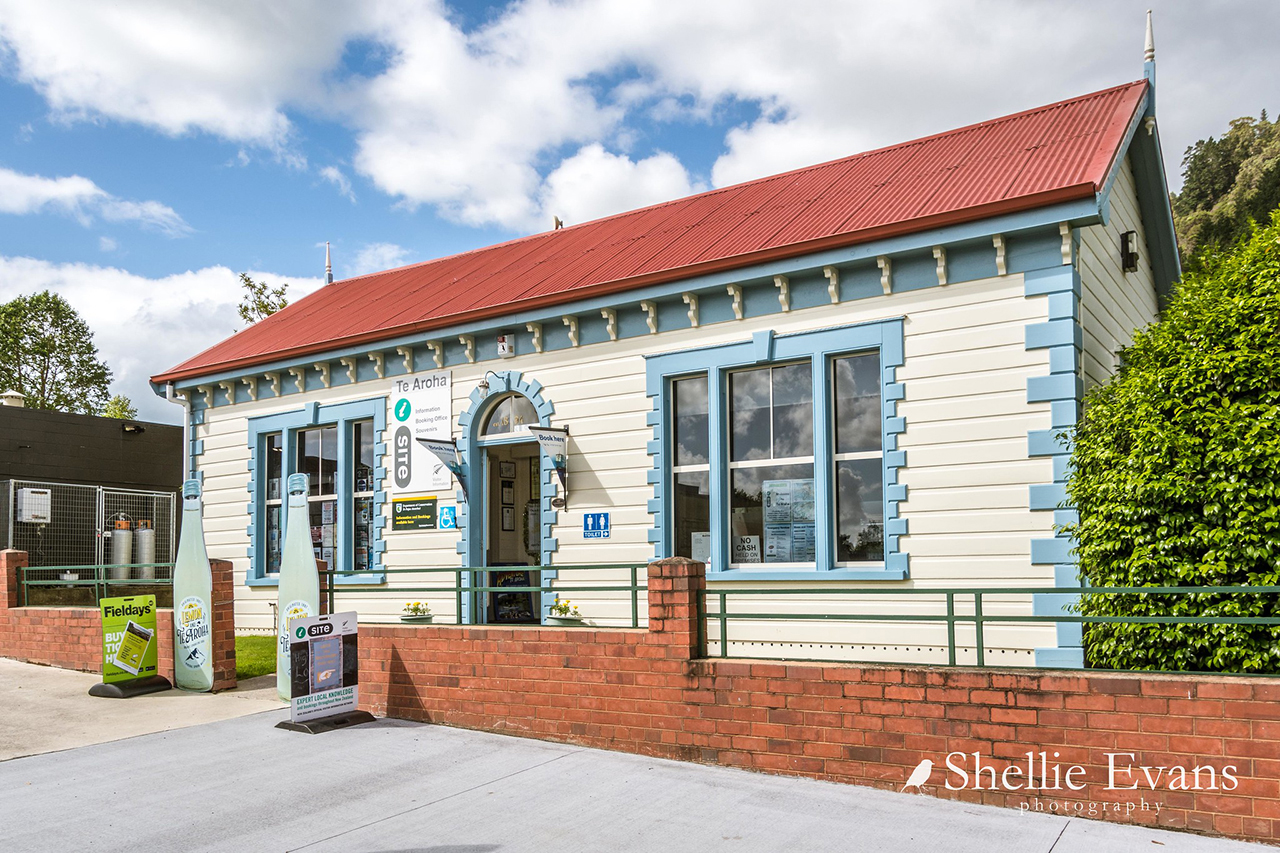
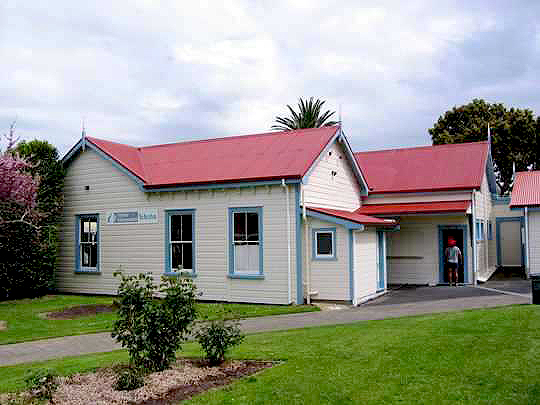
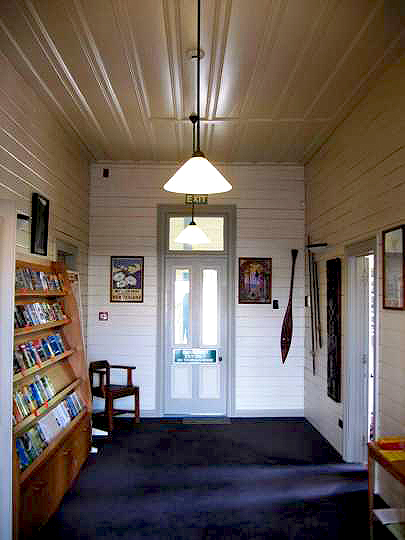
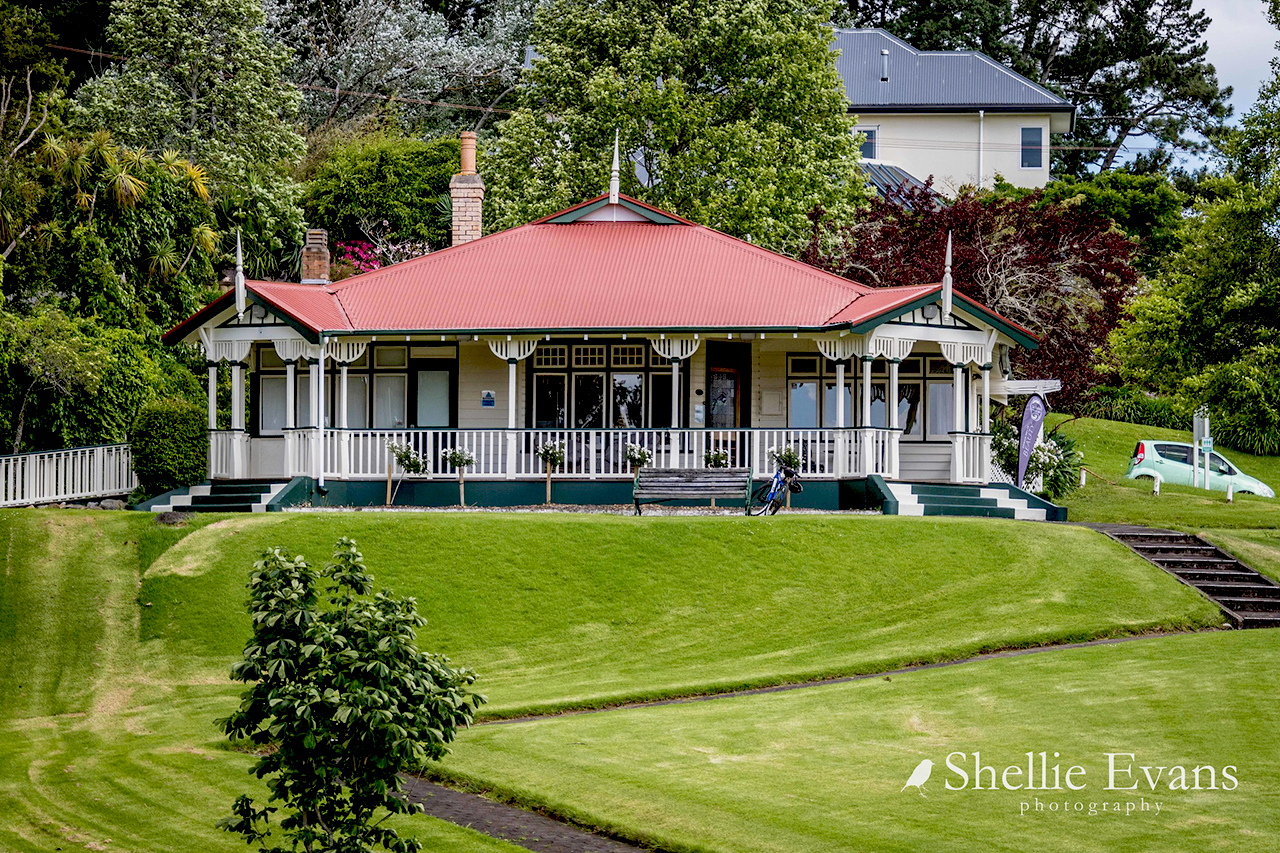
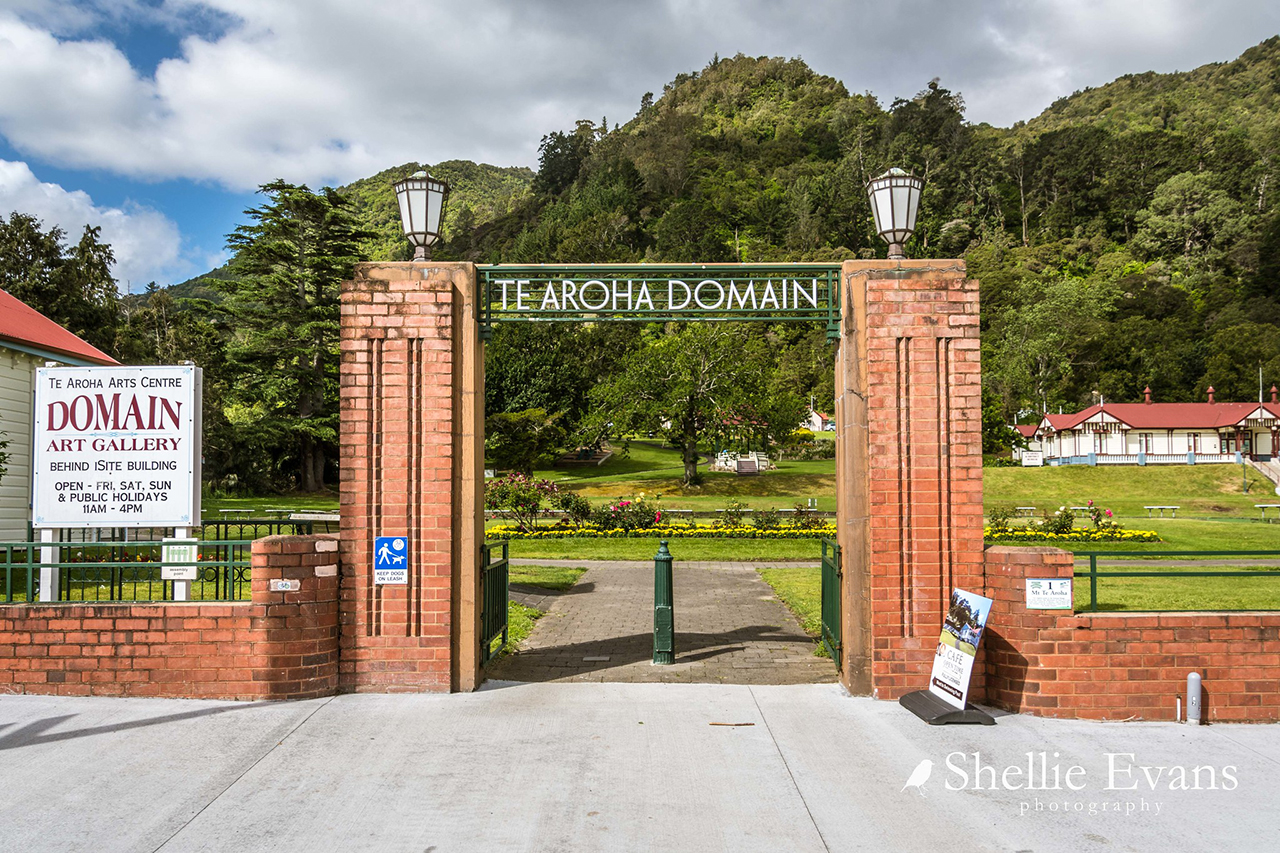
The former Domain Office is located in the north-western corner of Te Aroha Hot Springs Domain, fronting Whitaker Street. It lies next to the main entrance to the reserve and is the only building in the reserve to present its facade on to a major public thoroughfare. The structure has a low brick and railing wall on its western, streetward side but is otherwise unenclosed. A bowling pavilion and attached toilet have been built against the eastern part of its northern elevation. The former Domain Office is a single-storey structure built largely of timber. It is broadly rectangular in form with a north-south gabled roof over its western half, and a double-gabled section extending eastwards to the rear. The northern part of the eastwards extension is longer in length than the southern part, having been added to the original 1894 structure in 1904-1905. The building has been styled according to classical architectural principles, commonplace for small public buildings in late nineteenth-century New Zealand. It has a distinctive Italianate facade, which emulates a masonry form of construction. This incorporates mock voussoirs and keystones around its arched central door and symmetrically-placed windows, and mock quoins at each end of the facade. The sides and rear of the building are less ornate, with elements typical of contemporary villa construction. All external walls are clad with rusticated weatherboards, emphasising the building's masonry appearance. Its roof projects out from the walls, with medallions supporting boxed eaves. Brick chimneys that once projected above the roof-line have been removed. The roof itself is covered with corrugated iron. The internal planning of the structure also reflects a classical approach to design, with a wide central hall running down the centre of the building from the main door to a rear access. Rooms are arranged on either side, with a small front lobby providing access to a front room on the northern side and a larger space on the south. Further rooms are located at the eastern end of the building, including several accessed from a back porch. The major rooms at the front of the building have wainscoting on their lower walls, while others - including the hall - are lined with horizontal tongue and grooved boards. Most rooms have board and batten ceilings.
The former Domain Office is located in the north-western corner of Te Aroha Hot Springs Domain, fronting Whitaker Street. It lies next to the main entrance to the reserve and is the only building in the reserve to present its facade on to a major public thoroughfare. The structure has a low brick and railing wall on its western, streetward side but is otherwise unenclosed. A bowling pavilion and attached toilet have been built against the eastern part of its northern elevation. The former Domain Office is a single-storey structure built largely of timber. It is broadly rectangular in form with a north-south gabled roof over its western half, and a double-gabled section extending eastwards to the rear. The northern part of the eastwards extension is longer in length than the southern part, having been added to the original 1894 structure in 1904-1905. The building has been styled according to classical architectural principles, commonplace for small public buildings in late nineteenth-century New Zealand. It has a distinctive Italianate facade, which emulates a masonry form of construction. This incorporates mock voussoirs and keystones around its arched central door and symmetrically-placed windows, and mock quoins at each end of the facade. The sides and rear of the building are less ornate, with elements typical of contemporary villa construction. All external walls are clad with rusticated weatherboards, emphasising the building's masonry appearance. Its roof projects out from the walls, with medallions supporting boxed eaves. Brick chimneys that once projected above the roof-line have been removed. The roof itself is covered with corrugated iron. The internal planning of the structure also reflects a classical approach to design, with a wide central hall running down the centre of the building from the main door to a rear access. Rooms are arranged on either side, with a small front lobby providing access to a front room on the northern side and a larger space on the south. Further rooms are located at the eastern end of the building, including several accessed from a back porch. The major rooms at the front of the building have wainscoting on their lower walls, while others - including the hall - are lined with horizontal tongue and grooved boards. Most rooms have board and batten ceilings.
Historical and Associated Iwi / Hapū / Whānau
Completion Date
15th July 2004
Report Written By
Martin Jones
Information Sources
Cyclopedia of New Zealand, 1902
Cyclopedia Company, Industrial, descriptive, historical, biographical facts, figures, illustrations, Wellington, N.Z, 1897-1908, Vol.2, Christchurch, 1902
Mackay, 1993
Jamie Mackay, 'The Te Aroha Hot Springs Domain Conservation Area, Te Aroha, New Zealand', NZHPT report, Wellington, 1993.
Rockel, 1986
Ian Rockel, Taking the Waters: Early Spas in New Zealand, Wellington, 1986
Conservation Plan
Conservation Plan
Other Information
A fully referenced version of this report is available from the NZHPT Northern Region Office Please note that entry on the New Zealand Heritage List/Rarangi Korero identifies only the heritage values of the property concerned, and should not be construed as advice on the state of the property, or as a comment of its soundness or safety, including in regard to earthquake risk, safety in the event of fire, or insanitary conditions.
Historical and Associated Iwi / Hapū / Whānau
Completion Date
15th July 2004
Report Written By
Martin Jones
Information Sources
Cyclopedia of New Zealand, 1902
Cyclopedia Company, Industrial, descriptive, historical, biographical facts, figures, illustrations, Wellington, N.Z, 1897-1908, Vol.2, Christchurch, 1902
Mackay, 1993
Jamie Mackay, 'The Te Aroha Hot Springs Domain Conservation Area, Te Aroha, New Zealand', NZHPT report, Wellington, 1993.
Rockel, 1986
Ian Rockel, Taking the Waters: Early Spas in New Zealand, Wellington, 1986
Conservation Plan
Conservation Plan
Other Information
A fully referenced version of this report is available from the NZHPT Northern Region Office Please note that entry on the New Zealand Heritage List/Rarangi Korero identifies only the heritage values of the property concerned, and should not be construed as advice on the state of the property, or as a comment of its soundness or safety, including in regard to earthquake risk, safety in the event of fire, or insanitary conditions.
Current Usages
Uses: Civic Facilities
Specific Usage: Information/Visitors Centre
Former Usages
General Usage: Civic Facilities
Specific Usage: Library
General Usage: Health
Specific Usage: Doctor’s Surgery
General Usage: Trade
Specific Usage: Office building/Offices
Current Usages
Uses: Civic Facilities
Specific Usage: Information/Visitors Centre
Former Usages
General Usage: Civic Facilities
Specific Usage: Library
General Usage: Health
Specific Usage: Doctor’s Surgery
General Usage: Trade
Specific Usage: Office building/Offices
Location
Related listings
Sign up to hear more
Get the latest heritage news, features and events delivered
straight to your inbox.
