

List Entry Information
Status
Listed
List Entry Status
Historic Place Category 1
Access
Able to Visit
List Number
86
Date Entered
6th April 2001
Date of Effect
6th April 2001
City/District Council
Auckland Council
Region
Auckland Council
Extent of List Entry
Extent includes the land described as Secs 1-2 SO 355498 (RT 429742), Sec 3 SO 355498 (RT 429743) and Sec 3 SO 69845 (Section 33(5) Hauraki Gulf Marine Park Act 2000), North Auckland Land District, and the buildings or structures known as Fort Takapuna / O Peretu thereon
Legal description
Secs 1-2 SO 355498 (RT 429742), Sec 3 SO 355498 (RT 429743) and Sec 3 SO 69845 (Section 33(5) Hauraki Gulf Marine Park Act 2000), North Auckland Land District
Status
Listed
List Entry Status
Historic Place Category 1
Access
Able to Visit
List Number
86
Date Entered
6th April 2001
Date of Effect
6th April 2001
City/District Council
Auckland Council
Region
Auckland Council
Extent of List Entry
Extent includes the land described as Secs 1-2 SO 355498 (RT 429742), Sec 3 SO 355498 (RT 429743) and Sec 3 SO 69845 (Section 33(5) Hauraki Gulf Marine Park Act 2000), North Auckland Land District, and the buildings or structures known as Fort Takapuna / O Peretu thereon
Legal description
Secs 1-2 SO 355498 (RT 429742), Sec 3 SO 355498 (RT 429743) and Sec 3 SO 69845 (Section 33(5) Hauraki Gulf Marine Park Act 2000), North Auckland Land District
Why is this place significant?
Historic Significance
Historical Significance or Value This historic place was registered under the Historic Places Act 1993. This report includes text from the original Historic Place Assessment Under Section 23 Criteria report considered by the NZHPT Board at the time of registration. Historical: Work on Fort Takapuna began in 1885 and only recently has it been relinquished from defence use. Before work on the fort began the land had to be acquired from private hands. The resulting saga, known as the 'Stark Purchase' is only now, over 110 years later, having its ultimate conclusion with present attempts by the Defence Department to sell the land the fort sits on. Fort Takapuna was built to a particular design used in three other locations in New Zealand. Those other forts, Bastion (Auckland), Kelburn (Wellington) and Central (Dunedin), have been destroyed and today this remains the only example of this type of fort left. It is therefore an important, unique record of a particular aspect of New Zealand's defence planning.
Physical Significance
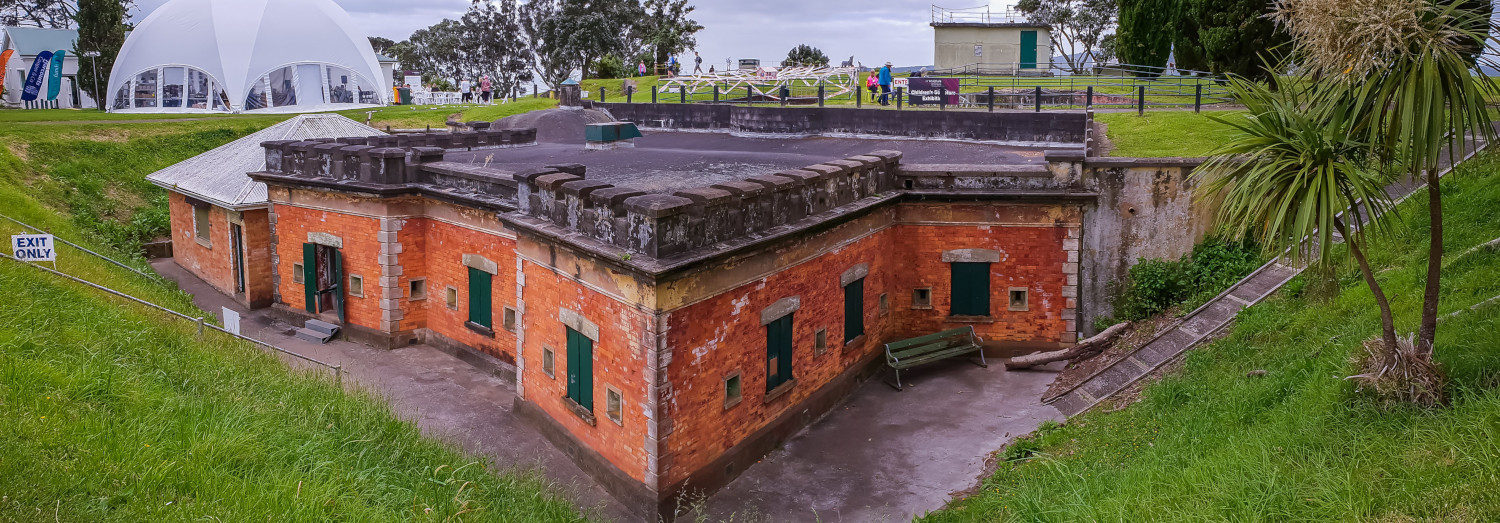
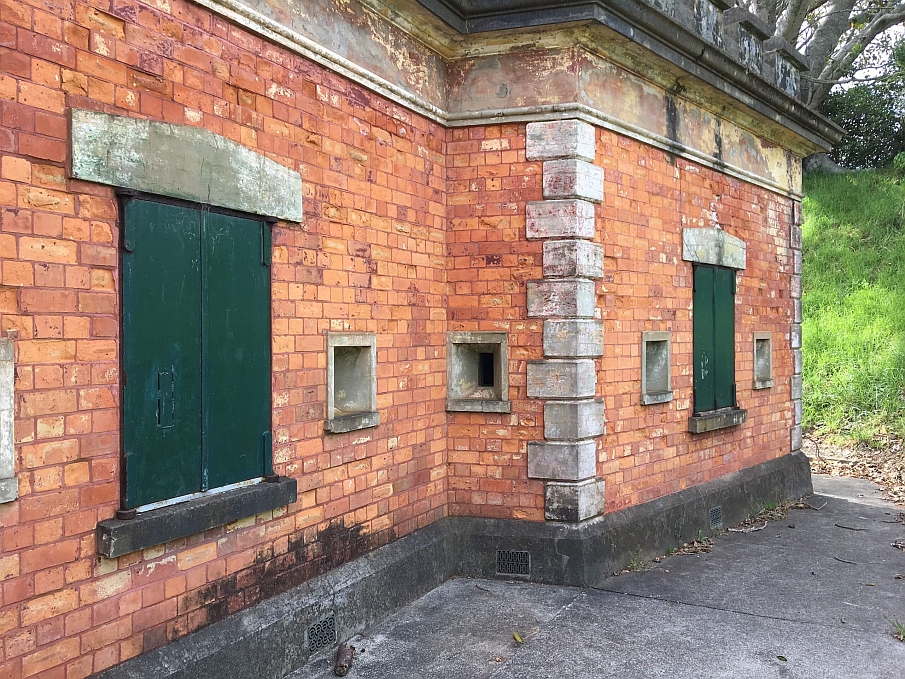
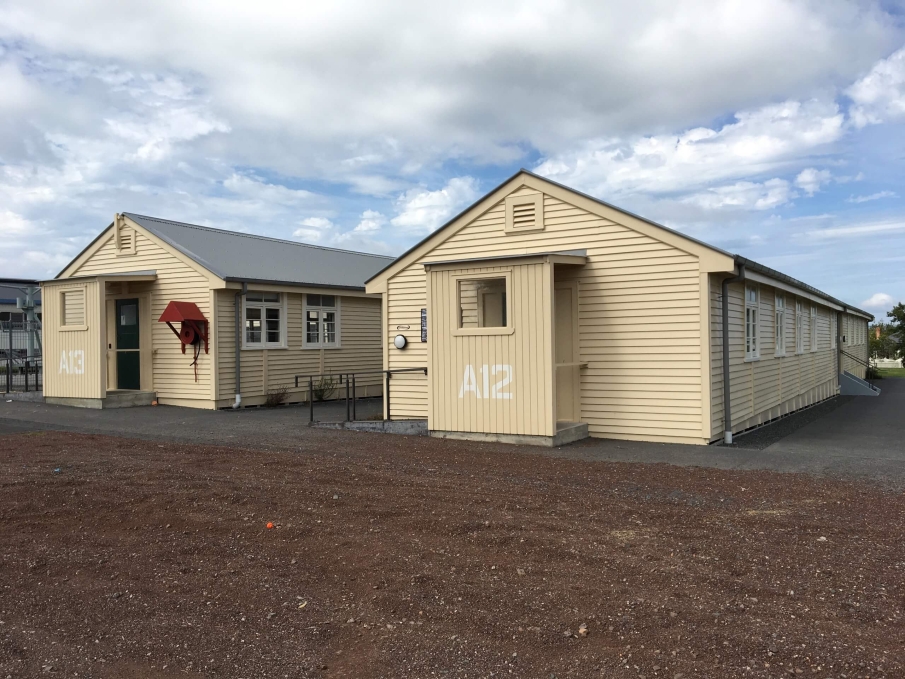
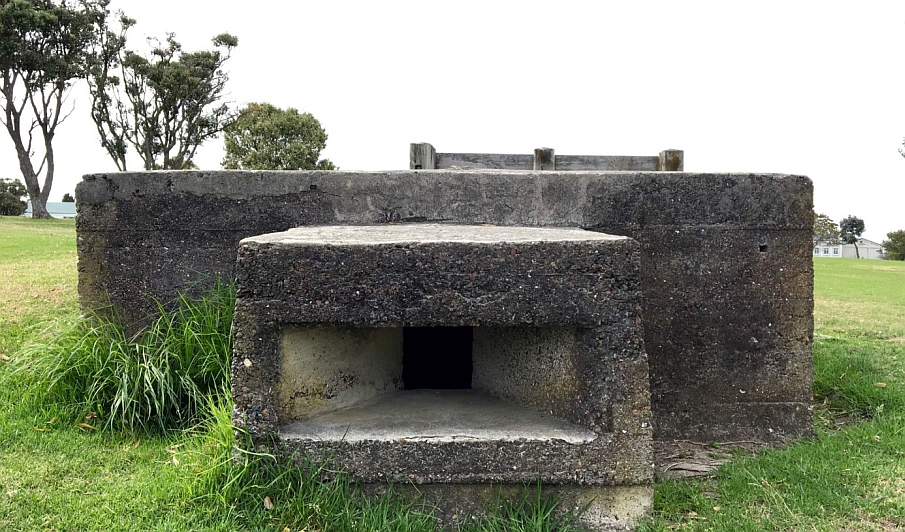
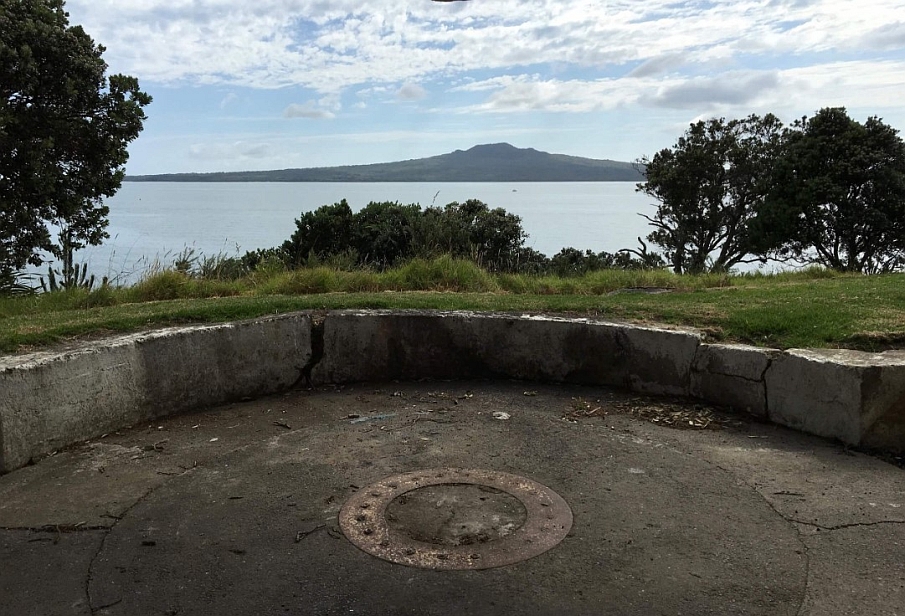
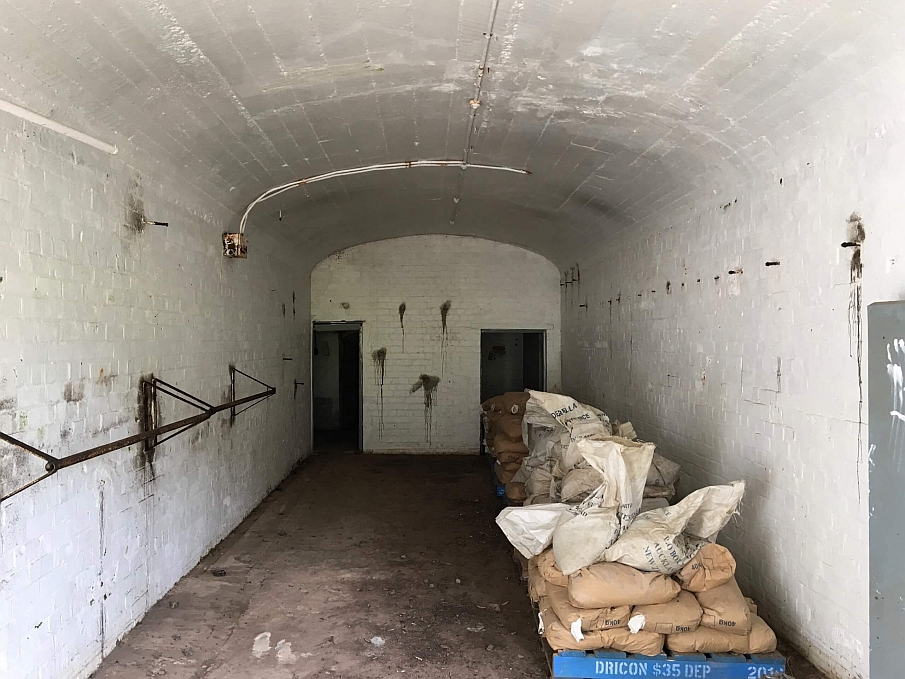
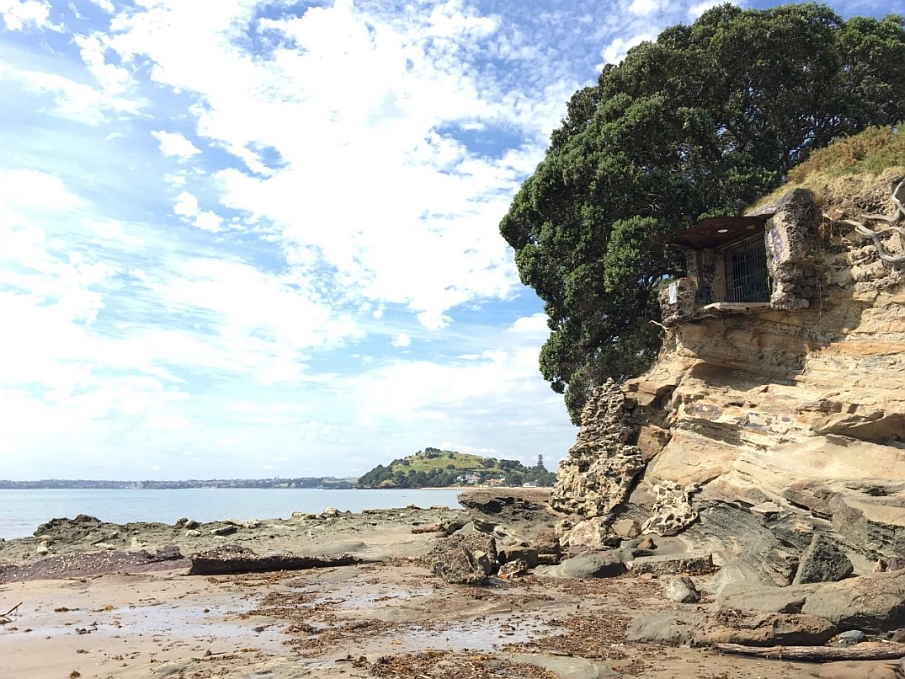
This historic place was registered under the Historic Places Act 1993. This report includes text from the original Historic Place Assessment Under Section 23 Criteria report considered by the NZHPT Board at the time of registration. Architectural: Fort Takapuna is significant not only for the uniqueness of the original fort and its great physical integrity but also for the range of structures that have survived. The fort comprises the following structures: - 1885-era barrack building and the associated underground battery - Underground engine room and two searchlight emplacements - Three 1920s naval magazines added as part of its conversion to a naval munitions depot 1924-38 - Three remaining 4-inch emplacements, battery observation post, from the examination battery, 1938-59 - Two naval observation post buildings from the precursor's of Puna Observation Post station
Why is this place Category 1 / Category 2?
Detail Of Assessed Criteria
This historic place was registered under the Historic Places Act 1993. This report includes text from the original Historic Place Assessment Under Section 23 Criteria report considered by the NZHPT Board at the time of registration. (a) The extent to which the place reflects important or representative aspects of New Zealand history: Apart from North Head there is not another installation in New Zealand that has had such length and variety of use as Fort Takapuna. It is one of the most important of all New Zealand's coastal defences. (b) The association of the place with events, persons, or ideas of importance in New Zealand history: Ideas: Fort Takapuna originally had 6-inch Mk: V guns on hydro-pneumatic mountings. These were removed around 1924 when the battery complex was converted to a naval munitions depot. After the navy commissioned its new munitions depot at Kauri Point, it handed the site back to army control and it was selected as the site for the Examination Service Battery in 1938. Like the examination battery at North Head, Fort Takapuna was used for the clearance of shipping into Auckland Harbour. The existing Victorian-era engine room and two Defence Electric Lights emplacements were modernised and brought back into service while the battery camp was used for the accommodation of the crews. Four, and then in 1939 two more circular, concrete emplacements with guns were constructed. Two munitions magazines built by the navy in the 1920s were used to store this battery's ammunition. A concrete battery observation post (BOP) was constructed on top of the old battery. In 1942 two guns were moved to North Battery, North Head and shortly after another of the remaining four was also removed. A simple 'Colchester' type overhead cover was provided for the remaining three emplacements. A temporary naval observation post built just east of the old fort in 1942 consisted of a small brick observation post and generator room. In 1943 this observation post was replaced by a larger timber building - Puna O.P. station - some distance away. This has since been demolished, leaving the smaller original observation post the only physical remnant of this activity. The observation post was used to monitor the movement of shipping through Rangitoto Channel, particularly to detect enemy ships, through the use of three detection devices. The first consisted of a series of indicator loops - coils of copper wire through which was sent a current. A ship passing over caused the current to fluctuate. The second was the ASDIC (anti-submarine defence investigation committee) which sent sonar rays across the sea bottom to detect movement. There was also a rudimentary underwater listening device. The examination battery remained in service until the abolition of coast artillery in the late 1950s. In 1958 the fort acquired the name Fort Cautley, occasionally providing confusion with the fort of the same name at North Head. The site was used by the army as a training base up to 1963. From that year until recently the area was used by the New Zealand Navy as part of HMNZS Tamaki, the navy's recruit and officer training facility. (e) The community association with, or public esteem for, the place: Fort Takapuna does not have the high public profile enjoyed by North Head but as controversy grows over the long-term future of the fort, so does public recognition of its significance. It has great potential for public visitation and interpretation and it occupies, like North Head and most forts and battery sites, a wonderful seaside location. Although still on defence land this is one of Auckland's best known coastal defence installations outside North Head, with which it shares a physical proximity. Sited on a spectacular piece of Auckland's eastern coast, it has great potential for public visitation. (g) The technical accomplishment or value, or design of the place: DATE: 1886-7 : 1920-45 ARCHITECT: G.C. Stevenson (Main Victorian Fort) STYLE CODE: MIL 9: Coastal Defence Fortification & Gun Battery, 1885-1905 MIL 12: Post Victorian Coastal Defence Batteries, 1905-1945 The Victorian era fort is the principal significant structure. Although many of its fittings and external embellishments have gone, it remains in fine condition. This is the only surviving example of what Mitchell describes as a 'two gun 6-inch fort .... built to a unique and sophisticated design.' It linked 'two 6-inch Mk V breach loading hydro-pneumatic (BLHP) guns in one coherent design with a central magazine and observation post, provision for two 6 pounder Nordenfelt quick firing guns for flank protection, and an integrated demi-bastioned and castellated brick barracks, the whole with a deep encircling ditch.' It was never rebuilt in a more modem style or altered for new uses, as happened to a number of other forts around the country. Instead new emplacements were built for the examination battery and remaining structures were adapted for that purpose. The older structures were therefore little changed. Fort Takapuna remains, alongside Fort Jervois, in the best condition of any fort from the 1885-90s Russian scare era. It retains its woodwork and lamp glasses, tramlines and turntables and many other features. Its engine room is in the best condition of any remaining in the country. Fort Takapuna became more than just a Victorian-era fort. The entire block behind the fort was eventually taken over for defence purposes. The conversion of the fort for use as a naval munitions depot in the 1920s and then its role as the home of examination service for Rangitoto Channel from 1938 saw more purpose-built structures erected. The three 'Colchester' emplacements, although later modified by the navy for use as part of their training facility, are in excellent condition as is the engine room and the converted Victorian era battery. Also still very much intact are the two buildings which were the precursor to the Puna observation post station. Fort Takapuna is a substantial complex. The entire ensemble retains its authenticity and represents, next to North Head, the most complete collection of coastal defence structures.
Why is this place significant?
Historic Significance
Historical Significance or Value This historic place was registered under the Historic Places Act 1993. This report includes text from the original Historic Place Assessment Under Section 23 Criteria report considered by the NZHPT Board at the time of registration. Historical: Work on Fort Takapuna began in 1885 and only recently has it been relinquished from defence use. Before work on the fort began the land had to be acquired from private hands. The resulting saga, known as the 'Stark Purchase' is only now, over 110 years later, having its ultimate conclusion with present attempts by the Defence Department to sell the land the fort sits on. Fort Takapuna was built to a particular design used in three other locations in New Zealand. Those other forts, Bastion (Auckland), Kelburn (Wellington) and Central (Dunedin), have been destroyed and today this remains the only example of this type of fort left. It is therefore an important, unique record of a particular aspect of New Zealand's defence planning.
Physical Significance
This historic place was registered under the Historic Places Act 1993. This report includes text from the original Historic Place Assessment Under Section 23 Criteria report considered by the NZHPT Board at the time of registration. Architectural: Fort Takapuna is significant not only for the uniqueness of the original fort and its great physical integrity but also for the range of structures that have survived. The fort comprises the following structures: - 1885-era barrack building and the associated underground battery - Underground engine room and two searchlight emplacements - Three 1920s naval magazines added as part of its conversion to a naval munitions depot 1924-38 - Three remaining 4-inch emplacements, battery observation post, from the examination battery, 1938-59 - Two naval observation post buildings from the precursor's of Puna Observation Post station
Why is this place Category 1 / Category 2?
Detail Of Assessed Criteria
This historic place was registered under the Historic Places Act 1993. This report includes text from the original Historic Place Assessment Under Section 23 Criteria report considered by the NZHPT Board at the time of registration. (a) The extent to which the place reflects important or representative aspects of New Zealand history: Apart from North Head there is not another installation in New Zealand that has had such length and variety of use as Fort Takapuna. It is one of the most important of all New Zealand's coastal defences. (b) The association of the place with events, persons, or ideas of importance in New Zealand history: Ideas: Fort Takapuna originally had 6-inch Mk: V guns on hydro-pneumatic mountings. These were removed around 1924 when the battery complex was converted to a naval munitions depot. After the navy commissioned its new munitions depot at Kauri Point, it handed the site back to army control and it was selected as the site for the Examination Service Battery in 1938. Like the examination battery at North Head, Fort Takapuna was used for the clearance of shipping into Auckland Harbour. The existing Victorian-era engine room and two Defence Electric Lights emplacements were modernised and brought back into service while the battery camp was used for the accommodation of the crews. Four, and then in 1939 two more circular, concrete emplacements with guns were constructed. Two munitions magazines built by the navy in the 1920s were used to store this battery's ammunition. A concrete battery observation post (BOP) was constructed on top of the old battery. In 1942 two guns were moved to North Battery, North Head and shortly after another of the remaining four was also removed. A simple 'Colchester' type overhead cover was provided for the remaining three emplacements. A temporary naval observation post built just east of the old fort in 1942 consisted of a small brick observation post and generator room. In 1943 this observation post was replaced by a larger timber building - Puna O.P. station - some distance away. This has since been demolished, leaving the smaller original observation post the only physical remnant of this activity. The observation post was used to monitor the movement of shipping through Rangitoto Channel, particularly to detect enemy ships, through the use of three detection devices. The first consisted of a series of indicator loops - coils of copper wire through which was sent a current. A ship passing over caused the current to fluctuate. The second was the ASDIC (anti-submarine defence investigation committee) which sent sonar rays across the sea bottom to detect movement. There was also a rudimentary underwater listening device. The examination battery remained in service until the abolition of coast artillery in the late 1950s. In 1958 the fort acquired the name Fort Cautley, occasionally providing confusion with the fort of the same name at North Head. The site was used by the army as a training base up to 1963. From that year until recently the area was used by the New Zealand Navy as part of HMNZS Tamaki, the navy's recruit and officer training facility. (e) The community association with, or public esteem for, the place: Fort Takapuna does not have the high public profile enjoyed by North Head but as controversy grows over the long-term future of the fort, so does public recognition of its significance. It has great potential for public visitation and interpretation and it occupies, like North Head and most forts and battery sites, a wonderful seaside location. Although still on defence land this is one of Auckland's best known coastal defence installations outside North Head, with which it shares a physical proximity. Sited on a spectacular piece of Auckland's eastern coast, it has great potential for public visitation. (g) The technical accomplishment or value, or design of the place: DATE: 1886-7 : 1920-45 ARCHITECT: G.C. Stevenson (Main Victorian Fort) STYLE CODE: MIL 9: Coastal Defence Fortification & Gun Battery, 1885-1905 MIL 12: Post Victorian Coastal Defence Batteries, 1905-1945 The Victorian era fort is the principal significant structure. Although many of its fittings and external embellishments have gone, it remains in fine condition. This is the only surviving example of what Mitchell describes as a 'two gun 6-inch fort .... built to a unique and sophisticated design.' It linked 'two 6-inch Mk V breach loading hydro-pneumatic (BLHP) guns in one coherent design with a central magazine and observation post, provision for two 6 pounder Nordenfelt quick firing guns for flank protection, and an integrated demi-bastioned and castellated brick barracks, the whole with a deep encircling ditch.' It was never rebuilt in a more modem style or altered for new uses, as happened to a number of other forts around the country. Instead new emplacements were built for the examination battery and remaining structures were adapted for that purpose. The older structures were therefore little changed. Fort Takapuna remains, alongside Fort Jervois, in the best condition of any fort from the 1885-90s Russian scare era. It retains its woodwork and lamp glasses, tramlines and turntables and many other features. Its engine room is in the best condition of any remaining in the country. Fort Takapuna became more than just a Victorian-era fort. The entire block behind the fort was eventually taken over for defence purposes. The conversion of the fort for use as a naval munitions depot in the 1920s and then its role as the home of examination service for Rangitoto Channel from 1938 saw more purpose-built structures erected. The three 'Colchester' emplacements, although later modified by the navy for use as part of their training facility, are in excellent condition as is the engine room and the converted Victorian era battery. Also still very much intact are the two buildings which were the precursor to the Puna observation post station. Fort Takapuna is a substantial complex. The entire ensemble retains its authenticity and represents, next to North Head, the most complete collection of coastal defence structures.
Construction Details
Start Year
1885
Type
Original Construction
Construction Details
Start Year
1885
Type
Original Construction
Historical and Associated Iwi / Hapū / Whānau
Information Sources
Fox, 1893
Lieutenant-Colonel F J Fox, 'Report on The New Zealand Defence Works and Armaments', Part II, Wellington, 1893
Mitchell, 1995
J Mitchell, 'The Disappearing Guns of Auckland: The History and Archaeology of the forts of Auckland Harbour', Thesis in fulfilment of Doctor of Philosophy in Anthropology, Auckland University, 1995
New Zealand Defence Force
New Zealand Defence Force
McGibbon, 1991
I McGibbon. The Path to Gallipoli. GP Books, Wellington, 1991
Conservation Plan
Conservation Plan
Other Information
A copy of the original report is available from the NZHPT Northern Region office. Please note that entry on the New Zealand Heritage List/Rarangi Korero identifies only the heritage values of the property concerned, and should not be construed as advice on the state of the property, or as a comment of its soundness or safety, including in regard to earthquake risk, safety in the event of fire, or insanitary conditions.
Historical and Associated Iwi / Hapū / Whānau
Information Sources
Fox, 1893
Lieutenant-Colonel F J Fox, 'Report on The New Zealand Defence Works and Armaments', Part II, Wellington, 1893
Mitchell, 1995
J Mitchell, 'The Disappearing Guns of Auckland: The History and Archaeology of the forts of Auckland Harbour', Thesis in fulfilment of Doctor of Philosophy in Anthropology, Auckland University, 1995
New Zealand Defence Force
New Zealand Defence Force
McGibbon, 1991
I McGibbon. The Path to Gallipoli. GP Books, Wellington, 1991
Conservation Plan
Conservation Plan
Other Information
A copy of the original report is available from the NZHPT Northern Region office. Please note that entry on the New Zealand Heritage List/Rarangi Korero identifies only the heritage values of the property concerned, and should not be construed as advice on the state of the property, or as a comment of its soundness or safety, including in regard to earthquake risk, safety in the event of fire, or insanitary conditions.
Themes
Coastal Defences
Themes
Coastal Defences
