High Street School
In 1864, John Park opened a school for the growing number of children in central Dunedin. The school was successful and outgrew its building (High Street School Register No. 2172). Its success saw the Otago Education Board establish a school on the corner of nearby High and Alva Streets. New Zealand’s Premier Sir Robert Stout opened High Street School on 15 February 1887.
The building represented an advance in school design with wide passages and high ceilings. Large and imposing, the two-storey wooden weatherboard design included a bell tower. By the end of 1903, there were 570 scholars on the roll.
Former pupils had vivid memories of the school. Some remembered the frequent use of the leather strap for offences such as not being able to spell, for being late or running down the hall on their first day at school. Others remembered having to drink ‘that revolting warm milk’ that had been ‘sitting in the sun and the smell of the sour milk in the crates’. There were ‘no lawns to play on. It was a concrete jungle’. Memories of the buildings, described as ‘daunting’, were vivid. It was ‘so big, with its staircase and bell tower. The floors were creaky and smelt damp.’ Another remembered that the ‘old two story building in a thunderstorm was a bit scary’. Yet another remembered the ‘slate roof, separate stairs for girls and boys’. One pupil remembers ‘sliding down the main stairs in the middle of the school…and the lovely iron gates’.
‘A good iron fence’
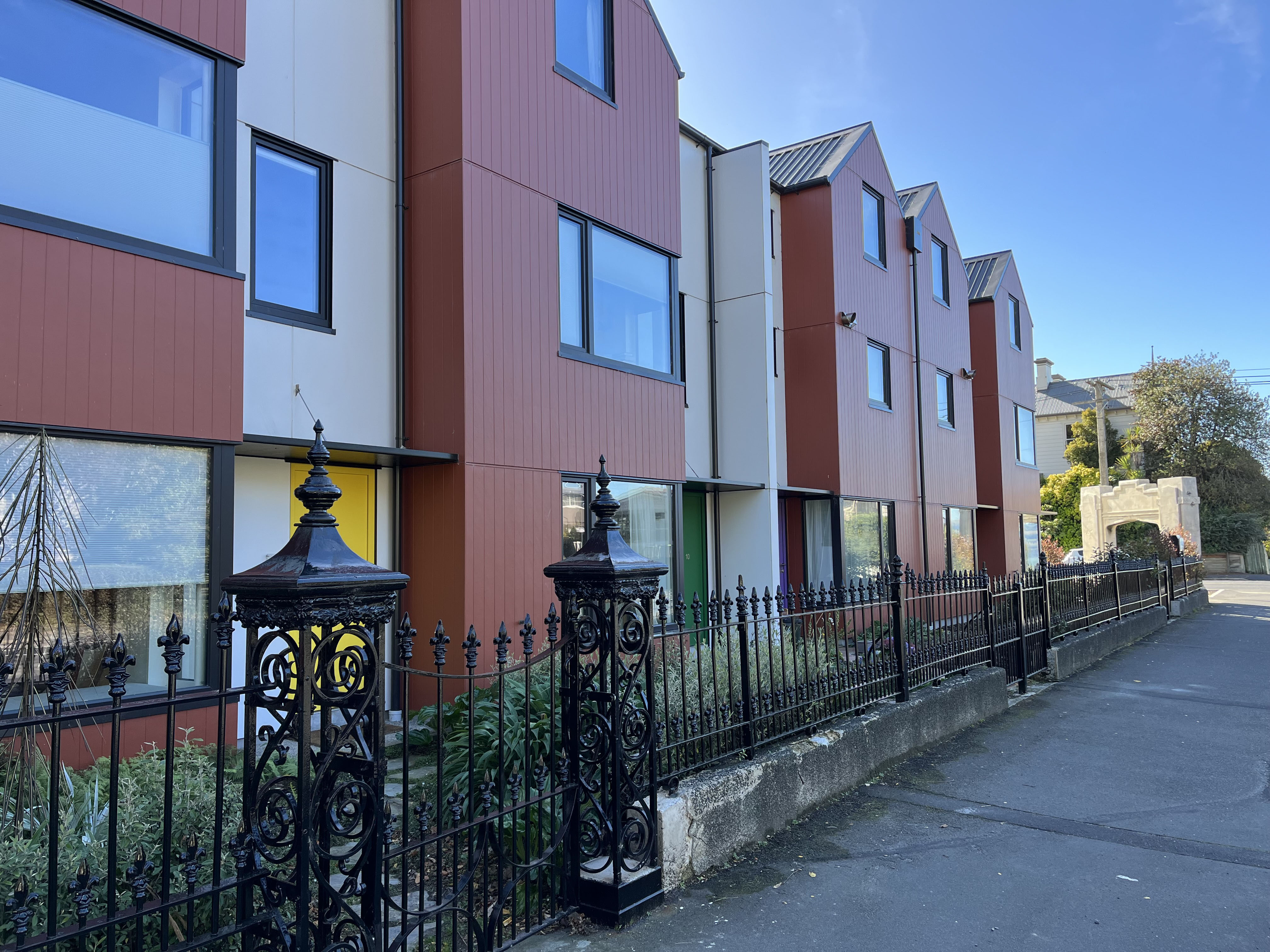
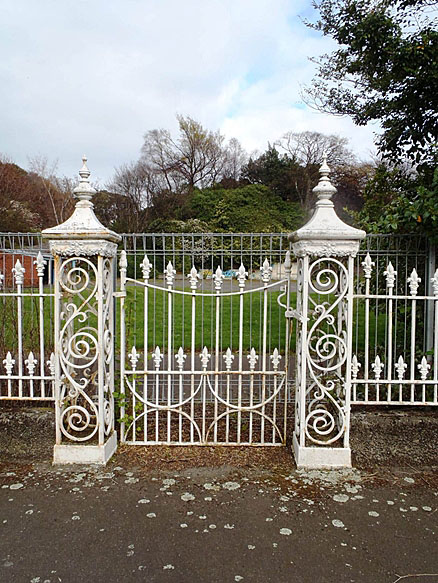
In 1904, High Street School Committee decided to get a ‘good iron fence’ erected around the school, with ‘householders’ support’. In October the Otago Education Board advertised for tenders for a concrete and iron fence at the High Street School. The Board’s architect John Somerville probably drew up the plans and specifications.
J & W Faulkner, Ornamental Iron & Wire Workers, won the contract with a tender of £175. They signed the contract on 24 October 1904. The foundations of the new fence were to be eight inches and the concrete footing to be 18 x 8 inches (46 x 20 centimetres). The concrete was to be finished with cement plaster. The gateposts were to be wrought or cast iron bolted to pieces of Port Chalmers stone 18 x 18 x 18 inches (46 x 46 x 46 centimetres). Finally, the ironwork was to be painted in several coats of red lead and oil paint. In April 1905, the School Committee reported that the old picket fence had been replaced on two frontages by the iron fence ‘including handsome gates and posts’.
Memorialising the Great War
On 4 August 1914, Britain and its Empire declared war against Germany. By the close of war, over 103,000 New Zealanders had served overseas. Ultimately, the war claimed 18,500 New Zealanders and wounded more than 4000. Otago and Southland casualties were particularly heavy through involvement in front line fighting, especially at Gallipoli, Messines and Passchendaele.
In honour of the war dead, approximately 500 war memorials were erected throughout the country. These memorials symbolised two contradictory messages: sadness at the death of young men cut off in their prime, and pride in the manhood of the ANZACS. Over 16,600 men were buried in foreign lands; 5324 with no known graves. The war memorial functioned as a surrogate grave where relatives could visit and grieve. Yet there was also pride in the way 'our boys' had given identity to our nation. A new ‘Kiwi’ sense of identity was honored and commemorated.
During the war New Zealand soldiers became known as ‘Kiwis’. Until the First World War, the kiwi represented the country and not the people: ‘they were En Zed(der)s, Maorilanders or Fernleaves’. During the war, however, several regiments used the kiwi as a symbol because of its unique and distinct association with New Zealand. Cartoonists also used the bird to symbolise New Zealand. ‘Kiwi’ boot polish, named for New Zealand, was also widely used by imperial forces. By the end of the war the ‘Kiwi’ nickname had taken hold.
Despite honourable intentions, memorials aroused opposition, particularly among returned soldiers. Many were cynical about ‘traditional memorials carved in stone’. The RSA argued that the most appropriate tribute was to care for the soldiers who survived. Others argued the money should go towards caring for soldiers’ widows and children.
While memorials were a focus for grief, pride and even antagonism, they also served a propagandist function. They were placed in prominent positions, often on school grounds, so that the ‘example of the fallen would be a daily inspiration to the young as they entered the school grounds.’ During unveiling ceremonies school children were given a prominent position, with speeches directed towards them. It was this propagandist role that the High Street School memorial particularly served.
High Street School War Memorial and Gates
During World War One the children at High Street School made their own contributions to the war effort. They raised funds to purchase a horse for the Otago Mounted Rifles; sewing periods were used to knit ‘comforts’ for the troops; and the pupils involved themselves in various fundraising efforts.
The school suffered losses among ex-pupils and ex-teachers. During the 1924 Jubilee celebrations, Prime Minister William Ferguson Massey (1856–1925) unveiled a memorial tablet containing 52 names. Fifty-two seems high, but it may reflect the fact that High Street was a thoroughfare through an inner city suburb in 1914. In handing over the tablets, he reminded the children that it was ‘our duty to keep the Empire intact’. The headmaster said the tablet would be regarded as the ‘sacred duty of the school to revere, guard and keep as long as the school existed’.
After the Jubilee, the Park and High Street Jubilee Committee decided to erect ‘gates in memory of those who had gone away and not come back.’ It was not an unusual project for a Committee to initiate. War memorials were always funded by local communities and without government assistance. As the soldiers had sacrificed their lives, so the community was asked to ‘voluntarily and sacrificially subscribe’.
Almost half of New Zealand’s war memorials were unveiled around 1922 and 1923. The first recorded sign of progress on the High Street memorial appeared in July 1925 when the School Committee asked permission to erect memorial gates at the School. The Otago Education Board agreed, subject to the Board architect’s approval.
In design, no two memorials were the same. Memorials might include soldier figures, obelisks and cupolas, towers, windows, and bridges or clocks that combined useful functions with a memorial purpose. A ‘useful’ memorial was generally held to be disrespectful to the sacrifice of those who had died, so most memorials were purely ornamental. Around a fifth of memorials were gates and arches, many of them found at the entrance to schools.
Memorials were placed in central and prominent positions, in some degree of open space, so relatives of the dead could easily have access. This also enabled their use in public ceremonies, especially ANZAC Day. In August 1925, it was decided, in the face of some opposition, that the school’s memorial should be placed at the corner of High and Alva Streets in place of the main gates. Easily accessed by the community, it was also a prominent position for the school children.
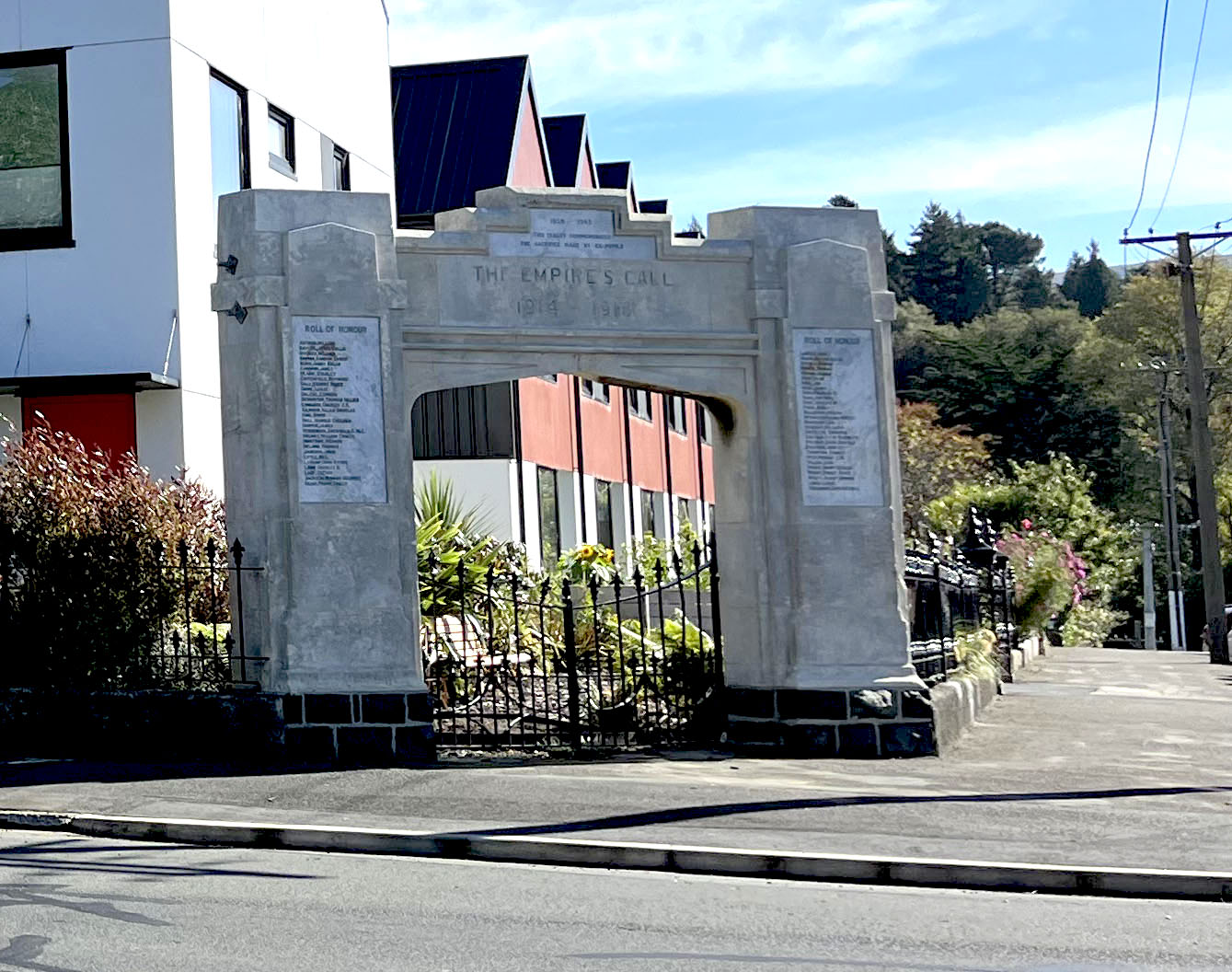
Monumental masons, H.S. Bingham and Co., constructed the memorial arch. The structure was relatively simple and exemplified a design chosen as appropriate for many schools. Of strong and imposing aesthetic, the memorial was probably erected relatively inexpensively as it was constructed mostly from Oamaru stone salvaged from the recently closed New Zealand and South Seas International Exhibition 1925-26 held in Dunedin. Evidence of the former use of the stone is still visible. Engraved in the centre of the memorial was the inscription ‘The Empire’s Call 1914-1918’.
In August 1926, a letter from Mr Ferguson Forrester, Chairman of the Jubilee Committee, advised that the memorial gates were completed. He asked the School Committee to organise a formal opening. The Jubilee Committee also asked ‘that Boys enter the school each morning through the gates and they be asked to remove their hats as a mark of respect to former pupils who gave their lives in the great war.’
The School Committee arranged for the unveiling ceremony to be held on Friday 13 August. In his speech, the School Committee Chairman observed that although most current school students had not been alive during the war ‘the gates would serve as an example to them – an example to follow should the need arise.’ The Education Board Chairman spoke of the gates representing ‘remembrance and example’. The gates stood ‘reminding everyone who saw them that if he had a duty to perform he should do it as these soldiers did, as true sons of the Empire’. Two Union Jacks, which covered the tablets, were drawn aside, revealing 56 names. Rev. H. Maclean led in prayer and then the Last Post was sounded. Rudyard Kipling’s ‘Land of Our Birth’ was sung by the children:
Land of our birth, our faith, our pride,
For whose dear sake our fathers died,
O Motherland, we pledge to thee
Head, heart, and hand through the years to be.
In accepting the handing over of the gates, the headmaster vowed that the memorial would be ‘handed down unsullied to future generations of children’.
The unveiling ceremony was saturated with the Imperial propaganda typical of these memorials. Historian, Rodney Hamel, suggests that the propaganda was used as a ‘bulwark against the mood of pacifism beginning to make itself felt after the war…Could it be that these memorials were an attempt to attach a particular spin to memory…’
Later modifications
In the aftermath of World War Two, a tablet was added to the centre of High Street School’s memorial. It read ‘This tablet commemorates the sacrifice made by ex-pupils, 1939-45’. The plaque was dedicated at the school’s ANZAC Day Service in 1950.
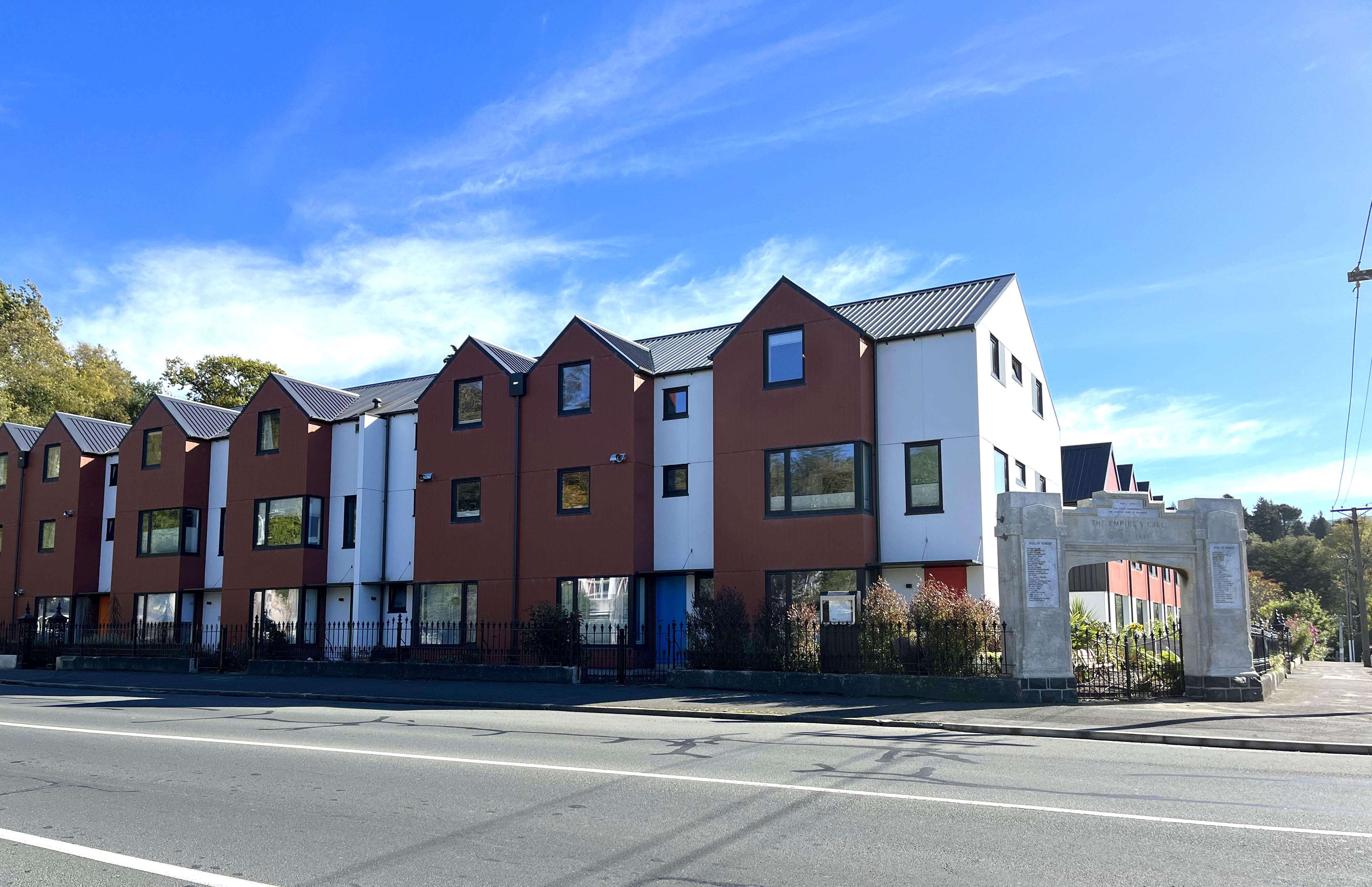
By 1981, the school’s roll had fallen to an all-time low and the buildings were deteriorating and ‘outmoded’. In 1982, the old school was demolished and prefabs were erected. The school roll declined steadily and the school was officially closed February 2011.
While the school is now closed, the importance of the gates and the memorial remains, particularly with the growing importance of ANZAC Day commemorations. Over time there have been changes in the way that the day has been commemorated, reflecting our changing society. In recent years, ANZAC Day ceremonies in New Zealand have witnessed increased attendance, among young and old alike. An increase in Kiwi visitors to battlefields in Turkey and Europe also demonstrate a growing interest in the war. ANZAC Day now promotes a sense of national accord. The value of the memorial at the former High Street School was recognised in 2013 when a NZHPT covenant was placed on the War Memorial, Gates and wrought iron fence.