Formation of the Society for the Promotion of Health of Women and Children
The health of infants was one of New Zealand’s major concerns of the early twentieth century, and with good reason: more than seven in 100 New Zealand children were dying in infancy. Illnesses such as gastroenteritis, tuberculosis, diphtheria and polio struck the young. And with the deaths of children, politicians expressed concern about the future health of the nation. Premier Richard Seddon called for the country to ‘save the babies’ as children were ‘‘social capital’ – the ‘building blocks’ of the nation and the country’s future defence force.’
So it was that Sir Frederic Truby King, superintendent at Seacliff Lunatic Asylum, became interested in the welfare of infants. His interest was spurred when he and wife Bella adopted Mary, a delicate infant. Bella challenged him to find a suitable milk formula for Mary. He studied artificial feeding for infants and devised a recipe for ‘humanised milk’ and established a routine under which Mary thrived. Truby King advocated breast feeding, and where that was not possible, the use of this ‘humanised milk.’ Encouraged by his success, he trained Joanna MacKinnon, one of his Seacliff staff, in his infant feeding methods and routines. He hoped to prove to the medical world and the wider community that his methods could lead to lower infant death rates and healthier children. Joanna MacKinnon took the method to Dunedin families, and alerted Truby King to the poor state of foster homes.
King called a public meeting on 14 May 1907, at which the Society for the Promotion of Health of Women and Children was formed to help mothers and to save babies from disease and malnutrition. As a doctor, he believed a system of good nutrition and regular routines would reduce the death rate among babies and children, and safeguard the nation’s health. Truby King won over a group of Dunedin women who formed the Society for the Promotion of Health of Women and Children – the inaugural meeting was held on 23 May 1907. The make-up of the officers of first committee shows how wives of the wealthy and influential played important roles: president Kathleen Hosking was wife of a magistrate; vice-president Ella Ritchie was wife of the general manager of the National Mortgage and Agency Company; Susanna Joachim was wife of the managing director of the country’s largest coal company; and treasurer Sarah Cohen was wife of an Evening Star editor. Planning meetings were held at Olveston, the home of committee member Mrs Marie Theomin. Truby King suggested setting up a licensed home to care for infants, as well as a maternity home for mothers in Dunedin. He offered his own holiday house at the small seaside town of Karitane, north of Dunedin, as the first licensed home or ‘Karitane’ hospital for sick, malnourished or premature babies. He equipped the hospital, while the community supplied baby clothes and the Taieri and Peninsula Dairy Company provided free milk. This community support was a key in the Society’s working.
Establishment of the ‘Karitane Home for Babies’, Andersons Bay
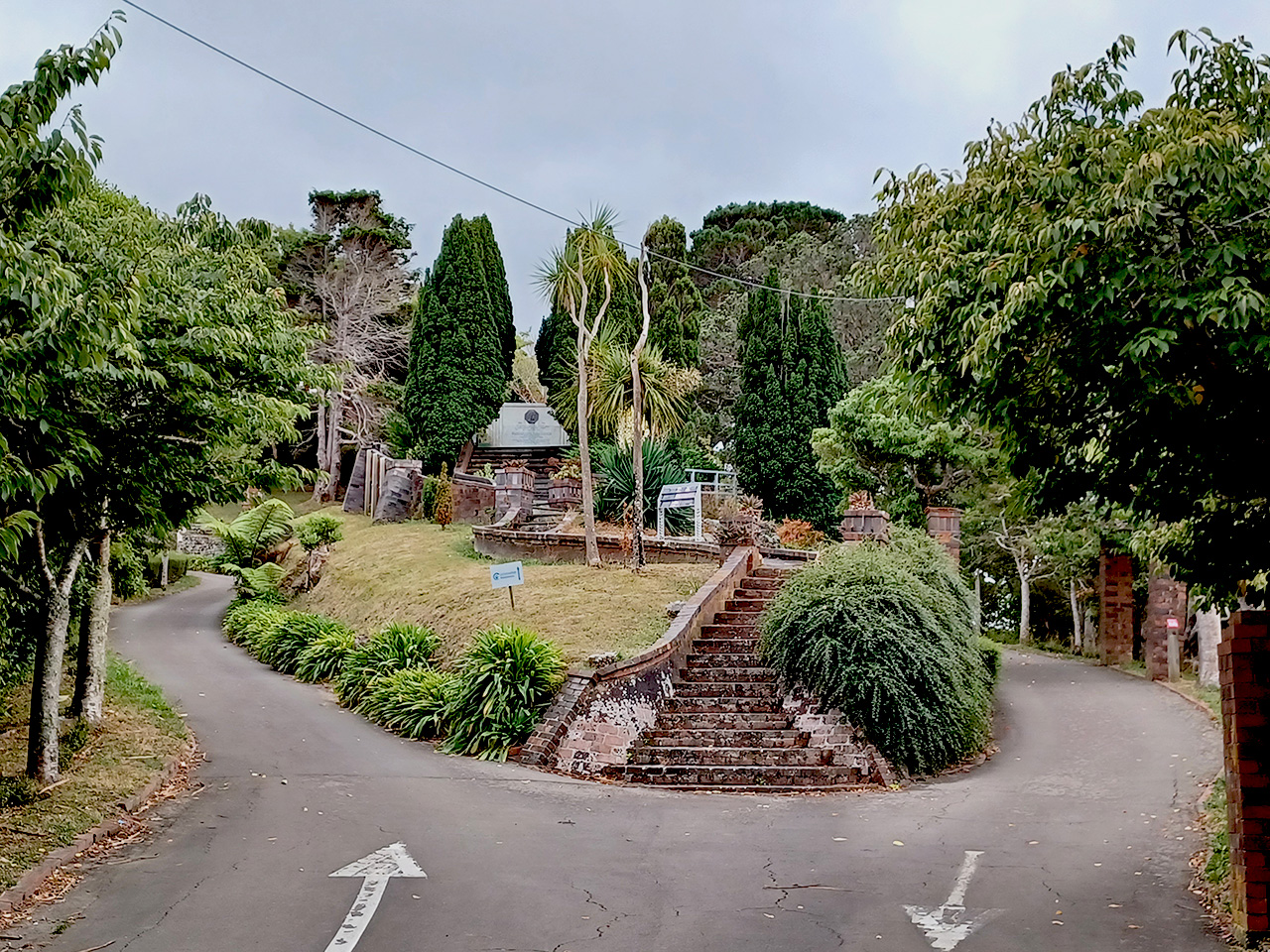
A sub-committee of Society women set about finding a suitable place in Dunedin for the maternity home. Mrs Leslie Harris, daughter in law of philanthropist Wolff Harris, arranged for the Society to lease one of the family’s homes in Andersons Bay/Puketahi. Wolff Harris became a life member of the Society, gifting the Andersons Bay property to the Society in 1910.
Puketahi (‘one hill’, also spelled Puketai), the Maori name for area overlooking South Dunedin’s flat land, was a commanding site overlooking the neck of the Otago Peninsula. Puketahi was on the Maori trail from the peninsula via Tomahawk to places south of Otepoti/Dunedin. Andersons Bay sits above the narrow neck of land, across which waka were dragged for sea journeys. European settlers too enjoyed the situation. James Anderson is the settler who gives his name to the modern suburb of Andersons Bay – settling in the district in 1844, before the founding of Dunedin. Following later were settlers like Wolff Harris who lived in the area. Harris was a Polish Jew, who came to Dunedin in 1857 and, with Adolf Bing, founded Bing Harris Company, a warehousing and manufacturing firm which road the crest of the golden wave of 1860s Dunedin. Harris later retired to a comfortable London life, but continued his Dunedin philanthropic interest, including funding a chair in Physiology at the Otago Medical School, and the later gift of a home for the Karitane hospital.
The Andersons Bay property was perfectly situated – a healthy setting with a generous section, sloping garden and fresh air. The hospital known as the ‘Karitane Home for Babies’ was opened on 13 December 1907. Their motto was ‘Save the Babies’ and their mission to ‘give a chance for a healthy life to babies who are brought into the world either without a home at all or under conditions that would not allow their being properly nurtured and cared for.’
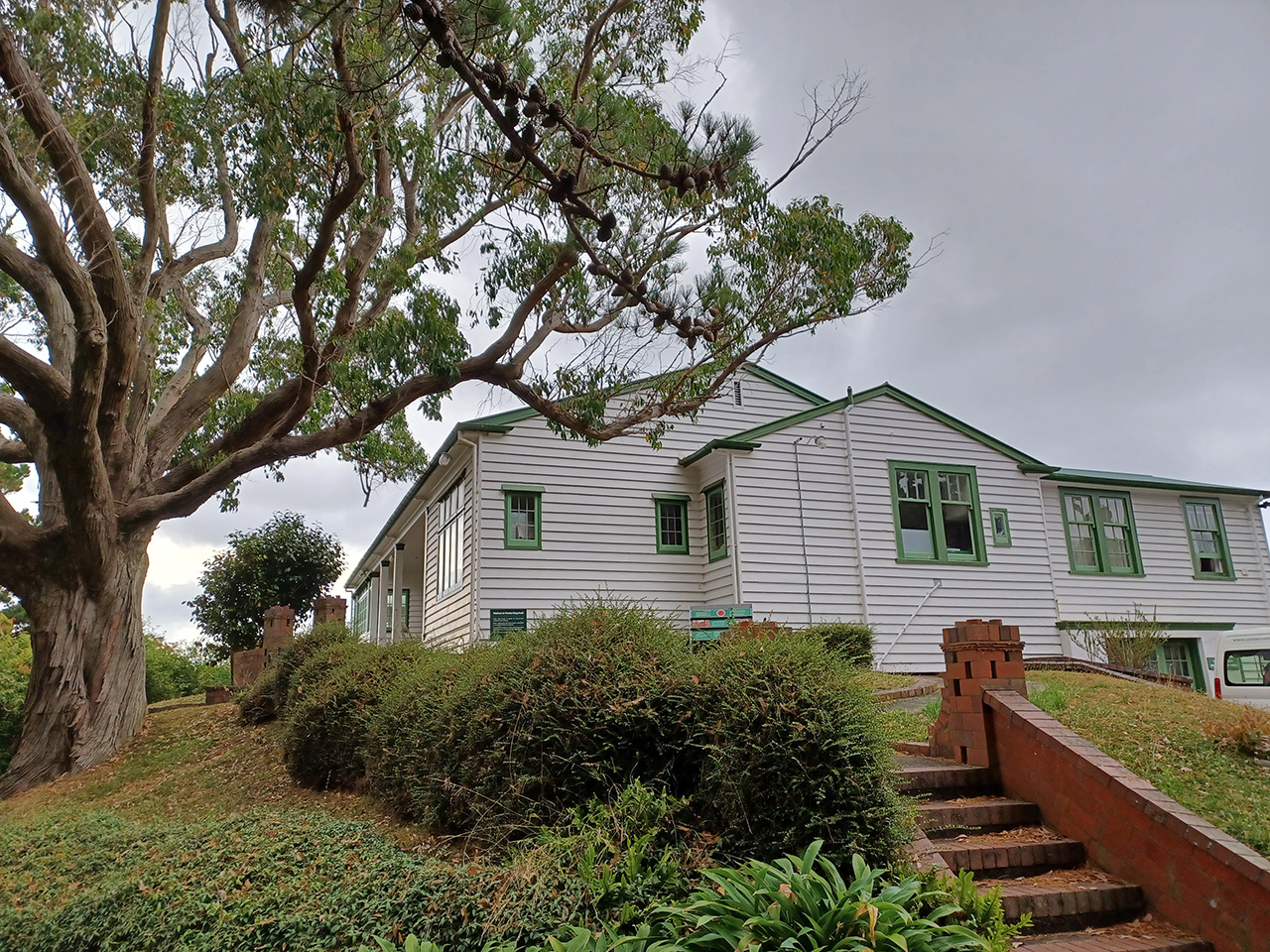
All Society baby-care homes took on the name ‘Karitane’. The Dunedin Karitane Home took babies and children under two years, who were not being treated in the hospital system. The facilities at Andersons Bay were limited; the house was a six-bedroom villa on three acres (1.21 hectares) of land with associated outbuildings. The two sunny front rooms were converted to ward space, and the stable became the nurses’ home. The hospital became known as the Karitane-Harris Hospital in honour of Wolff Harris and Truby King. Care was based on the system of ‘humanised milk, regular feeding and plenty of fresh air, sunshine and exercise.’ Humanised milk was a modified form of cow’s milk mimicking the make-up of breast milk, where infants could not be breast fed. Truby King’s system was taken up in many parts of the world.
Growth of the Plunket Society
By May 1908, Auckland, Wellington, Christchurch and Dunedin had branches of the new society. Victoria Plunket, wife of the then Governor-General, became patron and the society became known as the Plunket Society. Children’s health became an issue of ‘national safety and national progress’ in the early years of the twentieth century. This was brought to the fore with the First World War where, as a government poster put it, ‘The Race marches forward on the feet of Little Children.’
Six Karitane hospitals opened in New Zealand, providing support for new mothers and their babies who were ‘failing to thrive’. In 1918, the Christchurch Karitane Hospital opened, and the following year, Wanganui opened its own Karitane Hospital. Wellington’s new Karitane Hospital opened in 1926. Auckland’s Karitane Hospital opened in October 1924, while Invercargill’s opened in the mid-1920s. Each of the hospitals accommodated some 30 babies and 10 mothers, and was staffed by matrons, nurses and honorary visiting paediatricians.
Plunket built up a system of nurse training; qualified nurses trained in maintaining health and preventing disease. Lord and Lady Plunket instigated the programme, with the aim of training health visitors who would instruct mothers in infant care, free of charge. Each hospital also had a number of Karitane nurse trainees, who carried out the bulk of the nursing work. Before the 1960s, only Dunedin’s Karitane hospital trained Plunket nurses. By 1931, there were 129 Plunket nurses, who made close to 200,000 calls on mothers and babies at home. Over 623,000 mothers and babies visited Plunket rooms that year. New Zealand’s infant death rate was the lowest in the world.
Plunket Rooms
Crucial to the Society’s work was the network of Plunket Rooms. The first Plunket Rooms were established in public buildings. Later, communities built their own Plunket Rooms – with local fundraising and labour. Historian Linda Bryder writes that Plunket has often been heralded as ‘New Zealand’s most successful voluntary organisation and certainly its most famous.’ Plunket’s care was focused on Pakeha women, with Plunket having an ‘uneasy’ relationship with Maori mothers. It was not until the 1980s that Plunket was seen to serve Maori, Pacific communities and other ethnic groups, despite there being recognition that Maori and Pacific families had poorer health.
Supporting Plunket nurses were the Karitane nurses. Karitane nurses were also trained in Dunedin. ‘Karitane Bay Nurses’ (later known as Karitane nurses or Karitanes) specialised in the ‘practical care of babies and young children.’ Karitane nurses were not registered nurses and were available to work in private homes, where their care was known as ‘casing’. Karitane nurses played an ‘important part in spreading the Plunket message and improving the health of New Zealand families.’ Karitane nurses and Karitane hospitals were ‘mutually dependent.’ Karitane nurses made up the majority of the staff, carrying out the practical everyday care of babies and children, as well as looking after mothers in the Mothercraft units. Plunket nurses mainly worked in the community. Until 1964, when Auckland began a training course for Plunket nurses, Dunedin’s Truby King Harris Hospital was the only place where training was offered.
By 1928, the Plunket Society had 64 branches with Plunket nurses and 500 sub-branches that nurses visited. Mothers and babies made nearly 500,000 visits to Plunket Rooms that year, and nurses made 180,000 home visits. ‘Plunket’ had become a household name. As Plunket’s honorary secretary wrote in 1916, ‘Ours is essentially a woman’s mission – a woman’s society appealing to women.’ Historian Erik Olssen has argued that Plunket’s aims fitted into the capitalist framework, turning out self-controlled citizens, governed by the clock.
Construction of the new hospital
In 1934, Dunedin’s Karitane Home changed its name to the Truby King Harris Hospital to recognise Truby King’s role in founding the society. Like its founder, the hospital building was ageing. The facilities were out of date and cramped. The Plunket Society decided they needed a new hospital to provide modern accommodation for mothers and babies, and good training facilities for Plunket and Karitane nurses, befitting the centre of Plunket’s New Zealand operations. As with most of Plunket’s work, the community helped raise the money.
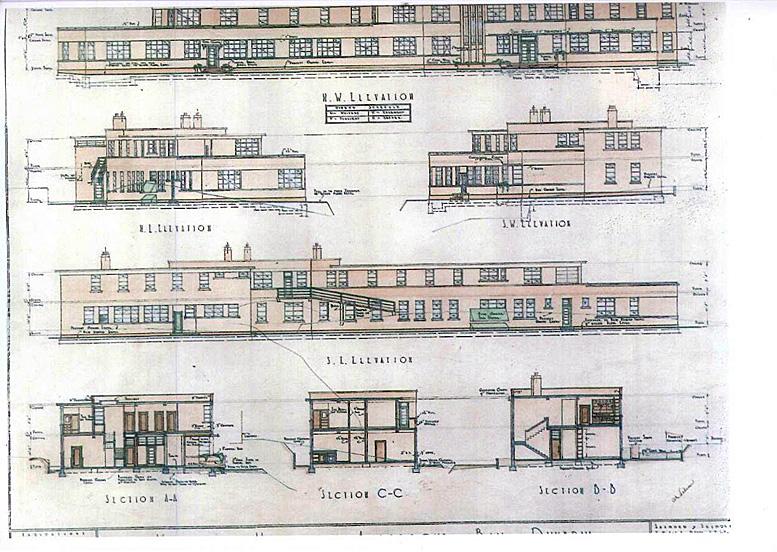
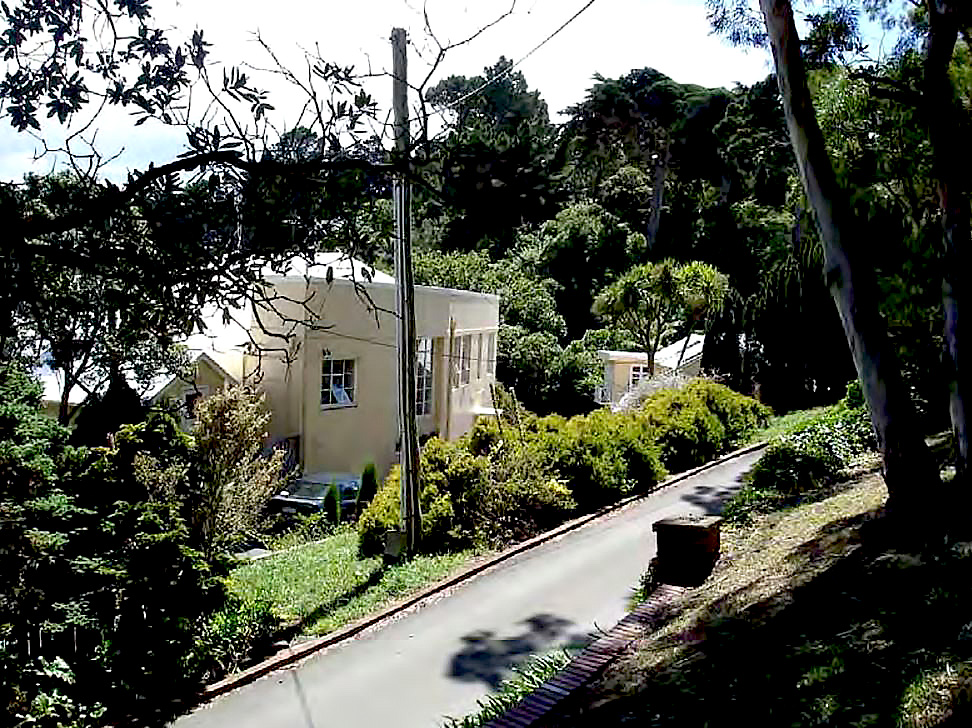
Dunedin architectural partnership Salmond and Salmond were commissioned to design the hospital. Arthur Louis Salmond (1906-1994) drew the plans for the building. Salmond, articled in his father James Louis Salmond’s office, entered the Auckland University College School of Architecture in its first intake of full time students. Salmond’s work was in the modern Beaux Arts tradition, taught in the Auckland School. Beaux-Arts encompassed geometrically ordered planning and simplified classical façade organisation. Winning a travelling scholarship to Britain and Europe exposed him to Modernist work. When he returned to Dunedin in 1933, he put into practice the Modernist ideas – shown in his 1933 house for T.K. Sidey in City Rise and on a larger scale in the 1938 Truby Harris Hospital.
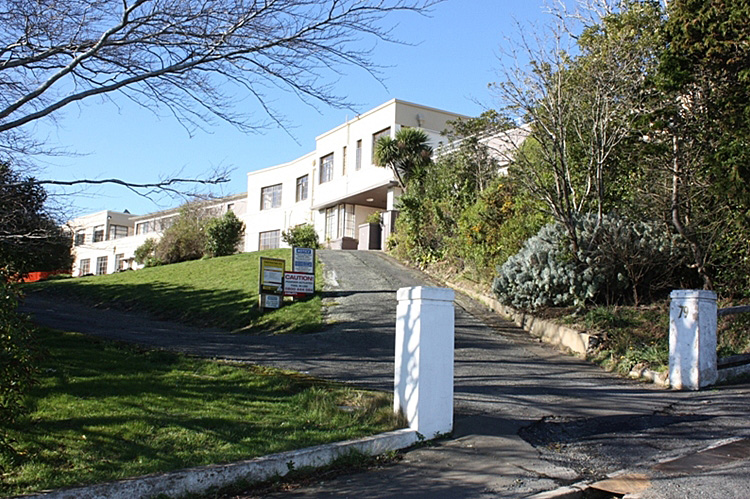
Modernism was ‘a cultural movement that in architecture and applied design involved the integration of form with social purpose. It also attempted to create a new classless and hygienic lifestyle with socialist values.’ The new hospital had many of the ‘principal architectural signatures of modernism’: flat roof, balcony, white or light painted concrete construction, standardised factory constructed window systems, and terrace. Like nineteenth century sanatoria, fresh air and sunlight were also important in the design of Modernist hygienic architecture.
Architectural historian Margaret Campbell writes that ‘early twentieth century modernism occurred at a time when the notion of healing by symbolic association rather than the application of scientific methods was still relatively unchallenged. Superstition, myth and subjectivity partnered modernist functional lifestyles that emphasized purity, hygiene, fresh air and sunlight. Modernist design embodied the clean, white world that was so craved for after the carnage and filth of the First World War.’ This view was particularly relevant for hospital architecture – with the emphasis on hygiene, cleanliness, light and fresh air. Salmond’s design with its terraces and balconies, factory-produced steel-framed windows flooding the premises with light and air, and its orientation to the sun and view fits into this Modernist framework.
Salmond designed the hospital to work with the elevated site, and the design follows the natural curve of the terrain. The building is asymmetrically organized in a shallow arc. The plans show a long, low two-storey building oriented to the sun. The ground floor housed offices (the ward sisters’ office, the nurses’ duty room, the matron and tutor sisters’ offices), wards (including an isolation ward, premature ward, weaklings ward), kitchens and bathrooms, stores and the like. The administration, work areas and staff accommodation were nearest the street, while the wards and individual rooms were contained in a longer wing extending towards the north. The north end of the building terminates in a broad roof terrace, with the rooms on the first floor set back to allow an open gallery from the mother’s sitting room to the roof terrace.
The Governor General, Viscount Galway, opened the new building in December 1939. The Otago Daily Times described the hospital as of ‘modern design, with every facility for the care and treatment of babies, and stands on a fine site where a maximum of sun and fresh air may be obtained.’ The contractor was A. E. Silver.
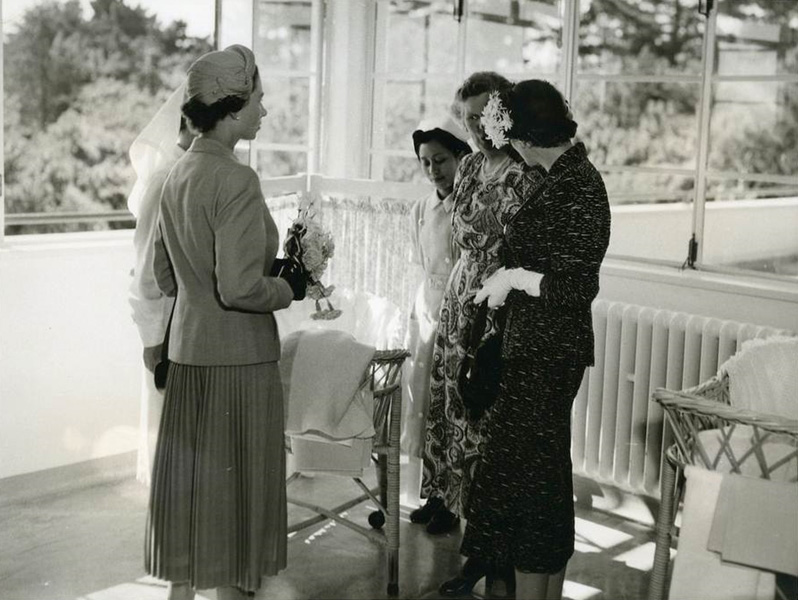
As the national headquarters for Plunket training, the Truby King Harris Hospital had some important visitors. Queen Elizabeth visited the hospital in January 1954, with a picnic on the lawn for the many supporters. Historian Jock Phillips writes that it was at Dunedin, and in this visit to the hospital that ‘the Queen’s role as symbolic mother reached new heights.’ The Queen Mother, as Duchess of York, had opened the Wellington Karitane hospital and had been patroness of the Mothercraft Training Society opened in London by Truby King. The Queen had received a copy of Plunket’s text Modern Mothercraft, so Phillips writes,’ the ‘Queen’s visit to the society’s founding hospital was a highly symbolic moment.’ The visiting children were scrubbed and shining, and the hospital decorated to mark the occasion. Walking past the Plunket and Karitane nurses, the Queen entered the hospital ‘all freshly painted with walls of off-white tinged with pink and woodwork of eau-de-nil and pale blue. She saw the premature babies, visited the ‘weakling ward’, watched a sister doing the weekly procedure of weighing a baby and writing up the results in the Plunket book, and spent time with toddlers playing with their prams and in the sandpits.’
Troubled times for Plunket
In the 1960s, the Karitane hospitals were in financial difficulty, and there was some pressure to close them. Historian Gordon Parry writes that Plunket attempted to ‘trade their way out of trouble’ – by publicising their work and improving facilities they hoped to increase public interest and patronage. New facilities were opened - a new hospital (on the grounds of the old) was built in Auckland, a new Nurses’ Home was constructed in Wellington, and a new hospital was built in Christchurch. Additions were made to the Wanganui and Dunedin hospitals, while the Invercargill hospital had been modernised in the 1950s.
By the 1970s, the Karitane hospitals were no longer supporting themselves. The hospitals reflected an earlier time when costs were lower, and also a different clientele. In the 1970s, babies were admitted because of social rather than health reasons. Weak babies, or those that failed to thrive, tended to stay in the neo-natal units of public hospitals, and those in Karitane hospitals were often those from poor families or where mothers were not coping. Plunket was lending large amounts of money to the hospitals. Some clinicians argued that the hospitals should be replaced by smaller, neighbourhood units. Paediatric advice was more widely available, and there was less need for residential care. In March 1978, a special meeting of the Society voted to close the hospitals.
There was a good deal of conflict and bitterness about this decision. In Dunedin Karitane trainees held a protest march supported by parents and children. Despite protests, by 1980, all the hospitals were closed and sold, with the proceeds going towards establishing Karitane family centres. Plunket continues to operate today – some Community Karitanes are employed, working closely with Plunket kaiawhina (Maori health workers). Contact with parents is now through the home, Plunket clinics, Plunket family centres, preschools, marae or other community facilities.
Closure of the hospital
The Truby King Harris hospital closed in July 1978 and was later sold. In the 1990s, the building was used as a rest home (Andersons Bay Home and Hospital) and later as backpackers (Every Street Lodge). The current owners bought the building in 2013. They are converting it into apartments. Their plans show that the communal spaces will be maintained, and the central axis of the interior plan will remain readable. They have removed many of the exterior service accretions, emphasising the simplicity of the original design. Their idea is to create a connected community in a world where people are increasingly isolated. The new owners have opened the building to the community and have been inundated with interest and community support. They have found that many people have valued connections with the building, whether it be because they worked there or they spend time there as young mothers or as small babies.