Te Pou Hawaiki
The site has a complex history of development from early human settlement to the modern period. Initially, it formed part of a small volcanic cone or maunga known as Te Pou Hawaiki – the ‘pillar of Hawaiki’ – indicating a place of considerable sanctity and ritual. It was where early arrivals to the Tāmaki isthmus placed soil from their traditional homeland of Hawaiiki to ritually ensure that people were sustained with resources to survive on. The cone was situated a few hundred yards from the much larger maunga at Maungawhau, the crater of which is known as Te Kapua Kai o Mataaho - ‘the food bowl of Mataaho’. Volcanic soils around Te Pou Hawaiki may have been used for cultivating kūmara and other crops after the arrival of ancestral Māori, as were other horticultural, ‘stonefield’ sites in the Auckland isthmus.
Te Pou Hawaiki continued to be regarded as sacred by subsequent peoples including Te Waiōhua, a major force on the isthmus in the seventeenth and early eighteenth centuries under its leader Kiwi Tamaki. Te Waiōhua occupied many settlements in the vicinity, including a major pā at Maungawhau. Auckland’s volcanic fields featured numerous ritual places, including standing stones containing the mauri or spiritual essence of a place. At Te Pou Hawaiki, rituals were reportedly performed in front of a pou or pillar before major fishing and hunting expeditions were undertaken. Following Kiwi Tamaki’s defeat by Te Taoū in the early eighteenth century, the land was held by Ngāti Whātua. A later name for Te Pou Hawaiki is Ōwhatihue, said to have been the site of a small pā. In 1840, Ngāti Whātua transferred land at Auckland to the Crown for the creation of a colonial capital.
Quarrying of Te Pou Hawaiki and creation of Auckland Teachers’ Training College
During the early colonial period, Te Pou Hawaiki formed part of a block of over 38 acres held by the Crown. In 1874, the block was reserved as part of an endowment ‘for the support and maintenance of the Lunatic and other Asylums in the Province of Auckland.’ A decade later, it was surveyed for the site of a Blind Asylum, an Industrial Home Reserve and a three-acre Gravel Pit Reserve - the latter occupying the site of Te Pou Hawaiki and the current Northern Districts Combined Headquarters Bunker. In the 1870s and 1880s, adjoining farmholdings were increasingly subdivided for suburban development as Auckland expanded southwards.
Scoria and basalt from Auckland’s volcanic cones were considered an important resource for creating roads and other infrastructure. Following the Epsom and Mount Eden Reserves Act 1890, the gravel pit was used as a quarry by the respective Road Boards of the Epsom, Mount Eden, One Tree Hill and Eden Terrace Road Districts, and for the Borough of Newmarket. By 1921, much of the maunga had been removed, leaving only lower slopes on its west and southwest sides.
During the 1920s the quarry and its wider site was obtained by the Auckland Education Board (AEB) for a new Teachers’ Training College and related educational facilities. Initially established in 1881, the college had outgrown its facilities in central Auckland as the importance of quality schooling and corresponding training for teachers was emphasised. In 1925 an impressive new college building was erected a short distance to the south of the quarry, accessed by a road along the pit edge – part of wider landscaping of the grounds. In the late 1920s, the college formed the largest institution of its kind in New Zealand. Subsequent improvement of the college grounds included an elaborate stone gateway on Poronui Street, erected in 1932 as a memorial to the district’s teachers who had fallen during the First World War (1914-18), and an associated commemorative avenue of pohutukawa planted in 1935.
Creation and initial use of the Northern Districts Combined Headquarters Bunker and associated facilities (1942-5)
More direct connections with international conflict occurred with the requisitioning of the college for military purposes during the Second World War (1939-45). In June 1940, the Auckland Hospital Board briefly took over the main college building for extra hospital accommodation, and again as an auxiliary hospital in September 1941. After the Japanese bombing of Pearl Harbour in December 1941, the property was selected as the combined headquarters for northern New Zealand – a key part of the country’s military command structure in the proposed defence of New Zealand.
Creation of the Northern Districts Combined Headquarters was directly connected with New Zealand’s response to potential attack, and specifically new approaches to deal with the threat of invasion. Following Pearl Harbour, New Zealand authorities considered the country likely to become a focus, and possibly the main base, for Allied counter-efforts in the Pacific, rendering it a likely target for invasion or attack by Japanese forces. Concerns soon emerged, however, that defence would be hampered by a lack of effective coordination between Army, Air Force and Navy forces, prompting a look at combined command approaches employed in Great Britain. This led to an adoption of aspects of decentralising tactical command through the creation of regional Combined Headquarters in Auckland, Wellington and Christchurch – respectively linked with Northern, Central and Southern Districts – to which Dunedin was later added. These were to act as ‘nerve centres’ from which coordinated military response against attack on the country would take place.
As northern New Zealand was the most likely region to be invaded, the first complex to be established was the Northern Districts Combined Headquarters at the Auckland Teachers Training College site by late March or early April 1942. Japanese planes had attacked Darwin in northern Australia in February, and the following month also undertook reconnaissance flights over Wellington and Auckland. The Northern Districts Combined Headquarters formed an extensive military complex in suburban Epsom and Mt Eden, comprising converted facilities in the main college grounds; new, purpose-built structures to facilitate or support military command requirements; and requisitioned properties in the local neighbourhood. Displaced college authorities found alternative accommodation in the immediate area.
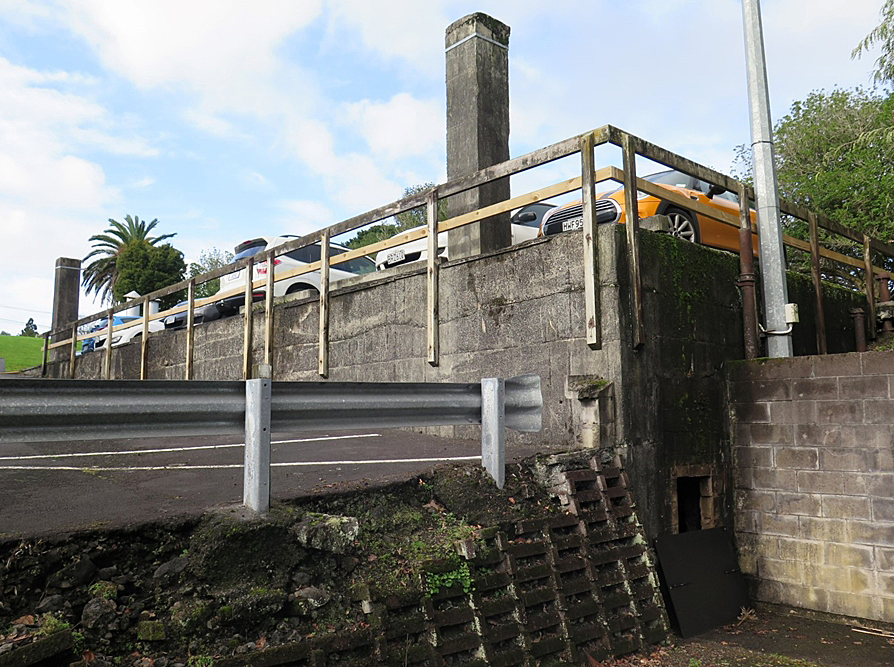
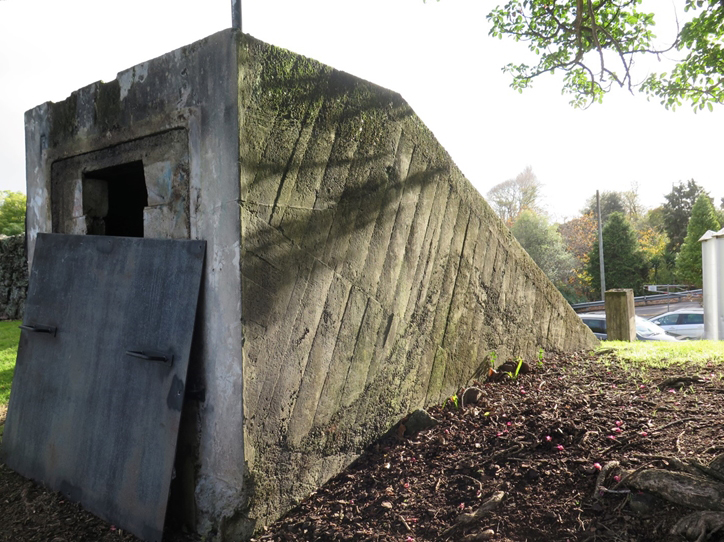
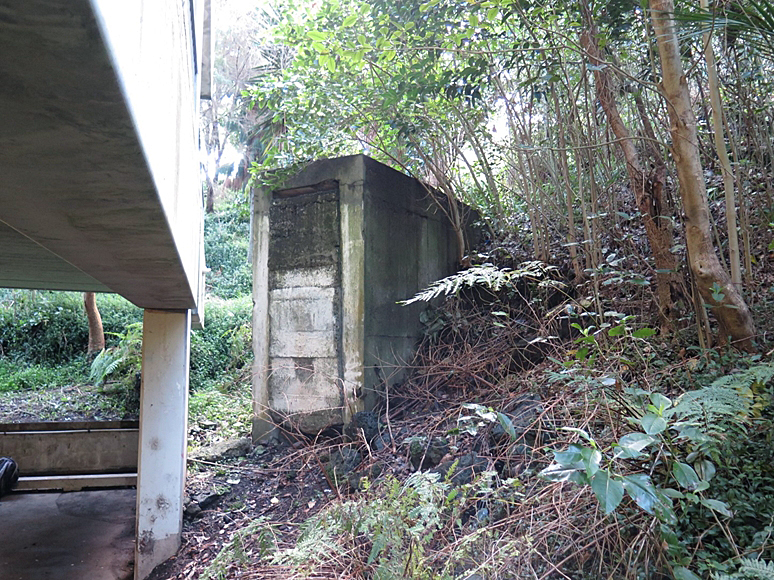
Initial construction at the Headquarters included two small, emergency underground telephone exchanges in the eastern sides of the quarry before May 1942 – reflecting the immediate importance of protecting communications. Another concrete structure forming a small shelter, possibly against air aids or shelling, was also created in the northern face of the quarry a short distance to the west. The most important part of the headquarters, however, was to be a Combined Operations Centre (COC), from which active coordination would take place. At Auckland, this was established in the main Teachers’ Training Building.
In order to allow command facilities to function in the event of an attack, underground quarters duplicating the functions of the above-ground COC were planned. Proposed by military chiefs in March 1942, they were soon approved by the War Cabinet for Auckland, Wellington and Christchurch, demonstrating the extent to which a front-line mentality had already developed. As noted by military historian Peter Cooke, COC facilities:
‘…would have an information centre for each arm, in the same or adjoining rooms, to display the dispositions of NZ and enemy forces. Another information centre [in the same structure] would liaise with civil authorities in relation to air raid warnings, evacuations and emergency precautions. Accommodation and facilities would also be made for administrative and intelligence personnel. Telephone circuits exclusively reserved for operational purposes, and duplicated by W/T or radio telephony, were essential for reliable communications.’
Initial intentions for an underground COC at Auckland were for a two-storey brick structure at least partially burrowed into the quarry face, modelled on double-width railway tunnels. However, after the return of Air Force officers following the Japanese takeover of Malaya an increase in the bunker’s protection level was requested, resulting in a new Public Works Department plan provided by W. L. Newnham in early May 1942. Newnham was director of fortifications and works, and a significant individual in New Zealand’s engineering history, including as president of the New Zealand Institution of Engineers in 1945-6. His plan was for a purpose-designed, standalone structure of reinforced concrete, to be built in the base of the quarry. Rectangular in outline with a flat roof, it was to be sealed beneath layers of gravel, a burster concrete slab and topsoil for both direct protection and concealment.
Subsequent design alterations included moving the building location closer to solid rock in the east face of the quarry face for more effective protection, and its creation as a two-storey structure to accommodate the requirements of Fighter Sector Control. The building was envisaged to be directly connected with the two pre-existing underground telephone exchanges in the quarry – one by a common entrance at its southwest end and the other through a side door from an internal room. In July 1942, its specifications were given as 108 x 55 feet (32.9 x 16.8 m) in plan, by 23 feet (7 m) high, with reinforced concrete walls 18 inches (0.46 m) thick – the latter reduced from earlier proposals as a means of conserving valuable steel.
Of highly specialised function, the building’s internal arrangement was ‘arrived at by officers brought from England having specialist knowledge of such buildings’. Newnham’s initial plan had a central corridor providing access to Army, Navy, Air Force, filter and communications rooms on one side and Combined Operations, Fighter Operations and Combined Operations Information Centre (COIC) rooms on the other. Following redesign as a two-storey structure, columns and temporary partitions rather than solid concrete corridor walls were adopted to allow future flexibility in use; a mezzanine level was inserted in one half, allowing plotting tables at ground floor level to be viewed from above; and separate entrances created at the front and back. As erected, facilities evidently included a Combined Operations Room, Fighter Room, Gun Operations Room, Signals Distribution Office, Filter Room, COIC, W/T Office, cypher accommodation, and other spaces such as a telephone exchange, engine room and separate cloakrooms for officers and other staff.
After construction work by private contractor, Thomas Clements, began in August 1942, the threat of direct attack on the Headquarters began to recede due to Allied successes in the Pacific, leading to other priorities. The bunker’s concrete structure and internal framing was in place by March 1943, and by July remaining work included the provision of technical equipment and certain fixtures such as benches, cabinets and cupboards. Covering the building had been largely carried out, but not completed. By October, neon lighting and most of the intended telephone exchange had been fitted. The latter was in operation by early December, by which time the Chiefs of Staff Committee confirmed a decision to stop further work ‘in view of the sustained improvement in the strategic situation’. The underground telephone facility took over from one in the college building, and subsequently functioned as the main COC exchange. Associated toilet facilities for personnel operating the exchange were provided in nearby buildings inside the quarry.
In spite of a receding military threat, the Headquarters’ role by February 1944 was still to ensure that any attack by submarine or air was dealt with effectively and expeditiously. It was to additionally maintain i) a running plot of all aircraft in the area covered by Northern Group Headquarters and of all shipping and aircraft in the area between New Zealand and the islands to the north; ii) control of the movement of all ferry aircraft between Auckland and New Caledonia, Fiji and Tonga; iii) control of the movement of air reinforcing units to and from New Zealand and the islands; and iv) initiation of any operations required of bomber reconnaissance squadrons in New Zealand waters. Staffing at the headquarters was reduced in April 1944, when the Army vacated the facility. Combined Operations by the Air Force and Navy remained, at a time when it was envisaged that several of the functions carried out by the United States Navy would be taken over by these departments, particularly in relation to the control of shipping.
When the Air Force and Navy finally also withdrew from the main complex in January 1945, returning most of the site for Teacher Training use, the underground bunker and its exchange facility was retained for military use. Reflecting shifts towards military deployment in the Pacific, the latter’s telephone operators were especially busy when detachments were leaving or returning from overseas. One of the telephone rooms was operated by members of the Women’s Auxiliary Air Force (WAAF). Another, housing more modern direct exchange facilities, was operated by men. WAAFS worked in the bunker until at least August 1945, the same month that United States forces dropped atomic bombs on Hiroshima and Nagasaki, heralding the nuclear age.
Use for storage and combined services training (1945-63)
The building was the only major structure at the headquarters complex retained by the military authorities after the war. Reflecting ongoing insecurities, it was employed by the Air Force for storing some 37,000 gas masks until at least 1949 – and possibly 1952. Preparations for this function had evidently begun in April 1945 with the construction of a steel door and grilles. Further work occurred in mid-August. A watchman subsequently occupied one of the underground telephone rooms to guard the building’s contents. In July 1949, the rear entrance was boarded up and a ‘strong door’ added to the front portal.
With Cold War tensions between Western allies and the Soviet Bloc mounting in the 1950s, the Air Force made plans to re-open the bunker ‘for training control and reporting personnel on a combined services basis’. In 1955, works included renewing pinex linings and adding extra floodlights in the operations room as a prelude to allowing a training exercise in February 1956 involving territorial air force and other personnel. Other works may have included exposing the bunker roof. By 1958, however, the building was considered most appropriate for storage, and by 1962 was being used to keep New Zealand Meteorological Service records.
Civil Defence Headquarters (1964-75)
In 1964, Auckland’s civil defence authorities were given permission to occupy the building on condition that the Air Force could retain the right of approval for any structural alterations and use for peacetime exercises. Initial plans included re-opening the rear entrance, providing two one-flight wooden stairs, and fixing partitions and door frames. In August 1965, a proposed layout was agreed between its future tenants – the Auckland Regional Authority and Auckland City Council. The building was formally handed over as a Civil Defence Control Centre in January 1966.
Re-occupation for this purpose was a direct consequence of the Civil Defence Act 1962. This created a three-tiered organisation including both regional and area committees, and has been considered ‘a major step forward in establishing a permanent, nationwide system for civil defence that included both natural hazards and wartime emergencies’. It followed establishment of the Ministry of Civil Defence in 1959 – created primarily in response to a perceived threat of global nuclear warfare and particularly the development of intercontinental ballistic missiles. Although the new legislation specified both armed attack and natural disaster as emergencies to be accommodated, Regional Commissioners emphasised threats from the former. Choice of the underground facility as Auckland’s main control centre was both a literal reflection of a ‘bomb-shelter mentality’ caused by fear of nuclear conflict, and an indication of military influence on civil defence in the 1960s.
Most of the bunker was occupied by the Auckland Regional Authority as the operational headquarters of No.1 Sub-Region. The latter’s role was to collect, collate and disseminate operational information throughout New Zealand’s largest conurbation, and to act as the co-ordinating link between Area Civil Defence Organisations and the Northern Region Control. A large room on the ground floor additionally accommodated the operations room of one of the former, Auckland Central Area Control – the largest Area Civil Defence organisation in the country with regard to population and number of participating authorities. Exercises were held at least monthly, and often weekly.
After 1968, the emphasis of regional civil defence shifted more clearly towards natural disaster preparation and sought to involve communities to a greater extent. In 1970, the Area headquarters moved into the Auckland City Council Administration Building, which had been built to resist earthquakes and was also a symbol of local democracy. Meetings to discuss the Auckland Regional Authority’s ongoing role in civil defence were held in the bunker in May and July 1971, at which it was decided that this organisation should retain a coordinating function. In March 1975, the Authority also vacated its control room in the bunker in favour of setting up a new Civil Defence Headquarters at Regional House.
By the late 1960s, a surface on top of the bunker roof appears to have been used for parking motor cycles. In 1977, the Ministry of Works suggested that the structure might have ongoing value to the Education Department – who had recently demolished the main 1920s Teachers’ Training College building – for this purpose. Retained facilities inside the bunker included ‘lighting, ventilation plant, firefighting equipment, kitchen and toilet.’ Subsequent fires inside the vacant bunker included a relatively large outbreak in 1982 and a smaller one in 1988, damaging interior timber elements especially at upper storey level. In 2002, access to the interior was still possible, when a passage and door to one of the emergency telephone exchange rooms pre-dating the bunker were also noted as being in existence. Access through the entrance of the 1942 shelter in the north face of the quarry had been blocked.
In 2019, the bunker and its associated underground buildings remained vacant. They are believed to form the last major, purpose-built remnants of the Northern Districts Combined Headquarters complex.