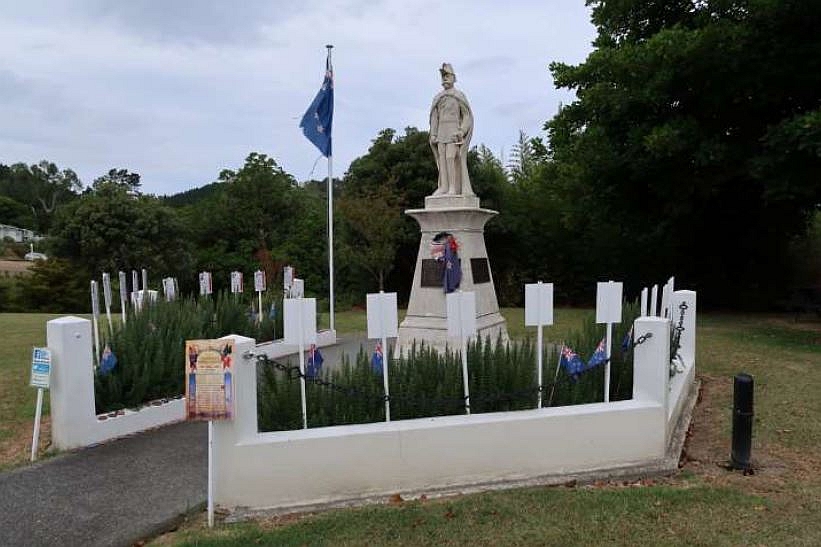
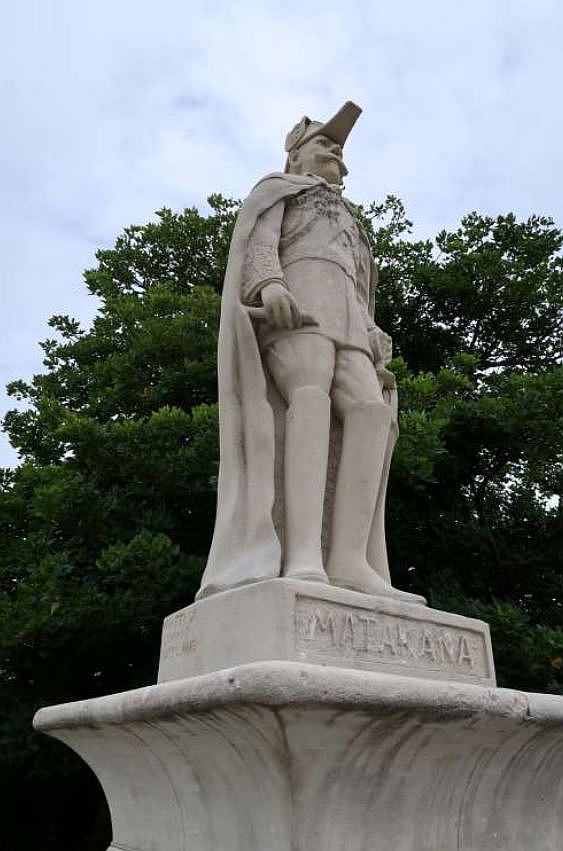
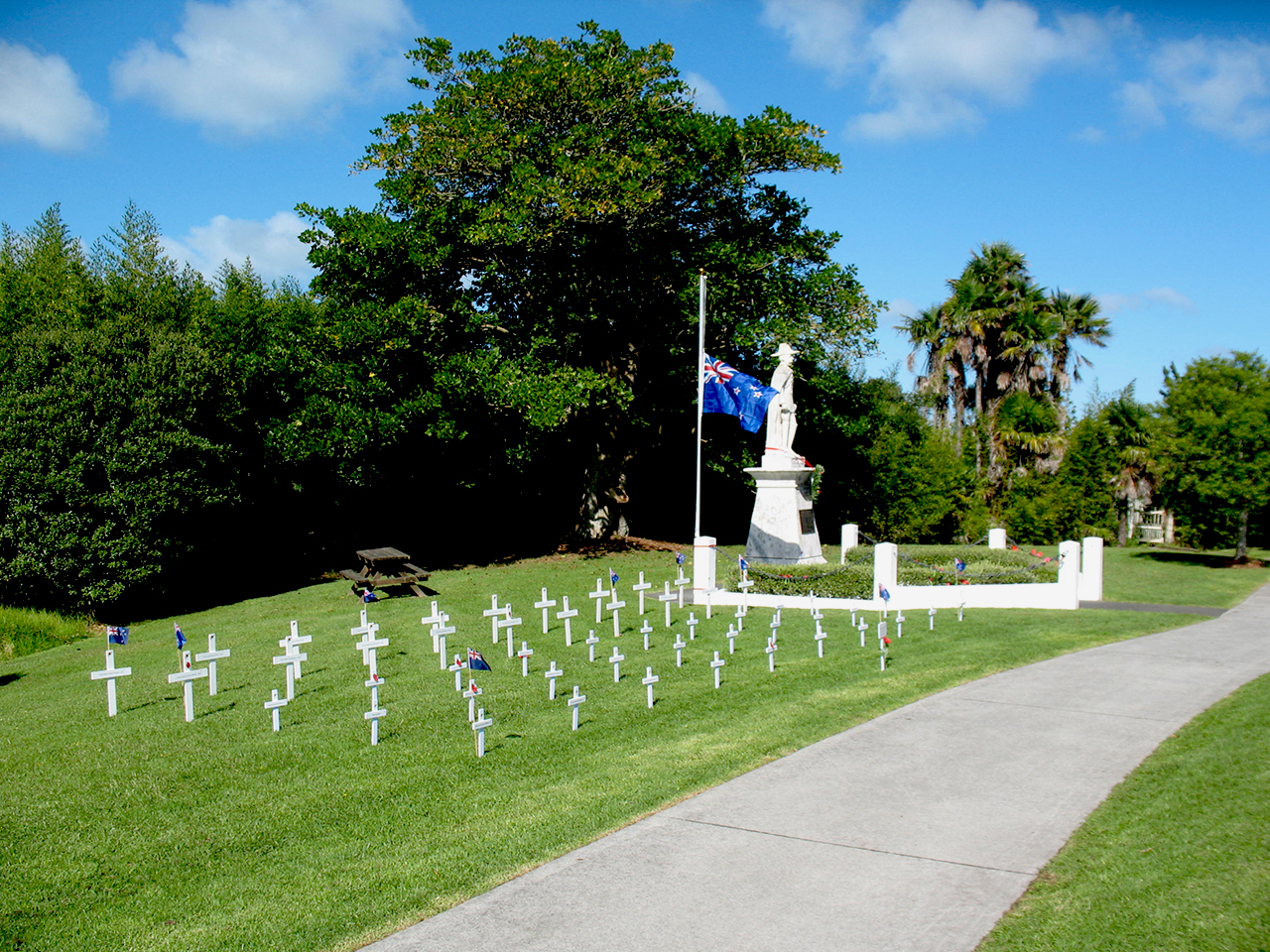
First World War Memorial, erected at Matakana less than two years after the end of the conflict, reflects the impact of the war on small communities that wished to acknowledge the losses and remind future generations of the events. As a landmark in the town, the monument is a tangible reminder of the sacrifices made by the community a century ago and remains a place where the community gathers to commemorate annually. The stone memorial, sculpted by William Henry Feldon, consists of one of the earliest statues of King George V atop a large plinth with a roll of honour and inscription. Its pared classical design reflects the developing trend towards reduced ornamentation in the twentieth century. The monument reflects the strong connection between New Zealand and the British Empire and is a graphic representation of contemporary imperial sentiments.
In an area with a long history of pre-European settlement and conquest, Matakana was established in the 1840s at the head of the Matakana River on land acquired by the Crown in the Mahurangi purchase. River access was of vital importance to the early settlers for transport and communication and so the township grew around the Matakana wharf which also supplied the wider district. When war broke out in 1914, 36 men from Matakana and the surrounding district enlisted and served in the New Zealand armed forces, thirteen of whom died while in service. The Matakana community rallied during the war years to raise funds for the war and kept abreast of the news through reports which were received at the wharf. Following the war the community resolved to erect a memorial to their dead and commissioned William Henry Feldon to create a monument.
First World War Memorial was sculpted by Feldon during 1919. Feldon was one of a small number of New Zealand sculptors who created war memorials for New Zealand as many were imported from Europe. Feldon’s sculpture for Matakana incorporated a statue of King George V in full Field Marshall attire complete with medals, his sword, and the 7 November 1919 proclamation of two minutes of silence. The inscription thanked God for peace and victory with the names of those who died recorded beneath. It was erected in December that year at the corner of the main roads in Matakana which met at a junction with the road to the wharf. The memorial was unveiled on 23 April 1920 and the community had regular services for ANZAC Day and Armistice Day in the years following.
The First World War Memorial did not remain as prominent as in its first years. In the early 1930s a car garage was erected immediately adjacent to the monument and there were structures close to the memorial until 1955 when the Campbell family gifted the land the memorial was located on to the local council. The memorial was also damaged by vandalism including paint bombing, being decapitated on multiple occasions, and from inappropriate cleaning techniques. In 2006 the memorial was relocated 50m south of its original location despite some local opposition. In recognition of the importance of the memorial the local council created a new court of honour on the new site and, following the eventual loss of the head in 2012, an extensive restoration of the memorial was funded to conserve the statue and replace the head as part of the nationwide commemorations of the centenary of the First World War. The place has seen a resurgence in local interest and regular commemorations are held around the memorial.