

The Clock Tower is considered to be one of Hastings' finest public landmarks and is a structure the city has taken pride in since its construction. As a symbol of Hastings' remarkable rejuvenation after the Hawke's Bay earthquake, and as a form of memorial to those who died in that event, it has importance to the local community.
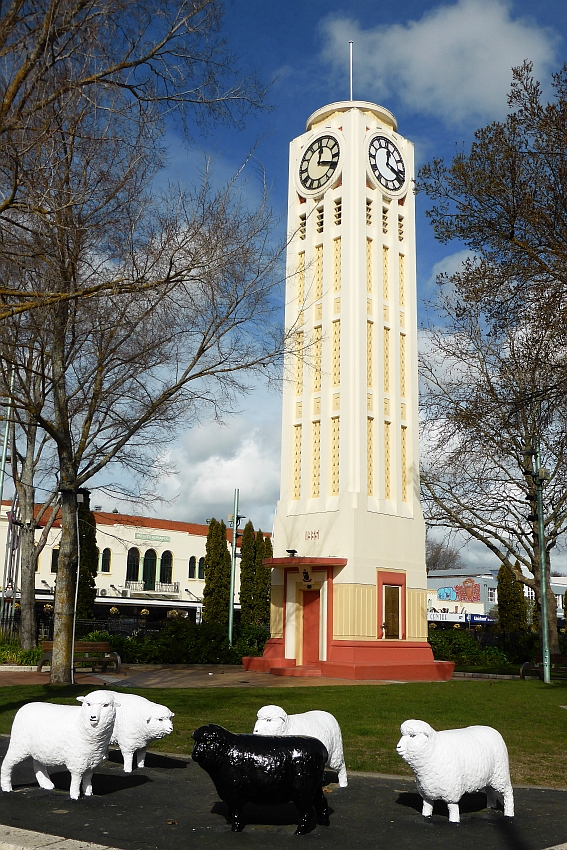
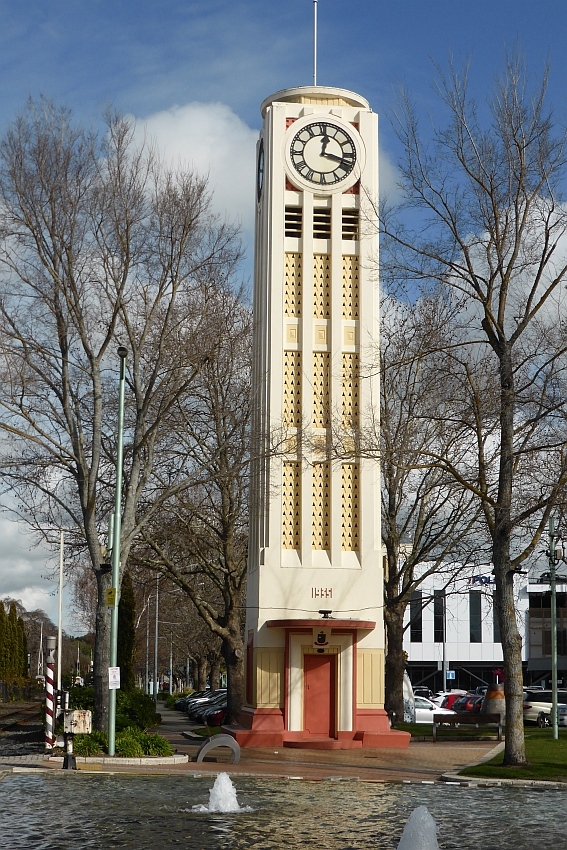
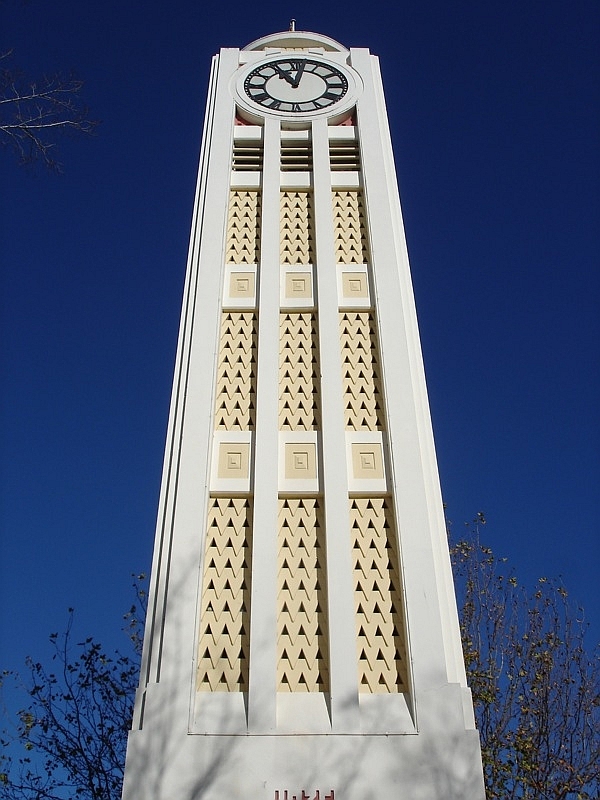
The Tower is an excellent example of design from the mid-1930s. It is Art Deco in style, and modern in its simplicity and clarity of form. It is an appropriate landmark in Hastings, reflecting the architecture of the 1930s that predominates in the surrounding parts of the city's central business district, while retaining a distinction and individuality of its own. The clock, with its four faces, gives the structure a civic usefulness, and the chiming bells add a melodious aspect to its familiarity in the city. It is in good condition, and remarkably unaltered over its 70-year lifespan.
List Entry Information
Status
Listed
List Entry Status
Historic Place Category 1
Access
Able to Visit
List Number
1075
Date Entered
24th June 2005
Date of Effect
24th June 2005
City/District Council
Hastings District
Region
Hawke's Bay Region
Extent of List Entry
The registration includes part of the land in Certificate of Title V3/1393, Hawkes Bay Registry (as shown in Appendix 4), the Clock Tower, and the Clock Tower's fittings and fixtures thereon.
Legal description
Sec 2 SO Plan 10608, and part Palmerston North-Gisborne Railway (NZ Gazette 1883, p.401), (RT V3/1393), Hawkes Bay Land District
Location Description
Located adjacent to Palmerston North / Gisborne Railway at Heretaunga Street crossing.
Status
Listed
List Entry Status
Historic Place Category 1
Access
Able to Visit
List Number
1075
Date Entered
24th June 2005
Date of Effect
24th June 2005
City/District Council
Hastings District
Region
Hawke's Bay Region
Extent of List Entry
The registration includes part of the land in Certificate of Title V3/1393, Hawkes Bay Registry (as shown in Appendix 4), the Clock Tower, and the Clock Tower's fittings and fixtures thereon.
Legal description
Sec 2 SO Plan 10608, and part Palmerston North-Gisborne Railway (NZ Gazette 1883, p.401), (RT V3/1393), Hawkes Bay Land District
Location Description
Located adjacent to Palmerston North / Gisborne Railway at Heretaunga Street crossing.
Why is this place significant?
Historic Significance
Historical Significance or Value The Clock Tower is a symbol of urban renewal and regeneration and testifies to the strength of local civic pride. Sited in the centre of the city, the structure is an important feature of the Hastings cityscape. It marks the axis of the central business district, and its landmark quality remains unsurpassed. Its central location and design makes the Clock Tower an important symbol of the renewed courage and hope that inspired the people of Hastings towards a period of urban renewal and rejuvenation in the city. It enjoys high public esteem and has local value as an important focus for civic activities.
Physical Significance
The forward-looking design pays respect to the then fashionable style now described as Art Deco, which was widely adopted after the earthquake, and has since become synonymous with the renewal of the city. The Clock Tower has architectural importance as an excellent example of design from the mid-1930s, well judged in the distribution of structural and decorative elements. Yet the Clock Tower is also is looking forward to modernism in its simplicity and clarity of form. The structure also has technological importance for its reinforced concrete construction and the plaster finishes, and in particular there is technical interest in the clock mechanism and peel of bells housed in the tower.
Why is this place Category 1 / Category 2?
Detail Of Assessed Criteria
(b) The association of the place with events, persons, or ideas of importance in New Zealand history: The Clock Tower is associated with one of the most important events in Hasting's history, the Hawkes Bay earthquake of 1931. The earthquake caused massive damage throughout the Hawkes Bay region and was largest natural disaster in New Zealand in the twentieth century. In the years after the earthquake the town was reconstructed and, from 1934, the Hastings District Council took steps to improve and beautify the city. The Hastings Clock Tower was erected as a direct result of this programme. As such, the public building reflects both what was lost during the earthquake, and the sense of civic pride that was gained through the proactive measures taken to rebuild the city in its aftermath. The Clock Tower also demonstrates the role of local authorities in the provision of amenities of aesthetic and symbolic importance in New Zealand. (e) The community association with, or public esteem for, the place: It is difficult to understate the importance of this place to the people of Hastings. The point where Heretaunga Street bisects the railway has been a centrepiece of the city for generations. Since its construction in 1935 the clock tower, now the city's premier landmark, has become one of the most important gathering and meeting spaces in the city. As the most distinctive symbol of the city, it has appeared in numerous brochures and publications, and is one of Hastings' best-known features. The Clock Tower has remained the city's most visible landmark for some 70 years, a continuously operating chiming timepiece, a meeting place, and a focus of civic pride. The level of public esteem for this structure is therefore very high. (g) The technical accomplishment or value, or design of the place: The structure is technically interesting for its in-situ concrete construction. It is a competent piece of architectural design in the Art Deco style, and at the same time having a modernist flavour in its simplicity. (h) The symbolic or commemorative value of the place: There are few structures with greater symbolic and commemorative significance to the people of Hastings than the Clock Tower. The structure incorporates the chimes of the post office tower, which was destroyed during the earthquake and killed those nearby when it fell. The Clock Tower thereby provides a direct link between the pre-earthquake city, and the disaster. The Clock Tower also features memorial plaques on its east and west sides that commemorate the 93 people who were killed in Hastings during the earthquake and its aftermath. However, the aesthetically pleasing structure's commemorative value lies not in the recollection of disaster, but in its power as a symbol of the triumph of the human spirit in its aftermath. (k) The extent to which the place forms part of a wider historical and cultural complex or historical and cultural landscape: In Hastings, the Hawkes Bay earthquake destroyed much of the city's central business district. After the earthquake, Hastings experienced a period of 'accelerated town renewal', and its central city area was reconstructed in the then popular styles of Art Deco, Spanish Mission, and streamline modern. This created a landscape of distinctive buildings that remains today to recall both the extent of the disaster that befell the city, and the people of Hastings' 'invincible courage and hopefulness' in overcoming it. The Clock Tower is located at the heart of the renewed urban centre, and is the focus of the civic pride that the landscape engenders.
Why is this place significant?
Historic Significance
Historical Significance or Value The Clock Tower is a symbol of urban renewal and regeneration and testifies to the strength of local civic pride. Sited in the centre of the city, the structure is an important feature of the Hastings cityscape. It marks the axis of the central business district, and its landmark quality remains unsurpassed. Its central location and design makes the Clock Tower an important symbol of the renewed courage and hope that inspired the people of Hastings towards a period of urban renewal and rejuvenation in the city. It enjoys high public esteem and has local value as an important focus for civic activities.
Physical Significance
The forward-looking design pays respect to the then fashionable style now described as Art Deco, which was widely adopted after the earthquake, and has since become synonymous with the renewal of the city. The Clock Tower has architectural importance as an excellent example of design from the mid-1930s, well judged in the distribution of structural and decorative elements. Yet the Clock Tower is also is looking forward to modernism in its simplicity and clarity of form. The structure also has technological importance for its reinforced concrete construction and the plaster finishes, and in particular there is technical interest in the clock mechanism and peel of bells housed in the tower.
Why is this place Category 1 / Category 2?
Detail Of Assessed Criteria
(b) The association of the place with events, persons, or ideas of importance in New Zealand history: The Clock Tower is associated with one of the most important events in Hasting's history, the Hawkes Bay earthquake of 1931. The earthquake caused massive damage throughout the Hawkes Bay region and was largest natural disaster in New Zealand in the twentieth century. In the years after the earthquake the town was reconstructed and, from 1934, the Hastings District Council took steps to improve and beautify the city. The Hastings Clock Tower was erected as a direct result of this programme. As such, the public building reflects both what was lost during the earthquake, and the sense of civic pride that was gained through the proactive measures taken to rebuild the city in its aftermath. The Clock Tower also demonstrates the role of local authorities in the provision of amenities of aesthetic and symbolic importance in New Zealand. (e) The community association with, or public esteem for, the place: It is difficult to understate the importance of this place to the people of Hastings. The point where Heretaunga Street bisects the railway has been a centrepiece of the city for generations. Since its construction in 1935 the clock tower, now the city's premier landmark, has become one of the most important gathering and meeting spaces in the city. As the most distinctive symbol of the city, it has appeared in numerous brochures and publications, and is one of Hastings' best-known features. The Clock Tower has remained the city's most visible landmark for some 70 years, a continuously operating chiming timepiece, a meeting place, and a focus of civic pride. The level of public esteem for this structure is therefore very high. (g) The technical accomplishment or value, or design of the place: The structure is technically interesting for its in-situ concrete construction. It is a competent piece of architectural design in the Art Deco style, and at the same time having a modernist flavour in its simplicity. (h) The symbolic or commemorative value of the place: There are few structures with greater symbolic and commemorative significance to the people of Hastings than the Clock Tower. The structure incorporates the chimes of the post office tower, which was destroyed during the earthquake and killed those nearby when it fell. The Clock Tower thereby provides a direct link between the pre-earthquake city, and the disaster. The Clock Tower also features memorial plaques on its east and west sides that commemorate the 93 people who were killed in Hastings during the earthquake and its aftermath. However, the aesthetically pleasing structure's commemorative value lies not in the recollection of disaster, but in its power as a symbol of the triumph of the human spirit in its aftermath. (k) The extent to which the place forms part of a wider historical and cultural complex or historical and cultural landscape: In Hastings, the Hawkes Bay earthquake destroyed much of the city's central business district. After the earthquake, Hastings experienced a period of 'accelerated town renewal', and its central city area was reconstructed in the then popular styles of Art Deco, Spanish Mission, and streamline modern. This created a landscape of distinctive buildings that remains today to recall both the extent of the disaster that befell the city, and the people of Hastings' 'invincible courage and hopefulness' in overcoming it. The Clock Tower is located at the heart of the renewed urban centre, and is the focus of the civic pride that the landscape engenders.
Construction Professional
Name
Hampton, A
Type
Builder
Biography
No biography is currently available for this construction professional
Name
Chaplin, Sydney G.
Type
Architect
Biography
ARIBA, ANZIA
Name
Drury, Charles Henry
Type
Plasterer
Biography
Master plasterer active in Hastings in the 1930s.
Construction Details
Start Year
1934
Type
Designed
Start Year
1935
Type
Original Construction
Start Year
1996
Type
Addition
Description
Neon lighting installed on Clock Tower
Construction Materials
In-situ reinforced concrete; coloured plaster finish (now painted), using Whangarei silver sand and tinting.
Construction Professional
Name
Hampton, A
Type
Builder
Biography
No biography is currently available for this construction professional
Name
Chaplin, Sydney G.
Type
Architect
Biography
ARIBA, ANZIA
Name
Drury, Charles Henry
Type
Plasterer
Biography
Master plasterer active in Hastings in the 1930s.
Construction Details
Start Year
1934
Type
Designed
Start Year
1935
Type
Original Construction
Start Year
1996
Type
Addition
Description
Neon lighting installed on Clock Tower
Construction Materials
In-situ reinforced concrete; coloured plaster finish (now painted), using Whangarei silver sand and tinting.
Completed in 1935, the Clock Tower in central Hastings is a symbol of renewal and restoration of order in the city that was devastated by earthquake on 3 February 1931. The earthquake, known as the 'Hawkes Bay earthquake', measured 7.8 on the Richter scale, and caused massive damage throughout the region. It was largest natural disaster to occur in New Zealand in the twentieth century. A total of 93 people died in Hastings, and much of the city's central business district was destroyed. One of the numerous buildings destroyed by the earthquake was the Hastings post office (1910), which featured a clock tower and dome over the entrance that rose 70 feet (21 metres) above street level. The clock's chimes were paid for by the citizens of Hastings and the government, which matched public donations £ for £. During the Hawkes Bay earthquake, the clock and chimes, which had been damaged by a previous earthquake, were shaken from the tower, and fell, killing the people in the street below. After the earthquake, a decision was made to remove all post office clock towers throughout New Zealand. The earthquake prompted what has been described as 'an accelerated town renewal' for Hastings. In 1932 rebuilding of the city began in earnest, with a total of 260 permits being issued in that year. A newspaper from the time commented that 'sign after sign of last year's ruination is disappearing, and today the town stands as an almost completed monument to the invincible courage and hopefulness of mankind'. The design of much of the re-building demonstrated the then popular styles, including Art Deco, Spanish Mission, and streamline Moderne. From 1934, the Hastings District Council took steps to improve and beautify the reconstructed town and make it more attractive to tourists. The construction of a new clock tower was one of the key projects in the Council's beautification programme. It was intended to both enhance the town's 'aesthetic beauty' and to give residents back a sound that had been much missed following the earthquake. A national design competition was held, judged by local architects Davies and Phillips. The commission, and the 25 guinea prize, was won by Sydney Chaplin, a young Hastings architect. A clock was procured from W. Littlejohns and Co. in Wellington, and the bells of the old post office clock tower were rescued from the earthquake debris for reuse. The Council acquired legal road (Railway Road) alongside the railway near the crossing at Heretaunga Street. The original site chosen was found to be unsuitable, after underground wells were struck during excavations. Moving to a new site nearby added considerably to the cost, which was 'not meant to exceed £880', but eventually reached £1,126. The Clock Tower was completed in 1935. Although the Clock Tower was not built as a memorial, the names of the 93 people who died in Hastings as a result of the earthquake were listed on two plaques on the east and west sides of the building. To augment the Clock Tower's construction, the Council made considerable improvements to the surrounding area, in particular to a strip of railway reserve it acquired for the purpose. Flowerbeds were planted, seats and lamps installed, and unsightly hoardings removed. Later, in 1937, the council purchased more land, from the estate of A.A. George, to form the present civic square, to augment the civic improvements around the clock tower. The tower is virtually unchanged from the time of its construction, and continues to stand as a monument to the civic pride of the people of Hastings.
Completed in 1935, the Clock Tower in central Hastings is a symbol of renewal and restoration of order in the city that was devastated by earthquake on 3 February 1931. The earthquake, known as the 'Hawkes Bay earthquake', measured 7.8 on the Richter scale, and caused massive damage throughout the region. It was largest natural disaster to occur in New Zealand in the twentieth century. A total of 93 people died in Hastings, and much of the city's central business district was destroyed. One of the numerous buildings destroyed by the earthquake was the Hastings post office (1910), which featured a clock tower and dome over the entrance that rose 70 feet (21 metres) above street level. The clock's chimes were paid for by the citizens of Hastings and the government, which matched public donations £ for £. During the Hawkes Bay earthquake, the clock and chimes, which had been damaged by a previous earthquake, were shaken from the tower, and fell, killing the people in the street below. After the earthquake, a decision was made to remove all post office clock towers throughout New Zealand. The earthquake prompted what has been described as 'an accelerated town renewal' for Hastings. In 1932 rebuilding of the city began in earnest, with a total of 260 permits being issued in that year. A newspaper from the time commented that 'sign after sign of last year's ruination is disappearing, and today the town stands as an almost completed monument to the invincible courage and hopefulness of mankind'. The design of much of the re-building demonstrated the then popular styles, including Art Deco, Spanish Mission, and streamline Moderne. From 1934, the Hastings District Council took steps to improve and beautify the reconstructed town and make it more attractive to tourists. The construction of a new clock tower was one of the key projects in the Council's beautification programme. It was intended to both enhance the town's 'aesthetic beauty' and to give residents back a sound that had been much missed following the earthquake. A national design competition was held, judged by local architects Davies and Phillips. The commission, and the 25 guinea prize, was won by Sydney Chaplin, a young Hastings architect. A clock was procured from W. Littlejohns and Co. in Wellington, and the bells of the old post office clock tower were rescued from the earthquake debris for reuse. The Council acquired legal road (Railway Road) alongside the railway near the crossing at Heretaunga Street. The original site chosen was found to be unsuitable, after underground wells were struck during excavations. Moving to a new site nearby added considerably to the cost, which was 'not meant to exceed £880', but eventually reached £1,126. The Clock Tower was completed in 1935. Although the Clock Tower was not built as a memorial, the names of the 93 people who died in Hastings as a result of the earthquake were listed on two plaques on the east and west sides of the building. To augment the Clock Tower's construction, the Council made considerable improvements to the surrounding area, in particular to a strip of railway reserve it acquired for the purpose. Flowerbeds were planted, seats and lamps installed, and unsightly hoardings removed. Later, in 1937, the council purchased more land, from the estate of A.A. George, to form the present civic square, to augment the civic improvements around the clock tower. The tower is virtually unchanged from the time of its construction, and continues to stand as a monument to the civic pride of the people of Hastings.
Description: The Clock Tower is a distinctive period design, surprisingly modern in its simplicity, but with decorative features that mark it stylistically as Art Deco. These include the geometric patterns of the infill panels between the columns, the emphasis given to the height of the tower by the corner 'stripes', and the circular roof 'cap' on top reflecting the four bold round faces of the clock. The tower is square in plan, with a recessed door, two commemorative plaques and a niche occupying the four faces of the ground floor. The door is made of Queensland maple, now painted, and above the door is the neatly incised date of 1935 in the plaster. The plaques are dedicated 'to the memory of those people who lost their lives in the earthquake at Hastings on 3rd February 1931', and the names of 93 people are listed. The niche on the fourth face was originally tiled and contained a drinking fountain, but there is no evidence of this today. There are three intermediate stages to the main part of the tower with three tiers of patterned infill panels, and above them are louvres and the faces of the clock. The flat round disk that forms the roof, and a central flagpole, complete the composition. The tower is set beside the railway line, surrounded by grass and trees, seats, and the central city feature of a pool and fountains. Statement of Integrity: The building is almost entirely unchanged from the time of its construction. The niche on the ground floor (south side) is now empty, and there is no sign of the fountain described in the specification. The original coloured plaster finish is now painted. Statement of Physical Condition: The condition of the tower is very good; it is well painted, and there are no obvious signs of deterioration.
Description: The Clock Tower is a distinctive period design, surprisingly modern in its simplicity, but with decorative features that mark it stylistically as Art Deco. These include the geometric patterns of the infill panels between the columns, the emphasis given to the height of the tower by the corner 'stripes', and the circular roof 'cap' on top reflecting the four bold round faces of the clock. The tower is square in plan, with a recessed door, two commemorative plaques and a niche occupying the four faces of the ground floor. The door is made of Queensland maple, now painted, and above the door is the neatly incised date of 1935 in the plaster. The plaques are dedicated 'to the memory of those people who lost their lives in the earthquake at Hastings on 3rd February 1931', and the names of 93 people are listed. The niche on the fourth face was originally tiled and contained a drinking fountain, but there is no evidence of this today. There are three intermediate stages to the main part of the tower with three tiers of patterned infill panels, and above them are louvres and the faces of the clock. The flat round disk that forms the roof, and a central flagpole, complete the composition. The tower is set beside the railway line, surrounded by grass and trees, seats, and the central city feature of a pool and fountains. Statement of Integrity: The building is almost entirely unchanged from the time of its construction. The niche on the ground floor (south side) is now empty, and there is no sign of the fountain described in the specification. The original coloured plaster finish is now painted. Statement of Physical Condition: The condition of the tower is very good; it is well painted, and there are no obvious signs of deterioration.
Historical and Associated Iwi / Hapū / Whānau
Completion Date
15th February 2005
Report Written By
Michael Kelly / Chris Cochran
Information Sources
Boyd, 1984
Mary Boyd, City of the Plains, A History of Hastings, Wellington, 1984
Wright, 1887
Alfred Wright, Te Aroha, New Zealand: A Guide for Invalids and Visitors to the Thermal Springs and Baths, Te Aroha, 1887
Hastings District Council
Hastings District Council building files.
Wright, 2001 (2)
M. Boyd, City of the Plains: A History of Hastings, Victoria University Press for Hastings District Council, 1984
Other Information
A fully referenced version of this report is available from the NZHPT Central Region Office This report was completed in association with the Hastings District Council, the Hastings Landmark Commission, and Hastings City Marketing. Please note that entry on the New Zealand Heritage List/Rarangi Korero identifies only the heritage values of the property concerned, and should not be construed as advice on the state of the property, or as a comment of its soundness or safety, including in regard to earthquake risk, safety in the event of fire, or insanitary conditions.
Historical and Associated Iwi / Hapū / Whānau
Completion Date
15th February 2005
Report Written By
Michael Kelly / Chris Cochran
Information Sources
Boyd, 1984
Mary Boyd, City of the Plains, A History of Hastings, Wellington, 1984
Wright, 1887
Alfred Wright, Te Aroha, New Zealand: A Guide for Invalids and Visitors to the Thermal Springs and Baths, Te Aroha, 1887
Hastings District Council
Hastings District Council building files.
Wright, 2001 (2)
M. Boyd, City of the Plains: A History of Hastings, Victoria University Press for Hastings District Council, 1984
Other Information
A fully referenced version of this report is available from the NZHPT Central Region Office This report was completed in association with the Hastings District Council, the Hastings Landmark Commission, and Hastings City Marketing. Please note that entry on the New Zealand Heritage List/Rarangi Korero identifies only the heritage values of the property concerned, and should not be construed as advice on the state of the property, or as a comment of its soundness or safety, including in regard to earthquake risk, safety in the event of fire, or insanitary conditions.
Current Usages
Uses: Civic Facilities
Specific Usage: Clocktower/ clock
Uses: Commemoration
Specific Usage: Memorial - Disaster
Former Usages
General Usage: Civic Facilities
Specific Usage: Clocktower/ clock
Current Usages
Uses: Civic Facilities
Specific Usage: Clocktower/ clock
Uses: Commemoration
Specific Usage: Memorial - Disaster
Former Usages
General Usage: Civic Facilities
Specific Usage: Clocktower/ clock
Location
Sign up to hear more
Get the latest heritage news, features and events delivered
straight to your inbox.
