DonateMembershipVisit Heritage
  • Tūrangawaewae
    Places
  • Tira Māori
    Māori Heritage
  • Poutairangahia
    Archaeology
  • Rauemi
    Resources
  • Mō Tātou
    About Us
  • New Zealand Heritage List
  • Nominate and submit
  • Explore the List
  • National Historic Landmarks
  • Plaques
  • Rainbow List Project
  • Lost heritage
  • Visit Heritage
  • Our properties
  • Turnbull House Project
  • Collections
  • Shop
  • Tohu Whenua
  • Tira Māori
  • Conserving Māori heritage
  • Marae built heritage
  • Māori heritage on the List
  • Hinemihi—Te Hokinga Mai
  • What is archaeology?
  • Is there a site on my property?
  • What are my legal requirements?
  • Affecting an archaeological site
  • Declaring an archaeological site
  • Archaeology FAQs
  • Archaeology Digital Library
  • Archaeology guidelines and templates
  • Resources
  • Funding
  • Publications
  • Sustainable management guides
  • Disaster recovery
  • Podcasts & digital resources
  • Education Hub
  • Conservation plans
  • About
  • Board
  • Māori Heritage Council
  • Senior Staff
  • Offices
  • Contact us
  • Careers
  • Covenants
  • Fast-track
  • Corporate documents
  • Currently consulting on
  • Our submissions
  • News
  • Covid-19 response
Quick links
Rārangi Kōrero | The List
Explore the List
National Historic Landmarks
Ngā Manawhenua o Aotearoa me ōna Kōrero Tūturu
Quick links
Tapuwae
A Vision for Places of Māori Heritage
Funding for Māori Heritage
Resources
Quick links
Archaeological Authority Portal
Applying for an archaeological authority
Archaeology FAQs
Browse the most frequently asked questions about archaeological authorities and the archaeological process.
Quick links
Quick links
News
News Keep up to date with Heritage New Zealand Pouhere Taonga
Membership
Membership Find out more and sign up today
DonateMembershipVisit Heritage
  • Tūrangawaewae
    Places
  • Tira Māori
    Māori Heritage
  • Poutairangahia
    Archaeology
  • Rauemi
    Resources
  • Mō Tātou
    About Us
  • New Zealand Heritage List
  • Nominate and submit
  • Explore the List
  • National Historic Landmarks
  • Plaques
  • Rainbow List Project
  • Lost heritage
  • Visit Heritage
  • Our properties
  • Turnbull House Project
  • Collections
  • Shop
  • Tohu Whenua
  • Tira Māori
  • Conserving Māori heritage
  • Marae built heritage
  • Māori heritage on the List
  • Hinemihi—Te Hokinga Mai
  • What is archaeology?
  • Is there a site on my property?
  • What are my legal requirements?
  • Affecting an archaeological site
  • Declaring an archaeological site
  • Archaeology FAQs
  • Archaeology Digital Library
  • Archaeology guidelines and templates
  • Resources
  • Funding
  • Publications
  • Sustainable management guides
  • Disaster recovery
  • Podcasts & digital resources
  • Education Hub
  • Conservation plans
  • About
  • Board
  • Māori Heritage Council
  • Senior Staff
  • Offices
  • Contact us
  • Careers
  • Covenants
  • Fast-track
  • Corporate documents
  • Currently consulting on
  • Our submissions
  • News
  • Covid-19 response
Quick links
Rārangi Kōrero | The List
Explore the List
National Historic Landmarks
Ngā Manawhenua o Aotearoa me ōna Kōrero Tūturu
Quick links
Tapuwae
A Vision for Places of Māori Heritage
Funding for Māori Heritage
Resources
Quick links
Archaeological Authority Portal
Applying for an archaeological authority
Archaeology FAQs
Browse the most frequently asked questions about archaeological authorities and the archaeological process.
Quick links
Quick links
News
News Keep up to date with Heritage New Zealand Pouhere Taonga
Membership
Membership Find out more and sign up today
  • Places
  • Nominate and submit
  • National Historic Landmarks
  • Places
  • Nominate and submit
  • National Historic Landmarks
  • Tira Māori
  • Conserving Māori heritage
  • Marae built heritage
  • Tira Māori
  • Conserving Māori heritage
  • Marae built heritage
  • Archaeological authorities
  • Archaeology Digital Library
  • Archaeological authorities
  • Archaeology Digital Library
  • All resources
  • Publications
  • Funding
  • All resources
  • Publications
  • Funding
  • FAQs
  • FAQs
Follow us on:
Places
  • Places
  • Nominate and submit
  • National Historic Landmarks
Tira Māori
  • Tira Māori
  • Conserving Māori heritage
  • Marae built heritage
Archaeology
  • Archaeological authorities
  • Archaeology Digital Library
Resources
  • All resources
  • Publications
  • Funding
FAQs
  • FAQs
Follow us on
HomePrivacyTerms and conditionsAbout this site
© Heritage New Zealand Pouhere Taonga 2026.
 
Ormond Chapel

55 Chaucer Road, Hospital Hill, NAPIER

Private

Historic Place Category 1

List No. 182

Quick links:
List GalleryLocationDetails
The Ormond Chapel, one of the oldest buildings in Napier, was constructed in about 1869 as a schoolroom for the Napier Grammar School. It was shifted to its present site in 1919 and dedicated as a memorial to Alexander Ormond, a member of a notable Hawke's Bay settler family who died serving in World War I.

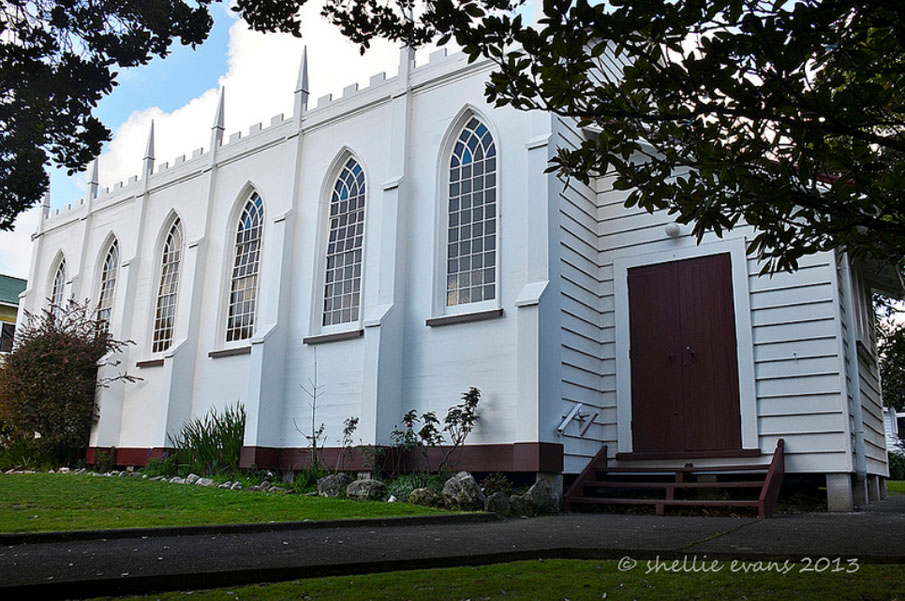
The first school in Napier was established in 1855 by William Marshall but this school only lasted three years before Marshall resigned and left the area. In the late 1860s Marshall, encouraged by the politician and later Superintendent of Hawke's Bay, John Davies Ormond (1831?-1917), and others, opened a new school, or academy for young gentlemen on a site on Napier Hill. In 1867 the school adopted the name of Napier Grammar School and two years later a large wooden schoolroom was built. The schoolroom was an unusual Neo-Gothic design. The exterior having buttresses terminating in pinnacles, while along the parapet miniature merlons simulated battlements.

In 1872 Marshall left for the ministry and the fortunes of the school waxed and waned and eventually the school was closed. The school buildings were taken over by a new school, also known as Napier Grammar. This school was acquired in 1900s by a Miss Thornton, a sister of John Thornton, headmaster of Te Aute College. Thornton opened the school to girls as well as boys, using the large schoolroom and some of the other buildings. The remaining school buildings were leased for private dwellings. In 1918, with the school buildings in need of repair, Thornton moved her pupils to a house. The grounds were bought by the Education Department for the site of the new Central School. The main school building was sold to Fanny Ormond, the daughter of John Davies Ormond. Ormond shifted the building to a portion of the family estate, and near the Napier hospital, where it was presented to the Cathedral Parish as a memorial to her nephew, Alexander Ormond, who had died in France in 1916. A bronze plaque was placed in the now chapel with the following inscription: "To the Glory of God and in ever loving memory of Alexander Ormond killed in action in France, 30th September, 1916." The dedication ceremony was performed by the Right Reverend W. Sedgewick, Bishop of the Diocese.

From 1918 the chapel played an important role in the religious life of the community. During the 1920s regular services were held in the chapel. Following the Hawke's Bay Earthquake of 1931 the chapel was used as a temporary hospital for patients who had been evacuated from the collapsed hospital building. In the mid 1930s a Sunday school was opened. To accommodate students a building, built from a bequest by Fanny Ormond (died 1953), was erected adjacent to the vestry. This school closed in 1962. Services in the main chapel were stopped [for a time in 1963 but were revived in August 1965]. Until the hospital closed, the chapel also provided a place of worship for nursing staff. Today the chapel is still used for regular services.

Over the years the chapel has acquired a number of memorials and fittings, donated by parishioners. These include an eagle lectern designed and carved by W. Lipsombe in 1923 and presented to the chapel in 1932, and the bell which once rang in the temporary cathedral before the construction of the present St John's Cathedral in Napier. To help the church the Jordan Trust was established by a Miss J. H. Jordan in memory of her brother Henry Edward Oswald Jordan. Miss Jordan also presented the chapel with a stained glass window depicting the Last Supper in memory of her parents who had worshipped at the chapel. The Ormond family also continued to support the church, helping with the payment for renovations in the mid 1970s.

The Ormond Chapel, Napier, is significant as one of the oldest buildings in Napier, and one of New Zealand's oldest surviving educational buildings. The Chapel is closely associated with the notable Hawke's Bay family, the Ormonds. Architecturally the building is an unusual gothic-style building. It is an unusual adaptation of an educational building to an ecclesiastical purpose.
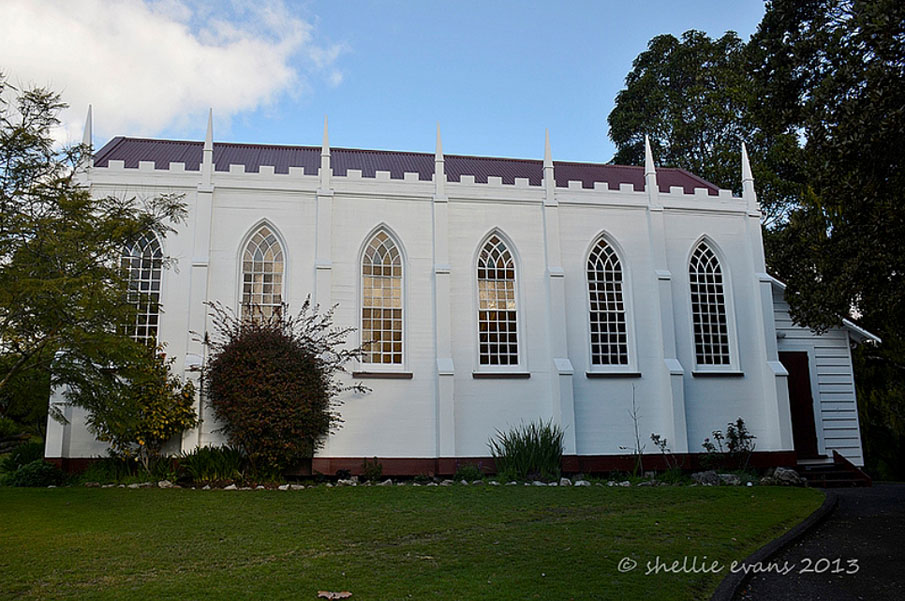
Ormond Chapel. Image courtesy of www.flickr.com | Shellie Evans - flyingkiwigirl | 14/06/2013 | Shellie Evans - flyingkiwigirl
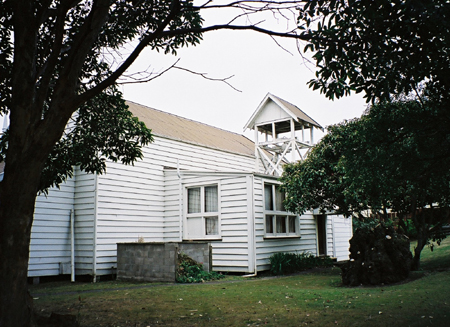
Ormond Chapel | Helen McCracken | 19/06/2002 | NZ Historic Places Trust
Ormond Chapel. Image courtesy of www.flickr.com | Shellie Evans - flyingkiwigirl | 14/06/2013 | Shellie Evans - flyingkiwigirl
Ormond Chapel | Helen McCracken | 19/06/2002 | NZ Historic Places Trust
Ormond Chapel. Image courtesy of www.flickr.com | Shellie Evans - flyingkiwigirl | 14/06/2013 | Shellie Evans - flyingkiwigirl

List Entry Information

Overview

Status
Listed

List Entry Status
Historic Place Category 1

Access
Private/No Public Access

List Number
182

Date Entered
28th June 1990

Date of Effect
28th June 1990

City/District Council
Napier City

Region
Hawke's Bay Region

Legal description

Pt Lot 29 DDP 718

Detailed List Entry
Significance

Historic Significance

Historical Significance or Value Ormond Chapel is the result of the unusual adaptation of a secular building to an ecclesiastical use. It remains one of New Zealand's earliest extant educational buildings and is today a memorial to the grandson of one of the school's original benefactors.

Physical Significance

This chapel is a small-scale but highly distinctive building. Its simple form is embellished by Gothic decoration, particularly in the unusual street elevation, which bellies the relative plainness of the rear of the building. Although somewhat modified the interior complements the exterior admirably. Ormond Chapel is a fine example in the New Zealand tradition of the adaptation of a simple colonial structure to a specific alternative use.

Construction Details

Start Year

1864

Type

Original Construction

Start Year

1919

Type

Relocation

Description

Schoolroom, moved to present site and converted into chapel

Start Year

1953

Type

Addition

Description

Room built next to vestry

Start Year

1973

Type

Modification

Description

Sanctuary enlarged

Start Year

1974

Type

Modification

Description

Building repiled, stained glass window installed

Start Year

1975

Type

Modification

Description

Decayed kauri in walls replaced with heart rimu, six north windows replaced with coloured glass

Start Year

1986

Type

Modification

Description

Six heart doors with clear leadlight panes replaced a solid door

Reference

Completion Date

29th November 2002

Report Written By

Helen McCracken/NZHPT

Information Sources

Burch, 1976

J. H. Burch,' Third Annual Report from the Ormond Chapel Committee and Guild', May 1976

Churchman, 1959

Churchman, 'Ormond Chapel', December 1959

Dictionary of New Zealand Biography

Dictionary of New Zealand Biography

Hogg, 1975

L. G. Hogg, 'Ormond Chapel', October 1975

Report Written By

This place was identified as significant under previous legislation with different information requirements. It remains significant under the current legislation. There is opportunity under our legislation and policies to add to this information. Further information about this place may be available from the Central Regional Office of Heritage New Zealand Pouhere Taonga. Please note that entry on the New Zealand Heritage List/Rarangi Korero identifies only the heritage values of the property concerned, and should not be construed as advice on the state of the property, or as a comment of its soundness or safety, including in regard to earthquake risk, safety in the event of fire, or insanitary conditions. This historic place was registered under the Historic Places Act 1993. The following text is the original citation considered by the NZHPT Board at the time of registration. Information in square brackets indicates modifications made after the paper was considered by the NZHPT Board.

Further Information

Current Usages

Uses: Religion

Specific Usage: Chapel

Former Usages

General Usage:: Education

Specific Usage: School

Themes

Web Links

Overview

Status

Listed

List Entry Status

Historic Place Category 1

Access

Private/No Public Access

List Number

182

Date Entered

28th June 1990

Date of Effect

28th June 1990

City/District Council

Napier City

Region

Hawke's Bay Region

Legal description

Pt Lot 29 DDP 718

Status

Listed

List Entry Status

Historic Place Category 1

Access

Private/No Public Access

List Number

182

Date Entered

28th June 1990

Date of Effect

28th June 1990

City/District Council

Napier City

Region

Hawke's Bay Region

Legal description

Pt Lot 29 DDP 718

Significance

Why is this place significant?

Historic Significance

Historical Significance or Value Ormond Chapel is the result of the unusual adaptation of a secular building to an ecclesiastical use. It remains one of New Zealand's earliest extant educational buildings and is today a memorial to the grandson of one of the school's original benefactors.

Physical Significance

This chapel is a small-scale but highly distinctive building. Its simple form is embellished by Gothic decoration, particularly in the unusual street elevation, which bellies the relative plainness of the rear of the building. Although somewhat modified the interior complements the exterior admirably. Ormond Chapel is a fine example in the New Zealand tradition of the adaptation of a simple colonial structure to a specific alternative use.

Why is this place significant?

Historic Significance

Historical Significance or Value Ormond Chapel is the result of the unusual adaptation of a secular building to an ecclesiastical use. It remains one of New Zealand's earliest extant educational buildings and is today a memorial to the grandson of one of the school's original benefactors.

Physical Significance

This chapel is a small-scale but highly distinctive building. Its simple form is embellished by Gothic decoration, particularly in the unusual street elevation, which bellies the relative plainness of the rear of the building. Although somewhat modified the interior complements the exterior admirably. Ormond Chapel is a fine example in the New Zealand tradition of the adaptation of a simple colonial structure to a specific alternative use.

Construction Information

Construction Details

Start Year

1864

Type

Original Construction

Start Year

1919

Type

Relocation

Description

Schoolroom, moved to present site and converted into chapel

Start Year

1953

Type

Addition

Description

Room built next to vestry

Start Year

1973

startYearCirca

Type

Modification

Description

Sanctuary enlarged

Start Year

1974

Type

Modification

Description

Building repiled, stained glass window installed

Start Year

1975

Type

Modification

Description

Decayed kauri in walls replaced with heart rimu, six north windows replaced with coloured glass

Start Year

1986

Type

Modification

Description

Six heart doors with clear leadlight panes replaced a solid door

Construction Details

Start Year

1864

Type

Original Construction

Start Year

1919

Type

Relocation

Description

Schoolroom, moved to present site and converted into chapel

Start Year

1953

Type

Addition

Description

Room built next to vestry

Start Year

1973

startYearCirca

Type

Modification

Description

Sanctuary enlarged

Start Year

1974

Type

Modification

Description

Building repiled, stained glass window installed

Start Year

1975

Type

Modification

Description

Decayed kauri in walls replaced with heart rimu, six north windows replaced with coloured glass

Start Year

1986

Type

Modification

Description

Six heart doors with clear leadlight panes replaced a solid door

Reference

Historical and Associated Iwi / Hapū / Whānau

Completion Date

29th November 2002

Report Written By

Helen McCracken/NZHPT

Information Sources

Burch, 1976

J. H. Burch,' Third Annual Report from the Ormond Chapel Committee and Guild', May 1976

Churchman, 1959

Churchman, 'Ormond Chapel', December 1959

Dictionary of New Zealand Biography

Dictionary of New Zealand Biography

Hogg, 1975

L. G. Hogg, 'Ormond Chapel', October 1975

Other Information

This place was identified as significant under previous legislation with different information requirements. It remains significant under the current legislation. There is opportunity under our legislation and policies to add to this information. Further information about this place may be available from the Central Regional Office of Heritage New Zealand Pouhere Taonga. Please note that entry on the New Zealand Heritage List/Rarangi Korero identifies only the heritage values of the property concerned, and should not be construed as advice on the state of the property, or as a comment of its soundness or safety, including in regard to earthquake risk, safety in the event of fire, or insanitary conditions. This historic place was registered under the Historic Places Act 1993. The following text is the original citation considered by the NZHPT Board at the time of registration. Information in square brackets indicates modifications made after the paper was considered by the NZHPT Board.

Historical and Associated Iwi / Hapū / Whānau

Completion Date

29th November 2002

Report Written By

Helen McCracken/NZHPT

Information Sources

Burch, 1976

J. H. Burch,' Third Annual Report from the Ormond Chapel Committee and Guild', May 1976

Churchman, 1959

Churchman, 'Ormond Chapel', December 1959

Dictionary of New Zealand Biography

Dictionary of New Zealand Biography

Hogg, 1975

L. G. Hogg, 'Ormond Chapel', October 1975

Other Information

This place was identified as significant under previous legislation with different information requirements. It remains significant under the current legislation. There is opportunity under our legislation and policies to add to this information. Further information about this place may be available from the Central Regional Office of Heritage New Zealand Pouhere Taonga. Please note that entry on the New Zealand Heritage List/Rarangi Korero identifies only the heritage values of the property concerned, and should not be construed as advice on the state of the property, or as a comment of its soundness or safety, including in regard to earthquake risk, safety in the event of fire, or insanitary conditions. This historic place was registered under the Historic Places Act 1993. The following text is the original citation considered by the NZHPT Board at the time of registration. Information in square brackets indicates modifications made after the paper was considered by the NZHPT Board.

Further Information

Current Usages

Uses: Religion

Specific Usage: Chapel

Former Usages

General Usage: Education

Specific Usage: School

Current Usages

Uses: Religion

Specific Usage: Chapel

Former Usages

General Usage: Education

Specific Usage: School

Location

Loading
Stay up to date with Heritage this month