

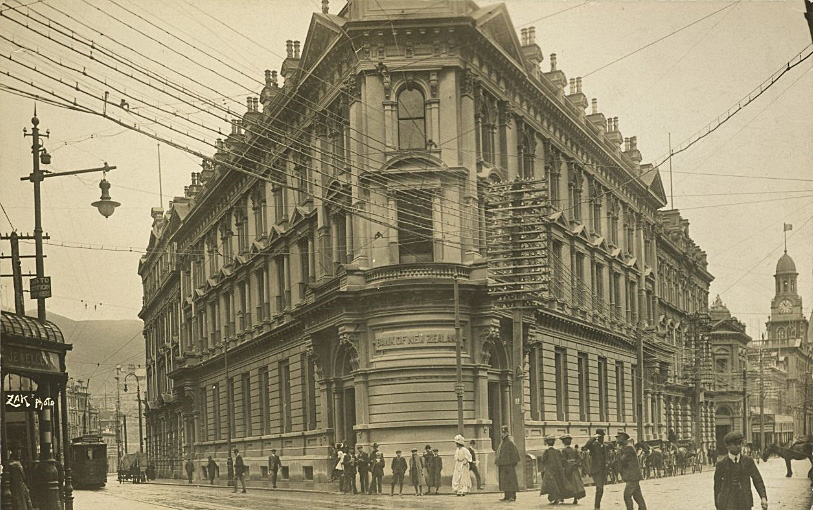
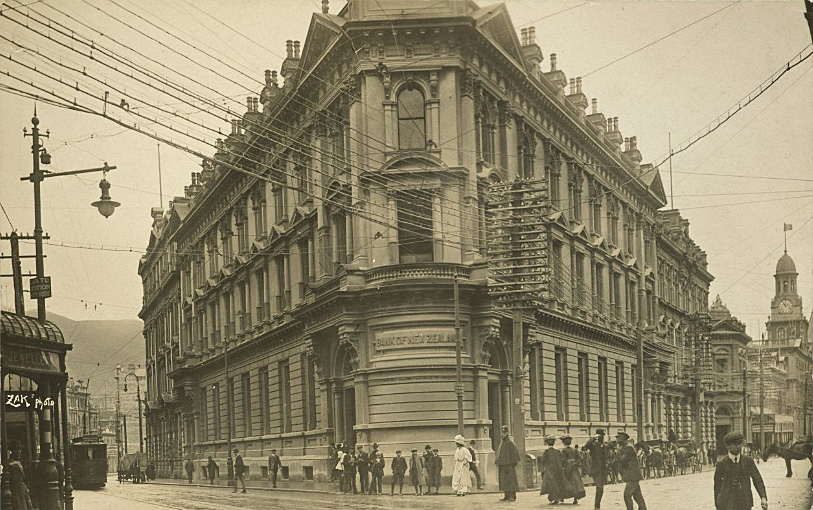
The Bank of New Zealand was founded in Auckland in 1861; it opened a Wellington branch in 1862 and its first permanent building in 1863. This stood on the site of the present building. The Head Office of the Bank was transferred to Wellington in 1894 and in 1899 plans were prepared by Thomas Turnbull and Son for a new Head Office Building. A contract was let to T. Carmichael on 4 April 1899 and the building opened on 1 July 1901.
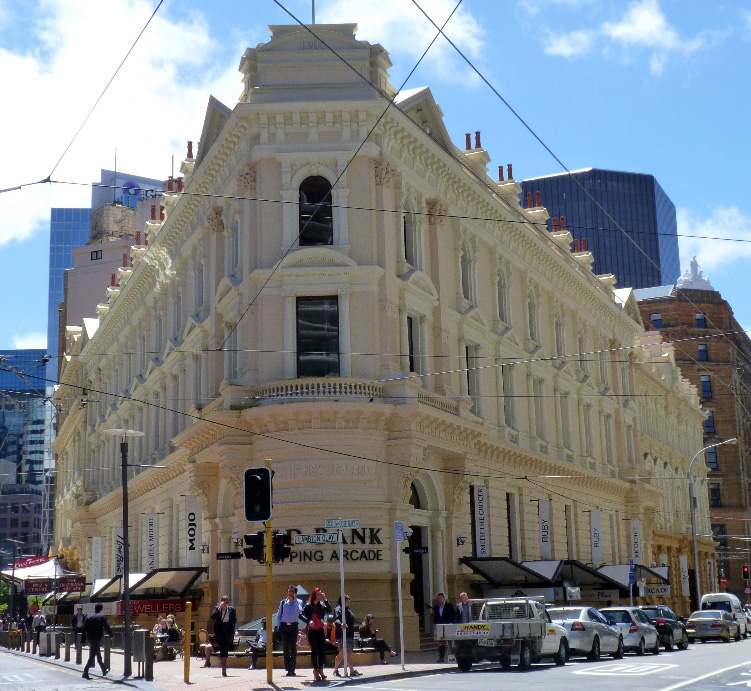
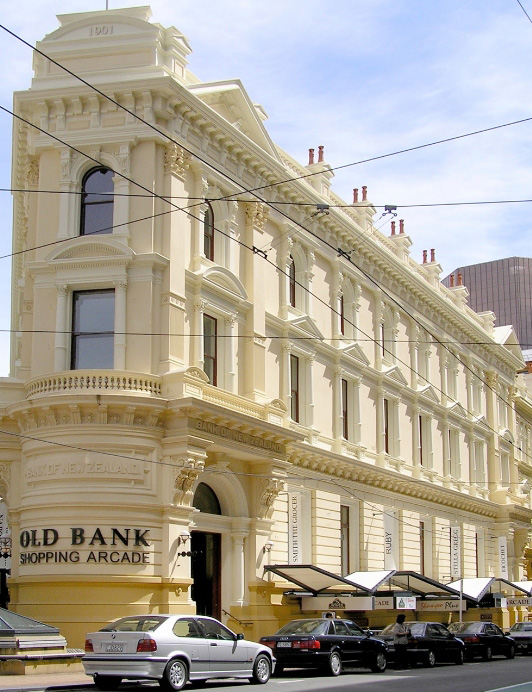
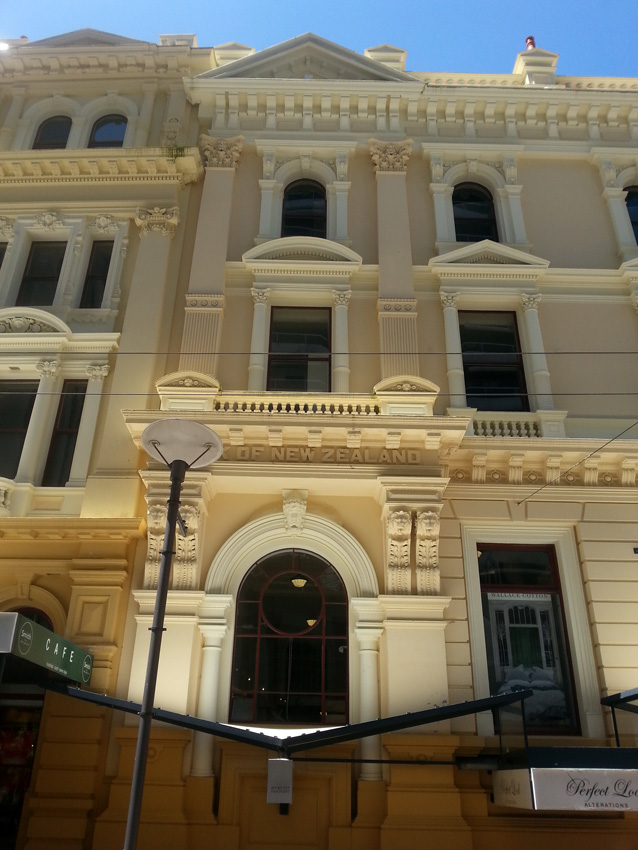
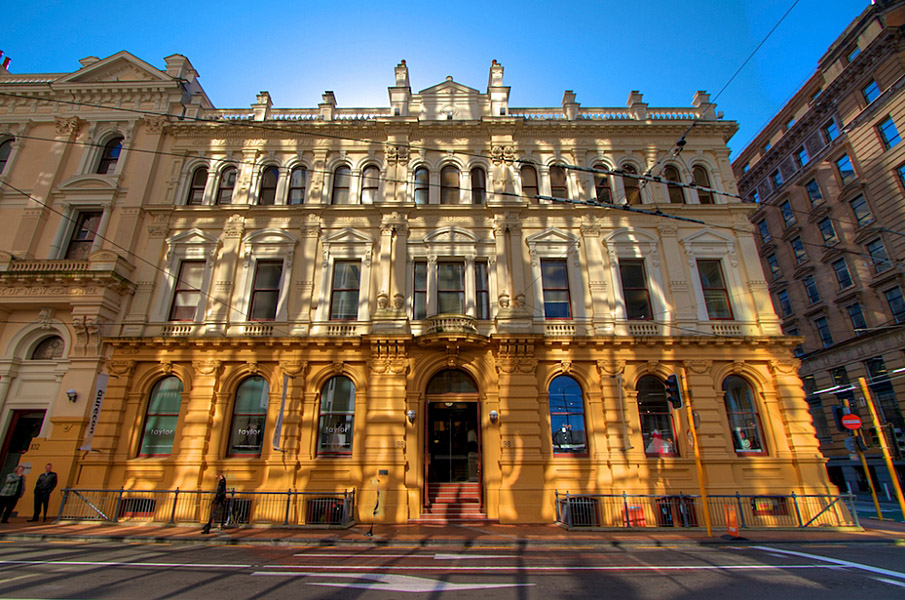
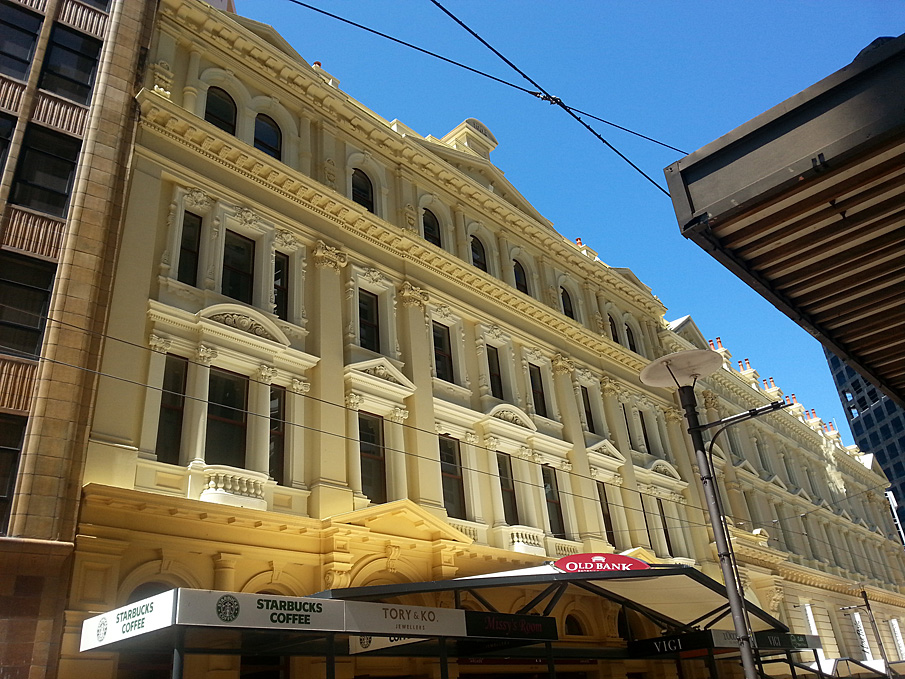
The facades of the building are divided horizontally into three parts. The ground floor is heavily rusticated. The first and second floors are joined with a giant order of Corinthian columns at the corners. Between them, the first floor has pediment and columned windows, the second floor round-headed windows with decorated corbels. A bracketed frieze and balustrade have been removed as an earthquake precaution. The interior has a fine banking chamber with a tesselated floor, highly finished Kauri furniture and elaborate plaster capitals and ceiling decoration, all of a standard of craftsmanship now rarely seen.
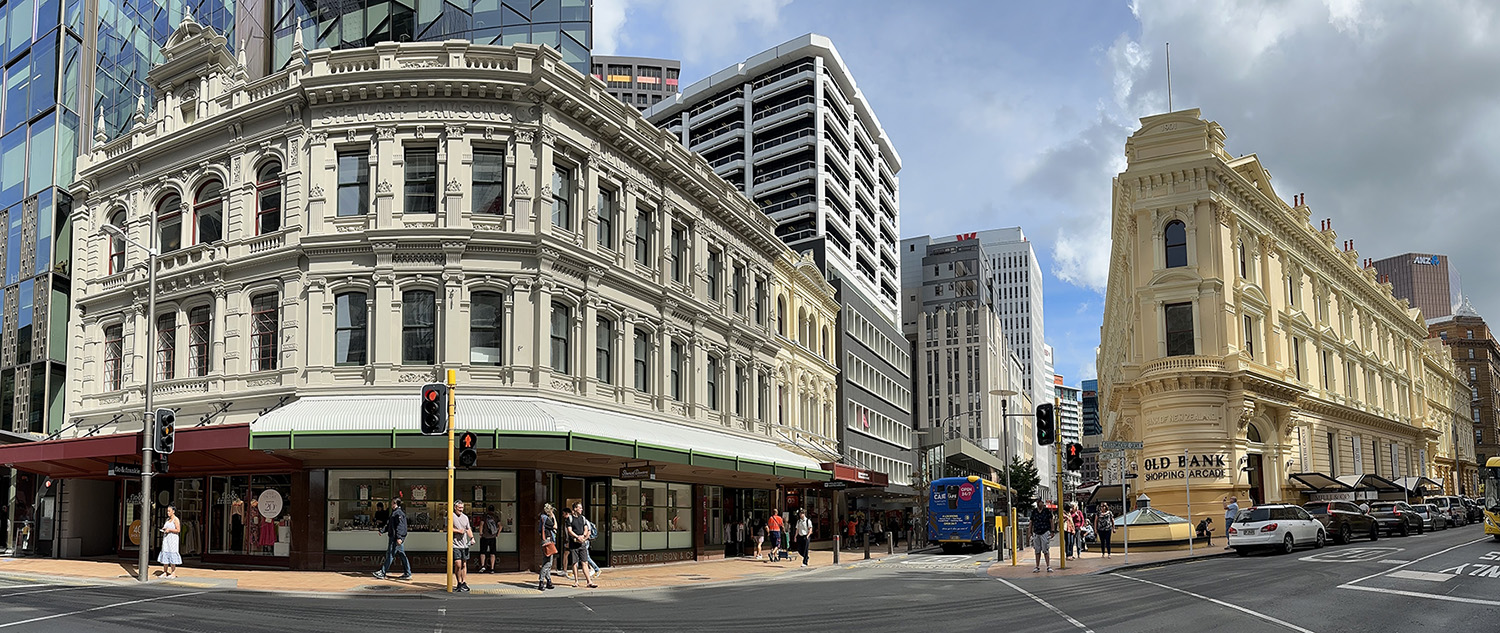
It is an imposing structure in the Edwardian Baroque style, fashionable in England at this time for important commercial buildings. It occupies a prominent wedge shaped site at a nodal point in the City, its two neighbouring buildings being compatible in scale and character. It befits the self assurance expected of the Head Office of New Zealand's largest banking house at a time of economic prosperity in the country.
List Entry Information
Status
Listed
List Entry Status
Historic Place Category 1
Access
Able to Visit
List Number
212
Date Entered
7th April 1983
Date of Effect
7th April 1983
City/District Council
Wellington City
Region
Wellington Region
Legal description
Lot 1 and 2, DP 85253
Status
Listed
List Entry Status
Historic Place Category 1
Access
Able to Visit
List Number
212
Date Entered
7th April 1983
Date of Effect
7th April 1983
City/District Council
Wellington City
Region
Wellington Region
Legal description
Lot 1 and 2, DP 85253
Construction Professional
Name
Turnbull, Thomas
Type
Architect
Biography
Thomas Turnbull (1824-1907) was born and educated in Scotland and trained under David Bryce, Her Majesty's Architect. He travelled to Melbourne in 1851 and after nine years there moved to San Francisco. He arrived in New Zealand in 1871 and soon established a thriving business. His son William, a distinguished architect in his own right, became a partner in the firm in 1891. Turnbull was a member of the Royal Institute of British Architects. He was a pioneer in the design of buildings to withstand earthquakes and he was responsible for breaking down prejudice against the use of permanent materials for building construction. He specialised in masonry construction for commercial purposes but was also responsible for some fine houses. Among his most important buildings were the Willis Street churches of St Peter (1879) and St John (1885), the former National Mutual Building (1883-84), the General Assembly Library (1899) and the former Bank of New Zealand Head Office (1901), all in Wellington.
Name
Edmund Platt
Type
Plasterer
Biography
No biography is currently available for this construction professional
Construction Details
Start Year
1901
Type
Original Construction
Construction Professional
Name
Turnbull, Thomas
Type
Architect
Biography
Thomas Turnbull (1824-1907) was born and educated in Scotland and trained under David Bryce, Her Majesty's Architect. He travelled to Melbourne in 1851 and after nine years there moved to San Francisco. He arrived in New Zealand in 1871 and soon established a thriving business. His son William, a distinguished architect in his own right, became a partner in the firm in 1891. Turnbull was a member of the Royal Institute of British Architects. He was a pioneer in the design of buildings to withstand earthquakes and he was responsible for breaking down prejudice against the use of permanent materials for building construction. He specialised in masonry construction for commercial purposes but was also responsible for some fine houses. Among his most important buildings were the Willis Street churches of St Peter (1879) and St John (1885), the former National Mutual Building (1883-84), the General Assembly Library (1899) and the former Bank of New Zealand Head Office (1901), all in Wellington.
Name
Edmund Platt
Type
Plasterer
Biography
No biography is currently available for this construction professional
Construction Details
Start Year
1901
Type
Original Construction
Historical and Associated Iwi / Hapū / Whānau
Other Information
This place was identified as significant under previous legislation with different information requirements. It remains significant under the current legislation. There is opportunity under our legislation and policies to add to this information. Further information about this place may be available from the Central Regional Office of Heritage New Zealand Pouhere Taonga. NZHPT Heritage Order (23 September 1986) Note: the other two buildings in the BNZ 'complex' are not included in the Protection Order i.e. Bank of New Zealand Building (No.4), 29 Hunter Street, Wellington NZHPT Record No. 1337 & Bank of New Zealand Building (No.2), 233-237 Lambton Quay, Wellington NZHPT Record No.1336. Please note that entry on the New Zealand Heritage List/Rarangi Korero identifies only the heritage values of the property concerned, and should not be construed as advice on the state of the property, or as a comment of its soundness or safety, including in regard to earthquake risk, safety in the event of fire, or insanitary conditions. This historic place was registered under the Historic Places Act 1980. The following text is the original citation considered by the NZHPT Board at the time of registration. Information in square brackets indicate modifications made after the paper was considered by the NZHPT Board.
Historical and Associated Iwi / Hapū / Whānau
Other Information
This place was identified as significant under previous legislation with different information requirements. It remains significant under the current legislation. There is opportunity under our legislation and policies to add to this information. Further information about this place may be available from the Central Regional Office of Heritage New Zealand Pouhere Taonga. NZHPT Heritage Order (23 September 1986) Note: the other two buildings in the BNZ 'complex' are not included in the Protection Order i.e. Bank of New Zealand Building (No.4), 29 Hunter Street, Wellington NZHPT Record No. 1337 & Bank of New Zealand Building (No.2), 233-237 Lambton Quay, Wellington NZHPT Record No.1336. Please note that entry on the New Zealand Heritage List/Rarangi Korero identifies only the heritage values of the property concerned, and should not be construed as advice on the state of the property, or as a comment of its soundness or safety, including in regard to earthquake risk, safety in the event of fire, or insanitary conditions. This historic place was registered under the Historic Places Act 1980. The following text is the original citation considered by the NZHPT Board at the time of registration. Information in square brackets indicate modifications made after the paper was considered by the NZHPT Board.
Current Usages
Uses: Trade
Specific Usage: Shop
Former Usages
General Usage: Finance
Specific Usage: Bank
Current Usages
Uses: Trade
Specific Usage: Shop
Former Usages
General Usage: Finance
Specific Usage: Bank
Location
Stay up to date with Heritage this month
