

The Cathedral of the Sacred Heart, 40 Hill Street, Wellington
The present brick and concrete church stands on the Hill Street site of the previous timber cathedral of St Mary which burnt down in 1898. The foundation stone for the Catholic Basilica of the Sacred Heart was laid in 1899 and the church was opened in 1901.
The design derives from the classical basilican plan. The Ionic columns in Oamaru Stone and the massive pediment of the portico are a strong contrast to other Wellington churches. With the oblong shape and twin bell towers (later and not designed by Petre, removed 1942) culminating in domes, the building was strongly Roman in appearance. The interior has a central aisle with two side aisles and a lavishly decorated ceiling of pressed zinc. The architect for the building was Francis William Petre (1847-1918), son of the Hon H W Petre who was closely associated with Bishop Viard, the first Catholic Bishop of the Diocese of Wellington, in establishing the Parish of Thorndon.
Petre was born in New Zealand and trained in England as architect and engineer and was a member of one of the most prominent English Catholic families. Consequently he attracted other Catholic commissions in the colony when he returned in 1872. Other examples of his work are the Dominican Priory 1877, and St Joseph's Cathedral
1886, both in Dunedin, and the Cathedral of the Blessed Sacrament, 1886 in Christchurch. His buildings are characterised by clean lines and simplified forms with extreme refinement of detail, thus assuring him of a definite place in the history of New Zealand architecture.
The landmark qualities of the Cathedral (elevated to this status by Cardinal Williams in 1983) are significant because its restrained design dominates the surrounding area from its raised site. Its townscape value lies in the close relationship to the two nearby churches, the neo-Gothic architecture of the General Assembly Library and the more classical forms of the old Parliament buildings.
The present brick and concrete church stands on the Hill Street site of the previous timber cathedral of St Mary which burnt down in 1898. The foundation stone for the Catholic Basilica of the Sacred Heart was laid in 1899 and the church was opened in 1901.
The design derives from the classical basilican plan. The Ionic columns in Oamaru Stone and the massive pediment of the portico are a strong contrast to other Wellington churches. With the oblong shape and twin bell towers (later and not designed by Petre, removed 1942) culminating in domes, the building was strongly Roman in appearance. The interior has a central aisle with two side aisles and a lavishly decorated ceiling of pressed zinc. The architect for the building was Francis William Petre (1847-1918), son of the Hon H W Petre who was closely associated with Bishop Viard, the first Catholic Bishop of the Diocese of Wellington, in establishing the Parish of Thorndon.
Petre was born in New Zealand and trained in England as architect and engineer and was a member of one of the most prominent English Catholic families. Consequently he attracted other Catholic commissions in the colony when he returned in 1872. Other examples of his work are the Dominican Priory 1877, and St Joseph's Cathedral
1886, both in Dunedin, and the Cathedral of the Blessed Sacrament, 1886 in Christchurch. His buildings are characterised by clean lines and simplified forms with extreme refinement of detail, thus assuring him of a definite place in the history of New Zealand architecture.
The landmark qualities of the Cathedral (elevated to this status by Cardinal Williams in 1983) are significant because its restrained design dominates the surrounding area from its raised site. Its townscape value lies in the close relationship to the two nearby churches, the neo-Gothic architecture of the General Assembly Library and the more classical forms of the old Parliament buildings.
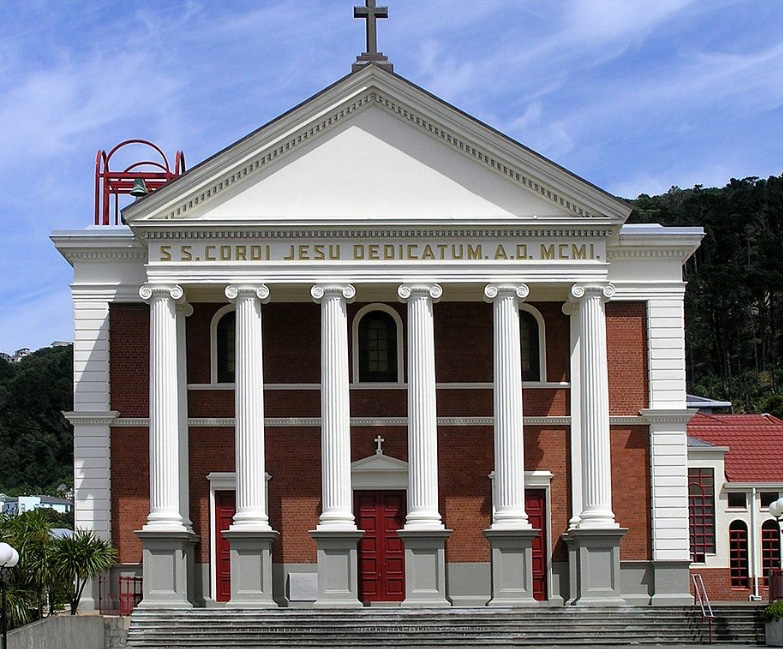
Cathedral of the Sacred Heart (Catholic). CC BY-NC-SA 2.0 Licence. Image courtesy of commons.wikimedia.org | Gordon Haws - Wikimedia Commons | 30/01/2005 | Gordon Haws
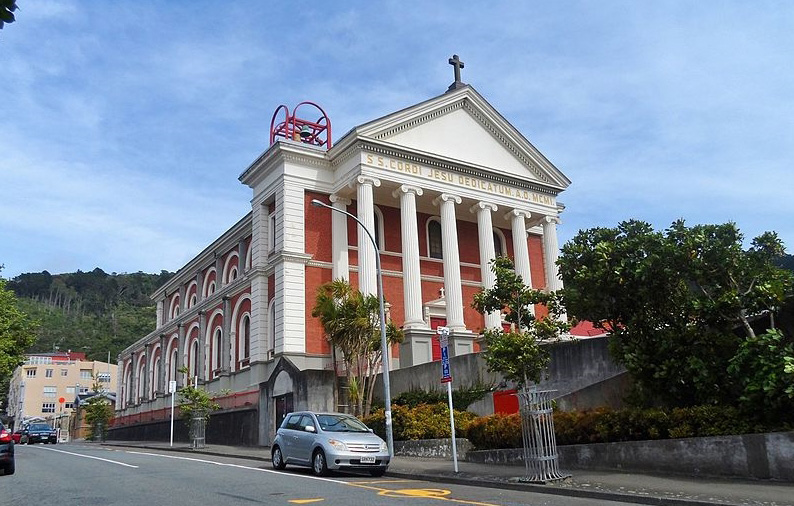
Cathedral of the Sacred Heart (Catholic). CC BY-SA 4.0 Licence. Image courtesy of commons.wikimedia.org | Pear285 - Wikimedia Commons | 11/01/2015 | Pear285
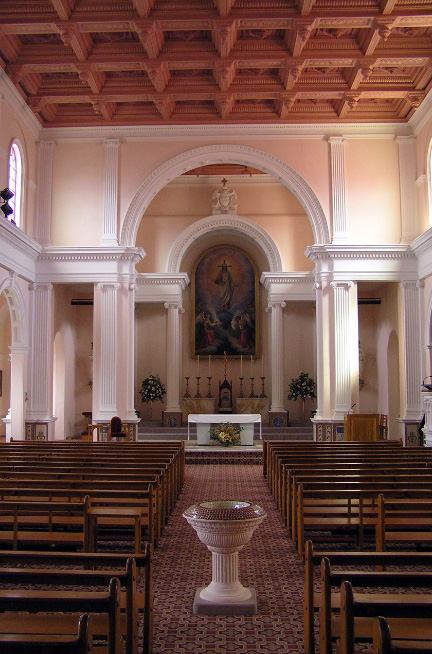
Cathedral of the Sacred Heart (Catholic). Interior CC BY-NC-SA 2.0 Licence. Image courtesy of commons.wikimedia.org | Gordon Haws - Wikimedia Commons | 30/01/2005 | Gordon Haws
Cathedral of the Sacred Heart (Catholic). CC BY-NC-SA 2.0 Licence. Image courtesy of commons.wikimedia.org | Gordon Haws - Wikimedia Commons | 30/01/2005 | Gordon Haws
Cathedral of the Sacred Heart (Catholic). CC BY-SA 4.0 Licence. Image courtesy of commons.wikimedia.org | Pear285 - Wikimedia Commons | 11/01/2015 | Pear285
Cathedral of the Sacred Heart (Catholic). Interior CC BY-NC-SA 2.0 Licence. Image courtesy of commons.wikimedia.org | Gordon Haws - Wikimedia Commons | 30/01/2005 | Gordon Haws
