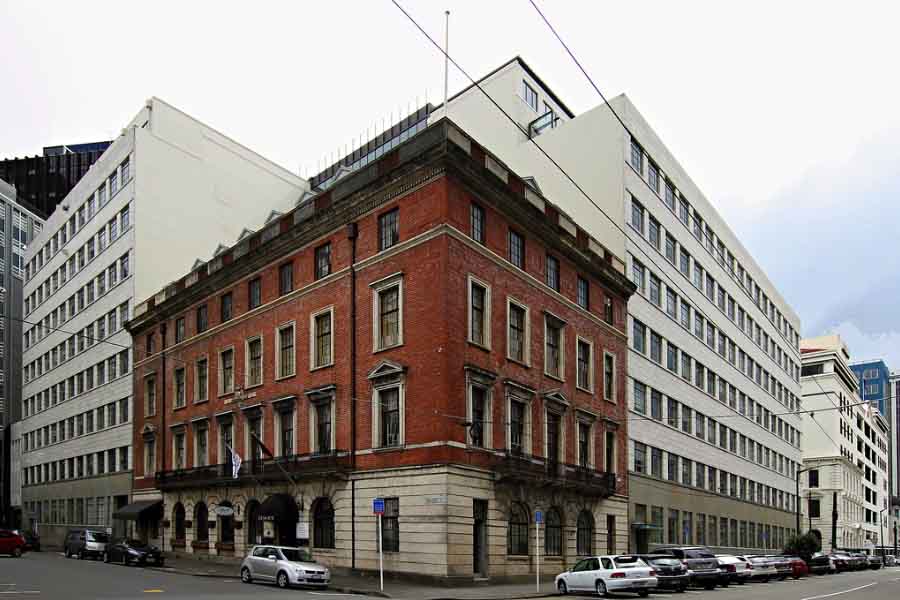
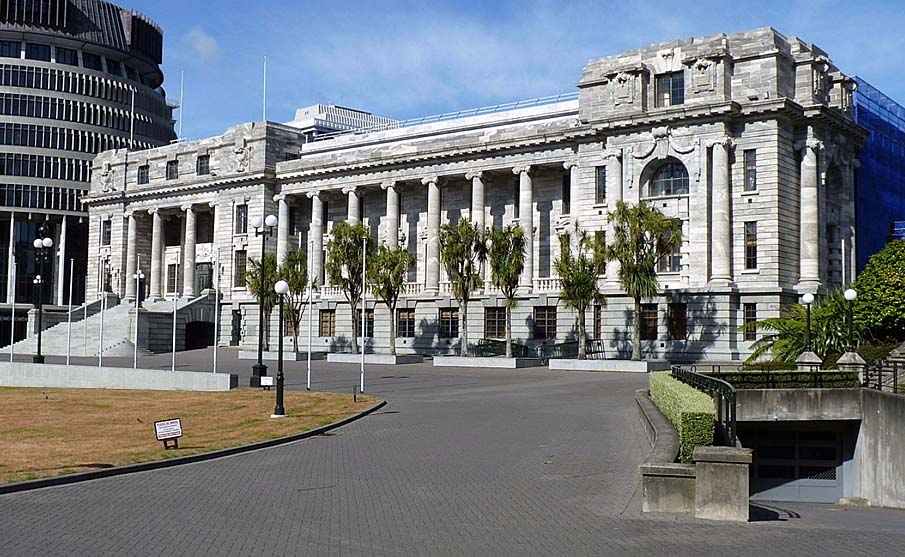
The Wellesley Club in central Wellington is a five-storey neo-Georgian building that was built 1925-1927 to house the gentlemen’s club of the same name. Officially opened in 1927, the building has considerable historical, aesthetic, architectural, and social significance. It is an award-winning example of neo-Georgian architecture and a fine example of the architecture of gentlemen’s clubs. The Wellesley Club also has value because of its association with people of importance in New Zealand history who were members of the club, including prominent Wellington architect William Gray Young (1885-1962) who designed the building. It is a significant element in Wellington’s Government Centre Historic Area.
In 1891, the Junior Wellington Club Company Limited was formed, changing its name to Wellesley in 1898 to distinguish it from the Wellington Club. Wellesley was the family name of the Duke of Wellington, after whom the city of Wellington was named. The Wellesley Club building was the Club’s fourth premises and the second to be purpose-built for the club, a move forced by a growing membership. Among the members of the club were a number of influential men such as the club’s first president Sir Francis Henry Dillon Bell, Sir Joseph Ward, and Sir Maui Pomare. A number of club members also represented New Zealand at sport, such as H. D. Thomson, member of the 1905 ‘Originals’ All Blacks team.
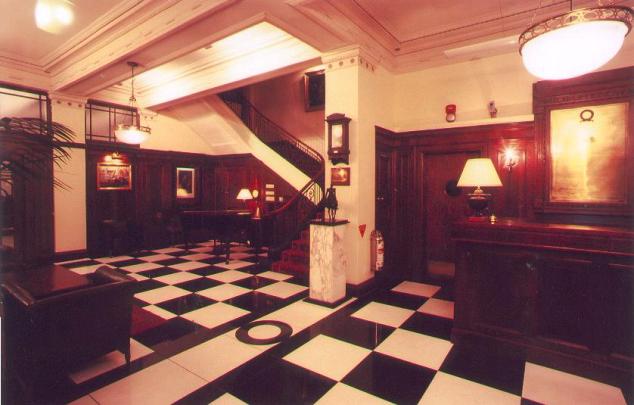
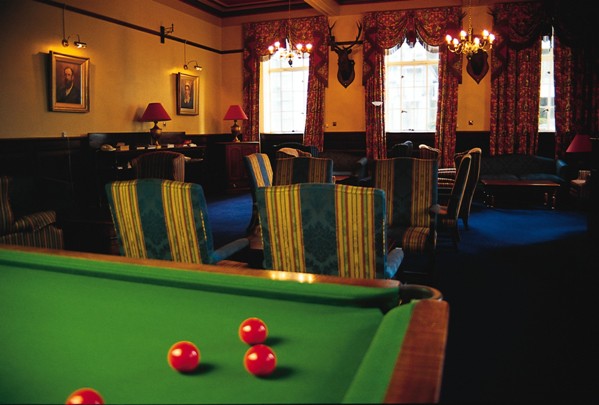
Land on the corner of Maginnity and Ballance Streets was purchased in 1925 and the foundation stone was laid on 31 October 1925 by Sir Charles Skerrett (1863-1929), the club’s second president. A contract for the building worth £33,627 was signed with Trevor Brothers and construction was completed early 1927. The building is constructed of reinforced concrete and faced with English bonded brickwork. Each of the floors features a different style of window and the ground floor is rusticated. Inside, the building originally followed the form of the English gentlemen’s club, featuring a billiard room, card rooms, reading rooms, lounges, bars and dining rooms. In addition, the upper storey included bedrooms, allowing the club to become a residential club for the first time in its history. Other interior features include an impressive staircase and wood panelling. Gray Young designed a number of buildings in the neo-Georgian style but it was for the Wellesley Club that he won the New Zealand Institute of Architects Gold Medal in 1932.
For fifty years after its erection, the building was little altered. In 1996, membership had fallen to 400, leading to the sale of the building. The building closed for refurbishment, reopening in late 1997 as the Wellesley Boutique Hotel, with the club continuing to use the building’s facilities. The building was sold again in 2009 and became the new home of Westminster Masonic Lodge. In 2014, the Wellesley Club moved out of the building, but the Wellesley Boutique Hotel and its bar, restaurant and café, continues to operate. The building is a fine example of a club building and it provides an insight into gentlemen’s clubs, a British institution transplanted to New Zealand. It is a particularly fine example of Gray Young’s work in the Georgian style.
In 1891, the Junior Wellington Club Company Limited was formed, changing its name to Wellesley in 1898 to distinguish it from the Wellington Club. Wellesley was the family name of the Duke of Wellington, after whom the city of Wellington was named. The Wellesley Club building was the Club’s fourth premises and the second to be purpose-built for the club, a move forced by a growing membership. Among the members of the club were a number of influential men such as the club’s first president Sir Francis Henry Dillon Bell, Sir Joseph Ward, and Sir Maui Pomare. A number of club members also represented New Zealand at sport, such as H. D. Thomson, member of the 1905 ‘Originals’ All Blacks team.
Land on the corner of Maginnity and Ballance Streets was purchased in 1925 and the foundation stone was laid on 31 October 1925 by Sir Charles Skerrett (1863-1929), the club’s second president. A contract for the building worth £33,627 was signed with Trevor Brothers and construction was completed early 1927. The building is constructed of reinforced concrete and faced with English bonded brickwork. Each of the floors features a different style of window and the ground floor is rusticated. Inside, the building originally followed the form of the English gentlemen’s club, featuring a billiard room, card rooms, reading rooms, lounges, bars and dining rooms. In addition, the upper storey included bedrooms, allowing the club to become a residential club for the first time in its history. Other interior features include an impressive staircase and wood panelling. Gray Young designed a number of buildings in the neo-Georgian style but it was for the Wellesley Club that he won the New Zealand Institute of Architects Gold Medal in 1932.
For fifty years after its erection, the building was little altered. In 1996, membership had fallen to 400, leading to the sale of the building. The building closed for refurbishment, reopening in late 1997 as the Wellesley Boutique Hotel, with the club continuing to use the building’s facilities. The building was sold again in 2009 and became the new home of Westminster Masonic Lodge. In 2014, the Wellesley Club moved out of the building, but the Wellesley Boutique Hotel and its bar, restaurant and café, continues to operate. The building is a fine example of a club building and it provides an insight into gentlemen’s clubs, a British institution transplanted to New Zealand. It is a particularly fine example of Gray Young’s work in the Georgian style.