DonateSupporterVisit Heritage
  • Tūrangawaewae
    Places
  • Tira Māori
    Māori Heritage
  • Poutairangahia
    Archaeology
  • Rauemi
    Resources
  • Mō Tātou
    About Us
  • New Zealand Heritage List
  • Nominate and submit
  • Explore the List
  • National Historic Landmarks
  • Plaques
  • Rainbow List Project
  • Lost heritage
  • Visit Heritage
  • Our properties
  • Turnbull House Project
  • Collections
  • Shop
  • Tohu Whenua
  • Tira Māori
  • Conserving Māori heritage
  • Marae built heritage
  • Māori heritage on the List
  • Hinemihi—Te Hokinga Mai
  • What is archaeology?
  • Is there a site on my property?
  • What are my legal requirements?
  • Affecting an archaeological site
  • Declaring an archaeological site
  • Archaeology FAQs
  • Archaeology Digital Library
  • Archaeology guidelines and templates
  • Resources
  • Funding
  • Publications
  • Sustainable management guides
  • Disaster recovery
  • Podcasts & digital resources
  • Education Hub
  • Conservation plans
  • About
  • Board
  • Māori Heritage Council
  • Senior Staff
  • Offices
  • Contact us
  • Careers
  • Covenants
  • Fast-track
  • Corporate documents
  • Currently consulting on
  • Our submissions
  • News
  • Covid-19 response
Quick links
Rārangi Kōrero | The List
Explore the List
National Historic Landmarks
Ngā Manawhenua o Aotearoa me ōna Kōrero Tūturu
Quick links
Tapuwae
A Vision for Places of Māori Heritage
Funding for Māori Heritage
Resources
Quick links
Archaeological Authority Portal
Applying for an archaeological authority
Archaeology FAQs
Browse the most frequently asked questions about archaeological authorities and the archaeological process.
Quick links
Quick links
Contact us
Offices
DonateSupporterVisit Heritage
  • Tūrangawaewae
    Places
  • Tira Māori
    Māori Heritage
  • Poutairangahia
    Archaeology
  • Rauemi
    Resources
  • Mō Tātou
    About Us
  • New Zealand Heritage List
  • Nominate and submit
  • Explore the List
  • National Historic Landmarks
  • Plaques
  • Rainbow List Project
  • Lost heritage
  • Visit Heritage
  • Our properties
  • Turnbull House Project
  • Collections
  • Shop
  • Tohu Whenua
  • Tira Māori
  • Conserving Māori heritage
  • Marae built heritage
  • Māori heritage on the List
  • Hinemihi—Te Hokinga Mai
  • What is archaeology?
  • Is there a site on my property?
  • What are my legal requirements?
  • Affecting an archaeological site
  • Declaring an archaeological site
  • Archaeology FAQs
  • Archaeology Digital Library
  • Archaeology guidelines and templates
  • Resources
  • Funding
  • Publications
  • Sustainable management guides
  • Disaster recovery
  • Podcasts & digital resources
  • Education Hub
  • Conservation plans
  • About
  • Board
  • Māori Heritage Council
  • Senior Staff
  • Offices
  • Contact us
  • Careers
  • Covenants
  • Fast-track
  • Corporate documents
  • Currently consulting on
  • Our submissions
  • News
  • Covid-19 response
Quick links
Rārangi Kōrero | The List
Explore the List
National Historic Landmarks
Ngā Manawhenua o Aotearoa me ōna Kōrero Tūturu
Quick links
Tapuwae
A Vision for Places of Māori Heritage
Funding for Māori Heritage
Resources
Quick links
Archaeological Authority Portal
Applying for an archaeological authority
Archaeology FAQs
Browse the most frequently asked questions about archaeological authorities and the archaeological process.
Quick links
Quick links
Contact us
Offices
  • Places
  • Nominate and submit
  • National Historic Landmarks
  • Places
  • Nominate and submit
  • National Historic Landmarks
  • Tira Māori
  • Conserving Māori heritage
  • Marae built heritage
  • Tira Māori
  • Conserving Māori heritage
  • Marae built heritage
  • Archaeological authorities
  • Archaeology Digital Library
  • Archaeological authorities
  • Archaeology Digital Library
  • All resources
  • Publications
  • Funding
  • All resources
  • Publications
  • Funding
  • FAQs
  • FAQs
Follow us on:
Places
  • Places
  • Nominate and submit
  • National Historic Landmarks
Tira Māori
  • Tira Māori
  • Conserving Māori heritage
  • Marae built heritage
Archaeology
  • Archaeological authorities
  • Archaeology Digital Library
Resources
  • All resources
  • Publications
  • Funding
FAQs
  • FAQs
Follow us on
HomePrivacyTerms and conditionsAbout this site
© Heritage New Zealand Pouhere Taonga 2026.
 
Fyffe House

62 Avoca Street, KAIKOURA

Public

Historic Place Category 1

List No. 238

Quick links:
List GalleryLocationDetails
Fyffe House is an historic survivor of Kaikoura's whaling past and was built in an area occupied by Maori for more than 900 years. Kaikoura was first occupied by Maori during the 14th and 15th centuries. A further wave of settlement occurred with the arrival in Kaikoura of Waitaha, then Kati Mamoe and then, during the seventeenth century, the Kati Kuri hapu of Kai Tahu. Kaikoura was sold as part of the Wairau Purchase of 1847 by Ngati Toa, who had conquered much of the northern half of the South Island during the 1830s. Kai Tahu disputed Ngati Toa's right to sell this land and in 1856 the government agreed to compensate Kai Tahu, however inadequately, for the land sold by Ngati Toa, which lay between Kaikoura and Kaiapoi. This occurred with the Kaiapoi Purchase, signed in 1857. It was not, however, until 1858 that the government began to negotiate with Kati Kuri over the purchase of the Kaikoura block itself. In 1859 a deed was signed between the Crown and Kati Kuri which saw an estimated 2.8 million acres exchanged for £300 and 5,558 acres of reserves. By this time Pakeha had already established themselves in the area, with whalers settling on the coast in the early 1840s and farmers further inland from the late 1840s and early 1850s.

Whalers first came to New Zealand waters in 1792, initially to hunt sperm whales from their ships. Shore whaling, the killing of whales from small boats launched from the shore, began in the 1820s. Southern right whales were killed and their blubber rended down. The oil produced from that process was used to fuel lamps and as a lubricant. The first shore-based whaling station in Kaikoura was established by Robert Fyffe in 1842. Fyffe had arrived in New Zealand in 1836. He worked for a few years in the Marlborough whaling industry and then opened Waiopuka station, just to the south of Fyffe House, with one of his workmates from Marlborough, John Murray. In 1843 Fyffe had four whale boats and employed 40 men for the whaling season.

It is believed that the first portion of Fyffe House was a two-roomed cottage built for Fyffe's cooper, Thomas Howell. Coopers played an essential role in the whaling industry as they constructed the barrels needed to store and ship the whale oil. Howell's cottage now comprises the eastern wing of Fyffe House and is thought to date from the mid-1840s. This section has French windows from both rooms opening onto the verandah and it rests on whale bone piles, a particularly unusual feature.

Murray opened a second whaling station in Kaikoura at South Bay in 1844 but appears to have had little interest in running either station. By 1845 Fyffe was the sole owner of both stations and these formed the social and commercial centre of Kaikoura until 1867. Fyffe's production of whale oil began to decline from 1847 and he turned to farming, as did many other whalers, and was one of earliest Pakeha to gain a pasturage licence in the area. (By 1850 the right whale had been hunted almost to extinction.)

With the death of Fyffe in 1854 his cousin George Fyffe bought the whaling equipment and 'the right to whale' from Fyfe's estate, and leased Fyfe's Kahu Tara run. Despite his subsequent purchase of 7,000 acres of Kahu Tara George appears to have lived mainly at Fyffe House, which he expanded during the late 1850s and early 1860s. When he was excavating the foundations for his store he discovered a koiwi (human skeleton), two toki (axes) and the largest moa egg ever found. A foot long (30.5 centimetres), the egg now resides in the Museum of New Zealand/Te Papa Tongarewa in Wellington.

The kitchen wing was the second part of Fyffe House to be constructed and it is possible that it was first built as a separate structure and subsequently connected to the remainder of the house. It is thought that the final two-storeyed wing, built to the west of the cooper's wing and running perpendicular to it, was built in preparation for George's marriage to Catherine Douglas Fyfe in 1860. (It is possible that they were related in some way: 'Fyfe' is the spelling Catherine used in her diary.)

George died in 1867, having fallen off the jetty near his house 'while in an unsound state of mind'. Catherine died the following year and, as there were no children, all of their property was sold. Fyffe House was bought by Joseph Wilkinson Goodall (1835-1911), who transferred to Kaikoura as the district constable in 1865. He later became the Clerk of the Court and Registrar of Births, Deaths and Marriages, as well as holding a number of other public service positions. After his marriage in 1876 he became the manager of the Kaikoura wharf, which was constructed on the site of the old jetty, just down the road from Fyffe House.

The Goodalls made few changes to Fyffe House itself, apart from enclosing part of the verandah to form an office. It seems likely that it was the Goodalls who first established a flower garden in the space between the two wings of the building, and who wallpapered the interior for the first time. After Goodall's death in 1911 the land surrounding the house was subdivided into five sections and the section on which Fyffe House stands, was sold to James Johnston in 1920. Johnston passed the house onto his son, James Allen (Jimmy) Johnston in 1922. Previously a whaler, Jimmy was a Kaikoura County Councillor, contractor for roads and bridges and was involved in many local organisations. He did not live in Fyffe House, which was occupied by Joseph and Maud Low and their eight children. The house was sold by Jimmy Johnston in 1935 to Joseph Soutar, a nephew of Joseph Low. Maud Low (also known as Granny Low) continued to live in Fyffe House, while Soutar lived in a small bach on the property. Soutar left Fyffe House to Maud Low upon his death in 1943.

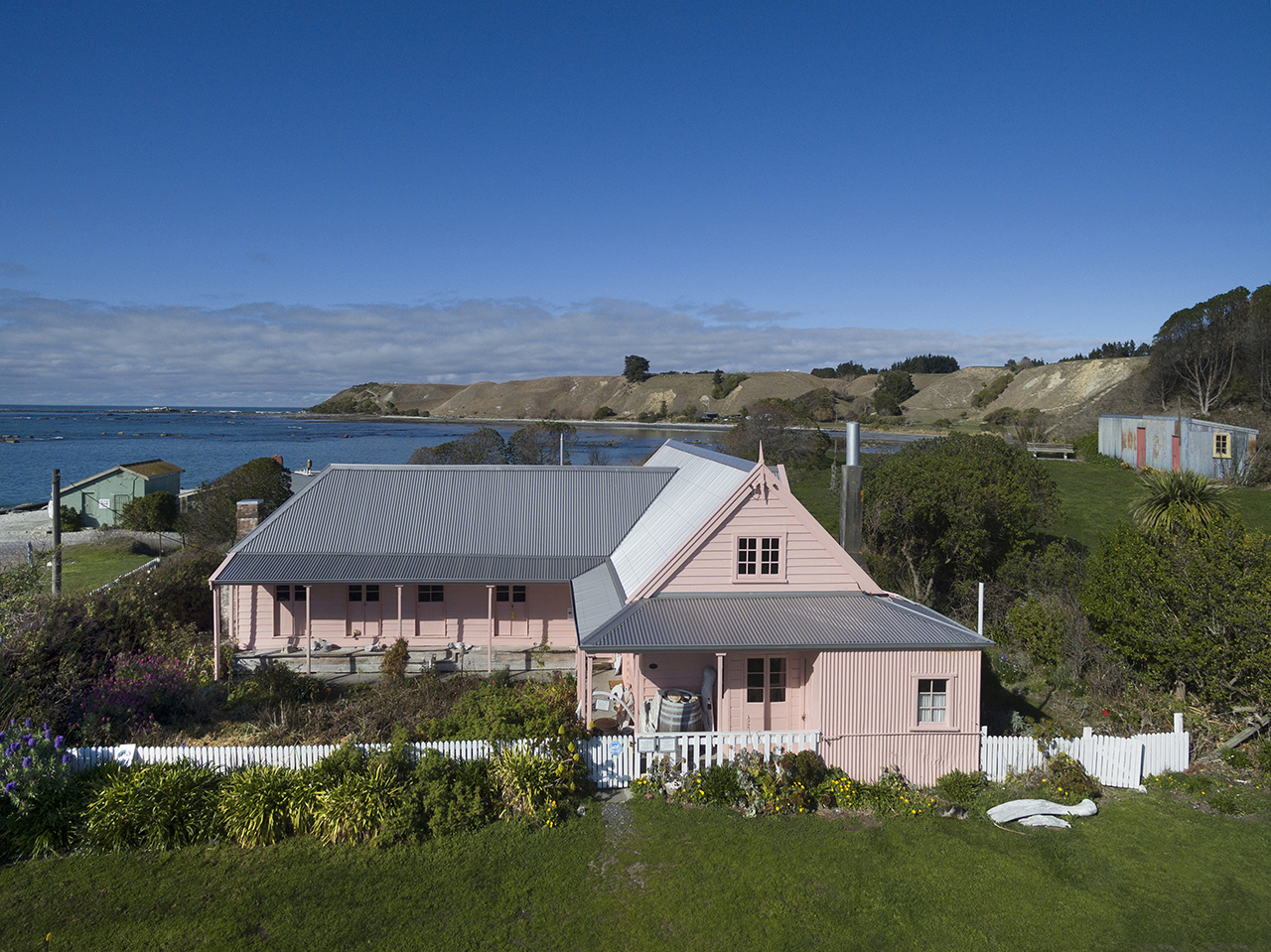
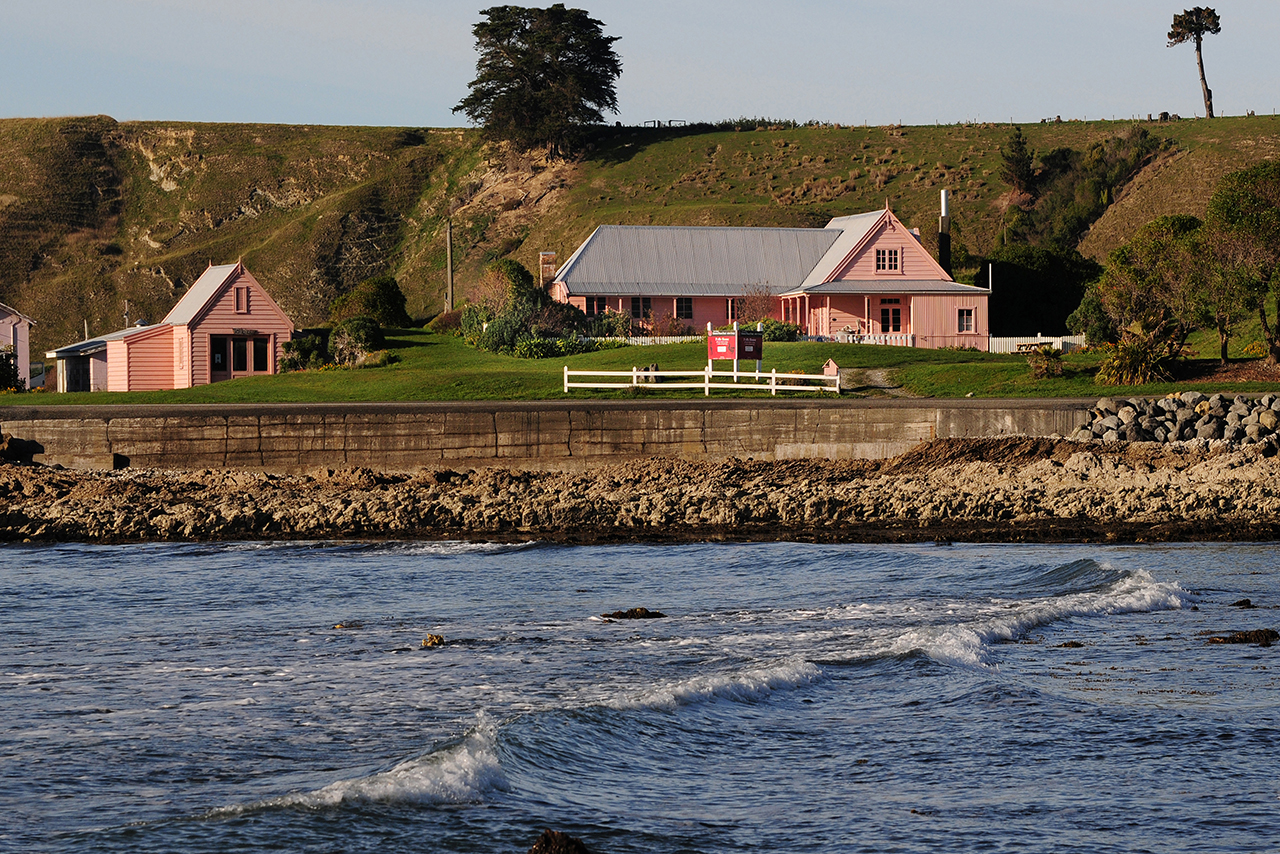
Maud died in 1951 and left Fyffe House to her youngest son, George. George made few changes to the house, closing off the earliest wing, and using much of the house for storage. After he retired from fishing he kept his boat in the parlour for many years. George bequeathed the house to the New Zealand Historic Places Trust Pouhere Taonga. After his death in 1980 the Trust repaired the house and some years later repainted the exterior in its original pink. The cooper's wing was repaired and redecorated as quarters for curators. The sections of land surrounding the house were sold.

Fyffe House is currently open to the public as a house museum. It rests on a site that is historically important to both Maori and Pakeha. The earliest section of the house was built in the mid-1840s and is Kaikoura's oldest surviving building. Fyffe House is important as a survivor of the early whaling industry in New Zealand, and as a representative of many other aspects of South Island history, including moa hunting, kumara gardening, fishing, farming, port activities, family life and tourism.
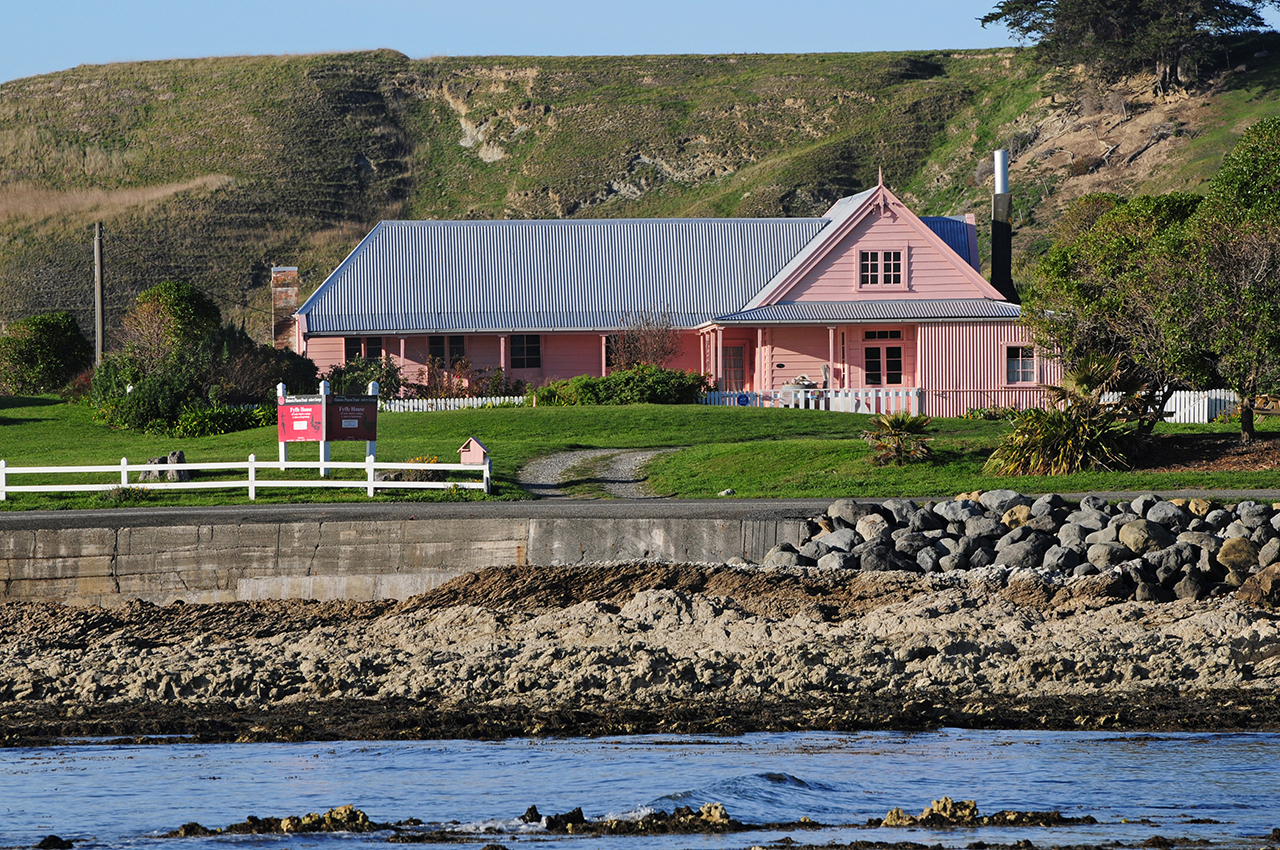
Fyffe House, Kaikoura | Grant Sheehan | 17/08/2015 | Heritage New Zealand Pouhere Taonga
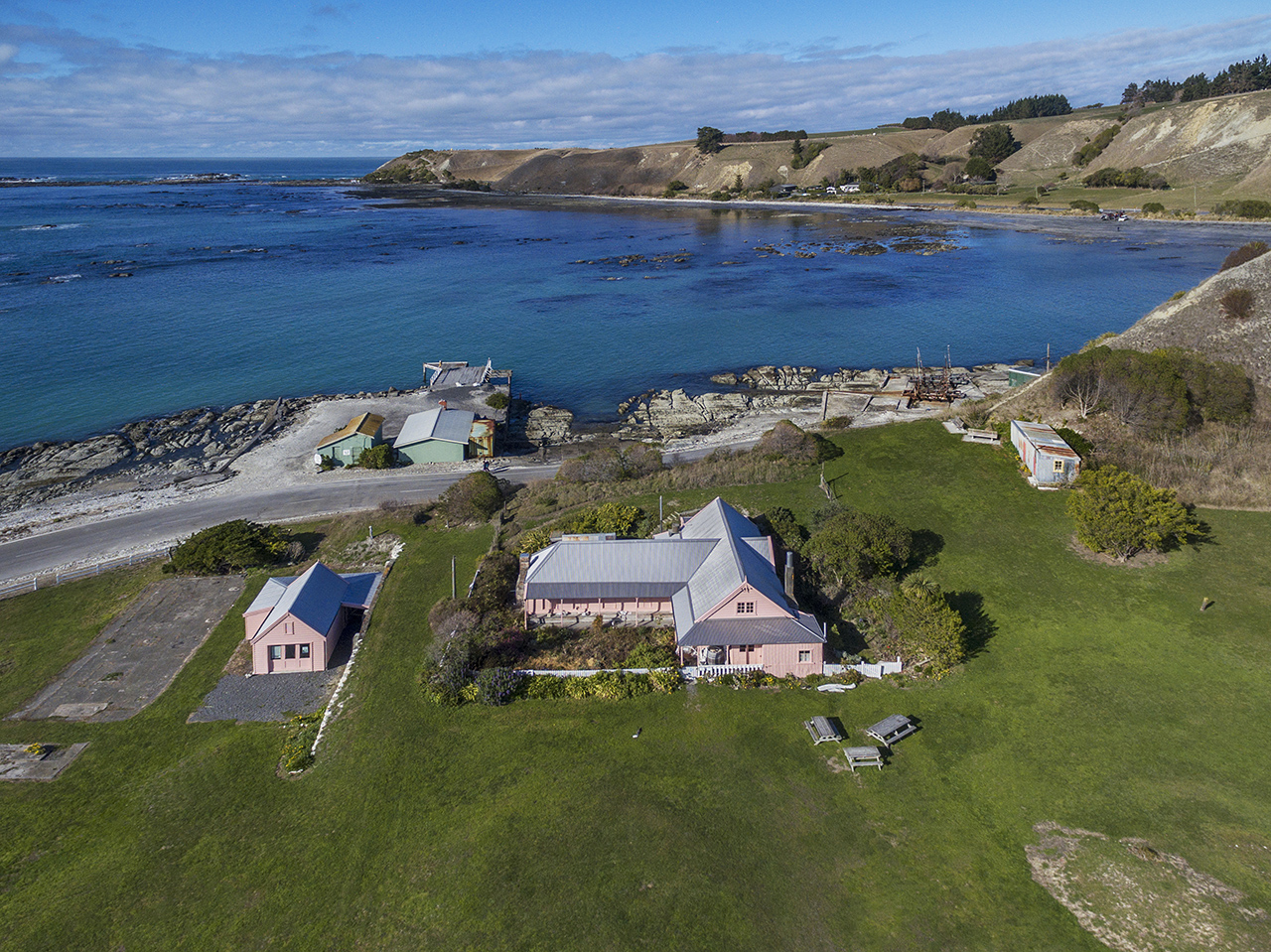
Fyffe House, Kaikoura. Drone shot | Grant Sheehan | 17/08/2015 | Heritage New Zealand Pouhere Taonga
Fyffe House, Kaikoura | Grant Sheehan | 18/05/2008 | Heritage New Zealand Pouhere Taonga
Fyffe House, Kaikoura. Drone shot | Grant Sheehan | 17/08/2015 | Heritage New Zealand Pouhere Taonga
Fyffe House, Kaikoura | Grant Sheehan | 17/08/2015 | Heritage New Zealand Pouhere Taonga
Fyffe House, Kaikoura. Drone shot | Grant Sheehan | 17/08/2015 | Heritage New Zealand Pouhere Taonga
Fyffe House, Kaikoura | Grant Sheehan | 18/05/2008 | Heritage New Zealand Pouhere Taonga
Fyffe House, Kaikoura. Drone shot | Grant Sheehan | 17/08/2015 | Heritage New Zealand Pouhere Taonga

List Entry Information

Overview

Status
Listed

List Entry Status
Historic Place Category 1

Access
Able to Visit

List Number
238

Date Entered
15th February 1990

Date of Effect
15th February 1990

City/District Council
Kaikōura District

Region
Canterbury Region

Legal description

Lot 2 DP826 (RT MB3D/662), Marlborough Land District

Detailed List Entry
Significance

Historic Significance

Historical Significance or Value Fyffe House has a considerable local historical significance as the oldest surviving building of the Kaikoura settlement. It was occupied by George and Catherine Fyffe for eight of its 128 years. It then became a family home, first for the Goodalls and then for the Lows. Joseph Goodall with his variety of occupations, was typical of settlers in such early small communities. The Lows also followed typical Kaikoura occupations.

Physical Significance

ARCHITECTURAL QUALITY: Fyffe House is a good example of a wooden colonial cottage. In plan, with its rooms leading off each other and with separate entrances from the verandah, it is more Georgian than Victorian in style. The enclosure of part of the verandah to form a separate room is typical of colonial New Zealand dwellings, as is the incorporation of attic rooms in a relatively low structure so as to make best use of all available space. TOWNSCAPE/LANDMARK VALUE06 Jan 2009 Fyffe House is the sole survivor of a complex of buildings in the area which centred around the old Kaikoura wharf. A low building with a distinctive local setting it is distinguished architecturally from newer buildings in the area by its colonial styling

Construction Details

Start Year

1840

Finish Year

1850

Type

Original Construction

Description

Two-roomed cottage built for cooper employed by Robert Fyfe

Start Year

1850

Finish Year

1860

Type

Addition

Description

Kitchen/store area

Start Year

1860

Finish Year

1863

Type

Addition

Description

Two-storeyed wing to west of original wing and running perpendicular to it

Type

Modification

Description

Largely unmodified; the west-end of the verandah was enclosed about 1910; small lean-to added to kitchen sometime before 1978.

Period

pre-1978

Start Year

2006

Type

Modification

Description

Authority granted for new foundations, drainage, reconstruction of southern wall of house, landscaping

Construction Materials

Timber framed building clad with weatherboard. Roof of corrugated iron; brick chimneys. One wing on whalebone piles.

Notable Features

Whalebone piles and the original paint Building material from old ships

Historical Narrative

Robert Fyffe (1810-54) in 1842 established the first shore whaling station of Kaikoura. His cousin, George Fyffe (1827-67) arrived in Kaikoura in 1853 and continued the whaling and farming activities following Robert's death. George is believed to have built Fyffe House at the time of his marriage in 1860. After the deaths of George and his wife the house was sold to Joseph Goodall who at various times carried out such official duties as the Kaikoura police constable, Clerk of the Court, and wharf manager. The house may have been associated with some of these duties. Following Goodall's death the house passed to the Low family. The last private owner, George Low, bequeathed the house to the Trust in 1981.

Physical Description

ARCHITECT: Not known. The designer may have been the original owner, George Fyffe. ARCHITECTURAL DESCRIPTION: Fyffe House has a 'T' plan. The main wing has 'one and a half' storeys with three rooms under the gable roof. Originally there was a gable roofed dormer window on each side of the wing. The second wing has one storey and whale vertebrae piles. Its floor is about one metre above the floor level of the main wing. It has a hipped roof, with a chimney at this end. There is also a fireplace and chimney in the main front room and another on the small wall of the kitchen. A shallow pitched verandah with plain wooden posts runs along the north facade and returns on part of the main wing. The windows and doors are irregularly spaced. All windows are tall and narrow side-hung casements. The finials of the main wing are suggestive of Victorian Gothic styling but the east wing, with the separate entry to each room by French doors off the verandah, is more typical of colonial Georgian houses. Much of the building material for the house is thought to have come from old ships. MODIFICATIONS: Largely unmodified; the west-end of the verandah was enclosed about 1910; small lean-to added to kitchen sometime before 1978.

Reference

Public NZAA Number

031/30

Completion Date

8th January 2002

Report Written By

Bill Edwards/Melanie Lovell-Smith

Information Sources

Dictionary of New Zealand Biography

Dictionary of New Zealand Biography

Harris, 1994

Jan Harris, 'Tohora : The story of Fyffe House, Kai Koura', Wellington, 1994

New Zealand Historic Places Trust (NZHPT)

New Zealand Historic Places Trust

Waitangi Tribunal

Waitangi Tribunal Report, www.waitangi-tribunal.govt.nz

Report Written By

Jan Harris points out in 'Tohora' (p.48) that there were a number of ways of spelling 'Fyffe' (Fiffe, Fife, Fyffe, Fyfe). Harris chose to use the spelling 'Fyfe' when referring to Robert Fyffe, as that was how he referred to himself, and how his correspondents referred to him in the nineteenth century. In this entry Robert has been referred to as Fyffe throughout, following the example of the Dictionary of New Zealand Biography. This historic place was registered under the Historic Places Act 1980. This report includes the text from the original Building Classification Committee report considered by the NZHPT Board at the time of registration. Please note that entry on the New Zealand Heritage List/Rarangi Korero identifies only the heritage values of the property concerned, and should not be construed as advice on the state of the property, or as a comment of its soundness or safety, including in regard to earthquake risk, safety in the event of fire, or insanitary conditions.

Further Information

Current Usages

Uses: Civic Facilities

Specific Usage: Historic Property

Former Usages

General Usage:: Accommodation

Specific Usage: House

Themes

Web Links

description: Heritage New Zealand website Places to Visit

url: http://www.heritage.org.nz/places/places-to-visit/marlborough-region/fyffe-house

Overview

Status

Listed

List Entry Status

Historic Place Category 1

Access

Able to Visit

List Number

238

Date Entered

15th February 1990

Date of Effect

15th February 1990

City/District Council

Kaikōura District

Region

Canterbury Region

Legal description

Lot 2 DP826 (RT MB3D/662), Marlborough Land District

Status

Listed

List Entry Status

Historic Place Category 1

Access

Able to Visit

List Number

238

Date Entered

15th February 1990

Date of Effect

15th February 1990

City/District Council

Kaikōura District

Region

Canterbury Region

Legal description

Lot 2 DP826 (RT MB3D/662), Marlborough Land District

Significance

Why is this place significant?

Historic Significance

Historical Significance or Value Fyffe House has a considerable local historical significance as the oldest surviving building of the Kaikoura settlement. It was occupied by George and Catherine Fyffe for eight of its 128 years. It then became a family home, first for the Goodalls and then for the Lows. Joseph Goodall with his variety of occupations, was typical of settlers in such early small communities. The Lows also followed typical Kaikoura occupations.

Physical Significance

ARCHITECTURAL QUALITY: Fyffe House is a good example of a wooden colonial cottage. In plan, with its rooms leading off each other and with separate entrances from the verandah, it is more Georgian than Victorian in style. The enclosure of part of the verandah to form a separate room is typical of colonial New Zealand dwellings, as is the incorporation of attic rooms in a relatively low structure so as to make best use of all available space. TOWNSCAPE/LANDMARK VALUE06 Jan 2009 Fyffe House is the sole survivor of a complex of buildings in the area which centred around the old Kaikoura wharf. A low building with a distinctive local setting it is distinguished architecturally from newer buildings in the area by its colonial styling

Why is this place significant?

Historic Significance

Historical Significance or Value Fyffe House has a considerable local historical significance as the oldest surviving building of the Kaikoura settlement. It was occupied by George and Catherine Fyffe for eight of its 128 years. It then became a family home, first for the Goodalls and then for the Lows. Joseph Goodall with his variety of occupations, was typical of settlers in such early small communities. The Lows also followed typical Kaikoura occupations.

Physical Significance

ARCHITECTURAL QUALITY: Fyffe House is a good example of a wooden colonial cottage. In plan, with its rooms leading off each other and with separate entrances from the verandah, it is more Georgian than Victorian in style. The enclosure of part of the verandah to form a separate room is typical of colonial New Zealand dwellings, as is the incorporation of attic rooms in a relatively low structure so as to make best use of all available space. TOWNSCAPE/LANDMARK VALUE06 Jan 2009 Fyffe House is the sole survivor of a complex of buildings in the area which centred around the old Kaikoura wharf. A low building with a distinctive local setting it is distinguished architecturally from newer buildings in the area by its colonial styling

Construction Information

Construction Details

Start Year

1840

Finish Year

1850

Type

Original Construction

Description

Two-roomed cottage built for cooper employed by Robert Fyfe

Start Year

1850

Finish Year

1860

Type

Addition

Description

Kitchen/store area

Start Year

1860

startYearCirca

Finish Year

1863

finishYearCirca

Type

Addition

Description

Two-storeyed wing to west of original wing and running perpendicular to it

Type

Modification

Description

Largely unmodified; the west-end of the verandah was enclosed about 1910; small lean-to added to kitchen sometime before 1978.

Period

pre-1978

Start Year

2006

Type

Modification

Description

Authority granted for new foundations, drainage, reconstruction of southern wall of house, landscaping

Construction Materials

Timber framed building clad with weatherboard. Roof of corrugated iron; brick chimneys. One wing on whalebone piles.

Notable Features

Whalebone piles and the original paint Building material from old ships

Construction Details

Start Year

1840

Finish Year

1850

Type

Original Construction

Description

Two-roomed cottage built for cooper employed by Robert Fyfe

Start Year

1850

Finish Year

1860

Type

Addition

Description

Kitchen/store area

Start Year

1860

startYearCirca

Finish Year

1863

finishYearCirca

Type

Addition

Description

Two-storeyed wing to west of original wing and running perpendicular to it

Type

Modification

Description

Largely unmodified; the west-end of the verandah was enclosed about 1910; small lean-to added to kitchen sometime before 1978.

Period

pre-1978

Start Year

2006

Type

Modification

Description

Authority granted for new foundations, drainage, reconstruction of southern wall of house, landscaping

Construction Materials

Timber framed building clad with weatherboard. Roof of corrugated iron; brick chimneys. One wing on whalebone piles.

Notable Features

Whalebone piles and the original paint Building material from old ships

Historical Narrative

Robert Fyffe (1810-54) in 1842 established the first shore whaling station of Kaikoura. His cousin, George Fyffe (1827-67) arrived in Kaikoura in 1853 and continued the whaling and farming activities following Robert's death. George is believed to have built Fyffe House at the time of his marriage in 1860. After the deaths of George and his wife the house was sold to Joseph Goodall who at various times carried out such official duties as the Kaikoura police constable, Clerk of the Court, and wharf manager. The house may have been associated with some of these duties. Following Goodall's death the house passed to the Low family. The last private owner, George Low, bequeathed the house to the Trust in 1981.

Robert Fyffe (1810-54) in 1842 established the first shore whaling station of Kaikoura. His cousin, George Fyffe (1827-67) arrived in Kaikoura in 1853 and continued the whaling and farming activities following Robert's death. George is believed to have built Fyffe House at the time of his marriage in 1860. After the deaths of George and his wife the house was sold to Joseph Goodall who at various times carried out such official duties as the Kaikoura police constable, Clerk of the Court, and wharf manager. The house may have been associated with some of these duties. Following Goodall's death the house passed to the Low family. The last private owner, George Low, bequeathed the house to the Trust in 1981.

Physical Description

ARCHITECT: Not known. The designer may have been the original owner, George Fyffe. ARCHITECTURAL DESCRIPTION: Fyffe House has a 'T' plan. The main wing has 'one and a half' storeys with three rooms under the gable roof. Originally there was a gable roofed dormer window on each side of the wing. The second wing has one storey and whale vertebrae piles. Its floor is about one metre above the floor level of the main wing. It has a hipped roof, with a chimney at this end. There is also a fireplace and chimney in the main front room and another on the small wall of the kitchen. A shallow pitched verandah with plain wooden posts runs along the north facade and returns on part of the main wing. The windows and doors are irregularly spaced. All windows are tall and narrow side-hung casements. The finials of the main wing are suggestive of Victorian Gothic styling but the east wing, with the separate entry to each room by French doors off the verandah, is more typical of colonial Georgian houses. Much of the building material for the house is thought to have come from old ships. MODIFICATIONS: Largely unmodified; the west-end of the verandah was enclosed about 1910; small lean-to added to kitchen sometime before 1978.

ARCHITECT: Not known. The designer may have been the original owner, George Fyffe. ARCHITECTURAL DESCRIPTION: Fyffe House has a 'T' plan. The main wing has 'one and a half' storeys with three rooms under the gable roof. Originally there was a gable roofed dormer window on each side of the wing. The second wing has one storey and whale vertebrae piles. Its floor is about one metre above the floor level of the main wing. It has a hipped roof, with a chimney at this end. There is also a fireplace and chimney in the main front room and another on the small wall of the kitchen. A shallow pitched verandah with plain wooden posts runs along the north facade and returns on part of the main wing. The windows and doors are irregularly spaced. All windows are tall and narrow side-hung casements. The finials of the main wing are suggestive of Victorian Gothic styling but the east wing, with the separate entry to each room by French doors off the verandah, is more typical of colonial Georgian houses. Much of the building material for the house is thought to have come from old ships. MODIFICATIONS: Largely unmodified; the west-end of the verandah was enclosed about 1910; small lean-to added to kitchen sometime before 1978.

Reference

Historical and Associated Iwi / Hapū / Whānau

Public NZAA Number

031/30

Completion Date

8th January 2002

Report Written By

Bill Edwards/Melanie Lovell-Smith

Information Sources

Dictionary of New Zealand Biography

Dictionary of New Zealand Biography

Harris, 1994

Jan Harris, 'Tohora : The story of Fyffe House, Kai Koura', Wellington, 1994

New Zealand Historic Places Trust (NZHPT)

New Zealand Historic Places Trust

Waitangi Tribunal

Waitangi Tribunal Report, www.waitangi-tribunal.govt.nz

Other Information

Jan Harris points out in 'Tohora' (p.48) that there were a number of ways of spelling 'Fyffe' (Fiffe, Fife, Fyffe, Fyfe). Harris chose to use the spelling 'Fyfe' when referring to Robert Fyffe, as that was how he referred to himself, and how his correspondents referred to him in the nineteenth century. In this entry Robert has been referred to as Fyffe throughout, following the example of the Dictionary of New Zealand Biography. This historic place was registered under the Historic Places Act 1980. This report includes the text from the original Building Classification Committee report considered by the NZHPT Board at the time of registration. Please note that entry on the New Zealand Heritage List/Rarangi Korero identifies only the heritage values of the property concerned, and should not be construed as advice on the state of the property, or as a comment of its soundness or safety, including in regard to earthquake risk, safety in the event of fire, or insanitary conditions.

Historical and Associated Iwi / Hapū / Whānau

Public NZAA Number

031/30

Completion Date

8th January 2002

Report Written By

Bill Edwards/Melanie Lovell-Smith

Information Sources

Dictionary of New Zealand Biography

Dictionary of New Zealand Biography

Harris, 1994

Jan Harris, 'Tohora : The story of Fyffe House, Kai Koura', Wellington, 1994

New Zealand Historic Places Trust (NZHPT)

New Zealand Historic Places Trust

Waitangi Tribunal

Waitangi Tribunal Report, www.waitangi-tribunal.govt.nz

Other Information

Jan Harris points out in 'Tohora' (p.48) that there were a number of ways of spelling 'Fyffe' (Fiffe, Fife, Fyffe, Fyfe). Harris chose to use the spelling 'Fyfe' when referring to Robert Fyffe, as that was how he referred to himself, and how his correspondents referred to him in the nineteenth century. In this entry Robert has been referred to as Fyffe throughout, following the example of the Dictionary of New Zealand Biography. This historic place was registered under the Historic Places Act 1980. This report includes the text from the original Building Classification Committee report considered by the NZHPT Board at the time of registration. Please note that entry on the New Zealand Heritage List/Rarangi Korero identifies only the heritage values of the property concerned, and should not be construed as advice on the state of the property, or as a comment of its soundness or safety, including in regard to earthquake risk, safety in the event of fire, or insanitary conditions.

Further Information

Current Usages

Uses: Civic Facilities

Specific Usage: Historic Property

Former Usages

General Usage: Accommodation

Specific Usage: House

Web Links

description: Heritage New Zealand website Places to Visit

url: http://www.heritage.org.nz/places/places-to-visit/marlborough-region/fyffe-house

Current Usages

Uses: Civic Facilities

Specific Usage: Historic Property

Former Usages

General Usage: Accommodation

Specific Usage: House

Web Links

description: Heritage New Zealand website Places to Visit

url: http://www.heritage.org.nz/places/places-to-visit/marlborough-region/fyffe-house

Location

Loading
Related listings
Wai o puka
Fyffe Historic Area
Fyffe Historic Area
Fyffe Historic Area
Fyffe Historic Area
Wai o puka
Sign up to hear more

Get the latest heritage news, features and events delivered
straight to your inbox.

Subscribe