DonateSupporterVisit Heritage
  • Tūrangawaewae
    Places
  • Tira Māori
    Māori Heritage
  • Poutairangahia
    Archaeology
  • Rauemi
    Resources
  • Mō Tātou
    About Us
  • New Zealand Heritage List
  • Nominate and submit
  • Explore the List
  • National Historic Landmarks
  • Plaques
  • Rainbow List Project
  • Lost heritage
  • Visit Heritage
  • Our properties
  • Turnbull House Project
  • Collections
  • Shop
  • Tohu Whenua
  • Tira Māori
  • Conserving Māori heritage
  • Marae built heritage
  • Māori heritage on the List
  • Hinemihi—Te Hokinga Mai
  • What is archaeology?
  • Is there a site on my property?
  • What are my legal requirements?
  • Affecting an archaeological site
  • Declaring an archaeological site
  • Archaeology FAQs
  • Archaeology Digital Library
  • Archaeology guidelines and templates
  • Resources
  • Funding
  • Publications
  • Sustainable management guides
  • Disaster recovery
  • Podcasts & digital resources
  • Education Hub
  • Conservation plans
  • About
  • Board
  • Māori Heritage Council
  • Senior Staff
  • Offices
  • Contact us
  • Careers
  • Covenants
  • Fast-track
  • Corporate documents
  • Currently consulting on
  • Our submissions
  • News
  • Covid-19 response
Quick links
Rārangi Kōrero | The List
Explore the List
National Historic Landmarks
Ngā Manawhenua o Aotearoa me ōna Kōrero Tūturu
Quick links
Tapuwae
A Vision for Places of Māori Heritage
Funding for Māori Heritage
Resources
Quick links
Archaeological Authority Portal
Applying for an archaeological authority
Archaeology FAQs
Browse the most frequently asked questions about archaeological authorities and the archaeological process.
Quick links
Quick links
Contact us
Offices
DonateSupporterVisit Heritage
  • Tūrangawaewae
    Places
  • Tira Māori
    Māori Heritage
  • Poutairangahia
    Archaeology
  • Rauemi
    Resources
  • Mō Tātou
    About Us
  • New Zealand Heritage List
  • Nominate and submit
  • Explore the List
  • National Historic Landmarks
  • Plaques
  • Rainbow List Project
  • Lost heritage
  • Visit Heritage
  • Our properties
  • Turnbull House Project
  • Collections
  • Shop
  • Tohu Whenua
  • Tira Māori
  • Conserving Māori heritage
  • Marae built heritage
  • Māori heritage on the List
  • Hinemihi—Te Hokinga Mai
  • What is archaeology?
  • Is there a site on my property?
  • What are my legal requirements?
  • Affecting an archaeological site
  • Declaring an archaeological site
  • Archaeology FAQs
  • Archaeology Digital Library
  • Archaeology guidelines and templates
  • Resources
  • Funding
  • Publications
  • Sustainable management guides
  • Disaster recovery
  • Podcasts & digital resources
  • Education Hub
  • Conservation plans
  • About
  • Board
  • Māori Heritage Council
  • Senior Staff
  • Offices
  • Contact us
  • Careers
  • Covenants
  • Fast-track
  • Corporate documents
  • Currently consulting on
  • Our submissions
  • News
  • Covid-19 response
Quick links
Rārangi Kōrero | The List
Explore the List
National Historic Landmarks
Ngā Manawhenua o Aotearoa me ōna Kōrero Tūturu
Quick links
Tapuwae
A Vision for Places of Māori Heritage
Funding for Māori Heritage
Resources
Quick links
Archaeological Authority Portal
Applying for an archaeological authority
Archaeology FAQs
Browse the most frequently asked questions about archaeological authorities and the archaeological process.
Quick links
Quick links
Contact us
Offices
  • Places
  • Nominate and submit
  • National Historic Landmarks
  • Places
  • Nominate and submit
  • National Historic Landmarks
  • Tira Māori
  • Conserving Māori heritage
  • Marae built heritage
  • Tira Māori
  • Conserving Māori heritage
  • Marae built heritage
  • Archaeological authorities
  • Archaeology Digital Library
  • Archaeological authorities
  • Archaeology Digital Library
  • All resources
  • Publications
  • Funding
  • All resources
  • Publications
  • Funding
  • FAQs
  • FAQs
Follow us on:
Places
  • Places
  • Nominate and submit
  • National Historic Landmarks
Tira Māori
  • Tira Māori
  • Conserving Māori heritage
  • Marae built heritage
Archaeology
  • Archaeological authorities
  • Archaeology Digital Library
Resources
  • All resources
  • Publications
  • Funding
FAQs
  • FAQs
Follow us on
HomePrivacyTerms and conditionsAbout this site
© Heritage New Zealand Pouhere Taonga 2026.
 
Waterworks Pumping Station No. 1 Pumphouse (Former)

544 Tuam Street, Phillipstown, CHRISTCHURCH

Private

Historic Place Category 2

List No. 3736

Quick links:
List GalleryLocationDetails
Begun in the early 1880s, the Waterworks Pumping Station No. 1 Pumphouse (Former) at 544 Tuam Street, Phillipstown, Christchurch, is a building complex that played a critical role in effecting significant improvement in the overall amenity of the city and the lives of Christchurch residents. It has historical, social, and technological significance in its ability to tell the story of how Christchurch developed a coordinated, city-wide drainage system that served as an exemplar both nationally and internationally. In its utilitarian design with classical detailing and craftsmanship, the Waterworks Pumping Station No. 1 Pumphouse also has architectural and aesthetic value.

The Christchurch Drainage Board was established in the mid-1870s to address the issue of poor drainage of stormwater and sewage disposal that was having serious health implications for the dwellers in this flat swampy city. The Board was tasked with planning and constructing a systematic drainage and sewerage network and they engaged an English civil engineer, William Clark, as consulting engineer. The key point of Clark’s comprehensive scheme, approved by the Drainage Board in 1878, was that wastewater flows were to be admitted into the sewers, but kept completely separate from stormwater to avoid contamination. The first stage was the construction, during the early 1880s, of pipelines that took sewage from the city by gravitation to holding tanks beneath the Waterworks Pumping Station No. 1 Pumphouse, in Tuam Street. Sometimes known as the Drainage Pumping Station, this brick building was designed by Clark to house the engines and pumps which would pump the sewage in 61 centimetre cast iron pipes to Bromley. The work was carried out by Thomas Parsons as contractor. After overcoming many challenges due especially to unstable soil, the pumping of sewage at the Waterworks Pumphouse Station finally took place as a fully operational system in early 1882.

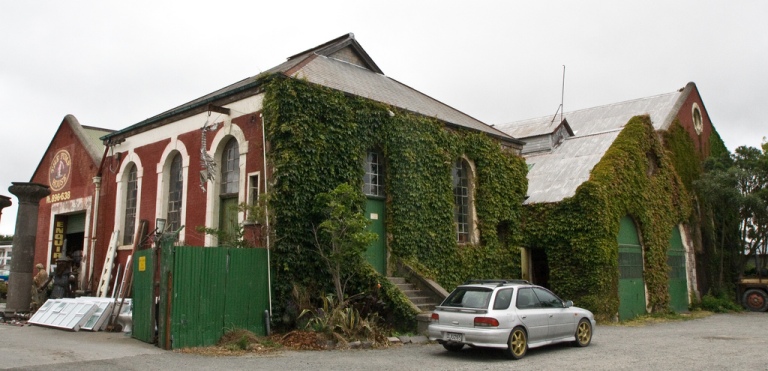
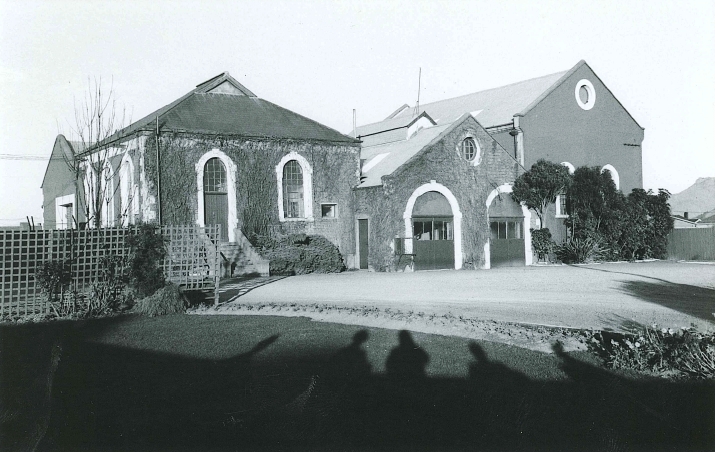
The Waterworks Pumping Station No. 1 Pumphouse (Former) is a building constructed of brick with Oamaru stone detailing, steel windows, and slate and corrugated iron roofing. It is a utilitarian structure with multiple gabled roofs and restrained classical detailing, including distinctive arched windows and doors, and round windows in some of the gables. It is possible that some of the pump and drainage technology remains in the sub-floor area of the building and within the setting.

The original building has been enlarged over time, and altered as machinery was updated. The Waterworks Pumping Station No. 1 Pumphouse (Former) building at Tuam Street continued to play a key role in the disposal of city sewage until 1957 when the Drainage Board opened a new pumping station in Pages Road. The Tuam Street site then became used as a maintenance depot until the 1980s, when the Board ‘vacated its most historic site, where the city’s sewage system was born’. Alterations of the building have included the removal of the furnace stack and removal of pump machinery and, after the Canterbury earthquakes of 2010-11, structural strengthening and demolition of a lean-to at the rear of the building. The property currently operates as a salvage yard. The building is the subject of two well-known paintings by Christchurch artist, Doris Lusk.
Waterworks Pumping Station No. 1 Pumphouse (Former). From: www.flickr.com | Paul Willyams | 19/01/2010 | Paul Willyams
Waterworks Pumping Station No. 1 Pumphouse (Former). Original image submitted at time of registration | Heritage New Zealand Pouhere Taonga
Waterworks Pumping Station No. 1 Pumphouse (Former). From: www.flickr.com | Paul Willyams | 19/01/2010 | Paul Willyams
Waterworks Pumping Station No. 1 Pumphouse (Former). Original image submitted at time of registration | Heritage New Zealand Pouhere Taonga

List Entry Information

Overview

Status
Listed

List Entry Status
Historic Place Category 2

Access
Private/No Public Access

List Number
3736

Date Entered
6th September 1984

Date of Effect
6th September 1984

City/District Council
Christchurch City

Region
Canterbury Region

Extent of List Entry

Extent includes the land described Lot 1 DP 333687 (RT 194987), Canterbury Land District and the complex of buildings known as Waterworks Pumping Station No. 1 Pumphouse (Former) thereon. Refer to the extent map tabled at the Rārangi Kōrero meeting on 5 October 2017.

Legal description

Lot 1 DP 333687(RT 194987), Canterbury Land District

Detailed List Entry

Construction Professional

Name

Bell, Charles Napier

Type

Engineer

Biography

Bell (1835-1906) was one of New Zealand's foremost civil engineers during the late nineteenth century. English by birth Bell received his training with Bell and Miller, Engineers of Glasgow, and in the late 1850s he worked on the Edinburgh sewerage system and the Glasgow graving dock. During the 1860s he worked in South America and Europe planning railways systems, water and harbourworks, and in 1867 he became an Associate Member of the Institution of Civil Engineers. In 1871, working for the English railway contractors J. Brogden and Sons, Bell arrived in New Zealand to advise on the siting of the Rangitata railway bridge and the development of the harbour in Timaru. Five years later he was appointed engineer to the Christchurch Drainage Board and in February 1873 Bell began a seven year association with the Lyttelton Harbour Board. He acted as the Board's first consulting engineer until his resignation in December 1885 when he took up the position of engineer with the Westport Harbour Board. Until his death in Tasmania in 1906 Bell undertook engineering work throughout New Zealand and Australia.

Name

Thomas Parsons

Type

Builder

Biography

Contractor for the Waterworks Pumping Station No. 1 Pumphouse (Former), Christchurch

Name

William Clark

Type

Engineer

Biography

Civil Engineer for the Christchurch Drainage Board, 1870s

Construction Details

Start Year

1882

Type

Original Construction

Type

Addition

Description

Building extended

Period

Late nineteenth and early twentieth century

Reference

Completion Date

23rd June 2017

Report Written By

Robyn Burgess

Report Written By

This place was identified as significant under previous legislation with different information requirements. It remains significant under the current legislation. There is opportunity under our legislation and policies to add to this information. Further information about this place may be available from the Southern Regional Office of Heritage New Zealand Pouhere Taonga. Please note that entry on the New Zealand Heritage List/Rarangi Korero identifies only the heritage values of the property concerned, and should not be construed as advice on the state of the property, or as a comment of its soundness or safety, including in regard to earthquake risk, safety in the event of fire, or insanitary conditions. A fully referenced upgrade report is available on request from the Southern Region Office of Heritage New Zealand.

Further Information

Current Usages

Uses: Trade

Specific Usage: Retail and Commercial - other

Former Usages

General Usage:: Utilities

Specific Usage: Water Pump House/Pumping Station

Themes

Web Links

Overview

Status

Listed

List Entry Status

Historic Place Category 2

Access

Private/No Public Access

List Number

3736

Date Entered

6th September 1984

Date of Effect

6th September 1984

City/District Council

Christchurch City

Region

Canterbury Region

Extent of List Entry

Extent includes the land described Lot 1 DP 333687 (RT 194987), Canterbury Land District and the complex of buildings known as Waterworks Pumping Station No. 1 Pumphouse (Former) thereon. Refer to the extent map tabled at the Rārangi Kōrero meeting on 5 October 2017.

Legal description

Lot 1 DP 333687(RT 194987), Canterbury Land District

Status

Listed

List Entry Status

Historic Place Category 2

Access

Private/No Public Access

List Number

3736

Date Entered

6th September 1984

Date of Effect

6th September 1984

City/District Council

Christchurch City

Region

Canterbury Region

Extent of List Entry

Extent includes the land described Lot 1 DP 333687 (RT 194987), Canterbury Land District and the complex of buildings known as Waterworks Pumping Station No. 1 Pumphouse (Former) thereon. Refer to the extent map tabled at the Rārangi Kōrero meeting on 5 October 2017.

Legal description

Lot 1 DP 333687(RT 194987), Canterbury Land District

Construction Information

Construction Professional

Name

Bell, Charles Napier

Type

Engineer

Biography

Bell (1835-1906) was one of New Zealand's foremost civil engineers during the late nineteenth century. English by birth Bell received his training with Bell and Miller, Engineers of Glasgow, and in the late 1850s he worked on the Edinburgh sewerage system and the Glasgow graving dock. During the 1860s he worked in South America and Europe planning railways systems, water and harbourworks, and in 1867 he became an Associate Member of the Institution of Civil Engineers. In 1871, working for the English railway contractors J. Brogden and Sons, Bell arrived in New Zealand to advise on the siting of the Rangitata railway bridge and the development of the harbour in Timaru. Five years later he was appointed engineer to the Christchurch Drainage Board and in February 1873 Bell began a seven year association with the Lyttelton Harbour Board. He acted as the Board's first consulting engineer until his resignation in December 1885 when he took up the position of engineer with the Westport Harbour Board. Until his death in Tasmania in 1906 Bell undertook engineering work throughout New Zealand and Australia.

Name

Thomas Parsons

Type

Builder

Biography

Contractor for the Waterworks Pumping Station No. 1 Pumphouse (Former), Christchurch

Name

William Clark

Type

Engineer

Biography

Civil Engineer for the Christchurch Drainage Board, 1870s

Construction Details

Start Year

1882

Type

Original Construction

Type

Addition

Description

Building extended

Period

Late nineteenth and early twentieth century

Construction Professional

Name

Bell, Charles Napier

Type

Engineer

Biography

Bell (1835-1906) was one of New Zealand's foremost civil engineers during the late nineteenth century. English by birth Bell received his training with Bell and Miller, Engineers of Glasgow, and in the late 1850s he worked on the Edinburgh sewerage system and the Glasgow graving dock. During the 1860s he worked in South America and Europe planning railways systems, water and harbourworks, and in 1867 he became an Associate Member of the Institution of Civil Engineers. In 1871, working for the English railway contractors J. Brogden and Sons, Bell arrived in New Zealand to advise on the siting of the Rangitata railway bridge and the development of the harbour in Timaru. Five years later he was appointed engineer to the Christchurch Drainage Board and in February 1873 Bell began a seven year association with the Lyttelton Harbour Board. He acted as the Board's first consulting engineer until his resignation in December 1885 when he took up the position of engineer with the Westport Harbour Board. Until his death in Tasmania in 1906 Bell undertook engineering work throughout New Zealand and Australia.

Name

Thomas Parsons

Type

Builder

Biography

Contractor for the Waterworks Pumping Station No. 1 Pumphouse (Former), Christchurch

Name

William Clark

Type

Engineer

Biography

Civil Engineer for the Christchurch Drainage Board, 1870s

Construction Details

Start Year

1882

Type

Original Construction

Type

Addition

Description

Building extended

Period

Late nineteenth and early twentieth century

Reference

Historical and Associated Iwi / Hapū / Whānau

Completion Date

23rd June 2017

Report Written By

Robyn Burgess

Other Information

This place was identified as significant under previous legislation with different information requirements. It remains significant under the current legislation. There is opportunity under our legislation and policies to add to this information. Further information about this place may be available from the Southern Regional Office of Heritage New Zealand Pouhere Taonga. Please note that entry on the New Zealand Heritage List/Rarangi Korero identifies only the heritage values of the property concerned, and should not be construed as advice on the state of the property, or as a comment of its soundness or safety, including in regard to earthquake risk, safety in the event of fire, or insanitary conditions. A fully referenced upgrade report is available on request from the Southern Region Office of Heritage New Zealand.

Historical and Associated Iwi / Hapū / Whānau

Completion Date

23rd June 2017

Report Written By

Robyn Burgess

Other Information

This place was identified as significant under previous legislation with different information requirements. It remains significant under the current legislation. There is opportunity under our legislation and policies to add to this information. Further information about this place may be available from the Southern Regional Office of Heritage New Zealand Pouhere Taonga. Please note that entry on the New Zealand Heritage List/Rarangi Korero identifies only the heritage values of the property concerned, and should not be construed as advice on the state of the property, or as a comment of its soundness or safety, including in regard to earthquake risk, safety in the event of fire, or insanitary conditions. A fully referenced upgrade report is available on request from the Southern Region Office of Heritage New Zealand.

Further Information

Current Usages

Uses: Trade

Specific Usage: Retail and Commercial - other

Former Usages

General Usage: Utilities

Specific Usage: Water Pump House/Pumping Station

Current Usages

Uses: Trade

Specific Usage: Retail and Commercial - other

Former Usages

General Usage: Utilities

Specific Usage: Water Pump House/Pumping Station

Location

Loading
Sign up to hear more

Get the latest heritage news, features and events delivered
straight to your inbox.

Subscribe