DonateMembershipVisit Heritage
  • Tūrangawaewae
    Places
  • Tira Māori
    Māori Heritage
  • Poutairangahia
    Archaeology
  • Rauemi
    Resources
  • Mō Tātou
    About Us
  • New Zealand Heritage List
  • Nominate and submit
  • Explore the List
  • National Historic Landmarks
  • Plaques
  • Rainbow List Project
  • Lost heritage
  • Visit Heritage
  • Our properties
  • Turnbull House Project
  • Collections
  • Shop
  • Tohu Whenua
  • Tira Māori
  • Conserving Māori heritage
  • Marae built heritage
  • Māori heritage on the List
  • Hinemihi—Te Hokinga Mai
  • What is archaeology?
  • Is there a site on my property?
  • What are my legal requirements?
  • Affecting an archaeological site
  • Declaring an archaeological site
  • Archaeology FAQs
  • Archaeology Digital Library
  • Archaeology guidelines and templates
  • Resources
  • Funding
  • Publications
  • Sustainable management guides
  • Disaster recovery
  • Podcasts & digital resources
  • Education Hub
  • Conservation plans
  • About
  • Board
  • Māori Heritage Council
  • Senior Staff
  • Offices
  • Contact us
  • Careers
  • Covenants
  • Fast-track
  • Corporate documents
  • Currently consulting on
  • Our submissions
  • News
  • Covid-19 response
Quick links
Rārangi Kōrero | The List
Explore the List
National Historic Landmarks
Ngā Manawhenua o Aotearoa me ōna Kōrero Tūturu
Quick links
Tapuwae
A Vision for Places of Māori Heritage
Funding for Māori Heritage
Resources
Quick links
Archaeological Authority Portal
Applying for an archaeological authority
Archaeology FAQs
Browse the most frequently asked questions about archaeological authorities and the archaeological process.
Quick links
Quick links
News
News Keep up to date with Heritage New Zealand Pouhere Taonga
Membership
Membership Find out more and sign up today
DonateMembershipVisit Heritage
  • Tūrangawaewae
    Places
  • Tira Māori
    Māori Heritage
  • Poutairangahia
    Archaeology
  • Rauemi
    Resources
  • Mō Tātou
    About Us
  • New Zealand Heritage List
  • Nominate and submit
  • Explore the List
  • National Historic Landmarks
  • Plaques
  • Rainbow List Project
  • Lost heritage
  • Visit Heritage
  • Our properties
  • Turnbull House Project
  • Collections
  • Shop
  • Tohu Whenua
  • Tira Māori
  • Conserving Māori heritage
  • Marae built heritage
  • Māori heritage on the List
  • Hinemihi—Te Hokinga Mai
  • What is archaeology?
  • Is there a site on my property?
  • What are my legal requirements?
  • Affecting an archaeological site
  • Declaring an archaeological site
  • Archaeology FAQs
  • Archaeology Digital Library
  • Archaeology guidelines and templates
  • Resources
  • Funding
  • Publications
  • Sustainable management guides
  • Disaster recovery
  • Podcasts & digital resources
  • Education Hub
  • Conservation plans
  • About
  • Board
  • Māori Heritage Council
  • Senior Staff
  • Offices
  • Contact us
  • Careers
  • Covenants
  • Fast-track
  • Corporate documents
  • Currently consulting on
  • Our submissions
  • News
  • Covid-19 response
Quick links
Rārangi Kōrero | The List
Explore the List
National Historic Landmarks
Ngā Manawhenua o Aotearoa me ōna Kōrero Tūturu
Quick links
Tapuwae
A Vision for Places of Māori Heritage
Funding for Māori Heritage
Resources
Quick links
Archaeological Authority Portal
Applying for an archaeological authority
Archaeology FAQs
Browse the most frequently asked questions about archaeological authorities and the archaeological process.
Quick links
Quick links
News
News Keep up to date with Heritage New Zealand Pouhere Taonga
Membership
Membership Find out more and sign up today
  • Places
  • Nominate and submit
  • National Historic Landmarks
  • Places
  • Nominate and submit
  • National Historic Landmarks
  • Tira Māori
  • Conserving Māori heritage
  • Marae built heritage
  • Tira Māori
  • Conserving Māori heritage
  • Marae built heritage
  • Archaeological authorities
  • Archaeology Digital Library
  • Archaeological authorities
  • Archaeology Digital Library
  • All resources
  • Publications
  • Funding
  • All resources
  • Publications
  • Funding
  • FAQs
  • FAQs
Follow us on:
Places
  • Places
  • Nominate and submit
  • National Historic Landmarks
Tira Māori
  • Tira Māori
  • Conserving Māori heritage
  • Marae built heritage
Archaeology
  • Archaeological authorities
  • Archaeology Digital Library
Resources
  • All resources
  • Publications
  • Funding
FAQs
  • FAQs
Follow us on
HomePrivacyTerms and conditionsAbout this site
© Heritage New Zealand Pouhere Taonga 2026.
 
Port Chalmers Municipal Building

1 Grey Street, PORT CHALMERS

Private

Historic Place Category 1

List No. 4373

Quick links:
List GalleryLocationDetails
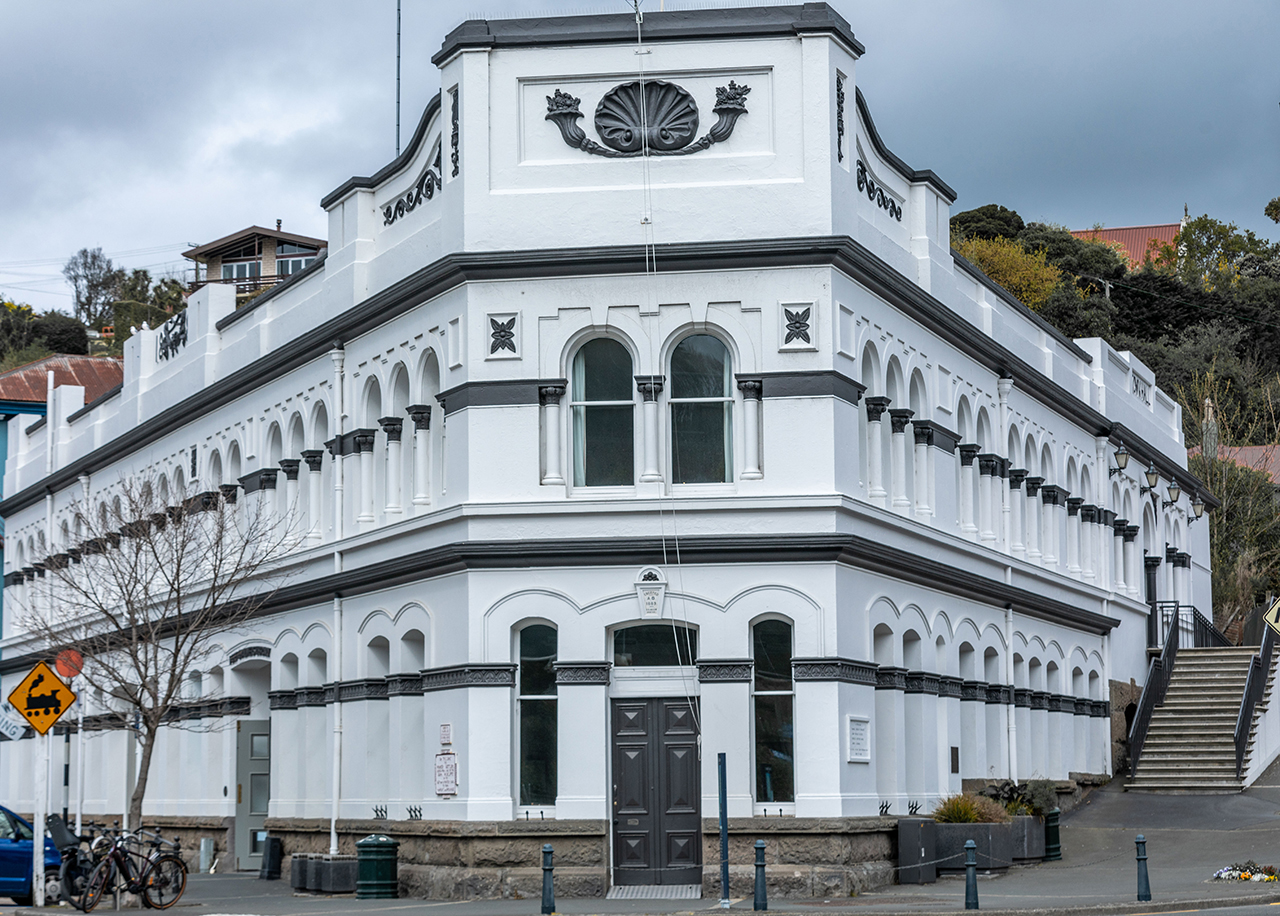
Port Chalmers Municipal Building. CC BY Licence | Jan Philip | 27/09/2023 | Jan Philip
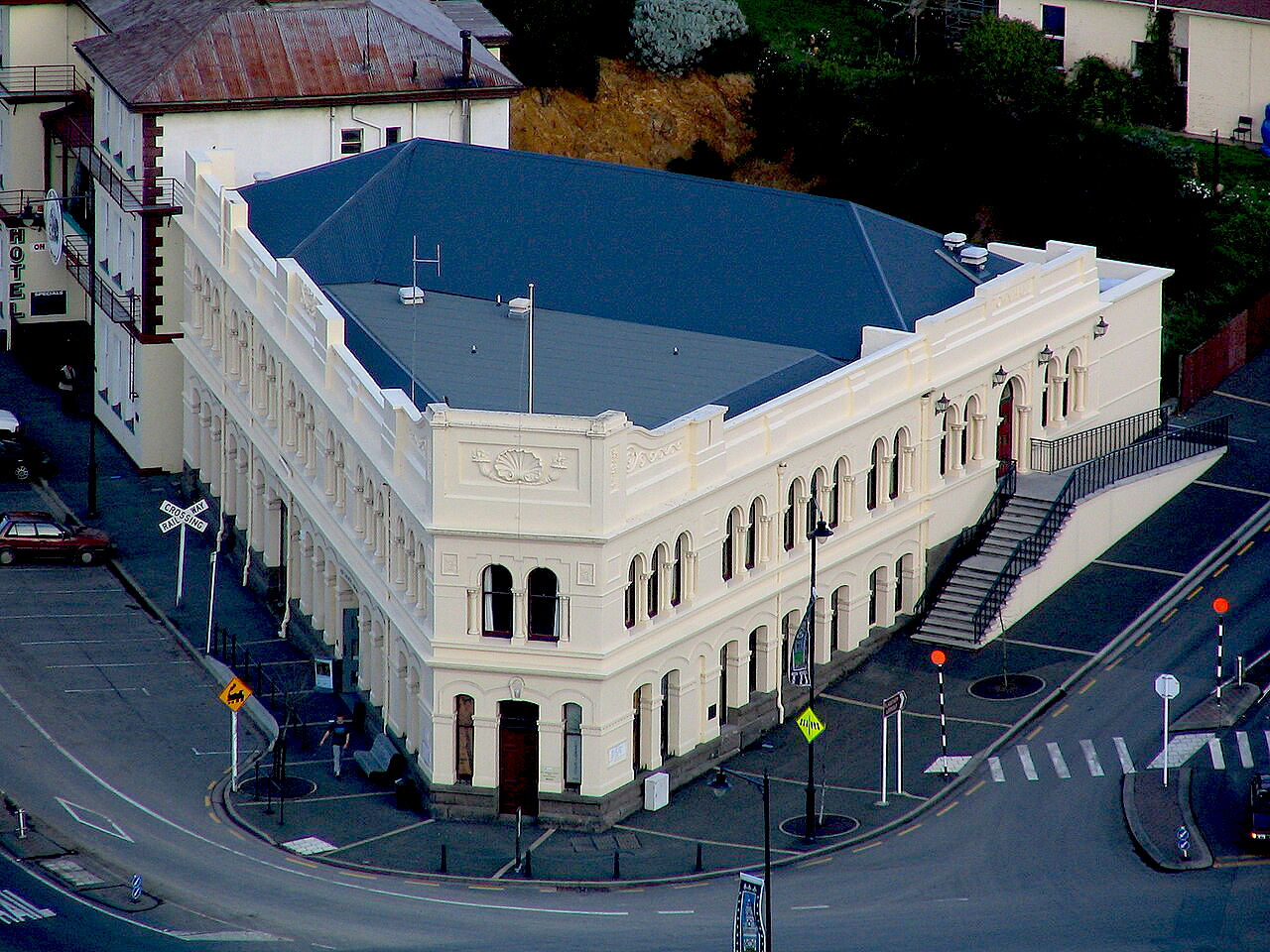
Port Chalmers Municipal Building. CC BY-SA 3.0 Image courtesy of commons.wikimedia.org | Benchill | 18/08/2009 | Benchill - Wikimedia Commons
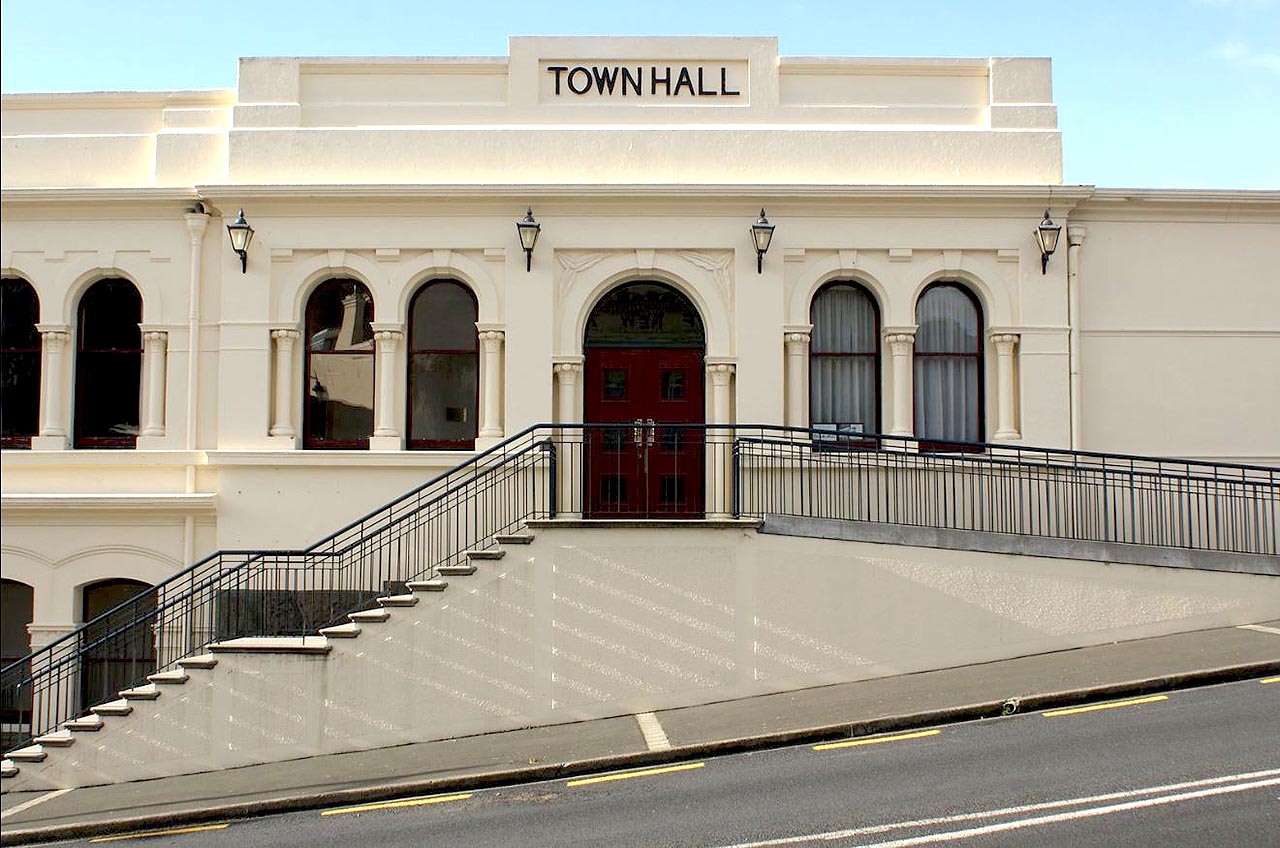
Port Chalmers Municipal Building. Town Hall image courtesy of www.flickr.com | PhilBee NZ - Phil Braithwaite | 08/06/2019 | Phil Braithwaite
Port Chalmers Municipal Building. CC BY Licence | Jan Philip | 27/09/2023 | Jan Philip
Port Chalmers Municipal Building. CC BY-SA 3.0 Image courtesy of commons.wikimedia.org | Benchill | 18/08/2009 | Benchill - Wikimedia Commons
Port Chalmers Municipal Building. Town Hall image courtesy of www.flickr.com | PhilBee NZ - Phil Braithwaite | 08/06/2019 | Phil Braithwaite

List Entry Information

Overview

Status
Listed

List Entry Status
Historic Place Category 1

Access
Private/No Public Access

List Number
4373

Date Entered
26th November 1987

Date of Effect
26th November 1987

City/District Council
Dunedin City

Region
Otago Region

Legal description

Sec 408 Port Chalmers Town (RT OT367/195), Otago Land District

Detailed List Entry
Significance

Historic Significance

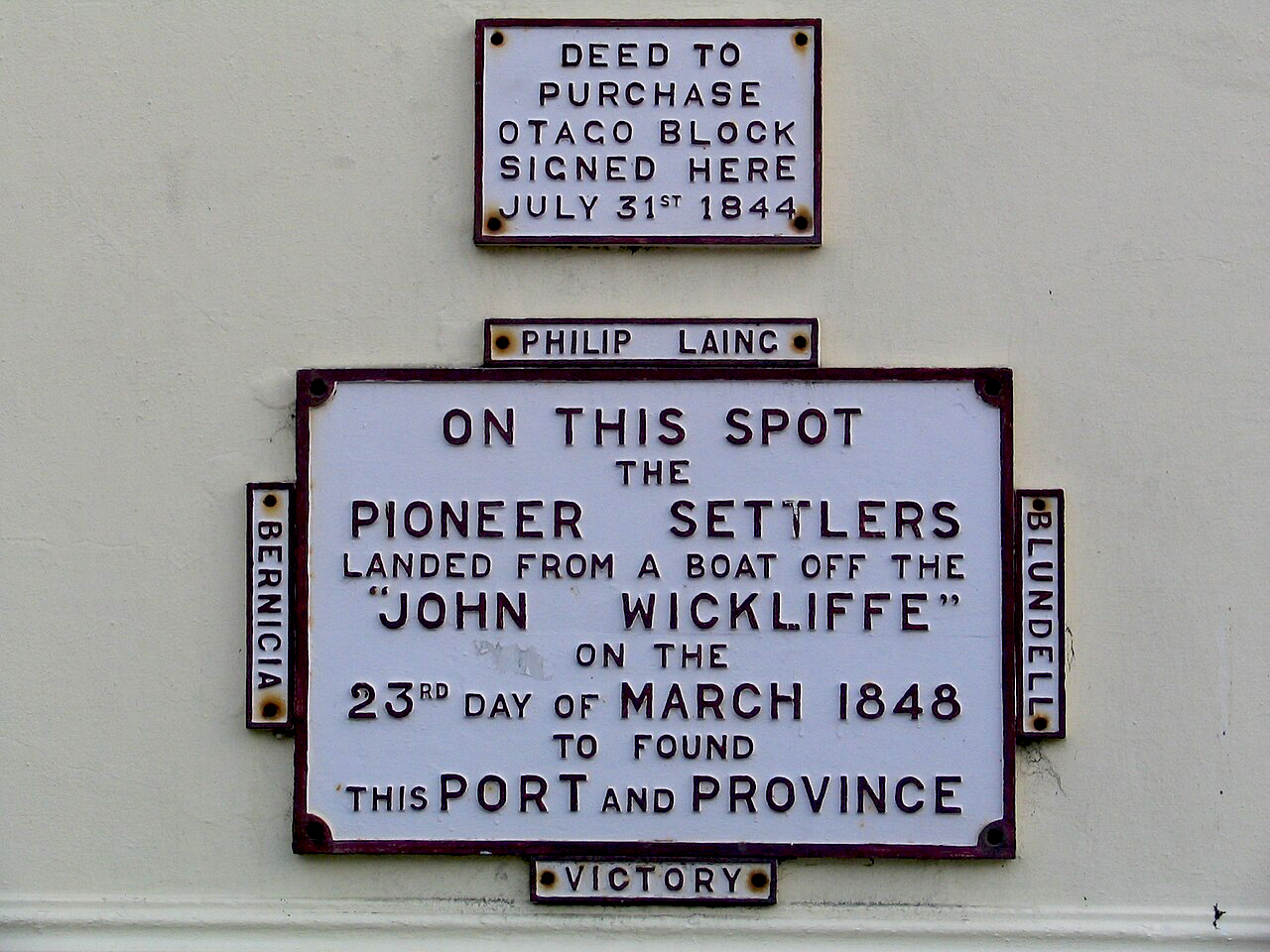
Historical Significance or Value The building was designed as a combined government and local body office. It housed originally the Customs, Police, Fire Brigade offices, the Court House, Town Hall and Borough Council Chamber and offices. With so many departments involved there was a protracted period of negotiation over the design of the rooms before work could begin. The Customs Department, for instance, objected to the proposal to house its offices in a room which had only one small window opening into a passage way. After it was opened, a banquet for 112 people was held for which the menu appears in the Borough letter books. The building now houses the Borough Council Chamber and offices, the Town Hall and Public Library. The building carries three plaques. One at the back of the building commemorates the founding of the New Zealand Seaman's Union. The two at the front commemorate the signing of the deed to purchase the Otago Block from the Maoris on July 31st 1844 and the landing of the pioneer settlers from the ship John Wickliffe in March 1848. In the 1840s the site of the two plaques would have been on the foreshore which is now some 100 metres away.

Physical Significance

ARCHITECTURAL SIGNIFICANCE: An example of the work done by the Public Works architects in the 1880s at a time when the office had no well-known architect in charge. SIGNIFICANCE OF ARCHITECT/ENGINEER/DESIGNER: The Architect's Branch had been under William Clayton as Colonial Architect until 1877, and he was succeeded by Pierre Burrows. After a review of the Branch, Burrows services were dispensed with in 1884 but plans for the Municipal Chambers were not started until 1885 (Borough Letter book). Burrows was succeeded by a draftsman named Charles Edward Beatson who would have administered the architectural services during the period 1885 to 1887when the plans for the Municipal Chambers were being made and revised (National Archives 1983). TOWNSCAPE/LANDMARK SIGNIFICANCE: The Municipal Chambers form a focus for the cross roads in the heart of Port Chalmers where its main street runs up from the wharves. On the other corners are the bluestone Post Office, the classically styled Bank of New Zealand and the two-storied stone Chicks Hotel. Around the corner and beside the Municipal Chambers is the big two storied and double bayed Port Chalmers Hotel of the same style and period.

Construction Professional

Name

Public Works Department

Type

Architect

Biography

No biography is currently available for this construction professional

Name

Public Works Department

Type

Architect

Biography

No biography is currently available for this construction professional

Construction Details

Start Year

1889

Type

Original Construction

Construction Materials

A triangular building on a sloping site is two storied in front running away to one storey and a basement at the back, built of treble brick plastered over, on a basement of Port Chalmers breccia with a slate roof over the Town Hall section, sheet lead on the flat places and corrugated iron at the front over the Borough offices. The ornamental parapets over the front corner were removed in the 1940s but the swags and shell decorations remain. The windows are arched with lateral pillars and ornamental frieze along the lower window line. There is a large stone arch over the wide windows into the basement at pavement level. The interior of the offices were lined with tongue and groove panels to shoulder height, still visible in the passages.

Notable Features

The association of the building with early offices of both government departments and the Borough and its landmark qualities.

Physical Description

ARCHITECTURAL DESCRIPTION (Style): A relatively simple example of Classical Revival Renaissance. MODIFICATIONS: The removal of the parapets is the main modification to the exterior, though a grand doorway into the Town Hall has been filled in and louvre windows (?for toilets) placed in the top of the arch. The interior has been relined and modernised, but the old window frames remain. Fireplaces and chimneys have been removed but at least one spiral staircase with turned bannisters remains.

Reference

Information Sources

Archives New Zealand (Wgtn)

Archives New Zealand (Wellington)

Government Architect & Builder Catalogue

The Government Architect and Builder in the 19th Century: catalogue of an exhibition Dec 1983-April 1984.

Report Written By

This historic place was registered under the Historic Places Act 1980. This report includes the text from the original Building Classification Committee report considered by the NZHPT Board at the time of registration. Please note that entry on the New Zealand Heritage List/Rarangi Korero identifies only the heritage values of the property concerned, and should not be construed as advice on the state of the property, or as a comment of its soundness or safety, including in regard to earthquake risk, safety in the event of fire, or insanitary conditions.

Further Information

Current Usages

Former Usages

General Usage:: Government

Specific Usage: Council/local government building

Themes

Web Links

Overview

Status

Listed

List Entry Status

Historic Place Category 1

Access

Private/No Public Access

List Number

4373

Date Entered

26th November 1987

Date of Effect

26th November 1987

City/District Council

Dunedin City

Region

Otago Region

Legal description

Sec 408 Port Chalmers Town (RT OT367/195), Otago Land District

Status

Listed

List Entry Status

Historic Place Category 1

Access

Private/No Public Access

List Number

4373

Date Entered

26th November 1987

Date of Effect

26th November 1987

City/District Council

Dunedin City

Region

Otago Region

Legal description

Sec 408 Port Chalmers Town (RT OT367/195), Otago Land District

Significance

Why is this place significant?

Historic Significance

Historical Significance or Value The building was designed as a combined government and local body office. It housed originally the Customs, Police, Fire Brigade offices, the Court House, Town Hall and Borough Council Chamber and offices. With so many departments involved there was a protracted period of negotiation over the design of the rooms before work could begin. The Customs Department, for instance, objected to the proposal to house its offices in a room which had only one small window opening into a passage way. After it was opened, a banquet for 112 people was held for which the menu appears in the Borough letter books. The building now houses the Borough Council Chamber and offices, the Town Hall and Public Library. The building carries three plaques. One at the back of the building commemorates the founding of the New Zealand Seaman's Union. The two at the front commemorate the signing of the deed to purchase the Otago Block from the Maoris on July 31st 1844 and the landing of the pioneer settlers from the ship John Wickliffe in March 1848. In the 1840s the site of the two plaques would have been on the foreshore which is now some 100 metres away.

Physical Significance

ARCHITECTURAL SIGNIFICANCE: An example of the work done by the Public Works architects in the 1880s at a time when the office had no well-known architect in charge. SIGNIFICANCE OF ARCHITECT/ENGINEER/DESIGNER: The Architect's Branch had been under William Clayton as Colonial Architect until 1877, and he was succeeded by Pierre Burrows. After a review of the Branch, Burrows services were dispensed with in 1884 but plans for the Municipal Chambers were not started until 1885 (Borough Letter book). Burrows was succeeded by a draftsman named Charles Edward Beatson who would have administered the architectural services during the period 1885 to 1887when the plans for the Municipal Chambers were being made and revised (National Archives 1983). TOWNSCAPE/LANDMARK SIGNIFICANCE: The Municipal Chambers form a focus for the cross roads in the heart of Port Chalmers where its main street runs up from the wharves. On the other corners are the bluestone Post Office, the classically styled Bank of New Zealand and the two-storied stone Chicks Hotel. Around the corner and beside the Municipal Chambers is the big two storied and double bayed Port Chalmers Hotel of the same style and period.

Why is this place significant?

Historic Significance

Historical Significance or Value The building was designed as a combined government and local body office. It housed originally the Customs, Police, Fire Brigade offices, the Court House, Town Hall and Borough Council Chamber and offices. With so many departments involved there was a protracted period of negotiation over the design of the rooms before work could begin. The Customs Department, for instance, objected to the proposal to house its offices in a room which had only one small window opening into a passage way. After it was opened, a banquet for 112 people was held for which the menu appears in the Borough letter books. The building now houses the Borough Council Chamber and offices, the Town Hall and Public Library. The building carries three plaques. One at the back of the building commemorates the founding of the New Zealand Seaman's Union. The two at the front commemorate the signing of the deed to purchase the Otago Block from the Maoris on July 31st 1844 and the landing of the pioneer settlers from the ship John Wickliffe in March 1848. In the 1840s the site of the two plaques would have been on the foreshore which is now some 100 metres away.

Physical Significance

ARCHITECTURAL SIGNIFICANCE: An example of the work done by the Public Works architects in the 1880s at a time when the office had no well-known architect in charge. SIGNIFICANCE OF ARCHITECT/ENGINEER/DESIGNER: The Architect's Branch had been under William Clayton as Colonial Architect until 1877, and he was succeeded by Pierre Burrows. After a review of the Branch, Burrows services were dispensed with in 1884 but plans for the Municipal Chambers were not started until 1885 (Borough Letter book). Burrows was succeeded by a draftsman named Charles Edward Beatson who would have administered the architectural services during the period 1885 to 1887when the plans for the Municipal Chambers were being made and revised (National Archives 1983). TOWNSCAPE/LANDMARK SIGNIFICANCE: The Municipal Chambers form a focus for the cross roads in the heart of Port Chalmers where its main street runs up from the wharves. On the other corners are the bluestone Post Office, the classically styled Bank of New Zealand and the two-storied stone Chicks Hotel. Around the corner and beside the Municipal Chambers is the big two storied and double bayed Port Chalmers Hotel of the same style and period.

Construction Information

Construction Professional

Name

Public Works Department

Type

Architect

Biography

No biography is currently available for this construction professional

Name

Public Works Department

Type

Architect

Biography

No biography is currently available for this construction professional

Construction Details

Start Year

1889

Type

Original Construction

Construction Materials

A triangular building on a sloping site is two storied in front running away to one storey and a basement at the back, built of treble brick plastered over, on a basement of Port Chalmers breccia with a slate roof over the Town Hall section, sheet lead on the flat places and corrugated iron at the front over the Borough offices. The ornamental parapets over the front corner were removed in the 1940s but the swags and shell decorations remain. The windows are arched with lateral pillars and ornamental frieze along the lower window line. There is a large stone arch over the wide windows into the basement at pavement level. The interior of the offices were lined with tongue and groove panels to shoulder height, still visible in the passages.

Notable Features

The association of the building with early offices of both government departments and the Borough and its landmark qualities.

Construction Professional

Name

Public Works Department

Type

Architect

Biography

No biography is currently available for this construction professional

Name

Public Works Department

Type

Architect

Biography

No biography is currently available for this construction professional

Construction Details

Start Year

1889

Type

Original Construction

Construction Materials

A triangular building on a sloping site is two storied in front running away to one storey and a basement at the back, built of treble brick plastered over, on a basement of Port Chalmers breccia with a slate roof over the Town Hall section, sheet lead on the flat places and corrugated iron at the front over the Borough offices. The ornamental parapets over the front corner were removed in the 1940s but the swags and shell decorations remain. The windows are arched with lateral pillars and ornamental frieze along the lower window line. There is a large stone arch over the wide windows into the basement at pavement level. The interior of the offices were lined with tongue and groove panels to shoulder height, still visible in the passages.

Notable Features

The association of the building with early offices of both government departments and the Borough and its landmark qualities.

Physical Description

ARCHITECTURAL DESCRIPTION (Style): A relatively simple example of Classical Revival Renaissance. MODIFICATIONS: The removal of the parapets is the main modification to the exterior, though a grand doorway into the Town Hall has been filled in and louvre windows (?for toilets) placed in the top of the arch. The interior has been relined and modernised, but the old window frames remain. Fireplaces and chimneys have been removed but at least one spiral staircase with turned bannisters remains.

ARCHITECTURAL DESCRIPTION (Style): A relatively simple example of Classical Revival Renaissance. MODIFICATIONS: The removal of the parapets is the main modification to the exterior, though a grand doorway into the Town Hall has been filled in and louvre windows (?for toilets) placed in the top of the arch. The interior has been relined and modernised, but the old window frames remain. Fireplaces and chimneys have been removed but at least one spiral staircase with turned bannisters remains.

Reference

Historical and Associated Iwi / Hapū / Whānau

Information Sources

Archives New Zealand (Wgtn)

Archives New Zealand (Wellington)

Government Architect & Builder Catalogue

The Government Architect and Builder in the 19th Century: catalogue of an exhibition Dec 1983-April 1984.

Other Information

This historic place was registered under the Historic Places Act 1980. This report includes the text from the original Building Classification Committee report considered by the NZHPT Board at the time of registration. Please note that entry on the New Zealand Heritage List/Rarangi Korero identifies only the heritage values of the property concerned, and should not be construed as advice on the state of the property, or as a comment of its soundness or safety, including in regard to earthquake risk, safety in the event of fire, or insanitary conditions.

Historical and Associated Iwi / Hapū / Whānau

Information Sources

Archives New Zealand (Wgtn)

Archives New Zealand (Wellington)

Government Architect & Builder Catalogue

The Government Architect and Builder in the 19th Century: catalogue of an exhibition Dec 1983-April 1984.

Other Information

This historic place was registered under the Historic Places Act 1980. This report includes the text from the original Building Classification Committee report considered by the NZHPT Board at the time of registration. Please note that entry on the New Zealand Heritage List/Rarangi Korero identifies only the heritage values of the property concerned, and should not be construed as advice on the state of the property, or as a comment of its soundness or safety, including in regard to earthquake risk, safety in the event of fire, or insanitary conditions.

Further Information

Former Usages

General Usage: Government

Specific Usage: Council/local government building

Former Usages

General Usage: Government

Specific Usage: Council/local government building

Location

Loading
Stay up to date with Heritage this month
